-
-
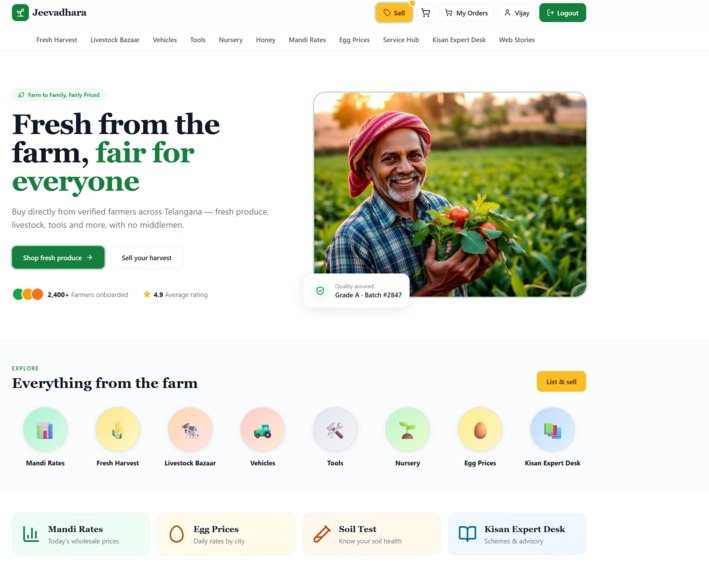
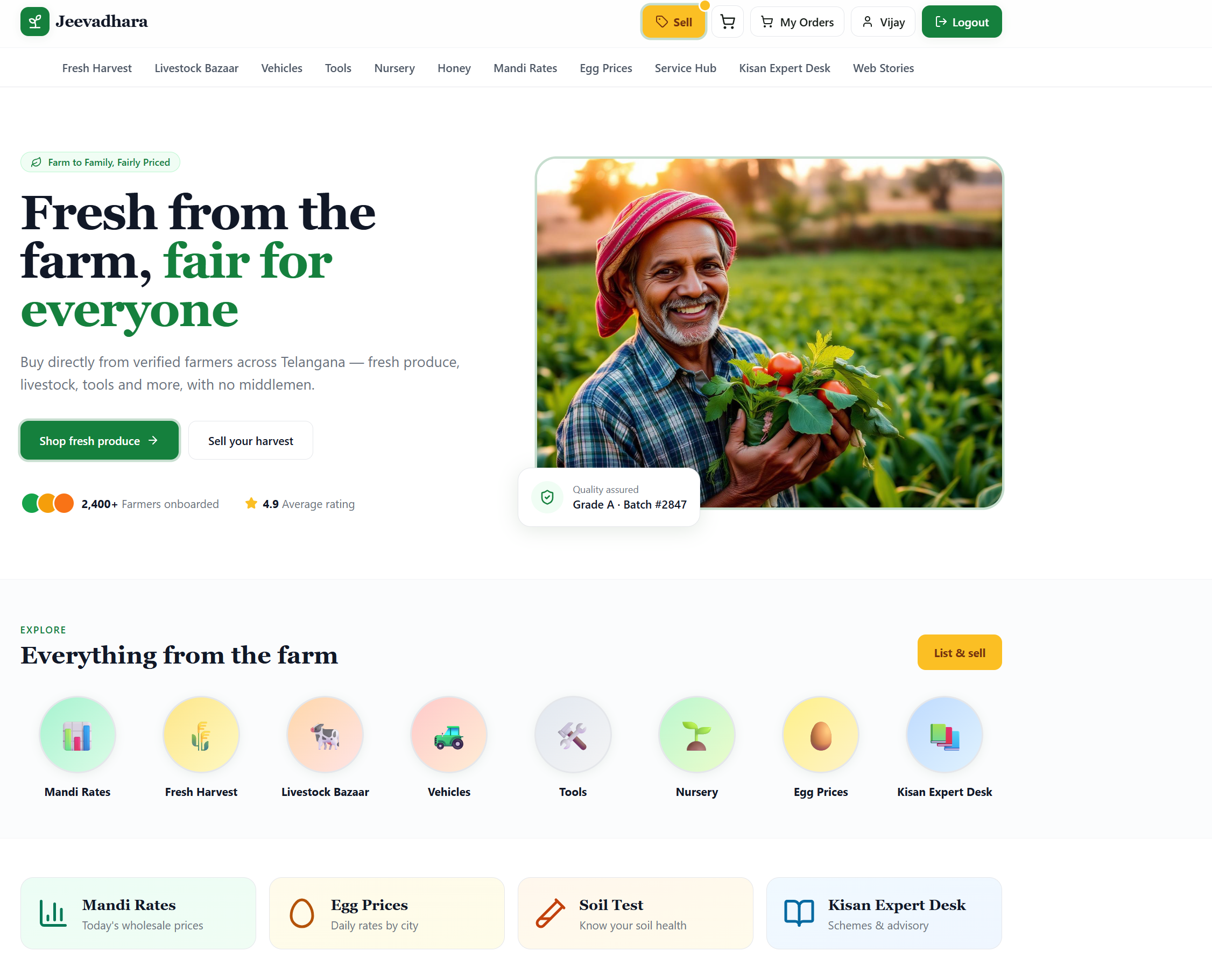
Home page
-
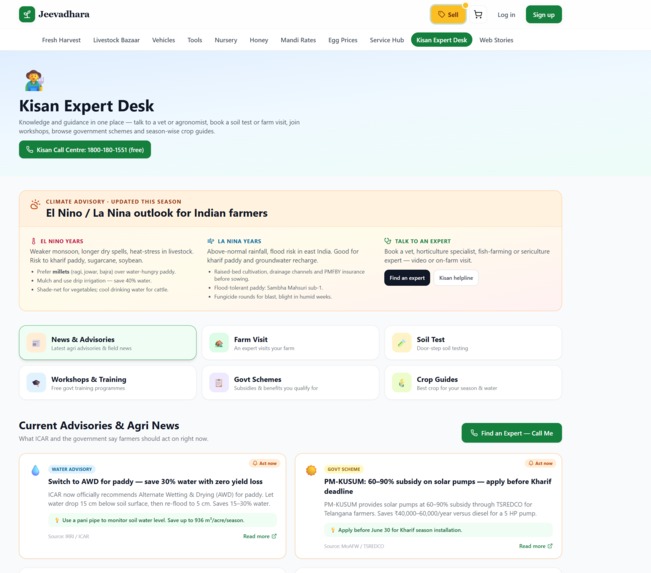
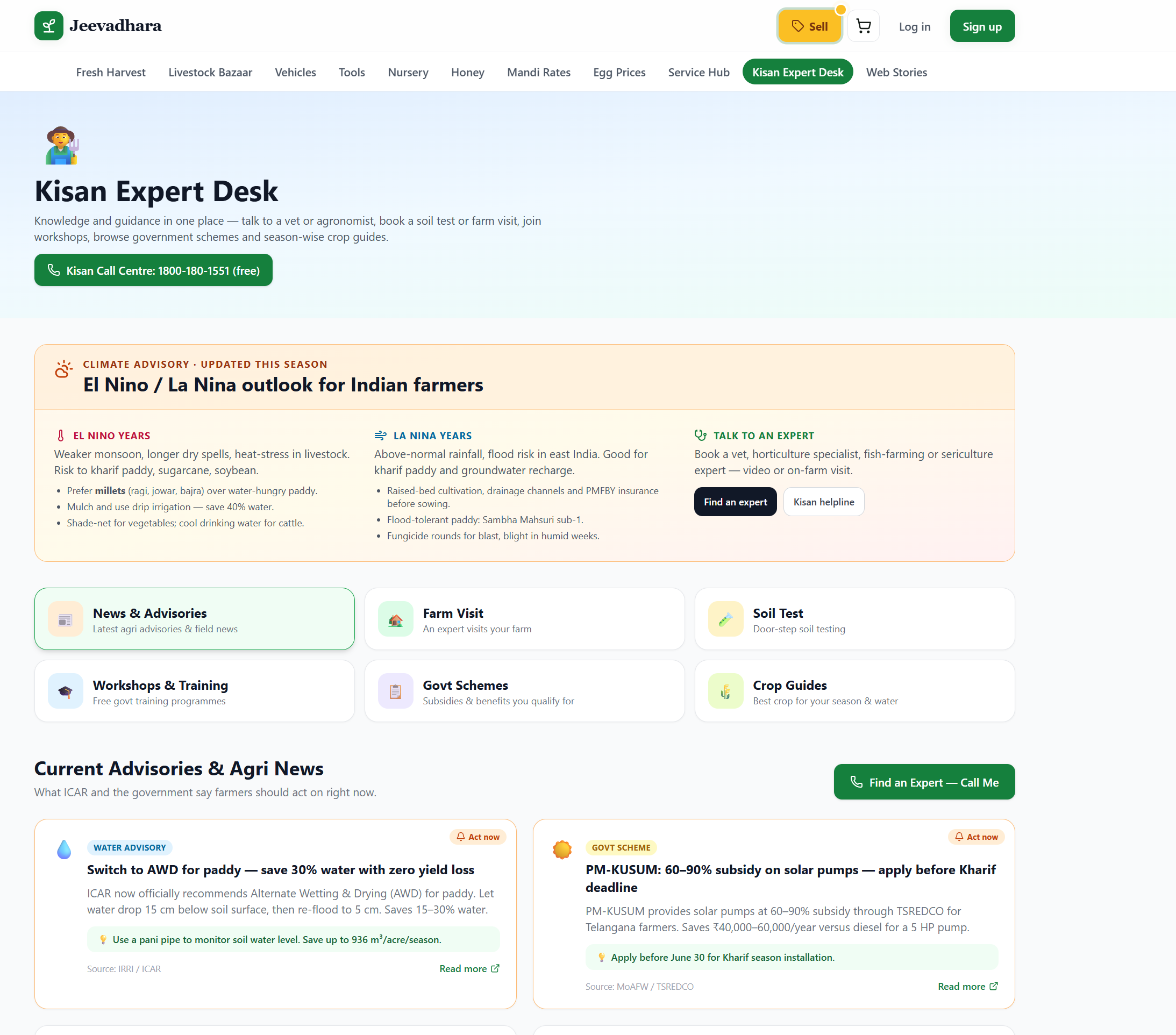
Kisan Expert Desk
-
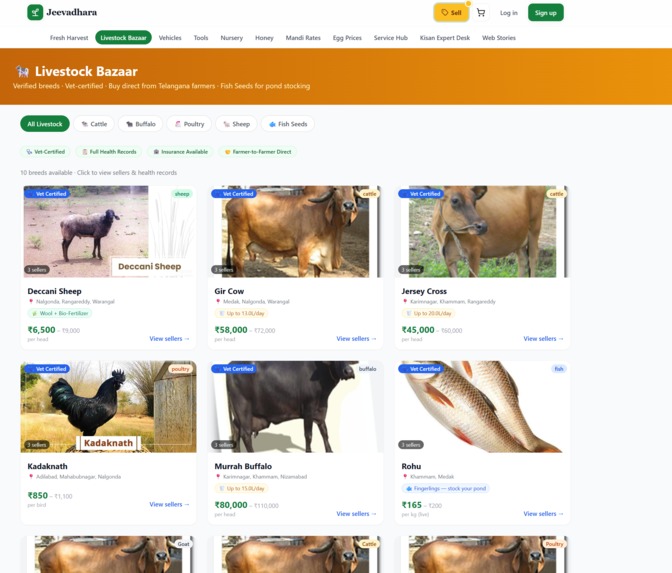
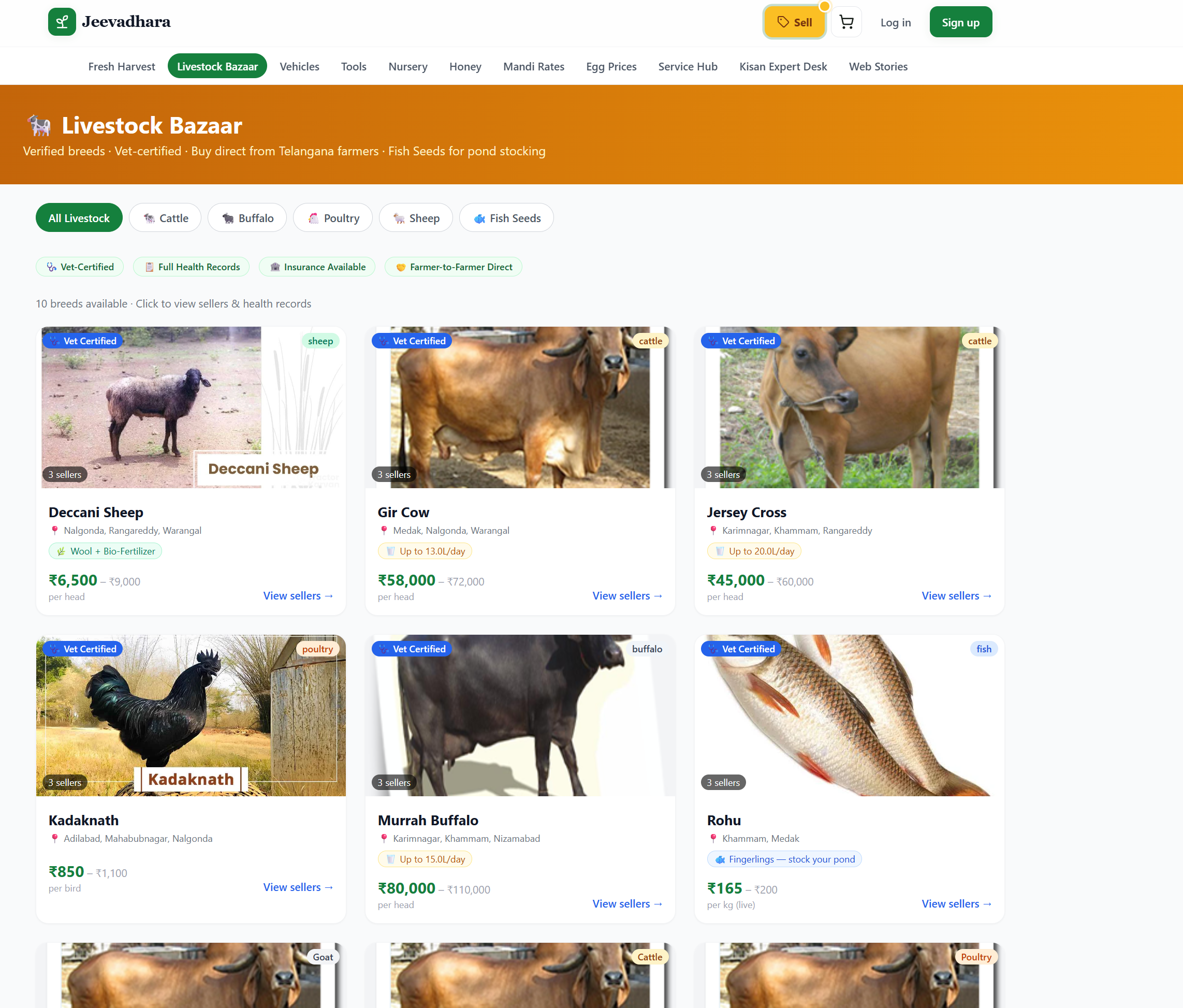
Live stock bazar
-
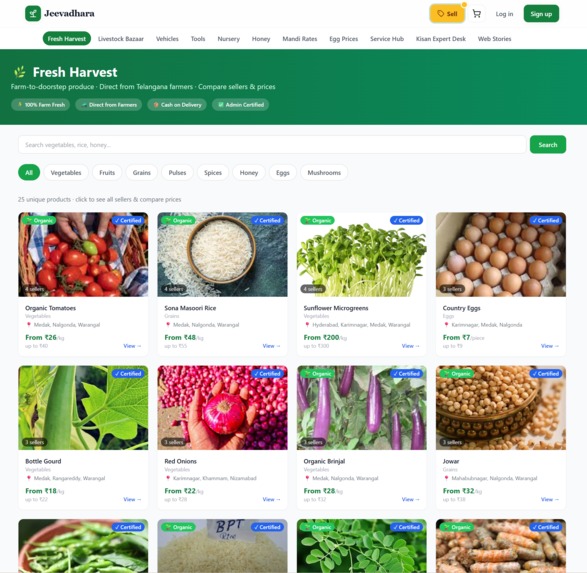
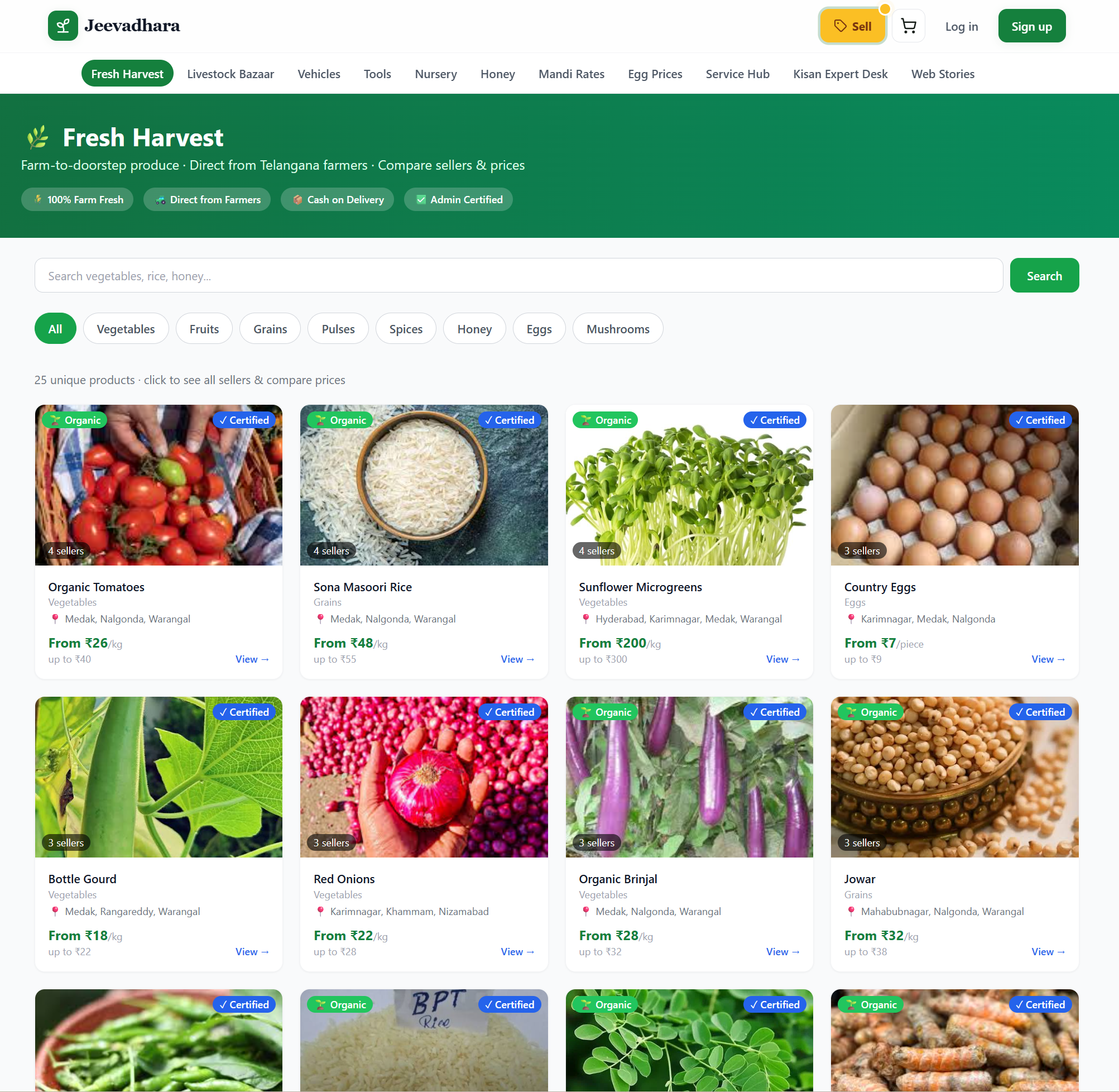
fresh harvest
-
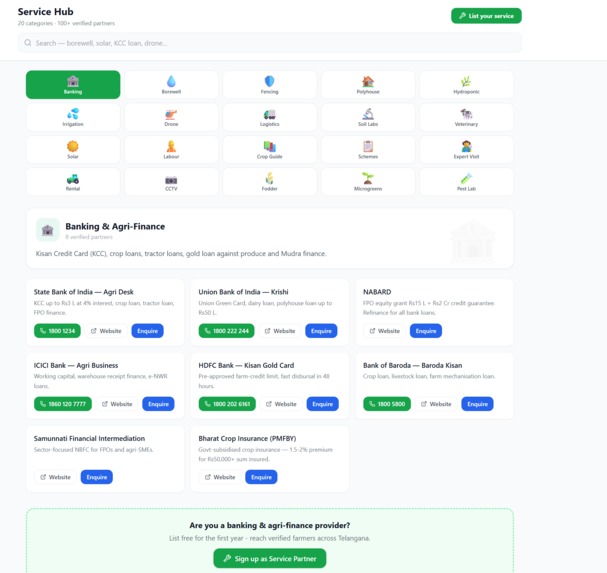
Service hub
-
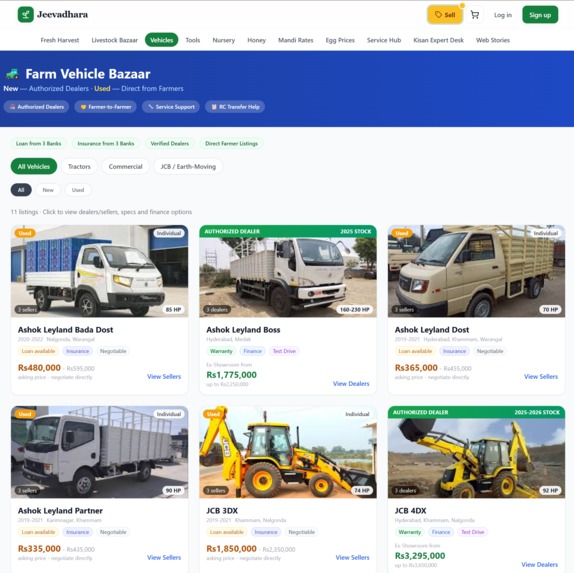
Vehicles
-
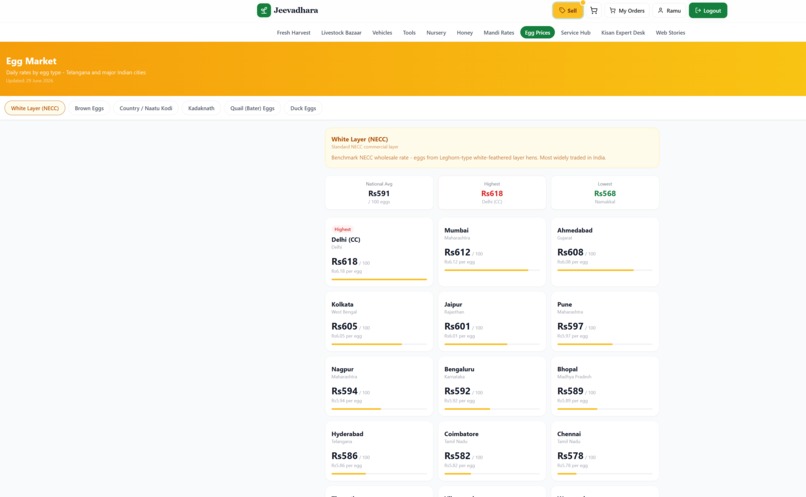
Egg
-
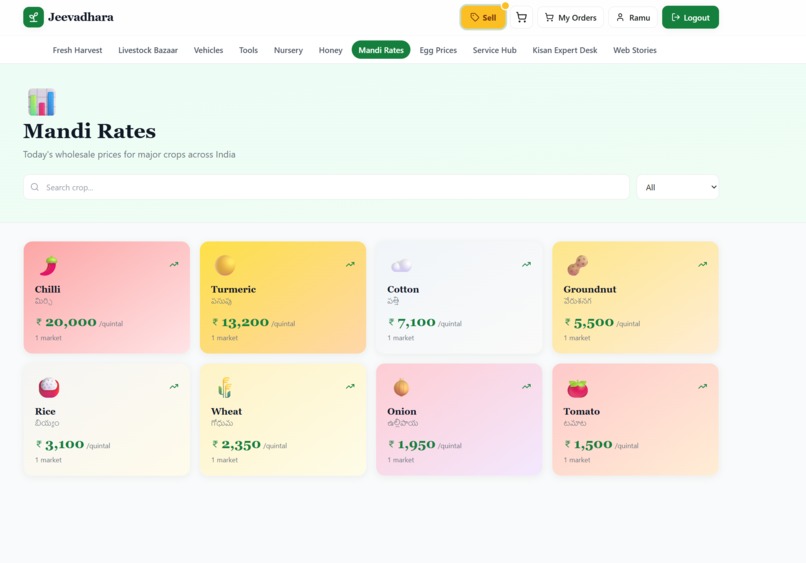
Mandi rates
-
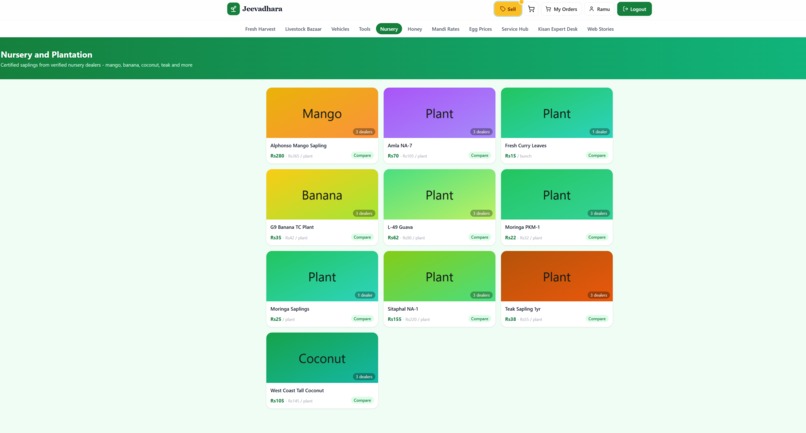
Nursery
-
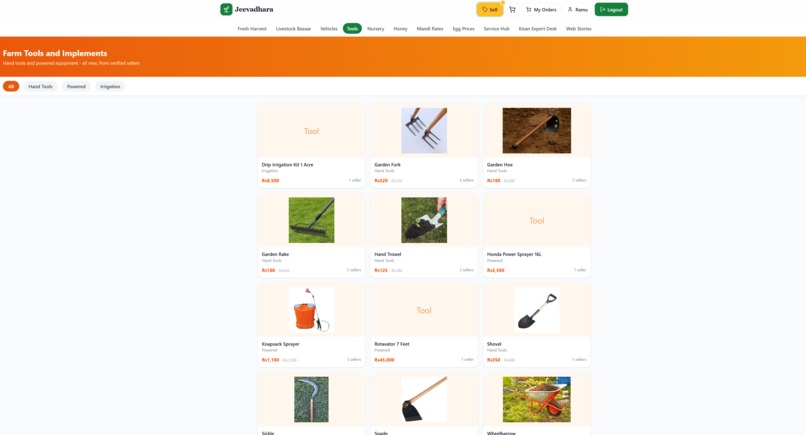
Tools
-
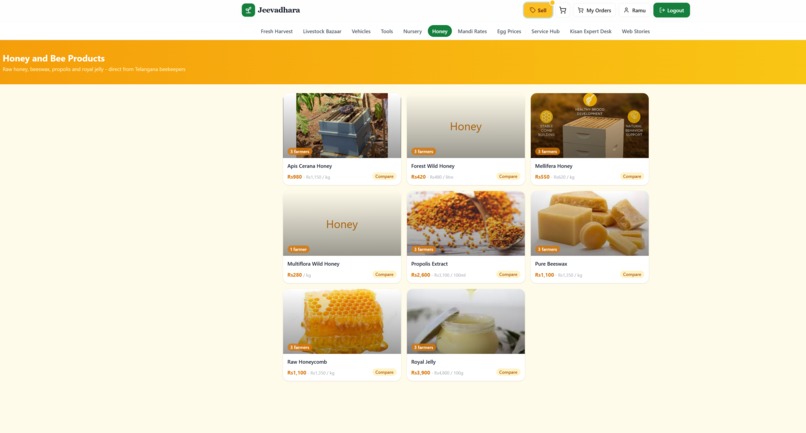
Honey
-
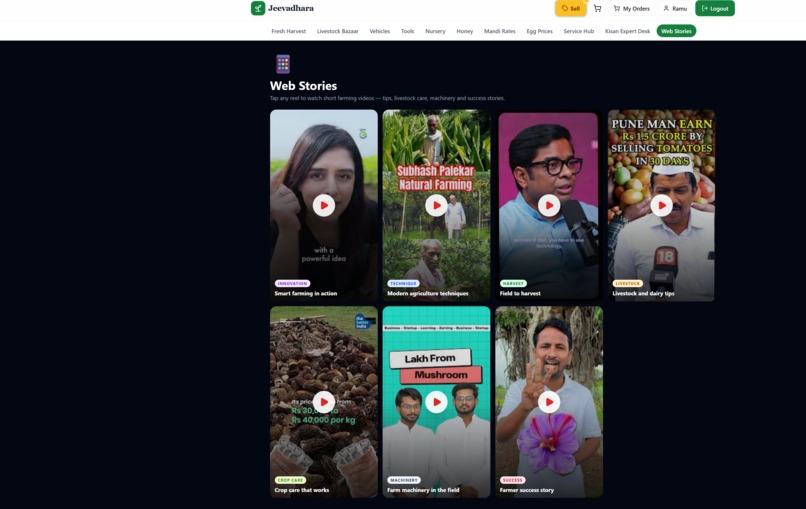
Web stories
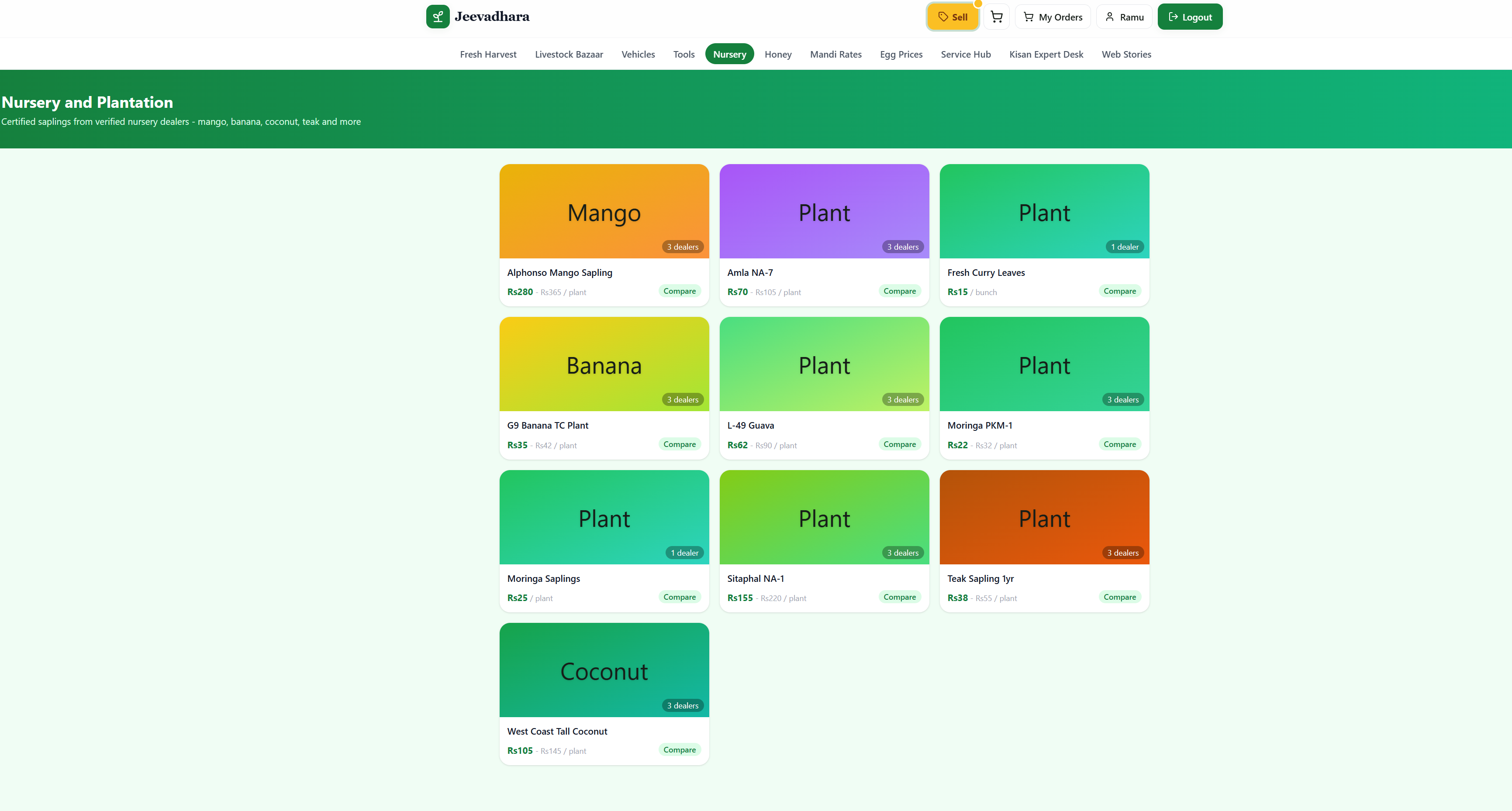
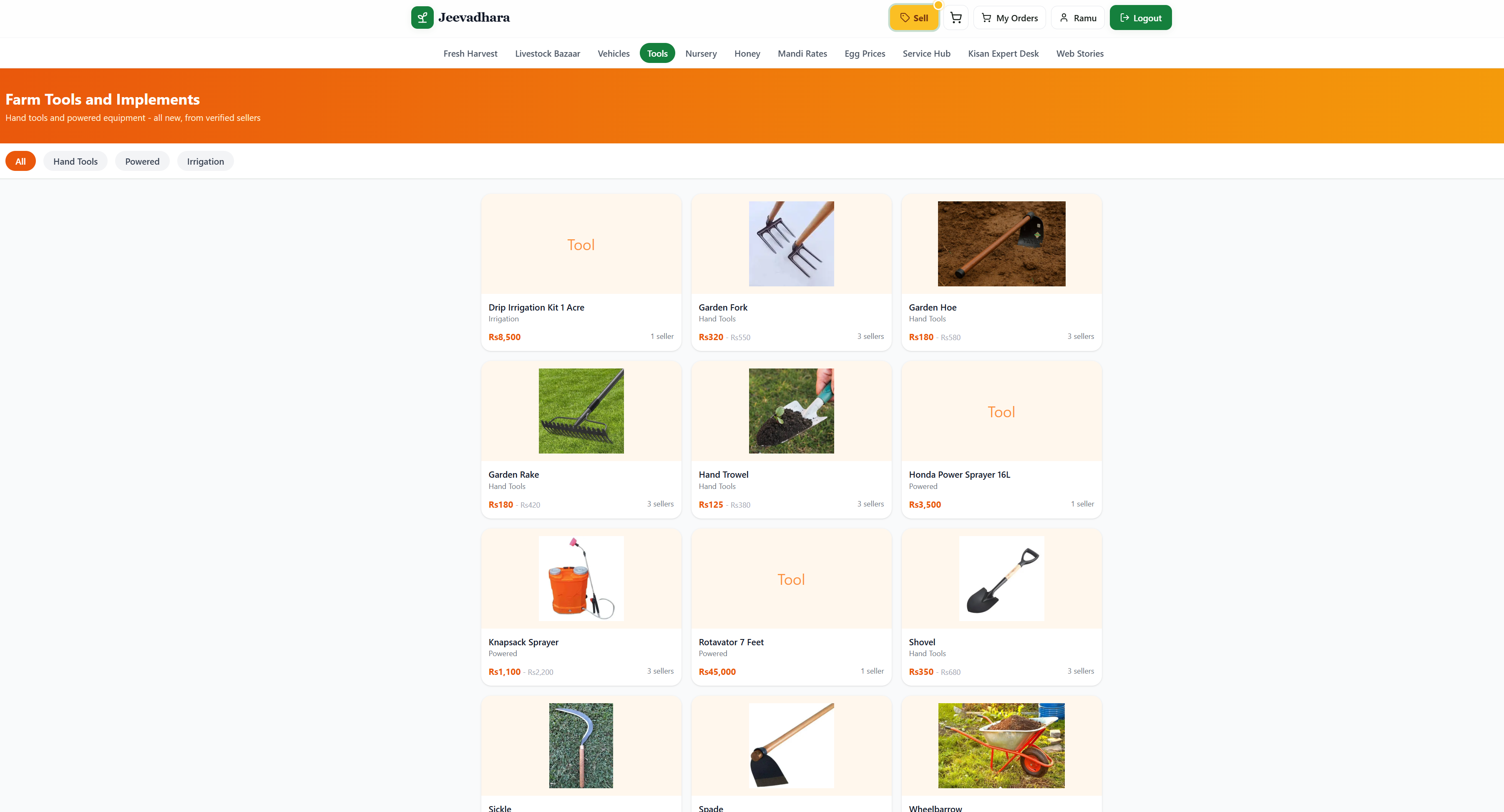
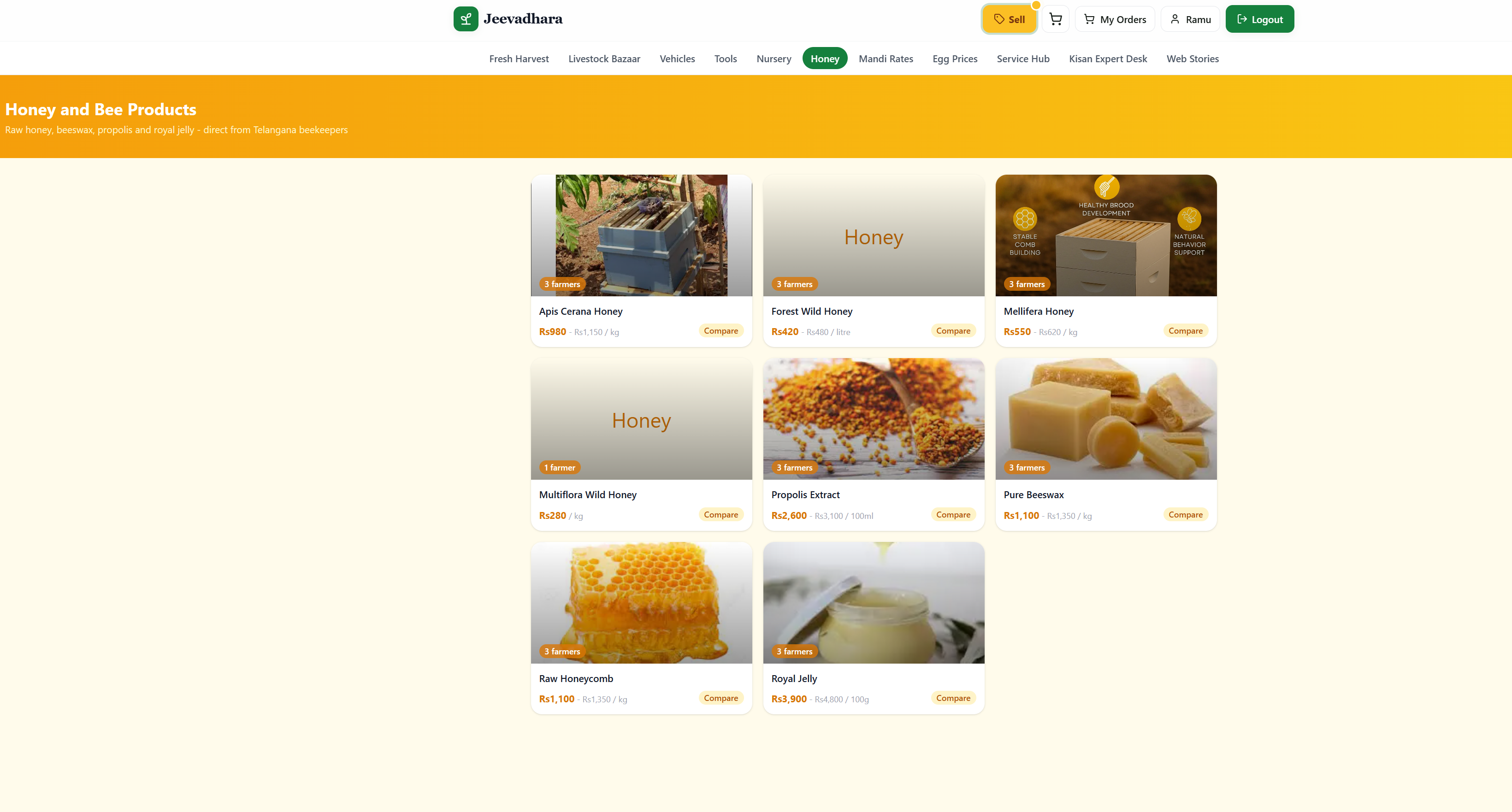
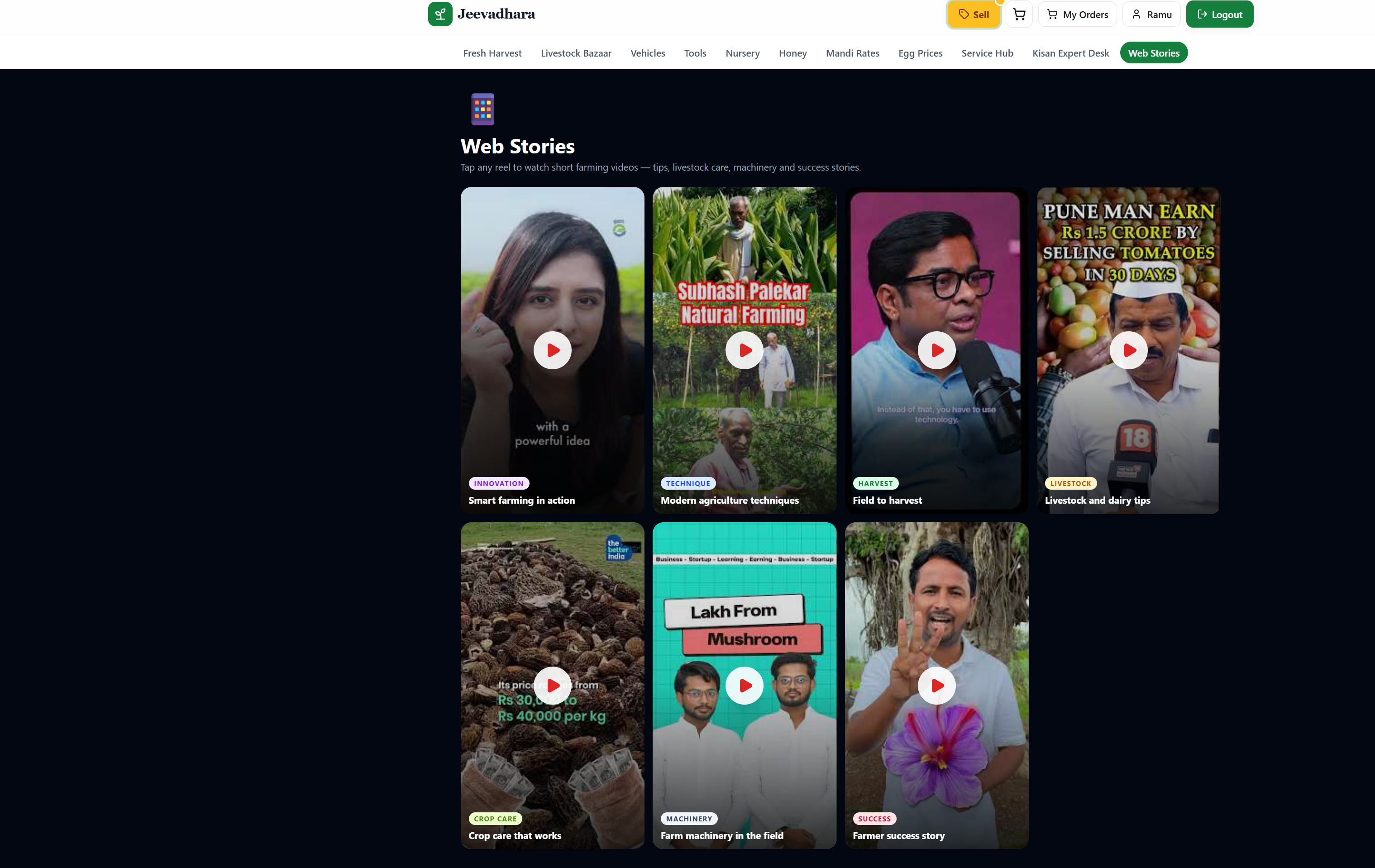
Inspiration
India has 14 crore farming families. They grow the food that feeds 1.4 billion people. Yet by the time that food reaches a consumer's kitchen, it has passed through 4 to 5 middlemen — each taking a cut. The farmer, who does all the work, keeps only ₹1 of every ₹3 the consumer pays.
This is not a new problem. It has existed for generations. What is new is that technology can now eliminate it entirely.
We built Jeevadhara — జీవధార, meaning lifestream in Telugu — because we believe the farmer deserves to be first, not last.
What We Built
Jeevadhara is a full-stack agri-tech marketplace that connects farmers, consumers, and service providers directly — with zero middlemen and zero commission.
Three roles. One platform:
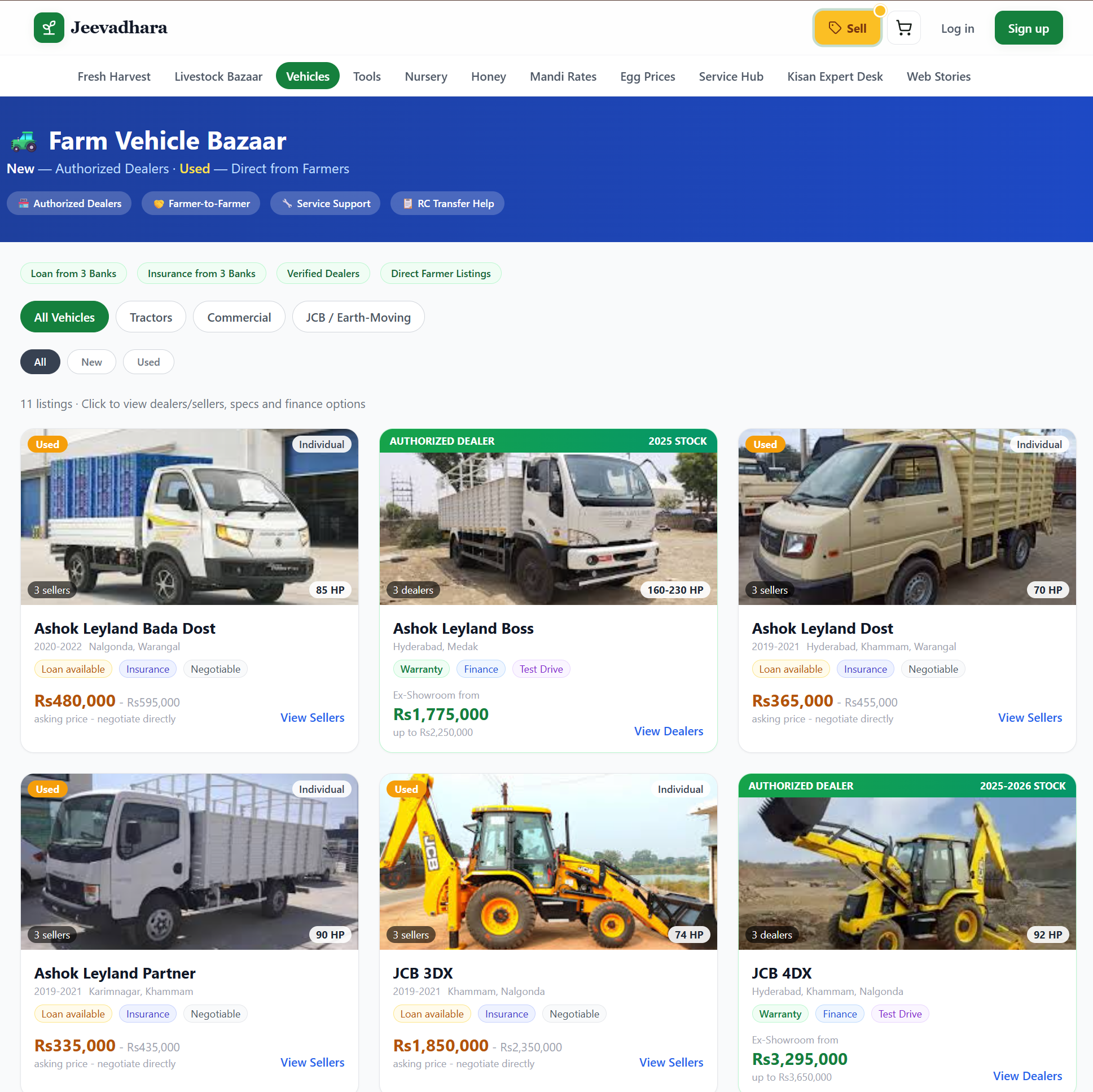
- 🌾 Farmers list produce, livestock, vehicles, and tools directly with their own price and grade
- 🛒 Consumers browse farm-fresh produce and get the farmer's direct contact — no broker, no markup
- 🔧 Service Providers (borewell drillers, drone operators, soil labs, solar installers) get a live CRM of verified farmer leads to pitch their services
What makes it different:
Roles are fluid. A farmer who grows tomatoes can also buy onions from another farmer. A consumer can book a borewell service for their land. The platform bends to the user — not the other way.
Beyond the marketplace:
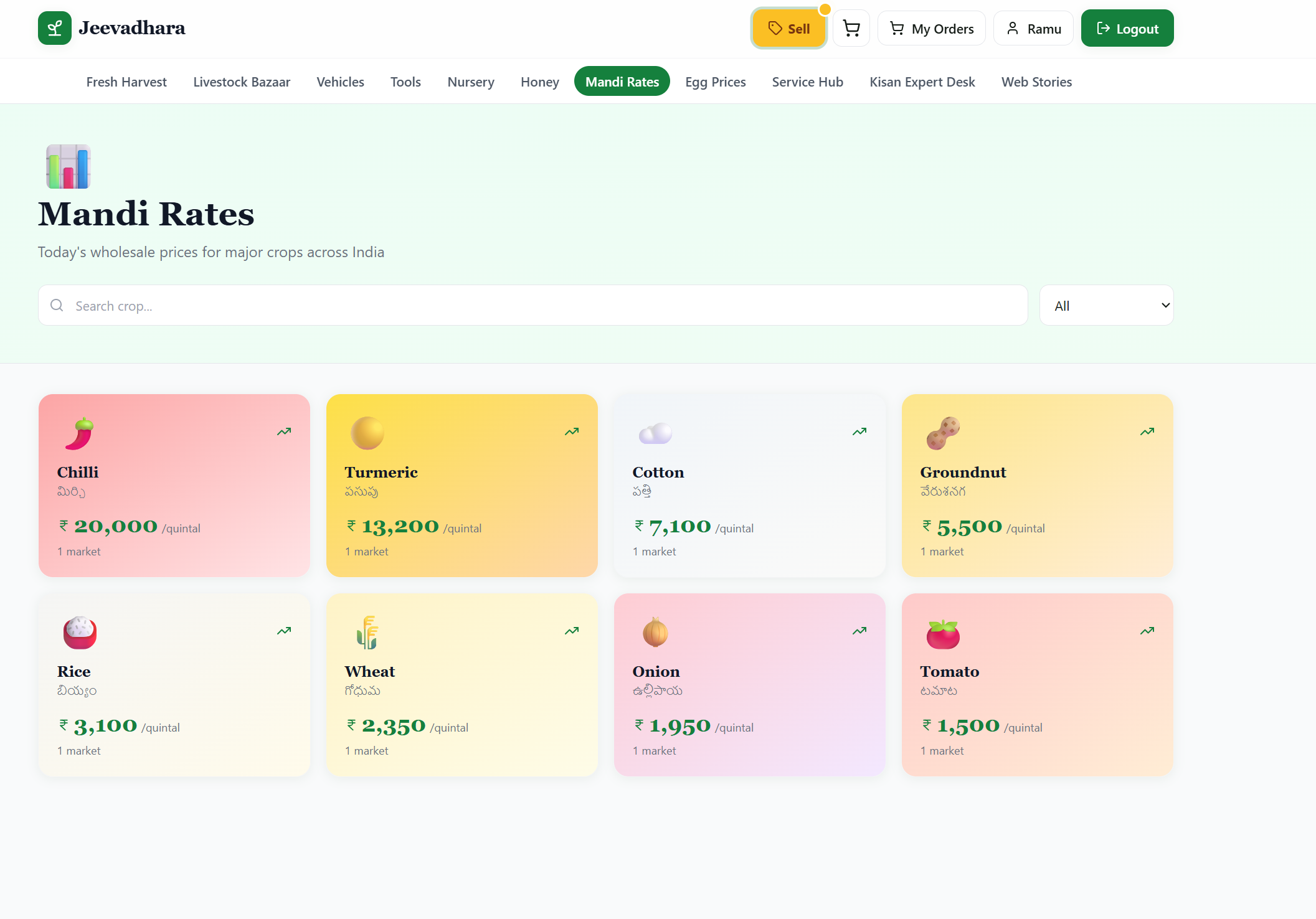
- Live mandi rates from across India
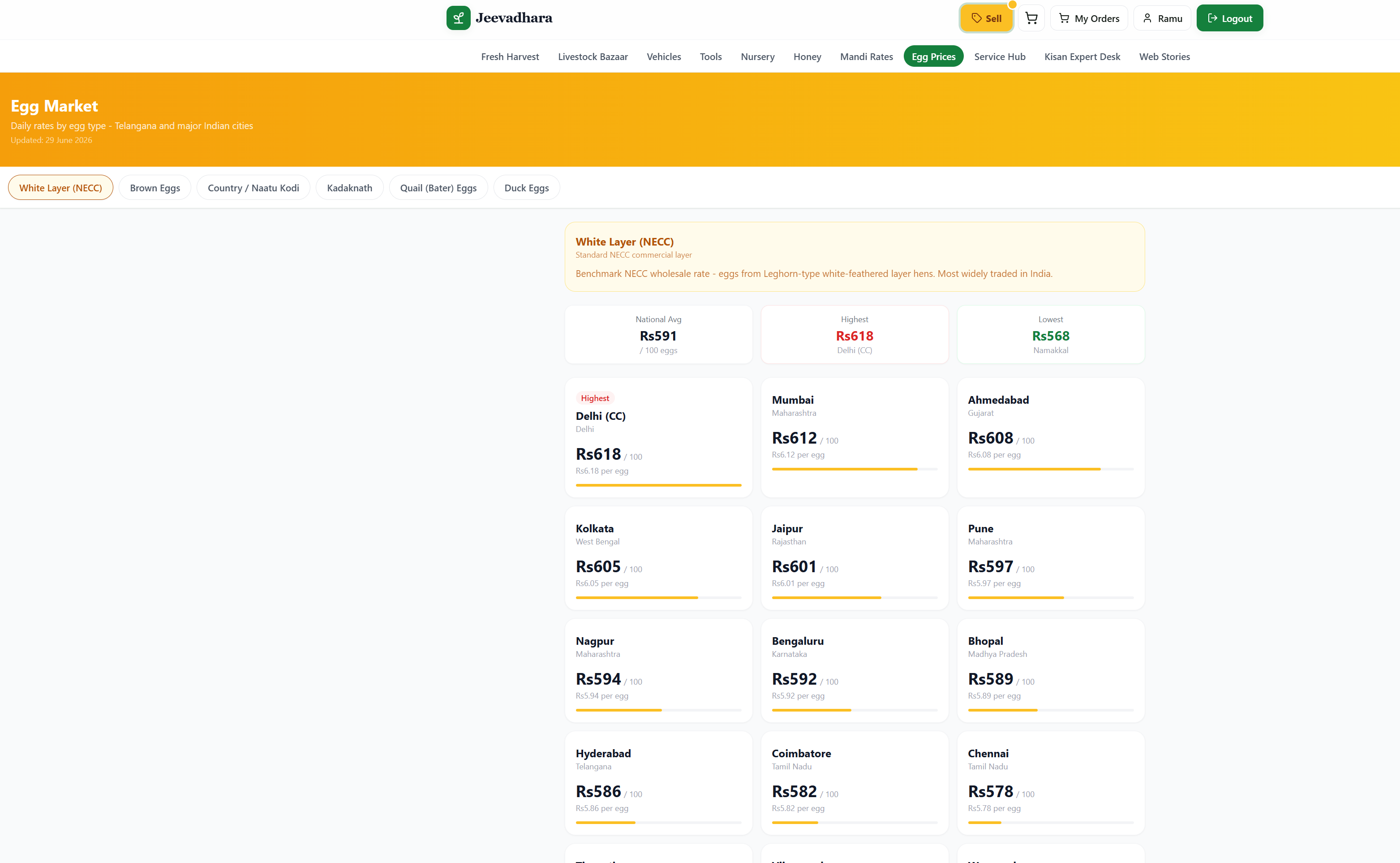
- Daily NECC egg prices by city
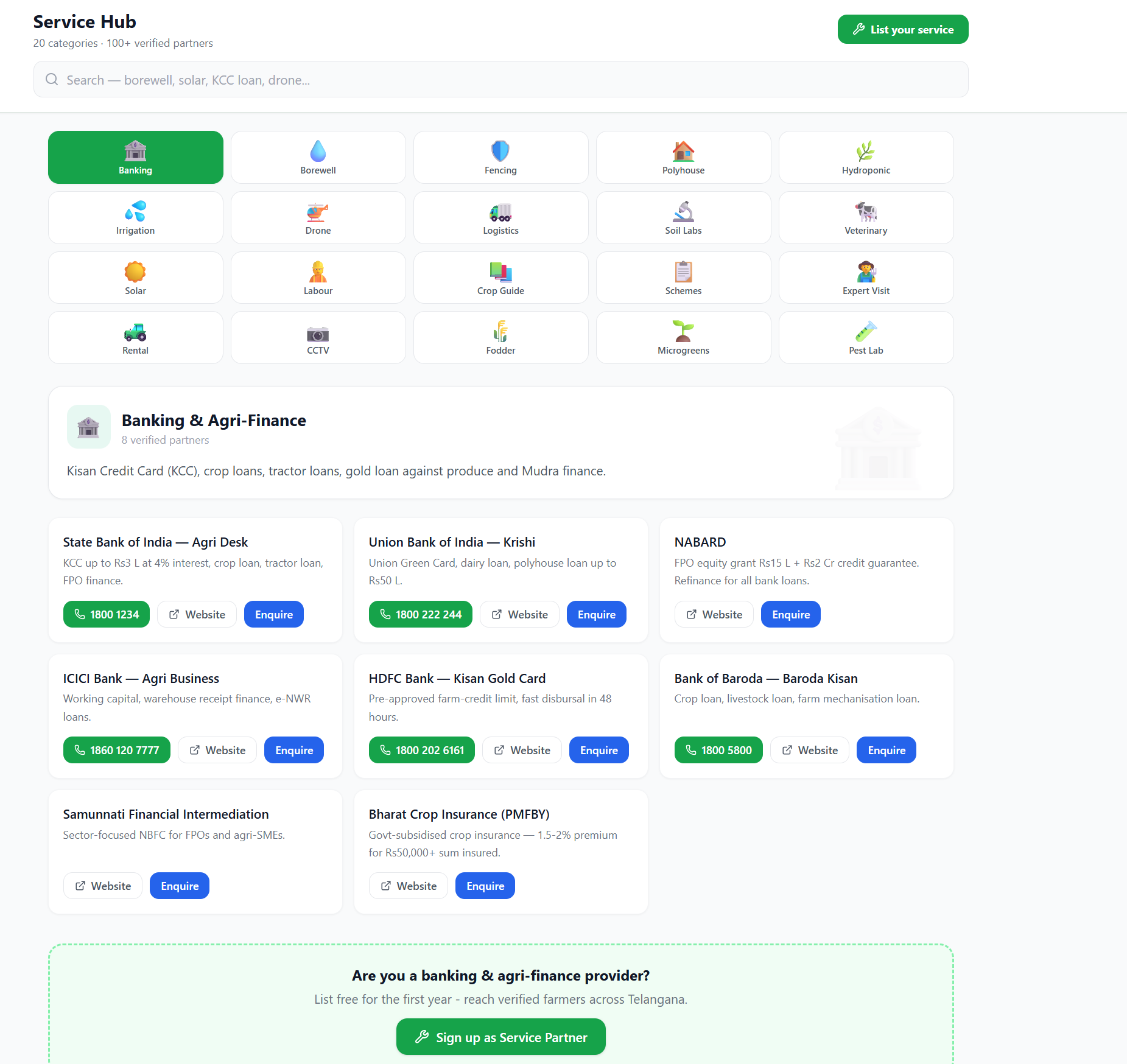
- 20-category Service Hub — borewells, drones, cold chain, solar pumps, soil labs, veterinary, govt schemes and more
- Kisan Expert Desk — agronomy advisory
How We Built It
The entire backend runs on AWS Aurora PostgreSQL 17.7 Serverless v2 — the core requirement of H0: Hack the Zero Stack.
Stack:
- Frontend: Next.js 14 App Router, Tailwind CSS
- Database: AWS Aurora PostgreSQL Serverless v2 (eu-north-1)
- Auth: IAM Token Authentication via
@aws-sdk/rds-signer— no static passwords in the codebase - Deployment: Vercel (production)
- Connection: Custom pool manager with 10-minute token refresh cycle matching Aurora's 15-minute IAM token expiry
Every farmer listing, every order, every service enquiry is persisted to Aurora in real time. This is not mock data — it is a live production system.
Challenges
1. Aurora IAM Authentication
AWS Aurora Serverless v2 with IAM-only auth is production-grade
but operationally non-trivial. Vercel internally reserves
AWS_ACCESS_KEY_ID and AWS_SECRET_ACCESS_KEY, silently
overriding them. We solved this by using custom environment
variable names (JEEVADHARA_AWS_KEY_ID, JEEVADHARA_AWS_SECRET)
to bypass Vercel's internal reservation.
2. PostgreSQL 15+ Schema Permissions
PostgreSQL 15 revoked default CREATE privileges on the public
schema. Our IAM user jeevadhara_iam could connect but not create
tables. We resolved this via an IAM-authenticated CloudShell
session running explicit GRANT commands as the master user.
3. Fluid Role Architecture Most agri platforms hard-gate roles — farmers can only sell, consumers can only buy. We removed all role gates at the API layer (not just the UI), allowing any authenticated user to place orders, request services, or list produce regardless of their registered role.
4. Aurora Cold Start + Connection Pooling Serverless v2 has variable latency on cold connections. We implemented a pool manager that recycles the connection pool every 10 minutes — safely within Aurora's 15-minute IAM token expiry — eliminating timeout errors in production.
What We Learned
Aurora Serverless v2 with IAM authentication is the right architecture for an India-scale agri platform — it costs nothing when idle and handles production load instantly when needed. The complexity is in the setup, not the operation.
The biggest product insight: removing role restrictions unlocks the real network effect. When a farmer can also buy, and a consumer can also request farm services, the platform becomes indispensable to everyone — not just one type of user.
Built With
- amazon-web-services
- aurora
- authentication
- css
- for
- iam
- javascript
- next.js
- node.js
- postgresql
- rds
- react
- sdk
- tailwind
- typescript
- vercel

Log in or sign up for Devpost to join the conversation.