-
-
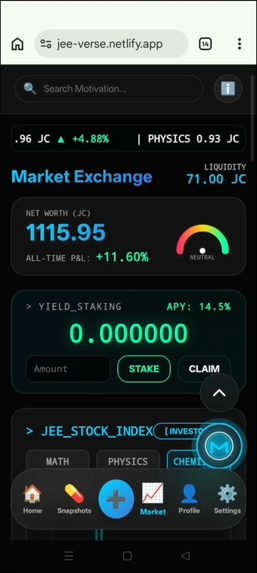
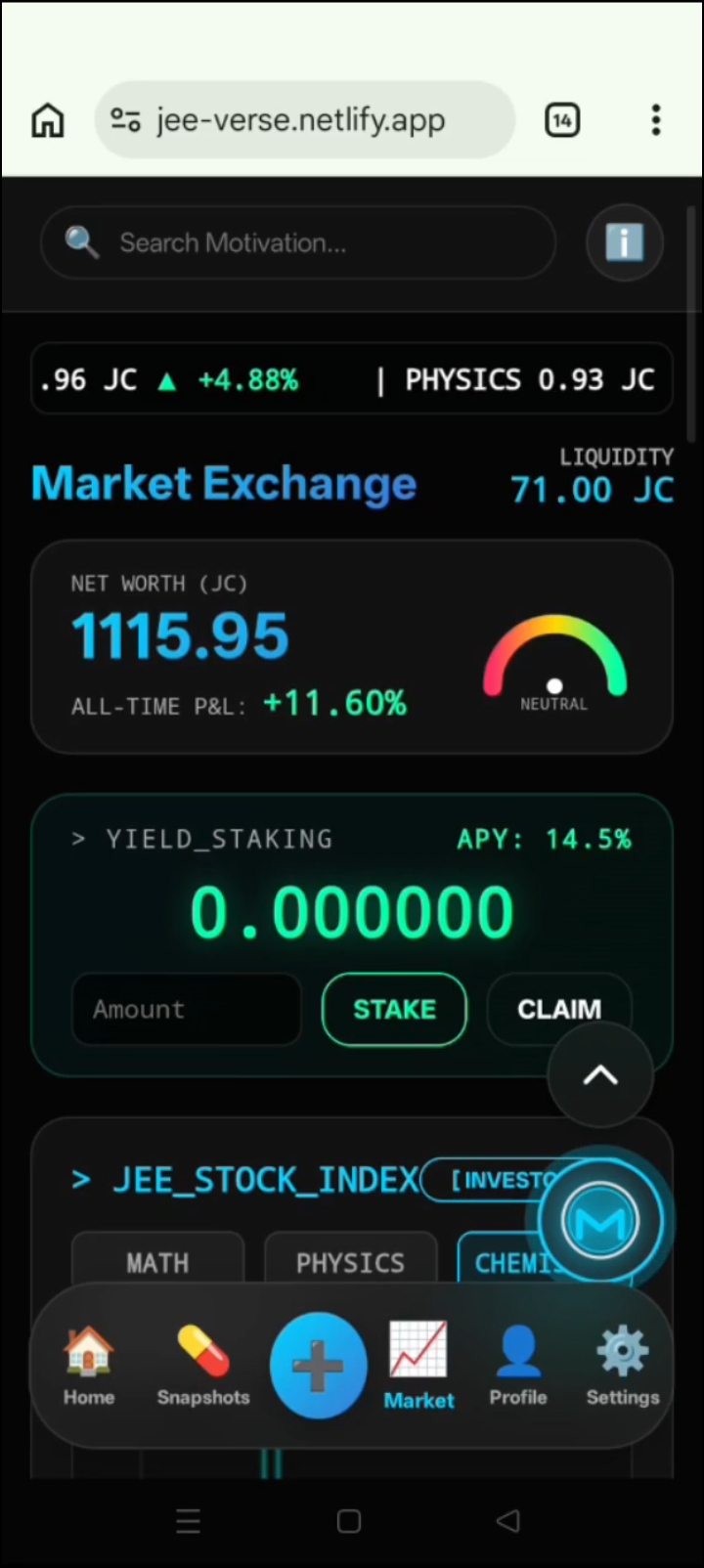
Live Market Dashboard, Net Worth Tracker, and Yield Staking.
-
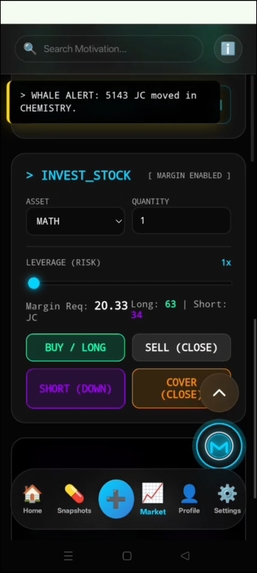
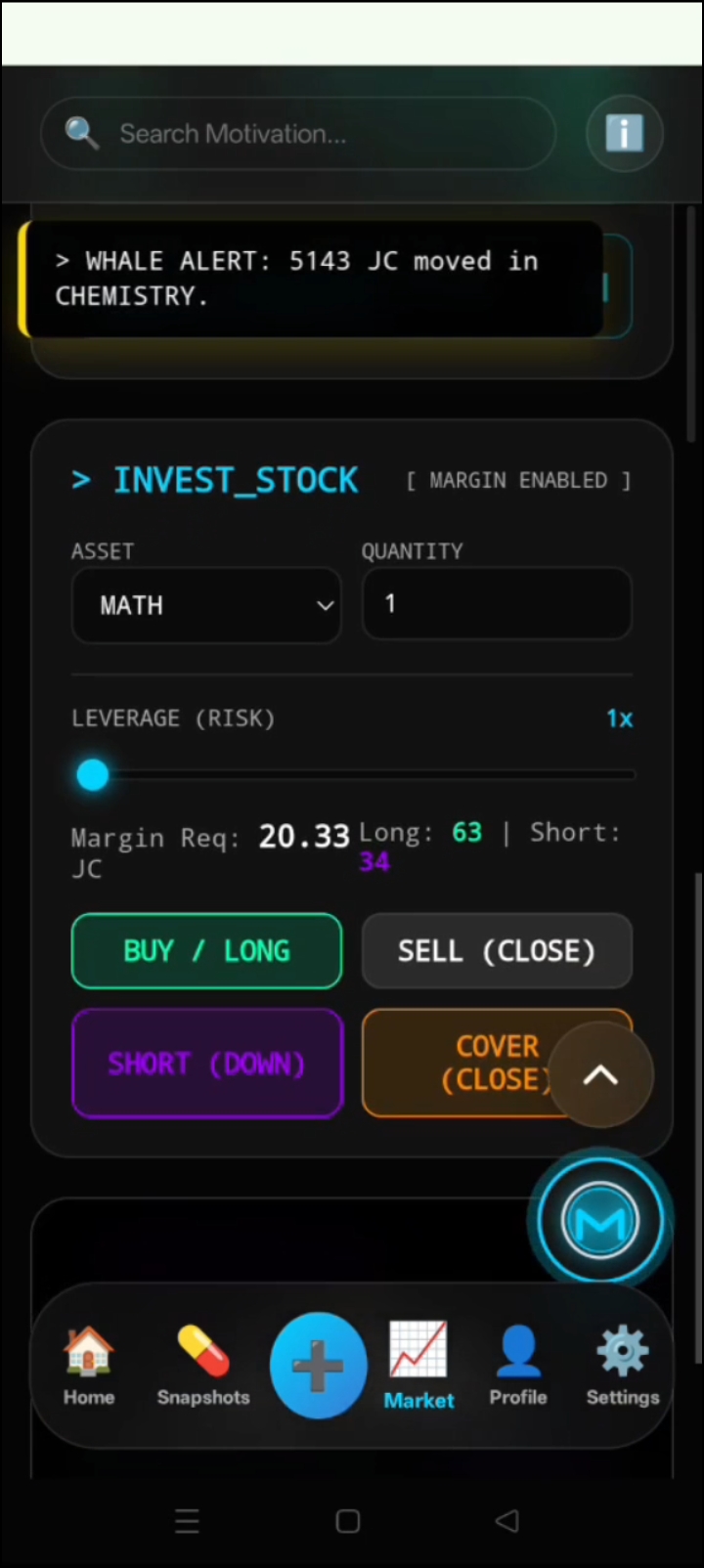
Advanced Trading UI featuring Margin, Leverage, and Whale Alerts.
-
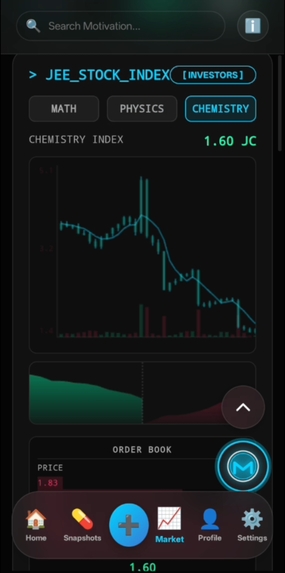
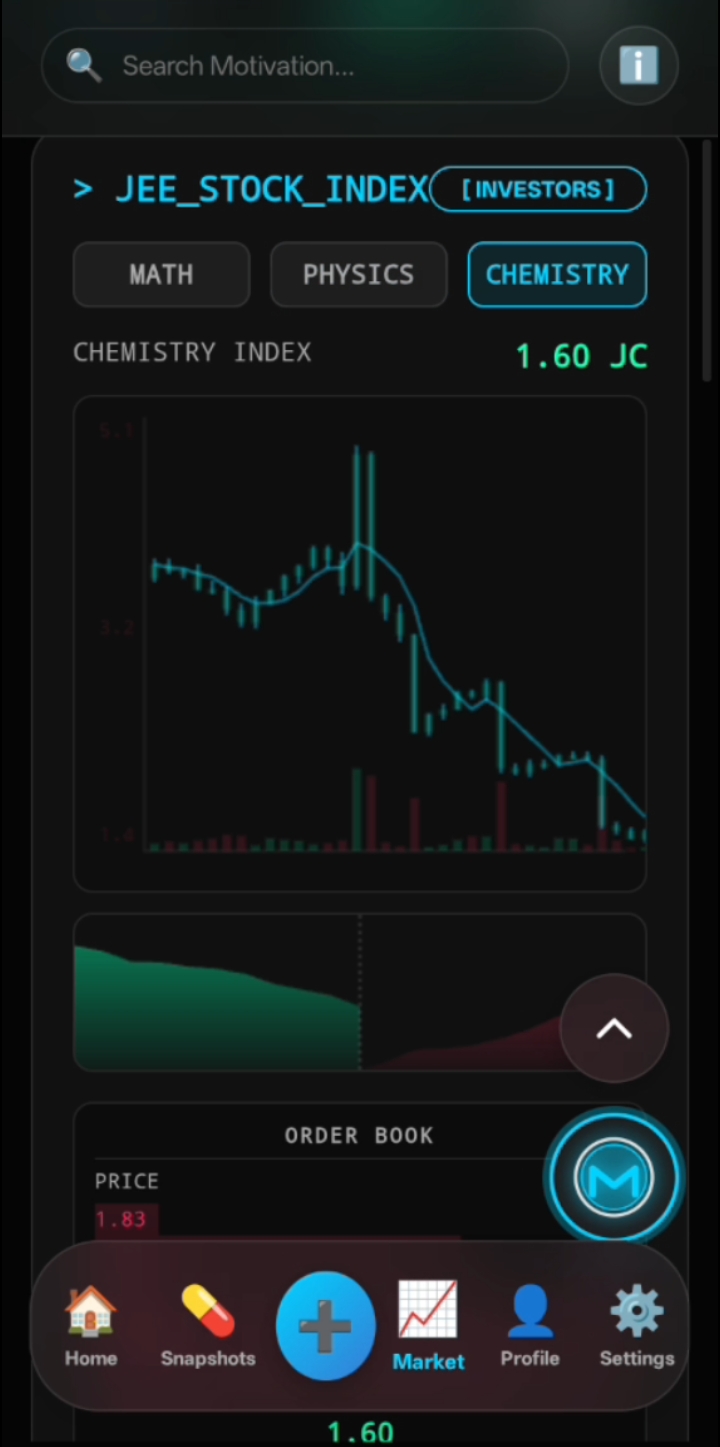
Real-Time Chemistry Index with Candlestick Charts and Order Book.
-
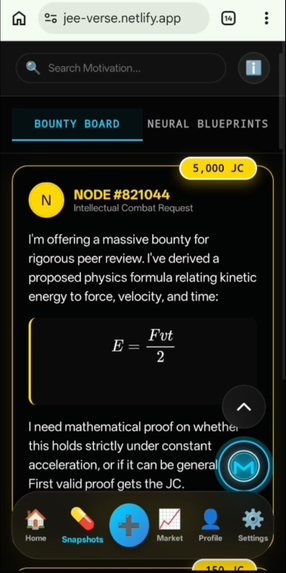
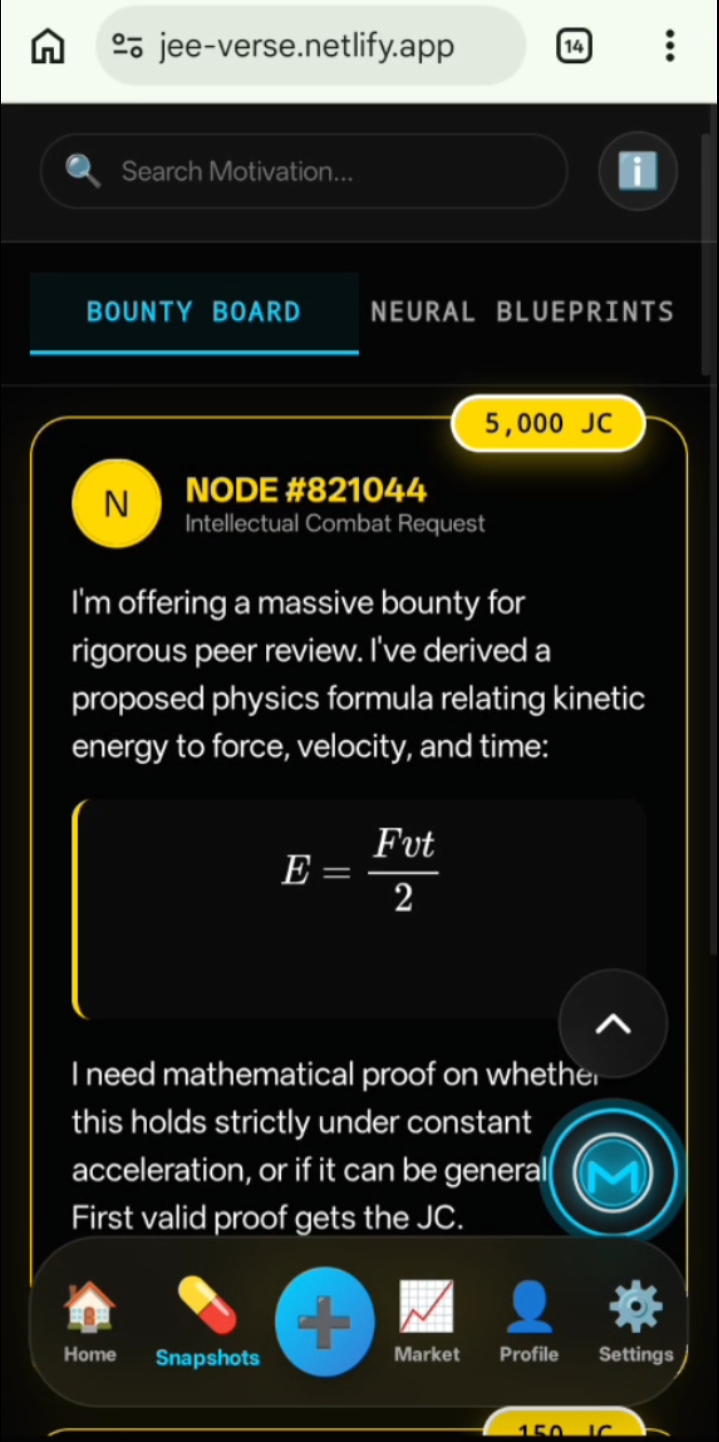
Bounty Board: Gamified Intellectual Combat for Peer-Reviewed Physics Challenges.
Inspiration
I am an 18-year-old solo developer from India, currently in the final 19-day sprint of preparing for my engineering entrance exams (WBJEE/JEE). The preparation journey is incredibly isolating. You sit in a room for 10 hours a day, staring at books, fighting burnout. I realized that if I didn't find a way to make the grind feel engaging, my brain was going to crash. I wanted to turn the solitary act of studying into a multiplayer, high-stakes ecosystem.
What it does
JEE-Verse is a## What it does live, 3D gamified study ecosystem and virtual market. Instead of just logging study hours, students enter a futuristic "Liquid Glass" UI environment. As they complete study blocks (like Math or Physics), they engage with a live virtual currency exchange. It turns academic discipline into a tangible, gamified asset. The platform also features an integrated AI tutor named Magnesium AI to assist with complex problem-solving without breaking the immersion of the ecosystem.
How I built it
This is where the project deviates from a traditional build. I wrote zero manual syntax. I operated entirely as an "AI Systems Architect," utilizing Google Gemini to orchestrate the entire codebase from scratch. My stack is complex: a 60fps 3D front-end utilizing Three.js and Tailwind CSS, wired directly to a Firebase backend handling real-time WebSocket syncs for the live market volatility.
Instead of typing out standard boilerplate, I used advanced prompt-chaining with Gemini. I forced the AI to act as my lead engineer, passing it strict architectural logic, handling component state management through natural language, and deploying the iterations (up to v2.15.0) via Vercel.
Challenges I ran into
The biggest challenge of "Vibe Coding" an entire 3D ecosystem is state degradation. When asking an AI to update a complex Three.js rendering loop or a Firebase WebSocket listener, earlier features can easily vanish. I had to develop a strict system-logging and prompting framework to force Gemini to maintain the exact feature parity of stable versions (like v2.2.3) while injecting new complex components like the virtual currency exchange. Handling live global market syncs without dropping WebSocket connections was a massive architectural hurdle that Gemini helped me debug step-by-step.
Accomplishments that I'm proud of
Yesterday, I launched JEE-Verse to a global audience. The architecture survived a 24-hour global stress test on Product Hunt, closing out the day in the Top 50 (#48 globally). The Firebase backend handled the live traffic flawlessly, and the 3D UI maintained a smooth framerate. Building and scaling this infrastructure as a solo 18-year-old with no formal engineering team is my biggest win.
What I learned
I learned that the future of software development isn't just about memorizing syntax; it is about high-level system architecture and logic framing. Google Gemini proved that a solo developer with a strong understanding of system design can build venture-scale infrastructure entirely through prompt engineering and architectural direction.
What's next for JEE-Verse
Right now, my immediate focus is "eating my own dog food." I am onboarding my peers from local Telegram and WhatsApp study groups to use the ecosystem simultaneously as we push through these final weeks of exam prep. The next technical milestone is expanding Magnesium AI's capabilities to dynamically adjust the live market volatility based on the collective real-time study habits of the entire user base.
Built With
- firebase
- gemini
- javascript
- tailwind-css
- three.js


Log in or sign up for Devpost to join the conversation.