-
-
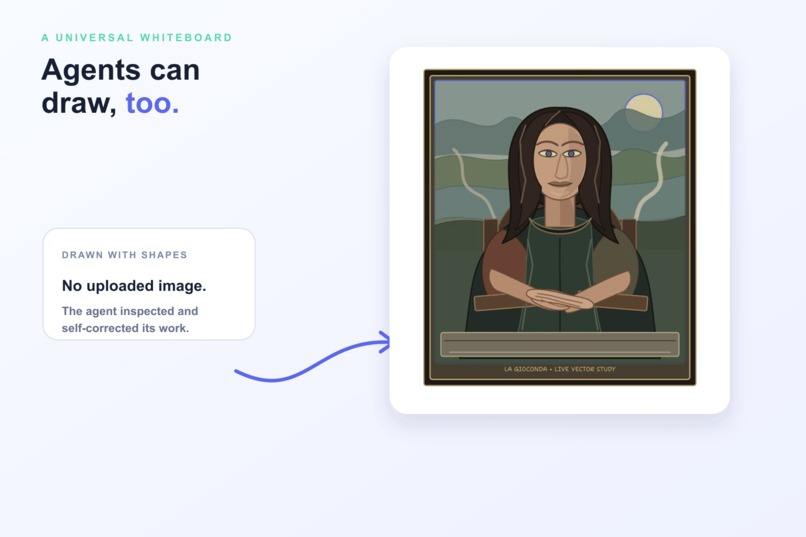
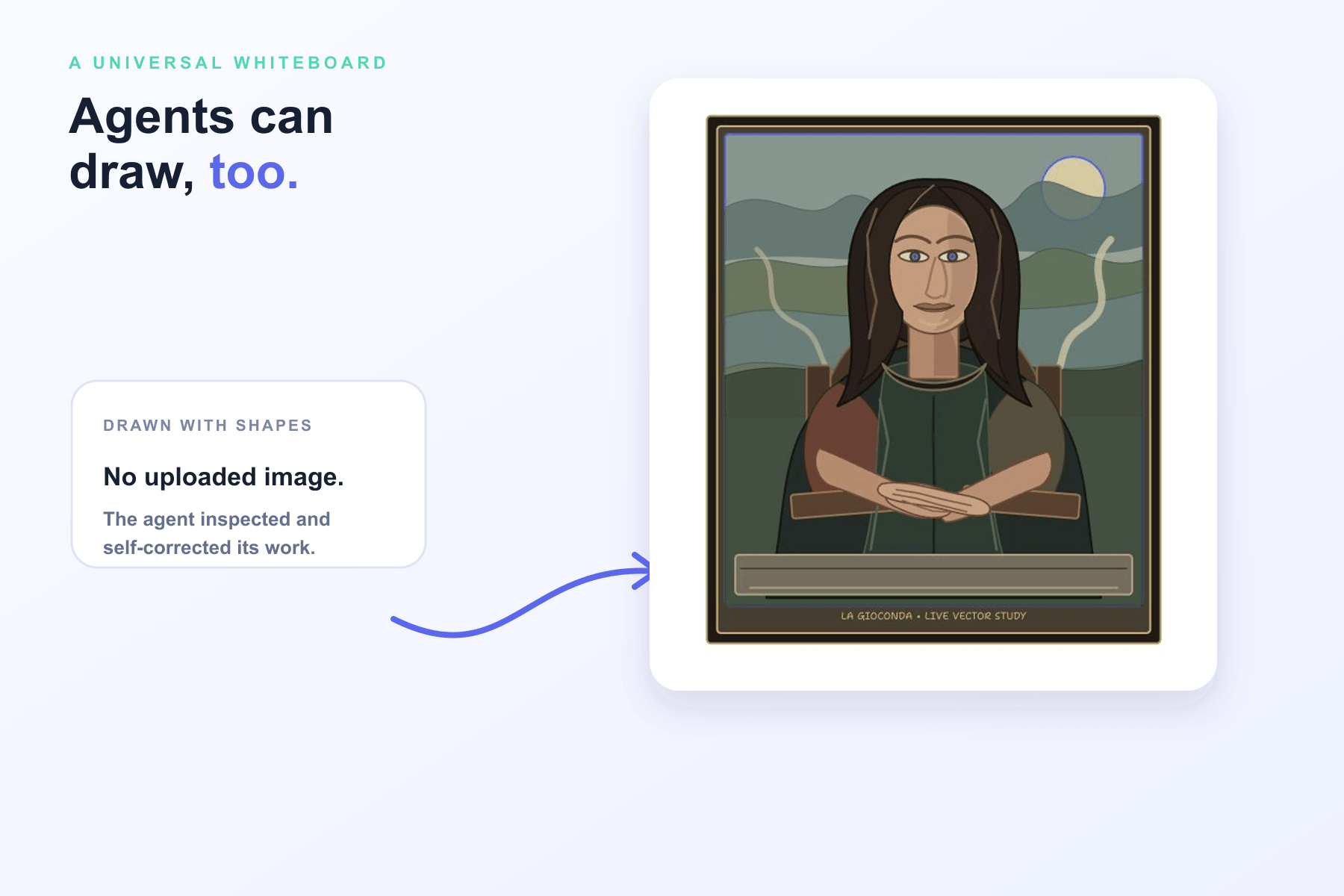
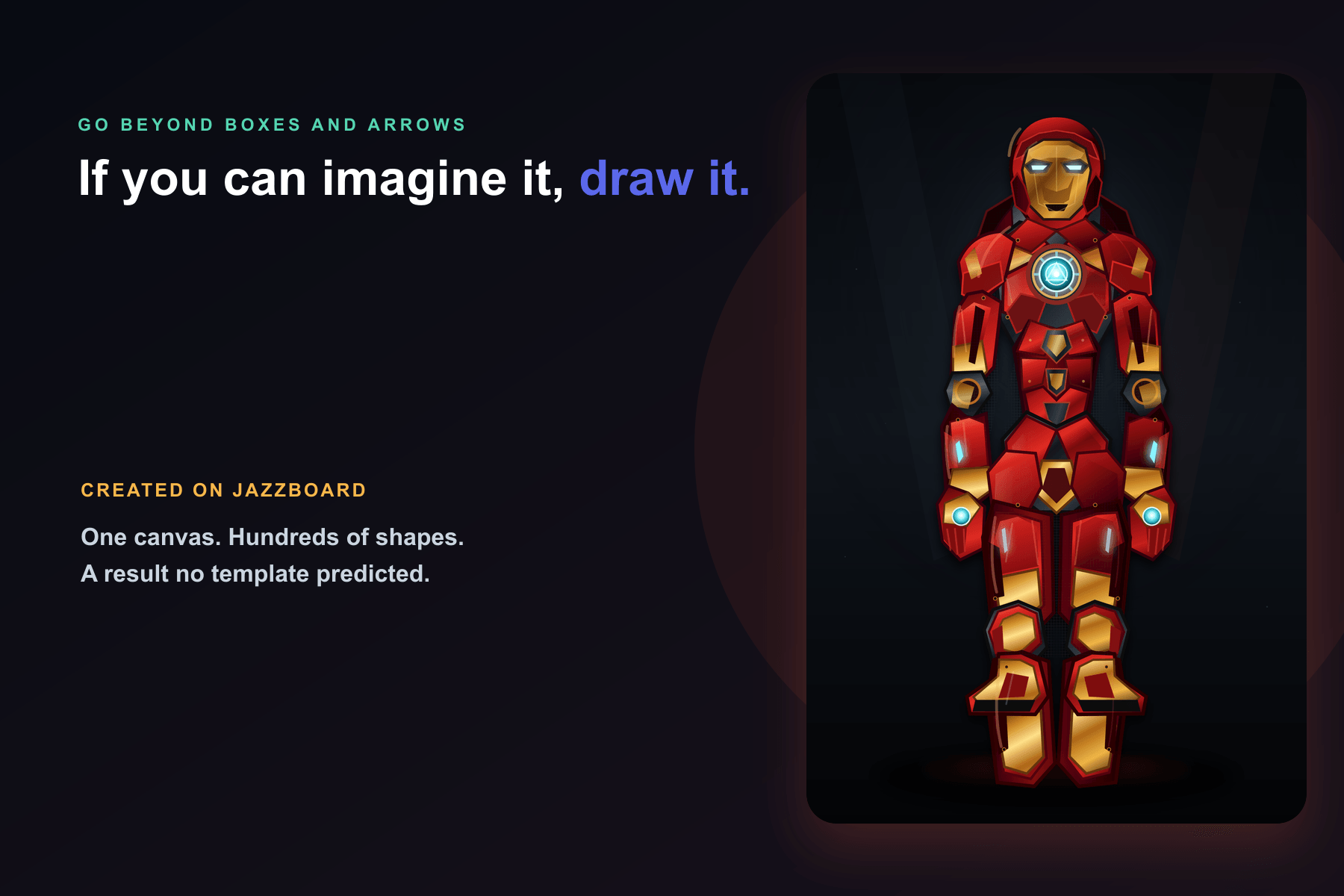
Jazzboard gives agents the visual feedback and canvas tools needed to create, inspect, and improve original artwork.
-
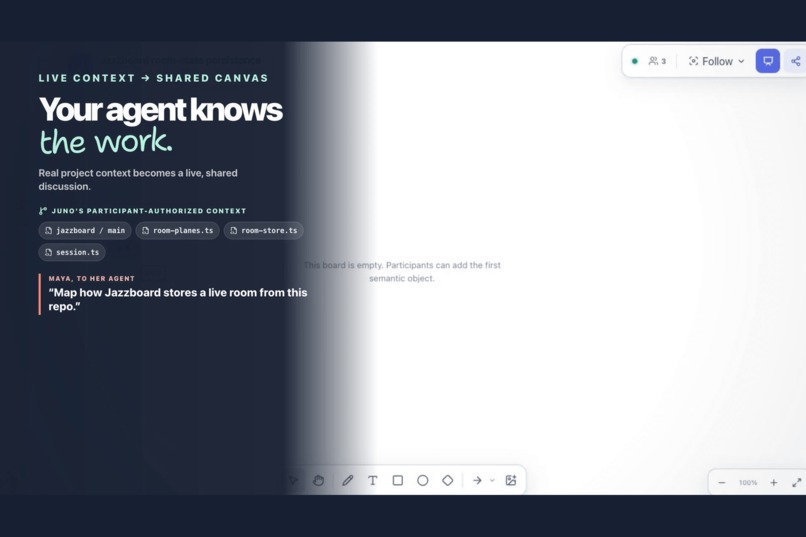
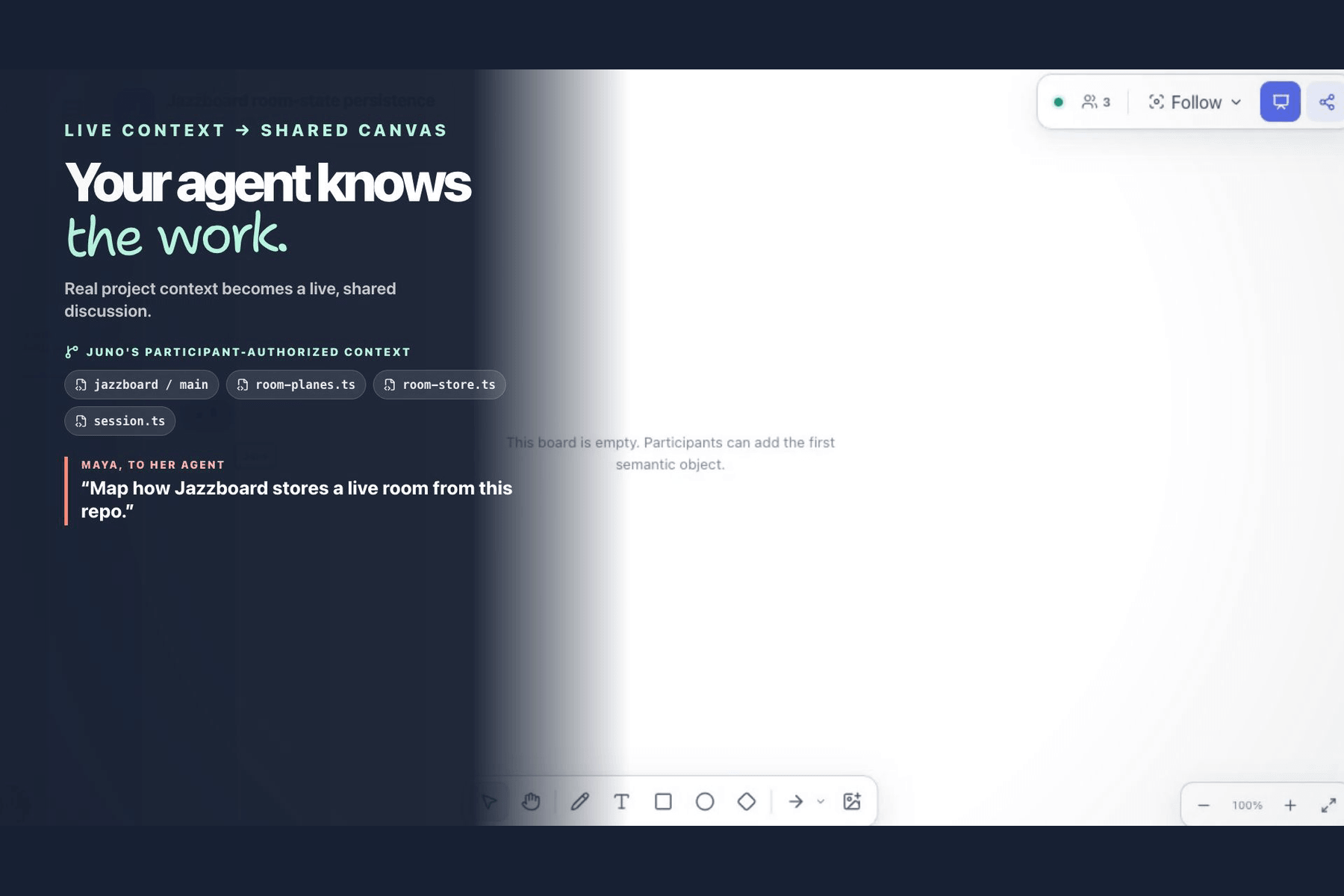
Bring your agent’s real project context into a visual space where the whole team can understand and discuss it.
-
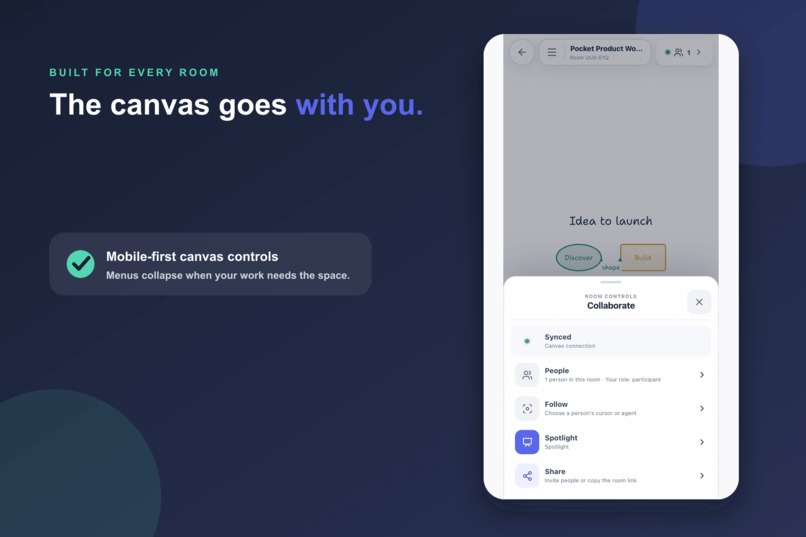
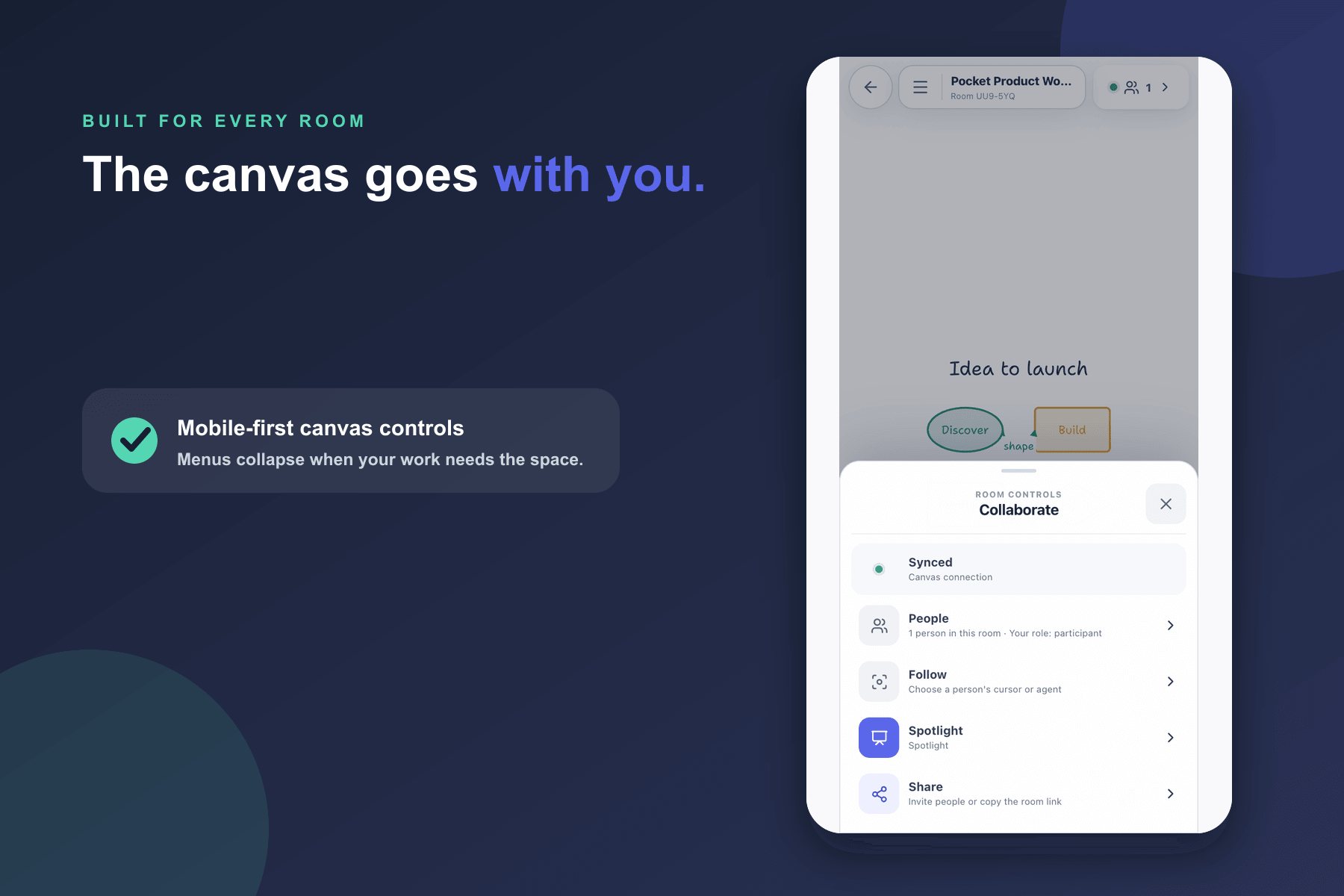
Join the room from anywhere with mobile controls designed for navigating and collaborating on an infinite canvas.
-
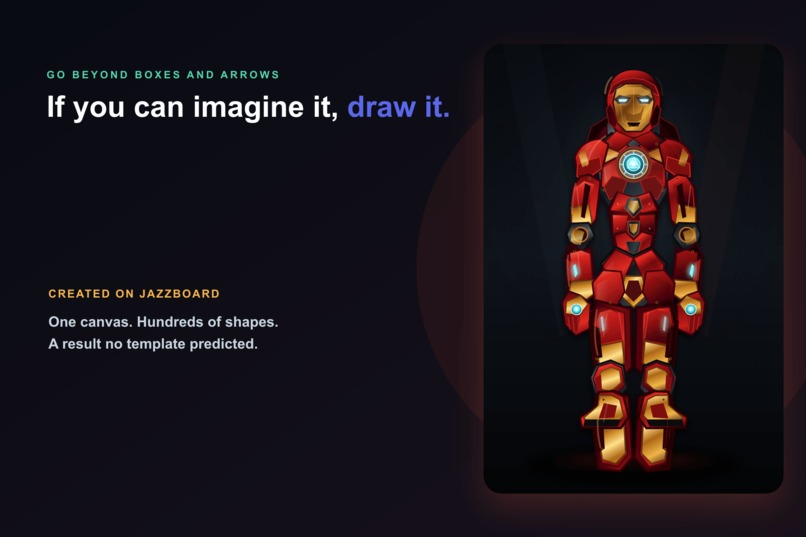
From architecture diagrams to detailed illustrations, Jazzboard is a universal creative surface for people and agents.
-
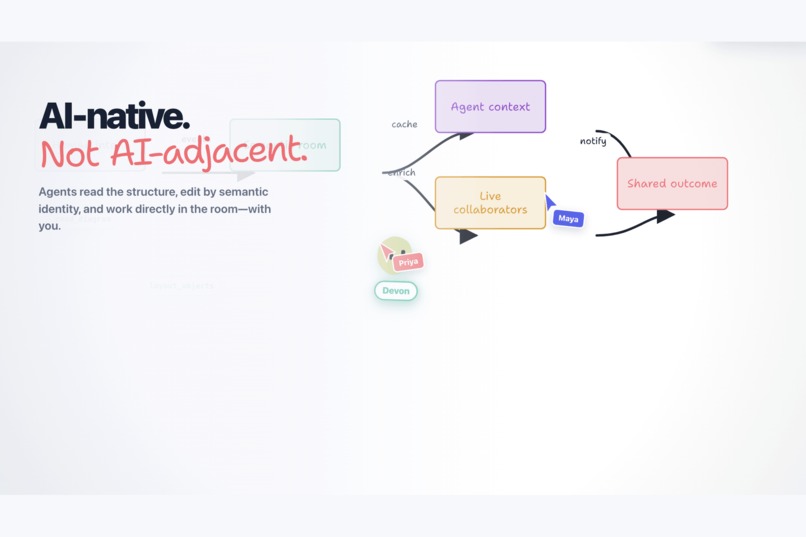
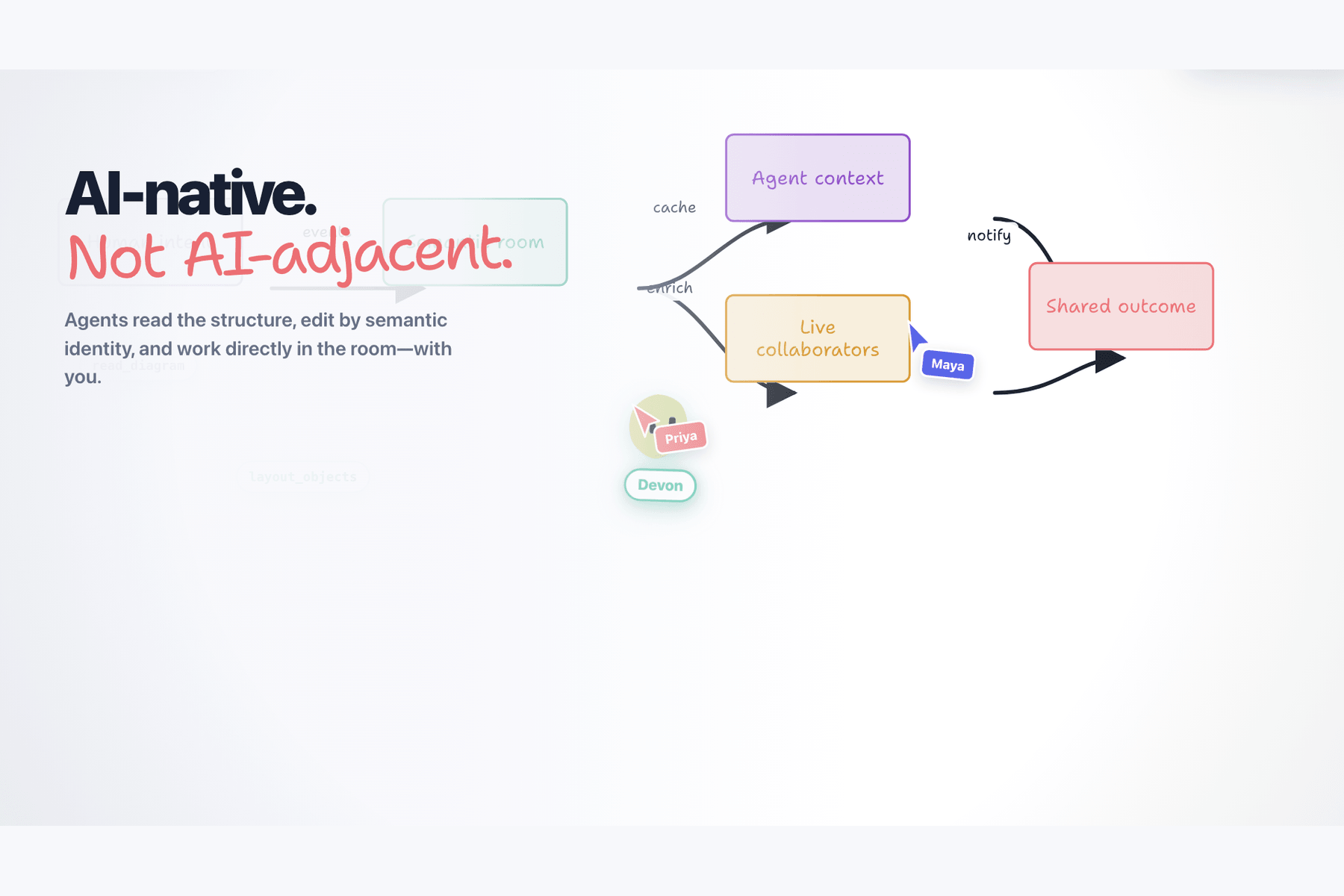
Agents read semantic structure, collaborate with people, and edit the board directly through WebMCP.
-
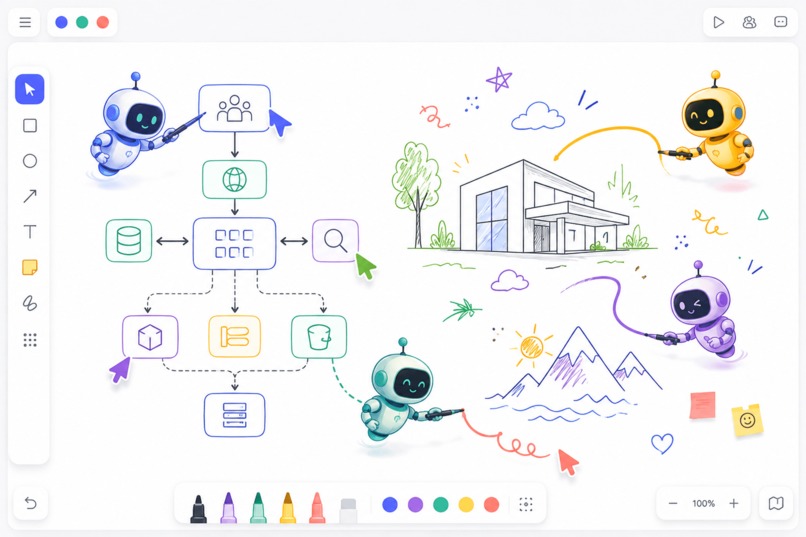
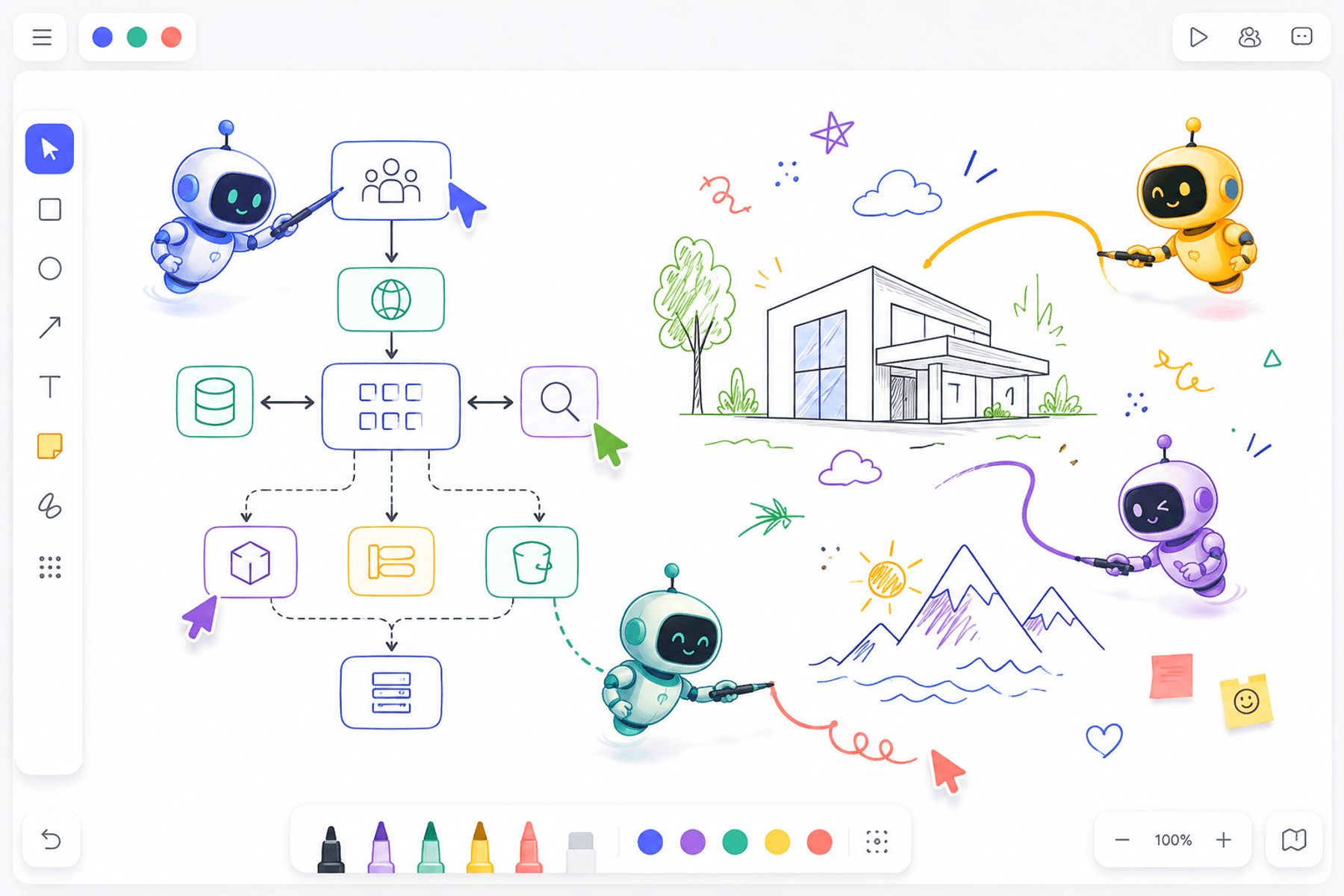
Humans and AI agents creating, diagramming, and exploring ideas together on one live canvas.
Inspiration
My remote team and I miss the energy of being in the same room during a feature meeting, gathered around one whiteboard and building an idea together. Video calls and shared documents never quite recreated that experience. We built Jazzboard to bring it back, while adding a new kind of teammate to the room: AI agents.
What it does
Jazzboard is a multiplayer whiteboard where people and AI agents create together live. You can ask Codex to map your real codebase, design an architecture, explore an idea, or draw something fun. The agent works directly on the shared canvas while everyone watches, collaborates, and edits alongside it.
How we built it
Jazzboard uses a first-party semantic canvas, real-time multiplayer synchronization, Redis, Vercel, and browser-native WebMCP tools. Every object has meaningful identity, geometry, relationships, revisions, and attribution.
Agents can create entire diagrams in efficient transactions, visually trace their work onto the board, inspect the result, detect readability problems, and safely correct them. We also built a research harness that measures speed, accuracy, and visual quality using isolated agent runs and blinded reviews.
Challenges we ran into
The hardest challenge was making AI work feel both fast and alive. Agents need to create complex artifacts efficiently, but people should still be able to watch that work unfold naturally.
We also had to solve real-time conflicts between humans and agents, prevent delayed updates from snapping objects backward, preserve connector relationships, and give agents enough visual context to recognize cramped or unreadable results without making creative decisions for them.
Accomplishments that we're proud of
We built a canvas that agents can truly understand and operate, not just click through with browser automation.
Agents can build editable diagrams from real project context, draw original artwork, inspect their own work, identify visual problems, and self-correct. Humans can collaborate on the same board in real time while animated, uniquely generated bots visibly move around and construct their work.
We are especially proud that Jazzboard preserves agent autonomy. It provides evidence, context, and precise tools, while leaving composition and creative decisions to the agent.
What we learned
An agent is only as capable as the environment and context we give it. A powerful model can still create a poor diagram if it cannot understand object relationships, spatial conflicts, or what its finished work actually looks like.
We learned that the best agent interfaces do more than expose CRUD operations. They provide semantic state, actionable errors, visual inspection, revision safety, and clear recovery paths. Good harness engineering can improve both quality and speed without limiting what the agent is allowed to create.
What's next for Jazzboard
We want Jazzboard to become the best canvas in the world for agent-created architecture diagrams and visual art.
Next, we are expanding our research benchmarks, improving creation speed, supporting increasingly complex boards, and giving agents even stronger tools for visual reasoning and self-correction. Our larger vision is a universal creative space where people and AI can think visually together, no matter where they are.
Built With
- html
- next.js
- openai-codex
- playwright
- react
- typescript
- upstash-redis
- vercel
- vercel-blob
- vitest
- webmcp
- websockets
- zod


Log in or sign up for Devpost to join the conversation.