-
-
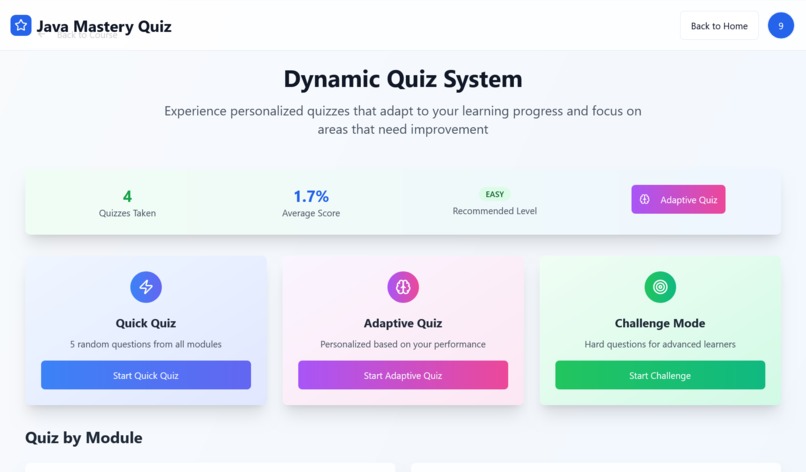
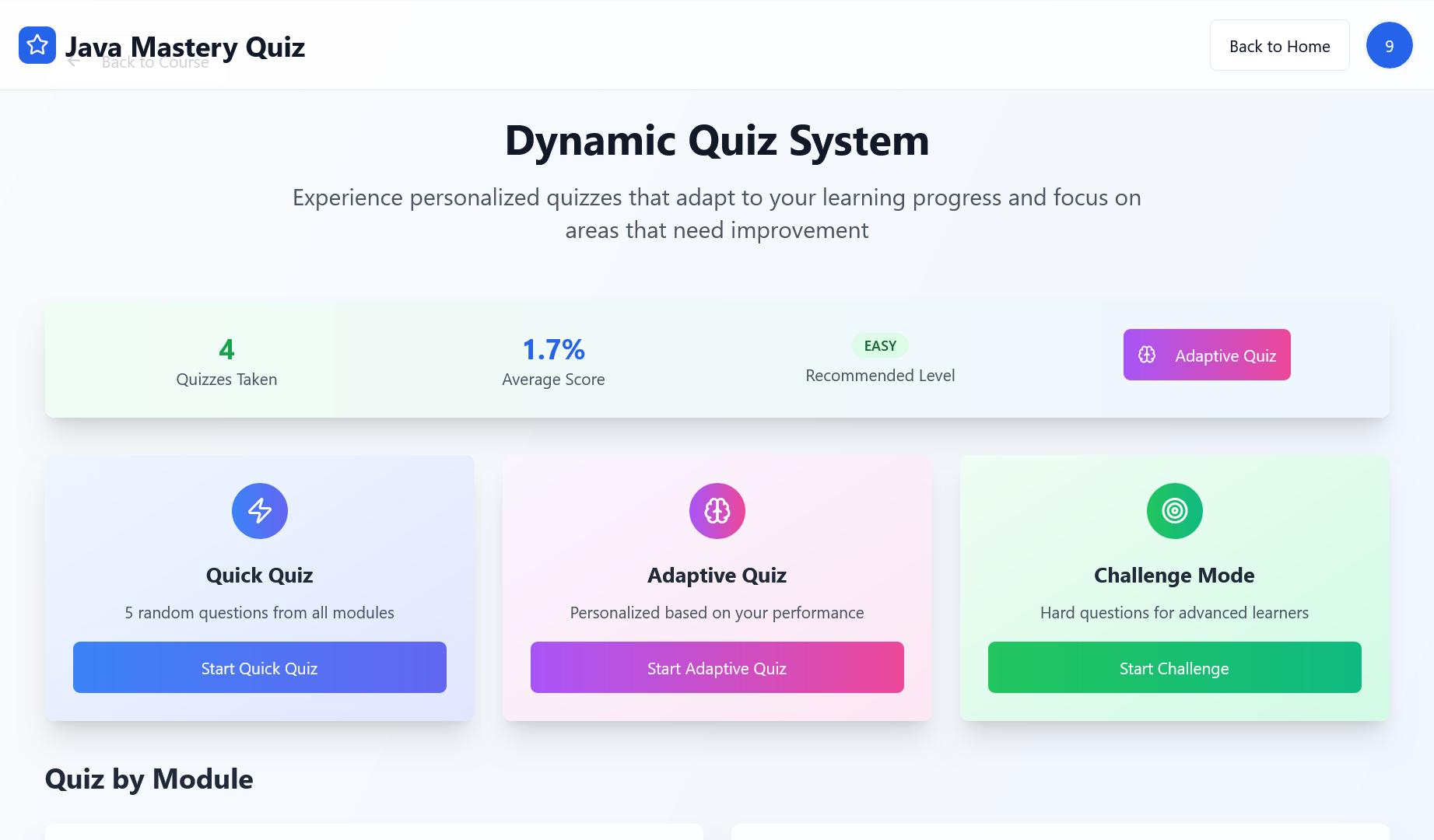
Dynamic quizzes system
-
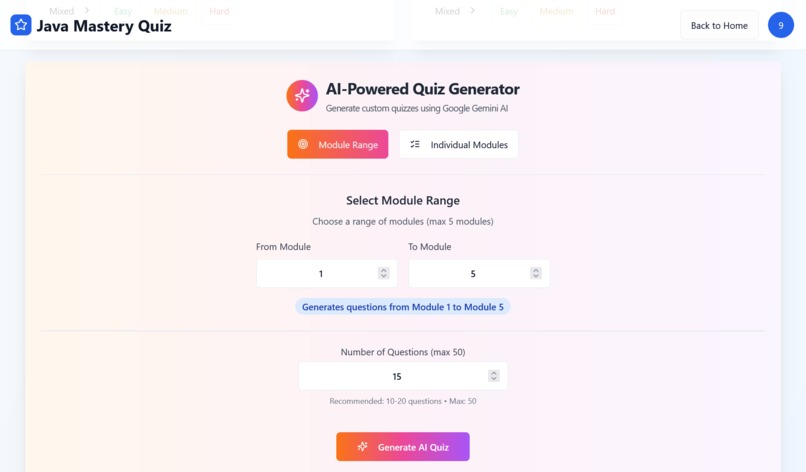
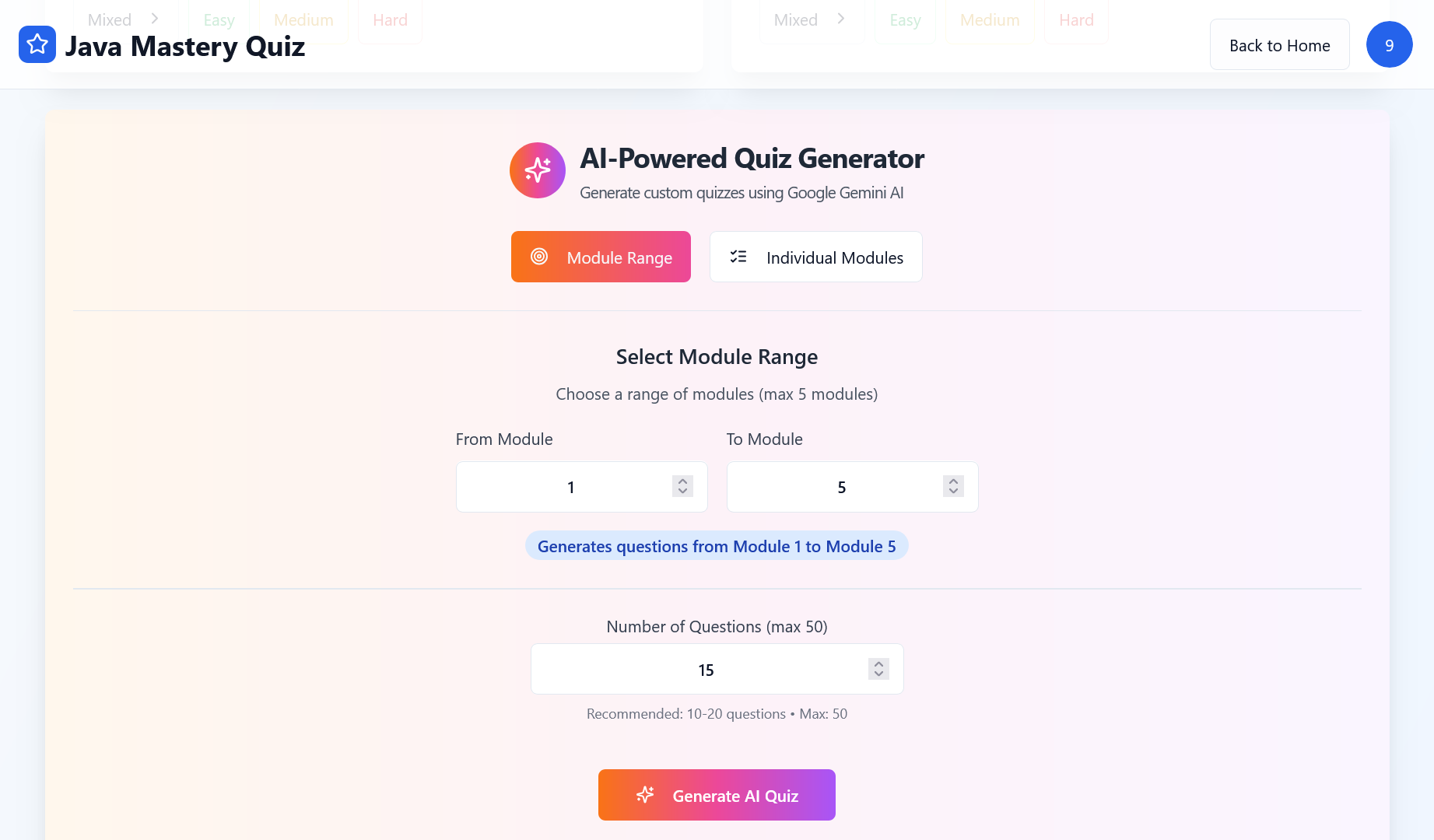
Ai generating quizzes system for better skills test
-
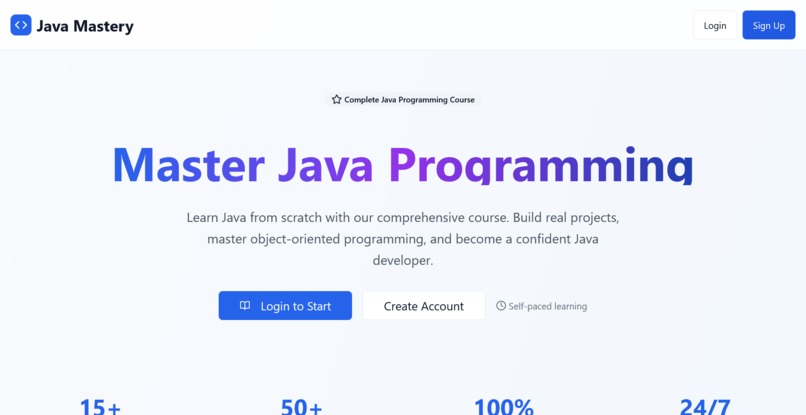
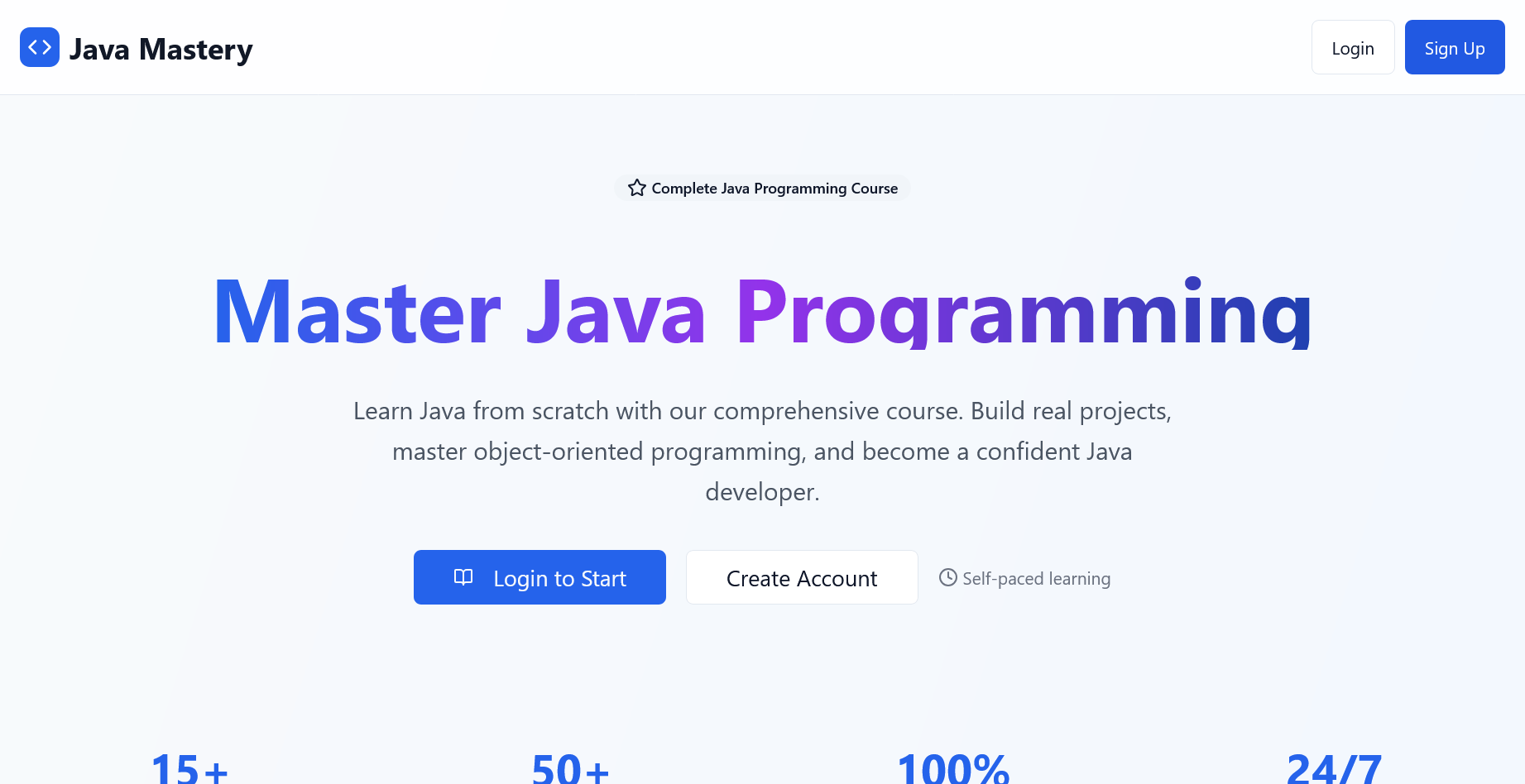
first interface of my website
-
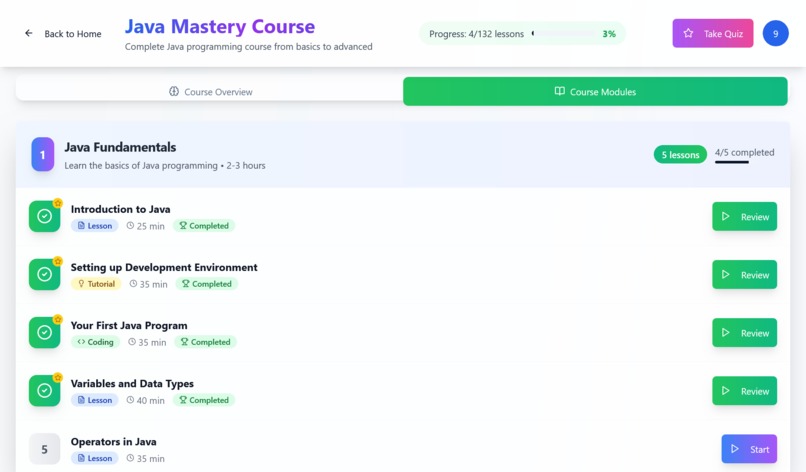
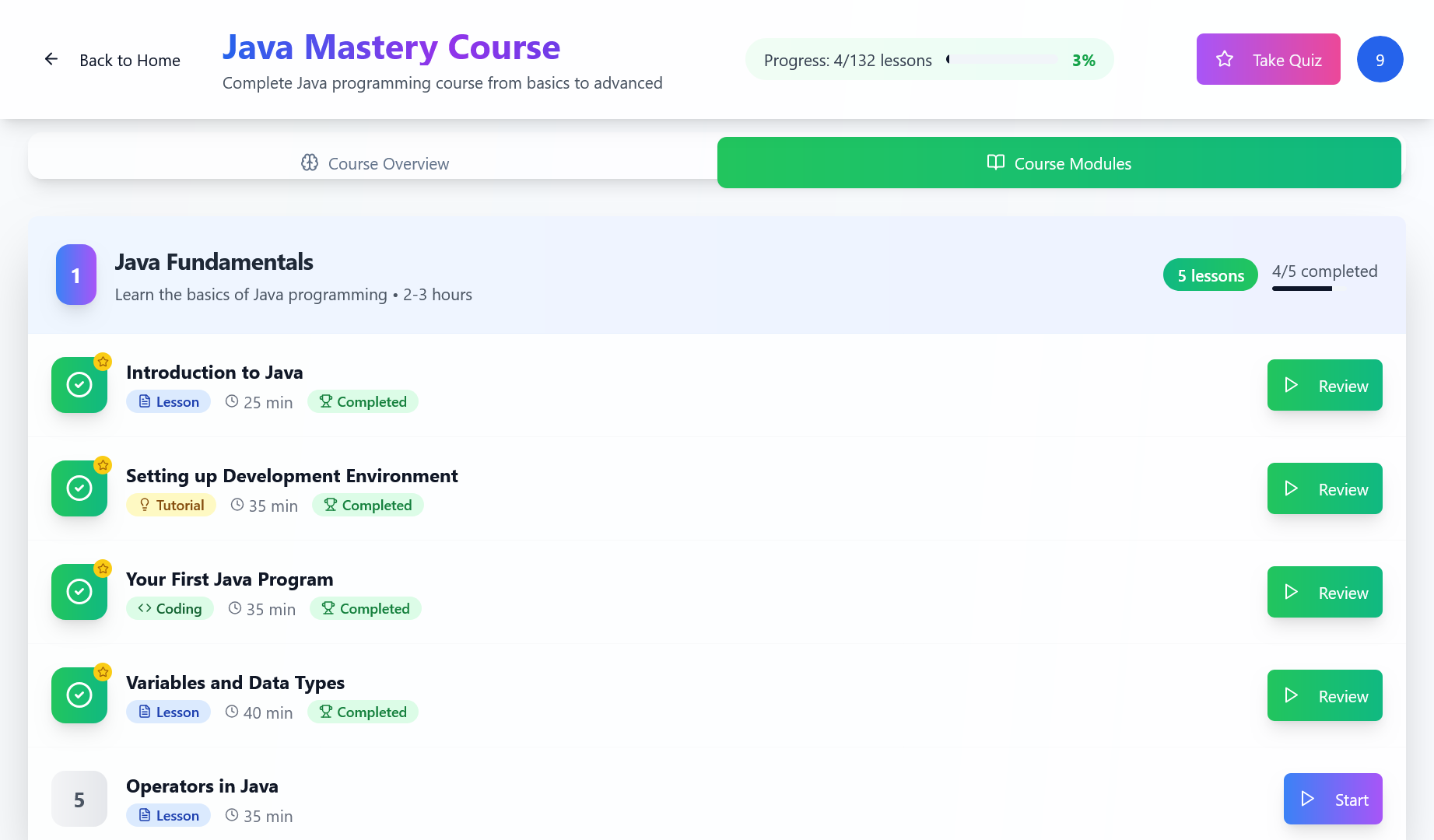
Module wise course contents
-
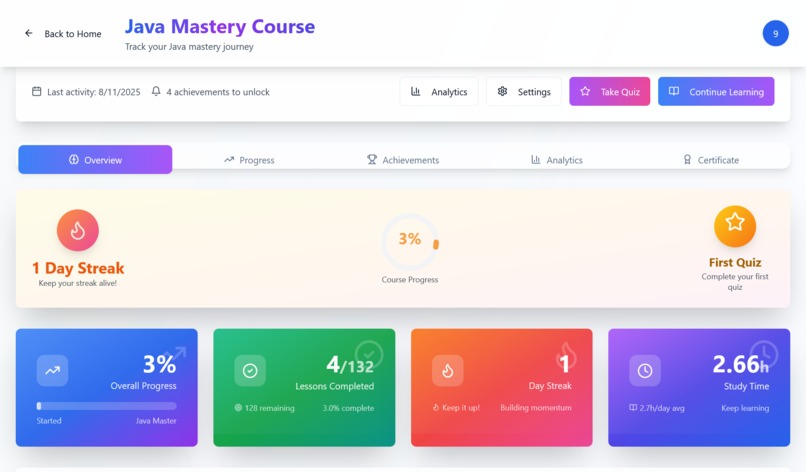
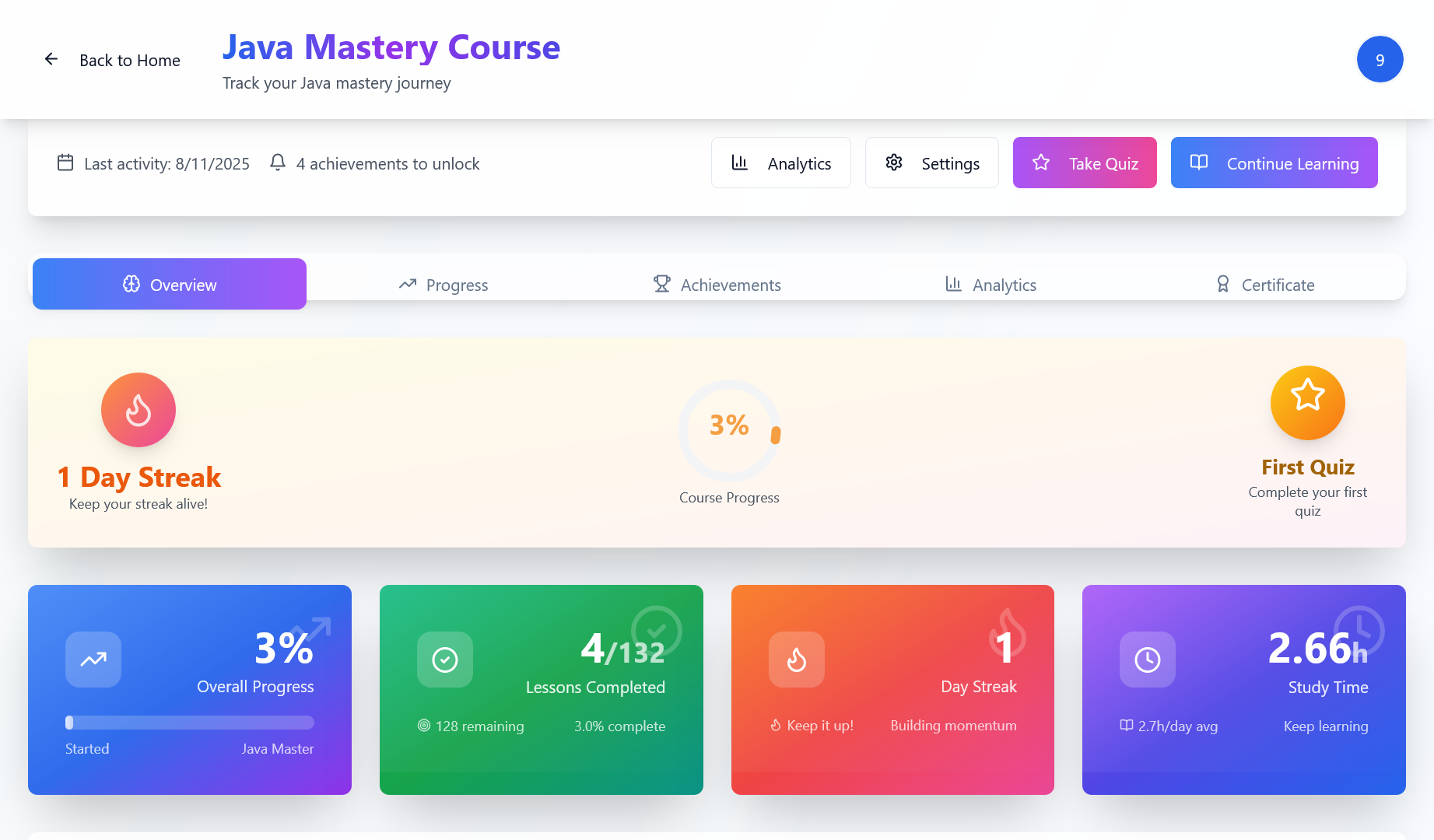
Dashboard of my website
-
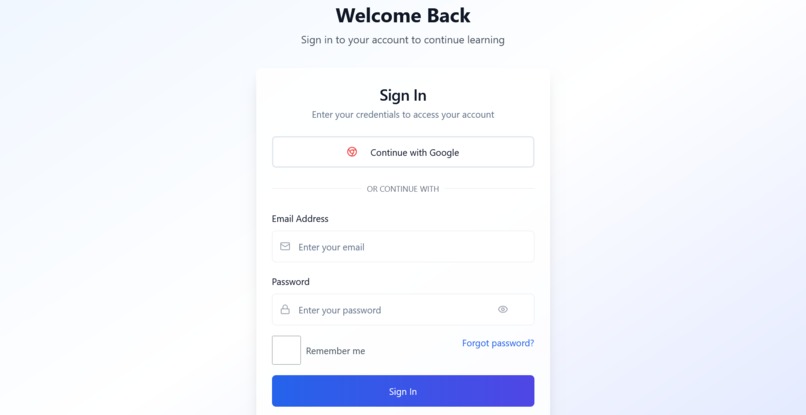
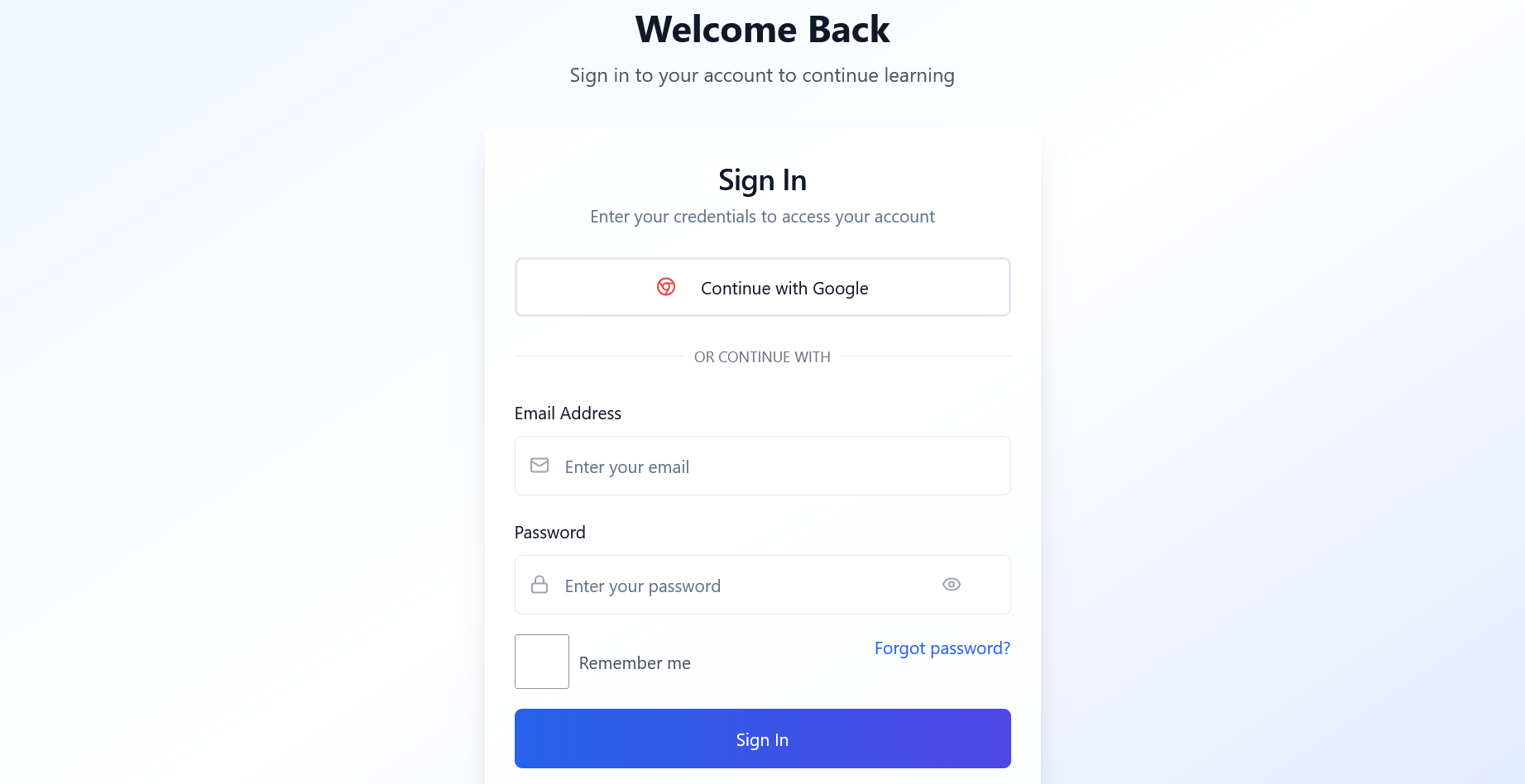
login page view
Inspiration
The project was inspired by the "setup tax" that frequently discourages beginners who struggle with installing the Java Development Kit (JDK) and configuring complex IDEs before they can code. We wanted to eliminate this barrier by creating a unified, zero-setup ecosystem where theory, practice, and assessment live in one place. What it does
The platform provides a structured Java curriculum where students can read lessons, write and execute code in a browser-based IDE, and take AI-generated adaptive quizzes. It features real-time progress tracking through "streaks" and "badges" to maintain motivation, while a proctoring module monitors for cheating during exams. How we built it
We architected the application using the MERN stack (MongoDB, Express, React, Node.js) and integrated the Monaco Editor for a professional coding interface. The backend leverages the Google Gemini API for dynamic quiz generation, the Paiza.io API for remote code execution, and Redis for high-speed caching. Challenges we ran into
One major challenge was managing secure authentication tokens across different domains and handling the rate limits of the free-tier AI API. We overcame these issues by implementing a custom mutex pattern for token management and an aggressive Redis caching layer that reduced external API calls by eighty percent. Accomplishments that we're proud of
We are proud of creating a functional, zero-setup environment that allows anyone with an internet connection to learn Java instantly. Additionally, we successfully implemented a unique AI-driven assessment system that generates varied, "un-googleable" questions tailored to a student's difficulty level. What we learned
We learned the intricacies of full-stack integration and how to handle secure remote code execution safely within a web environment. We also discovered that gamification elements, like study streaks, are highly effective tools for maintaining consistency in self-paced digital learning. What's next for Java learning platform
Short-term updates will include adding instructor-led video content and a dark mode theme for a better user experience. Longer-term goals focus on developing native mobile applications and adding real-time "collaborative coding" features so students can work together in the browser.
Built With
- api
- express.js
- firebase
- gemini
- git
- github
- javascript
- jwt
- mongodb
- node.js
- outh
- react
- redis
- render
- shadcn/ui
- tailwind
- typescript
- vercel
- vite
- zod


Log in or sign up for Devpost to join the conversation.