-
-
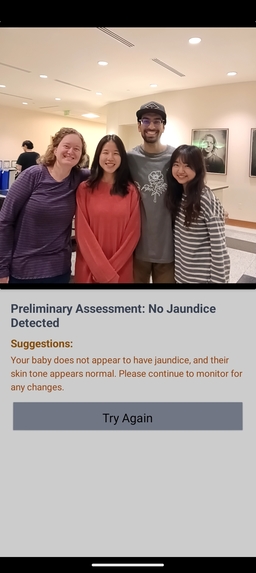
Team Photo!
-
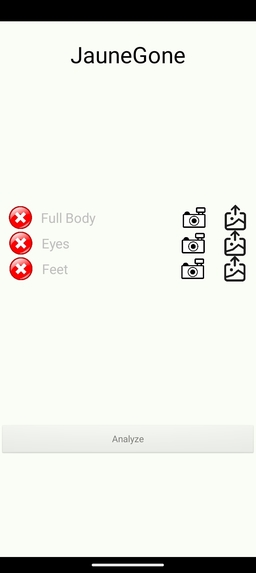
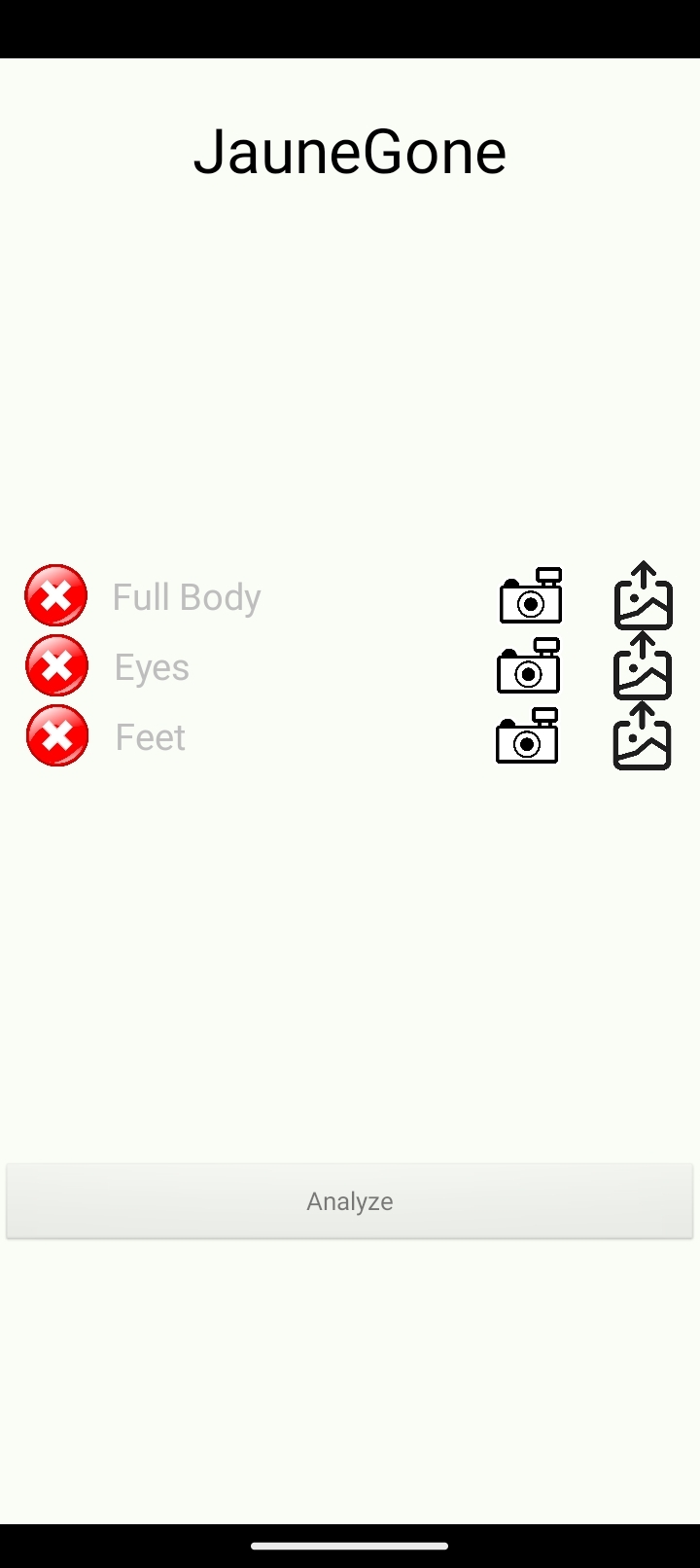
App startup screen
Inspiration
60% of newborns and 80% of premature babies develop jaundice. Parents often miss the early signs, and if left untreated, severe jaundice can lead to serious complications such as kernicterus (brain damage). Because this is such a widespread problem, we wanted to provide parents with a quick way to check whether their baby is showing symptoms of jaundice. We hope that we can improve quality of life by allowing parents to verify the health of their children, from the safety of their own home.
What it does
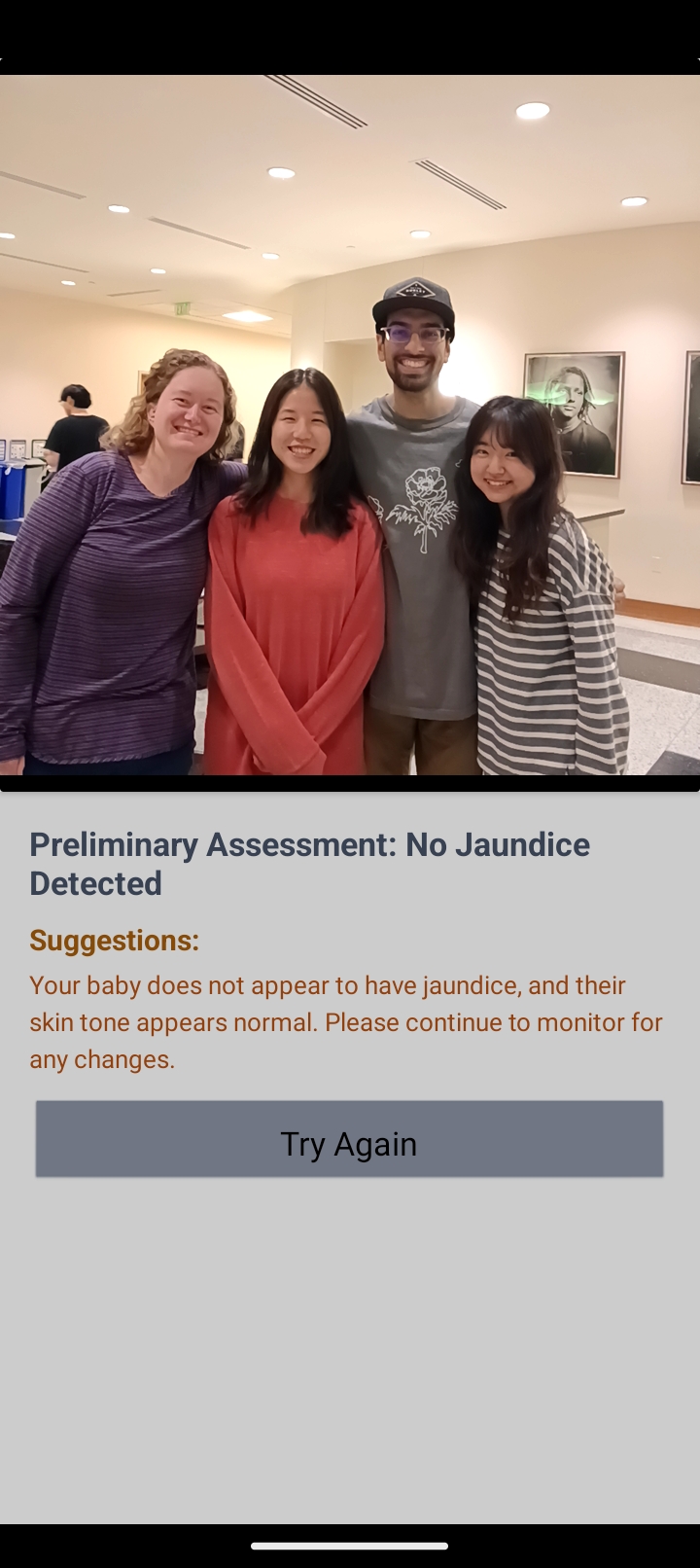
The user takes (or uploads) three pictures of their newborn's body, eyes, and feet. The app will analyze the picture of the baby's body and provide a judgment on whether the baby is likely to have jaundice.
How we built it
Our app uses our AI model (JaundAIce) to analyze photos of newborns for signs of jaundice. We custom-trained JaundAIce using the Kaggle newborn jaundice dataset (at https://www.kaggle.com/datasets/aiolapo/jaundice-image-data/). Starting with MobileNetV2, a lightweight pre-trained CNN, we unfroze the last layers to account for our project-specific features and utilized Python to train a classifier-based Keras model, which we then converted to Tensorflow Lite to be used with our Android app. The UI was built in Android Studio using Java.
Challenges we ran into
Funny story, none of us have an official computer science background! Half of our team did not even know how to use GitHub, and this was our very first time creating a Github account. Every step was a challenge, literally every step. Learning how to integrate the Keras model with our Android app was the most difficult part. With the help of AI tools such as ChatGPT, Copilot, Gemini, along with good ol' Google and our own sheer will, we were able to pull our app together into a working product with reasonable accuracy. Another challenge was that we did not have access to real babies—both with and without jaundice—for data collection, app testing, and demo purposes. To overcome this challenge, we added a feature that allows users to upload baby photos instead.
What's next for JauneGone
- Train the AI model on other jaundice markers, such as eyes and feet
- increase training dataset size to train a more accurate model
- Integrate healthcare access point of contacts - virtual doctors' appointments or nearby hospitals
- Potentially reach out for feedback/user requested features (that fall within the app’s original scope)
Built With
- android-studio
- java
- keras
- tensorflow


Log in or sign up for Devpost to join the conversation.