
Inspiration
I wanted to build an AI assistant that truly belongs to its user—not one that depends on expensive subscriptions, constant internet access, or sending personal data to remote servers.
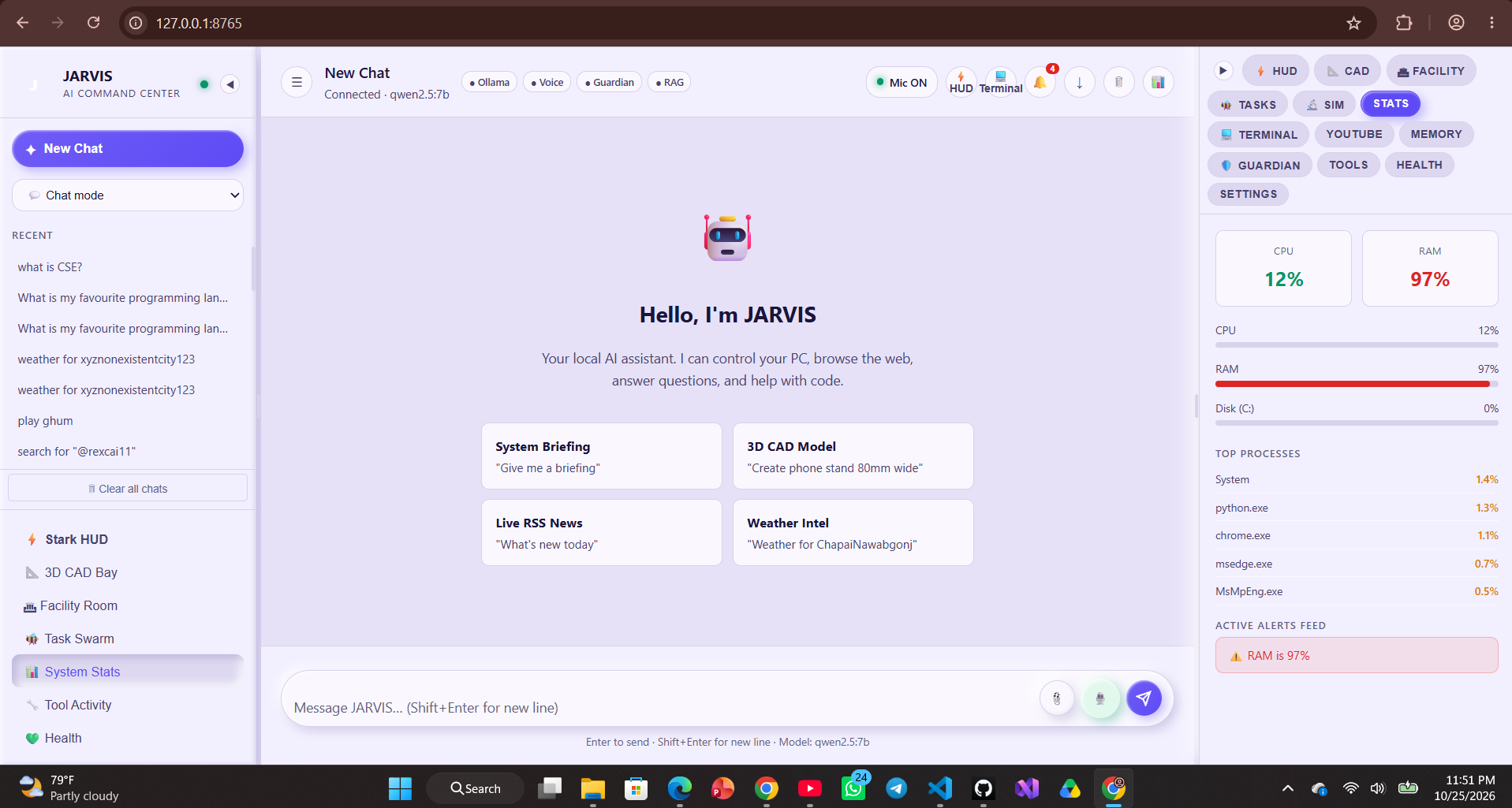
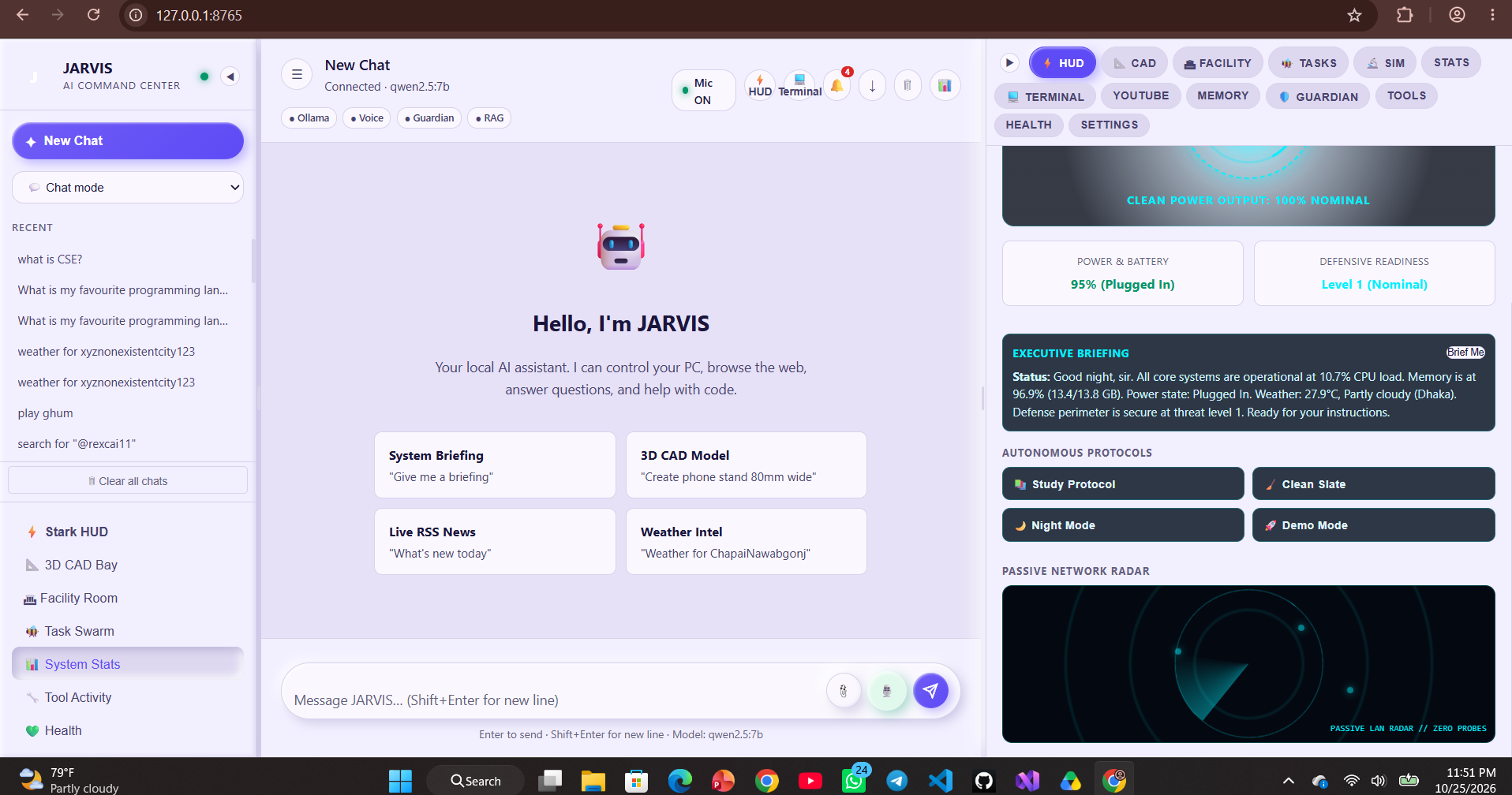
Inspired by the vision of J.A.R.V.I.S. from Iron Man, I started building JARVIS Stark Edition, a locally powered personal AI assistant that can understand voice commands, remember context, interact with the operating system, and execute real tasks.
I also wanted to address a gap that matters in Bangladesh: making AI more accessible to Bengali and Banglish speakers, students, and developers who may not have access to expensive cloud AI services.
The goal was simple: build an assistant that doesn't just talk about completing tasks—it verifies whether the tasks were actually completed.
What it does
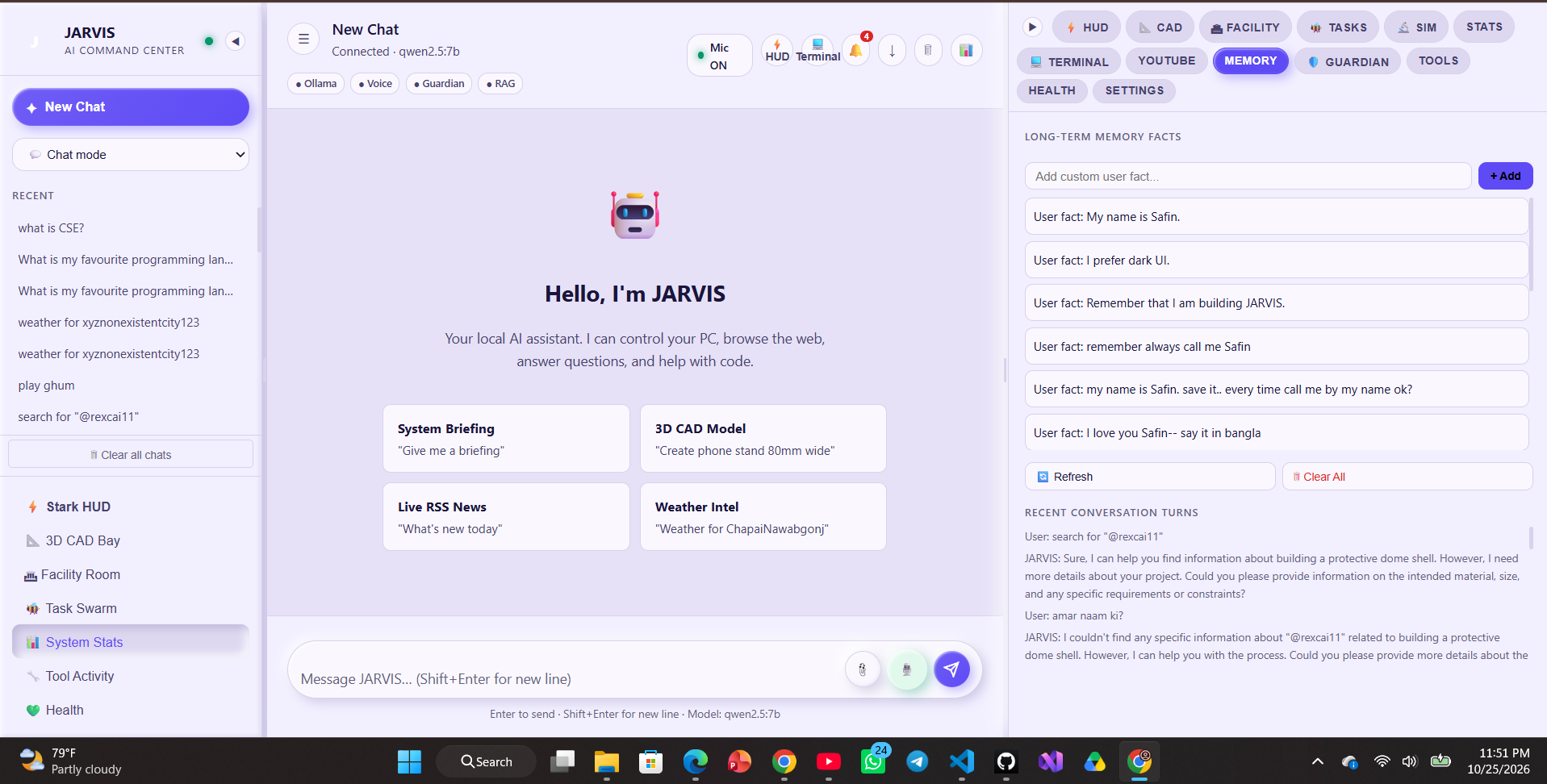
JARVIS Stark Edition is a local-first AI assistant designed for privacy, accessibility, and reliable computer interaction.
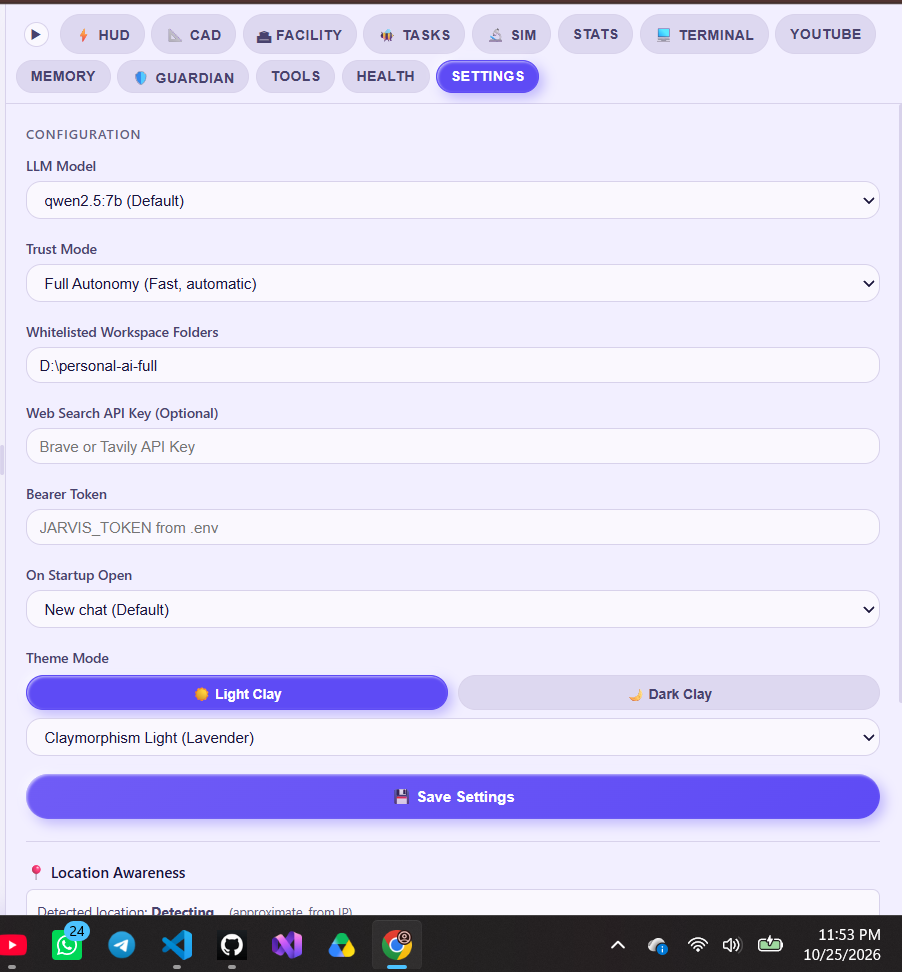
- Local AI inference: Runs a Qwen2.5-7B-Instruct model through Ollama on consumer hardware, avoiding per-request cloud API costs for local inference.
- Voice interaction: Combines speech recognition, language-model reasoning, and speech synthesis for hands-free interaction.
- Bilingual experience: Designed to support English, Bangla, and Banglish interaction, with attention to Bengali-script output.
- Verified tool execution: Checks actual system state—such as file existence, process status, window handles, and command exit codes—before reporting task completion where supported.
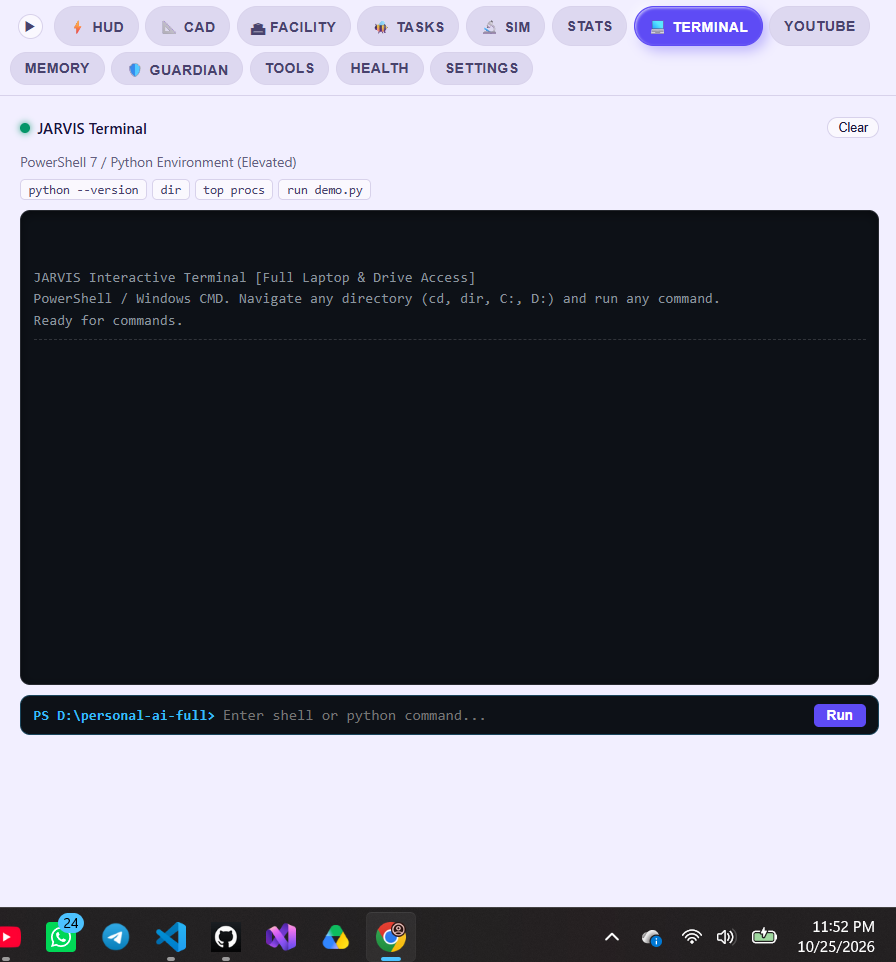
- Desktop automation: Executes supported operating-system actions through dedicated tools and handlers.
- Local memory and document retrieval: Uses local memory and retrieval components to make relevant context available across interactions.
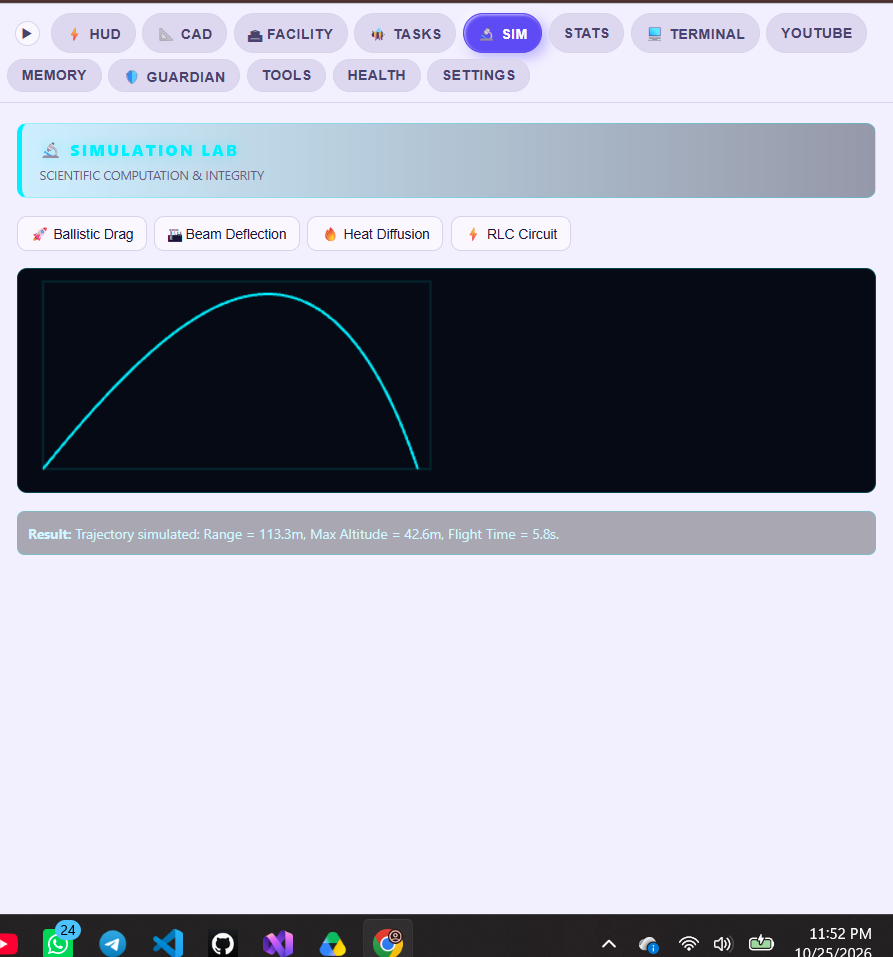
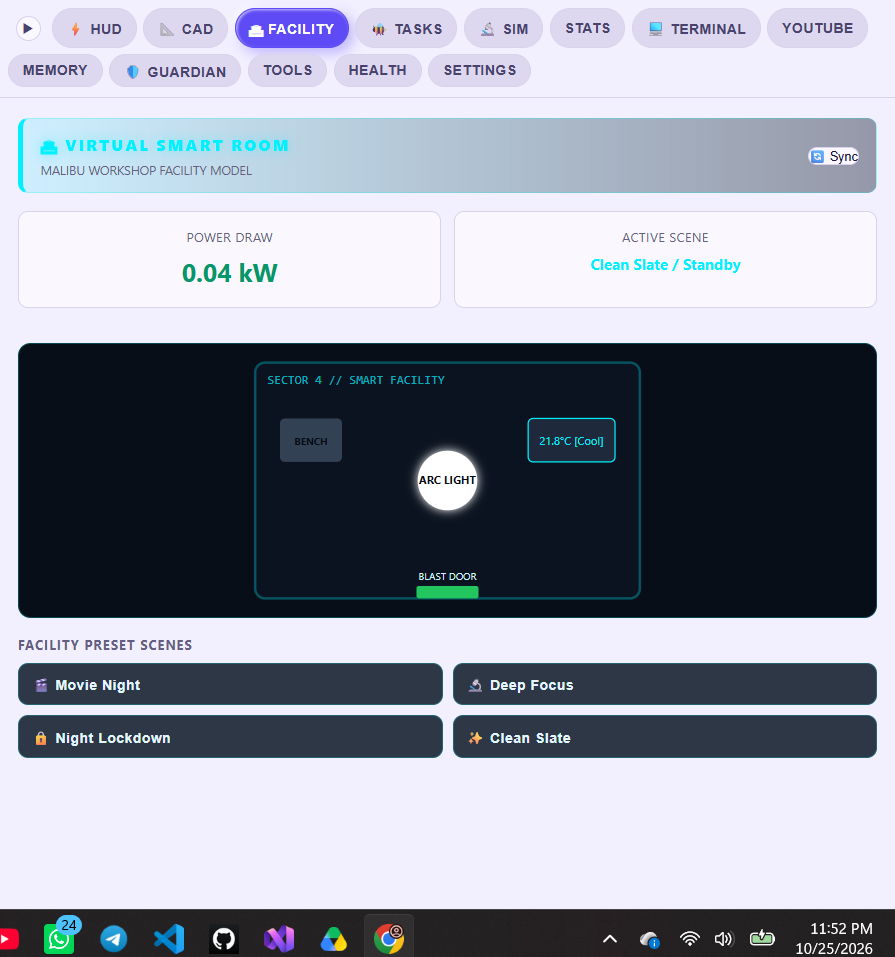
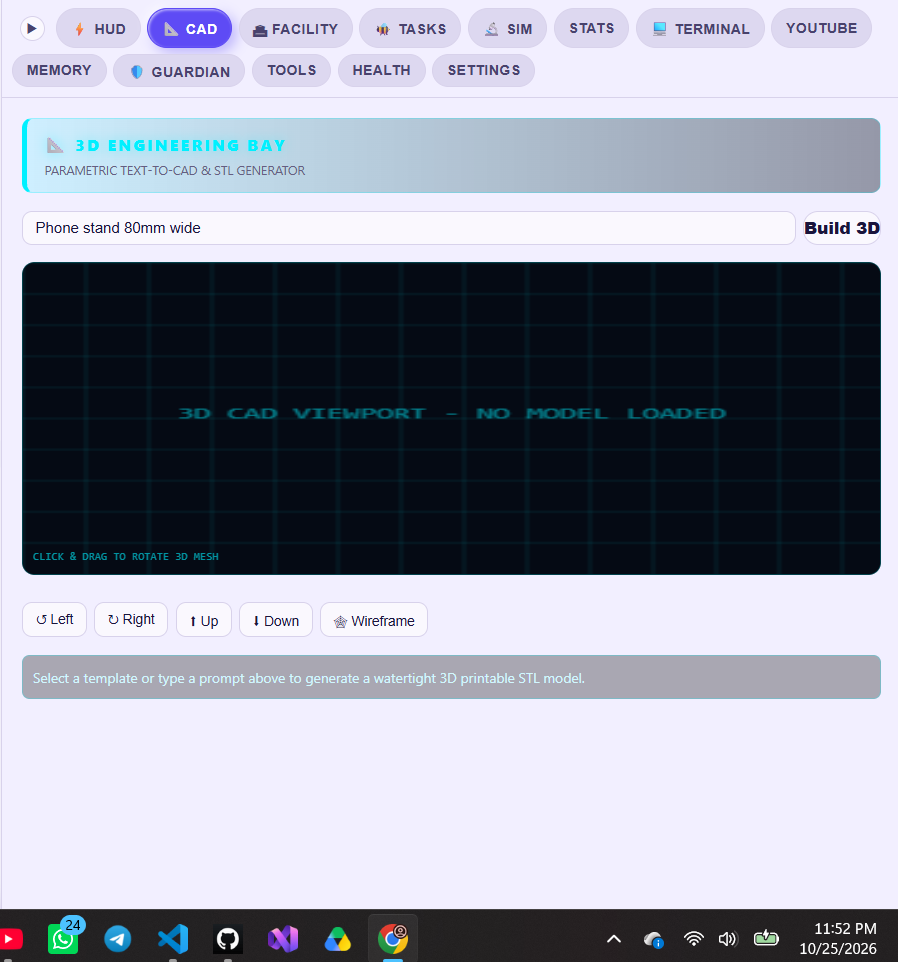
- Multimodal capabilities: Includes vision and image-generation components alongside its core assistant features.
Unlike a conventional chatbot, JARVIS connects language-model reasoning with real computer actions. Its design principle is that a successful response must reflect the outcome of the action, not merely the model's prediction.
How we built it
JARVIS was built as a modular personal AI system, combining local inference with specialized components for voice, memory, retrieval, automation, and multimodal interaction.
- LLM: Qwen2.5-7B-Instruct running locally through Ollama.
- Speech: faster-whisper-based speech recognition and text-to-speech components.
- Memory and retrieval: Local storage, document ingestion, embeddings, and retrieval components.
- Automation: Dedicated intent handling and tool execution, with operating-system checks to verify supported actions.
- Backend: Python services and API endpoints coordinate the assistant's modules.
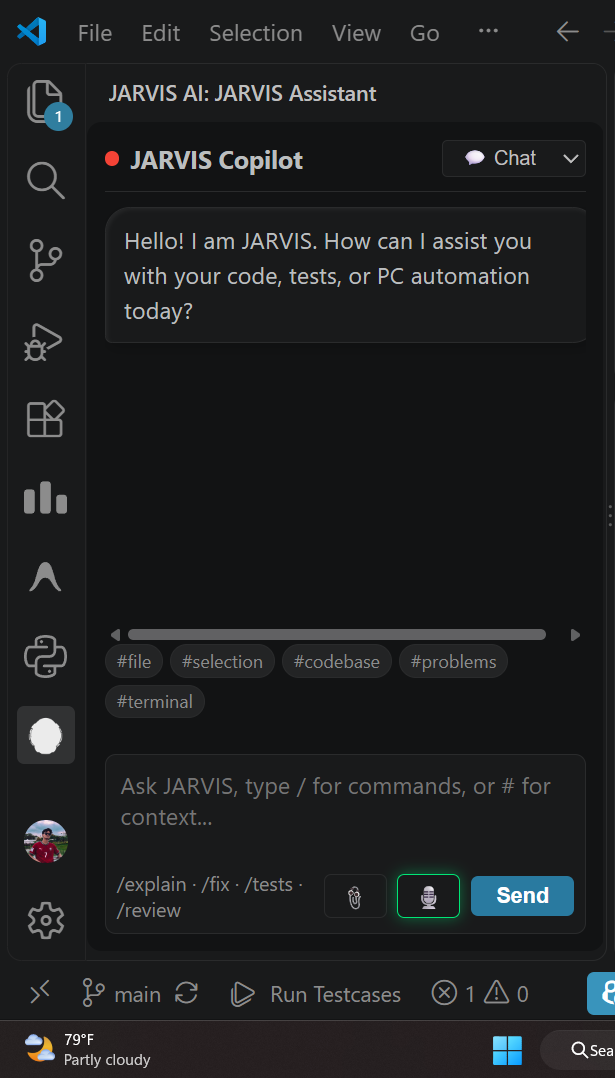
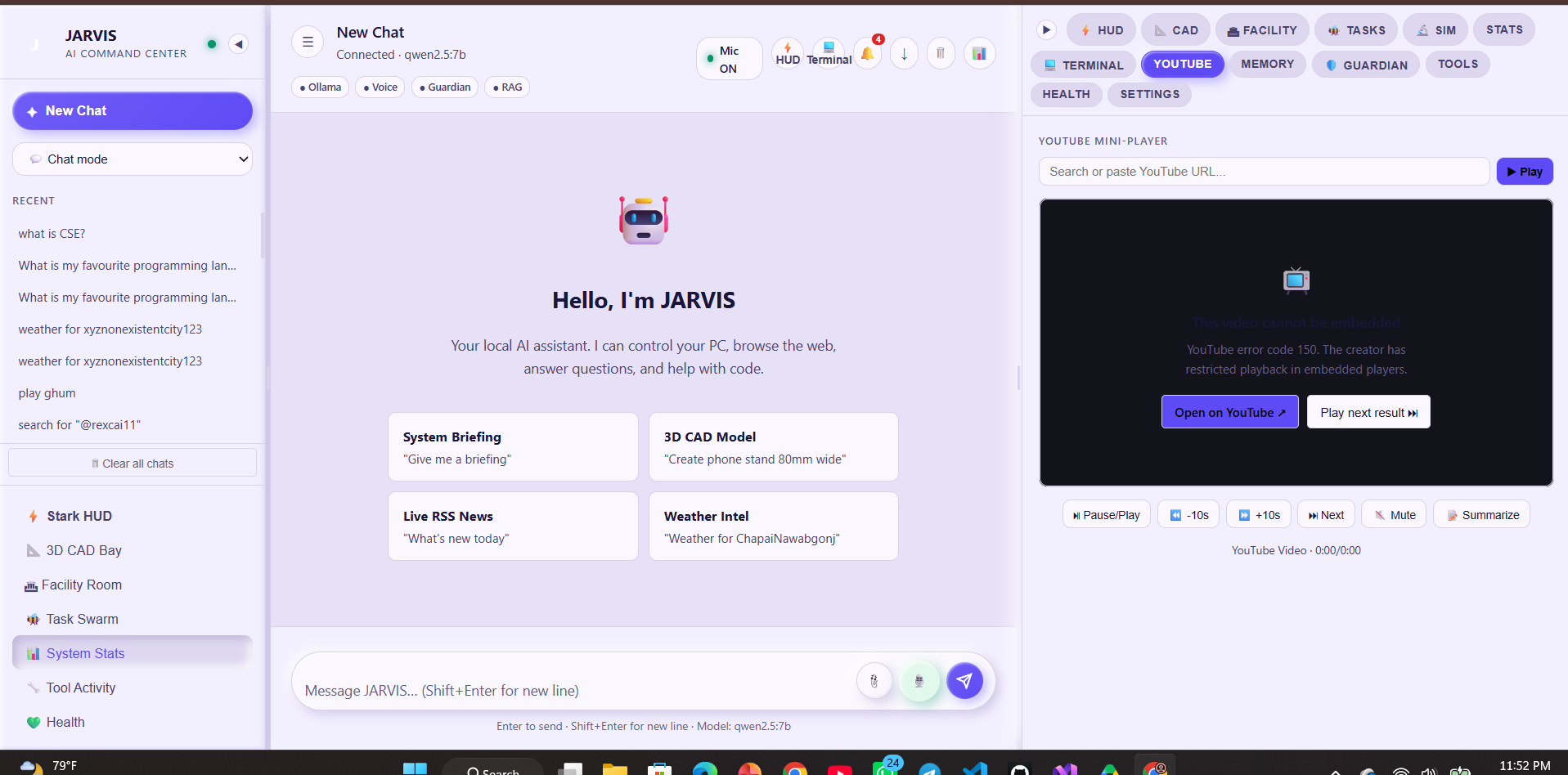
- Interface: A voice-enabled desktop experience designed to make interacting with the assistant natural and practical.
The architecture prioritizes local execution and modularity, allowing individual capabilities to be developed, tested, and improved without redesigning the entire system.
Challenges we ran into
Building a useful local AI assistant involved challenges beyond simply running a language model.
1. Making local AI practical
Running a 7B model on consumer hardware requires careful resource management. The system needed to balance model capability, memory usage, responsiveness, and the limitations of CPU-only execution.
2. Preventing false success claims
An LLM can generate a convincing message even when a command fails. We addressed this by designing tool handlers that check observable system state before reporting completion for supported operations.
3. Voice input and feedback loops
A voice assistant must distinguish user input from its own speech and other environmental audio. Audio capture, recognition, and feedback-loop prevention remain important engineering challenges.
4. Supporting Bangla and Banglish
Mixed-language input, Bengali-script generation, and reliable speech recognition introduce challenges that are less visible in English-first AI systems.
5. Integrating multiple subsystems
Voice, local inference, memory, retrieval, vision, and desktop automation each have different dependencies and failure modes. Bringing them together required a modular architecture and iterative debugging.
Accomplishments that we're proud of
- Built a working personal AI assistant around a locally hosted language model.
- Integrated voice interaction with desktop automation and local AI reasoning.
- Developed a modular architecture combining memory, document retrieval, vision, image generation, and tool execution.
- Implemented system-state verification for supported actions so JARVIS can report actual outcomes rather than relying solely on LLM-generated claims.
- Designed the project with Bengali and Banglish interaction in mind.
- Created a foundation that can run without paid cloud AI APIs for its local inference workflow.
Our proudest achievement is bringing these capabilities together into one extensible assistant while keeping local execution and user privacy central to the design.
What we learned
We learned that building a reliable AI assistant is not just about choosing a powerful model. The surrounding engineering—tool orchestration, state verification, error handling, resource management, and user interaction—is equally important.
We also learned that local AI can offer meaningful independence from cloud services, although hardware limitations still affect speed and model capability.
Most importantly, trust must be engineered. A useful assistant should distinguish between what it intended to do, what it attempted, and what it can actually verify it accomplished.
What's next for JARVIS — YOUR LOCAL AI ASSISTANT
Our next steps are focused on making JARVIS more reliable, accessible, and useful:
- Improve Bangla and Banglish speech recognition and natural Bengali responses.
- Strengthen voice-input isolation to reduce accidental activation from system audio.
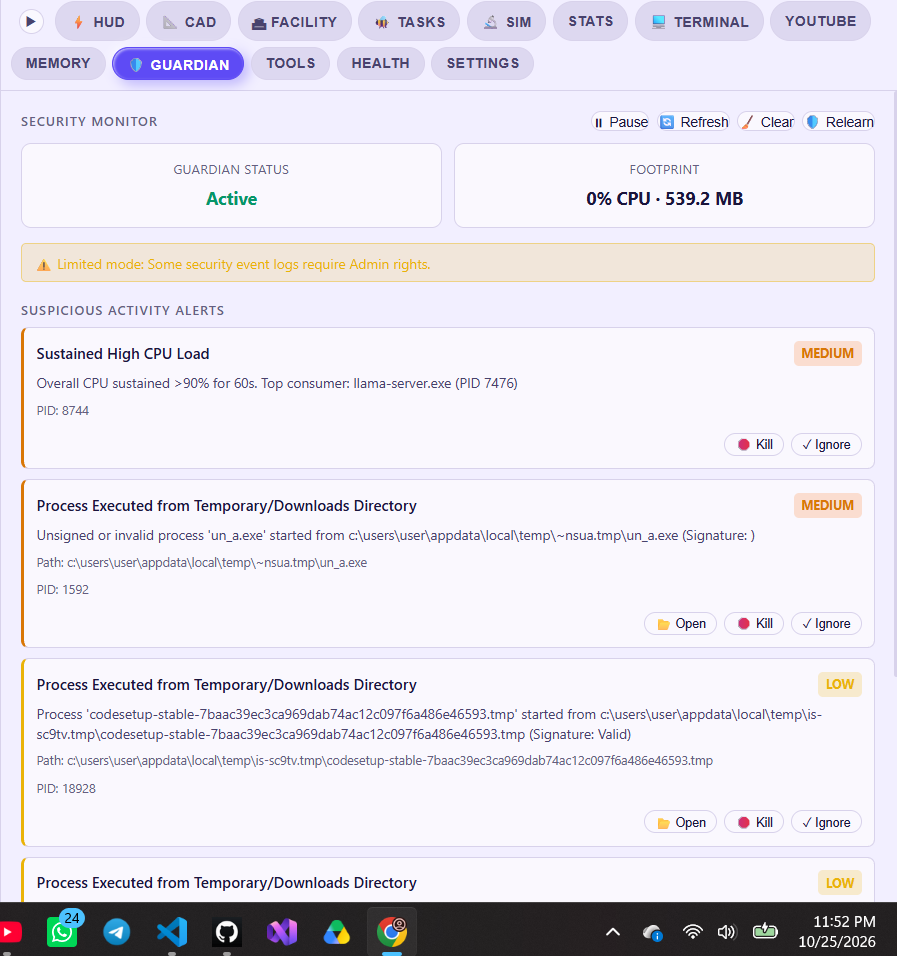
- Expand verified tool execution with clearer failure diagnostics and safer permission controls.
- Improve local document understanding, long-term memory, and contextual retrieval.
- Optimize inference speed and memory usage on modest consumer hardware.
- Expand testing across Windows configurations and different hardware setups.
- Publish reproducible benchmarks covering latency, resource consumption, offline functionality, and tool-execution reliability.
- Improve documentation, installation, and the developer contribution workflow.
The long-term vision: an extensible personal AI that users can run, inspect, and control on their own machines—bringing practical AI assistance to more people without making cloud access a requirement.
Built With
- batchfile
- css
- html
- javascript
- other
- powershell
- python


Log in or sign up for Devpost to join the conversation.