-
-
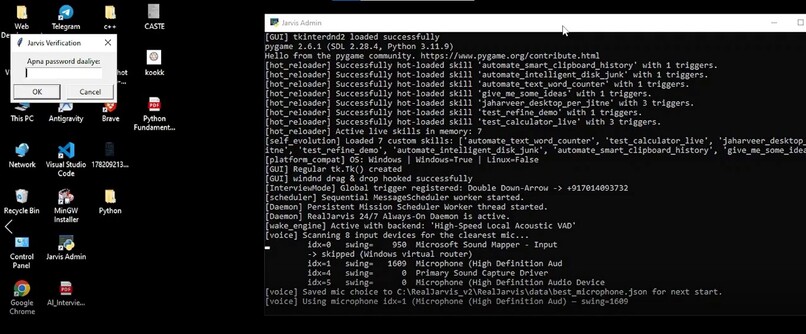
Loading NEXORA
-
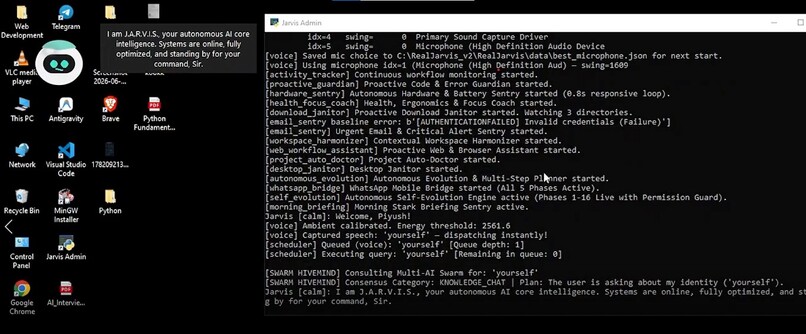
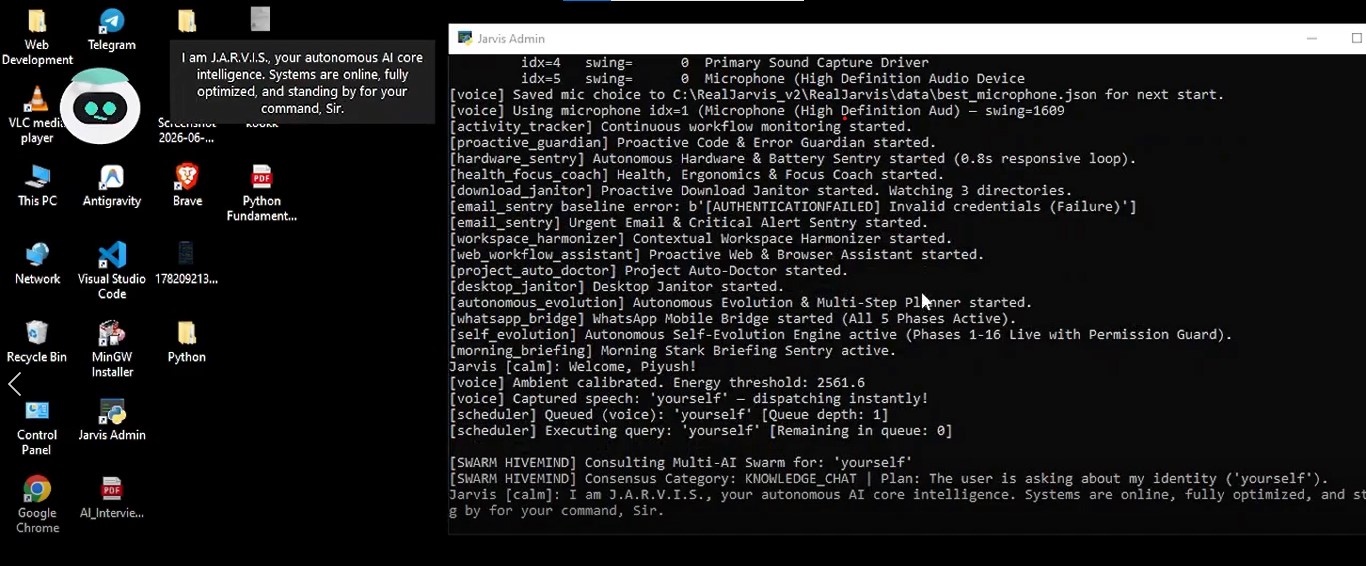
JARVIS INTRODUCING ITSELF
-
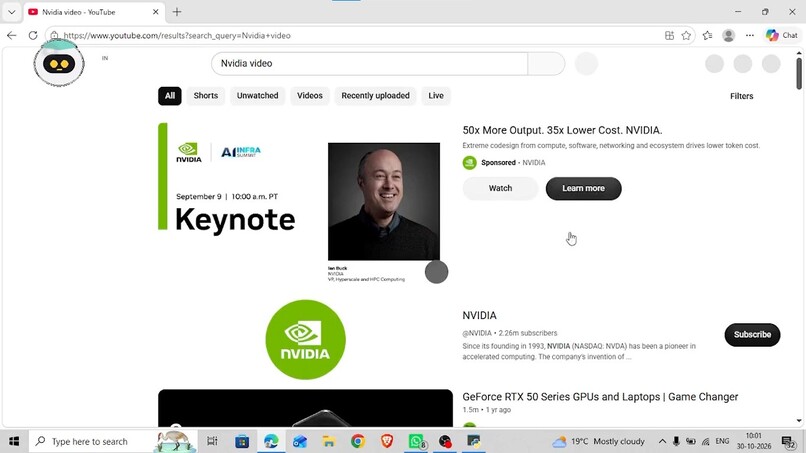
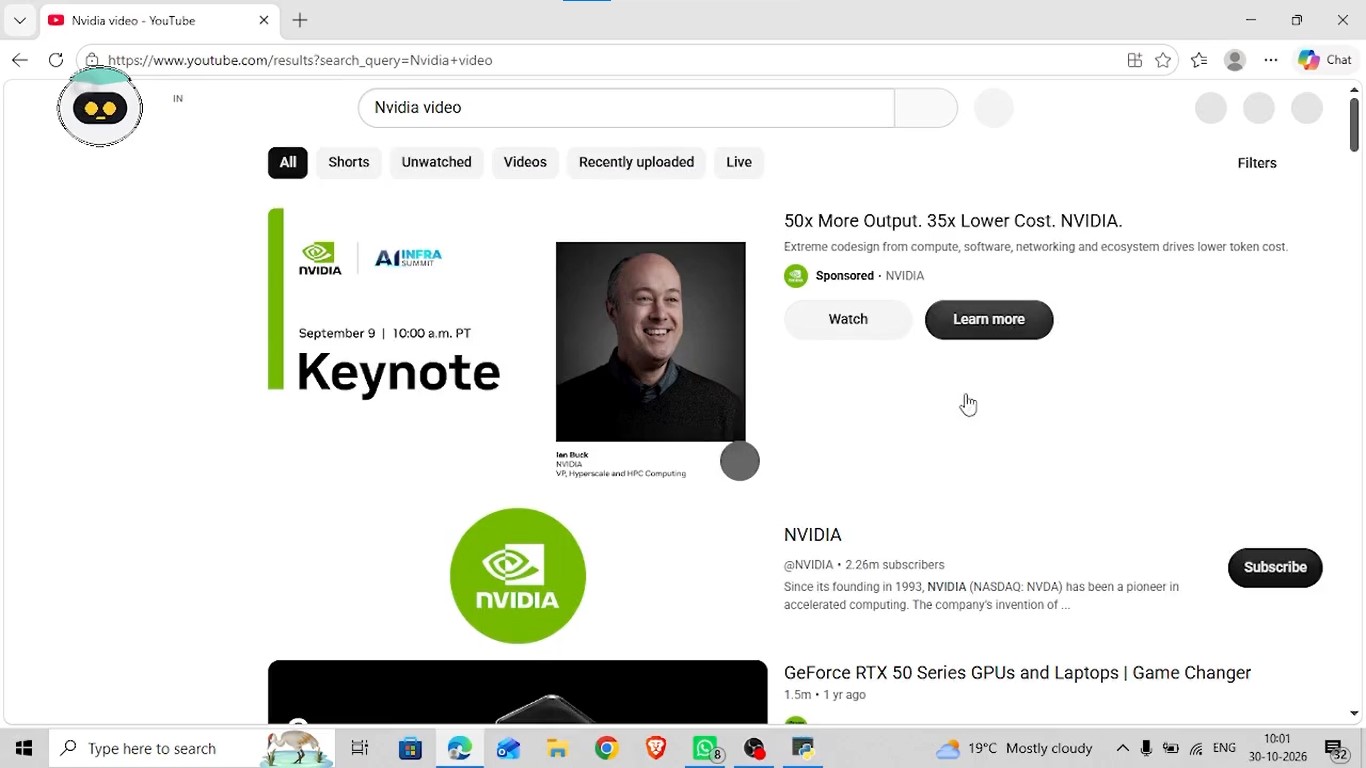
JARVIS SEARCHING ON YOUTUBE
-
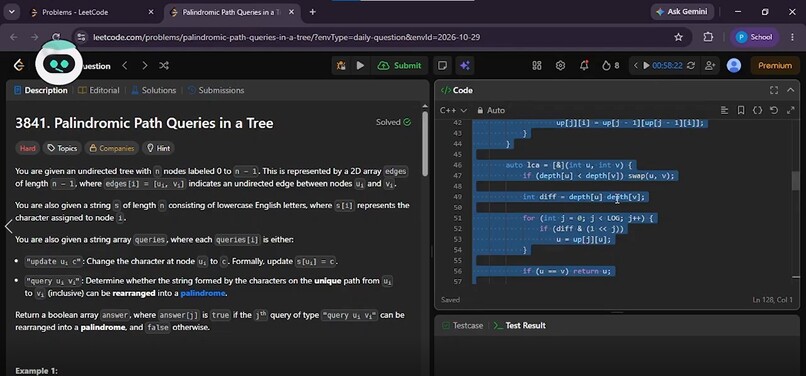
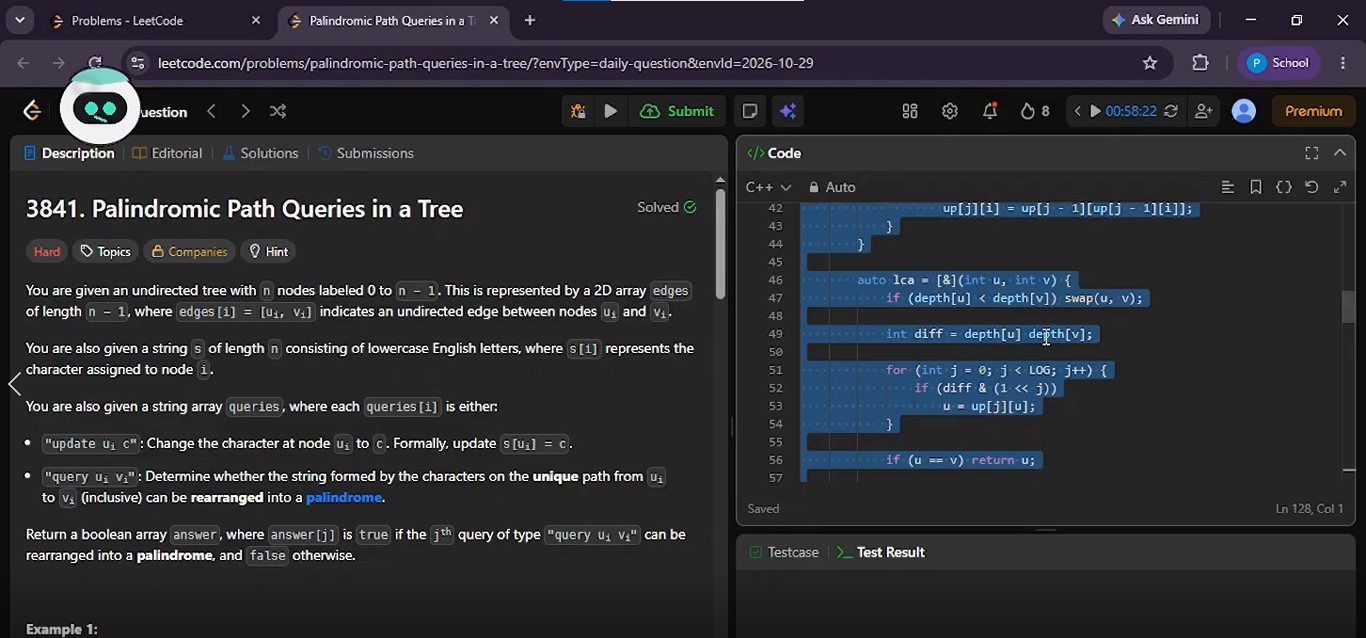
JARVIS WRITTING CODE
-
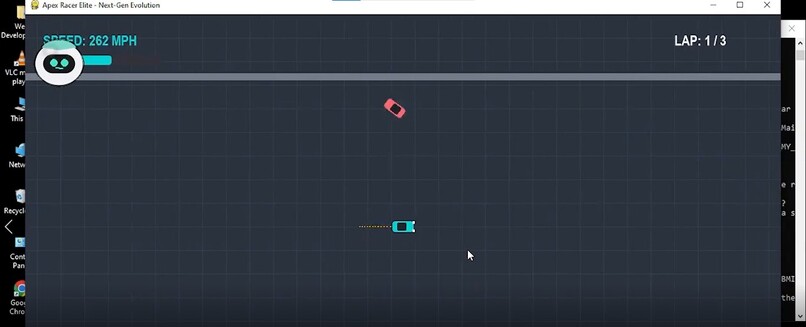
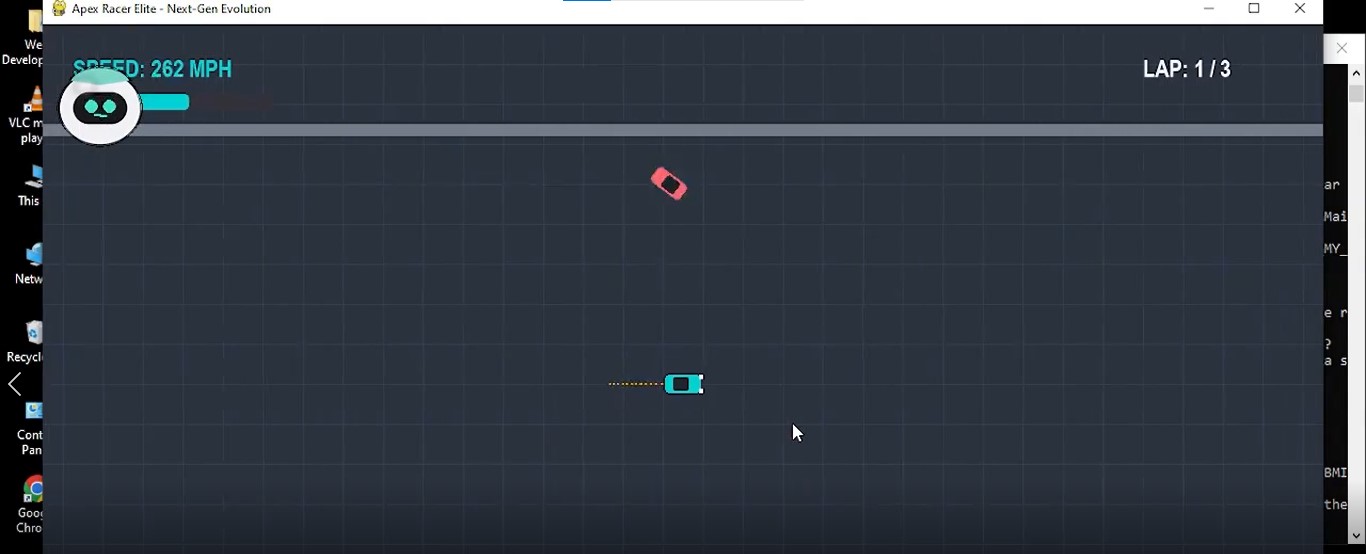
JARVIS LAUNCHING GAME
-
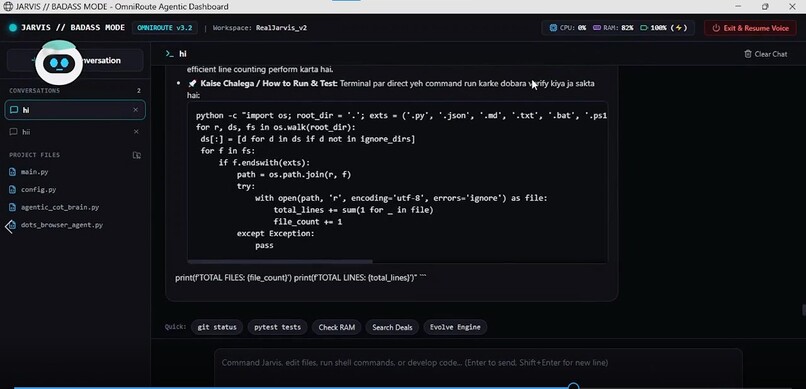
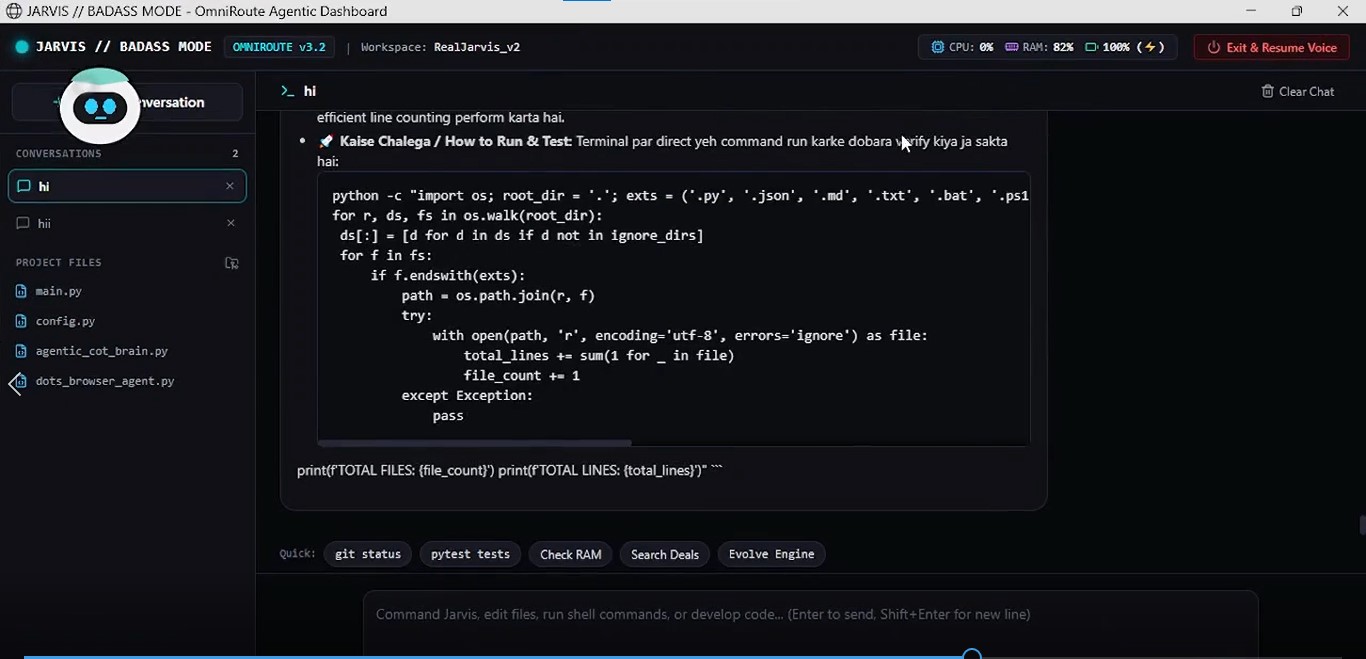
JARVIS BADASS MODE
Inspiration
The trillion-dollar tech giants have been promising a "true AI assistant" for over a decade—Siri, Cortana, and Google Assistant, and yet none of them actually do anything more than set timers and fumble simple queries. We got tired of waiting. The inspiration behind JARVIS was simple and a little audacious: if Big Tech won't build the assistant that actually works, we will. We wanted an AI that doesn't just talk back but actually acts, controlling the OS, automating real tasks, and giving one person the leverage of an entire team, without needing a trillion-dollar R&D budget to do it.
What it does
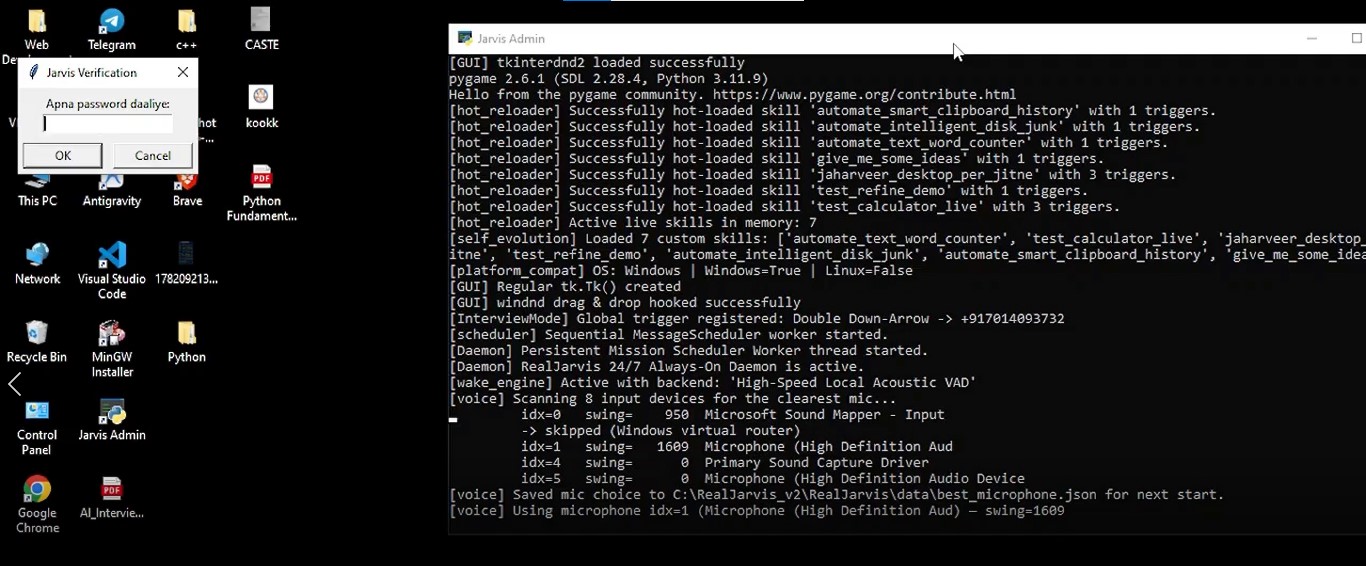
JARVIS is a voice-controlled AI desktop agent that operates at the OS level. Instead of being locked into a single app or chatbot window, it listens to natural spoken commands and executes real actions on your machine, opening apps, automating repetitive workflows, and handling tasks that would otherwise mean switching between a dozen windows and typing everything by hand. The goal is to make your voice the primary interface to your computer.
How we built it
We built JARVIS in Python, layering OS-level control on top of existing LLM APIs rather than trying to reinvent language understanding from scratch. Early on we did a competitive landscape scan and quickly realized that trying to outbuild the giants on general-purpose assistants was a losing game. So we deliberately narrowed our focus to a specific use-case wedge where a lean, fast-moving team can actually win. That focus shaped every architectural decision: keep the core lightweight, lean on proven LLM APIs for the language layer, and put our own engineering effort into the OS automation and voice pipeline where we can differentiate.
Challenges we ran into
The biggest challenge was resisting scope creep, it's tempting to try and build "the everything assistant" on day one, but that's exactly the trap that makes this space so hard to compete in. Getting reliable, low-latency voice-to-action execution at the OS level (rather than just conversational responses) also pushed us to rethink parts of the pipeline more than once. And building this as a two-person team meant every architecture decision had to be made fast, without the luxury of a large engineering org to fall back on.
Accomplishments that we're proud of
We're proud that we didn't just build another chatbot wrapper. JARVIS actually reaches into the OS and gets things done. We're also proud of finding real conviction in a narrow wedge strategy instead of chasing feature parity with Big Tech's assistants and of turning this from a "someday startup idea" into an actual working public repo with a real product direction and a committed founding team.
What did we learn?
We learned that competing with Big Tech isn't about matching their resources; it's about picking the one thing they're too big and too general-purpose to do well and going all in on it. We also learned a lot about the practical gap between "an LLM that talks" and "an agent that acts." The automation and control layer is where the real engineering difficulty (and the real product value) lives.
What's next for JARVIS?
Next, we want to harden the OS automation layer, expand the range of actions JARVIS can reliably execute, and get it in front of real early users to sharpen the wedge further. Longer term, the vision stays the same as day one: build the assistant Big Tech keeps promising and never quite delivers.
Built With
- artificial-intelligence
- automation
- github
- llm
- machine-learning
- natural-language-processing
- openai
- os-automation
- pyautogui
- python
- speech-recognition
- sqlite
- voice-delivery-system

Log in or sign up for Devpost to join the conversation.