
Inspiration
Students do not usually fail because they lack ambition. They fail because their goals, research, opportunities, projects, decisions, and daily actions live in different places.
I wanted to build the system I wish I had before college: something that does more than answer questions. Jarvis should understand where a student is, identify what matters next, find real opportunities, turn them into concrete work, and follow up until progress happens.
What it does
Jarvis is an adaptive AI operating system for students.
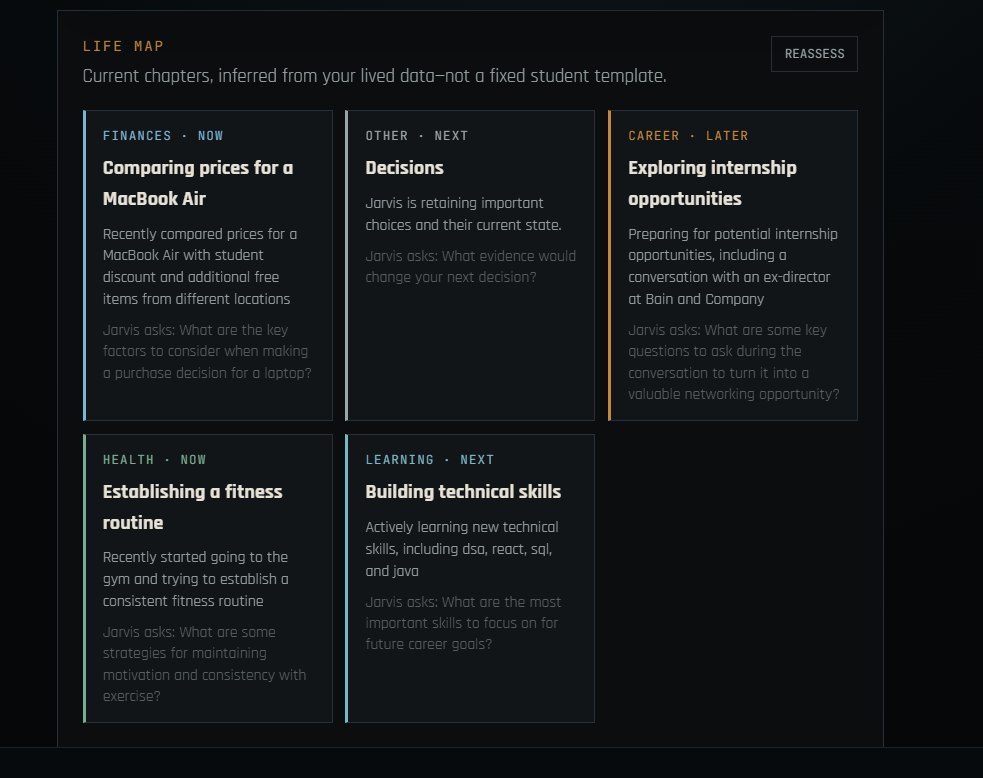
It maintains a private working context across goals, projects, decisions, skills, tasks, research, health, and opportunities. A student can give Jarvis an unstructured thought, such as "I want to enter AI engineering but I do not know what to do next," and Jarvis turns it into a structured plan.
Key workflows include:
- Reality Compiler: turns a messy goal or decision into priorities, risks, capability gaps, and next actions.
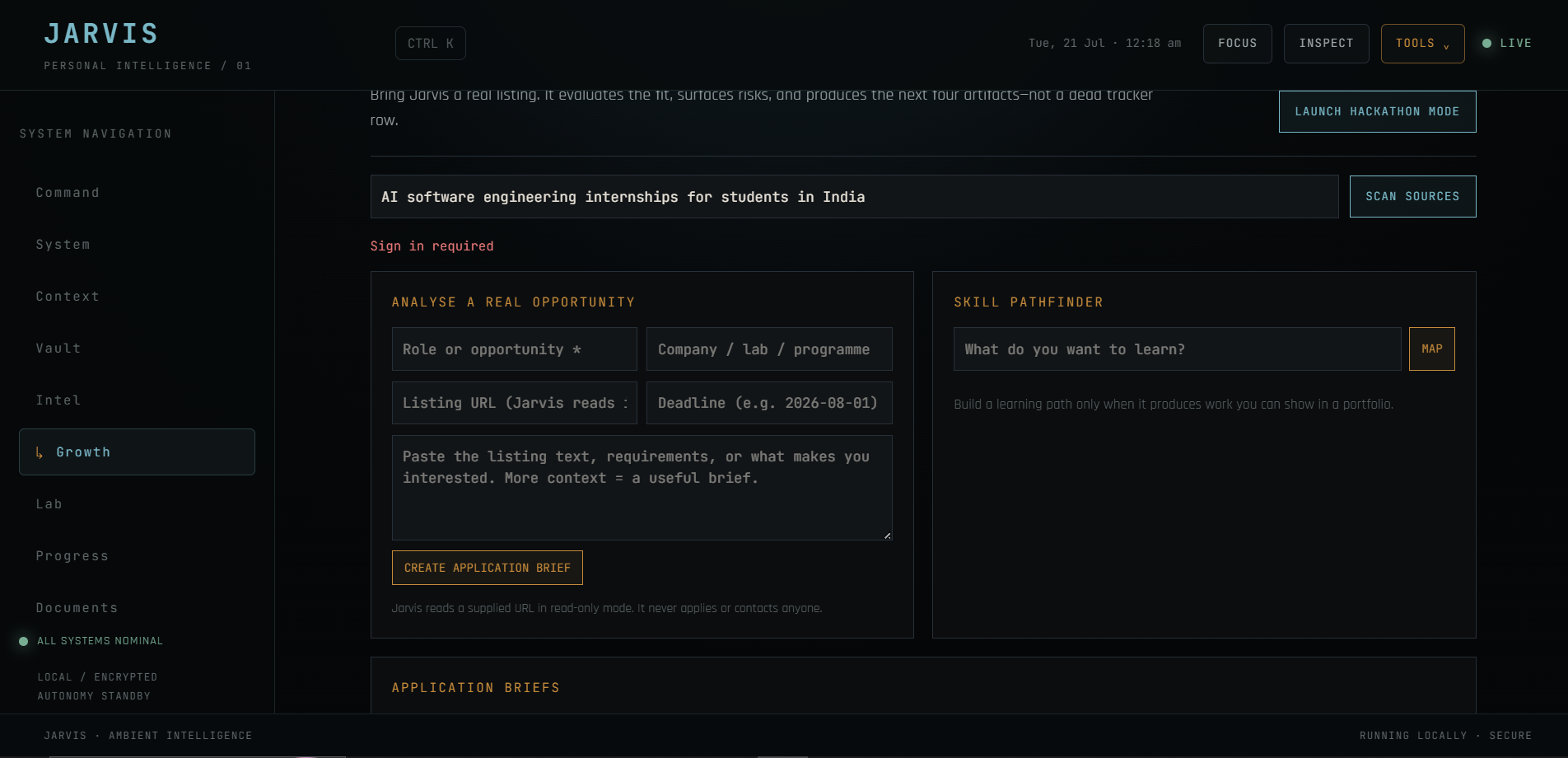
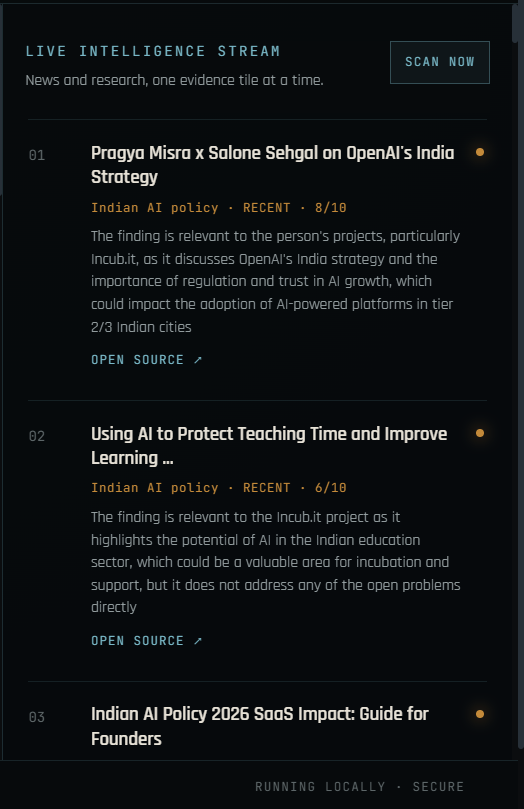
- Opportunity Engine: finds relevant internships, roles, hackathons, and programs, preserves source URLs, and creates an evidence-based application brief.
- Skill Pathfinder: maps a skill goal into practical, portfolio-oriented learning steps.
- Memory Replay and Jarvis Council: make Jarvis explain the evidence behind a recommendation and examine decisions from competing perspectives.
- Autonomy Loop and Weekly Review: turn plans into open loops, tasks, check-ins, and proactive follow-ups.
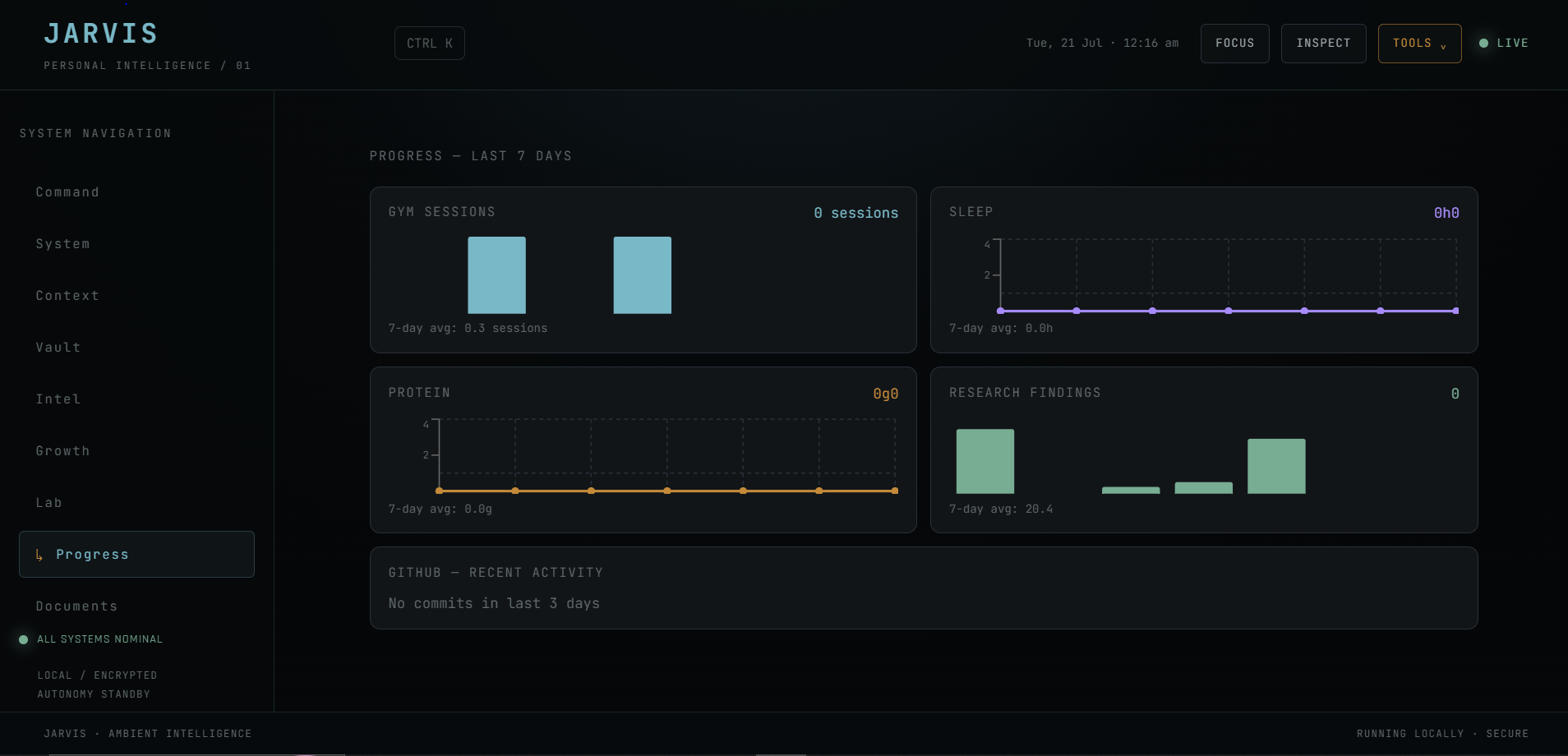
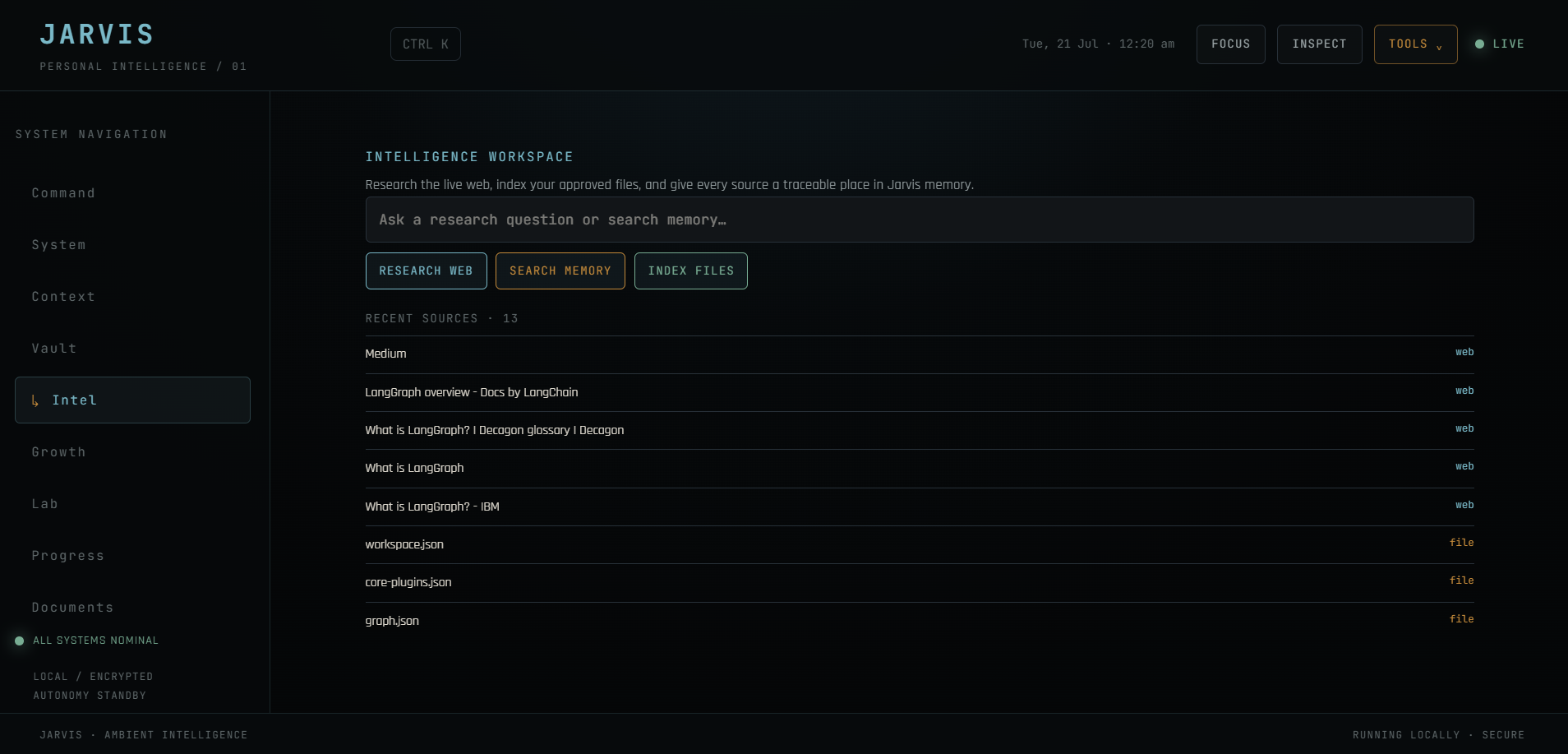
- Research, files, and nutrition layers: connect current research, personal documents, notes, and health logging into one local dashboard.
Jarvis never applies, messages people, spends money, or makes irreversible choices autonomously. It prepares evidence and concrete next steps while keeping the student in control.
How I built it
I built Jarvis with a FastAPI backend, React and Vite frontend, SQLite for structured memory, ChromaDB for semantic memory, and a local-first architecture.
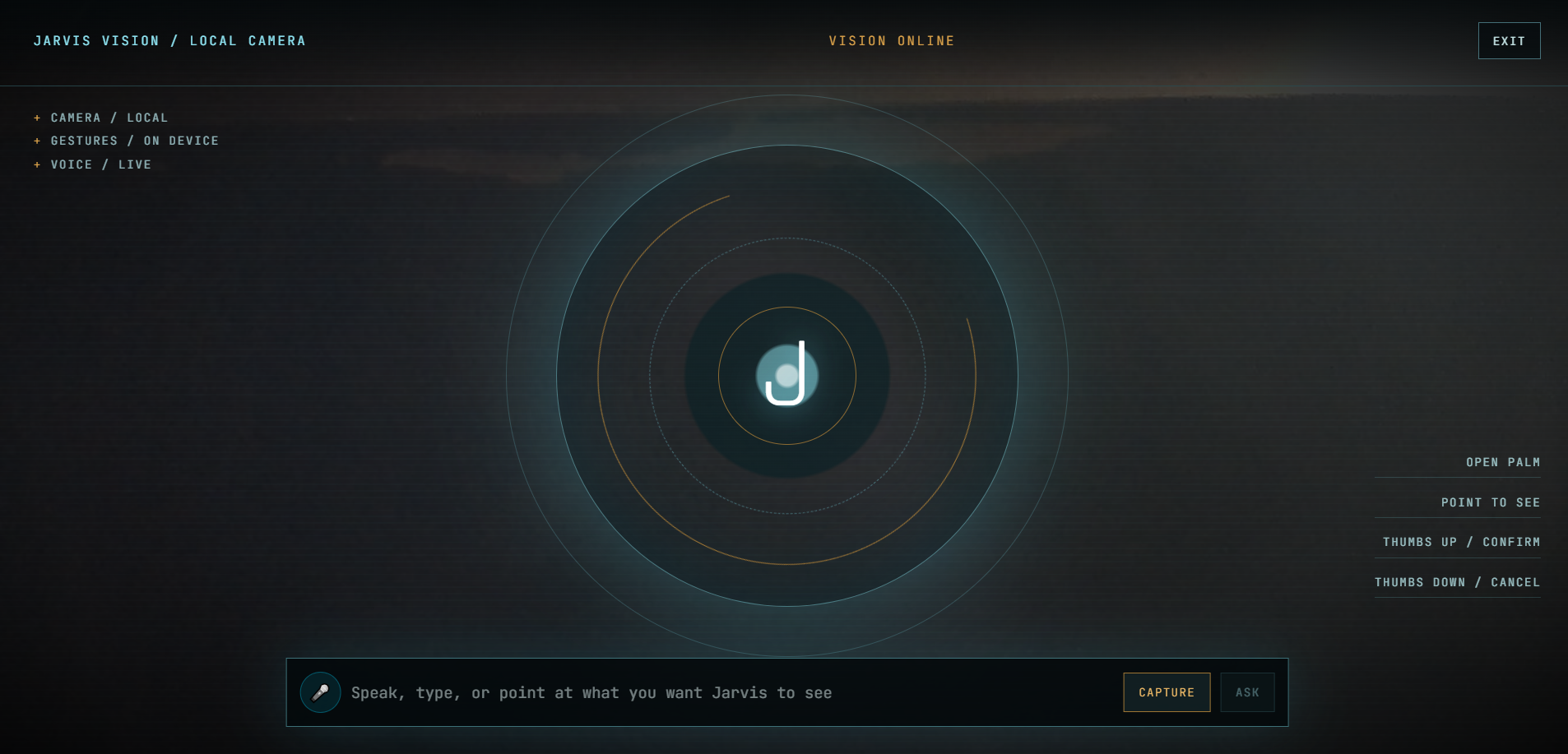
The backend coordinates research, context, decisions, opportunities, learning paths, health logs, proactive loops, and constrained artifact generation. The interface is a command center designed to make Jarvis feel like a persistent system rather than another chat window.
Security was part of the architecture:
- Password authentication for desktop access
- WebAuthn passkeys for phone access
- HTTP-only, same-site sessions
- Local-first storage
- Controlled tool boundaries
- Sandboxed artifact previews
- Explicit approval boundaries for high-impact actions
How Codex and GPT-5.6 helped me
Codex and GPT-5.6 were central to my development process.
I used Codex to inspect the evolving codebase, trace bugs across the FastAPI and React layers, implement new workflows, harden authentication and file boundaries, improve the dashboard UX, and repeatedly run regression checks.
GPT-5.6 accelerated my architectural decisions around persistent memory, autonomous-but-safe behavior, the opportunity workflow, research grounding, and the student-first product scope. It helped me transform rough feature ideas into working components, tests, secure API routes, and a cohesive interface.
Challenges I faced
The hardest challenge was defining autonomy responsibly. It is easy to make an assistant sound autonomous; it is much harder to make it useful without allowing unsafe actions. I addressed this by separating reasoning, recommendation, and execution. Jarvis can research, organize, draft, and surface decisions, but consequential actions remain behind explicit user approval.
Another challenge was avoiding a dashboard full of disconnected features. I focused on a single loop: student context becomes research, research becomes an opportunity, an opportunity becomes an application brief, and the brief becomes work Jarvis can follow up on.
Finally, reliability mattered. I added regression checks for memory, health logging, research deduplication, authentication boundaries, route protection, constrained lab deployment, frontend builds, and local failure handling for unavailable integrations.
What I learned
I learned that the most useful AI experience is not the one with the most features. It is the one that remembers enough context to identify the next meaningful action.
I also learned that trust is a product feature. Source links, visible reasoning, constrained execution, private storage, and clear approval boundaries are what make an autonomous system worth using every day.
Built With
- ai-agents
- caddy
- chromadb
- fastapi
- groq
- javascript
- local-first-ai
- openai-codex
- python
- react
- rest-api
- sqlite
- tavily
- vector-database
- vite
- webauthn

Log in or sign up for Devpost to join the conversation.