-
Chat
-

Cultural Intelligence Studio

Inspiration
Discovering something new is more meaningful when it connects with your personal interests. Music, movies, entertainment, lifestyle, and other cultural preferences are often connected, but exploring those connections can be difficult when recommendations are scattered across different platforms.
I built JARVIS Nexus: Cultural Intelligence Studio to explore how Qloo's Taste AI can help people discover relevant experiences through cultural intelligence and how an AI agent can make that discovery more interactive and useful.
What It Does
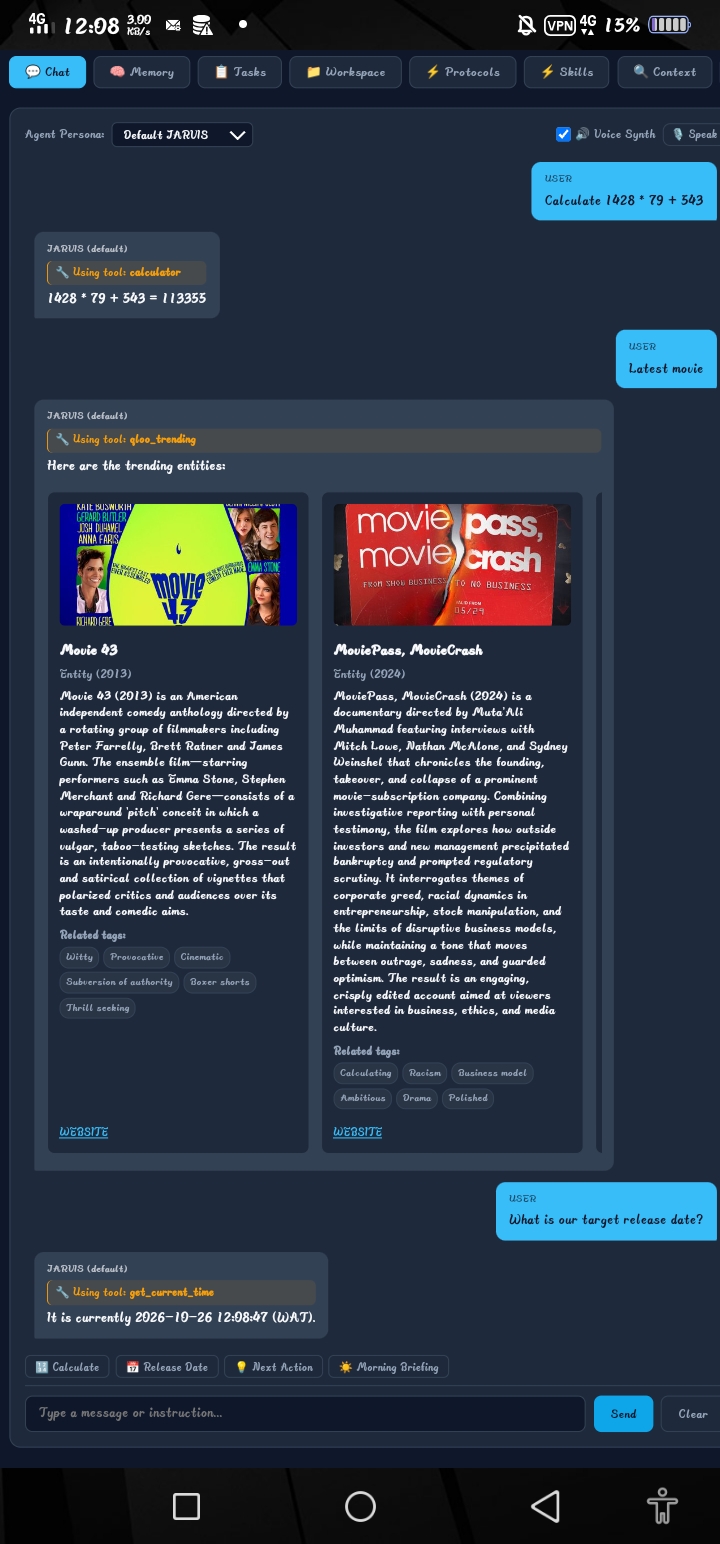
JARVIS Nexus is an AI agent platform featuring a Cultural Intelligence Studio powered by Qloo. It brings cultural discovery into an interactive web interface with features including:
- Personalized recommendations: Discover items based on cultural interests and Qloo's recommendation capabilities.
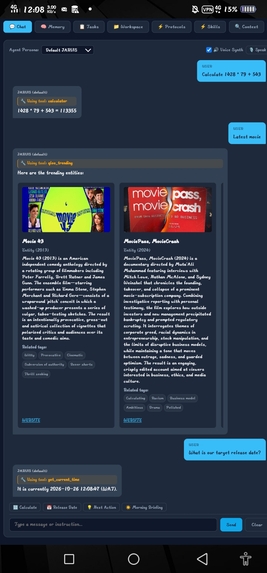
- Trending insights: Explore trending cultural interests and entities.
- Geographic exploration: Investigate cultural discovery through location-based queries.
- Recommendation comparison: Compare results to explore different discovery possibilities.
- Cultural context: Present relevant tags and recommendation explanations where available.
- Interactive AI experience: Connect tool-based workflows with an agent interface.
The goal is to make cultural discovery more accessible and to demonstrate how cultural intelligence can become part of an interactive AI-powered application.
How I Built It
I built JARVIS Nexus using Python, with Qloo Taste AI integrated through a dedicated provider and tool layer. The application connects Qloo's API capabilities to the Cultural Intelligence Studio and presents results through a browser-based interface.
The architecture separates the Qloo integration from the user interface and agent tooling. This makes the integration easier to test, maintain, and extend.
I also developed automated tests to validate important application behaviors and integration components. The application is deployed as a public web demo, allowing reviewers to explore it without setting up the project locally.
How It Uses Qloo
Qloo is central to the Cultural Intelligence Studio. Rather than treating cultural discovery as a collection of unrelated searches, the application uses Qloo's cultural intelligence capabilities to retrieve and explore recommendations.
The integration supports recommendation discovery, trending queries, geographic exploration, and comparisons. The interface organizes the results to help users explore cultural interests and understand relevant context.
Challenges I Faced
One challenge was connecting an external API to an interactive application while keeping the integration maintainable. I addressed this by separating provider logic and tool workflows from the interface.
Another challenge was handling inconsistent or missing information in API responses, including images, entity types, and tags. I worked on normalizing results and making the interface more resilient when some information is unavailable.
I also focused on automated testing and deployment so that the project would be more reliable than a simple prototype running only on my device.
What I Learned
This project strengthened my understanding of API integration, tool-based AI architectures, automated testing, and deploying a Python application for public access.
It also showed me that building an AI-powered product involves more than connecting an API: the results must be presented clearly, edge cases must be handled, and the application must be usable by people who did not build it.
What's Next
Future improvements could include richer preference controls, more ways to explore connections between cultural interests, and additional agent workflows that help users move from discovering an interest to exploring related experiences.
JARVIS Nexus demonstrates my approach to combining cultural intelligence, AI agent tooling, and practical software engineering in one extensible application.
Built With
- agents
- ai
- api
- artificial
- css
- html
- intelligence
- javascript
- pytest
- python
- qloo
- rest

Log in or sign up for Devpost to join the conversation.