Inspiration
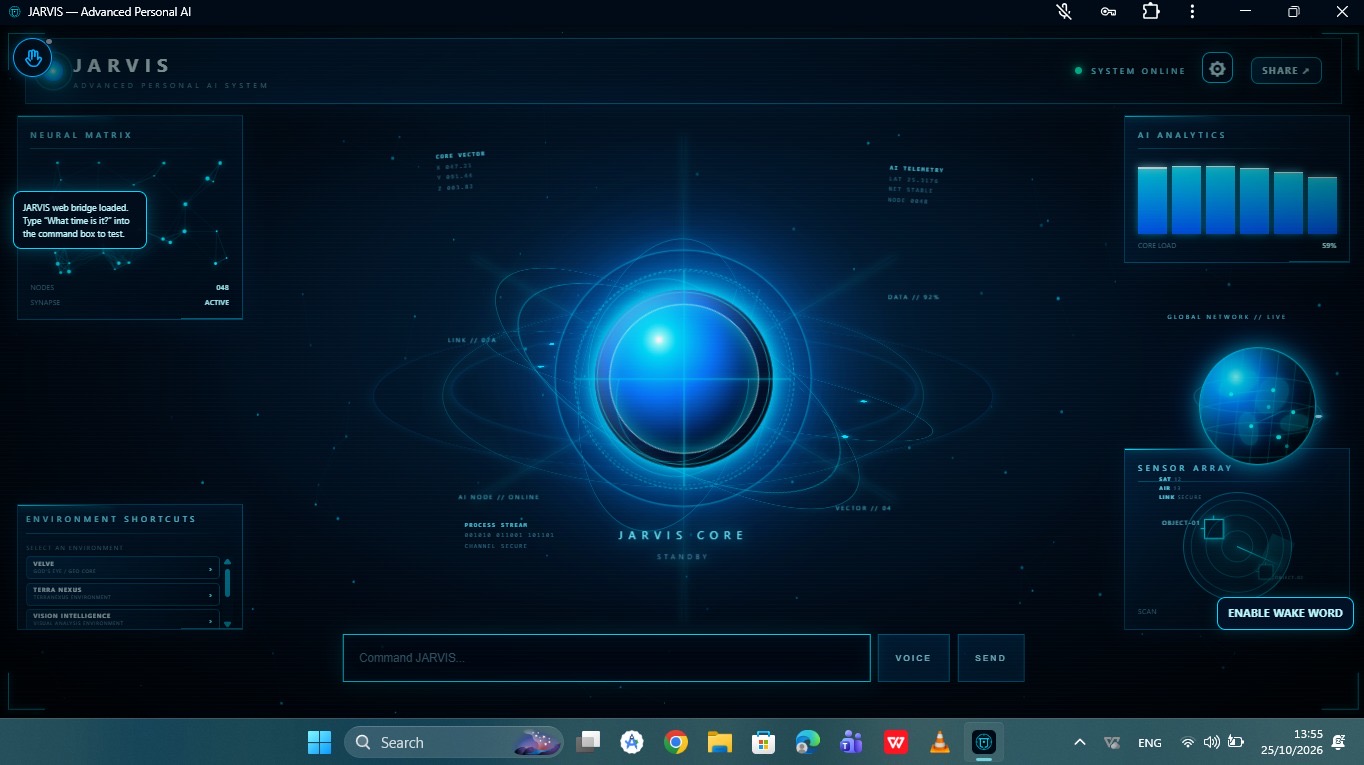
JARVIS-MULTI AI WEB APP was inspired by the idea of creating a personal AI system that feels less like a chatbot and more like a complete digital operating environment. Instead of requiring users to switch between dozens of applications, tools, and AI services, JARVIS brings intelligence, automation, visualization, and interaction into one unified interface.
The inspiration came from futuristic AI assistants such as JARVIS, but the goal was to turn that concept into a practical web application that can actually help users create, explore, analyze, communicate, and interact with digital environments.
What it does
JARVIS-MULTI AI WEB APP is a multi-environment AI web application designed to provide different specialized experiences from a single interface.
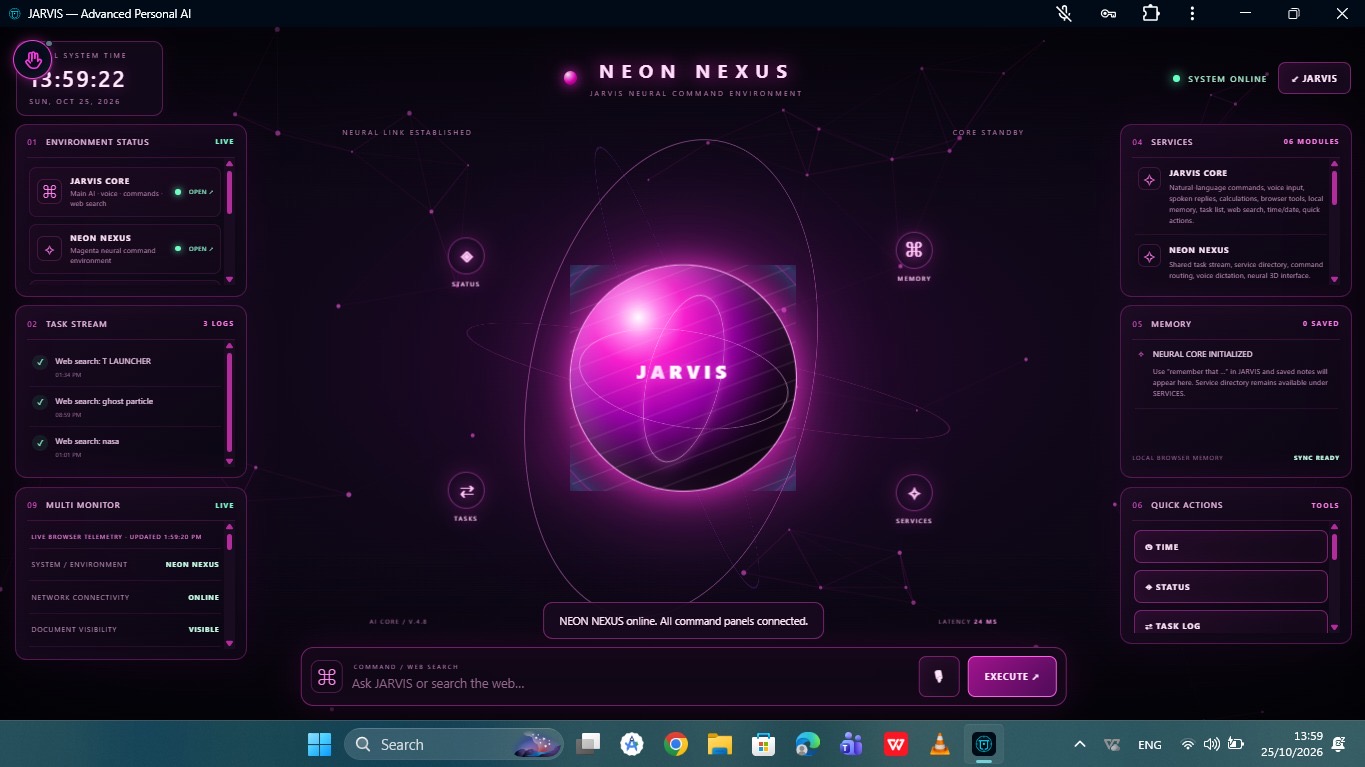
It includes multiple JARVIS environments:
- Main JARVIS — the central AI assistant and command interface.
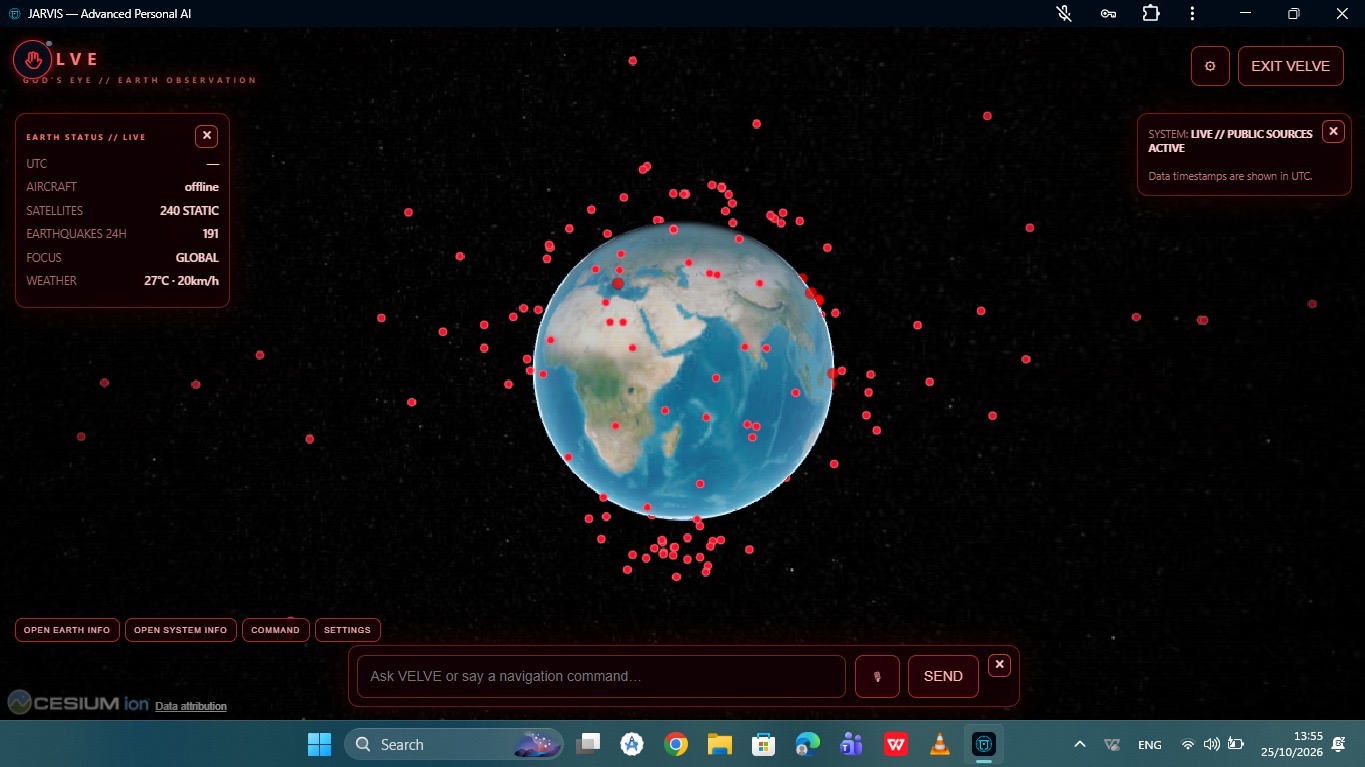
- Velve — a specialized environment for interacting with AI and digital workflows.
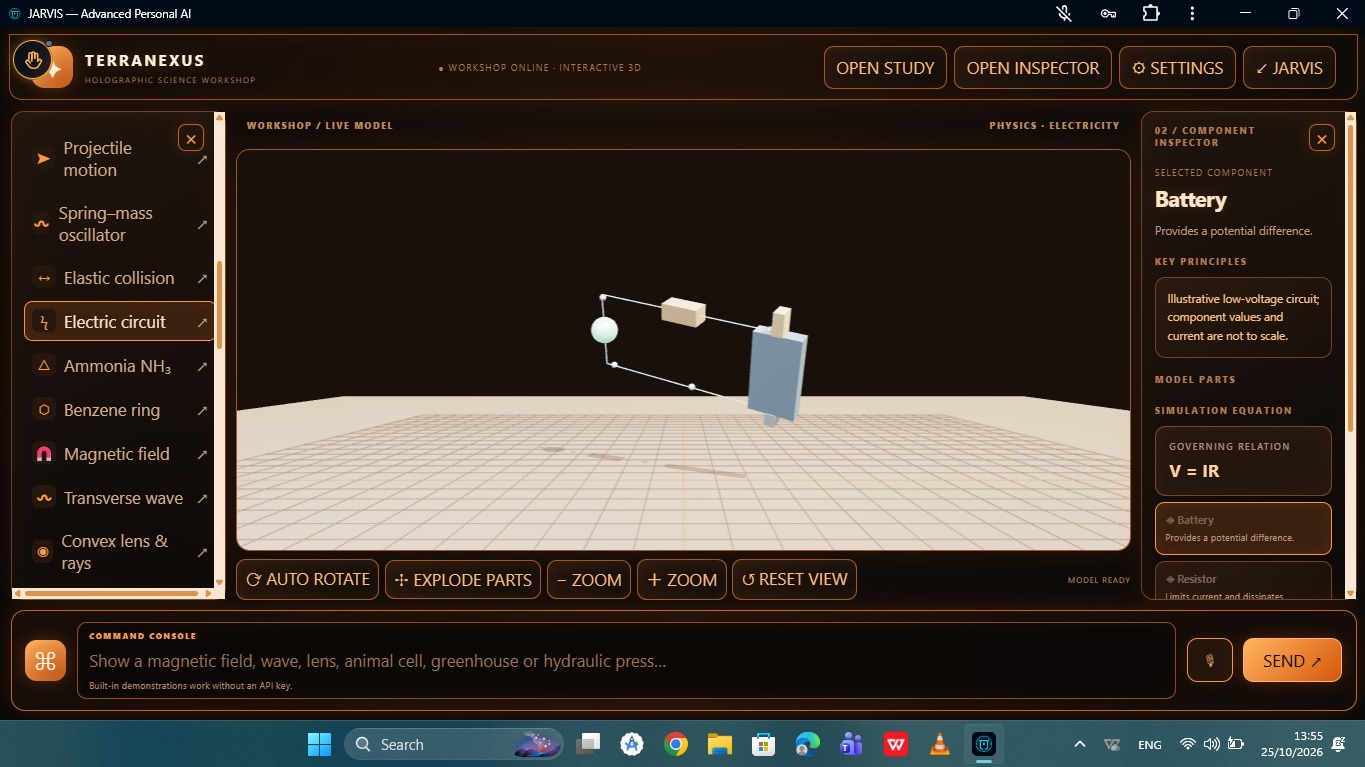
- TerraNexus — a science and mechanics workshop where experiments, machines, and concepts can be explored through simulation.
- Command Centre — a centralized control and monitoring environment.
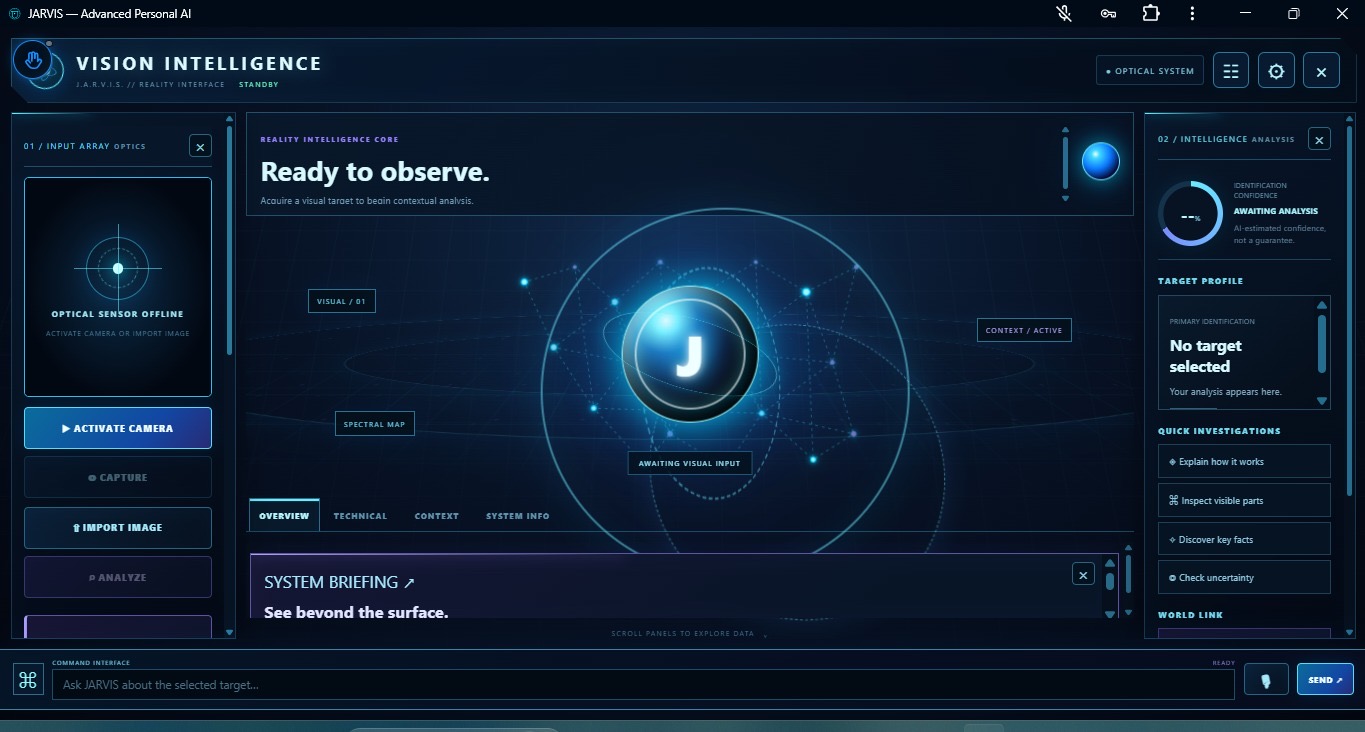
- Vision Intelligence — an AI-powered visual intelligence environment for understanding and working with visual information.
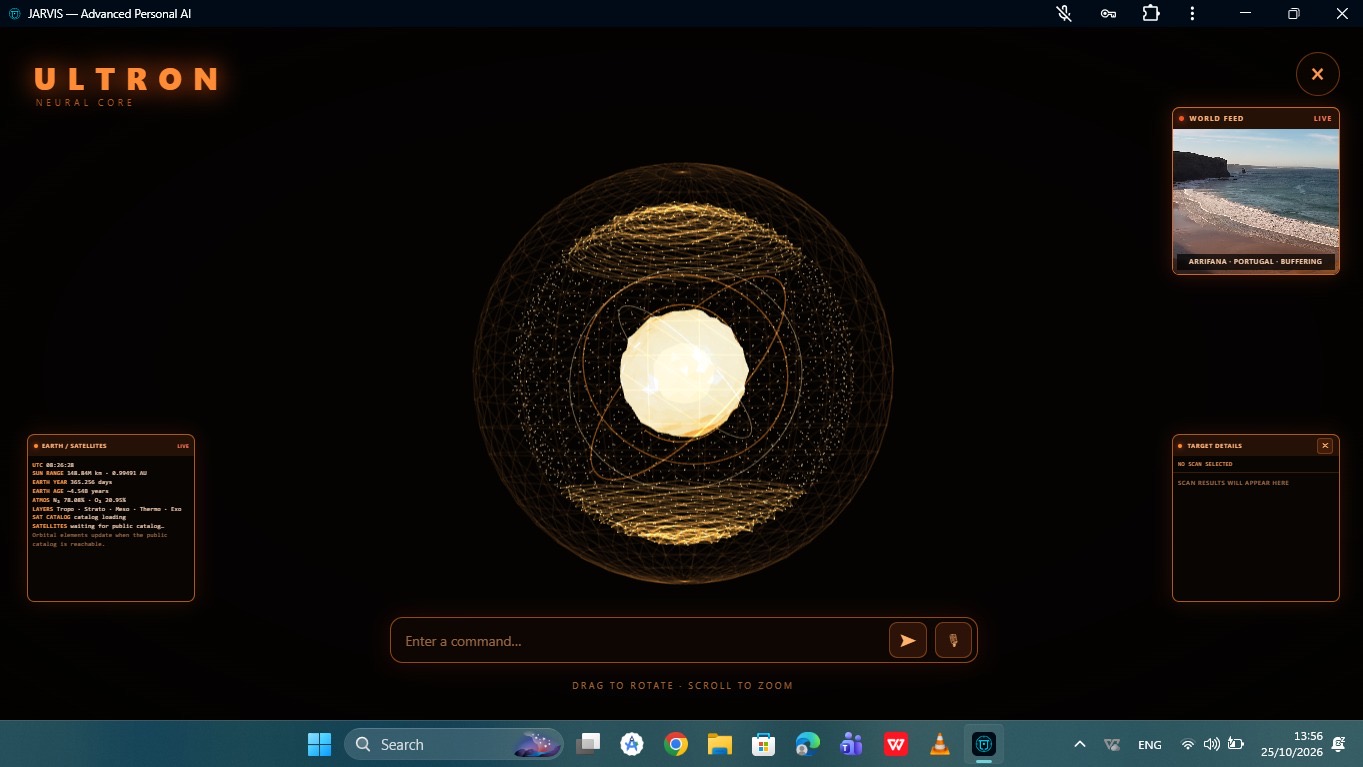
- Ultron — an advanced futuristic control and intelligence environment.
Rather than being limited to text conversations, JARVIS is designed around the idea of AI + tools + environments + interaction.
The system can be extended to work with different AI models and APIs, allowing different capabilities to be combined into one assistant instead of forcing the user to interact with each service separately.
How we built it
JARVIS was built as a web-based AI application with a modular architecture so that different environments and capabilities can coexist inside one system.
The frontend provides the futuristic interface and interactive environments, while the backend acts as the bridge between the interface, AI services, commands, and application logic.
The architecture is designed around several major layers:
User Interface → JARVIS Command System → Backend → AI Models/APIs → Specialized Tools/Environments
This approach allows JARVIS to interpret user requests, communicate with AI services, execute application functionality, and present the result through an interactive interface.
We also focused heavily on making the application feel like an actual futuristic AI system rather than a conventional website. Different environments have their own purpose and interaction style, while remaining part of the same JARVIS ecosystem.
Where possible, the project is designed around free or low-cost services so that advanced AI functionality can remain accessible.
Challenges we ran into
One of the biggest challenges was combining many different capabilities without turning the application into a collection of disconnected features.
We had to think about:
- Designing a consistent architecture for multiple environments.
- Connecting AI models and APIs to the application.
- Creating a futuristic interface while keeping it usable.
- Managing communication between the frontend and backend.
- Keeping different JARVIS environments independent while still making them part of one system.
- Handling API availability, configuration, and free-tier limitations.
- Making complex functionality accessible through simple commands.
- Continuously improving the system without breaking existing features.
Another major challenge was balancing ambition and reliability. JARVIS is designed to eventually become a much larger ecosystem, so every new feature has to be added carefully without compromising the functionality that already works.
Accomplishments that we’re proud of
We are proud that JARVIS evolved beyond the concept of a simple AI chatbot into a multi-environment AI web platform.
Some of our biggest accomplishments include:
- Building a unified AI assistant experience.
- Creating multiple specialized JARVIS environments.
- Combining AI interaction with visualization and interactive interfaces.
- Developing a backend capable of connecting the application with AI services.
- Designing a futuristic command-centre-style experience.
- Building specialized environments for visual intelligence, simulation, experimentation, and control.
- Creating an architecture that can continue expanding with new AI models and capabilities.
- Keeping the project focused on practical functionality rather than only visual effects.
Most importantly, JARVIS demonstrates our vision of an AI system that can eventually become a digital workspace rather than simply a conversational assistant.
What we learned
Building JARVIS taught us that creating an AI application is much more than connecting an AI API to a chat box.
We learned how important architecture, backend systems, API integration, state management, user experience, and modular design are when building a large AI product.
We also learned that AI becomes significantly more useful when it is connected to tools and actions rather than being limited to generating text.
Another major lesson was the importance of designing for future expansion. A system like JARVIS can quickly become extremely complex, so modular environments and clear separation between components are essential.
Most importantly, we learned to think about AI as an interface to capabilities, not merely as a source of answers.
What’s next for JARVIS-MULTI AI WEB APP
JARVIS is still only the beginning.
Our next goal is to evolve it into a much more capable personal AI operating environment where users can interact with applications, information, tools, simulations, and digital services through natural commands.
Future development will focus on:
- More powerful AI agents and tool use.
- Multi-model AI support.
- Better voice interaction.
- More advanced vision capabilities.
- Persistent, user-controlled memory.
- More automation and command execution.
- Expanded simulation environments.
- More intelligent monitoring and dashboards.
- Better integration with external applications and services.
- More powerful multimodal interaction.
- Additional specialized JARVIS environments.
- Improved offline and low-cost AI capabilities.
Ultimately, our vision is for JARVIS to become a personal digital intelligence layer — something that doesn’t just answer questions, but helps users understand information, control tools, explore ideas, build things, and accomplish tasks through a single intelligent interface.
JARVIS-MULTI AI WEB APP is not meant to be the final version of an AI assistant.
It is the foundation for one.
Built With
- c
- chatgpt
- claude
- coding
- css
- html
- javascript
- openrouter
