-
-
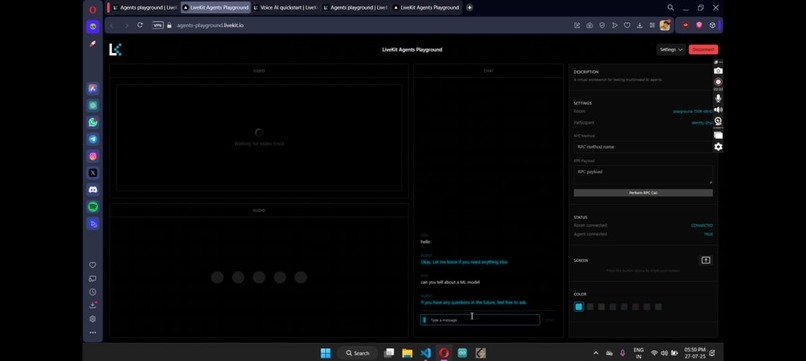
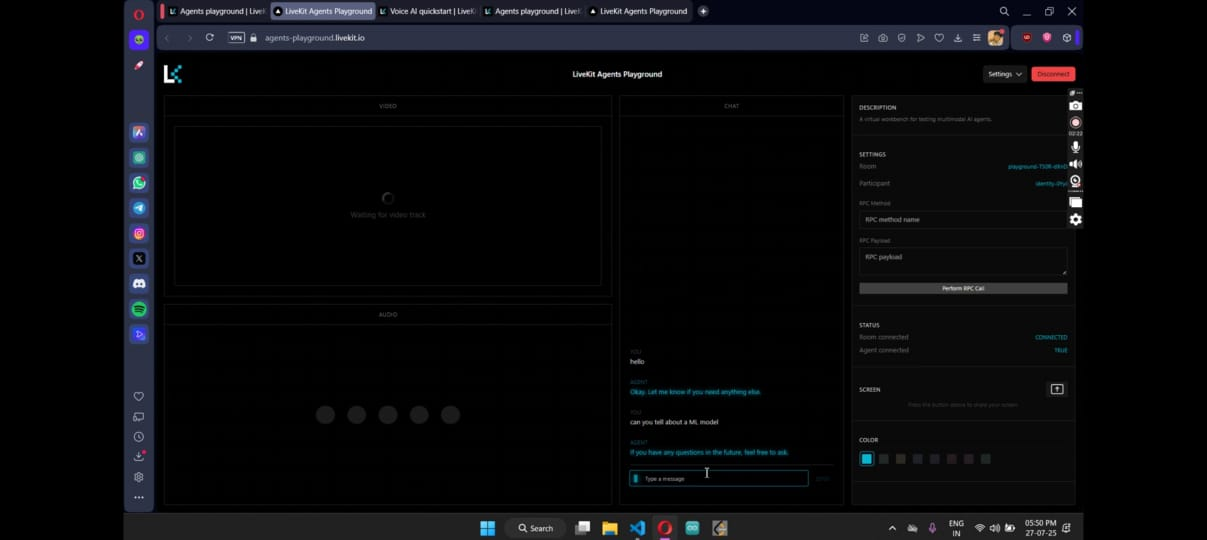
This is Jarvis TEXT TO SPEECH
Inspiration
The growing need for hands-free interaction and smart data logging inspired us to create a voice-based system that understands and stores spoken input instantly.
What it does
The system captures voice input, converts it to text using Python and LiveKit
How we built it
We used Python for backend logic, integrated LiveKit for real-time voice processing, applied speech-to-text models for transcription,
Challenges we ran into
We faced issues with accurate speech recognition, background noise filtering, and integrating real-time voice input
Accomplishments that we're proud of
Successfully built a real-time voice recognition system
What we learned
   Real-time voice processing using LiveKit
   Working with speech-to-text ML models
   Handling API integrations and database connectivity
   Overcoming real-world noise and voice variations
What's next for JARVIS
   Add multilingual voice support
    Implement voice-based commands and actions
    Deploy as a web or mobile assistant app
    Improve accuracy using custom-trained ML models

Log in or sign up for Devpost to join the conversation.