-
-
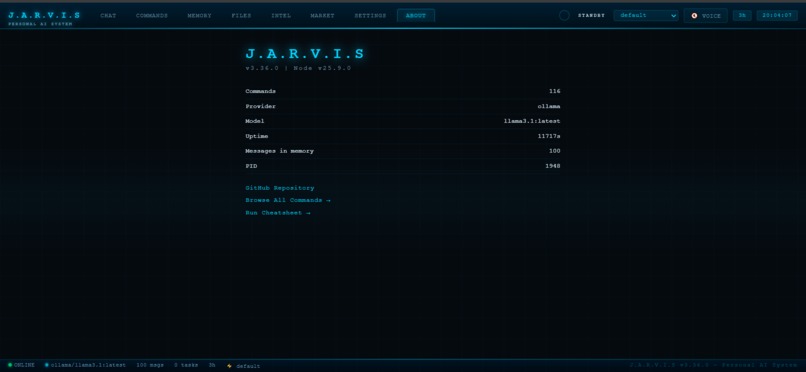
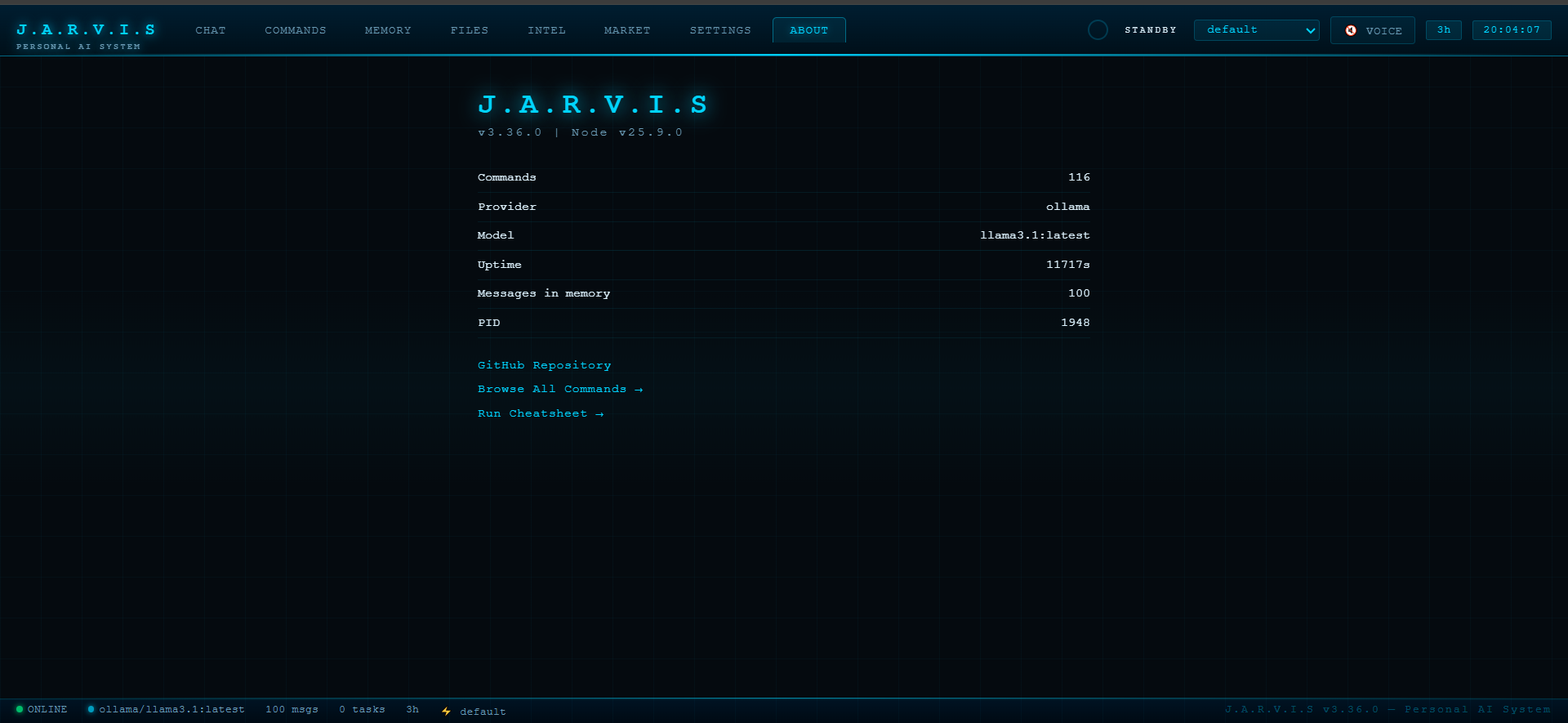
About page
-
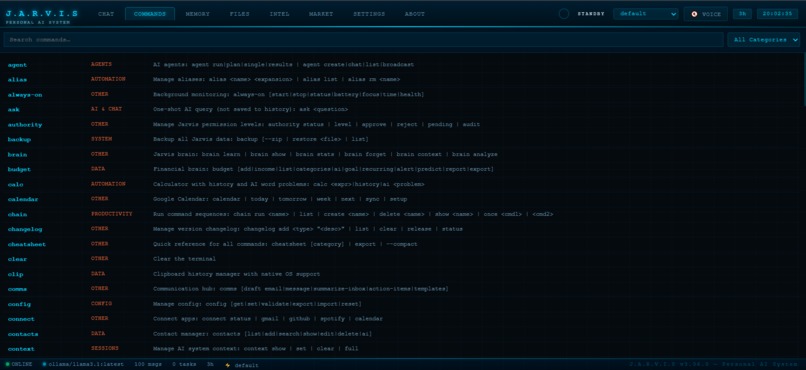
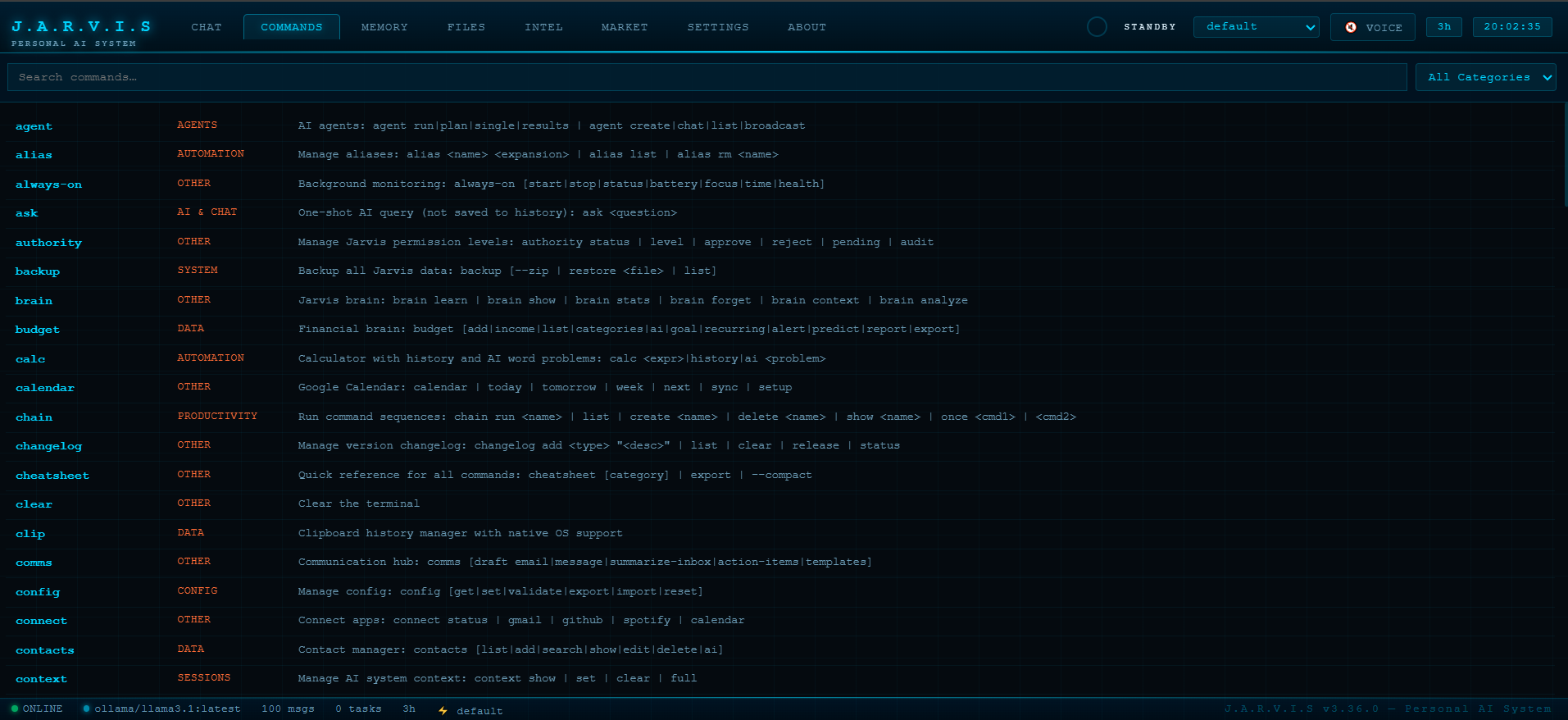
Commands total of 112
-
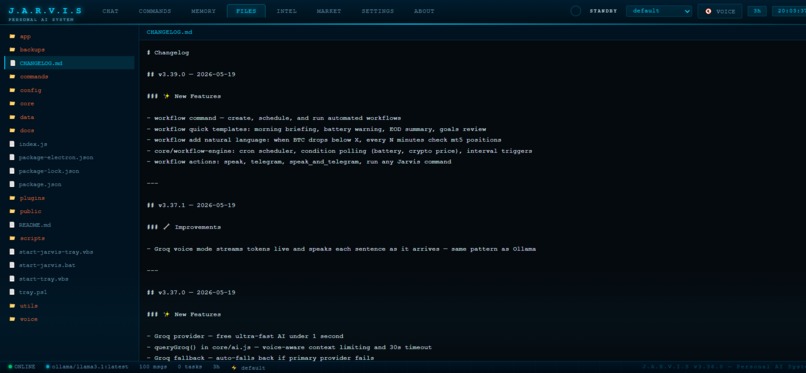
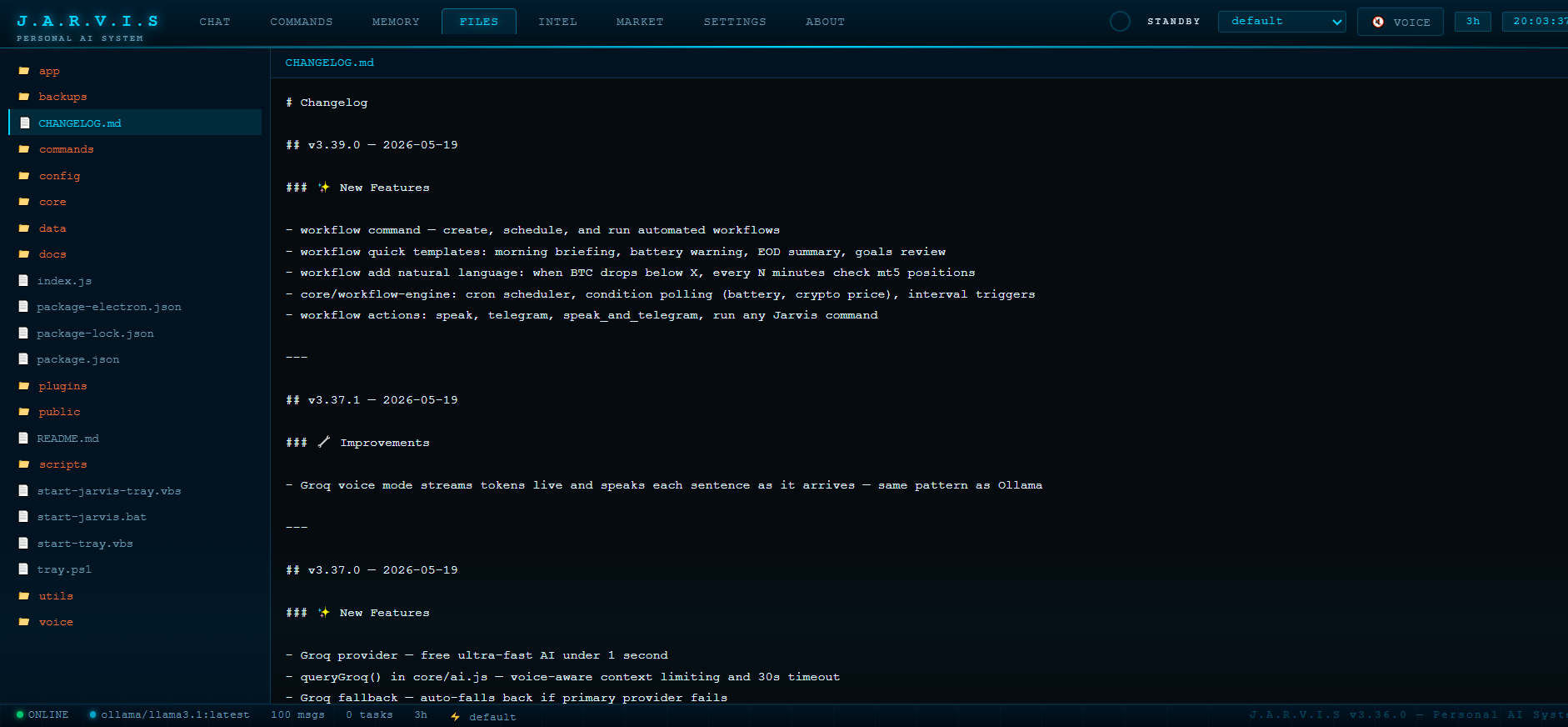
Files for views
-
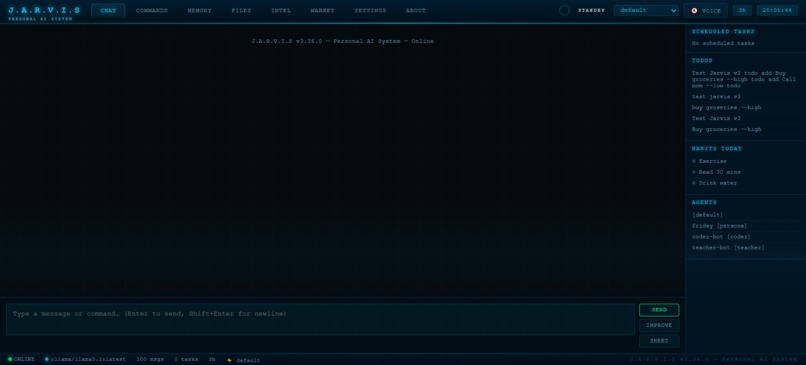
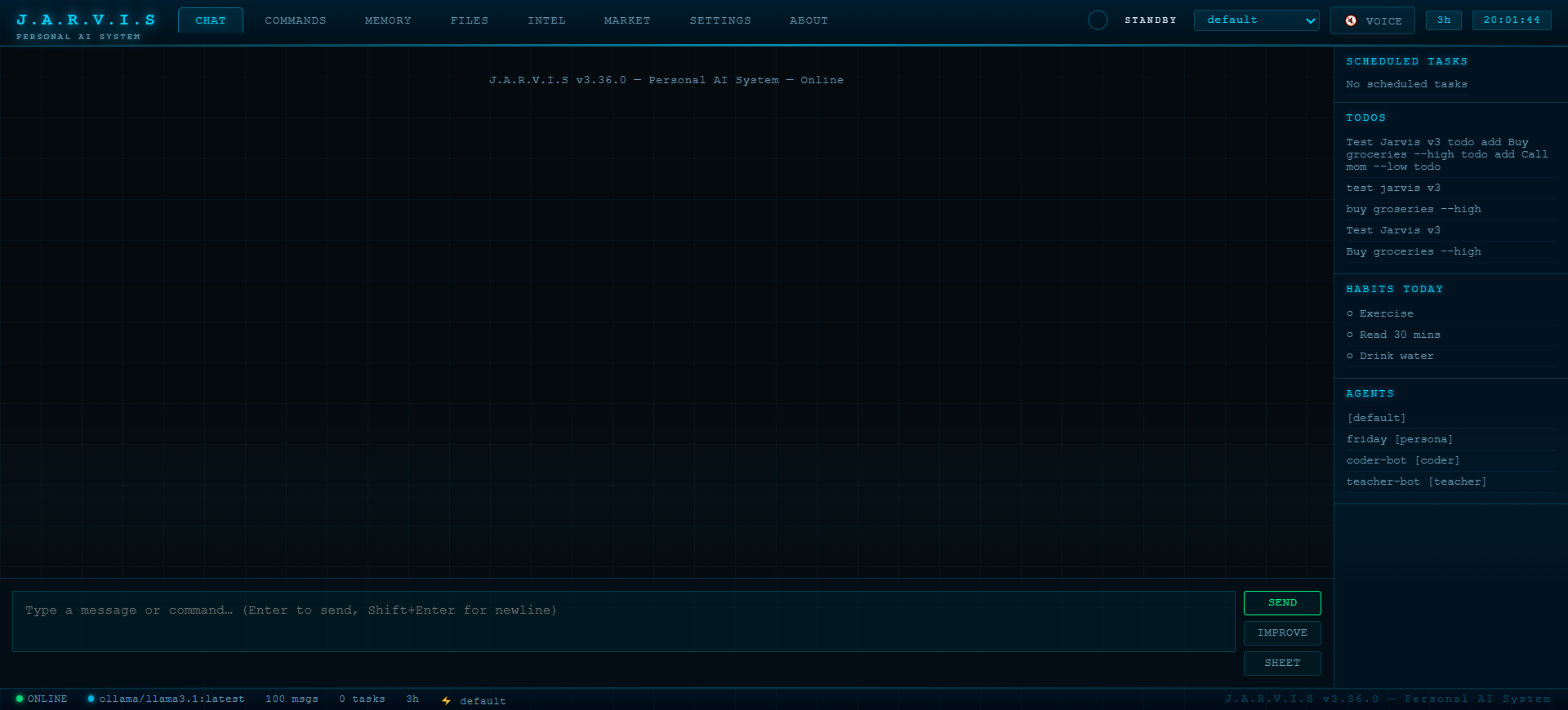
Homepage jarvis
Inspiration
Most AI assistants today are reactive. You open an app, type a question, get an answer, and leave. I wanted to build something different: an AI that behaves more like a personal operating system than a chatbot.
The idea behind JARVIS was inspired by the vision of a persistent assistant that can see, hear, remember, and act. Instead of simply responding to prompts, I wanted an AI capable of understanding context, controlling a computer, automating tasks, monitoring information, and proactively helping its user throughout the day.
What it does
JARVIS is an autonomous AI operating system designed for personal productivity and computer automation.
It can:
- Listen for voice commands using wake-word detection
- Understand speech and hold natural conversations
- Control a Windows PC through mouse and keyboard automation
- Analyze screenshots and understand what is happening on the screen
- Remember user preferences, goals, and project history
- Manage tasks, reminders, workflows, and objectives
- Connect with services such as Telegram, Gmail, GitHub, Spotify, and Google Calendar
- Monitor financial markets and MetaTrader 5 trading activity
- Generate, edit, review, and improve code using AI models
- Operate both locally and with cloud AI fallbacks
Unlike traditional assistants, JARVIS is designed to remain active in the background and assist proactively rather than waiting for every instruction.
How I built it
JARVIS was built primarily using JavaScript with Node.js as the core runtime.
The system combines multiple technologies:
- Node.js for orchestration and automation
- Python for speech recognition and MetaTrader integration
- PowerShell for Windows automation
- Electron for desktop integration
- Ollama for local AI models
- Faster-Whisper for speech-to-text
- LLaVA for computer vision
- Qwen2.5-Coder for coding assistance
- Telegram Bot API for remote notifications
- Gmail, GitHub, Spotify, and Calendar integrations
- REST APIs and WebSockets for dashboard communication
The architecture is modular, allowing new commands, integrations, and AI capabilities to be added easily.
Challenges I ran into
Building a voice-first AI system presented several challenges.
One of the biggest difficulties was creating a reliable audio pipeline. The wake-word detector, speech recognition system, and text-to-speech engine all needed to work together without microphone conflicts or delays.
Another challenge was managing multiple AI models. Different tasks required different capabilities, so a routing system was developed to automatically choose the best model for coding, conversation, reasoning, or vision tasks.
Creating safe automation was also difficult. Since JARVIS can control a computer and execute actions, permission systems and authority levels had to be introduced to prevent unintended behavior.
Performance optimization was another major challenge, especially when running local AI models on consumer hardware.
What I learned
This project taught me a great deal about:
- AI agent architecture
- Speech processing systems
- Large language model integration
- Computer vision workflows
- Automation and workflow engines
- API integration
- Desktop software development
- System design and modular architecture
Most importantly, I learned how multiple AI technologies can be combined into a single coherent platform capable of performing real-world tasks.
Future Plans
The long-term goal is to evolve JARVIS into a true AI operating system that works across devices and platforms.
Future improvements include:
- Cross-platform support
- Enhanced security and authentication
- Better long-term memory systems
- Multi-device synchronization
- Plugin marketplace
- Mobile companion application
- Smarter autonomous agents
- Enterprise-grade deployment options
JARVIS represents my vision of a future where AI is not just a chatbot, but an intelligent digital partner capable of helping people achieve more every day.
Built With
- ai-agents
- automation
- computer-vision
- electron
- faster-whisper
- github-api
- gmail-imap
- google-calendar
- javascript
- json
- llava
- metatrader-5
- node.js
- ollama
- powershell
- python
- qwen2.5-coder
- rest-api
- speech-recognition
- spotify
- telegram-bot-api
- text-to-speech
- websocket


Log in or sign up for Devpost to join the conversation.