-
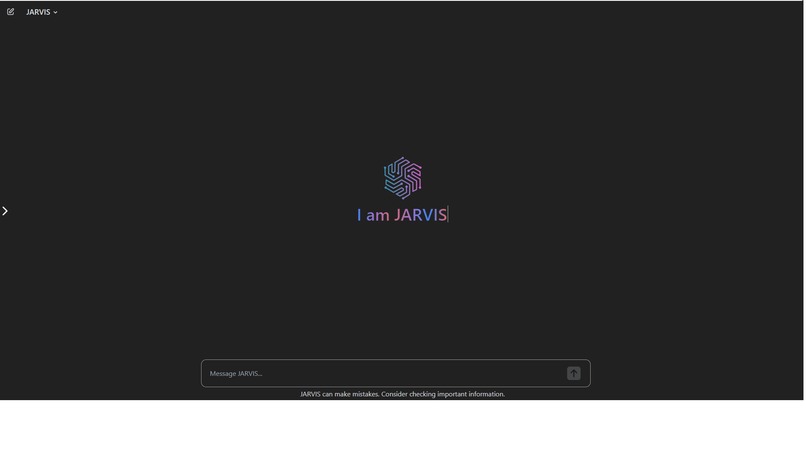
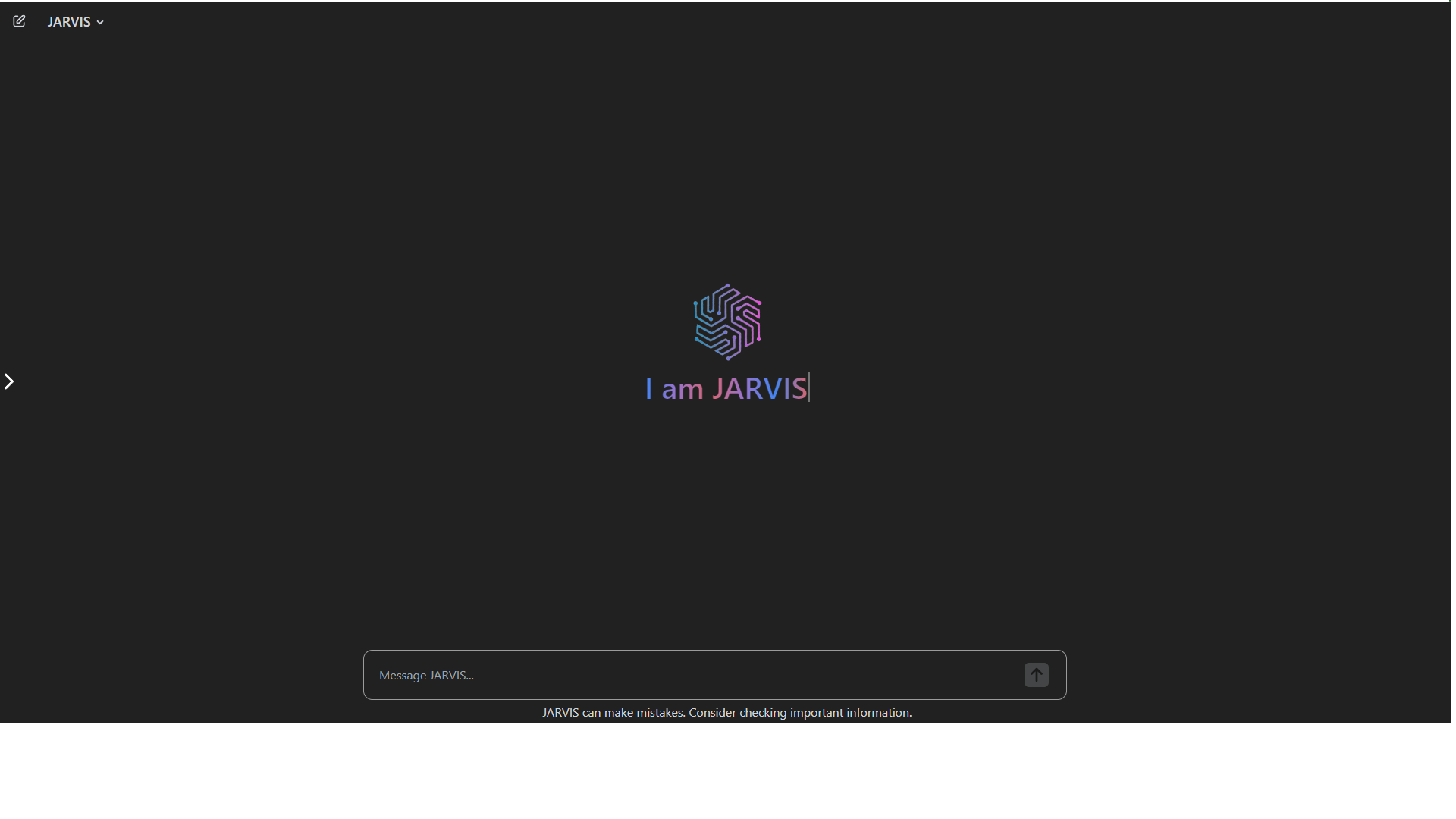
jarvis home page
-
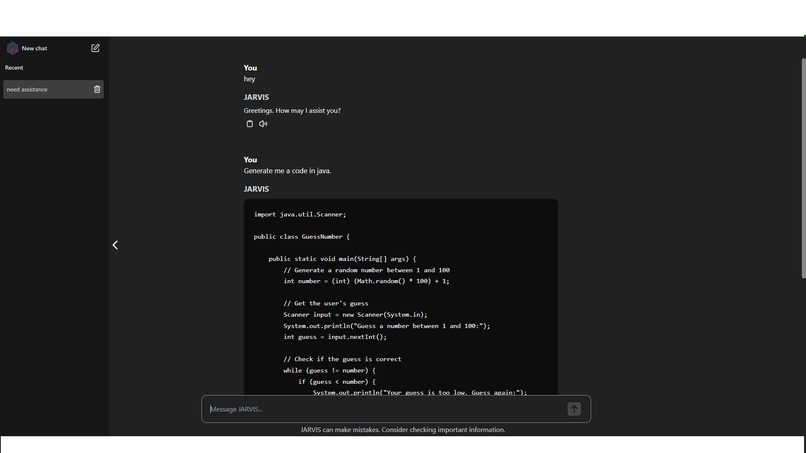
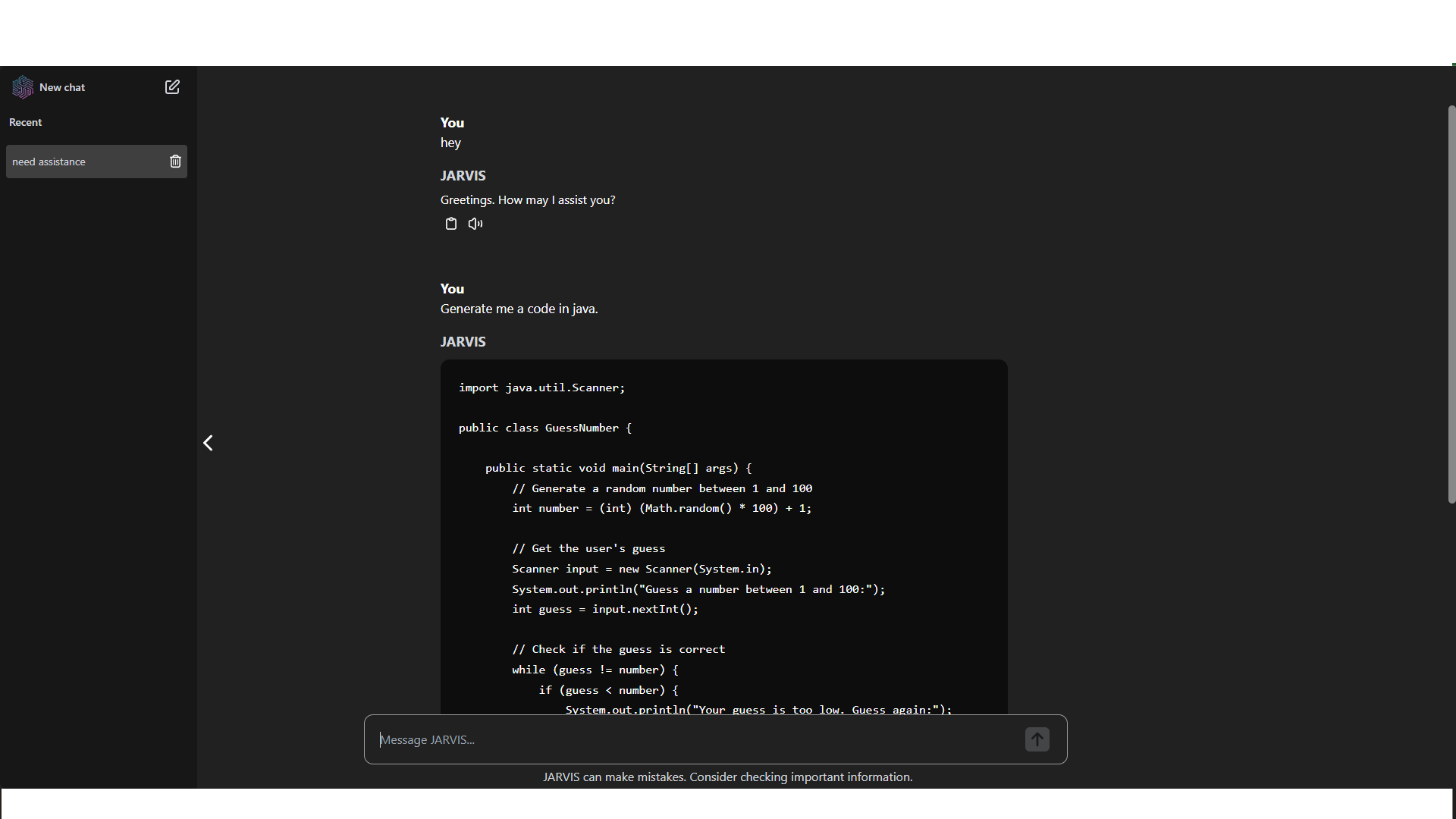
jarvis in action
Inspiration
The inspiration for JARVIS came from a desire to create a highly responsive and intelligent conversational AI that can assist with various tasks, from managing databases to providing real-time information. Inspired by the fictional AI assistant from the Iron Man series made with google GEMINI AI, our goal was to build a practical and versatile tool that could simplify and enhance everyday workflows.
What it does
JARVIS is an AI-powered assistant designed to interact with users through natural language processing. It can:
- Provide syntax highlighting for code snippets.
- Integrate with the Google Generative AI API to generate contextual responses.
- Seamlessly switch between different database tables based on user input.
How we built it
JARVIS was built using a combination of modern web development technologies and frameworks:
- Frontend: HTML, CSS, JavaScript, React, and Tailwind CSS for a responsive and dynamic user interface.
- Backend: Node.js and Express.js for server-side operations and handling API requests.
- Database: MySQL for storing conversation data and managing tables.
- API Integration: Google Generative AI for generating intelligent and context-aware responses.
- Modules: Various npm packages, including
mysql,express,showdown, and others, for extended functionality.
Challenges we ran into
Building JARVIS presented several challenges:
- Ensuring seamless interaction between the frontend and backend.
- Managing and synchronizing state across different components and functions.
- Handling asynchronous operations and ensuring data consistency.
- Integrating Google Generative AI and optimizing it for real-time responses.
- Designing a user-friendly interface that provides a smooth and intuitive user experience.
Accomplishments that we're proud of
We're proud of several accomplishments in the development of JARVIS:
- Successfully integrating multiple technologies and frameworks to create a cohesive and functional AI assistant.
- Implementing robust database management features that allow dynamic interaction with MySQL tables.
- Achieving real-time communication and data processing between the frontend and backend.
- Developing a responsive and visually appealing user interface with Tailwind CSS.
- Creating a reliable and context-aware conversational AI using Google Generative AI.
What we learned
Throughout the development of JARVIS, we learned:
- The importance of efficient state management in complex applications.
- Advanced techniques for integrating third-party APIs and handling their responses.
- Best practices for designing and implementing RESTful APIs.
- Strategies for optimizing performance and ensuring the scalability of web applications.
- The value of user feedback in iterating and improving the functionality and usability of the product.
What's next for JARVIS
The future for JARVIS includes several exciting possibilities:
- Expanding the range of functionalities and integrating additional APIs for enhanced capabilities.
- Improving the AI's ability to understand and respond to more complex queries and tasks.
- Enhancing the user interface with more interactive and customizable features.
- Implementing machine learning algorithms to provide more personalized and adaptive responses.
- Exploring cross-platform compatibility to make JARVIS accessible on various devices and operating systems.
By continuously refining and expanding JARVIS, we aim to create an even more powerful and versatile AI assistant that can seamlessly integrate into various aspects of users' lives and workflows.
Built With
- api
- css
- express.js
- gemini
- html
- node.js
- tailwindcss


Log in or sign up for Devpost to join the conversation.