-
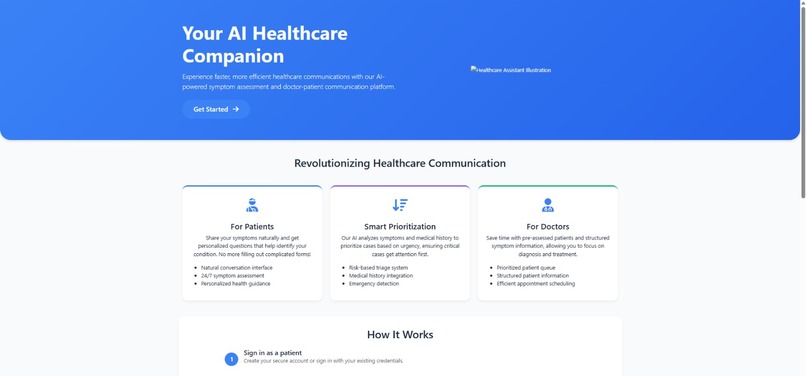
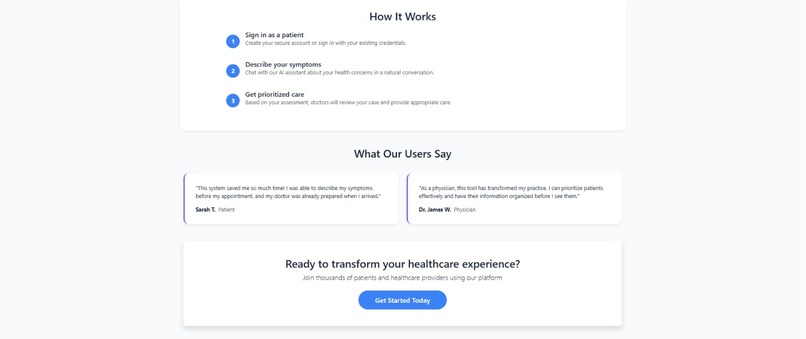
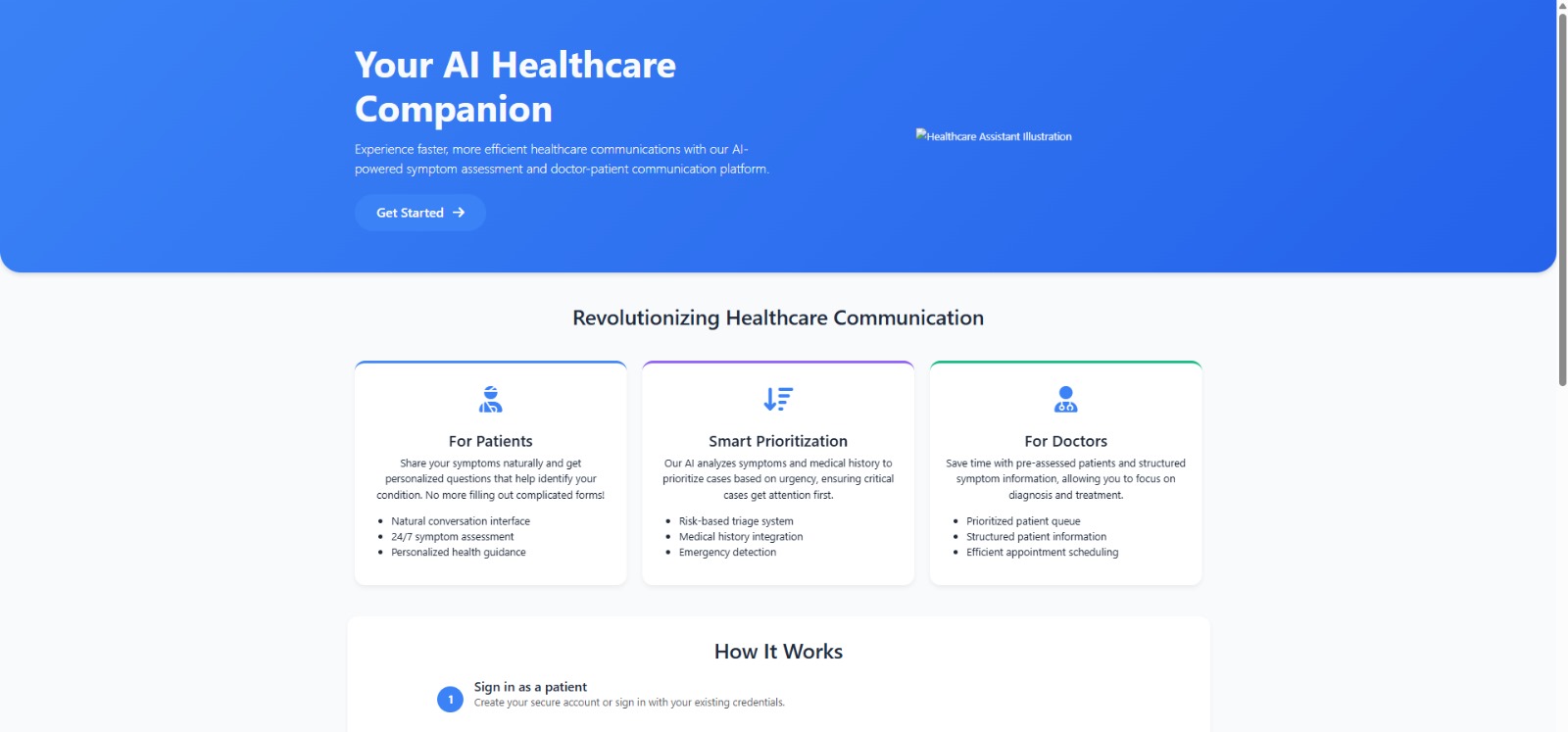
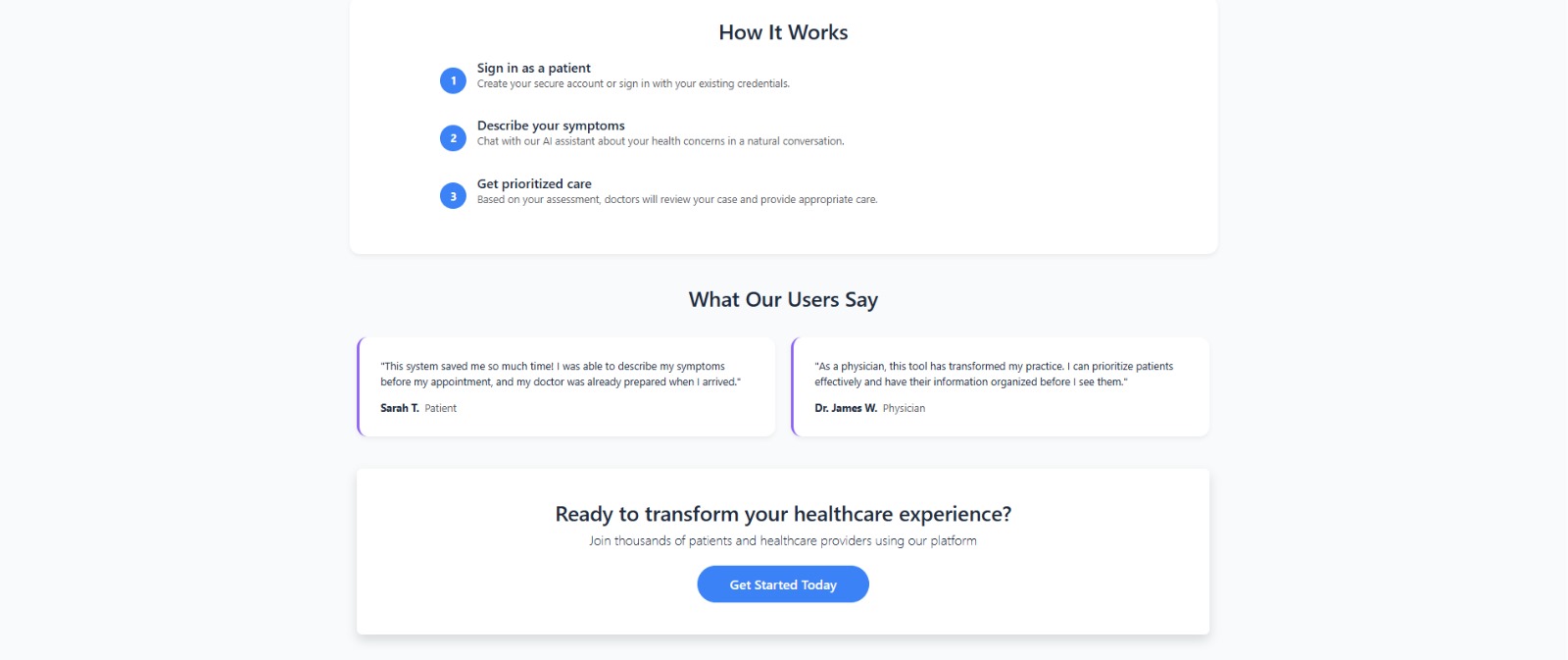
website
-
-

ChatGPT assistant chat
-
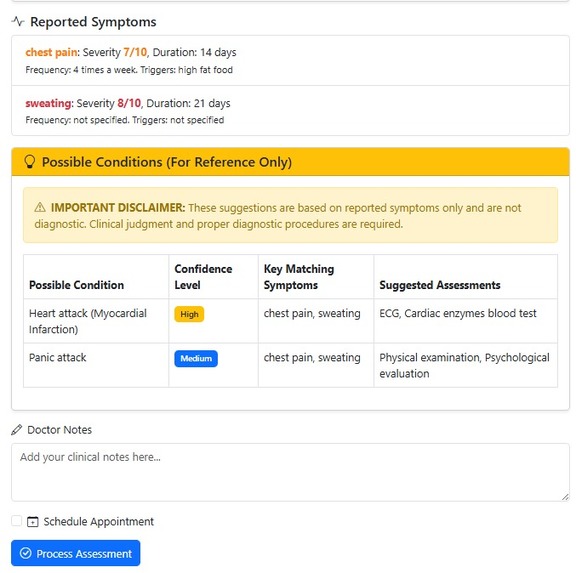
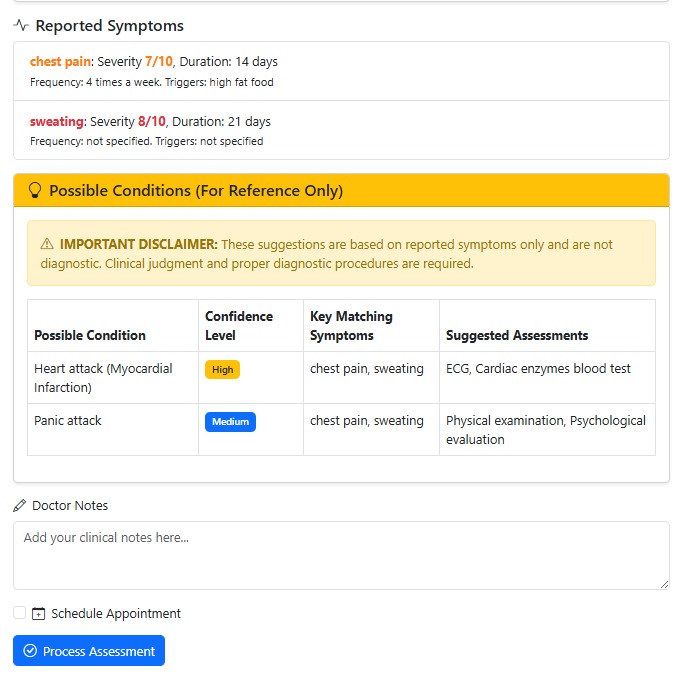
Doctor dashboard with a patient report

Inspiration
My uncle's recent heart condition crisis was preventable. Ignoring early symptoms led to 30 critical days in ICU - a stark reminder of how symptom neglect costs lives. This personal tragedy, combined with America's surgeon shortage crisis and the communication barriers between patients and doctors, inspired my solution.
What it does
What it does This is a healthcare conversation assistant with three core modules:
Patient Interview System: AI-powered conversational interface that collects comprehensive symptom data, medical history, and lifestyle factors. Medical Assessment Engine: Analyzes collected data to generate priority scores (0-100) and classify cases into Critical, Urgent, Standard, or Routine categories. Doctor Dashboard: Presents prioritized patient queue with detailed symptom reports, possible condition predictions, and appointment scheduling tools.
How we built it
My system architecture consists of: Frontend: Responsive HTML/CSS/JS using Bootstrap framework with separate patient chat and doctor dashboard interfaces Backend: Python Flask server handling REST API endpoints with session management Conversation Manager: Python module for structured medical interviews using OpenAI's ChatGPT API Data Processing Pipeline: Extracts symptom severity, duration, and characteristics from natural language Storage Layer: JSON-based patient records and assessment data with filesystem persistence Authentication System: Role-based access control separating patient and provider views Prediction Module: Generates possible conditions with confidence levels based on reported symptoms
Challenges we ran into
1) Maintaining conversation context across HTTP requests in stateless web environments 2) Balancing thoroughness of assessment with user engagement 3) Creating an ethical framework for medical predictions without diagnostic claims 4) Optimizing API costs while ensuring comprehensive symptom collection
Accomplishments that we're proud of
1) A conversation state management system that handles complex medical interviews 2) A symptom extraction pipeline with duration and severity classification 3) Priority indicators in the doctor dashboard 4) Disease prediction with appropriate medical disclaimers
What we learned
1) Implementing stateful conversation tracking in Flask using secure session management and JSON serialization 2) Designing extraction algorithms that reliably convert natural language medical descriptions into structured data points 3) Optimizing ChatGPT prompt engineering techniques for more effective medical information collection 4) Building priority scoring algorithms that balance multiple factors including symptom severity, duration, and risk factors 5) Creating secure authentication workflows that protect sensitive patient information while remaining accessible
What's next for JARVIS
Our technical roadmap includes:
1) Make app compatible with real time data about patients collected by applications like google fit 2) Development of a React Native mobile application 3) Machine learning model for improved symptom severity classification 4) Expansion of the medical knowledge base through partnership with healthcare institutions 5) Implementation of voice input for accessibility


Log in or sign up for Devpost to join the conversation.