-
-
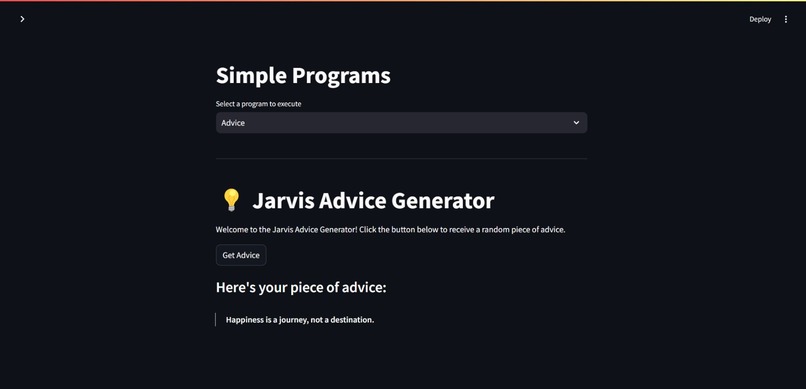
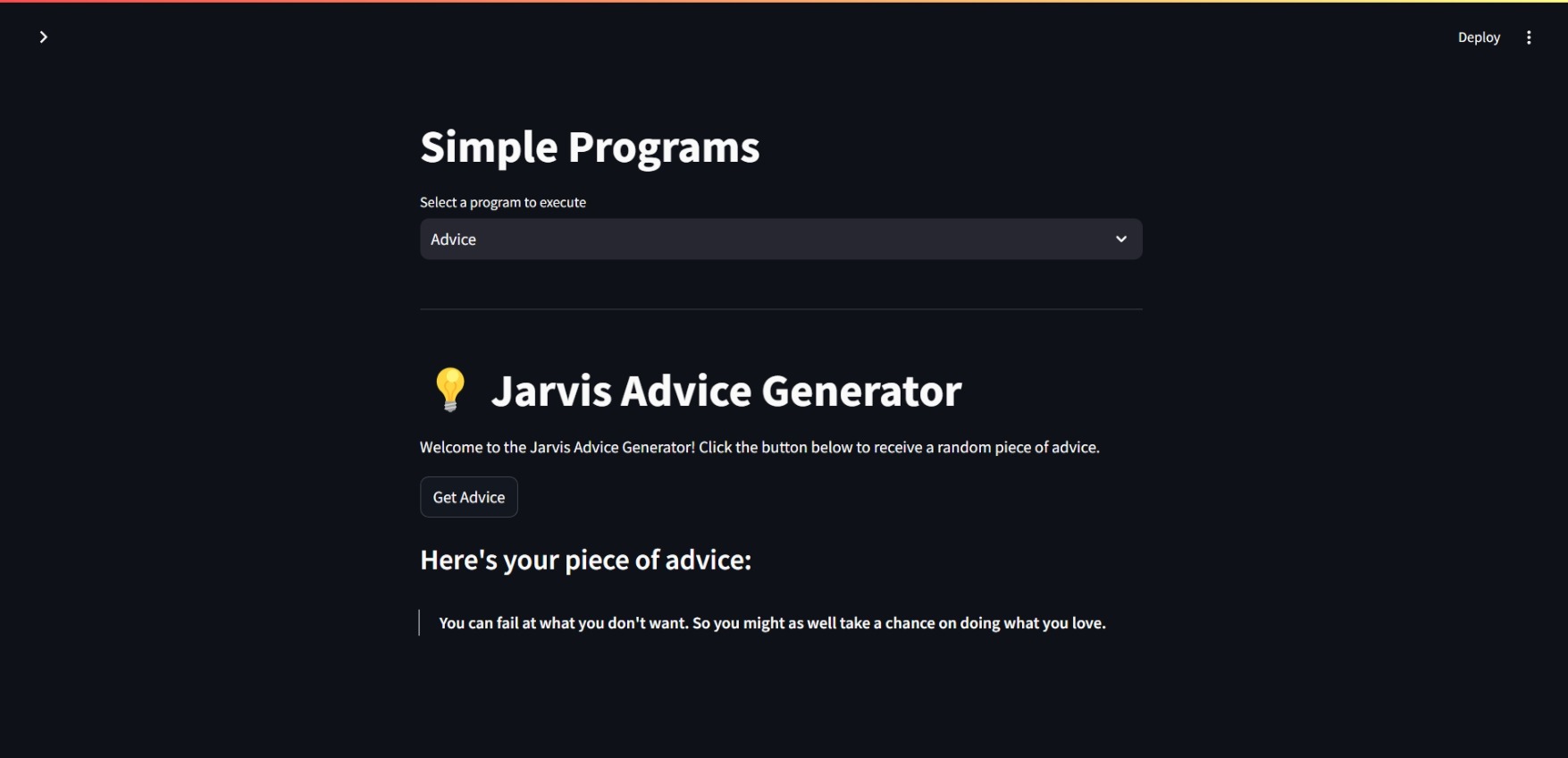
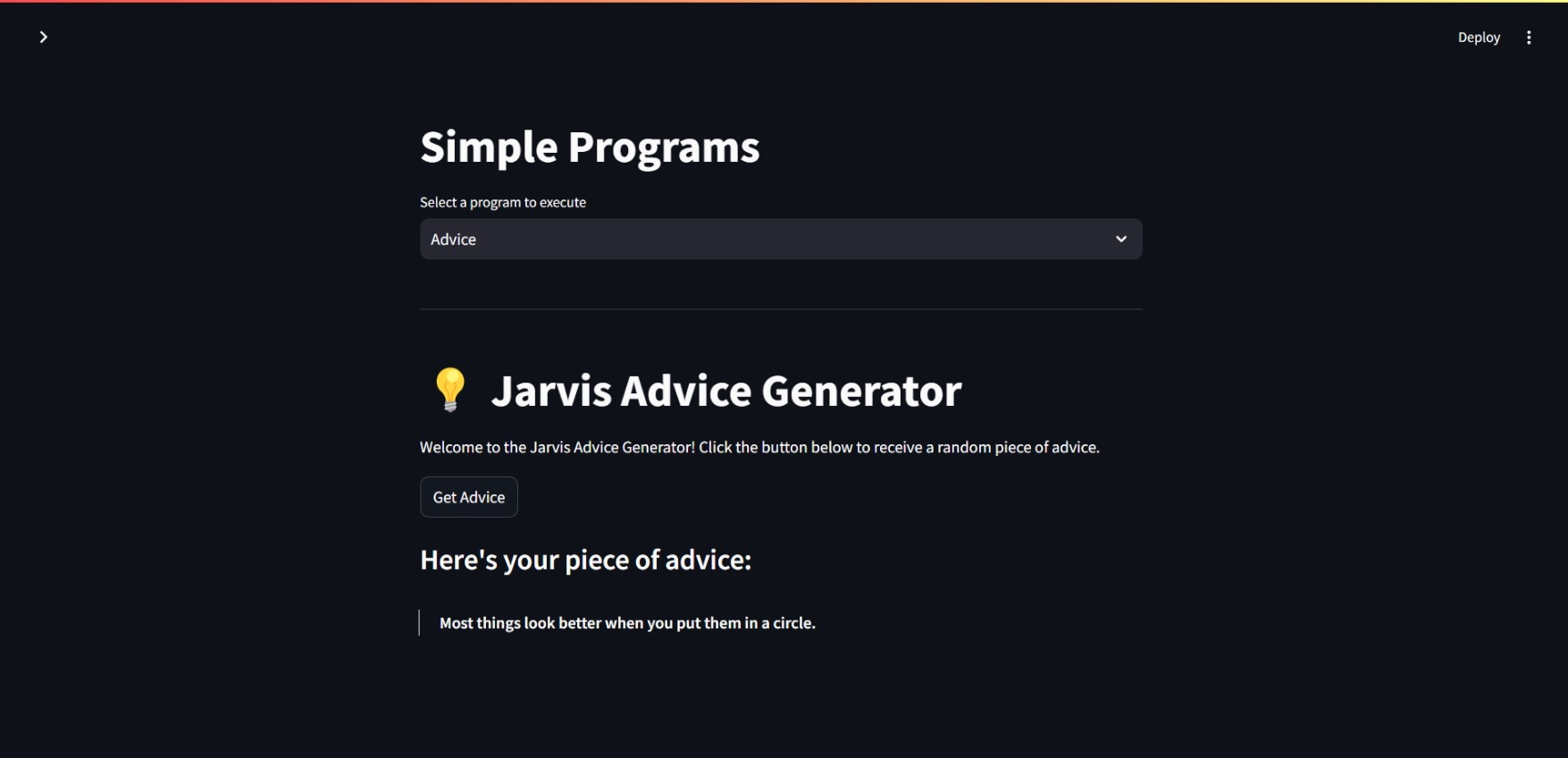
Advice Generator Program
-
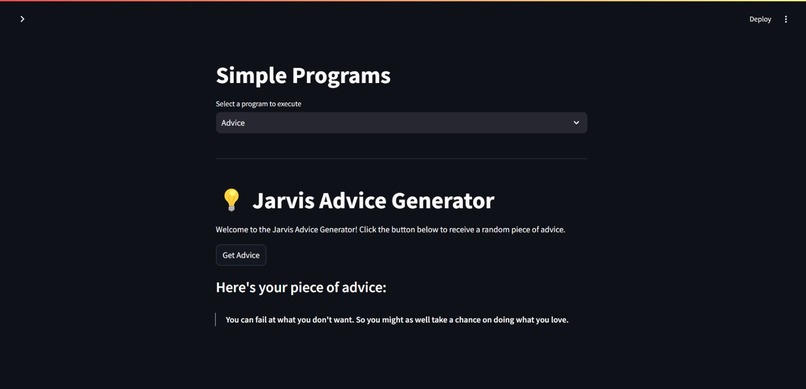
Advice Generator Program
-
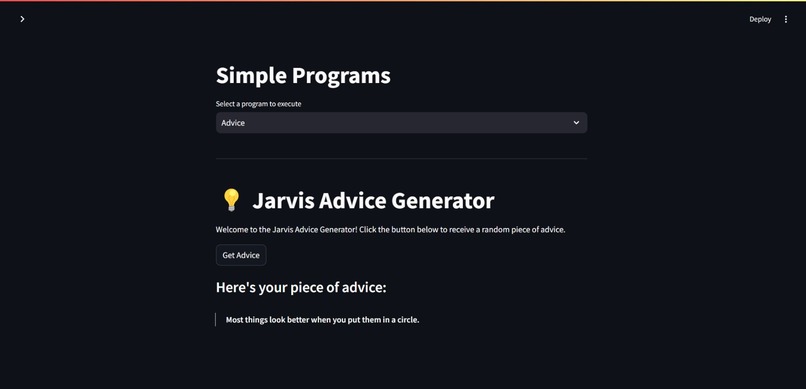
Advice Generator Program
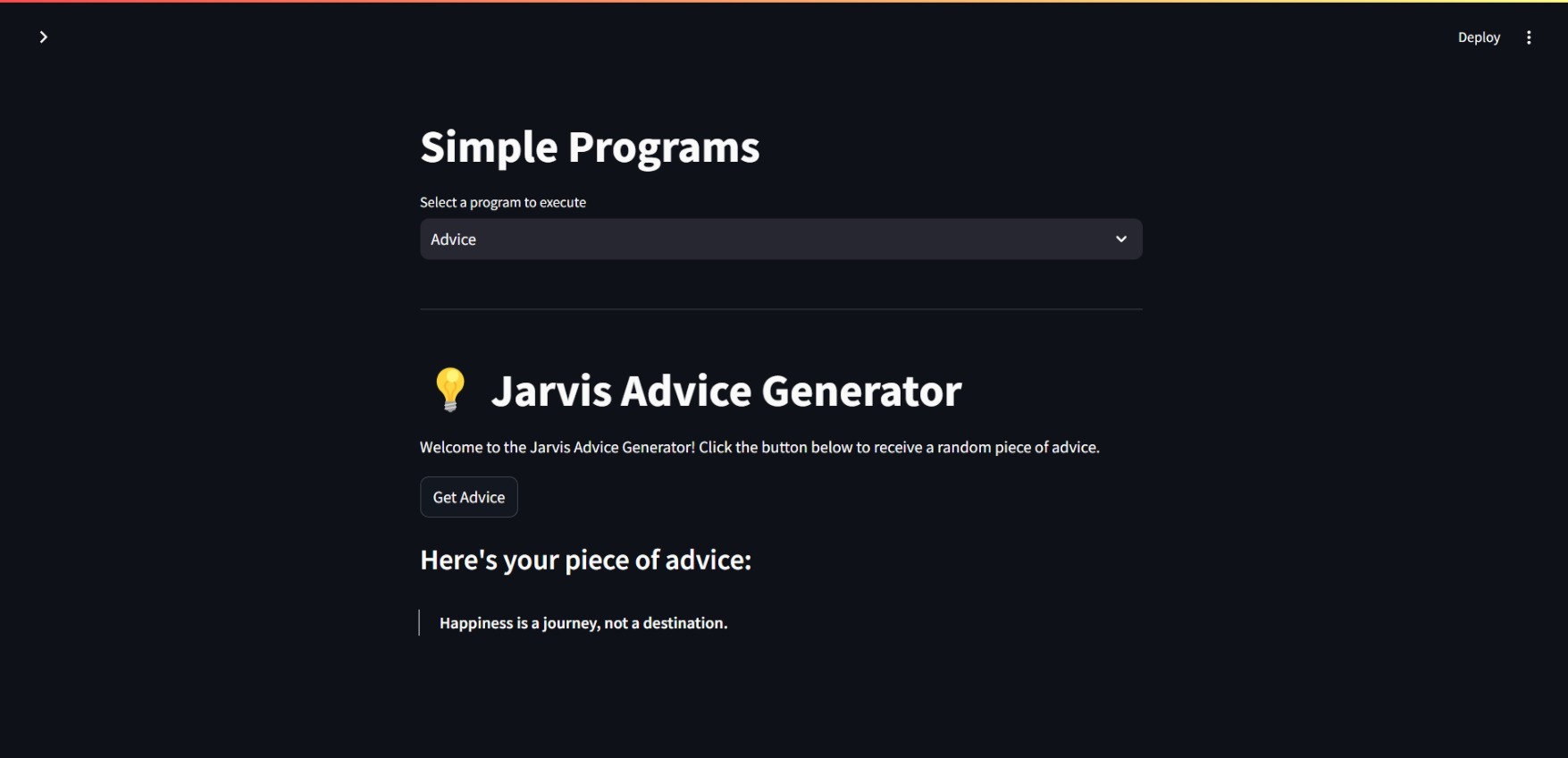
Inspiration
The inspiration behind Jarvis came from a desire to create a smart, all-in-one virtual assistant that enhances productivity, simplifies everyday tasks, and brings multiple AI-powered tools under a single, user-friendly platform—much like Iron Man's Jarvis. With a passion for AI and machine learning, the goal was to build something not just technically impressive, but practically useful for students, developers, and tech enthusiasts.
What it does
Jarvis is a multi-functional AI assistant built with Streamlit that integrates over 10+ ML/DL-based projects in a single dashboard. Features include:
🔊 Voice-controlled interaction 📊 Image processing (Deblurring, Face Detection, Cartoonify) 📚 Educational tools (Translator, Dictionary, Calculator) 🤖 Fun APIs (Jokes, Advice) 🧠 Predictive models (Gender Detection, Emotion Recognition) 🔐 User authentication (MongoDB-based) ☁️ Google Drive integration for model loading 🎨 Attractive and structured UI for seamless navigation
It serves as both a personal assistant and a mini AI lab for experimenting with various models.
How we built it
We built Jarvis using:
- Python as the core programming language
- Streamlit for a fast and interactive UI
- TensorFlow, OpenCV, Scikit-learn for ML/DL functionalities
- MongoDB for secure and flexible user authentication
- gdown for loading heavy models directly from Google Drive
- REST APIs for dynamic content like advice and jokes
- Modular architecture to easily plug in new models or tools
Challenges we ran into
- Handling and storing large ML models without exceeding GitHub limits
- Building a secure and scalable login system
- Maintaining UI/UX consistency while adding diverse functionalities
- Ensuring fast loading despite the number of tools integrated
- Deploying models that rely on heavy image processing on the cloud
Accomplishments that we're proud of
- Successfully merged 10+ machine learning applications into a unified assistant
- Designed a professional-looking dashboard with role-based access
- Improved model deployment using Google Drive integration
- Created YouTube tutorials and blogs for educational reach
- Built a real-time, functional voice assistant interface on top of ML models
What we learned
- Full-stack AI project management from UI to backend ML integration
- Streamlit best practices for performance and modularity
- Cloud storage strategies for large-scale deployment
- REST API integration within Streamlit apps
- Efficient user management with MongoDB in a Python environment
What's next for Jarvis
🔁 Adding chatbot-like memory and conversation context 📱 Building an Android/iOS app version of Jarvis 🧩 Adding more AI tools like Resume Ranker, PDF Chat, etc. 🌐 Real-time news, weather, and reminders through API integration 👥 Collaborative AI space where users can contribute new models
Built With
- ai
- computer-vision
- deep-learning
- machine-learning
- natural-language-processing
- python
- streamlit

Log in or sign up for Devpost to join the conversation.