-
-
Jargon Hero
-
Jargon Purpose
-
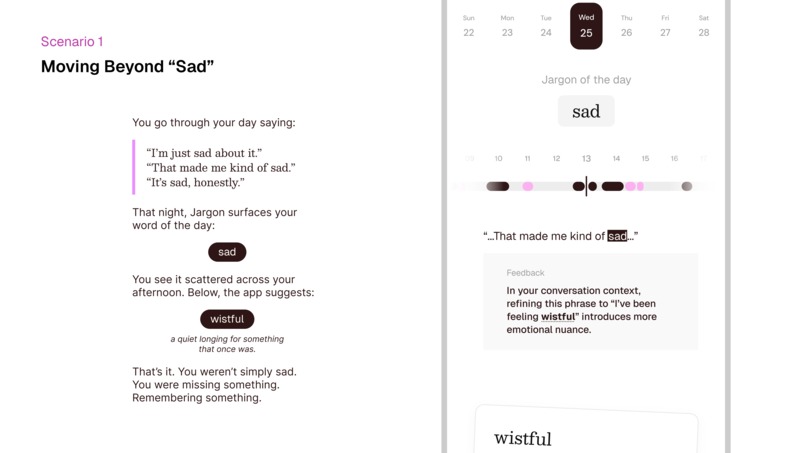
Scenario
-
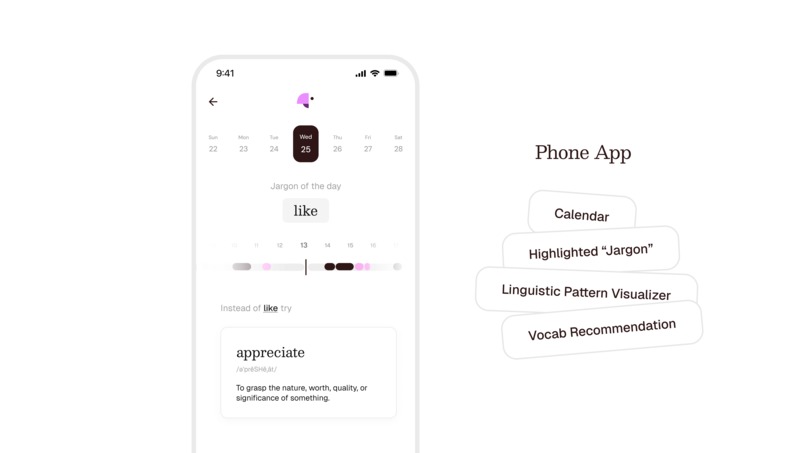
Mobile App Hero
-
Smart Watch Hero
-
How it Works

Inspiration
As language proficiency declines and AI increasingly standardizes communication, human expression is becoming compressed, limiting self-understanding. We began asking: what if language and linguistics itself is a sense? This question led us to Jargon. We know that the words you know shape the feelings you can experience. Research in linguistic relativity suggests that language influences perception, but at the same time we observed Gen Z going through a cultural shift: Reading proficiency has declined in recent years Long-form reading exposure is decreasing AI tools are increasingly standardizing expression If language shapes perception, and our expressive range is narrowing, then our lived experience may be narrowing with it. We wanted to design a tool that makes that invisible compression visible, and gently expands it.
What it does and How It Works
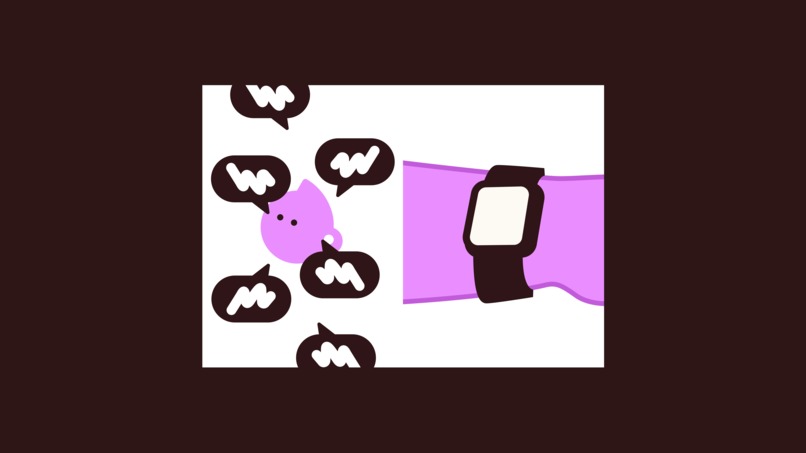
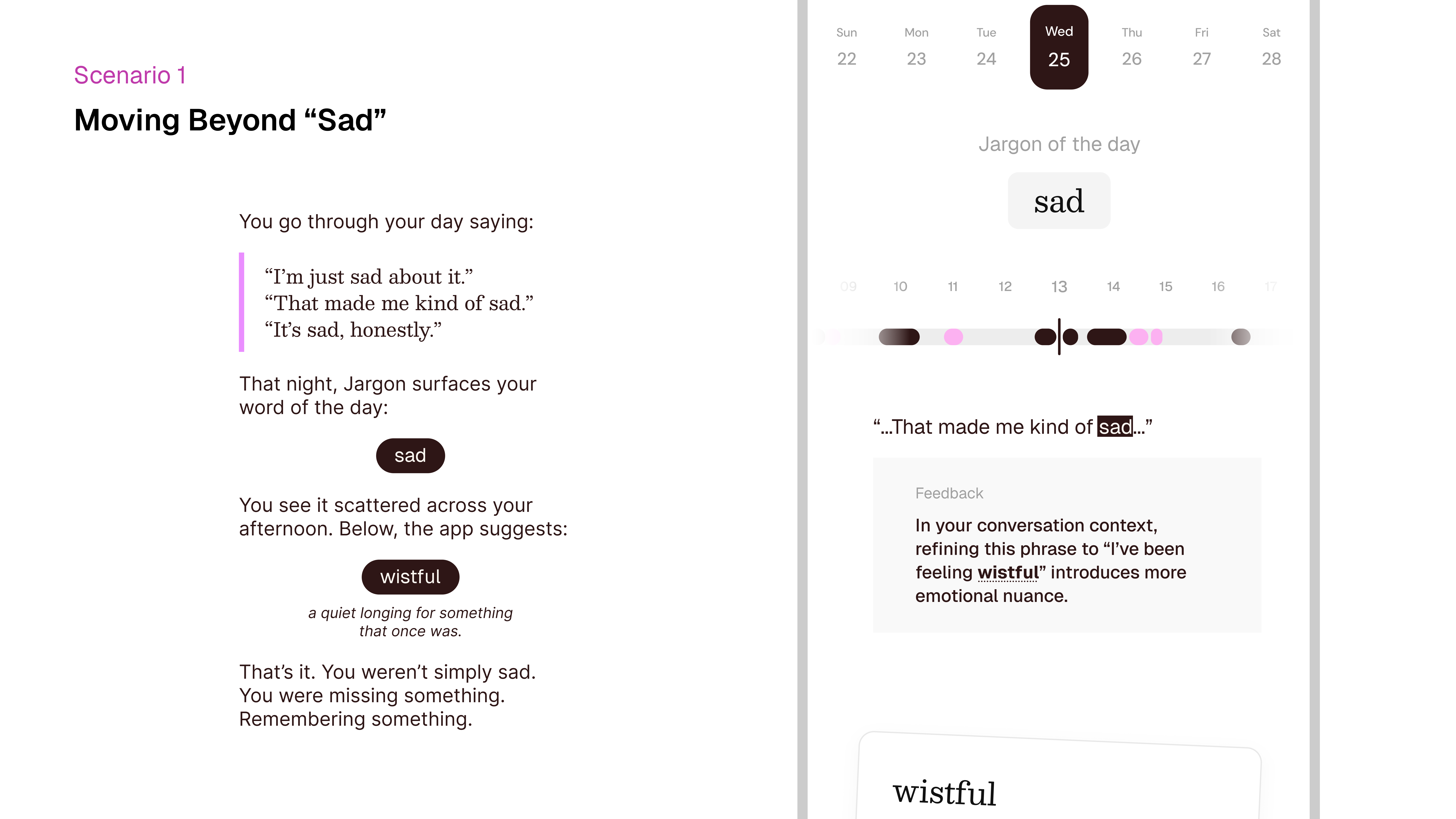
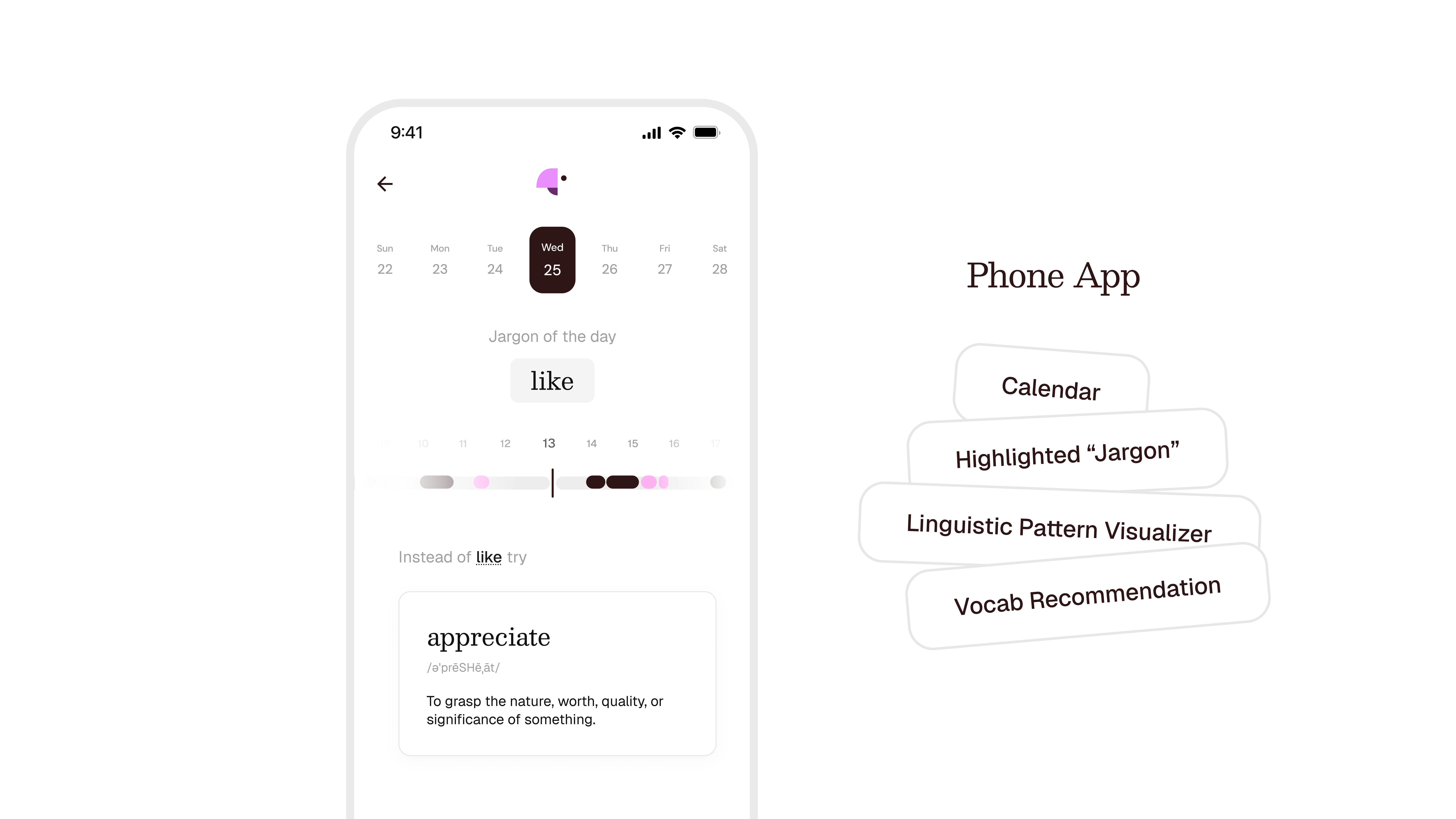
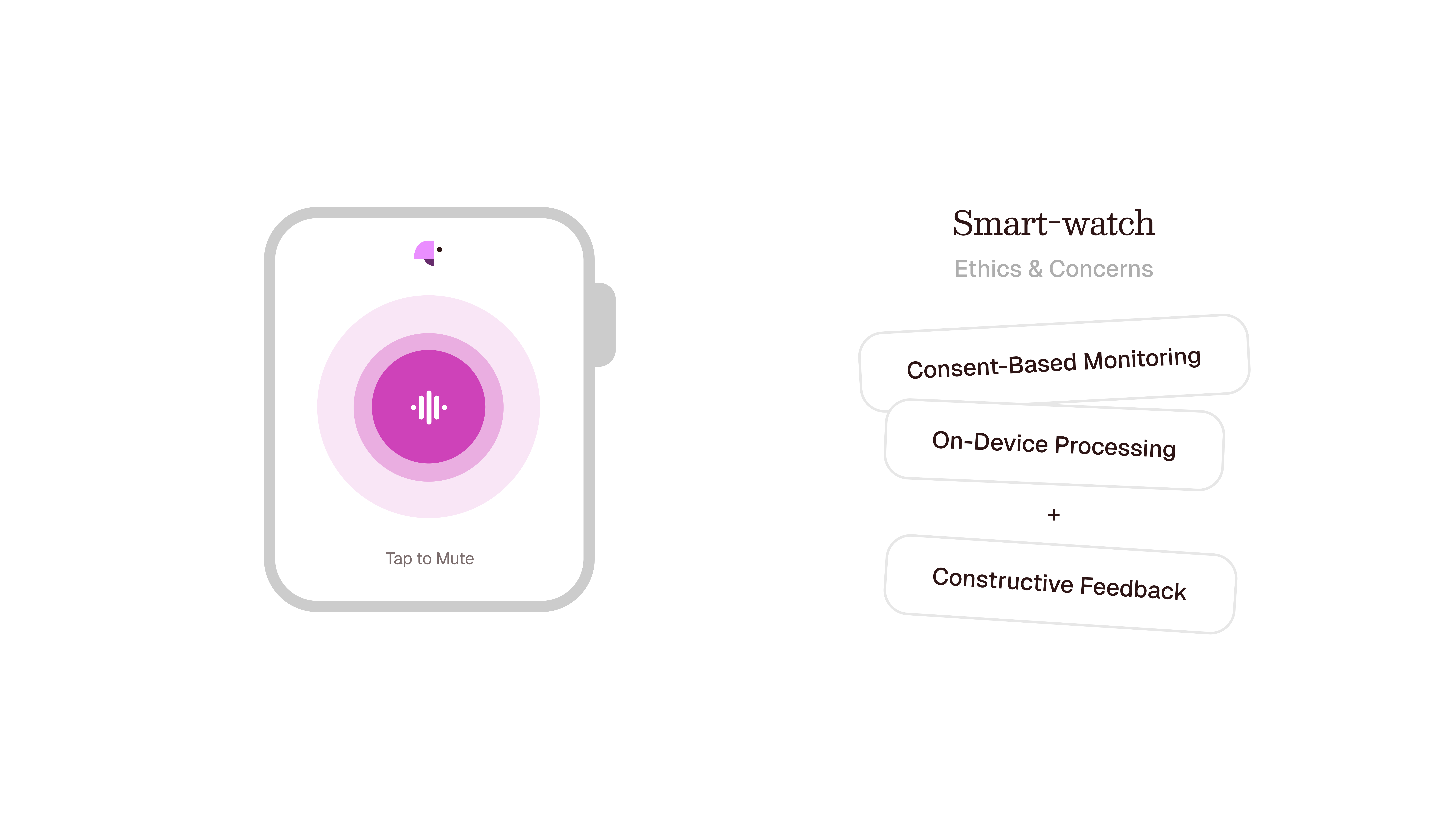
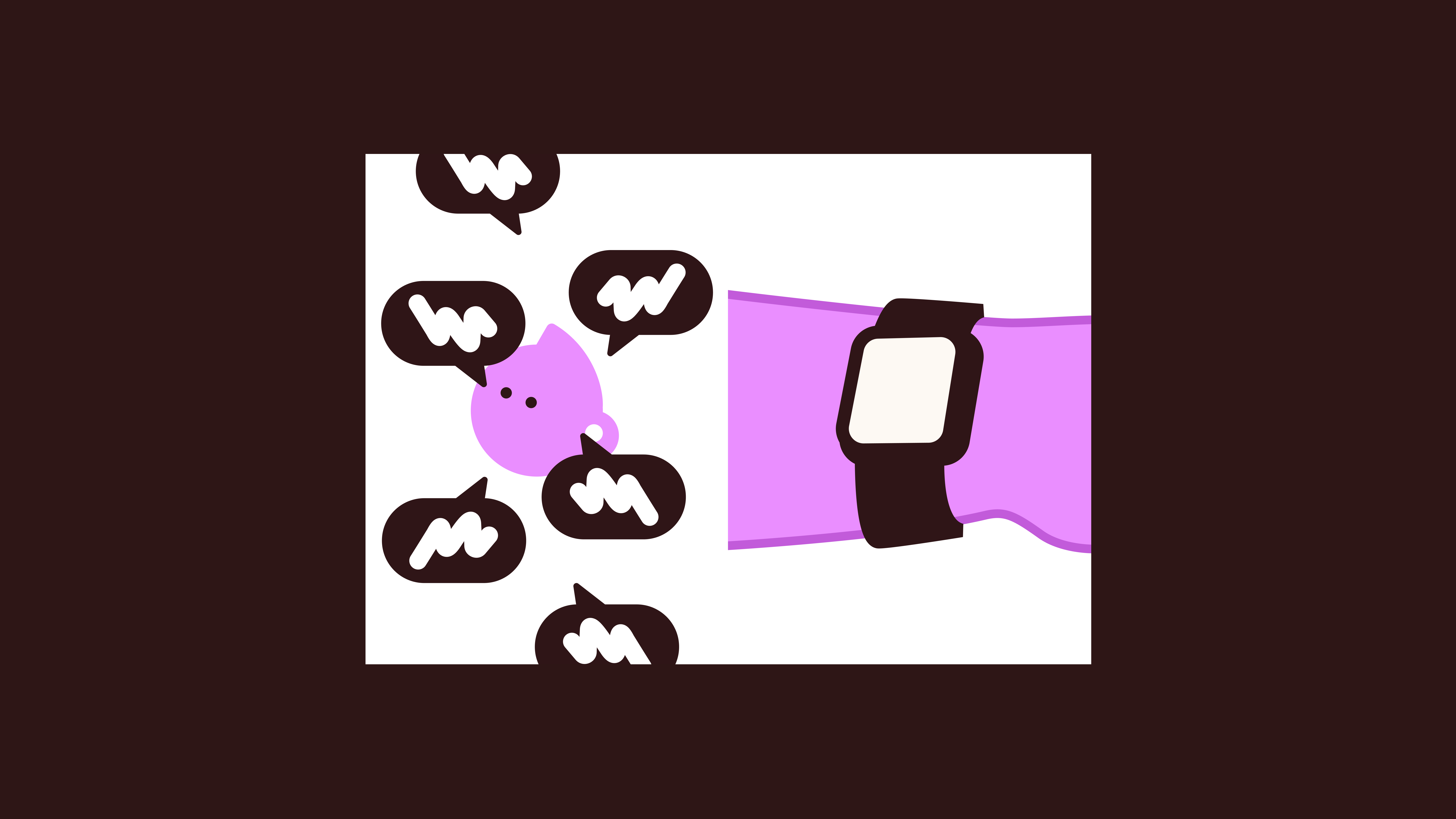
Jargon is a tool that detects and visualizes an invisible layer of the human experience: linguistics. By analyzing the words you unconsciously rely on each day, Jargon maps patterns of repetition and reveals subtle limits in everyday speech. Rather than correcting or standardizing language, Jargon introduces one word a day. A single, precise vocabulary expansion, frictionlessly integrated into daily life. We frame this as the development of a new sense: Speak: conveying thought and feeling Cognitive Awareness: understanding one’s mental states Audition: the perception of sound Jargon enhances awareness of how language shapes internal experience, a subtle sensory layer that normally goes unnoticed. The way Jargon works is it runs as a consent-based, ambient listener through a smartwatch interface. At the end of the day, the app surfaces: Linguistic Pattern Visualizer: mapping repetition across time Vocabulary Recommendation: one refined expansion Smart Word Visualization: see categories of intelligent words used throughout the day. And why does this matter? Growth can happen passively and progressively. Small shifts accumulate into meaningful cognitive expansion. A richer vocabulary changes how deeply you experience life. If language shapes perception, then expanding language expands consciousness. Jargon does not aim to make people more articulate, it aims to make them more aware, one word at a time.
How we made it?
We began by designing the full system in Figma, mapping the conceptual framework first, then translating it into interface structure. Our initial focus was not features, but philosophy: how should awareness feel? Calm. Reflective. Subtle. From there, we built an interactive prototype using Figma Make, allowing us to simulate real flows, refine transitions, and test how the “one word a day” interaction would feel in context. We iterated rapidly, simplifying screens and removing unnecessary friction. We refined motion, pacing, and presentation through Jitter, shaping the storytelling and visual rhythm of the slides. The final prototype reflects multiple cycles of refinement, reducing noise, clarifying hierarchy, and aligning design with intention.
Challenges We Faced
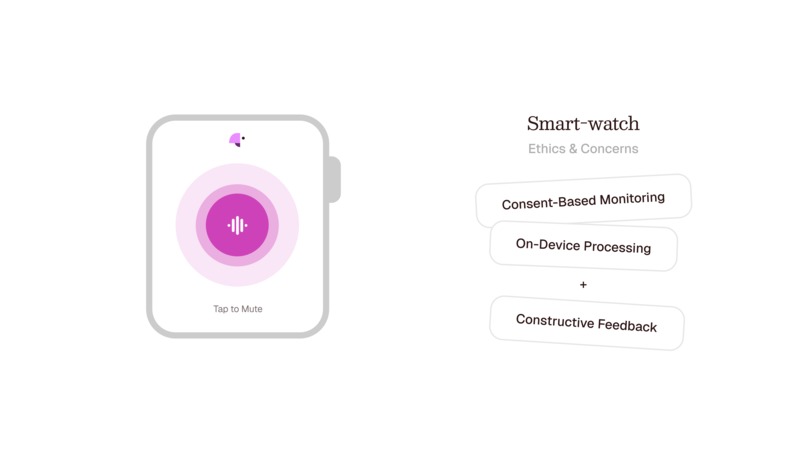
1. Avoiding Surveillance Anxiety Trust became as important as functionality. The concept of ambient listening immediately raises ethical concerns. We had to design clear boundaries: No recording storage Local, on-device processing Visible and pausable listening 2. Avoiding Linguistic Bias Never correction. Never standardization. If a system suggests “better” words, who defines “better”? We reframed recommendations as: Contextual refinements Emotional granularity Cognitive precision Jargon expands expression without privileging dialect, identity, or cultural speech patterns. 3. Designing for Subtlety We resisted gamification. The competition prompt asked us to track an invisible sensory layer. The challenge was not making the app louder, but making awareness quieter. The interface reflects this: Soft calendar structure Gentle repetition markers One word only
Accomplishments that we're proud of
We are proud of how cohesive and intentional the final experience feels. The interface is minimal yet expressive, playful yet reflective. Every screen reinforces the philosophy of subtle growth. We are also proud of how quickly we were able to move from concept to high-fidelity prototype. In a short timeframe, we developed a fully articulated design system, interactive prototype, and presentation narrative that aligns concept, research, and execution.
What We Learned
This project pushed us to build quickly, think conceptually, and collaborate deeply. We learned how powerful rapid prototyping tools like Figma Make can be when exploring speculative interfaces. We strengthened our ability to translate abstract ideas, like “linguistic awareness as a sense”, into tangible interaction flows. We also learned the importance of alignment between ethics, design, and narrative. A tool that touches language touches identity. That responsibility shaped every design decision.
What's next for Jargon?
Ultimately, we see Jargon evolving into a daily cognitive companion, one that expands perception gradually, quietly, and intentionally. Because if language shapes consciousness, then even one new word can shift how we experience the world.
Built With
- figma
- figmamake
- jitter


Log in or sign up for Devpost to join the conversation.