-
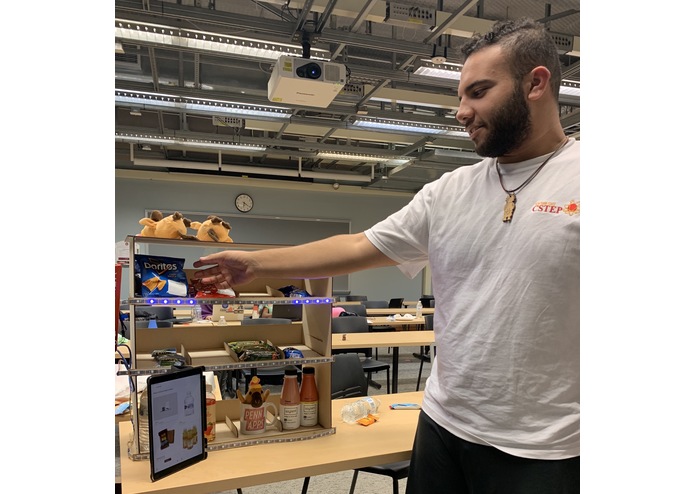
Kamal , a fellow hacker, trying Janet - Shopping Reimagined
-
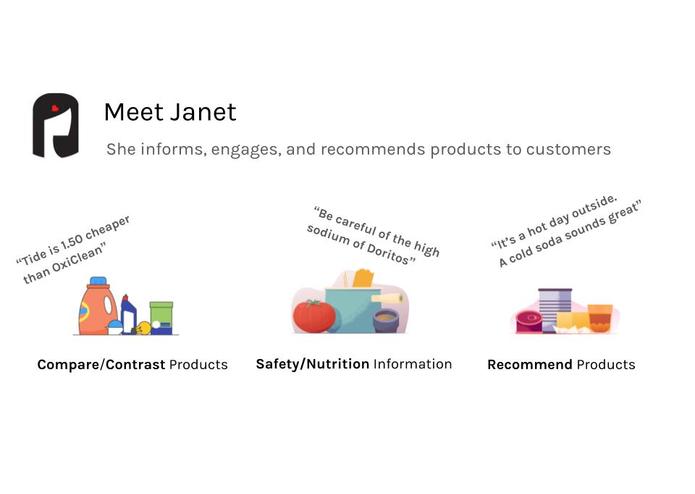
The Functionality of Janet
-
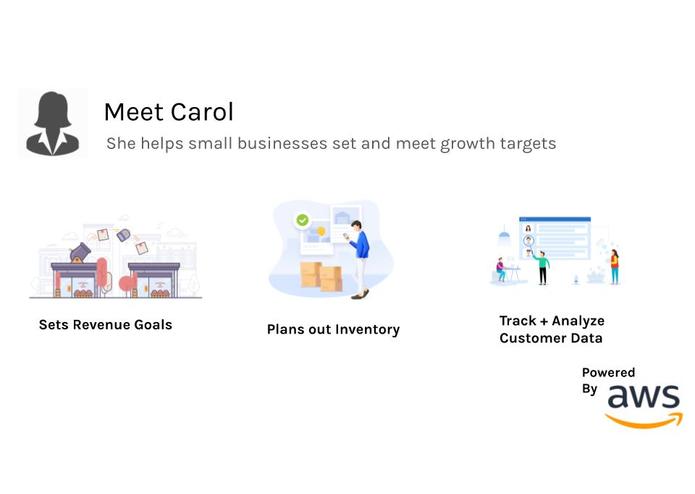
The Functionality of Carol
What it does
We have developed two different frameworks within our project; Janet and Carol, who work together to give small business owners an insight into their customers' wants and needs, while giving the customers a smoother shopping experience.
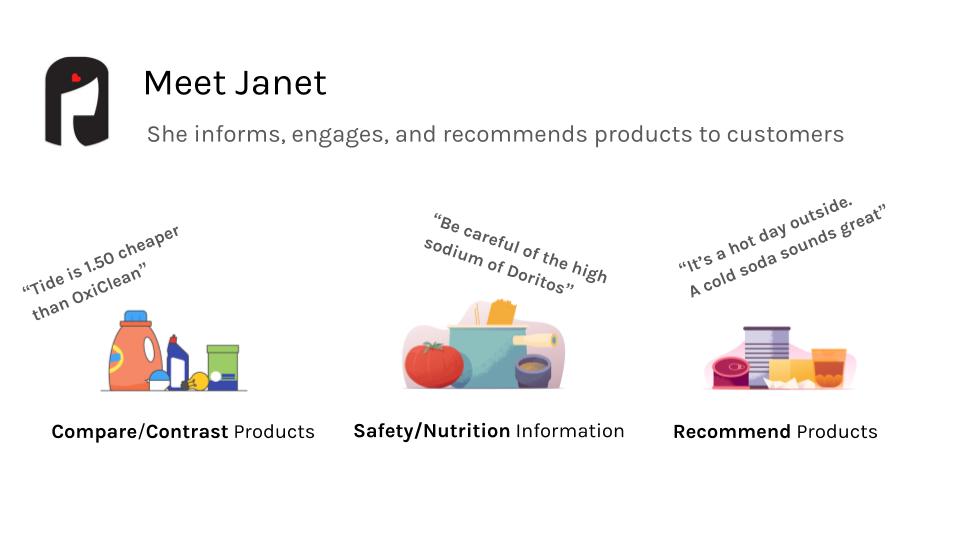
Janet: Janet is a new-and-improved version of price checkers present at a lot of supermarkets. While a price-check machine provides users information unidirectionally, Janet informs, engages, and recommends products to customers. It uses the power of natural language processing to give helpful tips to consumers, processing their requests, and improve the overall experience as a customer. This allows the business owner a rich source of information on his customers' behaviors, and how to better cater to them.
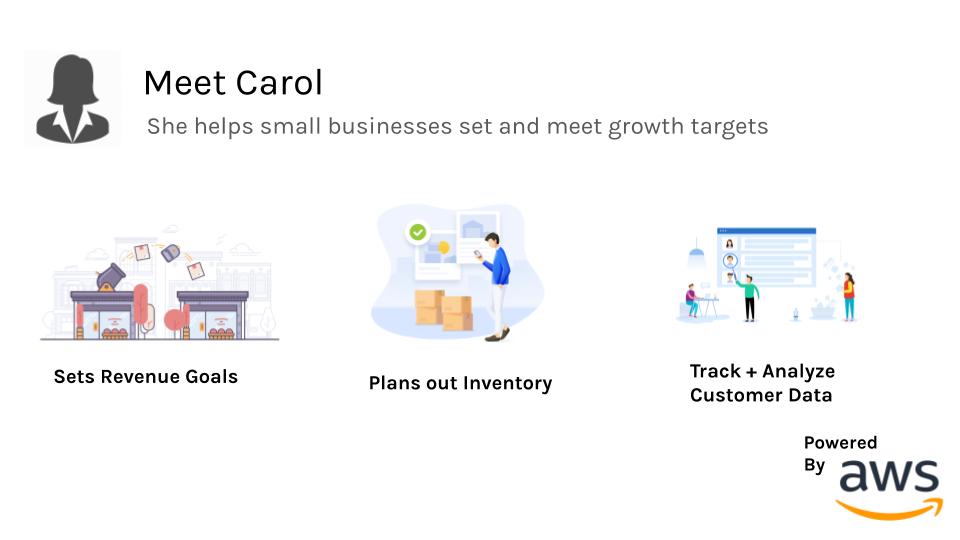
Carol: Carol is a wrapper for the Amazon Forecast API that analyzes historical data of a business, runs a variety of simulations, and gives actionable insight to the business owner. Amazon Forecast uses machine learning to combine time series data with additional variables to build an informative model for a business.
Carol takes it a step further. It determines the impact of certain variables of the datasets submitted to the Amazon Forecast API by running simulations of various alternative scenarios. With a distribution of simulated data at its fingertips, it is able to
- Generate attainable revenue goals for businesses
- Optimize marketing/inventory stocking strategies
How we built it
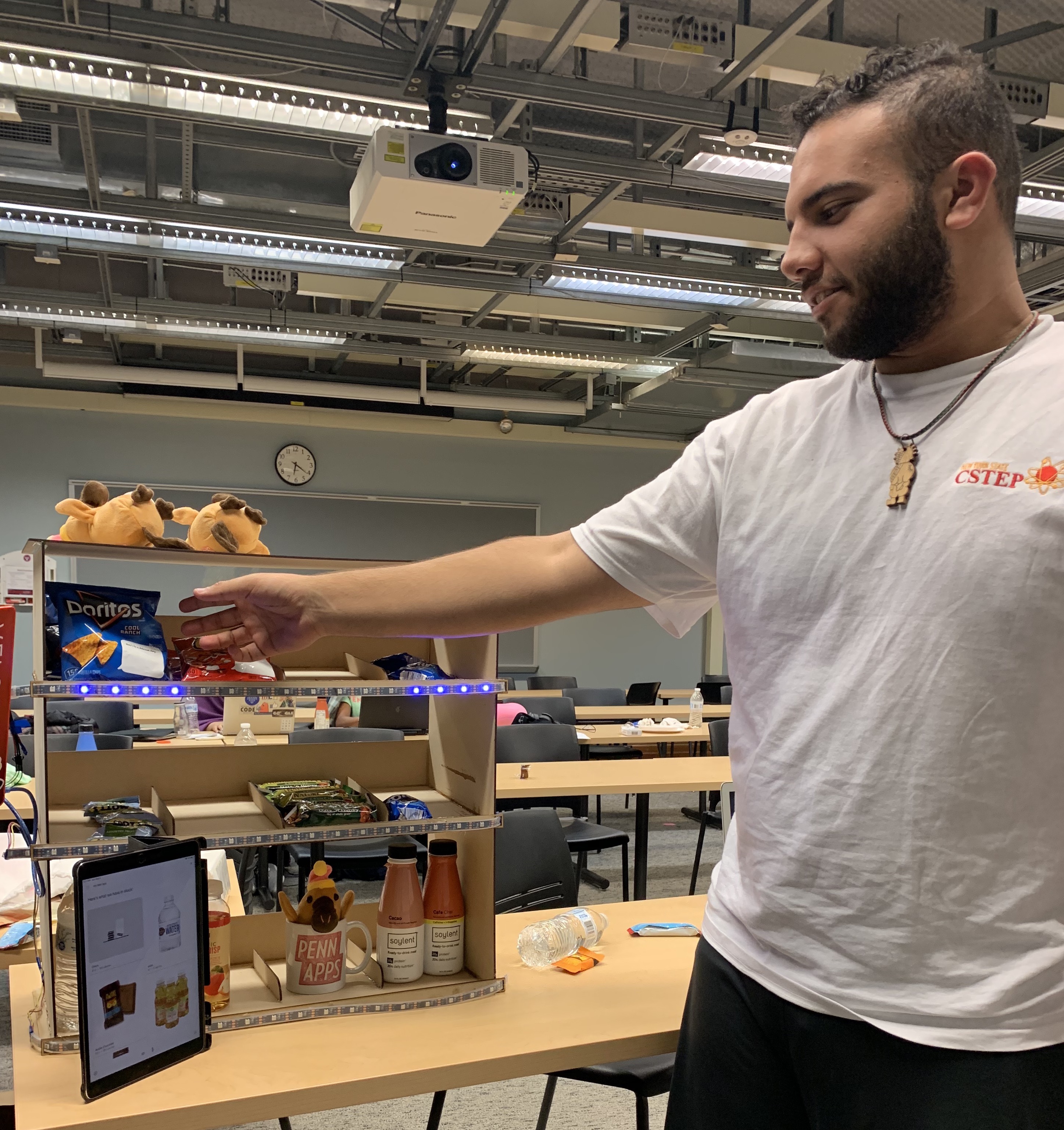
We built the cabinet with 1/8'' wood panels laser-cut at the UPenn labs. We built Janet with DialogueFlow, NodeJS, and Firebase. We built Carol with ReactJS, Amazon Forecast, and Jupyter Notebook
Challenges we ran into
We ran into a number of challenges in implementing this project.
- The breakdown of the cabinet We originally planned to transform a small storage cabinet into a smart cabinet using LEDs. However, as fate would have it, it was delivered in a devastated state; the plastic was warped and broken, barely holding its structural integrity.
(How we solved it) Ellie, a first-year mechatronics engineer from the University of Waterloo proposed building a storage solution from scratch. She took the initiative of first drawing the CAD design on Autodesk Inventor, and transforming her image into our final product through laser cutting.
- The reservation of the esp8266 Because the esp8266, the only wifi - enablable chip at the Hardware Lab, was all checked out, we had no choice but to find an alternative to direct connection between the Arduino and the cloud.
(How we solved it) We used Raspberry Pi as a server to connect the Arduino to the Firebase Cloud Database.
What we learned
We learned to work as a team to solve problems together and debug together. When faced with a big challenge, the best way to work through it (and gain life-long friends) is to rely on each other to make it through.
In addition, we learned how to work with natural language processing and the intricacies of the human language. Who knew there were dozens of ways to ask to get a doughnut?
What's next for Janet - Shopping Reimagined
The conversational and informational skills developed for Janet can be applied in a variety of fields in order to glean insight on consumer behavior. We propose travel planning and pharmacies as a possible avenues exploration.
Built With
- amazon
- amazon-web-services
- amazonforcast
- arduino
- dialogflow
- firebase
- firestore
- led
- netlify
- node.js
- raspberry-pi


Log in or sign up for Devpost to join the conversation.