-
-
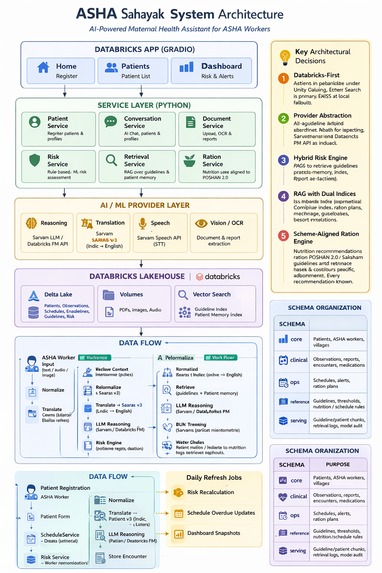
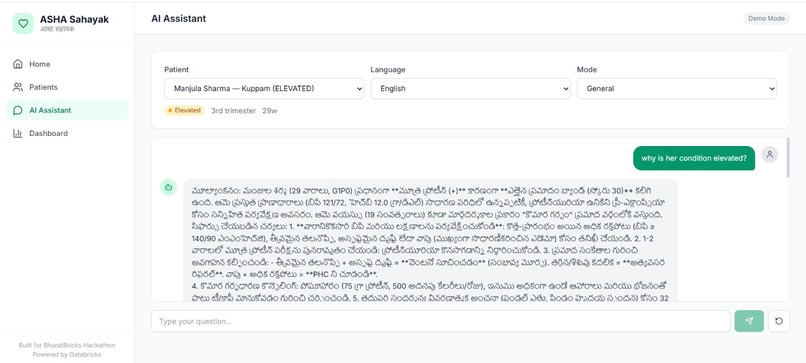
Architecture diagram of ASHA Sahayak
-
ASHA Sahayak
About the Project
India has more than 59 million pregnant women at any given time, and their care is largely supported by a vast network of over 1 million ASHA (Accredited Social Health Activist) workers, who serve as the first point of contact for maternal healthcare in many communities. Each ASHA worker is often responsible for dozens of pregnant women, tracking their checkups, vaccinations, pathology tests, nutrition programs, government scheme benefits, and potential emergency situations.
Consider a real scenario: an ASHA worker in a rural village may start her day by visiting multiple homes, reminding women about upcoming antenatal checkups, recording blood pressure readings, and ensuring they receive iron and folic acid tablets. She must also keep track of doctor visits, lab reports, referral cases, delivery planning, and government documentation. Much of this information is recorded in notebooks or scattered registers. When a woman misses a checkup, forgets a test, or experiences complications, the lack of a centralized record can make coordination difficult and delays more likely.
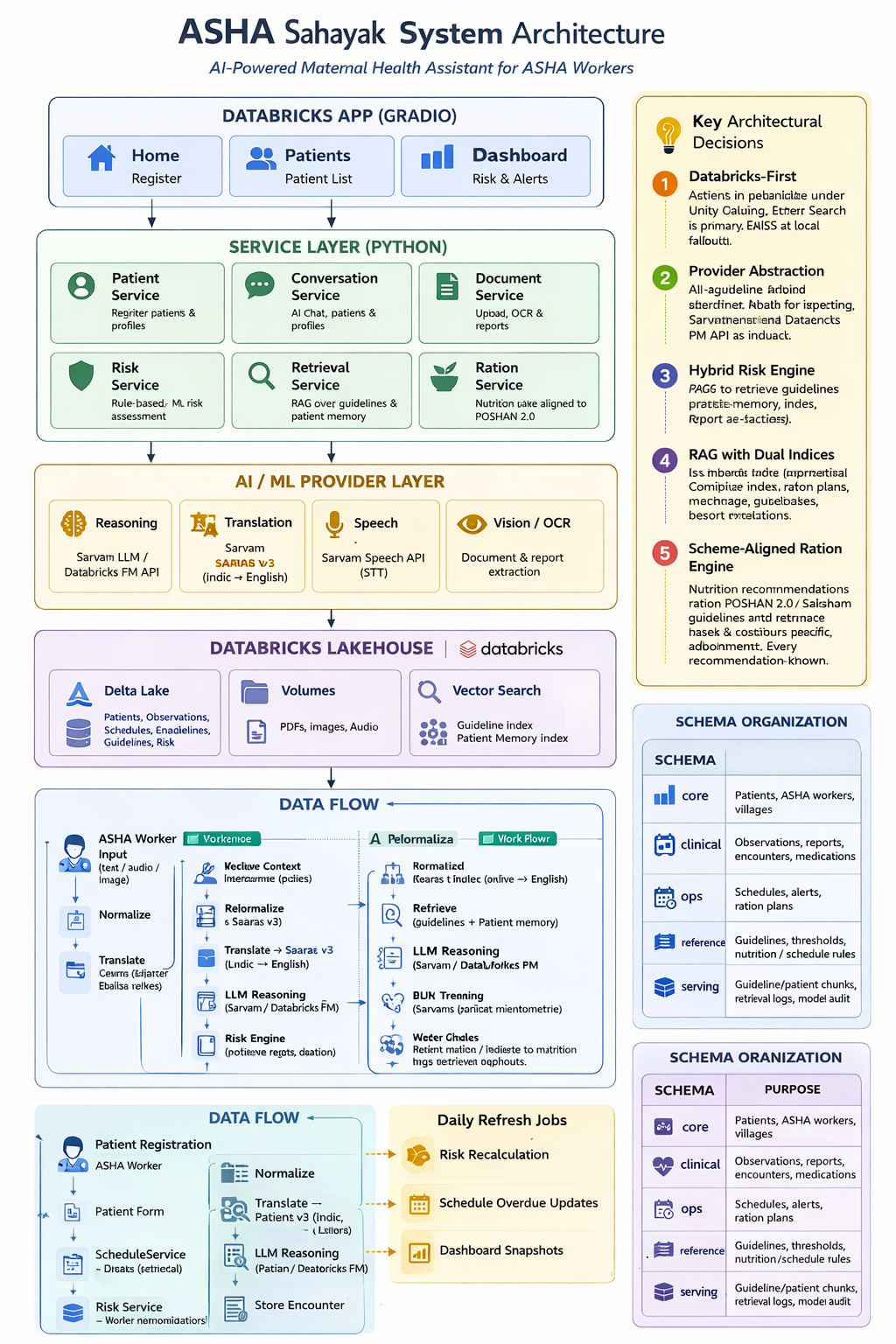
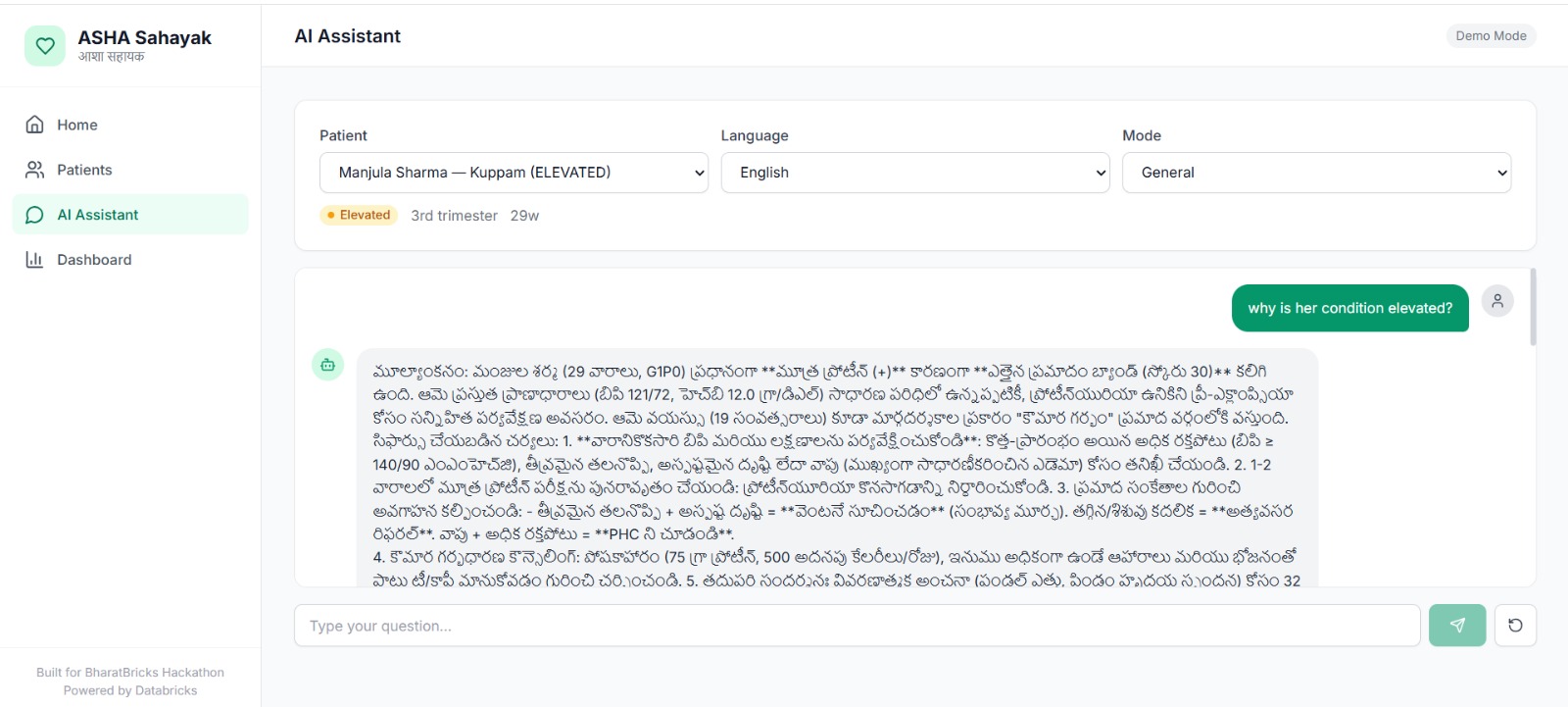
ASHA Sahayak was designed to support these frontline workers in managing this complex workflow. It is not meant to replace ASHA workers but to assist them. The platform keeps a longitudinal health record for every pregnant woman, allowing ASHA workers to track appointments, pathology tests, doctor visits, referrals, and follow-ups in one place. This helps them stay organized, helps doctors quickly understand a patient’s medical history, and ensures that pregnant women receive more continuous and timely care.
For example, if a woman’s blood pressure rises or a scheduled test is missed, ASHA Sahayak can help highlight the issue so the ASHA worker can take action early. The system also supports Indic languages, making it easier to use in rural communities where English-only tools often become a barrier.
Building ASHA Sahayak taught us that the biggest challenge in maternal healthcare is not only treatment but coordination and continuity of care. Missed visits, delayed tests, incomplete records, and communication gaps can significantly affect outcomes, especially in rural settings where connectivity is limited and ASHA workers already manage heavy workloads. Because of this, digital solutions must be simple, fast, and practical to use in real-world conditions. ASHA Sahayak is our attempt to address these challenges by creating a system that makes maternal healthcare more connected, trackable, and supportive for both ASHA workers and the pregnant women they care for.
Built With
- databricks
- databricks-apps
- databricks-delta-lake
- databricks-sdk
- databricks-vector-search
- databricks-workflows
- faiss
- fastapi
- html/css
- httpx
- javascript
- numpy
- pandas
- pdf2image
- pillow
- pydantic
- pytesseract
- pytest
- python
- python-multipart
- pyyaml
- react
- sarvam-ai
- sentence-transformers
- soundfile
- sqlite
- tailwind-css
- unity-catalog
- uvicorn
- vite
