project story
Inspiration
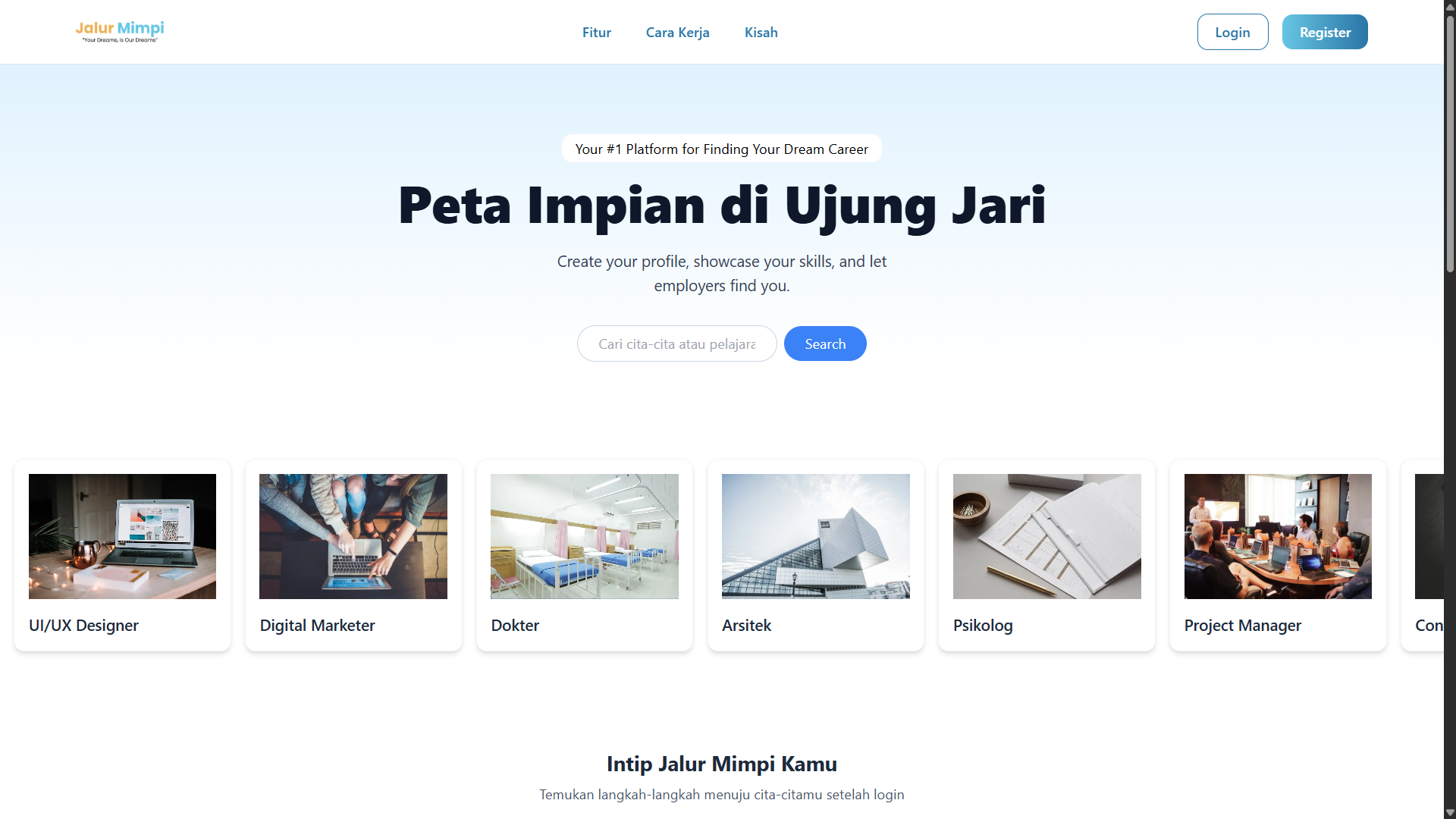
For students and recent graduates, particularly within the Indonesian job market, the process of selecting a career path can be a daunting task. The multitude of available options, coupled with uncertainty regarding individual skills and professional interests, frequently leads to indecision. The Jalur Mimpi ("Dream Path") project was conceived to address this challenge. The objective was to develop a sophisticated tool that transcends generic career assessments by leveraging artificial intelligence to deliver personalized, actionable guidance. The platform is designed to assist users in identifying a career that not only matches their qualifications but also aligns with their long-term professional and personal aspirations.
What it does
Jalur Mimpi functions as an intelligent career decision engine, employing a structured, two-phase process to provide users with comprehensive vocational guidance:
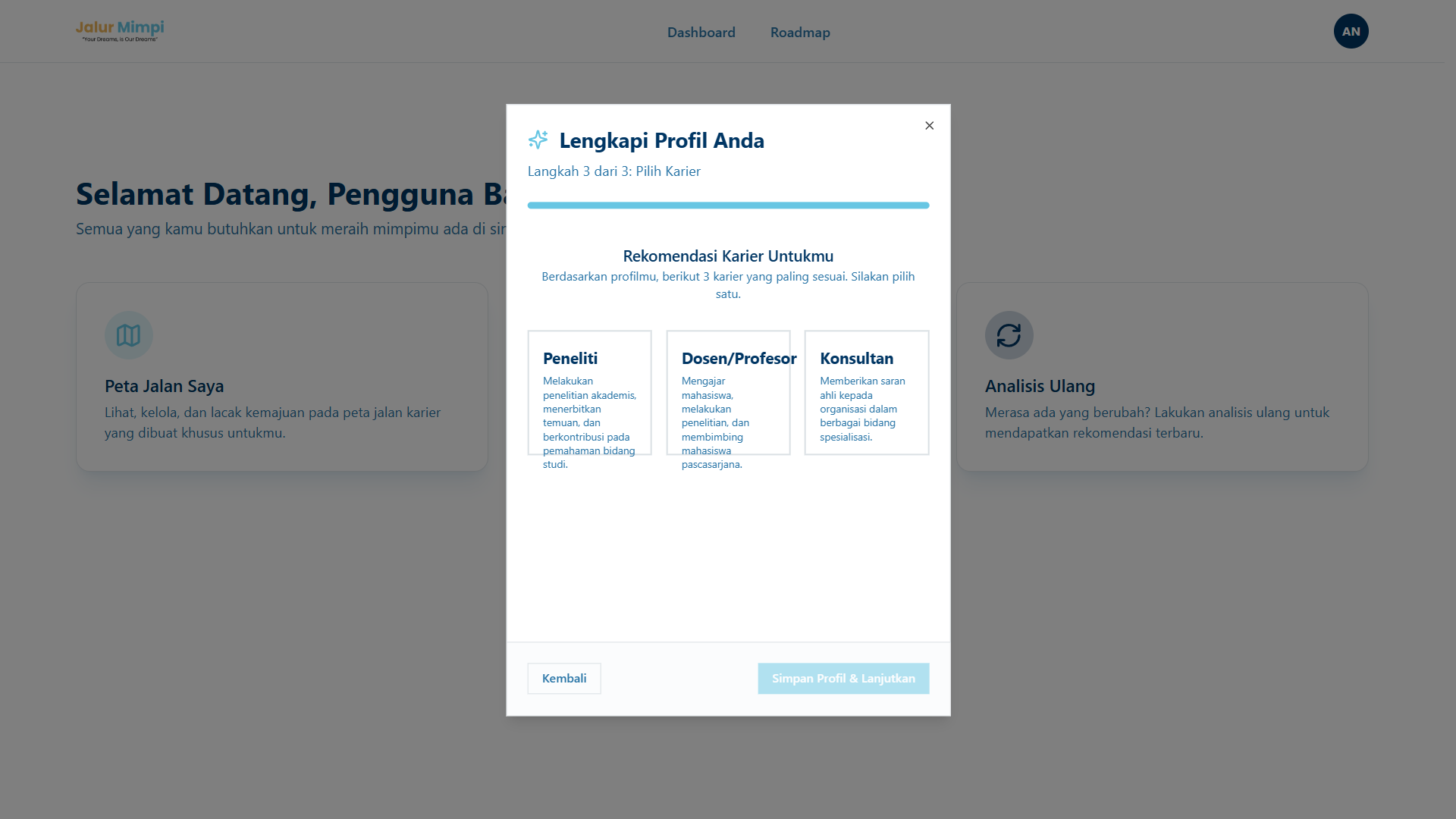
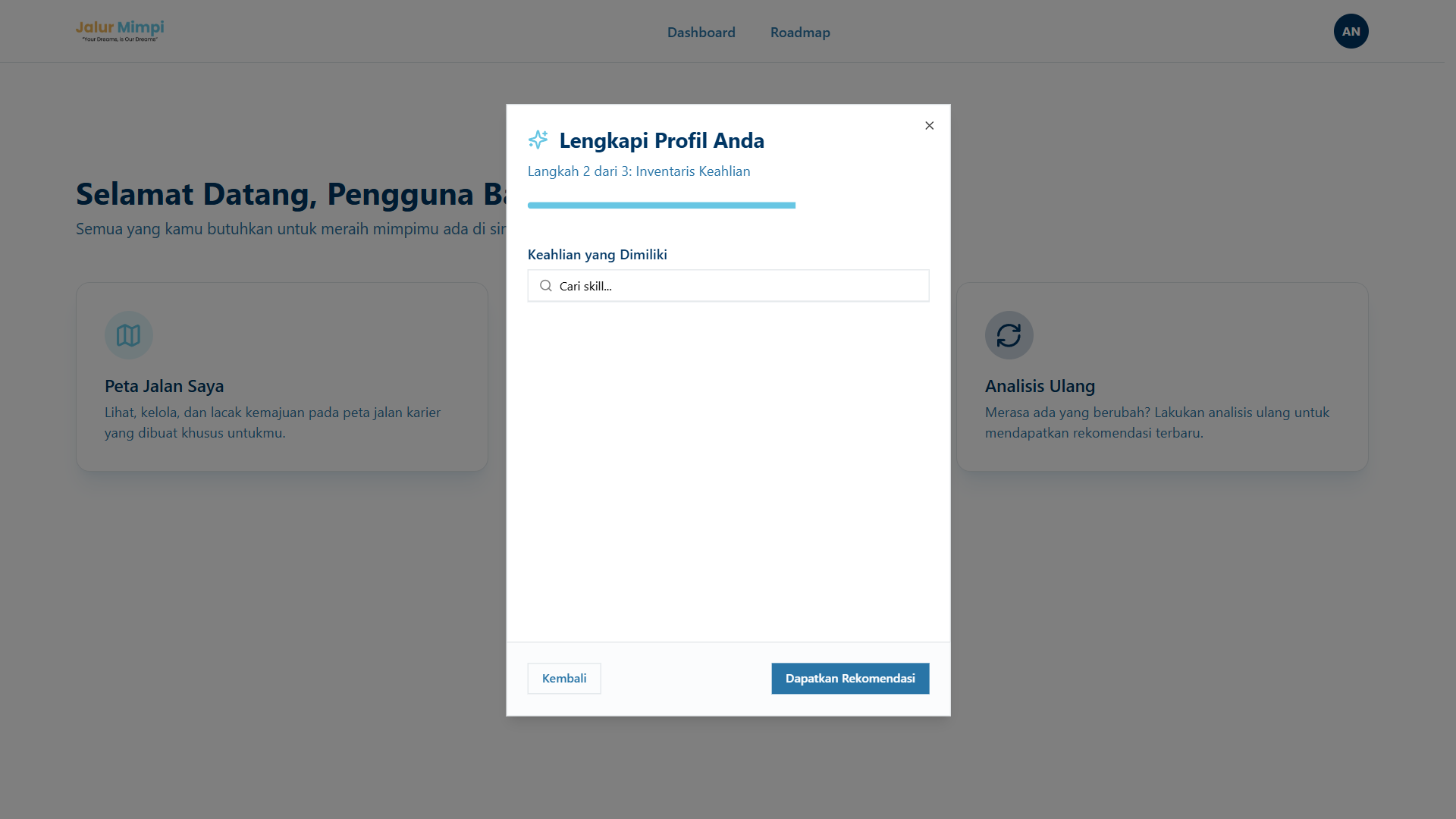
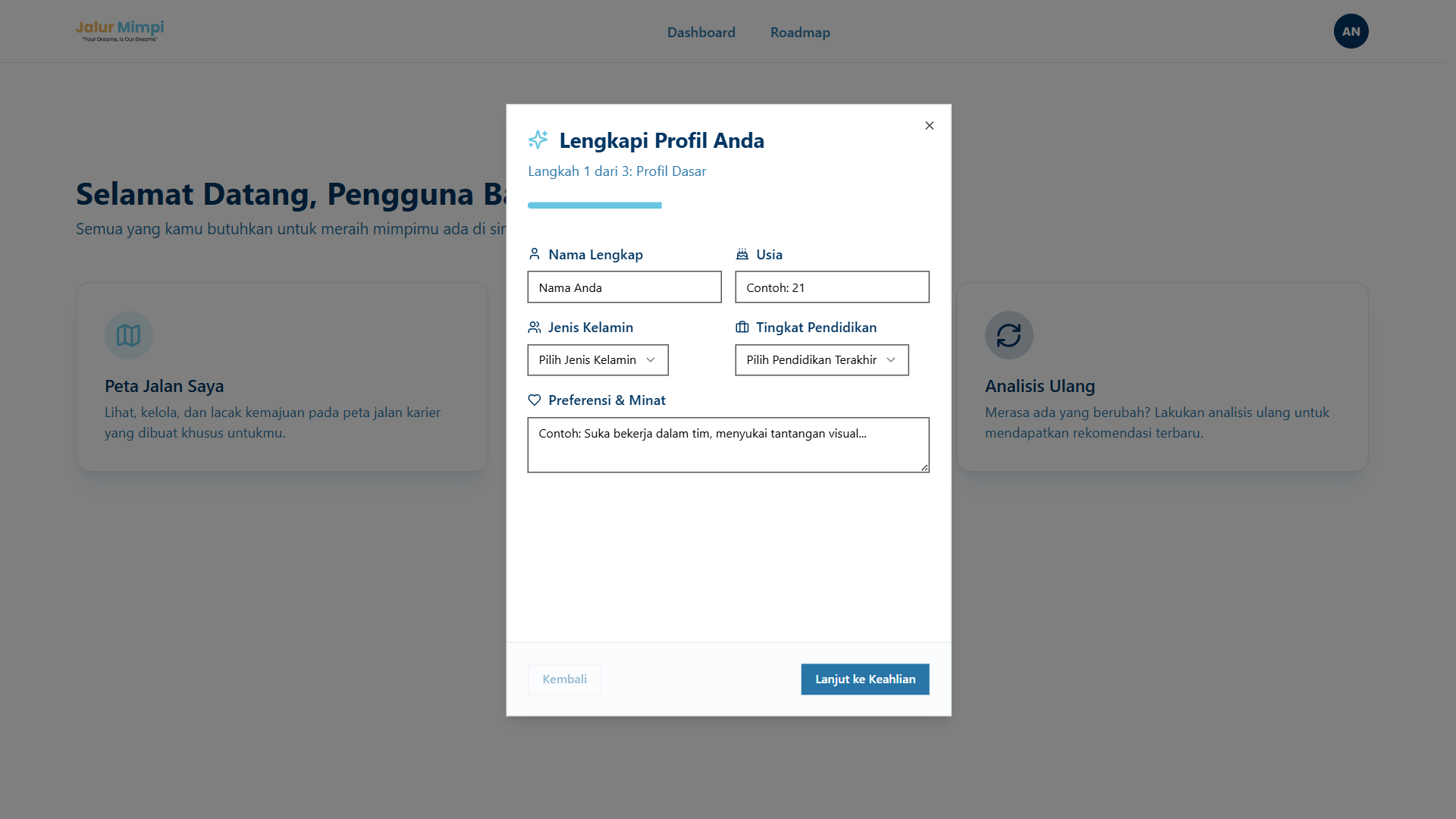
Profile Analysis and Career Suggestion: The user initiates the process by completing a detailed profile, which includes information regarding their skills, educational background, and professional preferences. This data is then transmitted to Google's Gemini AI for analysis. The AI model subsequently generates three distinct career suggestions deemed suitable for the user, each accompanied by a concise description.
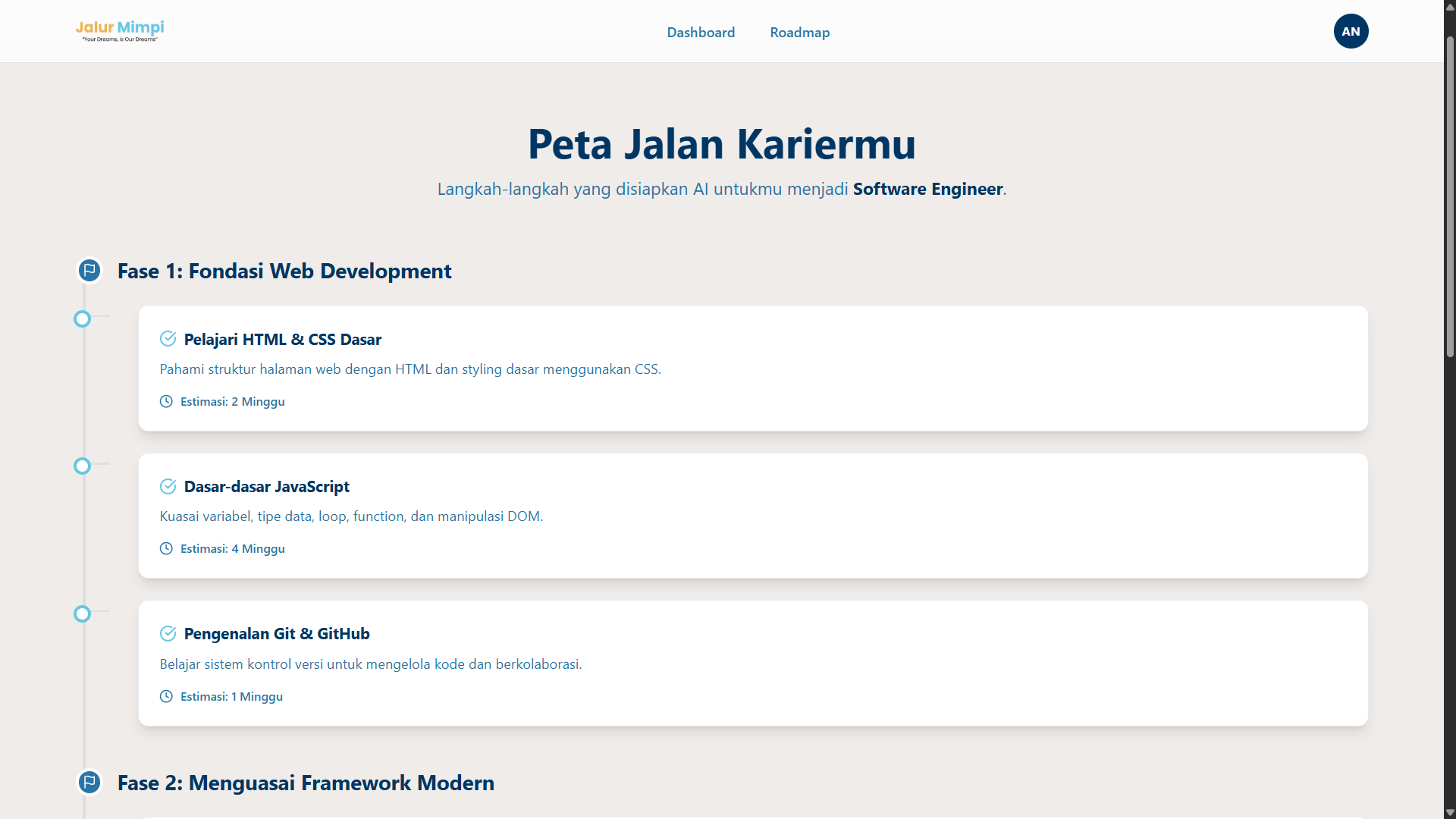
Skill Development Roadmap: Following the presentation of the three career options, the user selects the path that most aligns with their interests. This selection triggers a secondary process wherein the user's complete profile, now augmented with their chosen career, is re-submitted to the AI. The model then constructs a detailed roadmap that outlines the essential skills required for success in the selected field, providing in-depth explanations for each competency. This methodology provides the user with not only a professional goal but also a structured plan for achieving it.
How we built it
Jalur Mimpi was developed using a modern, full-stack architecture centered on Next.js, with the entire application hosted on the **Vercel platform. This unified approach enabled the development of the user interface and complex server-side logic within a single framework using React and TypeScript, which contributed to an efficient development process and a high-performance application.
The user interface and design were implemented using Shadcn UI and Tailwind CSS to create a clean, modern, and responsive user experience. All user-related data, including profiles, career suggestions, and skill roadmaps, is securely stored in a PostgreSQL database managed by Supabase, which also handles user authentication services.
The core intelligence of the application is powered by Google's Gemini API. Significant effort was dedicated to prompt engineering to ensure the AI model consistently returned well-structured JSON data. This was critical for enabling our Next.js backend to parse and process the information reliably and efficiently.
Challenges we ran into
The project's development trajectory required a significant architectural pivot. The initial plan involved a decoupled architecture with a Python backend hosted on Render and a frontend on Vercel. However, we encountered considerable integration challenges related to establishing seamless communication between the two services following a database write operation. This technical obstacle necessitated a strategic reconsideration, leading to a more ambitious but ultimately more rewarding objective: building the entire platform as a serverless application within the Next.js ecosystem.
This pivot required the rapid acquisition of new competencies. We learned to implement server-side logic using Next.js API Routes and mastered the secure management of API credentials for Supabase and Gemini within Vercel's serverless environment, ensuring they were never exposed on the client-side. Furthermore, it was necessary to develop proficiency in managing asynchronous operations to handle the latency of AI model responses and coordinate data persistence before returning results to the client. The resolution of this primary challenge resulted in a more modern, efficient, and seamlessly integrated application.
Accomplishments that we're proud of
Key accomplishments of this project include the successful development of a complete, full-stack serverless application from the ground up on a unified Next.js and Vercel stack. The team demonstrated adaptability by pivoting to a more effective and modern architectural solution when the initial plan proved unfeasible, a decision that significantly enhanced the project's technical scope and learning outcomes.
The creation of an interactive, two-step AI-driven workflow is another notable achievement, as it enhances user engagement and utility compared to a single, static data output. Finally, the successful implementation of structured prompt engineering was a critical success factor, ensuring the Gemini API provided predictable, machine-readable JSON responses, which in turn increased the stability and reliability of the application's backend code.
What we learned
This project provided an intensive, practical learning experience in building a real-world application. The team gained a comprehensive understanding of full-stack Next.js development, which encompasses not only user interface construction but also the creation of a robust serverless backend via API Routes. We acquired vital skills in writing, deploying, and debugging serverless functions on the Vercel platform.
Additionally, we learned to securely manage secret keys and integrate external APIs, such as Google Gemini, from a server-side context. The project also deepened our understanding of database interaction with Supabase from a backend environment, including handling the data insertion and update operations that are essential for application functionality.
What's next for Jalur Mimpi
Future development for the Jalur Mimpi platform is focused on expanding its capabilities to become a comprehensive career development tool. The strategic roadmap includes the following objectives:
Integration of Learning Resources: For each skill generated by the AI, we plan to integrate functionality that identifies and provides links to relevant, high-quality learning resources, such as online courses, tutorials, and academic articles.
Personalized User Dashboard: We envision the development of a persistent user dashboard where individuals can review their selected career path, monitor their skill acquisition progress, and establish professional development goals.
Job Platform API Integration: We intend to integrate with job search APIs to present users with relevant, entry-level employment opportunities in their geographic area that align with their chosen career.
Mentorship and Community Features: A long-term goal is to build a feature that facilitates connections between users and experienced mentors in their selected fields, as well as to foster a community of users pursuing similar career paths.
Built With
- css
- gemini
- next.js
- phyton
- postgresql
- react
- supabase
- tailwind
- typescript
- vercel

Log in or sign up for Devpost to join the conversation.