-
-
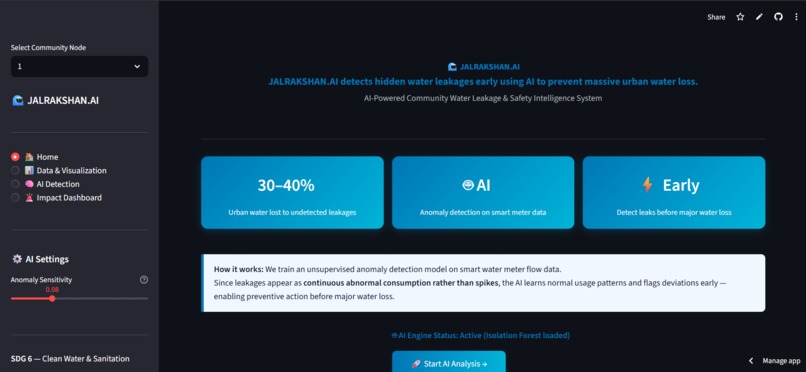
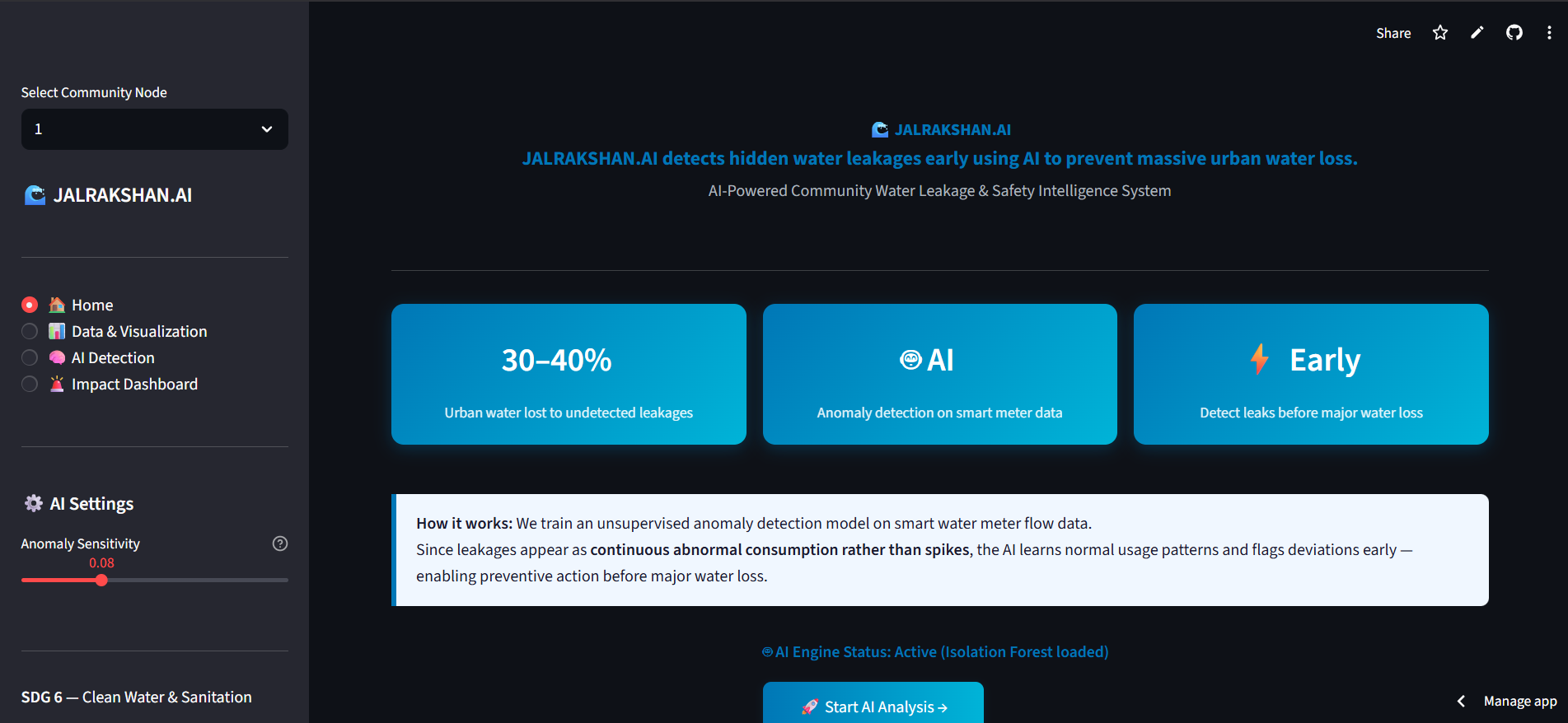
JALRAKSHAN.AI — AI-Powered Early Water Leak Detection System
-
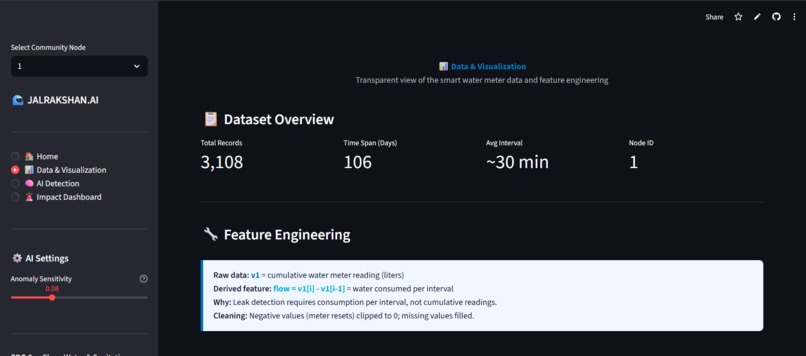
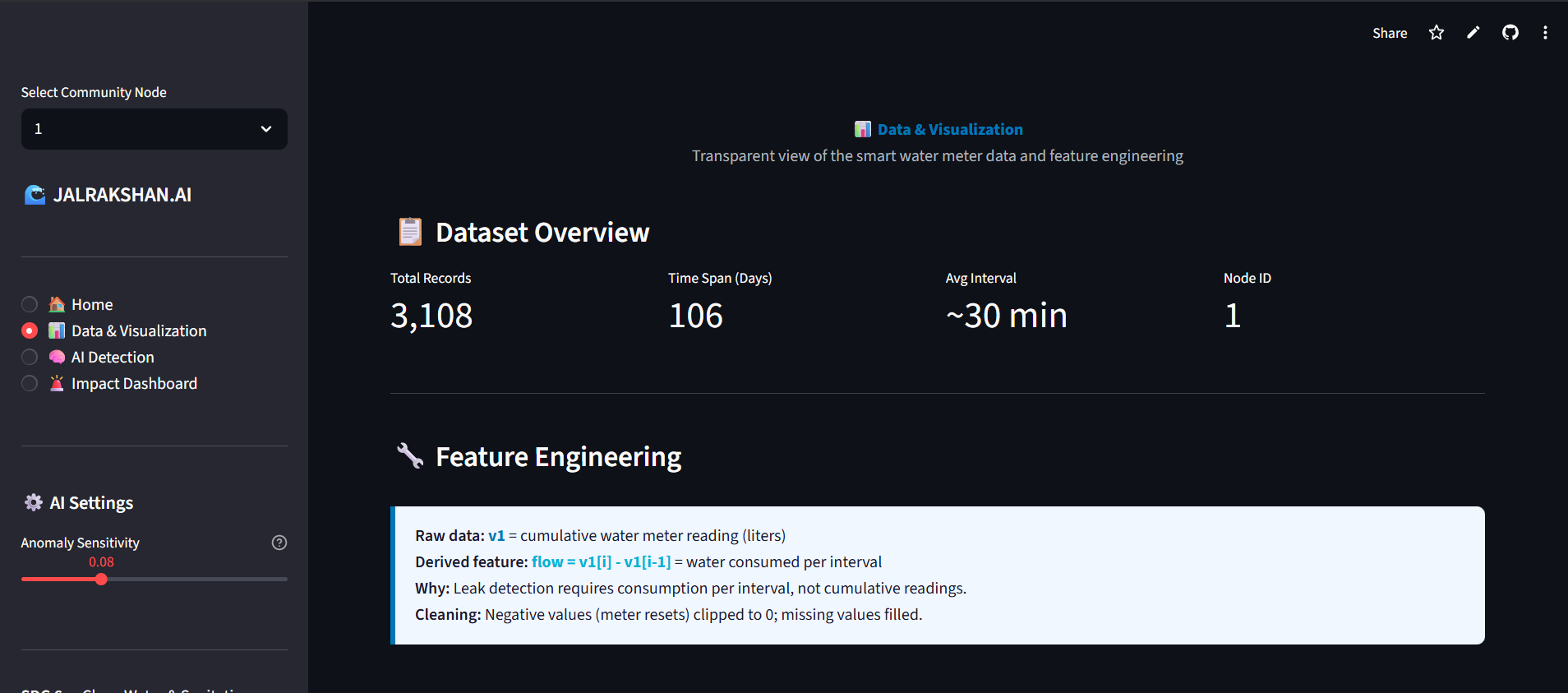
Smart Water Meter Data Processing & Feature Engineering
-
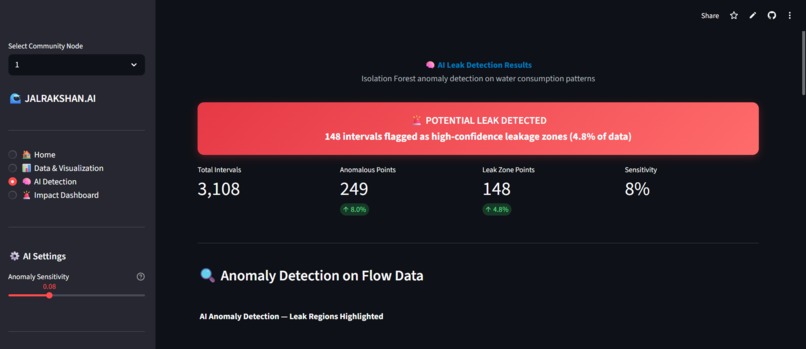
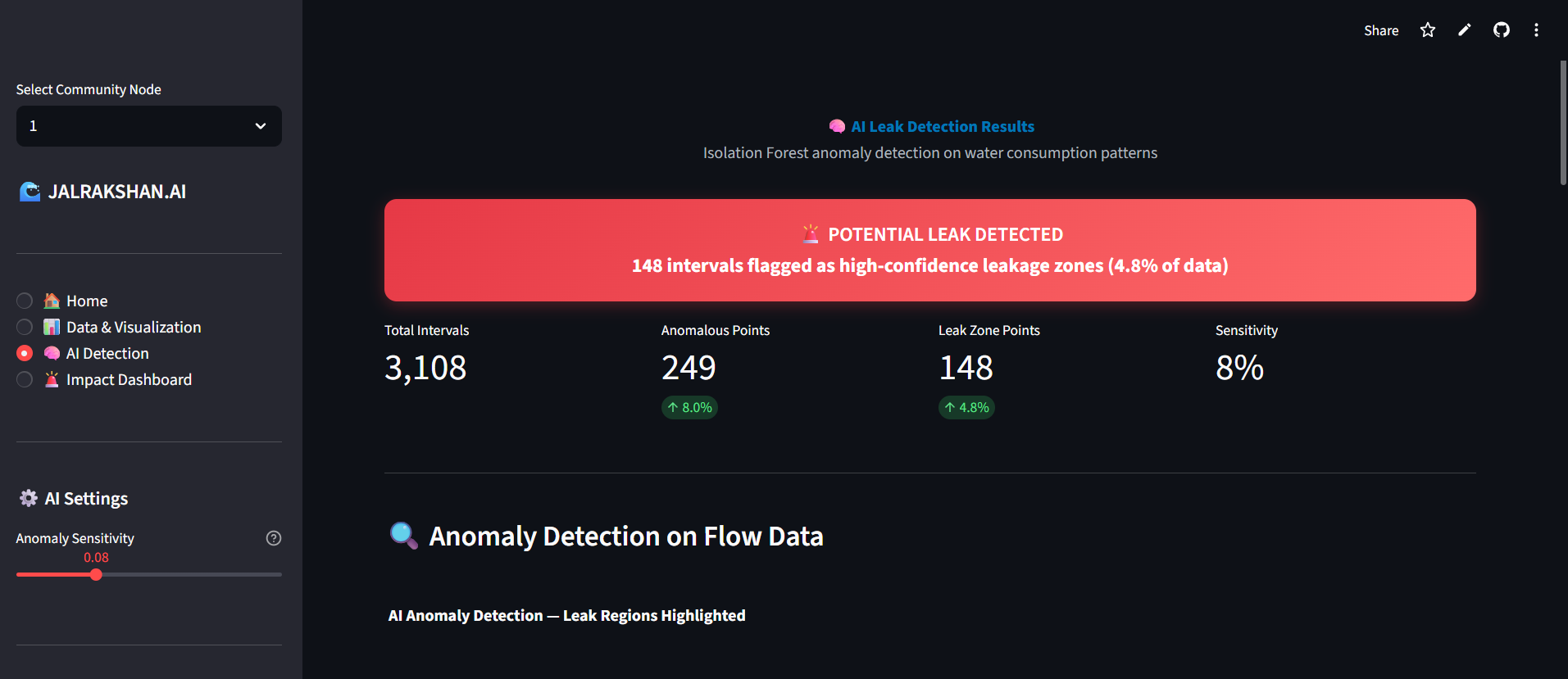
AI Leak Detection Results Using Isolation Forest Anomaly Detection
-
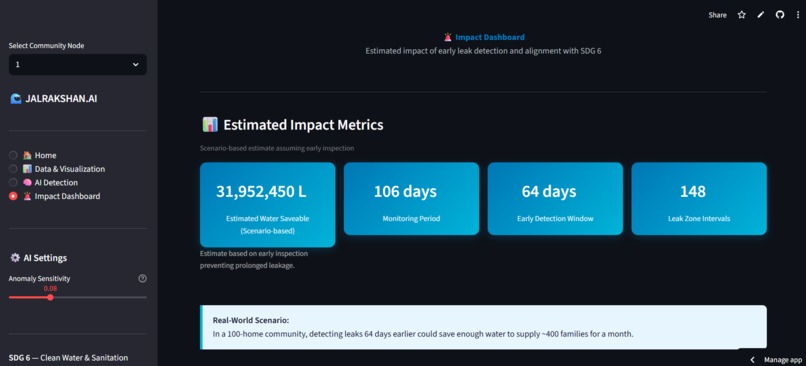
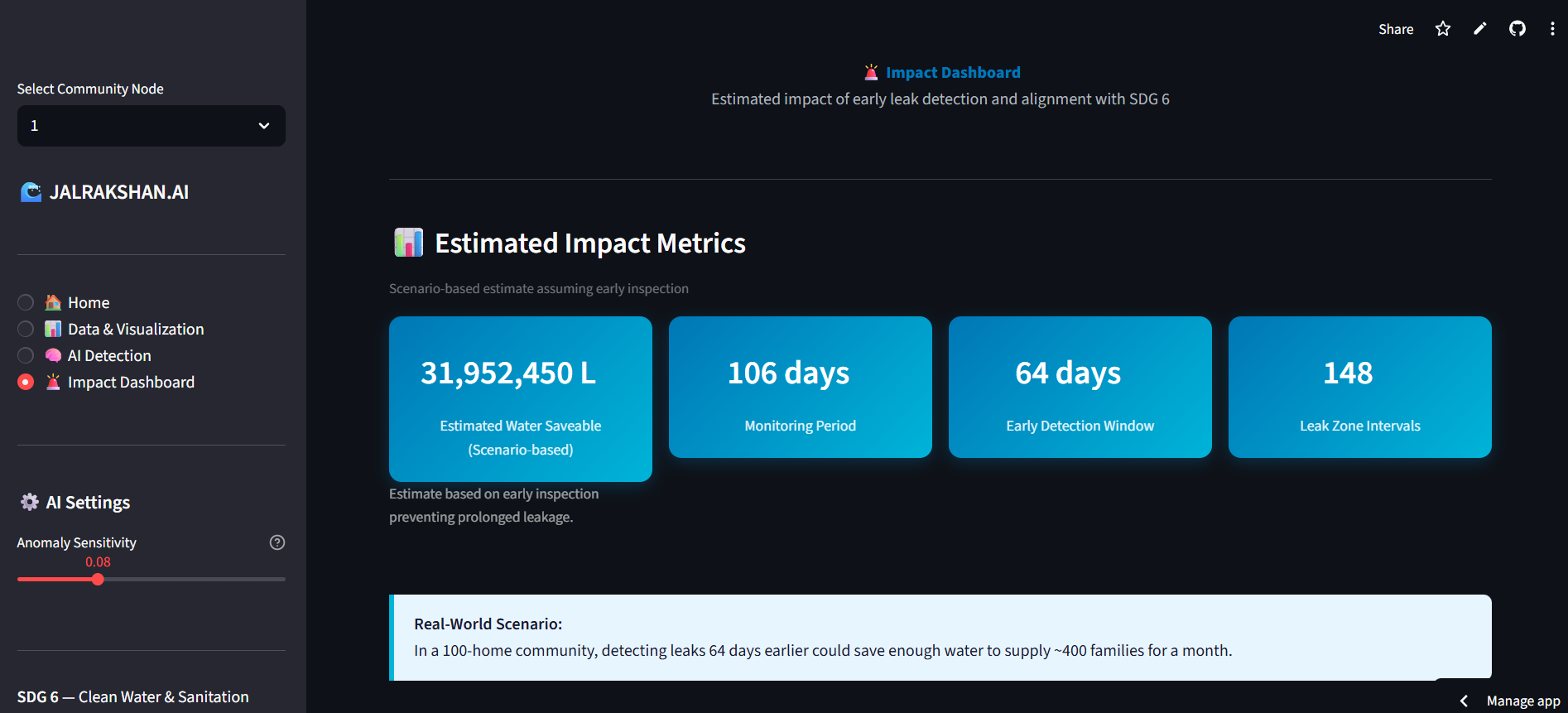
Estimated Real-World Impact & SDG-6 Alignment Dashboard
Inspiration
Water scarcity and infrastructure leakages are persistent challenges faced by communities across the world. A significant amount of treated water is lost every day due to undetected and invisible leakages in distribution systems. While smart water meters collect large volumes of data, this data is rarely analyzed intelligently to prevent losses. This project was inspired by the belief that AI should assist communities and authorities, not merely automate systems. The idea behind JALRAKSHAN.AI is to use responsible AI to detect early warning signs of water leakage so that preventive action can be taken before large-scale damage occurs.
What it does
JALRAKSHAN.AI is an AI-powered decision-support system that analyzes smart water meter time-series data to detect potential water leakages. The system:
- Converts raw cumulative meter readings into interval-based water flow
- Detects abnormal and continuous consumption patterns
- Identifies high-confidence leakage zones
- Visualizes data, AI results, and impact through an interactive dashboard
- Keeps humans in the loop for final inspection and decision-making The goal is early detection and prevention, not automated enforcement.
How we built it
The project was built using an explainable and modular AI pipeline:
- Dataset: Public smart water meter time-series data
- Feature Engineering:
- Smart meters provide cumulative readings, so interval-level consumption was derived using: $$ flow_t = v1_t - v1_{t-1} $$
- Model:
- Isolation Forest (unsupervised anomaly detection)
- Leak Detection Logic:
- A potential leak is flagged only when three or more consecutive anomalies are detected, reducing false positives from normal usage
- Frontend:
- Web-based dashboard with clear visualizations and animations
- Backend:
- Python-based data processing and AI inference The system allows operators to control sensitivity and understand why alerts are generated.
Challenges we ran into
Some key challenges included:
- Noisy and inconsistent sensor data
- Differentiating real leakages from normal household usage spikes
- Preventing excessive false positives in anomaly detection
- Clearly communicating AI decisions to non-technical users These challenges were addressed through careful data cleaning, rolling averages, consecutive anomaly logic, and transparent visual explanations.
Accomplishments that we're proud of
- Built a fully functional AI-powered web application
- Successfully applied unsupervised learning to a real-world problem
- Designed an end-to-end pipeline from data to impact visualization
- Implemented Responsible AI principles with human oversight
- Clearly aligned the project with UN SDG 6 — Clean Water and Sanitation
What we learned
Through this project, we learned:
- How unsupervised machine learning can detect meaningful real-world anomalies without labeled data
- The critical role of feature engineering in time-series analysis
- How to design AI systems that support human decisions, not replace them
- The importance of transparency and ethics in AI for public good This project strengthened both technical and ethical understanding of AI.
What's next for JALRAKSHAN.AI: Smart Water Leak Detection for Communities
Future development plans include:
- Integration with real-time IoT water meter data
- Scaling the system to monitor multiple communities and zones
- Adding SMS or app-based alerts for authorities
- Incorporating pressure sensor and valve data for higher accuracy
- Deploying pilot implementations with municipal water boards JALRAKSHAN.AI aims to evolve into a scalable, responsible AI platform for community-level water sustainability and conservation.


Log in or sign up for Devpost to join the conversation.