-
-
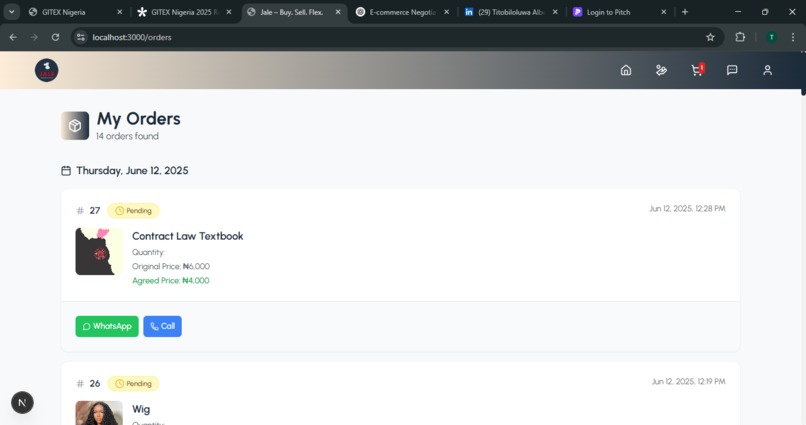
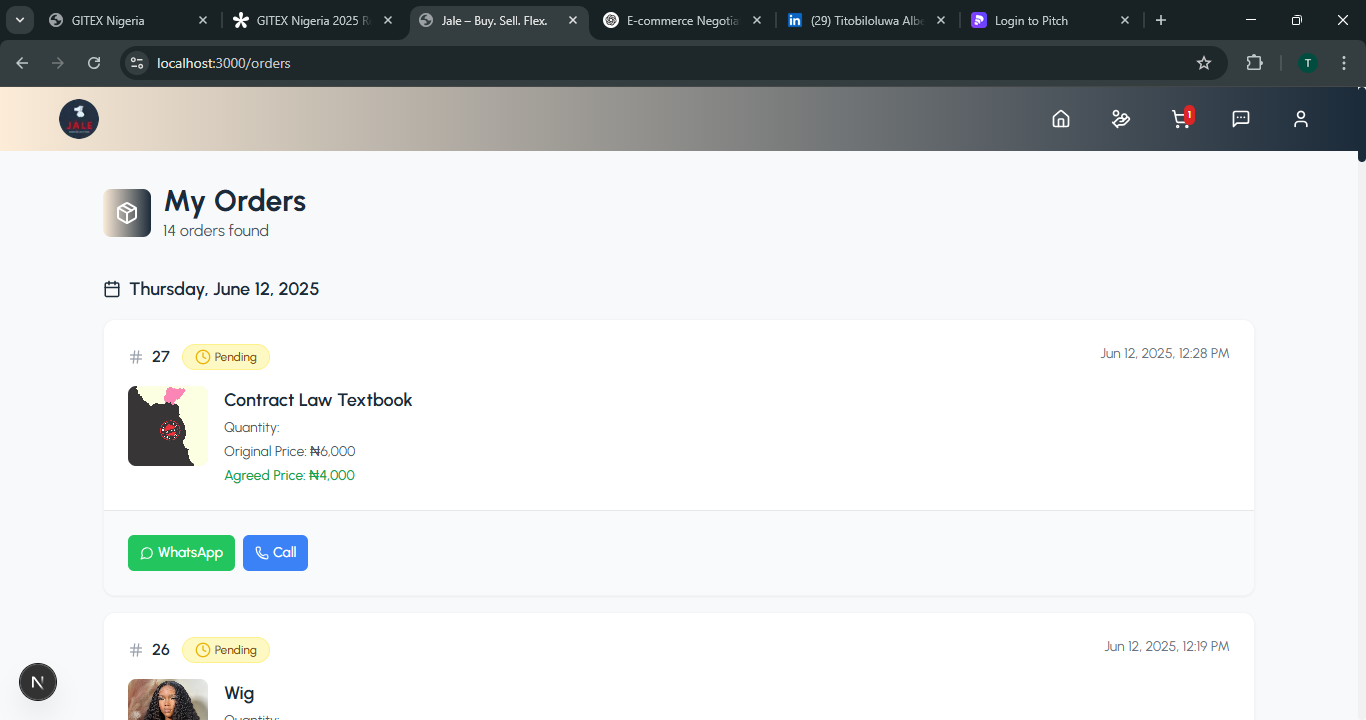
Orders Page
-
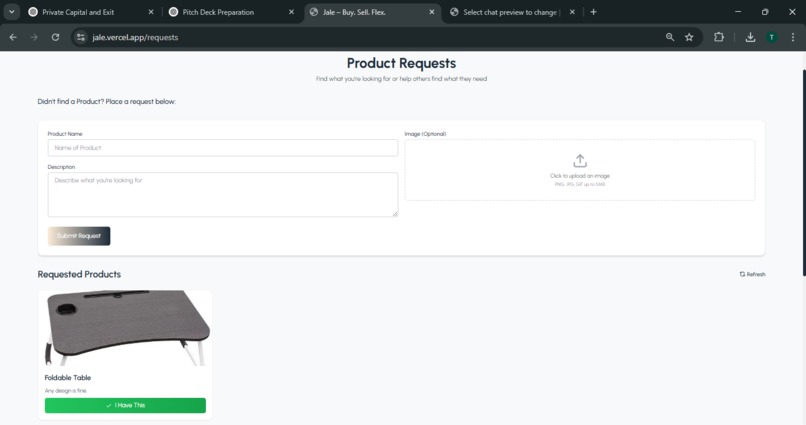
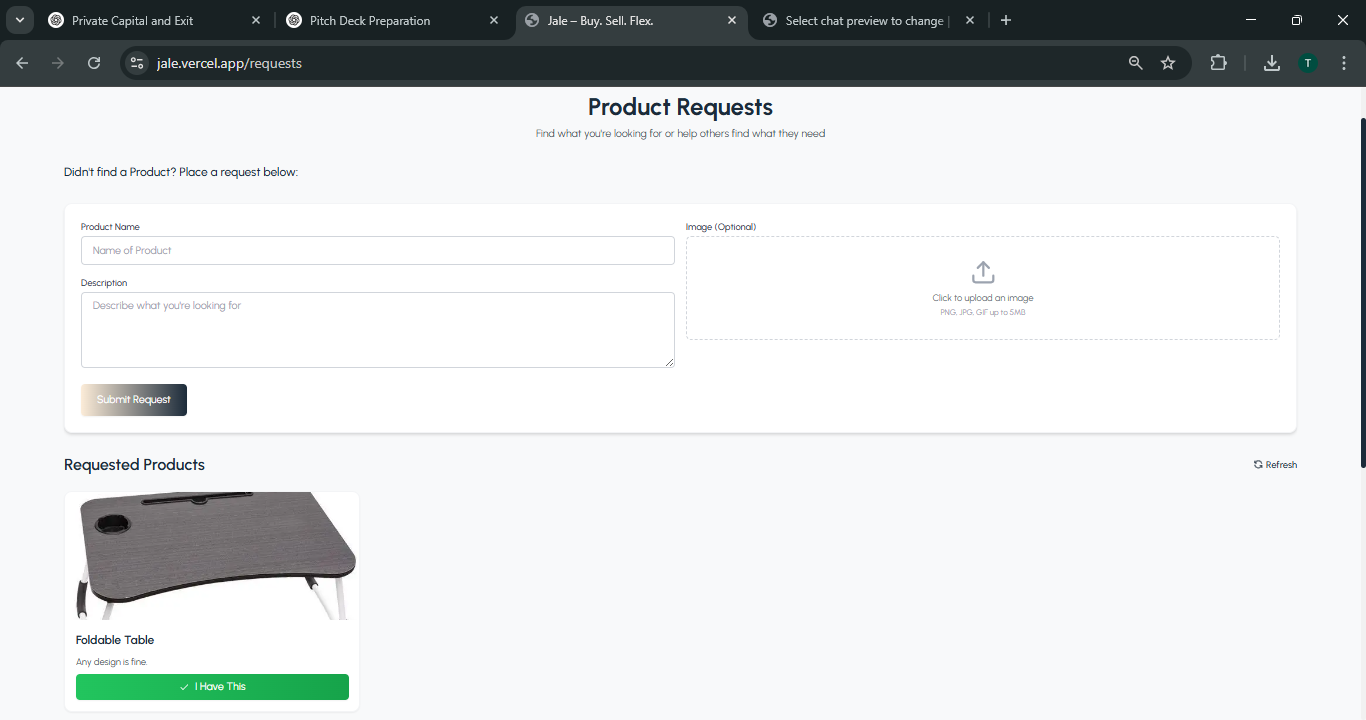
Request Page
-
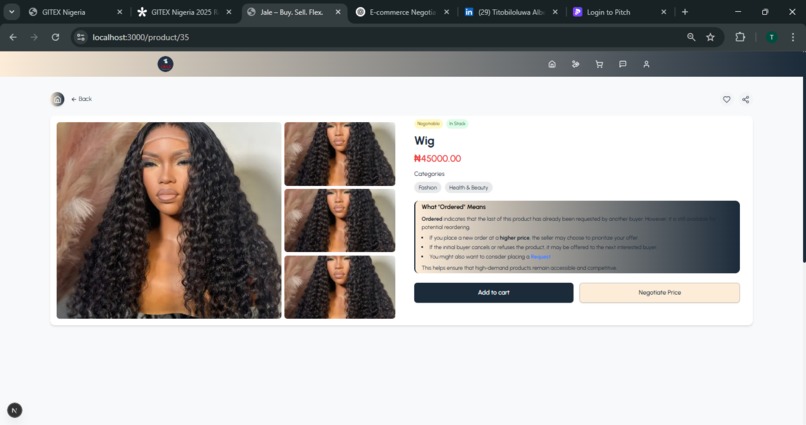
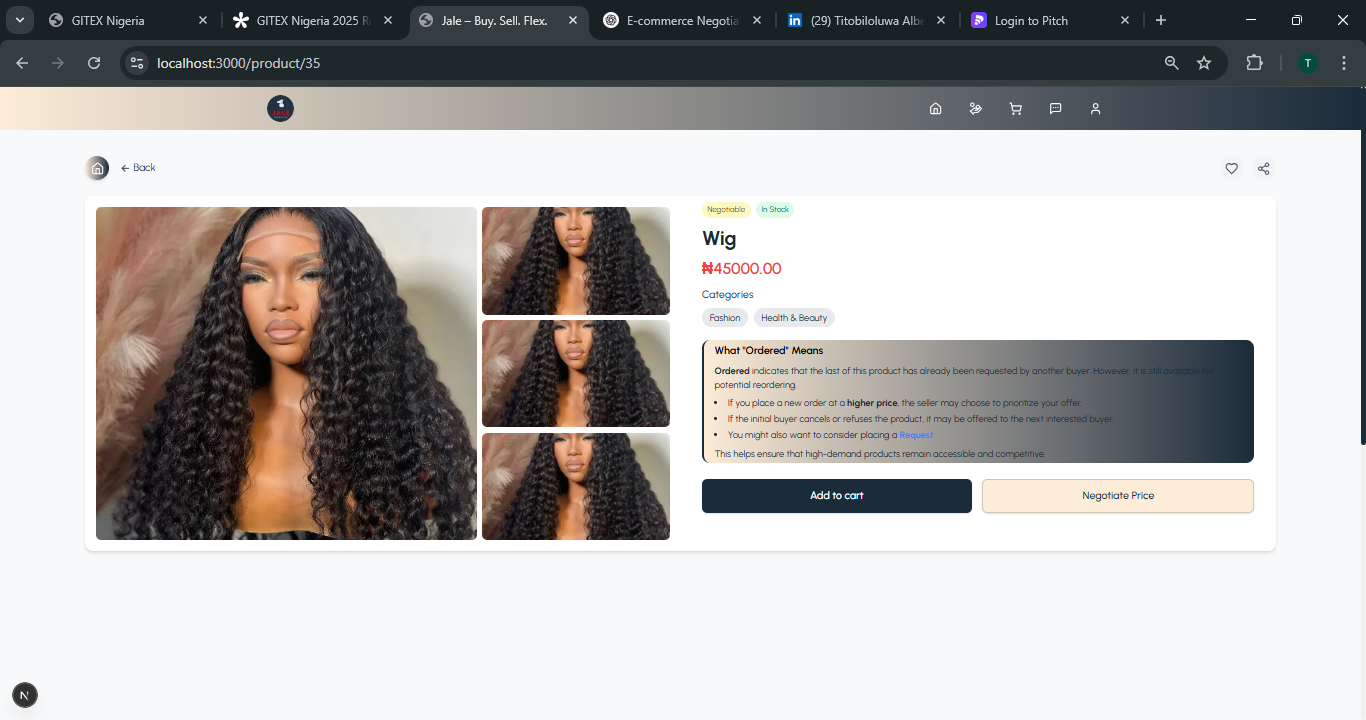
Product Page
-
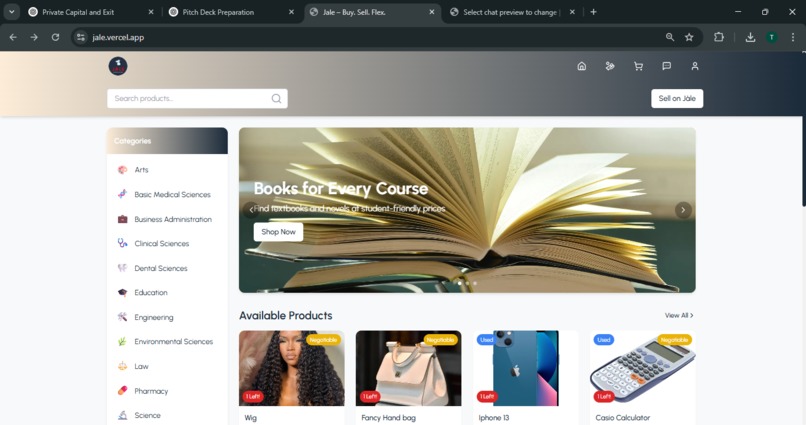
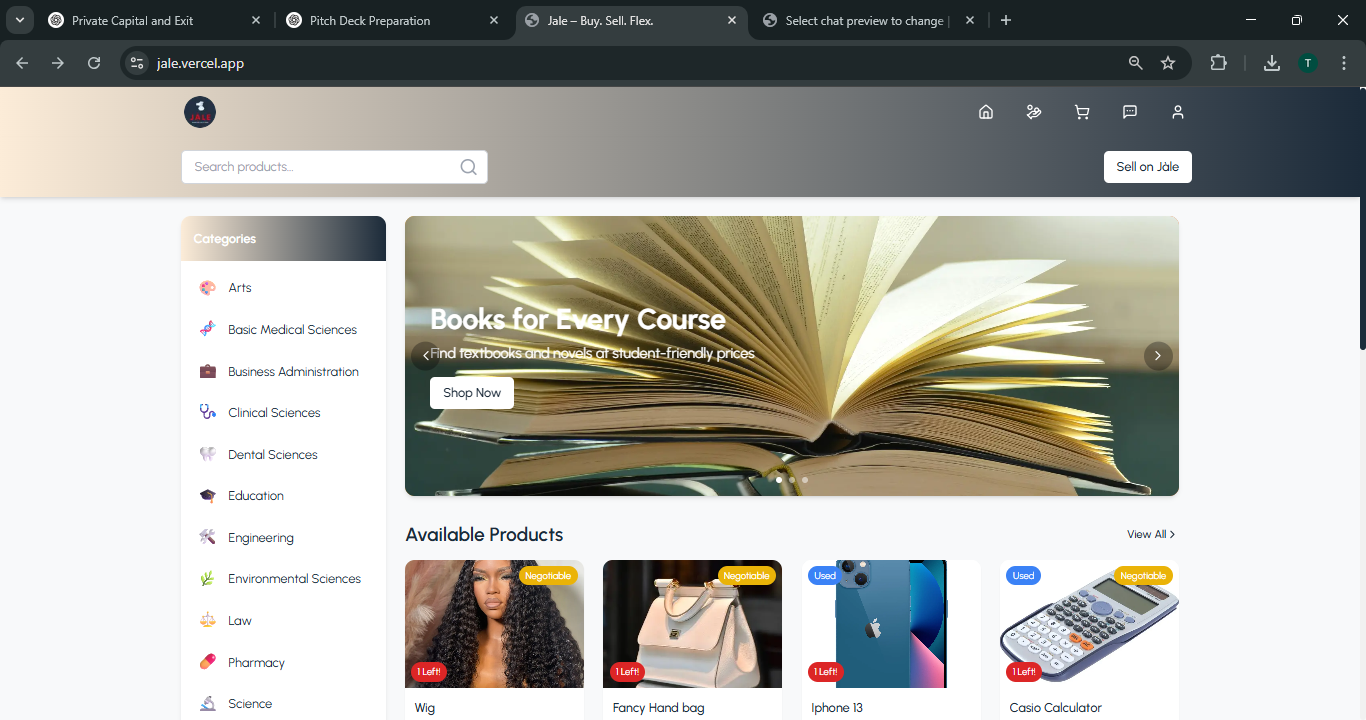
Home Page
-
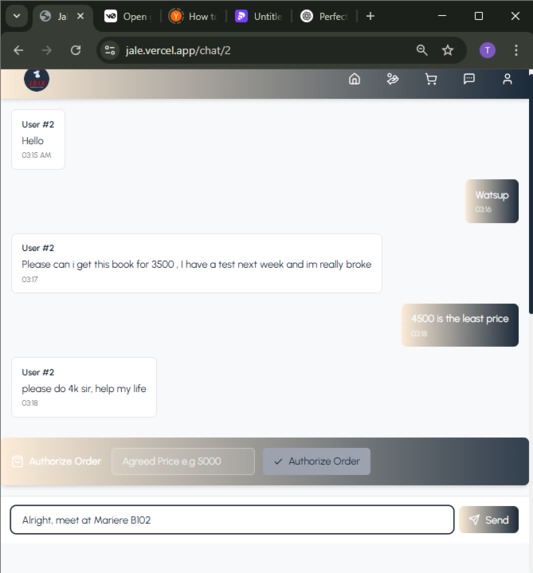
Negotiation
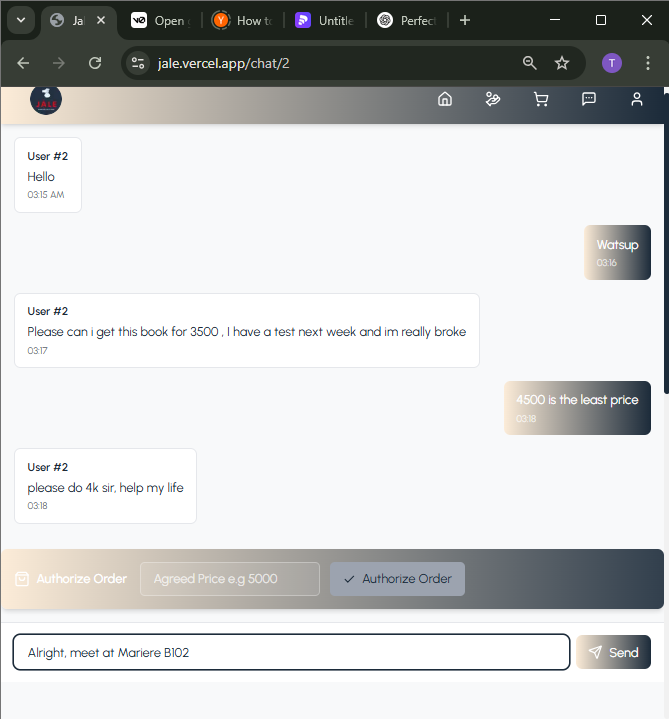
✅ Inspiration Jale was inspired by a real problem I experienced as a student — not being able to negotiate prices online like we do in physical markets. I noticed that students either overpaid on platforms like Jumia or tried to negotiate on Jiji and ended up taking transactions off-platform, risking trust and losing structure. I wanted to create a solution that gives the freedom to negotiate while protecting the integrity of the platform.
✅ What it does Jale is a student-first e-commerce platform that enables real-time price negotiation through a secure in-app chat. A built-in machine learning model monitors conversations to detect and block attempts to exchange personal contact details, keeping transactions safe and on-platform.
✅ How we built it The platform was built with a Django backend and a Next.js frontend, using REST APIs to connect components. I trained a machine learning model to identify and flag message patterns that suggest users are trying to share phone numbers or locations. Everything — from user auth to chat to moderation — was built solo over 10 months.
✅ Challenges we ran into Working alone made development slow at times. I also had to balance academics, limited resources, and teaching myself how to build and integrate the machine learning model into a live system. One of the toughest parts was designing a chat system that felt natural while still being monitored effectively.
✅ Accomplishments that we're proud of I manually validated the model before coding and generated real student transactions in early tests. I’m proud to have built a full-stack solution — with negotiation, moderation, and user protection — entirely solo. The MVP has passed QA testing and is ready for campus launch.
✅ What we learned I learned how important it is to test ideas manually before writing code. I also discovered that the best solutions come from solving problems you deeply understand — and that simplicity, not complexity, wins trust and traction.
✅ What's next for Jale We’re launching on campus in the coming weeks. The next phase is to gather real usage data, refine the ML model, and introduce visibility-based incentives for users who refer or share the platform. Long-term, we plan to expand to other campuses and then to informal markets beyond academic environments.
Built With
- cronjob
- django
- django-rest-framework
- fcm
- firebase
- github
- github-(version-control)
- html
- javascript
- jwt
- neon
- next.js(react)
- postgresql
- python
- redis
- render
- restful-apis
- scikit-learn
- tailwind
- transformers
- typescript
- upstash
- vercel
- vscode

Log in or sign up for Devpost to join the conversation.