-
-
JalCykle - Closing the Loop on Water Conservation & Reuse.
-
Defining the key metrics required to validate JalCykle's real-world impact.
-
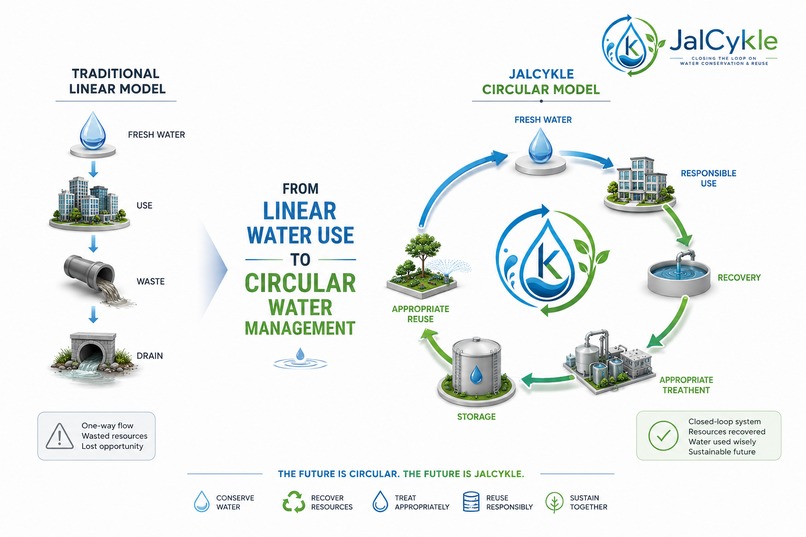
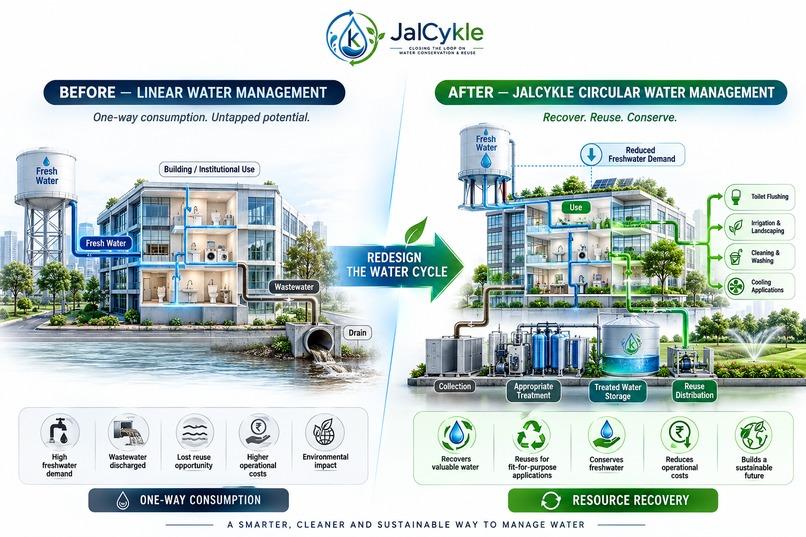
From “use and discharge” to “recover, treat, and reuse.”
-
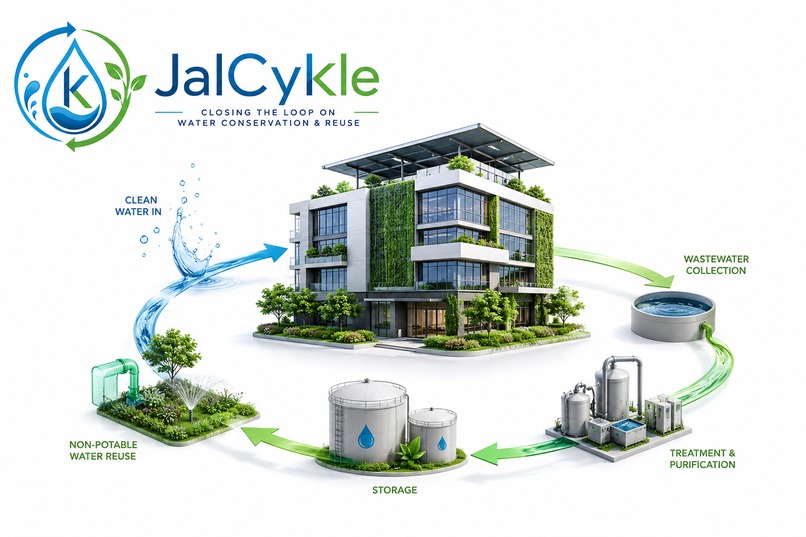
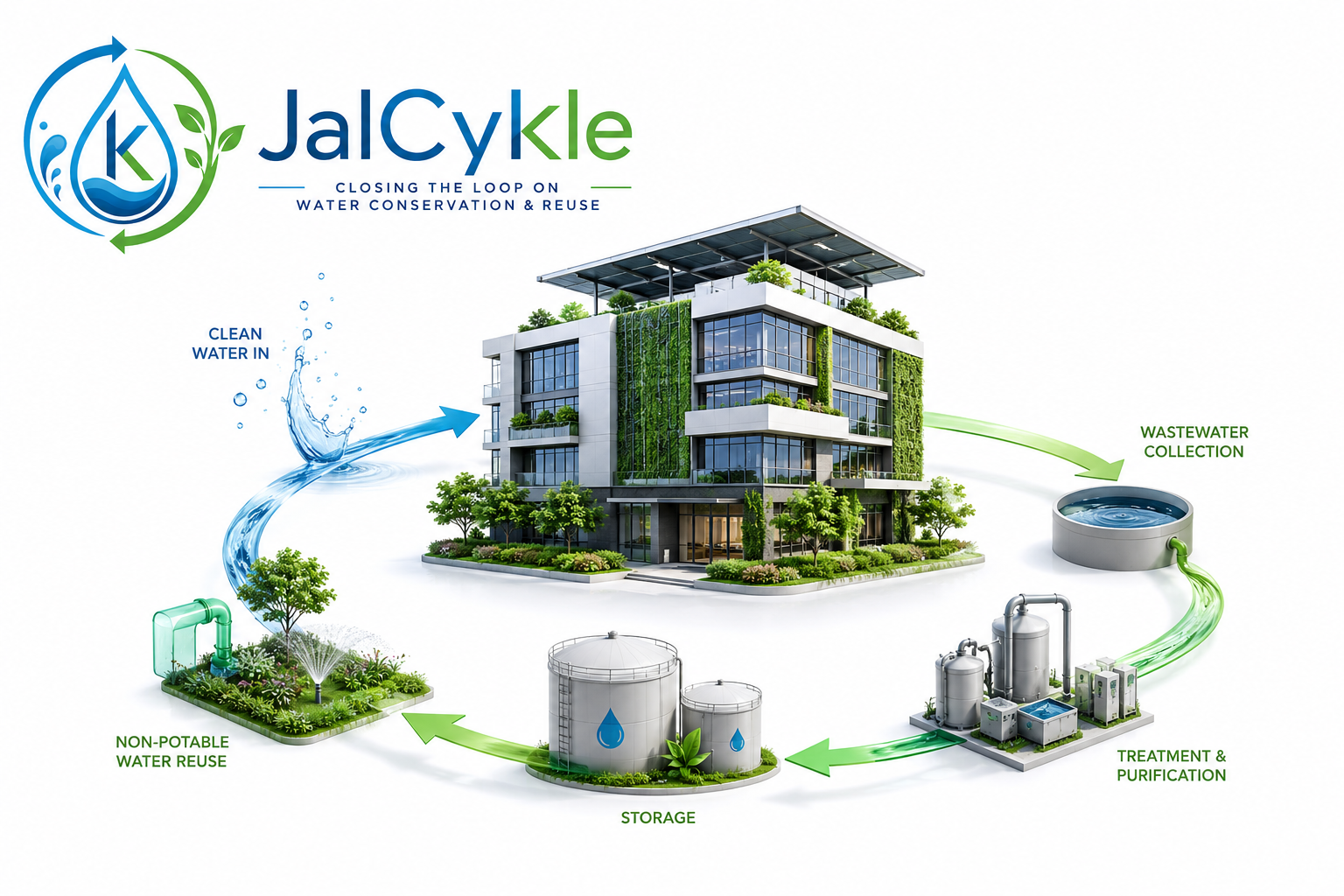
Introducing JalCykle: a circular approach to water conservation and reuse.
-
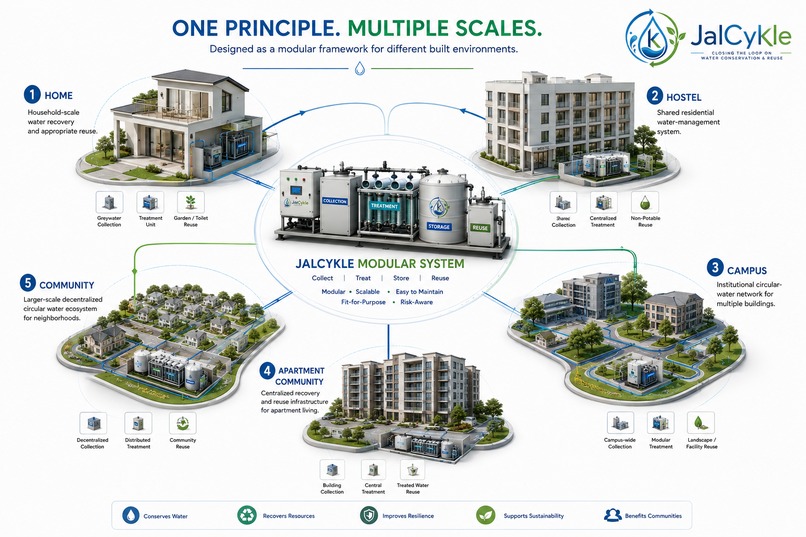
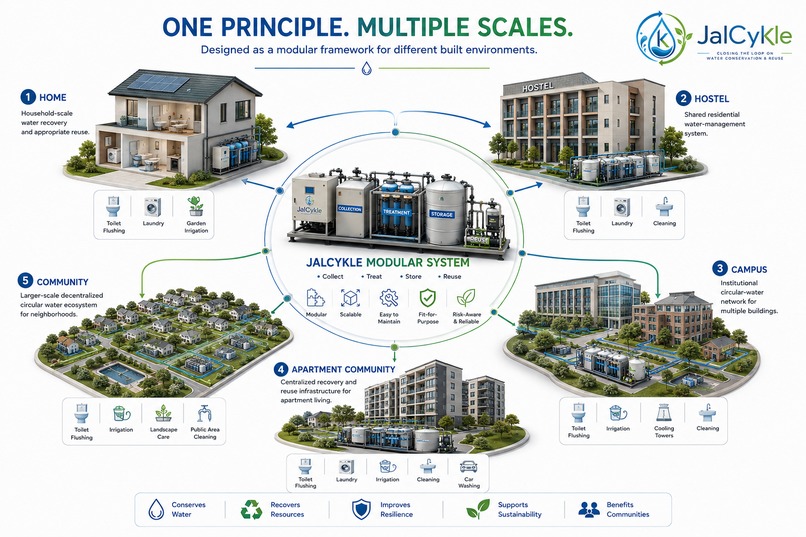
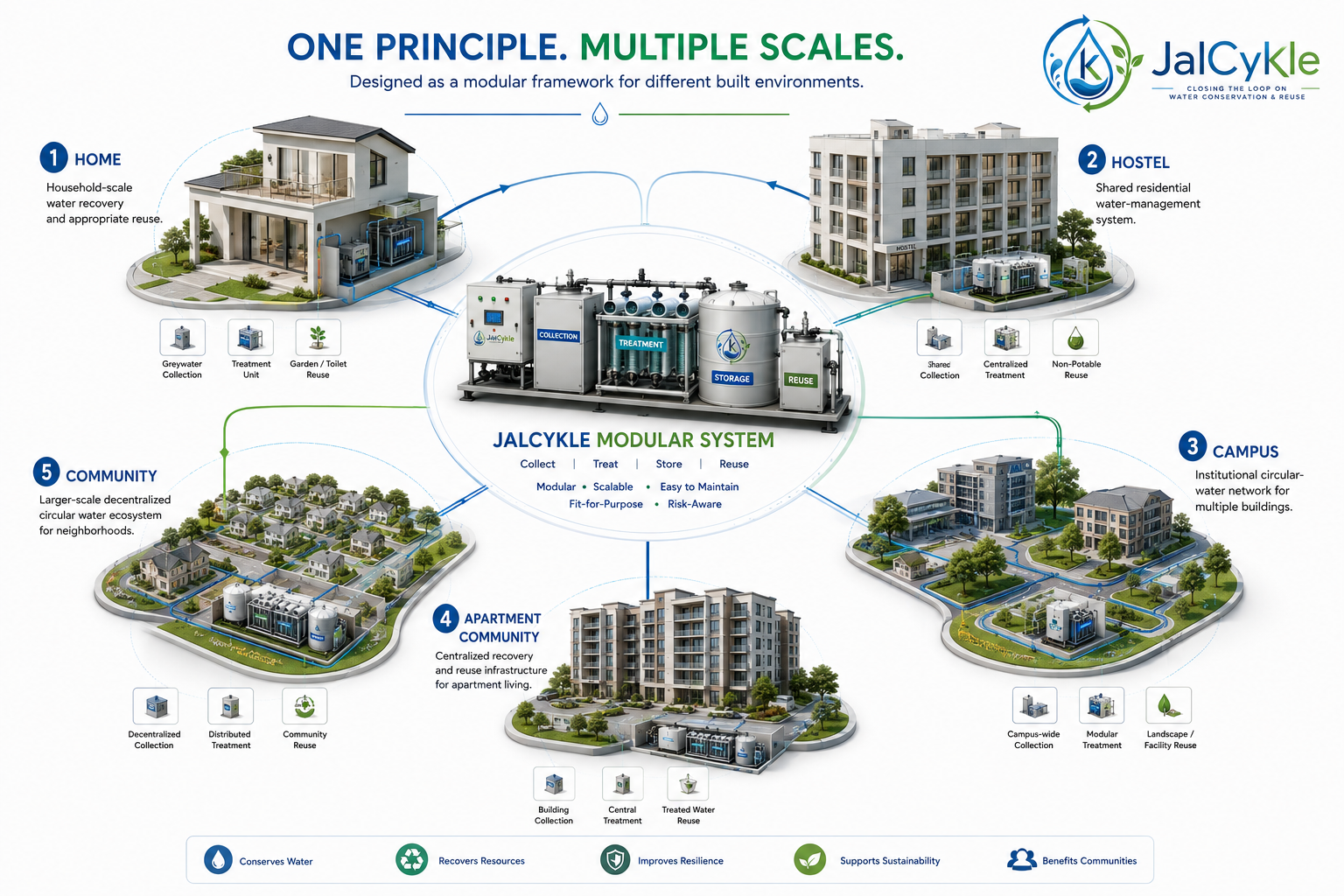
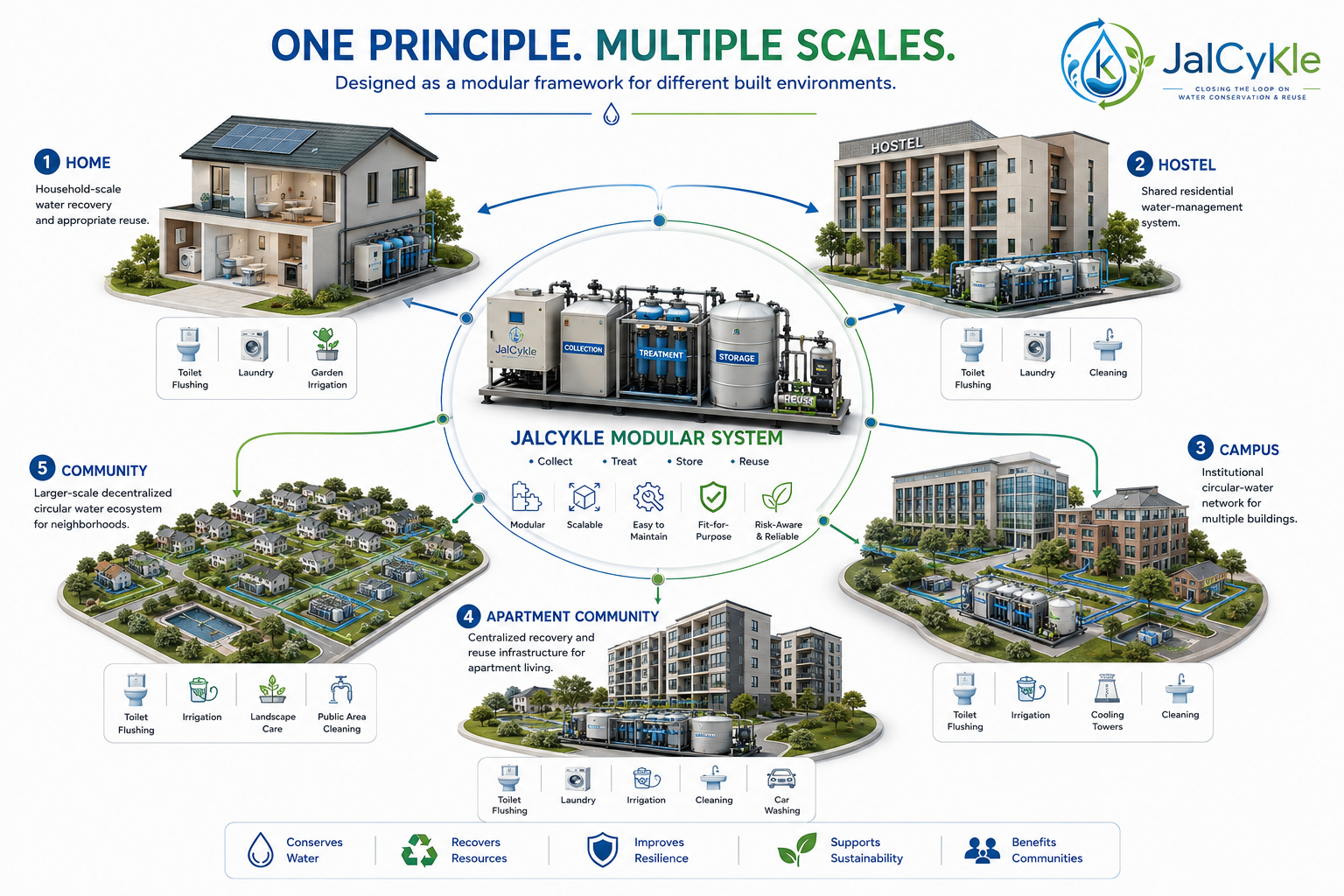
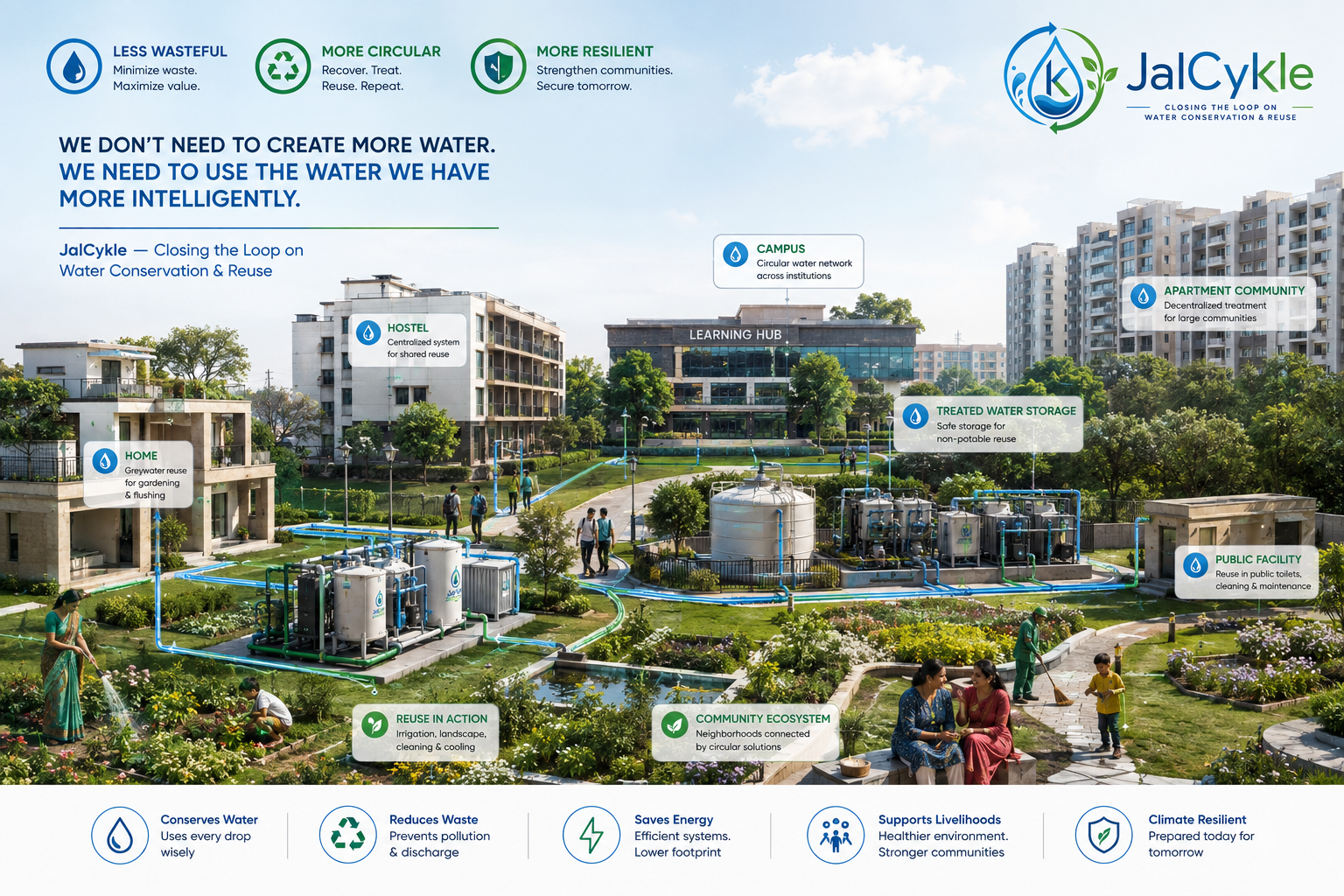
Applying the JalCykle framework across different buildings and community environments.
-
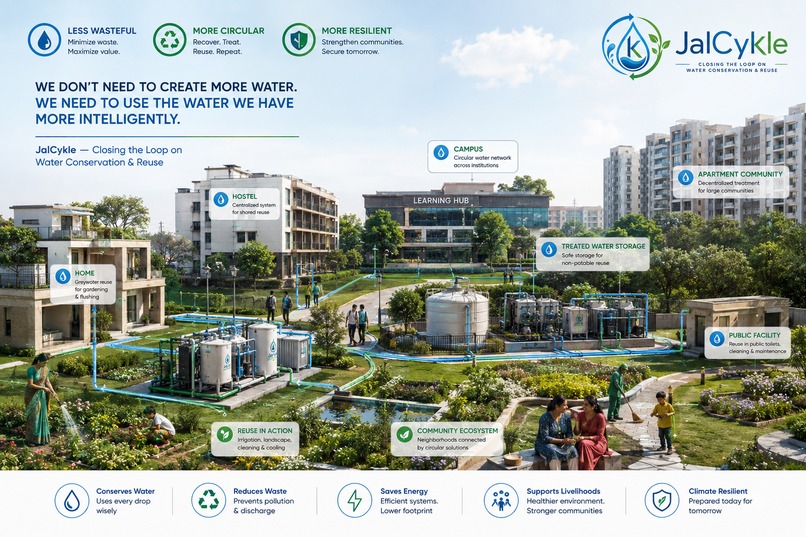
Envisioning communities where water remains a resource through intelligent circular management.
-
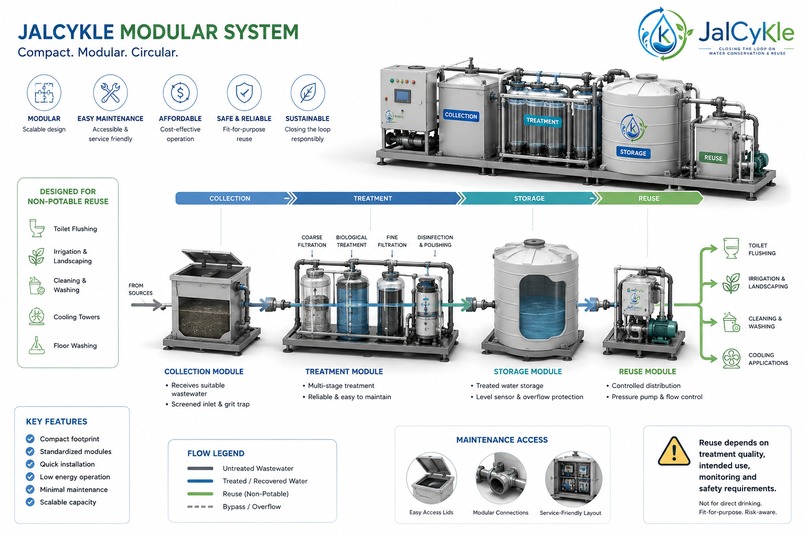
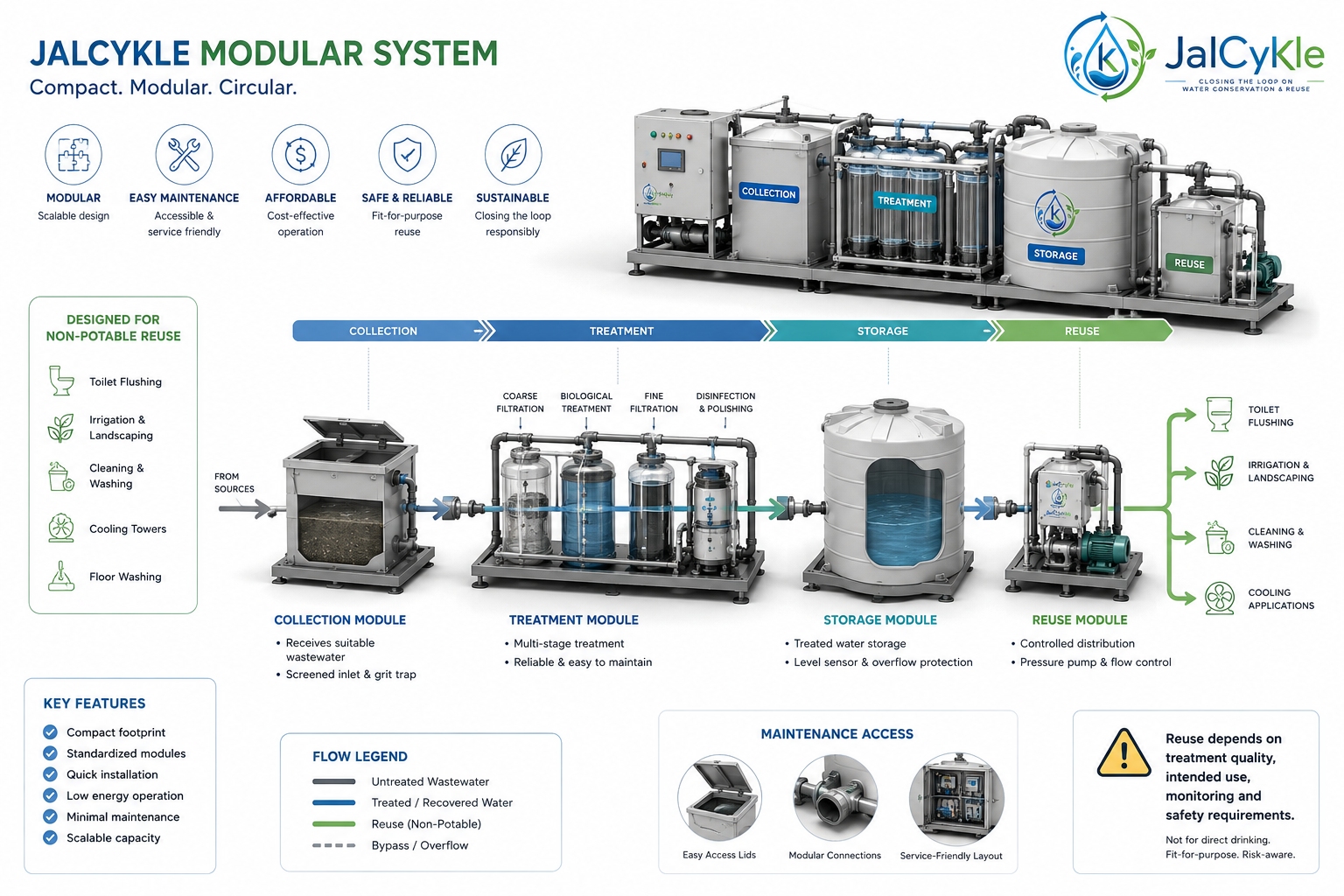
A practical modular concept designed for scalable circular water management.
-
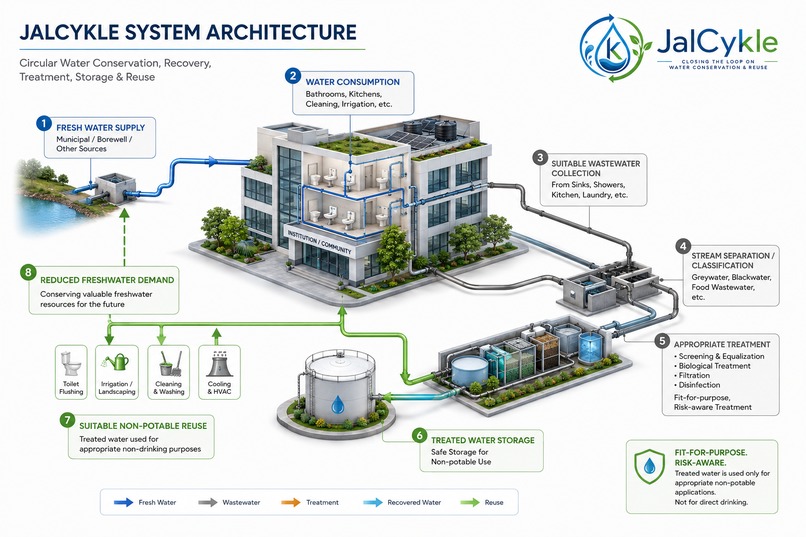
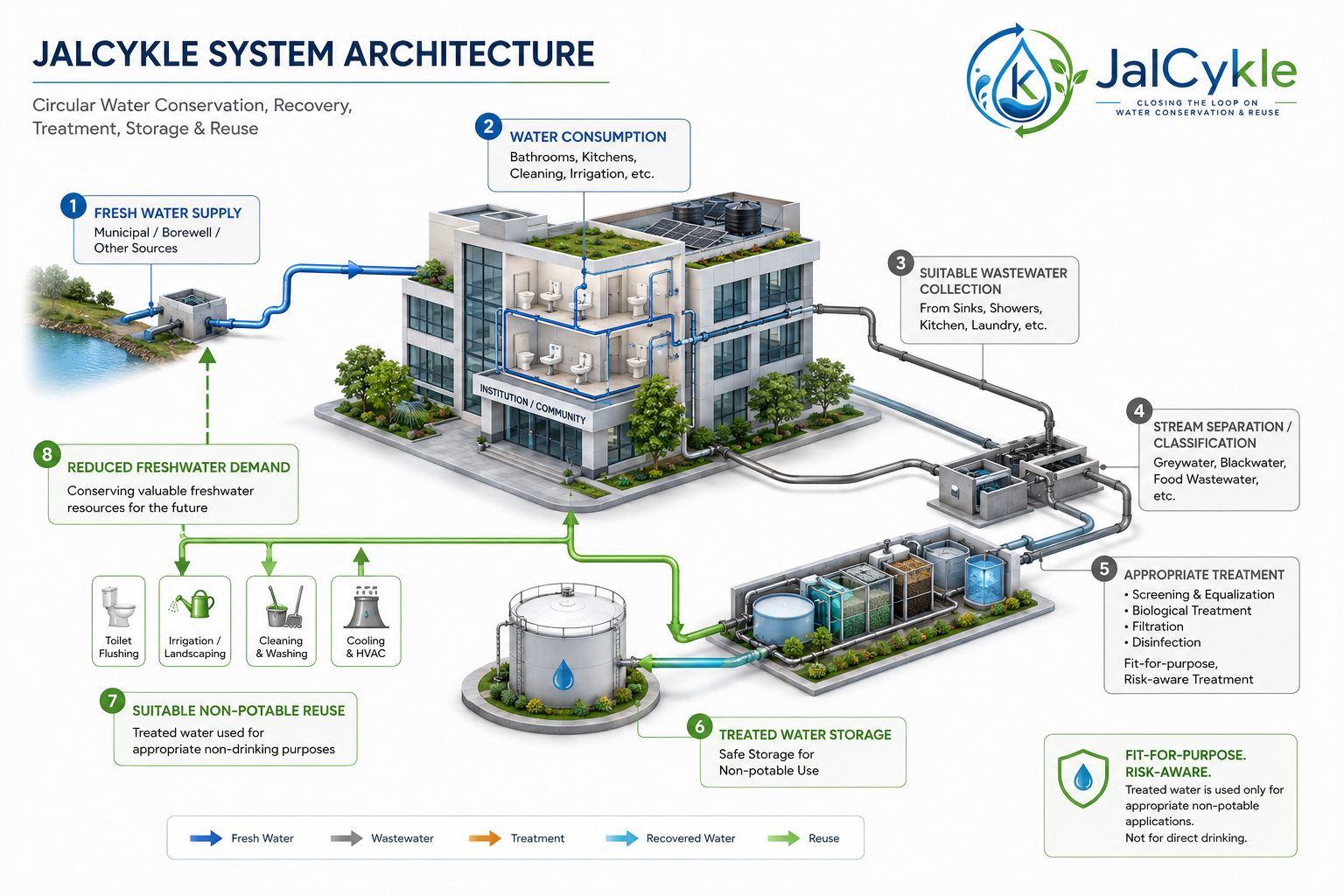
Mapping the complete JalCykle system from collection to appropriate reuse.
-
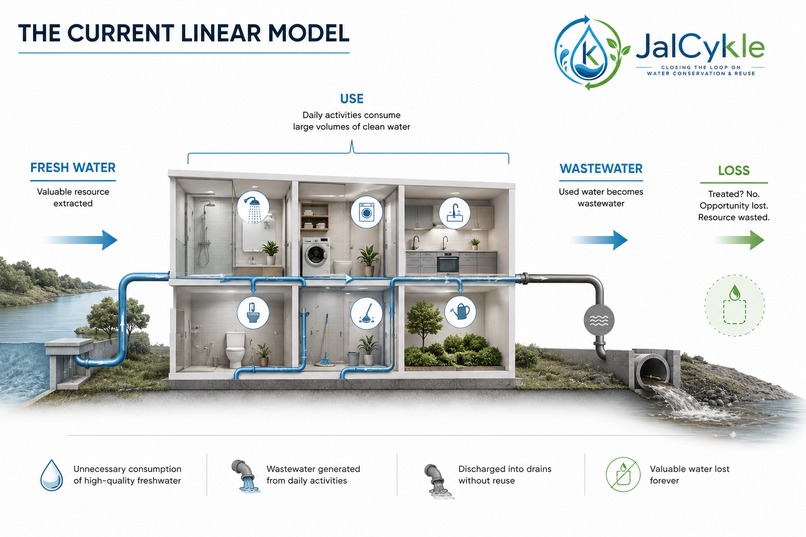
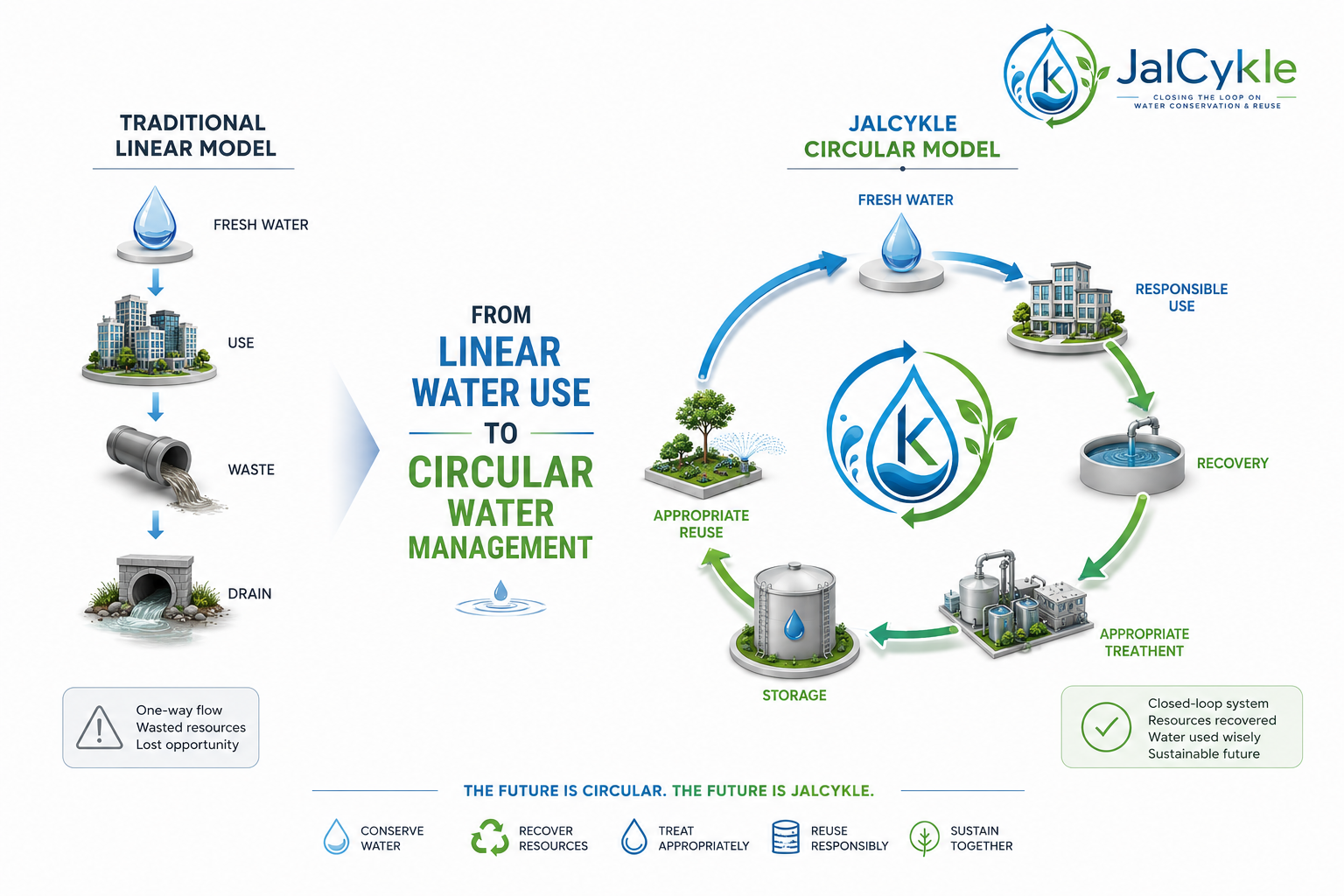
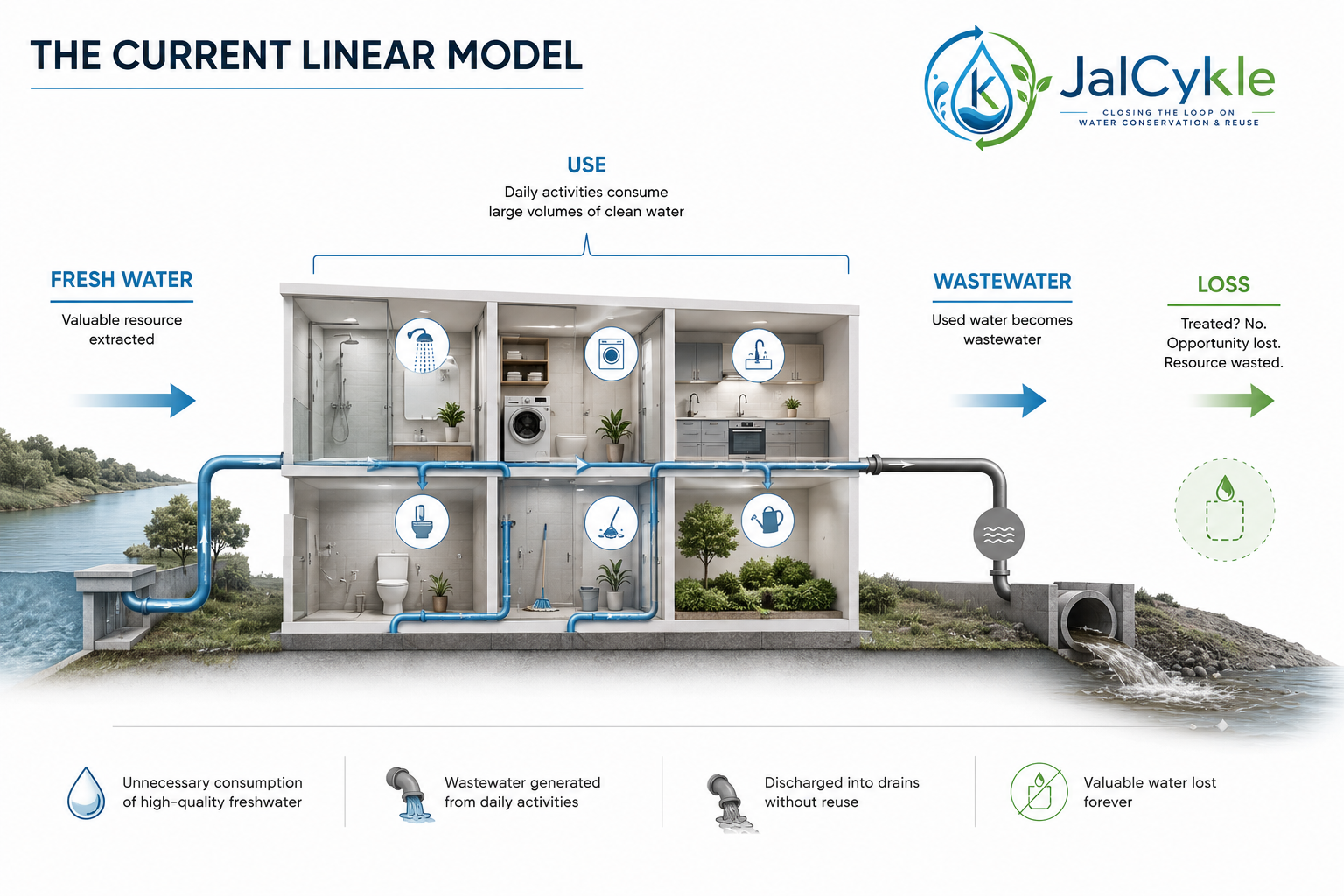
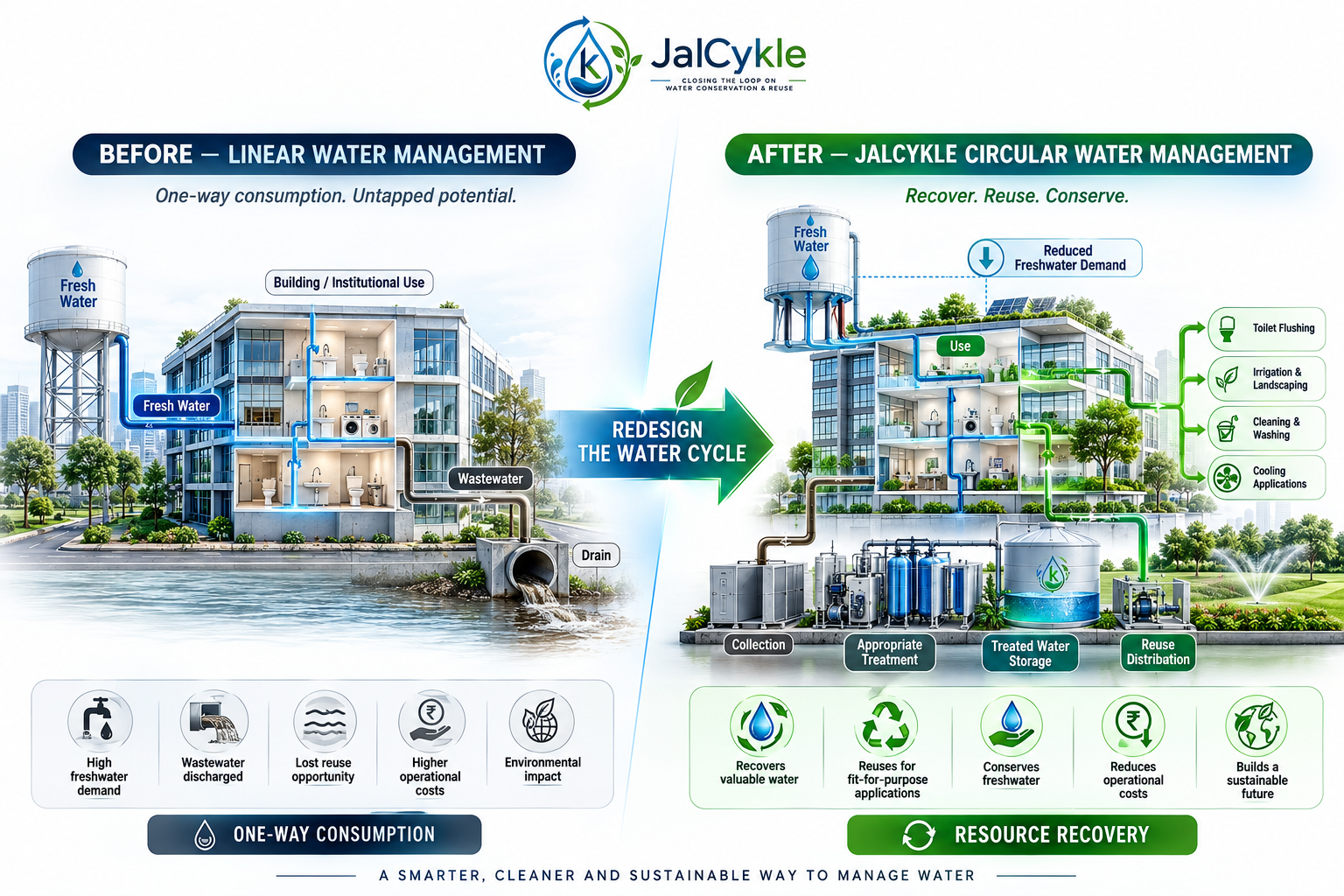
Transforming water management from a linear flow into a circular resource cycle.
-
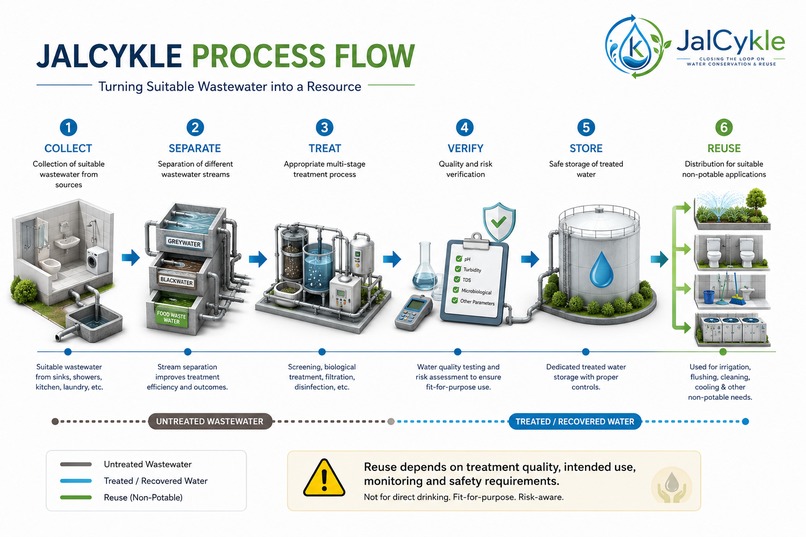
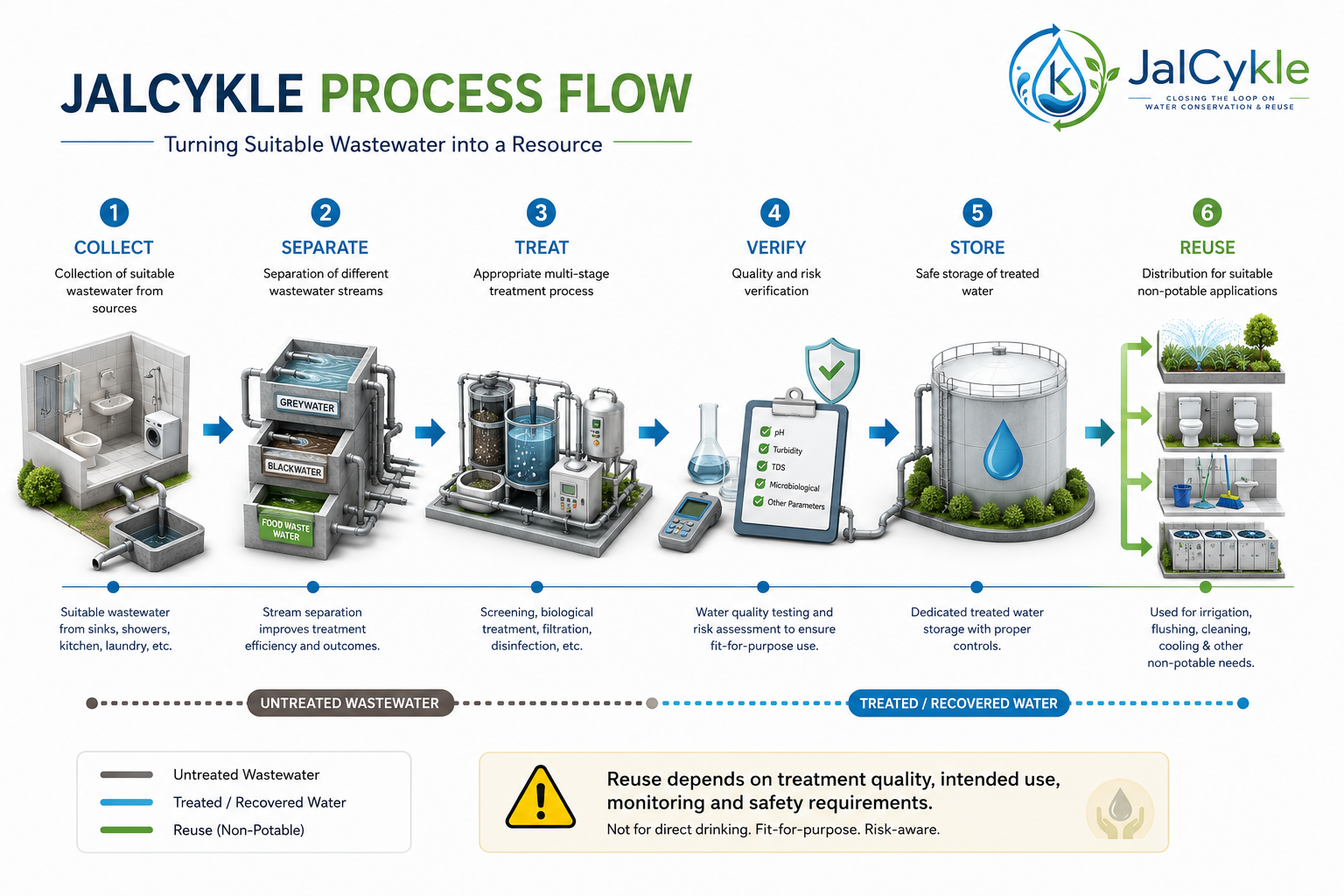
Showing how suitable wastewater moves through recovery, treatment, verification, storage, and reuse.
-
Visualizing the water wastage and lost reuse opportunities in the conventional linear model.
Inspiration
Water is one of our most valuable resources, yet much of the water used in homes and institutions is treated as waste after a single use. The SIH25085 problem statement challenged us to think beyond simple water conservation and explore water loss, wastewater treatment, and domestic reuse as one connected problem.
This inspired JalCykle — a circular water management concept built around a simple question:
Why should usable water become waste after just one cycle?
Instead of treating water management as a one-way process, we wanted to redesign it as a cycle where suitable wastewater can be recovered, treated, and reused for appropriate non-potable purposes.
What it does
JalCykle proposes a practical circular water-management system that connects water conservation, wastewater recovery, treatment, storage, and reuse.
The core flow is:
Fresh Water → Usage → Wastewater Collection → Appropriate Treatment → Storage → Reuse
The concept can be adapted for suitable environments such as homes, hostels, apartments, educational institutions, and community facilities.
Rather than replacing the entire existing water infrastructure, JalCykle focuses on identifying opportunities where water can be recovered and reused, reducing unnecessary freshwater demand and overall water wastage.
How we built it
Since Graphiques is a non-code innovation challenge, we focused on designing the solution as a practical system rather than developing a software application.
We started by understanding the complete journey of water within a typical facility and identifying where water is consumed, lost, or potentially recoverable.
We then developed:
- A circular water-flow model
- Wastewater collection concept
- Appropriate treatment stages
- Reuse pathways
- System architecture
- Process diagrams
- Implementation strategy
- Sustainability and impact model
- Cost and feasibility considerations
We also designed JalCykle's visual identity and branding to communicate the idea of circularity, water conservation, and environmental responsibility.
Challenges we ran into
The biggest challenge was making the concept innovative without making it unrealistic.
Water management involves several interconnected factors, including treatment, infrastructure, maintenance, user behavior, cost, safety, and scalability. Connecting these into one understandable system required considerable iteration.
Another challenge was recognizing that not all wastewater is the same and not all treated water should be reused for every purpose. This pushed us to design JalCykle around appropriate treatment and appropriate reuse rather than treating water recycling as a one-size-fits-all solution.
We also had to consider:
- Installation and maintenance requirements
- Space limitations
- Initial cost
- User acceptance
- Long-term sustainability
- Scalability across different environments
Accomplishments that we're proud of
We are proud that we transformed a broad water-management problem into a clear, structured, and practical innovation concept.
Our biggest accomplishment is the shift from thinking about water as a disposable resource to thinking about it as part of a continuous cycle.
We created a concept that brings together:
Conservation + Recovery + Treatment + Reuse + Sustainability
We are also proud that JalCykle remains technology-agnostic and non-code, allowing the innovation to focus on solving the actual problem rather than adding technology simply for the sake of it.
What we learned
The project taught us that innovation does not always mean inventing something completely new.
Sometimes, innovation means redesigning an existing system so that it wastes less and creates more value.
We learned to look at problems as connected systems rather than isolated issues. In JalCykle, the real opportunity was not just reducing water consumption, but connecting consumption, recovery, treatment, and reuse.
We also learned the importance of balancing:
- Innovation
- Practicality
- Cost
- Sustainability
- User adoption
- Scalability
Most importantly, we learned that a strong solution starts with understanding the problem deeply before deciding what to build.
What's next for JalCykle
Our next step is to move JalCykle from a conceptual innovation toward a validated and demonstrable solution.
We want to:
- Develop a detailed prototype of the proposed system.
- Test appropriate water-recovery and treatment pathways.
- Measure potential freshwater savings.
- Study implementation costs and maintenance requirements.
- Validate the concept in a suitable real-world environment.
- Refine the design based on user and operational feedback.
- Explore modular versions for homes, institutions, hostels, apartments, and communities.
Our long-term vision is to make circular water management practical, affordable, and scalable.
JalCykle
Closing the Loop on Water Conservation & Reuse.
Built With
- circulareconomy
- designthinking
- environmentalinnovation
- greywatermanagement
- humancentereddesign
- industrialdesign
- productdesign
- resourceefficiency
- sdg6
- sustainabledesign
- sustainableinfrastructure
- systemsthinking
- wastewatermanagement
- waterconservation
- waterreuse


Log in or sign up for Devpost to join the conversation.