-
-
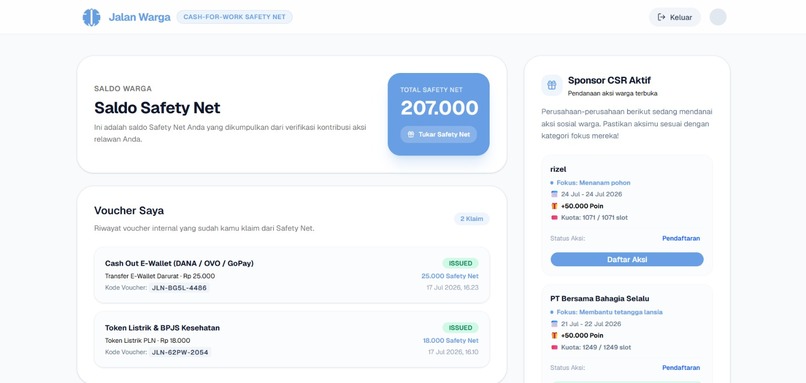
Dashboard Communities
-
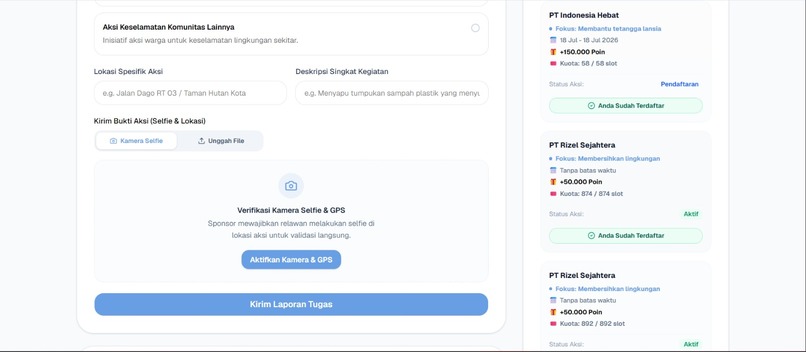
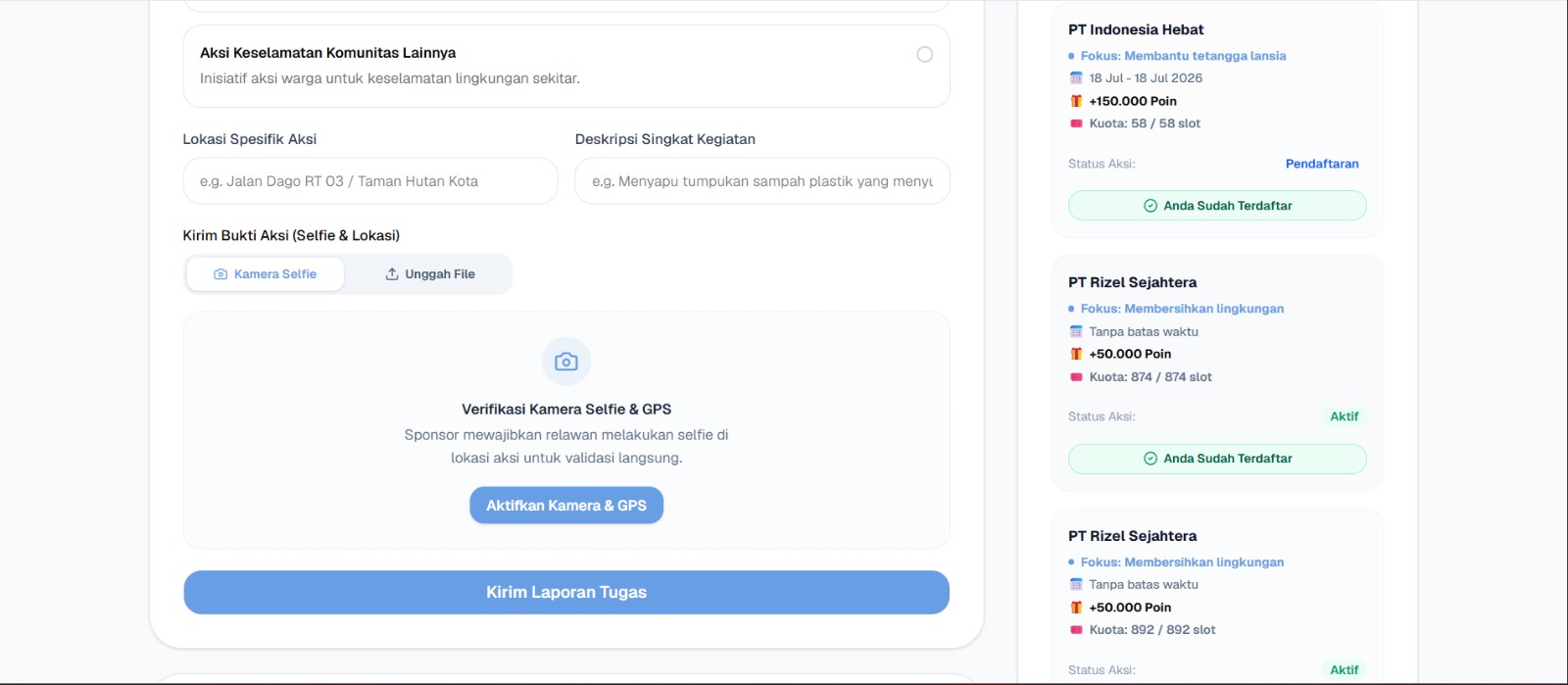
Task Submit Form
-
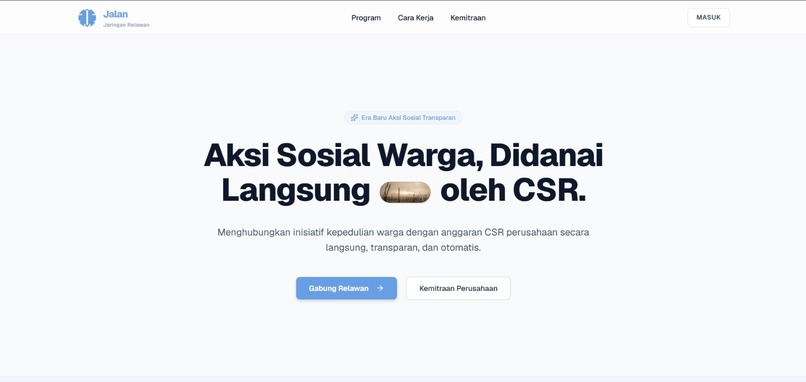
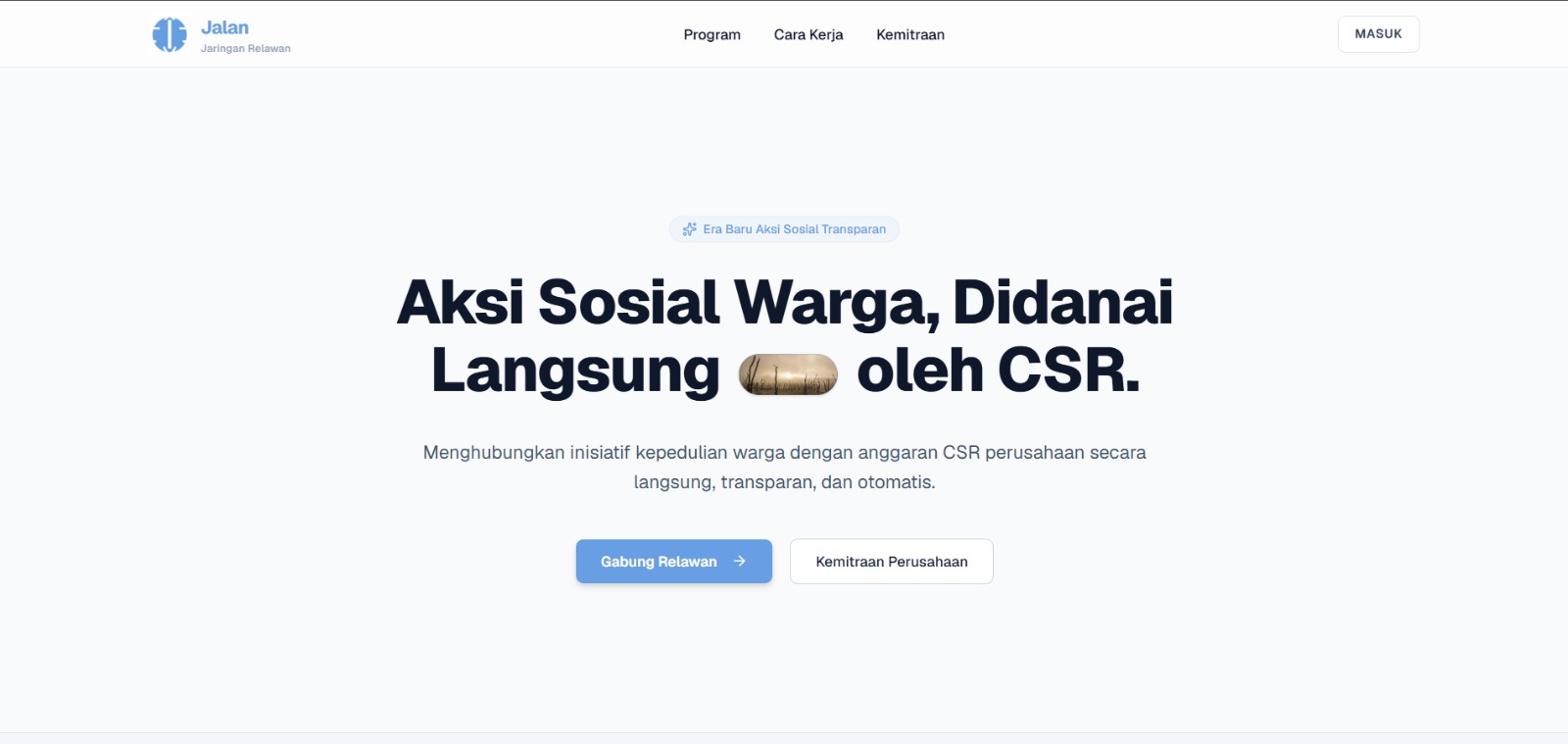
Landing Page
-
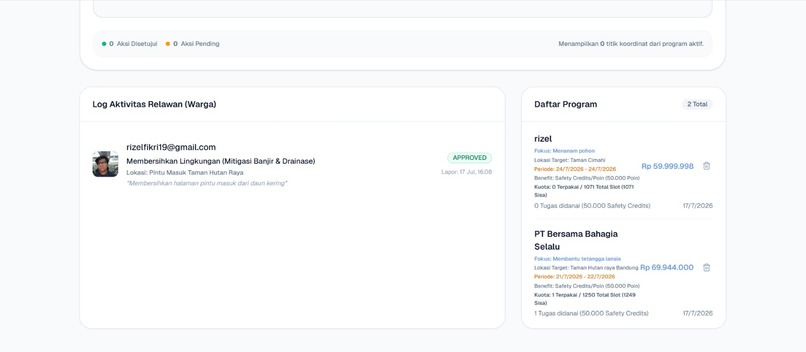
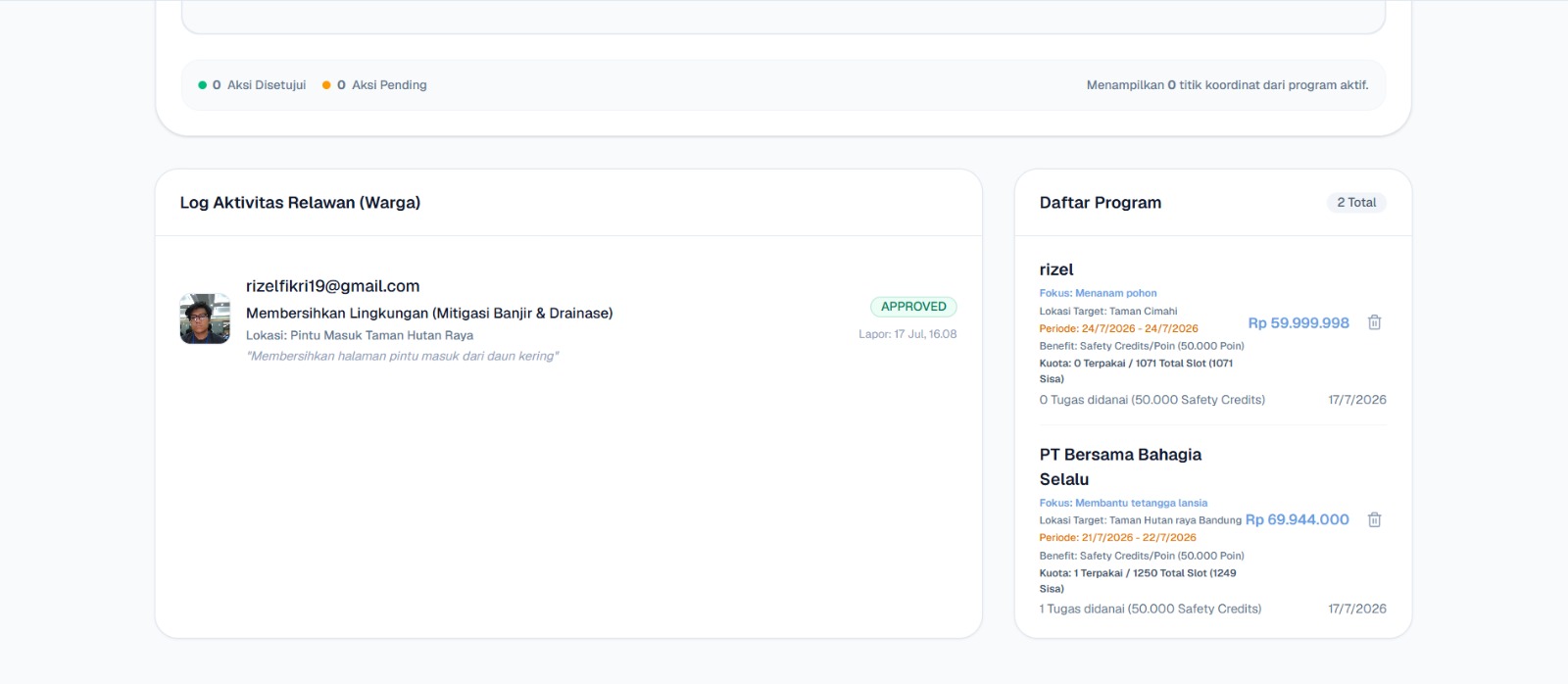
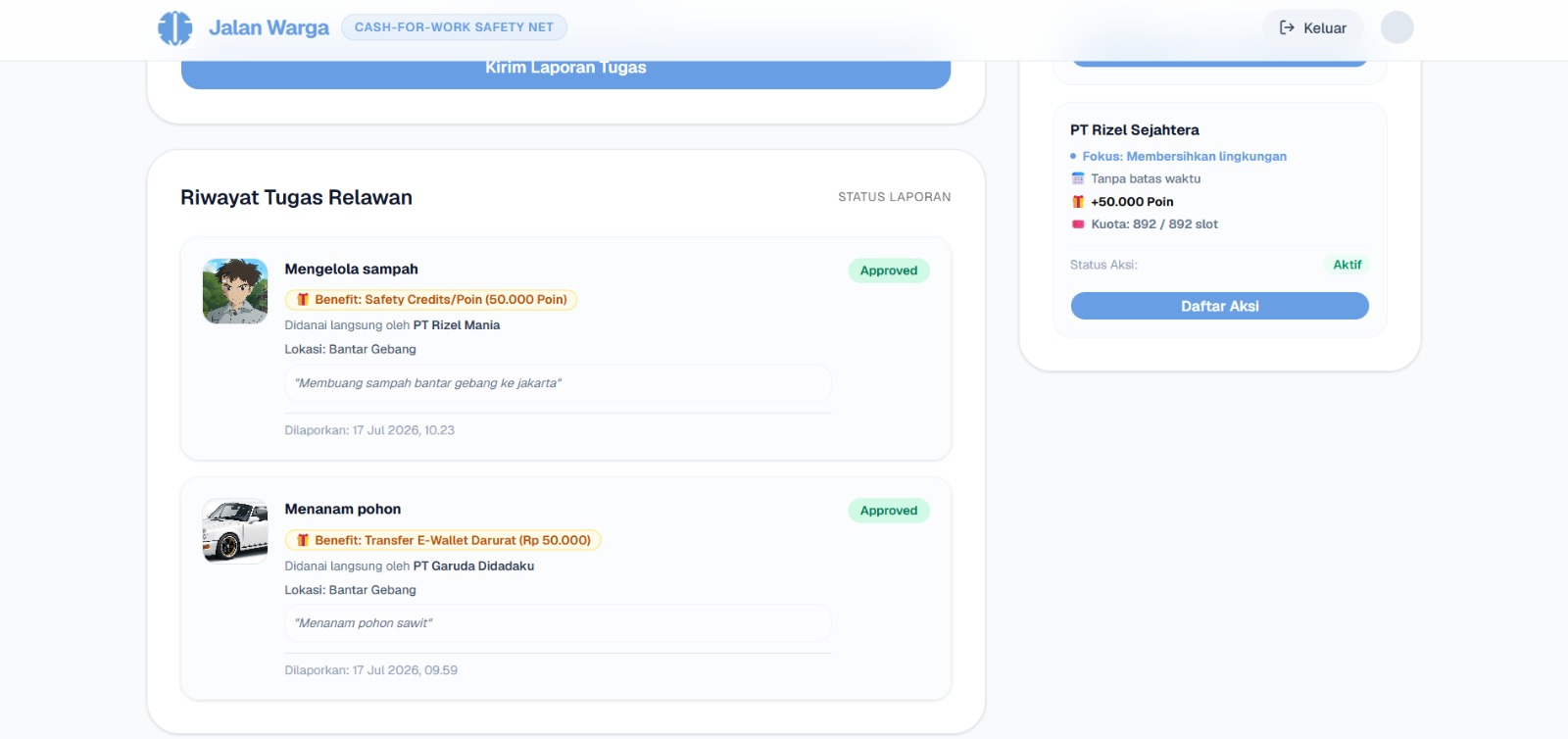
Communities Log Activity
-
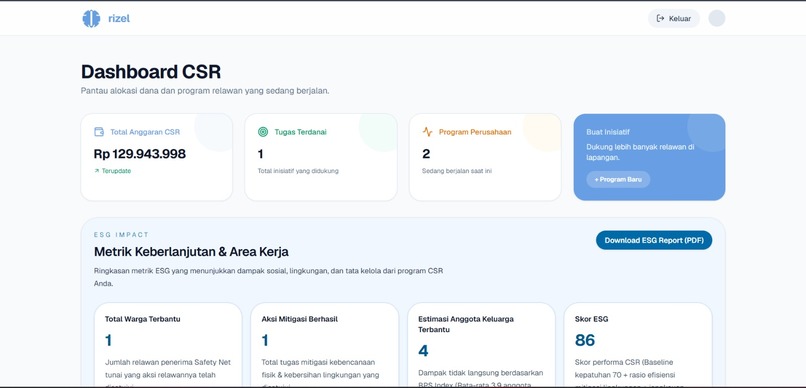
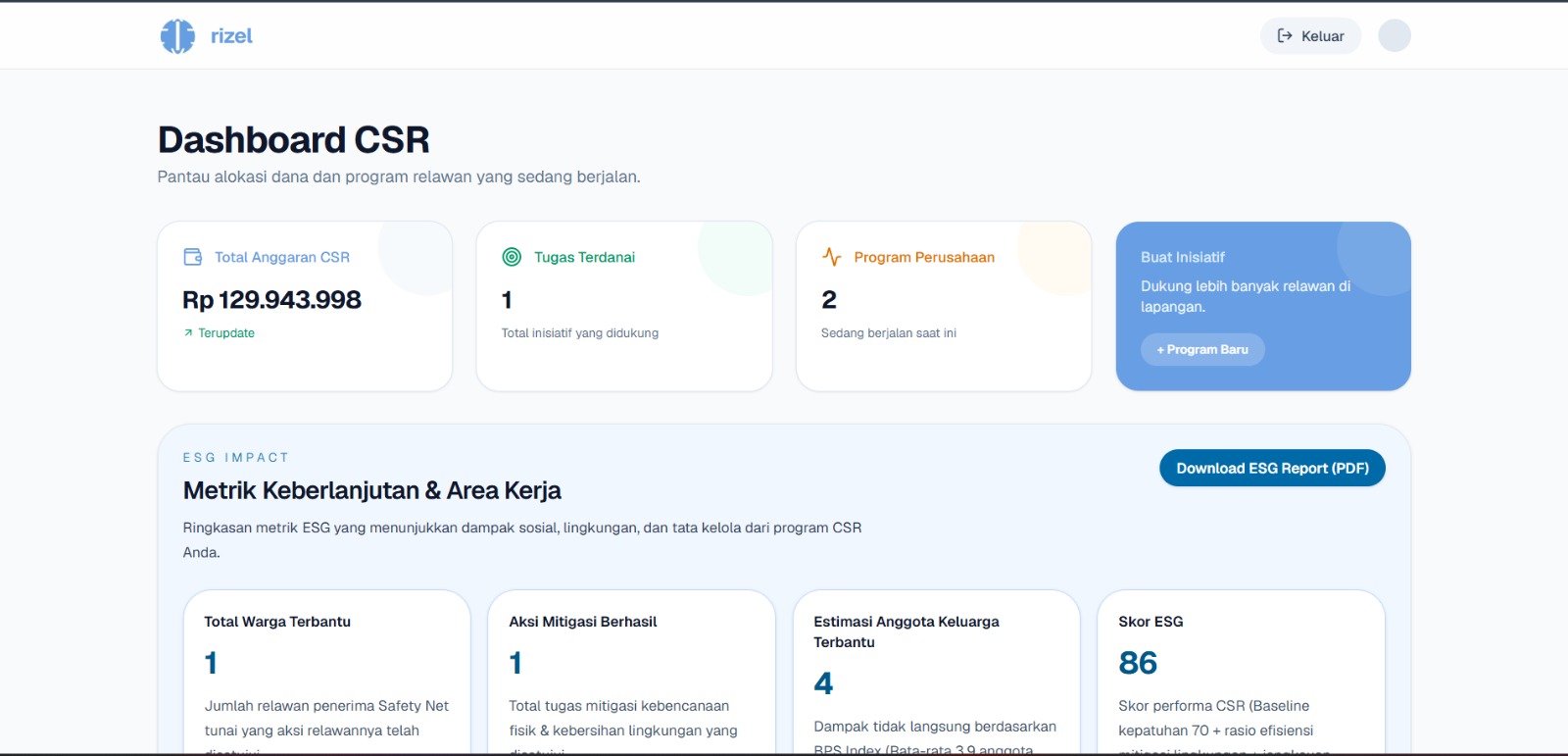
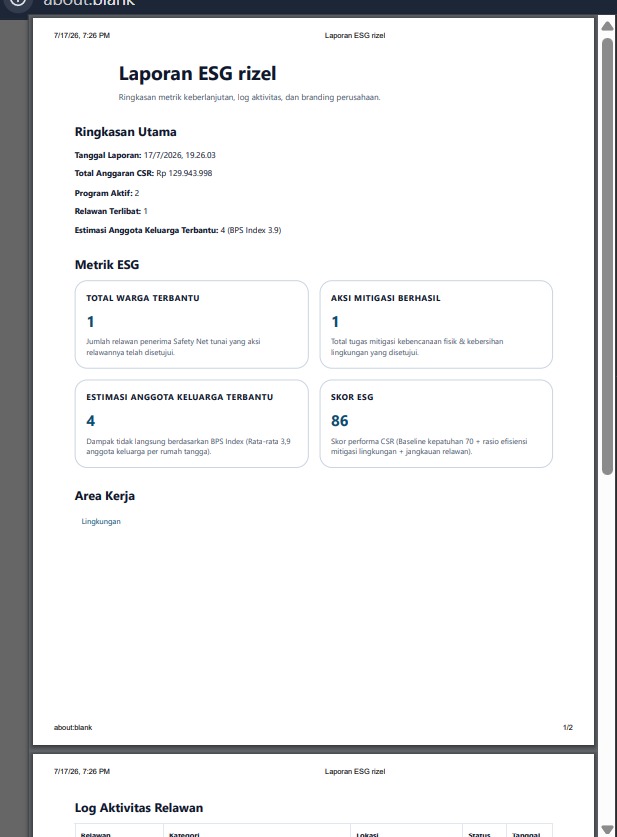
Sustainibility Metrics(can Export PDF)
-
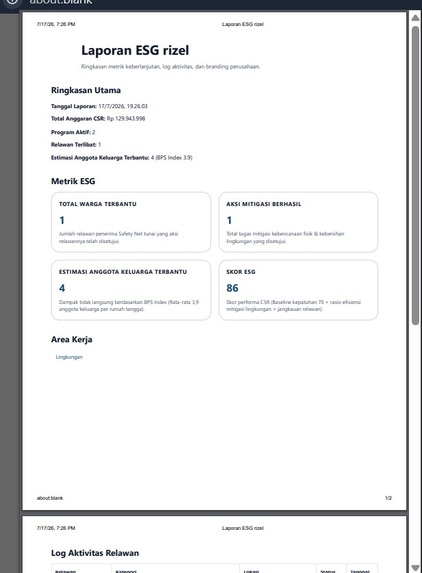
PDF File for ESG Report
-
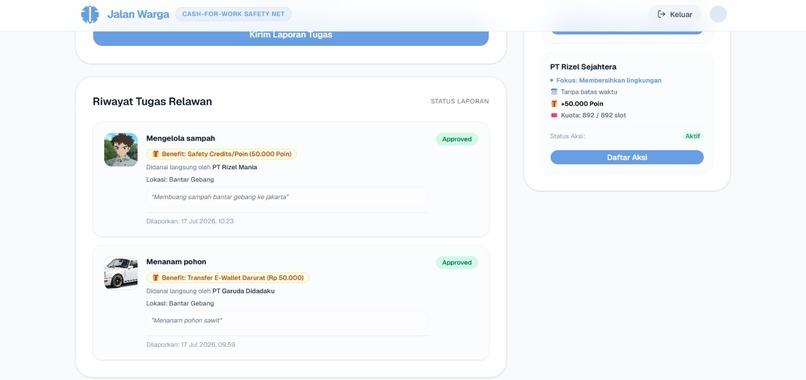
List of Company CSR Program
Inspiration
In many developing regions, there's a significant gap between corporate social responsibility (CSR) funds and grassroots environmental or social initiatives. Often, well-intentioned citizens who want to contribute to environmental mitigation (like cleaning up waste or planting trees) lack the resources or incentives. Meanwhile, corporations struggle to find transparent, verifiable ways to channel their CSR funds directly to communities and track their real ESG (Environmental, Social, and Governance) impact. We were inspired to bridge this gap by creating a platform that empowers citizens to take localized action while providing corporations with a trusted, data-driven system to fund and monitor these initiatives.
What it does
Jalan (Jaringan Relawan) is a custom web-based "Cash-for-Work" and ESG dashboard platform. It transparently connects citizens' environmental and social actions with corporate CSR funding.
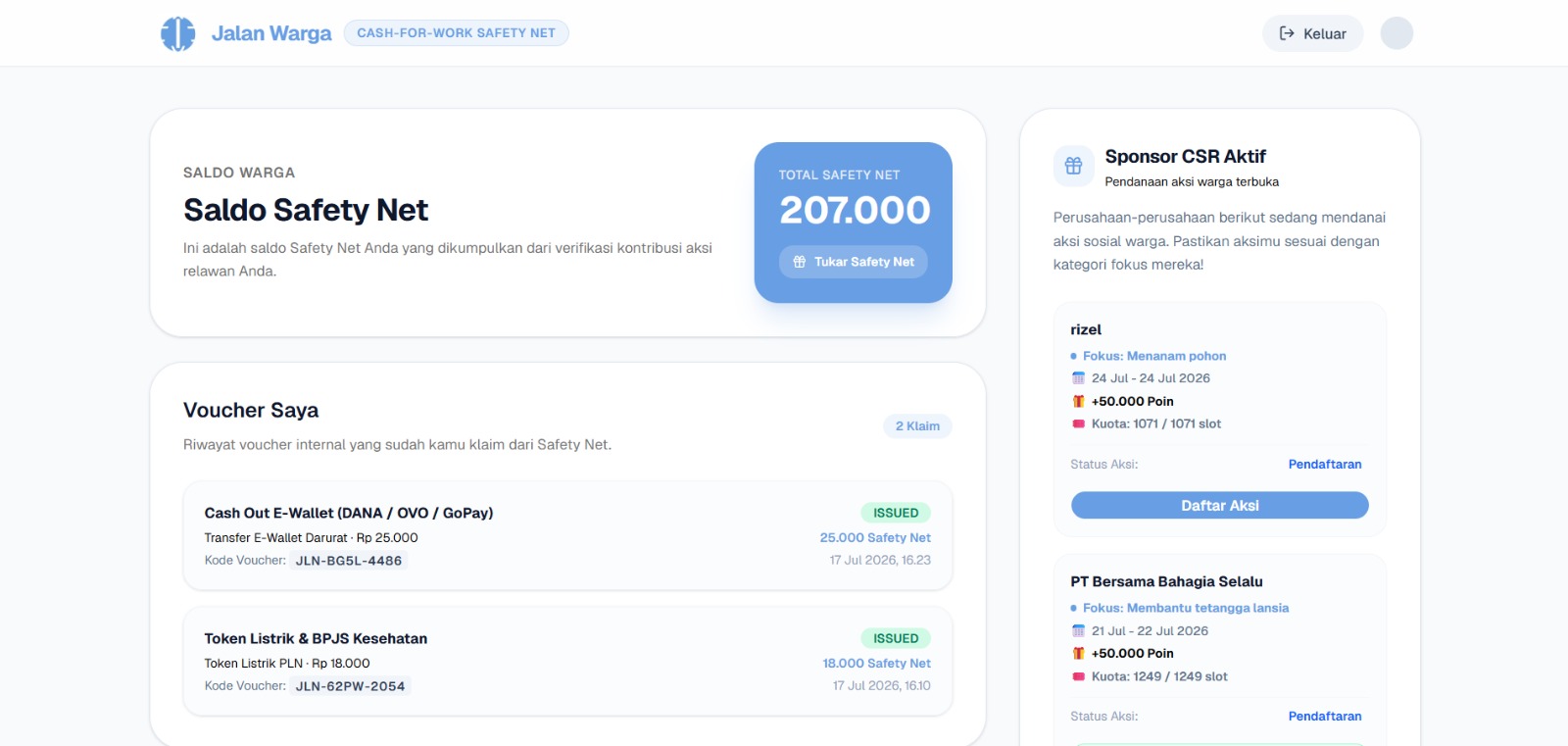
For citizens (volunteers), it serves as a platform to browse and register for local CSR initiatives. Volunteers can submit verifiable proof of their completed tasks using their device's camera and GPS, earning "Safety Net" reward points. These points can then be redeemed for essential goods, electricity tokens, health insurance, or e-wallet cash-outs.
For corporations, Jalan acts as a B2B ESG dashboard. They can create targeted CSR programs, allocate budgets, manually verify submitted tasks using geospatial data, and track their social impact through real-time sustainability metrics, interactive heatmaps, and automated PDF reports.
How we built it
We built Jalan as a highly interactive, modern web application. The frontend is powered by TanStack Start (React 19 + Vite) to enable fast Server-Side Rendering (SSR) and robust routing. We utilized TanStack Query for efficient data caching and state management. The user interface was styled with Tailwind CSS and Radix UI (shadcn/ui), and animated using GSAP and Framer Motion for a premium, dynamic feel.
For the backend, we leveraged Supabase (PostgreSQL) as our Backend-as-a-Service, handling authentication, data relationships, and file storage for volunteer photo proofs. We also integrated Leaflet and React Leaflet to render interactive geospatial maps and heatmaps that visualize the spread of volunteer activities.
Challenges we ran into
One of the main challenges was ensuring the integrity and authenticity of the volunteers' task submissions to prevent fraud. We tackled this by implementing a strict verification system requiring real-time front-camera captures (selfies) and mandatory GPS coordinate tagging (latitude and longitude) exactly when the photo is taken.
Another technical hurdle was managing the complex database relationships and business logic. Specifically, synchronizing citizen registrations to specific CSR programs, locking the submission form until the program's official "start date," and correctly updating corporate budgets and user points when a task is approved required careful database schema design and state management.
Accomplishments that we're proud of
We are incredibly proud of successfully building a two-sided marketplace that works seamlessly for both the grassroots level and enterprise users. We managed to create a highly intuitive, premium-feeling ESG dashboard that visualizes impact through interactive marker maps and heatmaps. Additionally, we are proud of the automated ESG scoring algorithm and the one-click PDF report generation feature, which provides immediate, tangible value to corporate stakeholders.
What we learned
Throughout this project, we deepened our understanding of building robust full-stack React applications using the new TanStack Start framework and integrating it efficiently with Supabase. We learned how to handle real-time geolocational data and render it meaningfully on interactive maps. Moreover, we gained valuable insights into the practical challenges of ESG reporting and how digital tools can incentivize community-driven environmental actions.
What's next for Jalan - Jaringan Relawan
Moving forward, we plan to enhance the platform's anti-fraud capabilities by integrating AI-powered image recognition to automatically verify that the submitted photos match the required tasks (e.g., detecting garbage bags or planted trees). We also aim to expand the reward ecosystem by partnering with more local merchants and utility providers to offer a wider variety of "Safety Net" vouchers. Finally, we want to introduce community leaderboards and social features to foster greater engagement and gamify the volunteer experience.
Built With
- cloudflare
- digitalocean
- leaflet.js
- supabase
- tailwind
- tanstack
- typescript

Log in or sign up for Devpost to join the conversation.