-
-
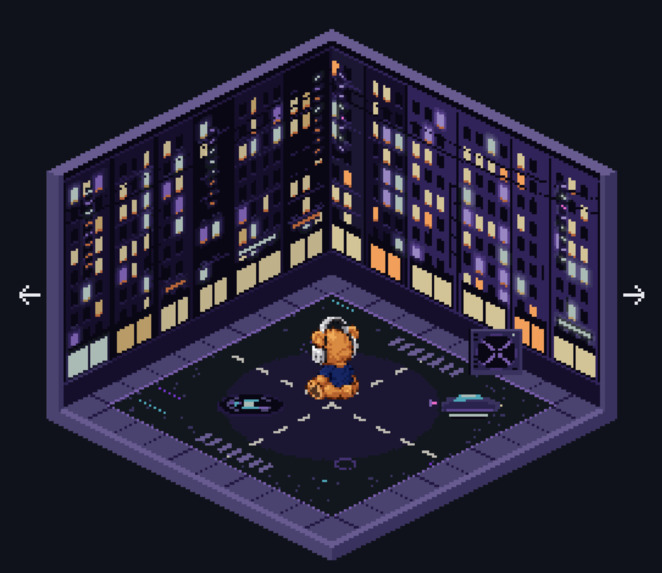
Cyberpunk City
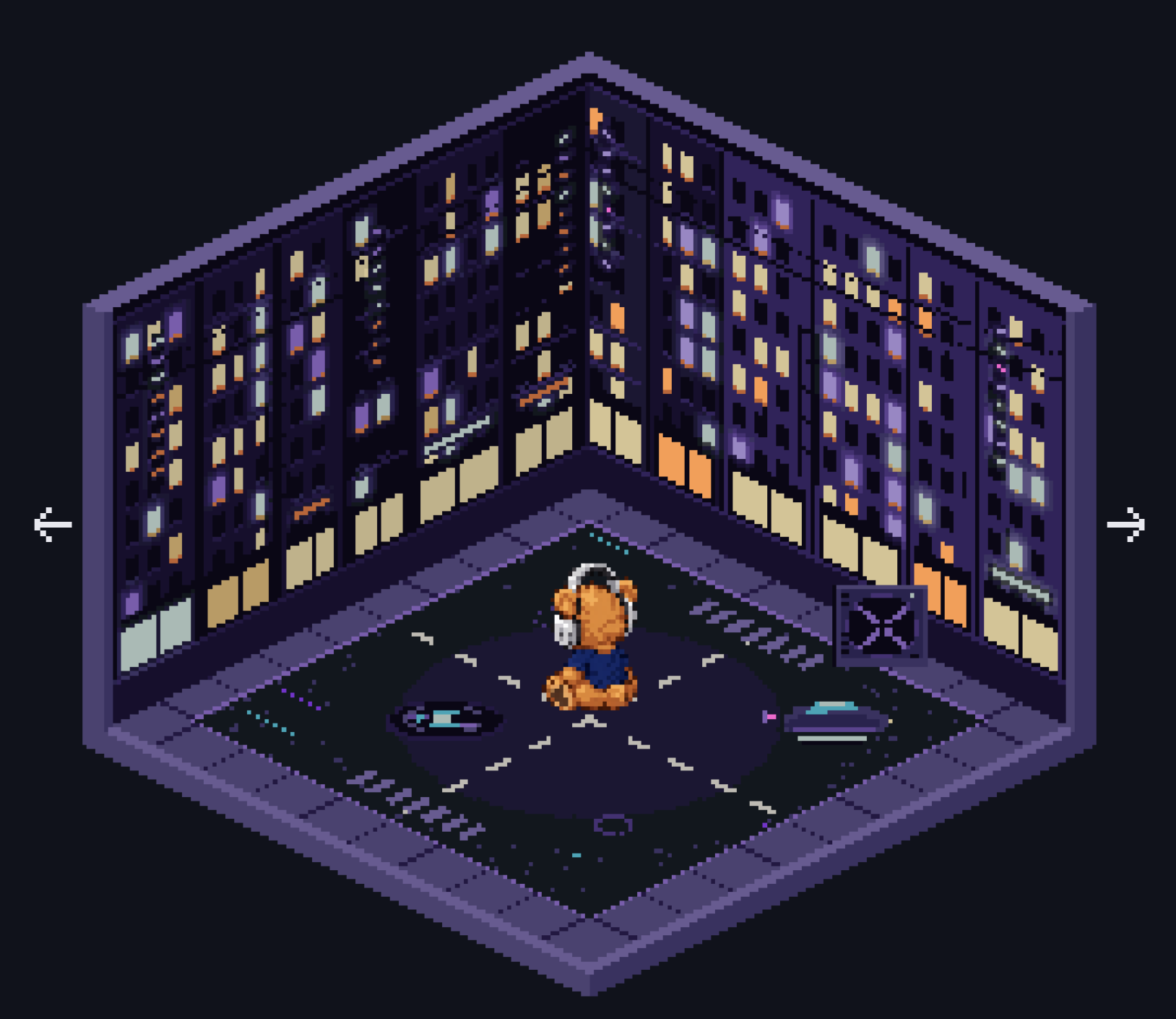
roomto.study
Your space. Your sounds. Your focus.
Inspiration
Finding the perfect environment to focus isn't easy, especially for people with ADHD. Sometimes silence is distracting, while too much background noise can become overwhelming.
Research suggests that sound can influence attention. A 2024 meta-analysis of 13 studies found that white and pink noise produced small improvements in attention-related performance among individuals with ADHD or elevated ADHD symptoms.
We wanted to take this idea further. What if you could create your ideal study environment simply by describing it?
What it does
roomto.study transforms your imagination into an immersive, AI-generated workspace.
Describe a rainy Tokyo café, peaceful forest, or cozy library, and our AI agent builds a pixel-art room filled with spatial audio.
Unlike traditional ambient sound apps, every sound exists in 3D space. Drag a fireplace closer, move the rain farther away, or turn your head and hear your surroundings respond.
Users can also control their environment through voice commands, save their favorite rooms, and recall personalized setups based on their activities and routines, all while working.
How we built it
We combined agentic AI with real-time spatial audio and persistent memory.
- Claude, for AI World Generation: Powers our primary AI agent, transforming natural-language prompts into interactive pixel-art environments. Claude uses pxl to generate visuals, chirp to create custom sound effects, and manages room modifications while preserving user adjustments.
- Moss, for Personalized AI Memory: Enables our agent to remember and retrieve user preferences based on activities, time of day, and previously saved environments. Moss uses semantic memory to recall preferred soundscapes, helping users recreate familiar focus environments without starting over.
- Convex, for Backend and Persistent Storage: Powers user authentication, saved rooms, and preference storage. Convex also preserves Claude-generated artwork and audio beyond temporary AI sessions and caches generated sounds, allowing users to revisit their personalized worlds.
Cartesia, for Voice Interaction: Powers hands-free environmental control using Ink-2 streaming speech-to-text. Users can issue voice commands to adjust or mute sounds, while Sonic text-to-speech provides optional spoken responses. An opt-in "Hey agent" mode enables voice control without interrupting work.
Web Audio API: Creates realistic 3D audio through HRTF spatialization, distance attenuation, and reverb.
MediaPipe: Tracks head movement through the webcam, keeping sounds spatially anchored.
We built the interface with React, TypeScript, Three.js, and Tailwind CSS, and deployed it on Vercel.
Challenges we ran into
We needed to synchronize generated objects with spatial audio, preserve user adjustments during AI edits, and ensure artwork and sounds persisted after the original AI session ended.
Integrating multiple AI providers also meant handling unpredictable response times, generation failures, and voice interaction without interrupting the user's experience. We addressed these challenges through structured scene validation, persistent asset storage, and fallback systems.
Accomplishments that we're proud of
We're proud of turning a simple spatial audio concept into a fully interactive, AI-powered environment. Instead of generating another playlist or image, we built a world users can hear, move through, talk to, and personalize.
Combining Claude's world generation, Cartesia's voice interface, Moss's memory, and Convex's persistence into one cohesive experience was our biggest accomplishment.
What we learned
We learned how to orchestrate AI agents, implement real-time 3D audio, manage persistent generated assets, and build natural voice interactions.
What's next for roomto.study
We want to introduce smarter personalization that learns from user feedback, activity, and time of day, along with collaborative rooms and deeper desktop integrations.
We're especially excited to continuously improve the sounds, making them sound more realistic and therefore more effective.


Log in or sign up for Devpost to join the conversation.