-
-
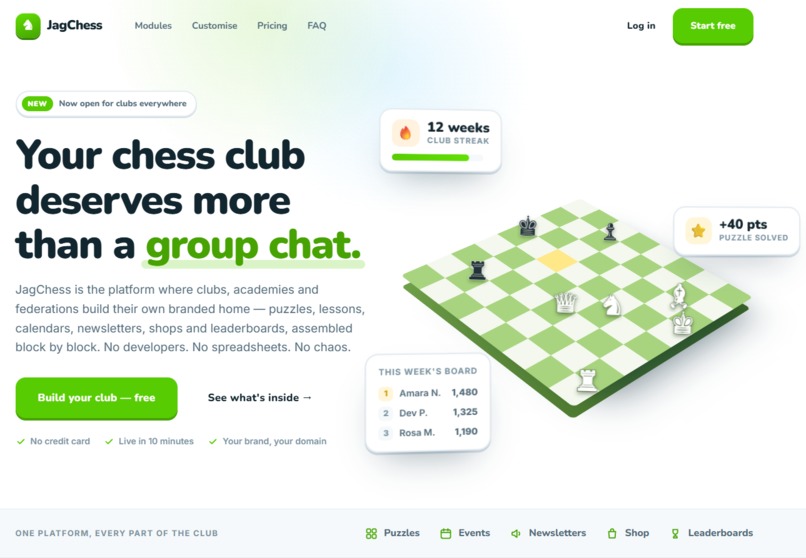
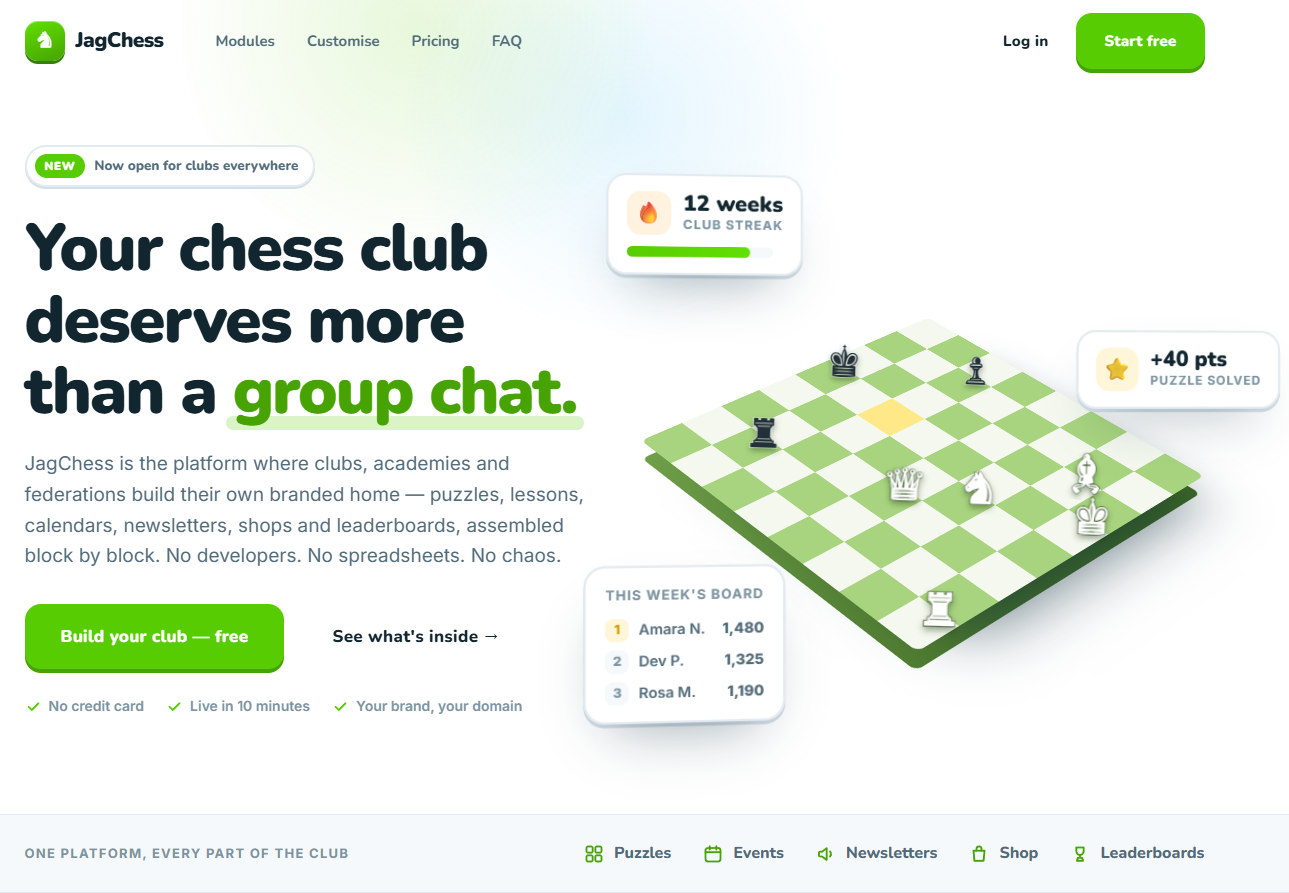
Homepage
-
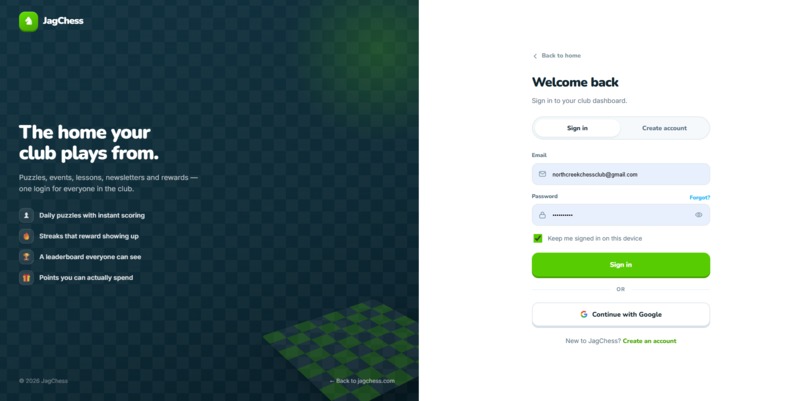
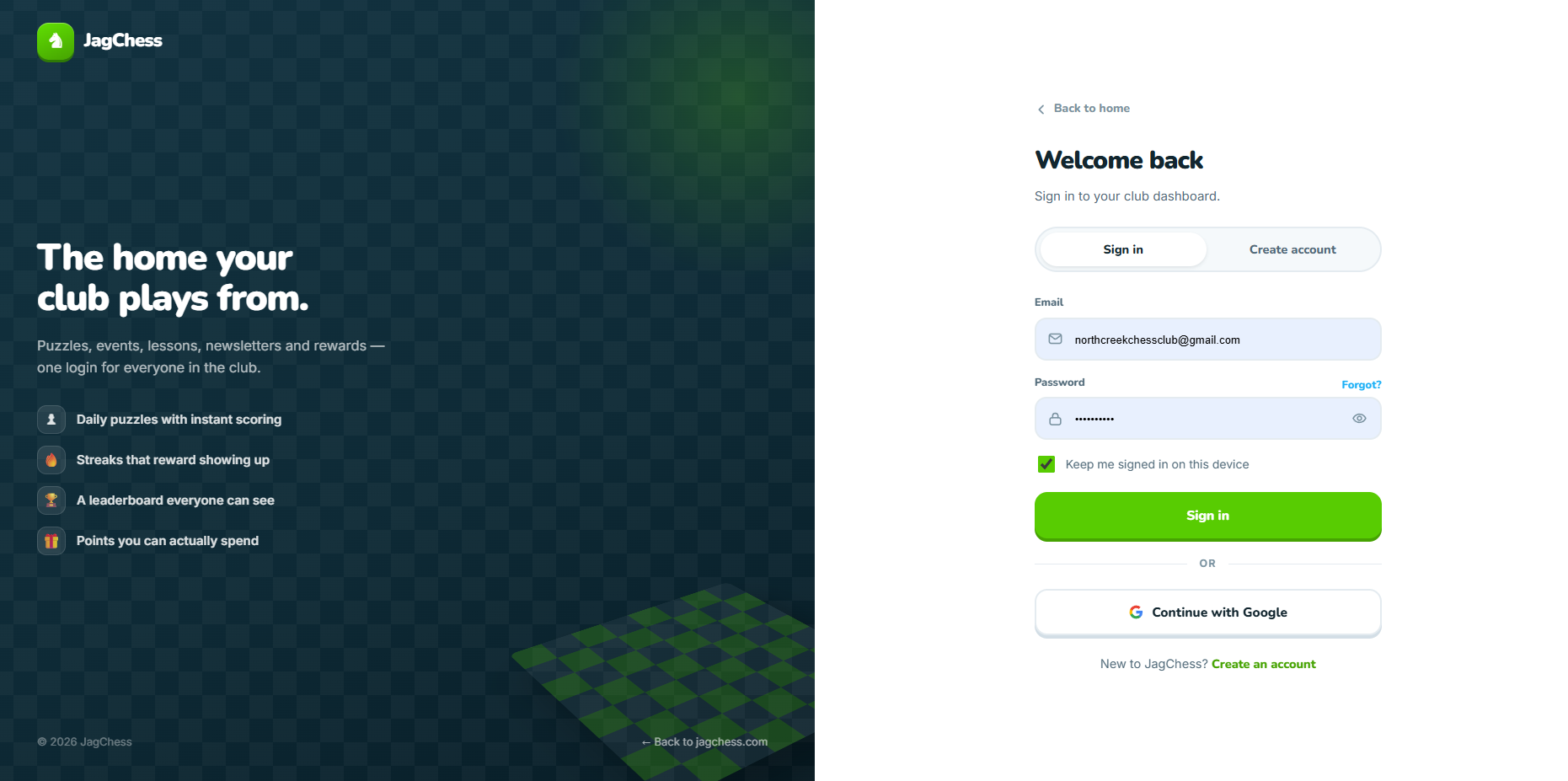
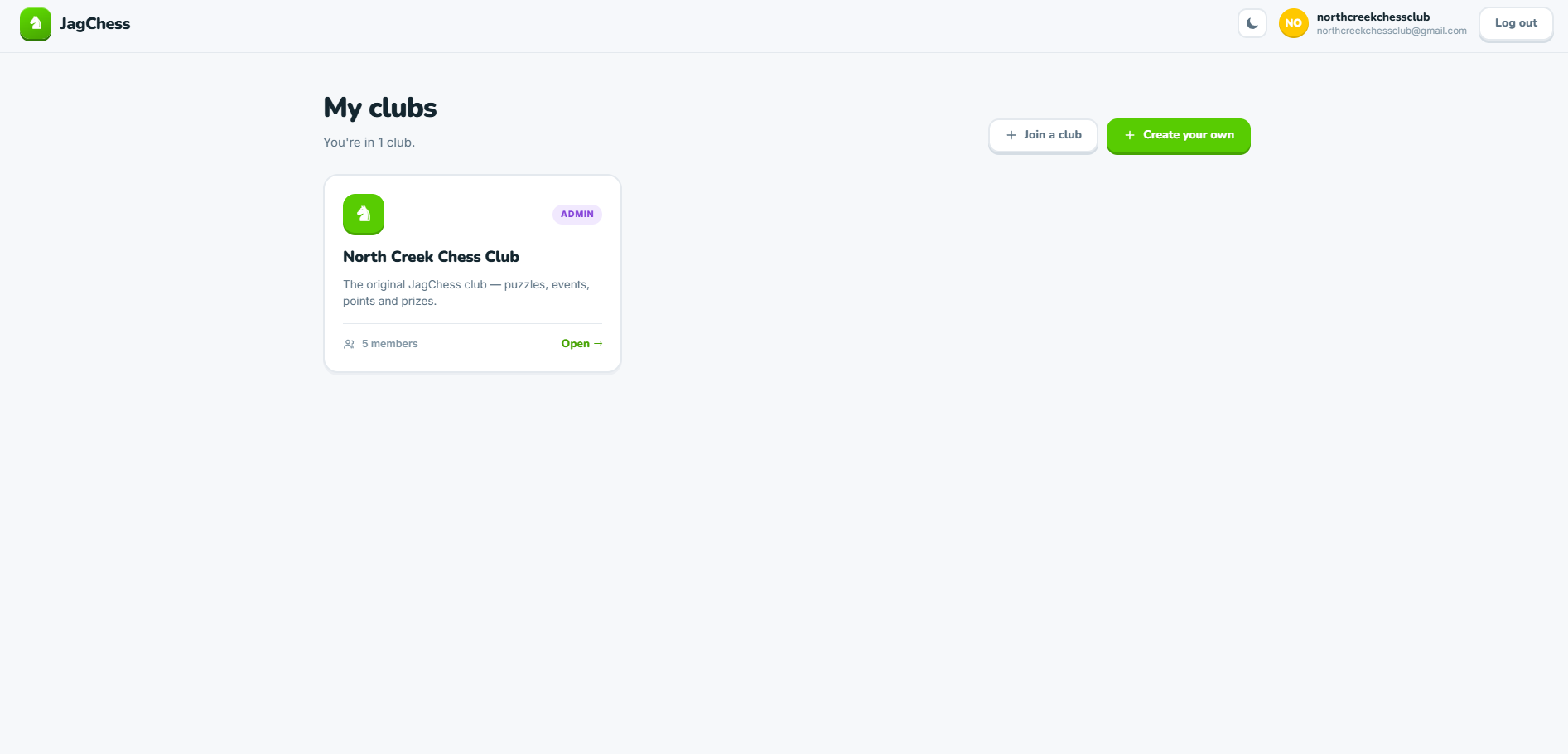
Login/Sign Up
-
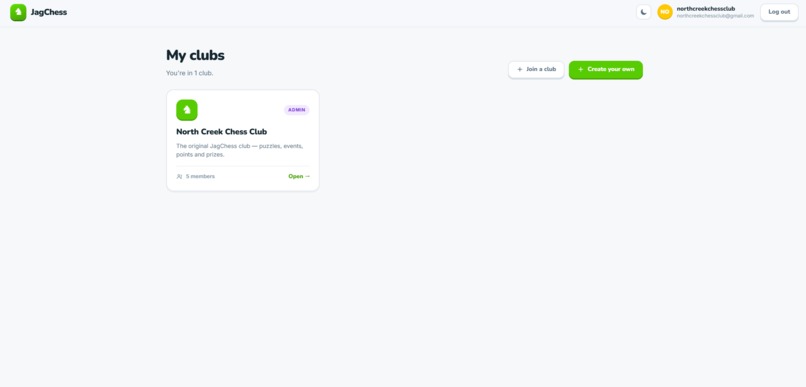
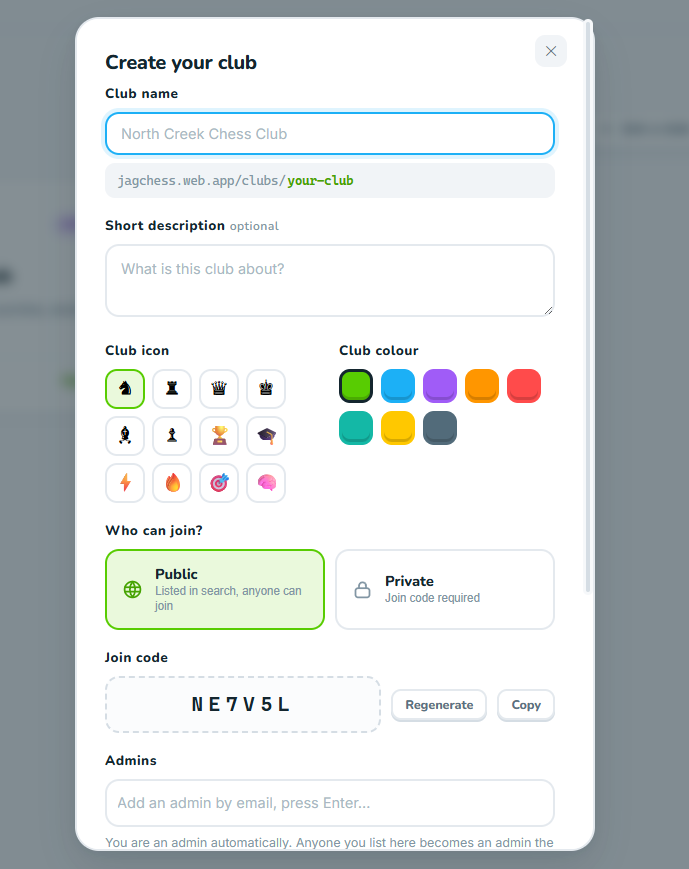
My Clubs
-
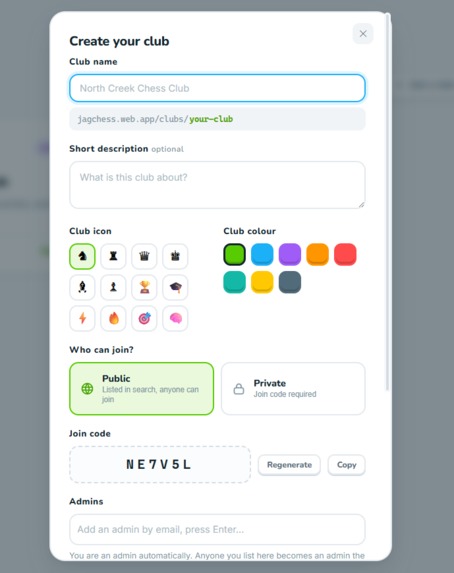
Join A Club
-
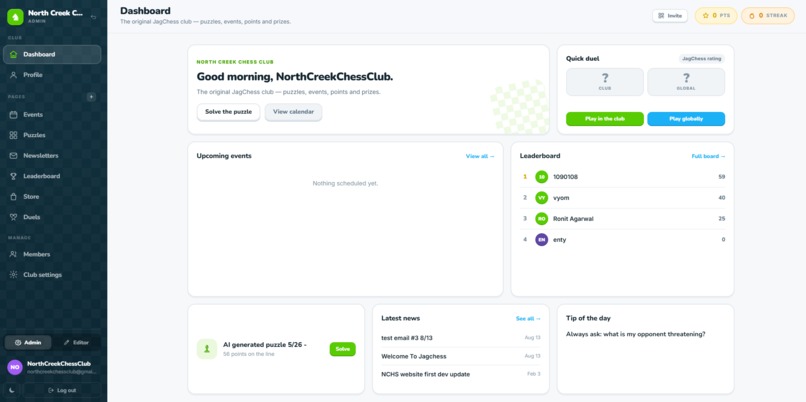
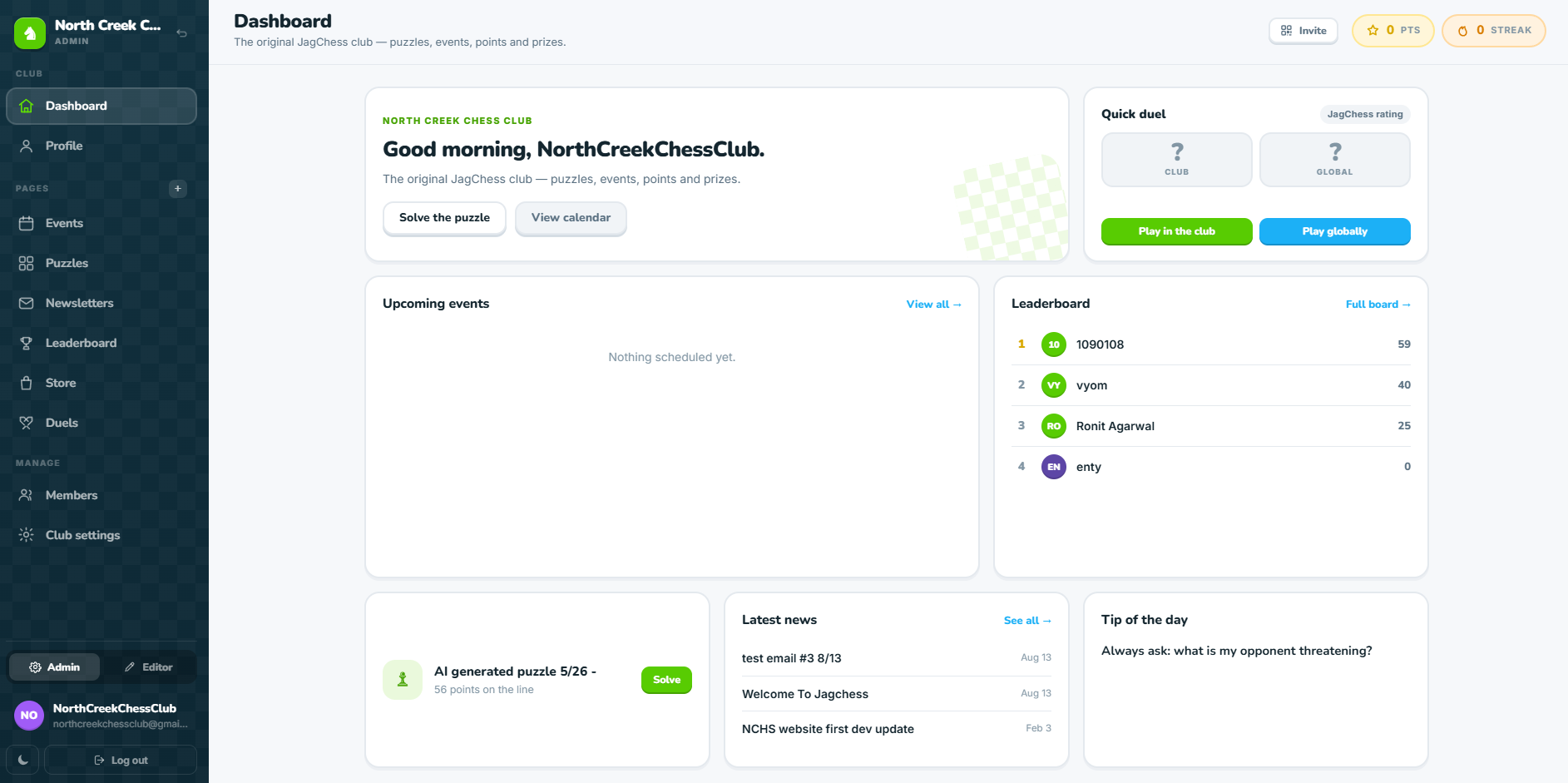
Dashboard
-
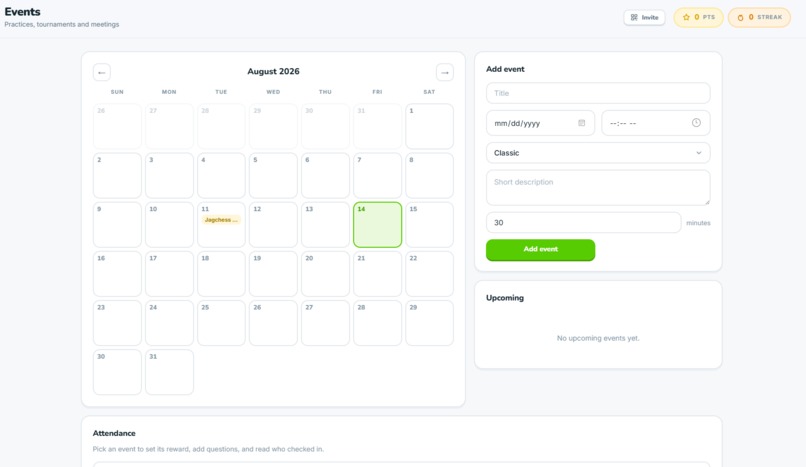
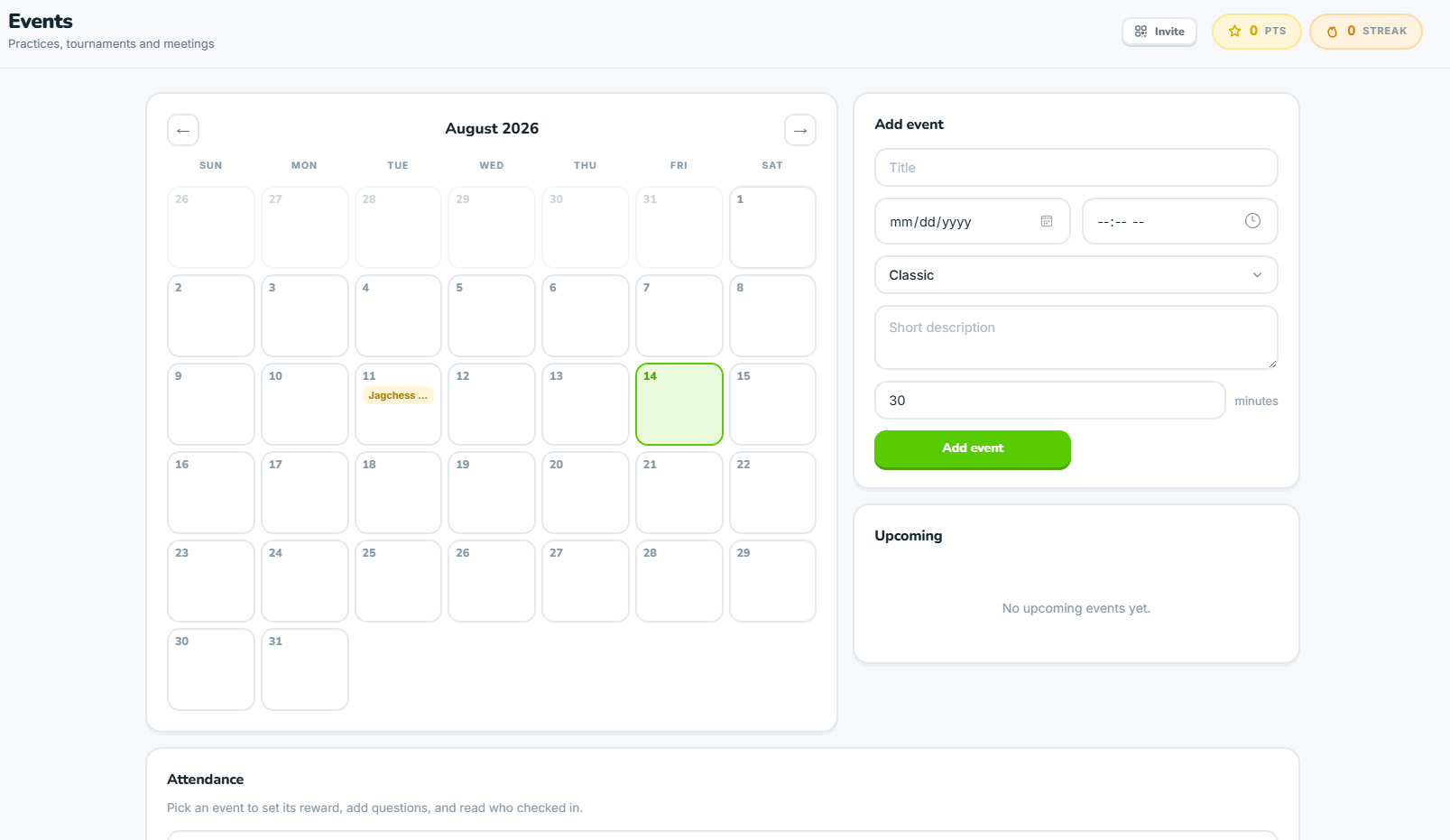
Events & Calendar
-
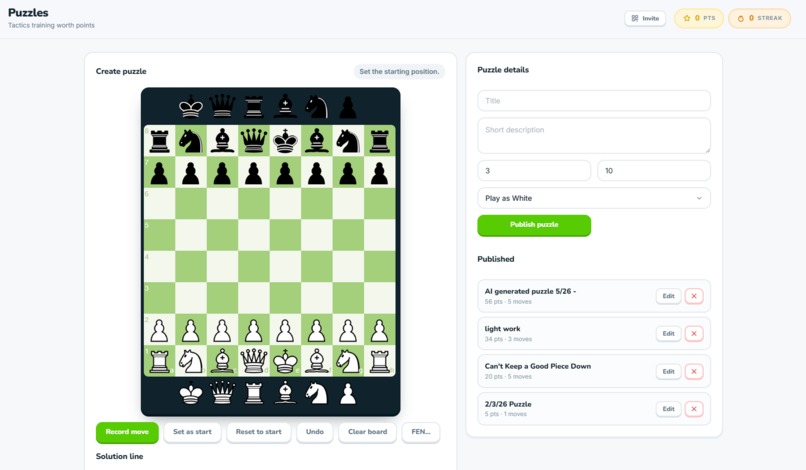
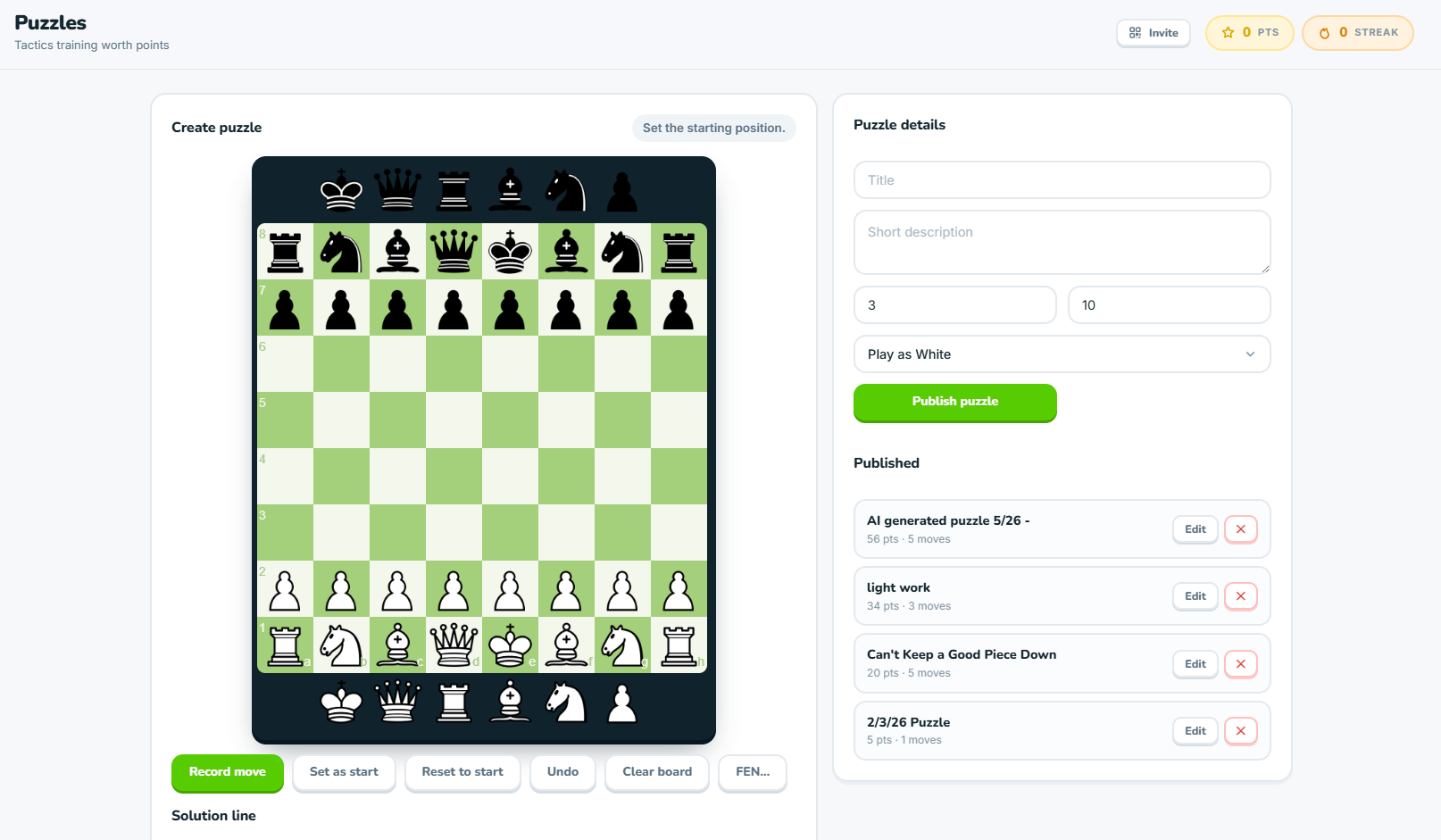
Puzzles
-
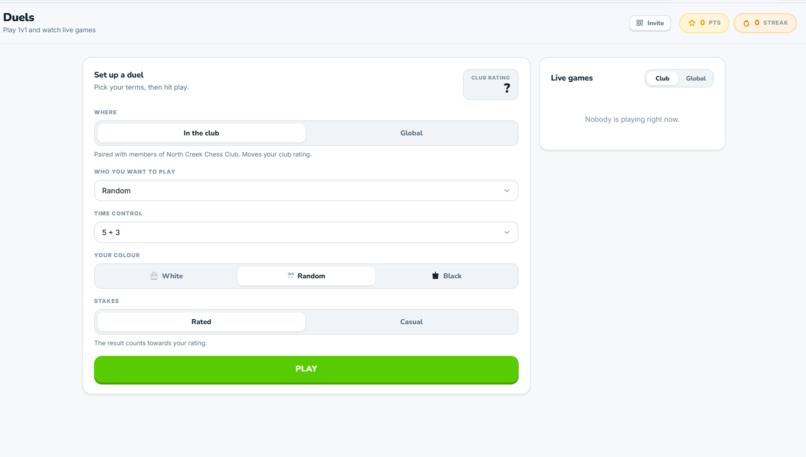
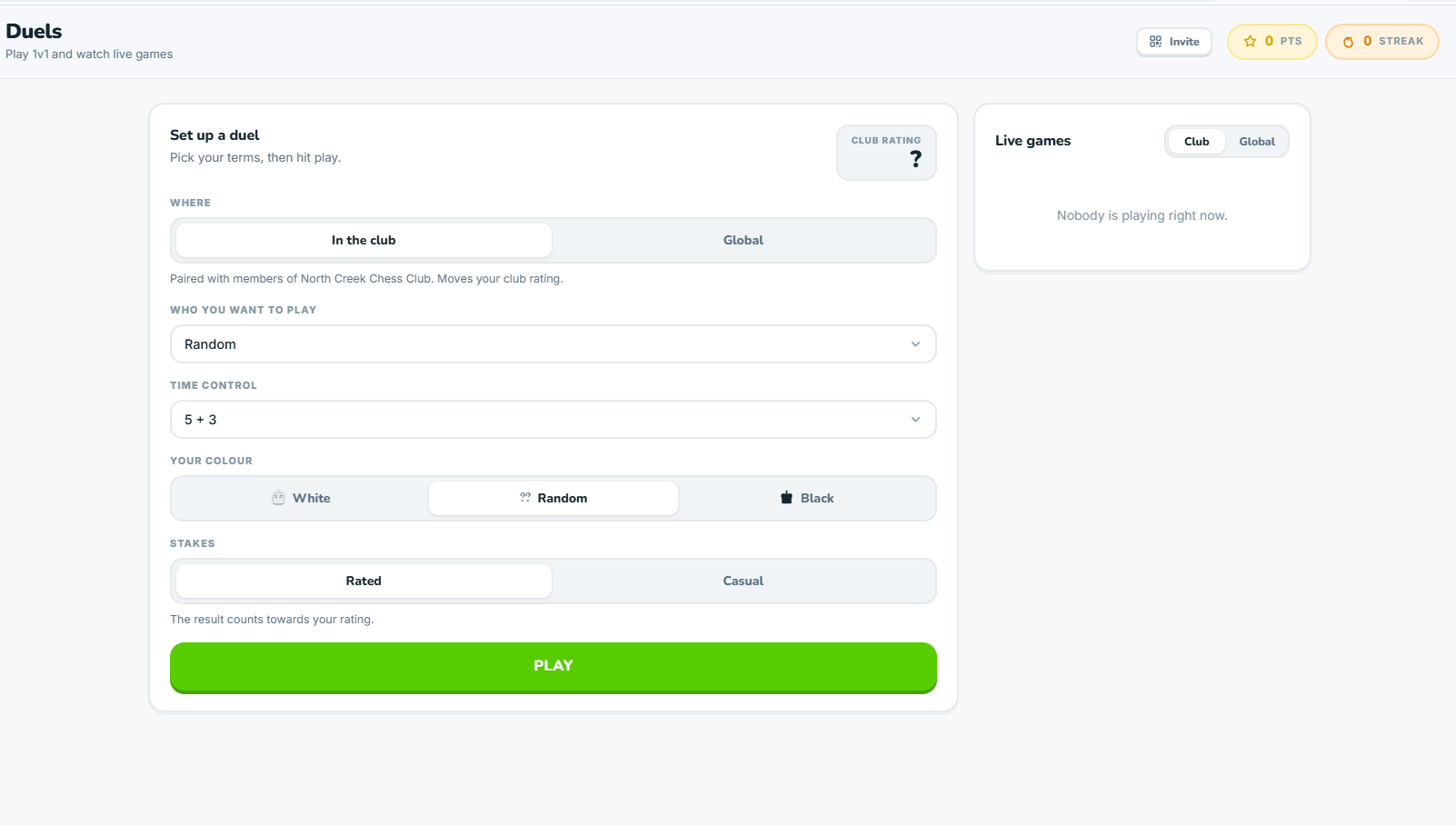
Duels
-
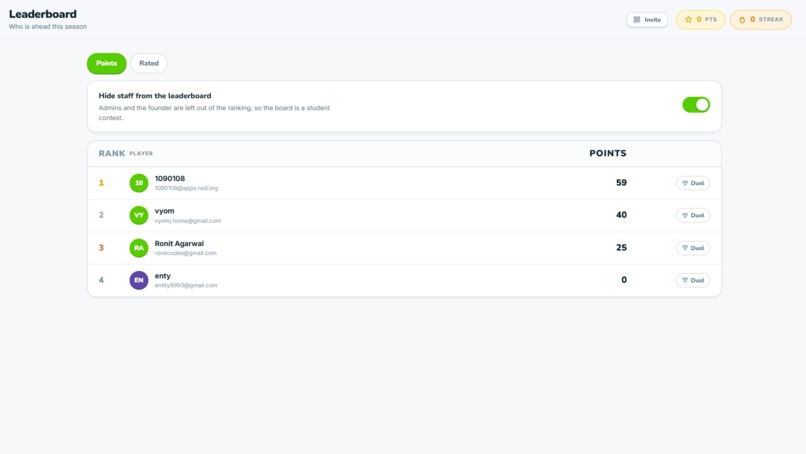
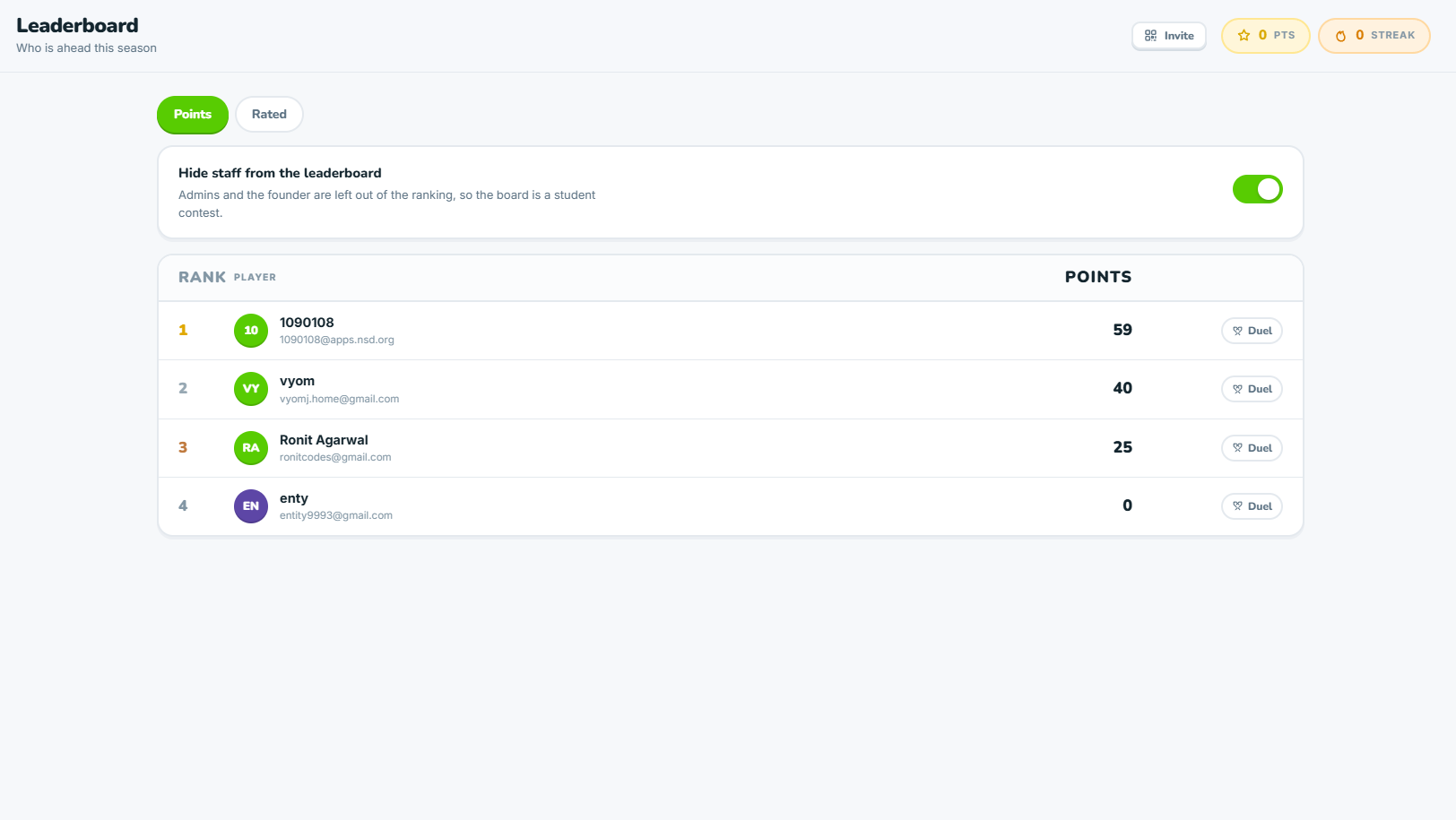
Leaderboard
-
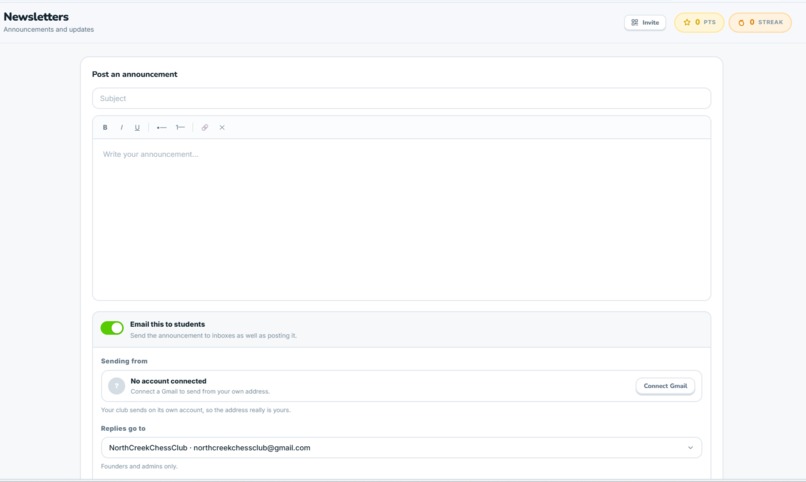
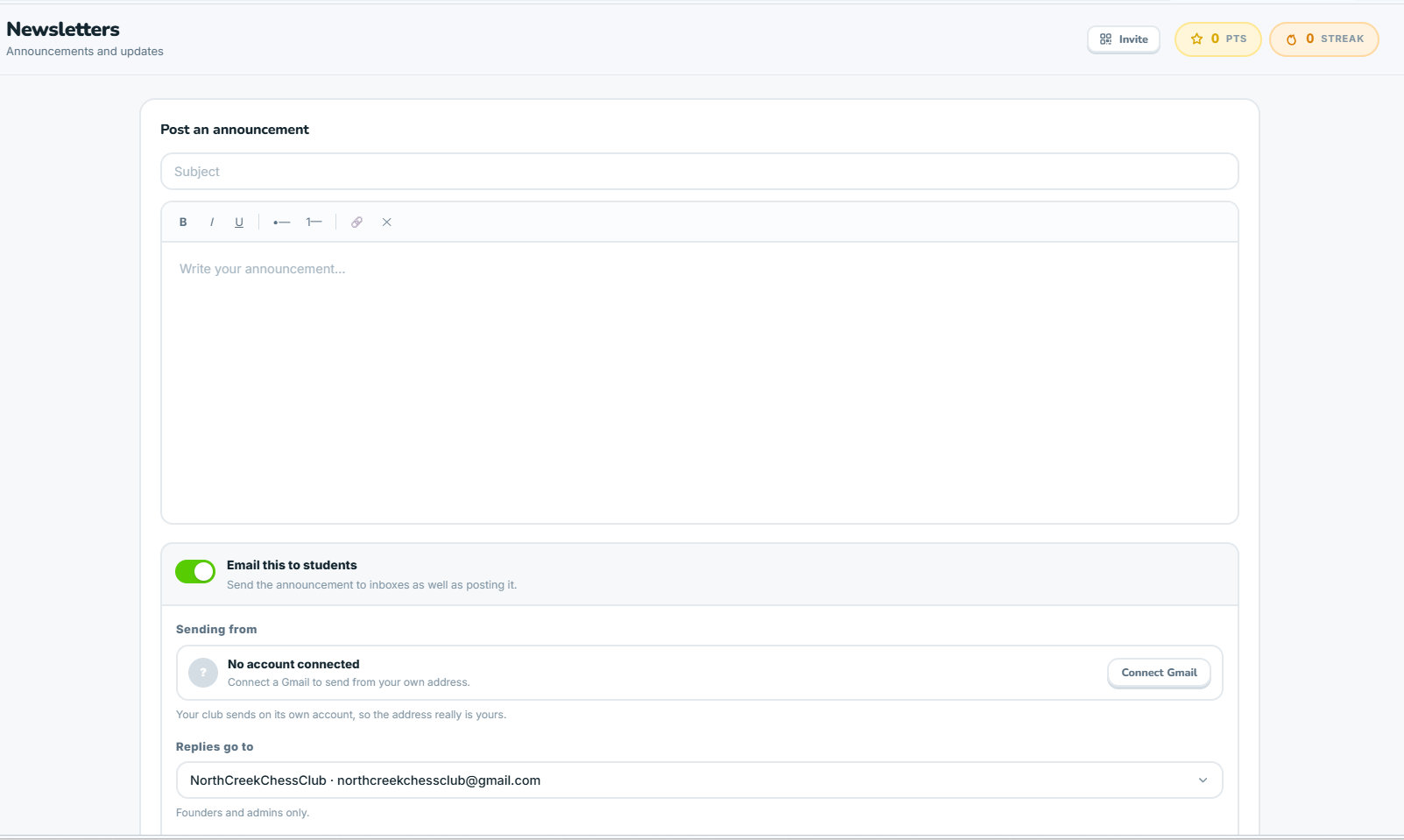
Newsletters
Jagchess — PRISM Submission
1. Project Title
Jagchess
2. Selected Track
Education & Social Impact
Jagchess sits at the intersection of structured learning and community engagement. It gives chess clubs, scholastic programs, and academies the infrastructure to deliver consistent, gamified, and progress-tracked learning experiences to members of all ages and skill levels.
3. Problem Statement
Chess clubs and academies are one of the most accessible forms of structured cognitive education, yet most of them are held together by group chats, spreadsheets, and a patchwork of disconnected platforms. Coaches have no reliable way to track whether members are completing puzzles, attending sessions, or progressing through a curriculum. Students receive no feedback loop that connects their effort to visible growth. Organizers spend more time managing logistics than supporting learning.
This problem affects thousands of scholastic chess programs, community clubs, and independent academies worldwide. Students, especially beginners, disengage when they cannot see their own progress or feel recognized for showing up. Coaches lose time to administrative overhead that could be spent on instruction. The gap is not a lack of chess content — platforms like Lichess and Chess.com provide that in abundance — but a lack of community infrastructure that ties learning, participation, and motivation together in one place that belongs to the club itself.
4. Your Solution
Jagchess is a no-code, branded platform that gives any chess organization a dedicated online home. It brings together the tools a club needs to educate and retain members: a puzzle engine where coaches can publish custom positions and track attempt history, structured learning paths that sequence lessons with unlocks and XP, a shared events calendar, attendance tracking with streaks and multipliers, a unified points economy, leaderboards, newsletters, and a rewards shop where points can be exchanged for real incentives.
Every module shares the same members, permissions, and points system, so nothing has to be kept in sync by hand. Coaches and organizers can configure the platform through a drag-and-drop page builder — renaming, recoloring, and reordering blocks — without writing a single line of code. A club can go from signup to a live, shareable home in under ten minutes.
Crucially, Jagchess does not try to replace Chess.com or Lichess. It sits alongside those platforms as the club's own community layer, connecting the game members already play with the learning structure and social recognition that keeps them engaged long-term.
5. Prototype / Demonstration
A fully working version of Jagchess is live and publicly accessible at jagchess.web.app. The puzzle engine allows coaches to compose or import positions via FEN, define multi-move solution lines, and publish puzzles that auto-score member attempts. Learning paths sequence lessons into structured curricula with unlocks and XP, so beginners always know what to do next. A single points economy spans puzzles, attendance, and events, ranked live on a leaderboard that the whole club can see. Members check in during sessions and build streaks that reward consistent participation, while the rewards shop lets them redeem points for merch, entry fees, or privileges. The page builder lets organizers drag blocks onto pages, set club colors, and publish a branded home without any development work. Newsletters can be written in the browser and emailed to targeted member segments, and role-based access ensures that coaches, captains, and students each see the appropriate view and permissions. The free Club plan supports up to 50 members with no credit card required, making the platform immediately accessible to small scholastic programs.
6. Project Presentation
The problem. Most chess clubs lack a coherent digital home. Coordination is fragmented, learning is invisible, and members — especially students — disengage when they cannot see their own progress or feel recognized for their effort.
The solution. Jagchess provides a branded, modular club platform that any organizer can set up in minutes. It connects the administrative side of running a club with the motivational mechanics that keep members coming back: puzzles, streaks, points, leaderboards, and rewards.
How I built it. I designed Jagchess around a modular architecture where every feature — puzzles, events, learning, newsletters, shop — shares a common member and permissions layer. The page builder gives organizers Notion-style flexibility without requiring technical knowledge. The points economy is intentionally unified so that engagement in any part of the platform contributes to the same visible progress.
Expected impact. Jagchess lowers the barrier to running a well-organized chess program, making structured chess education more accessible to schools, community clubs, and independent coaches. By making learning progress visible and rewarding consistent participation, it increases member retention and gives students a stronger sense of belonging and achievement within their club.
7. Supporting Materials
The live platform at jagchess.web.app is fully functional and open for exploration. The Modules section of the site documents each capability with feature tags and live examples. The interactive page builder demonstrates the no-code club setup experience, and the Pricing section outlines the free Club plan, the $29/month Pro plan, and the Federation tier. The FAQ addresses data privacy, compatibility with existing chess accounts, domain customization, and plan portability. Additional documentation, design files, or technical architecture notes can be provided on request.


Log in or sign up for Devpost to join the conversation.