-
-
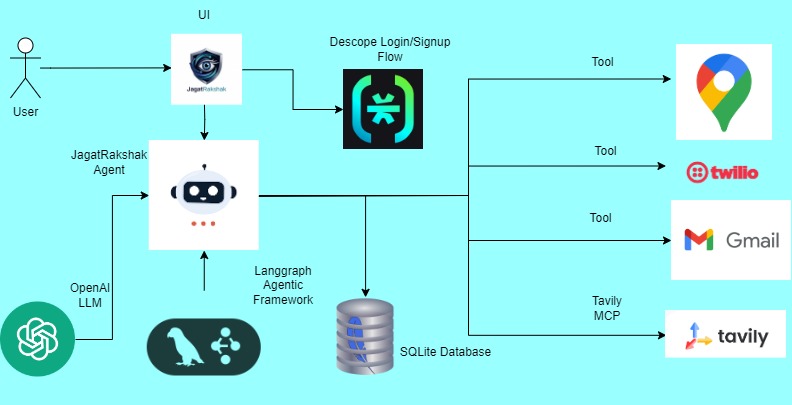
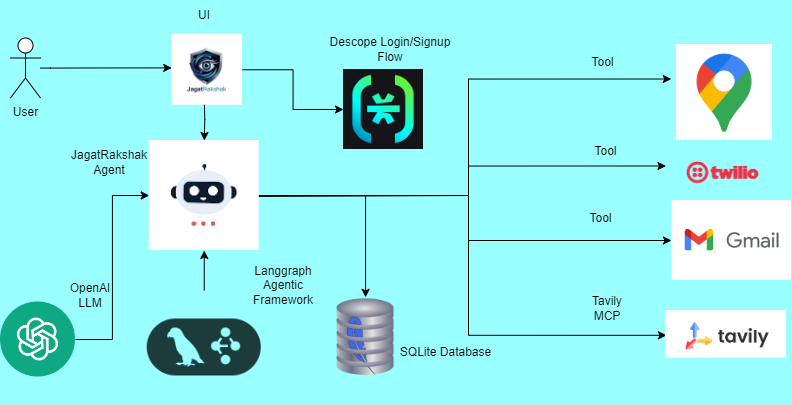
Architecture
-
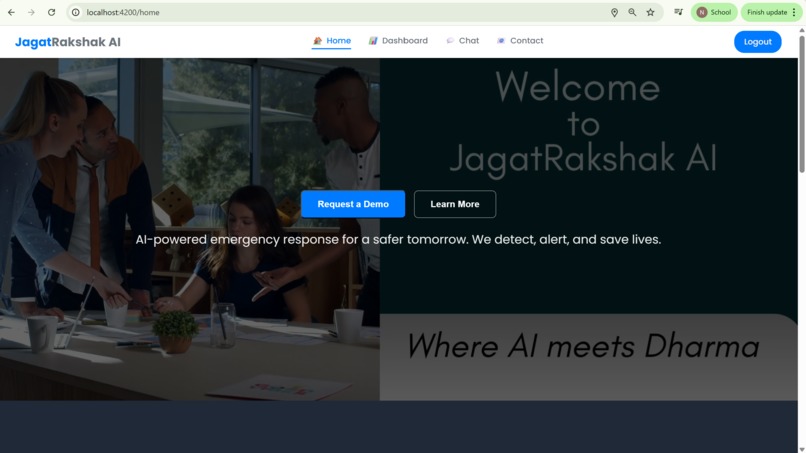
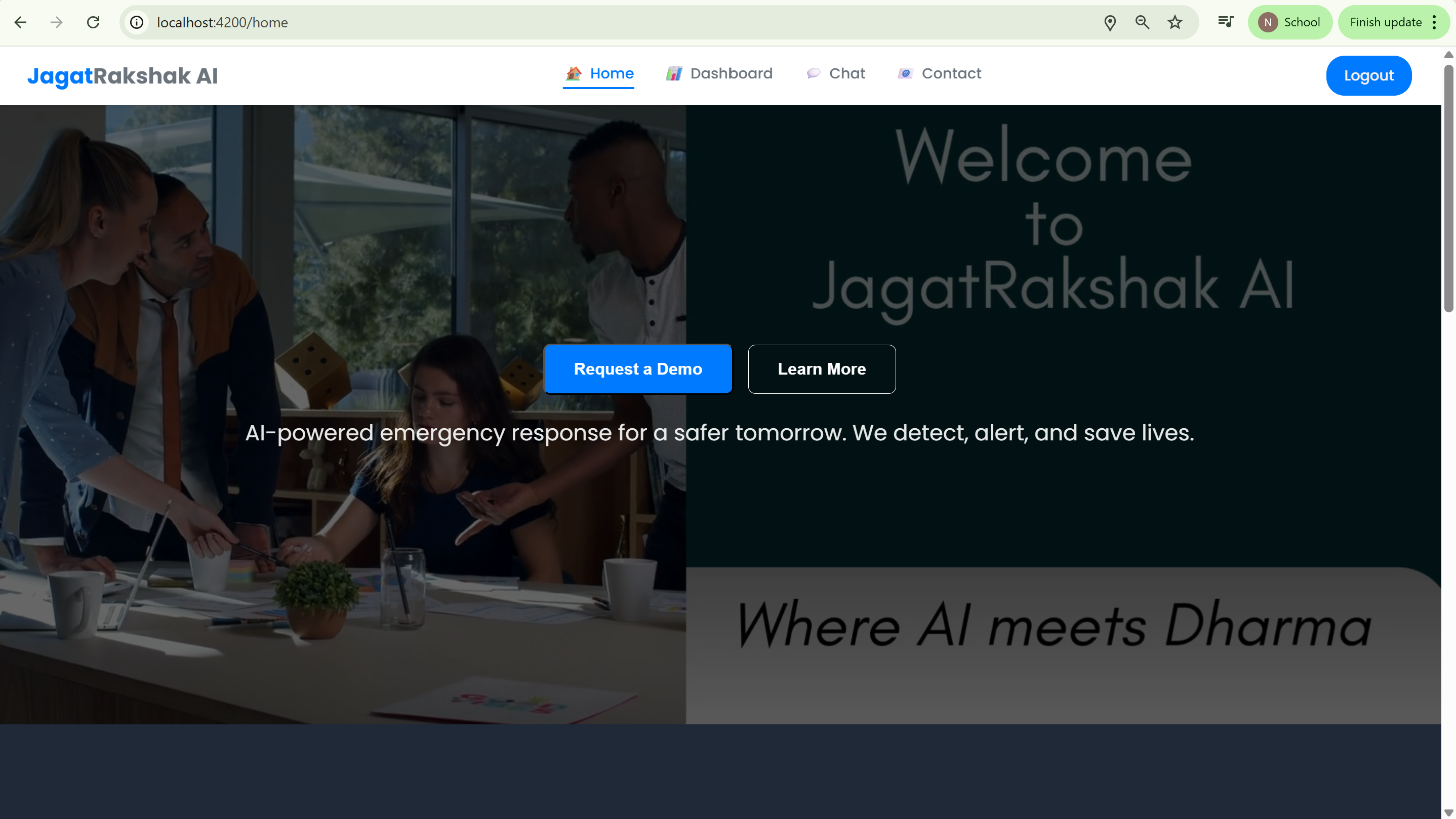
Welcome
-
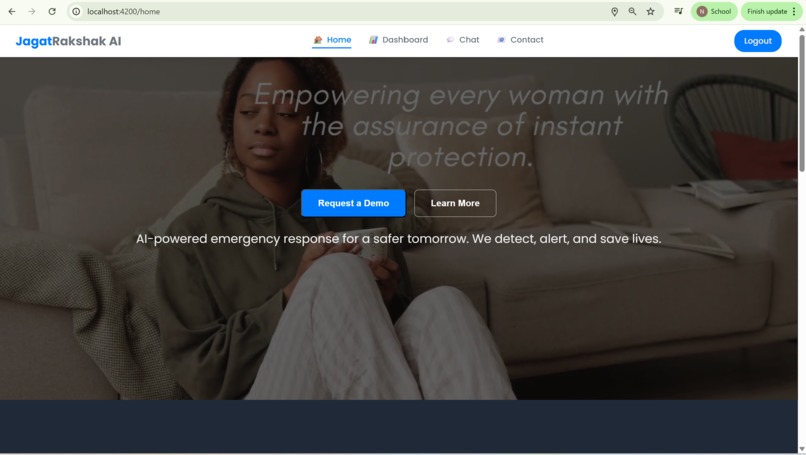
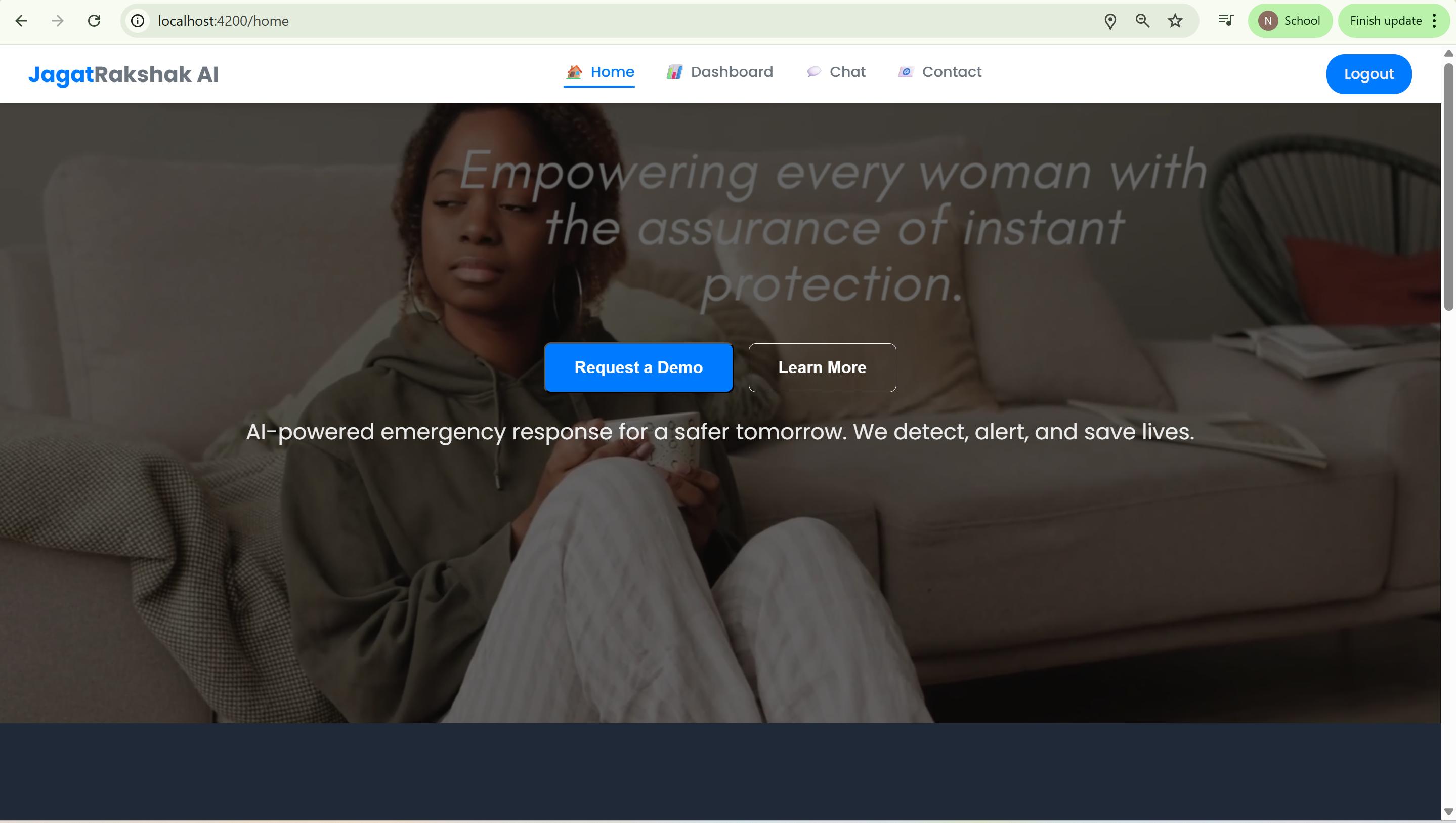
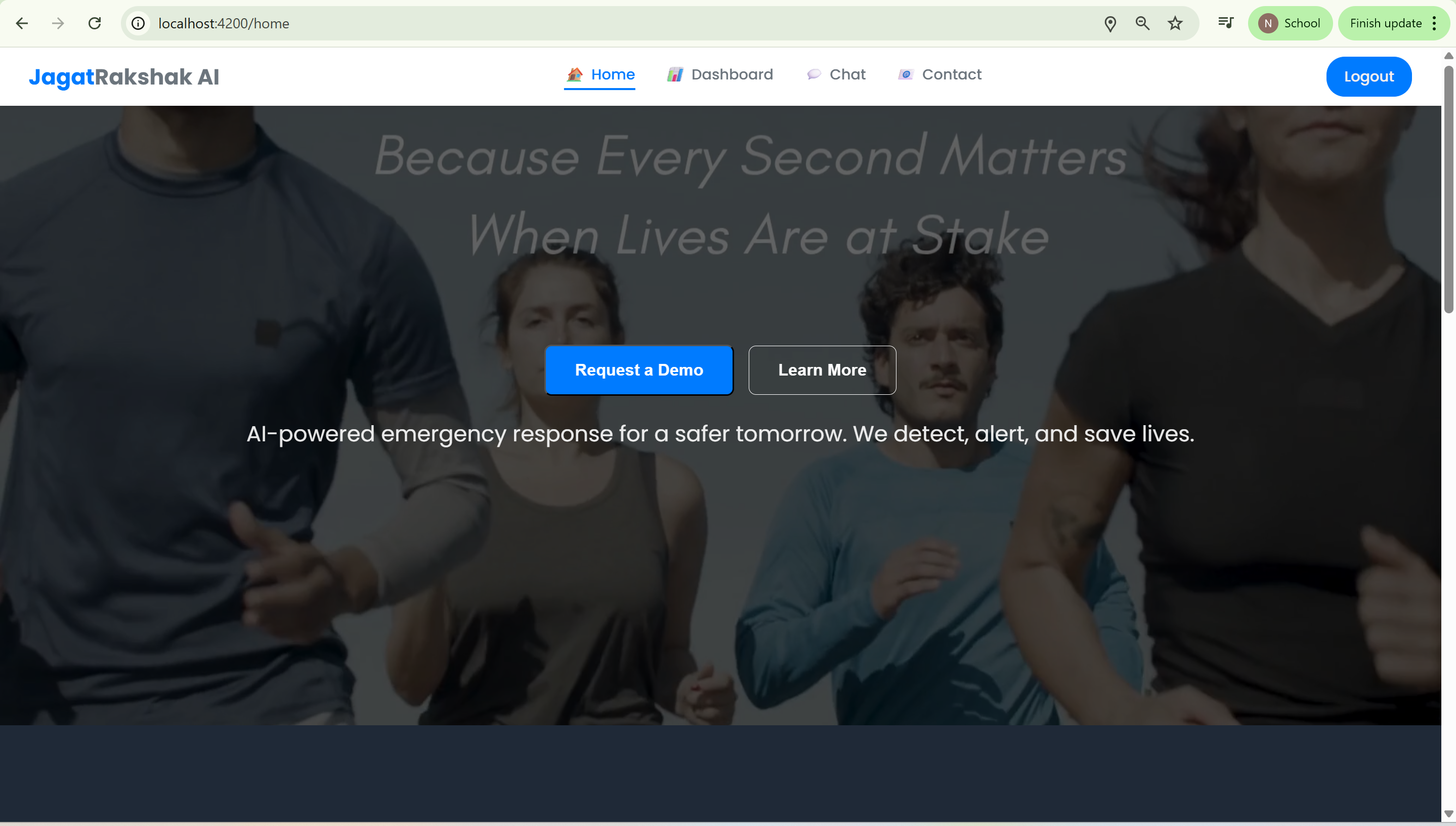
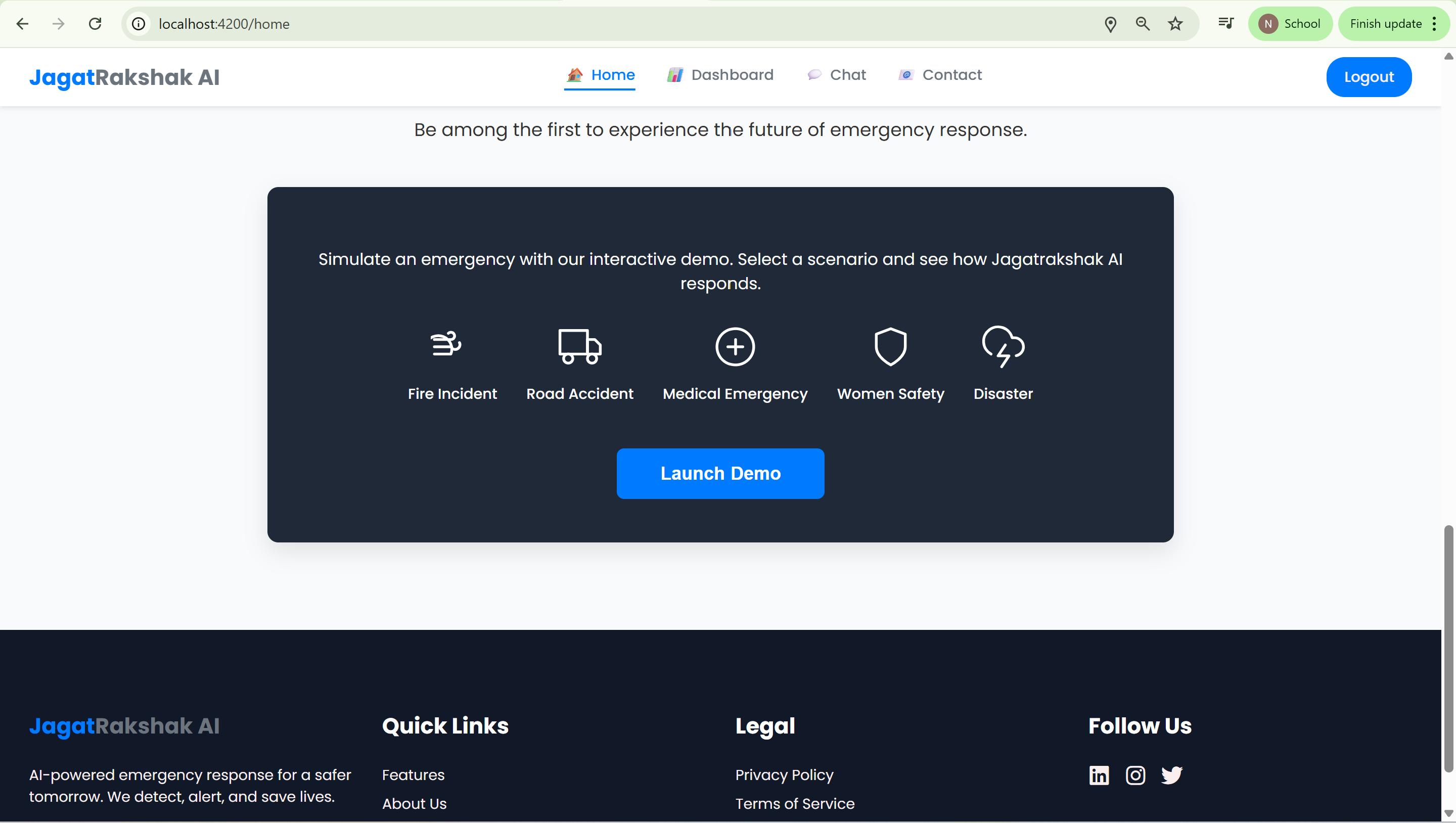
Home Page-2
-
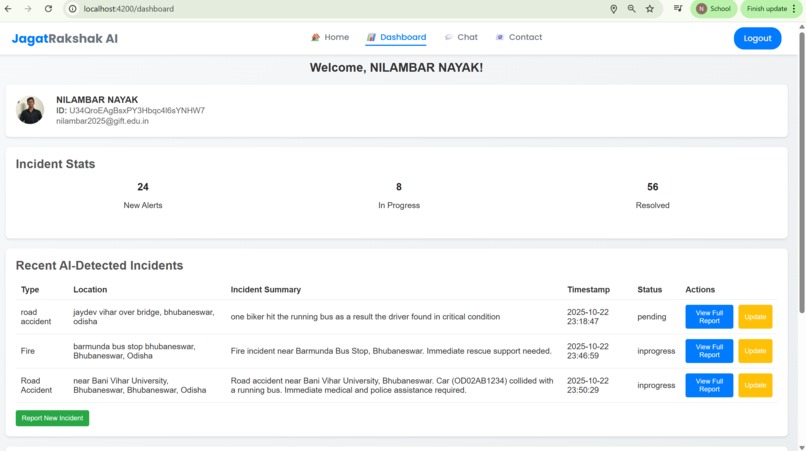
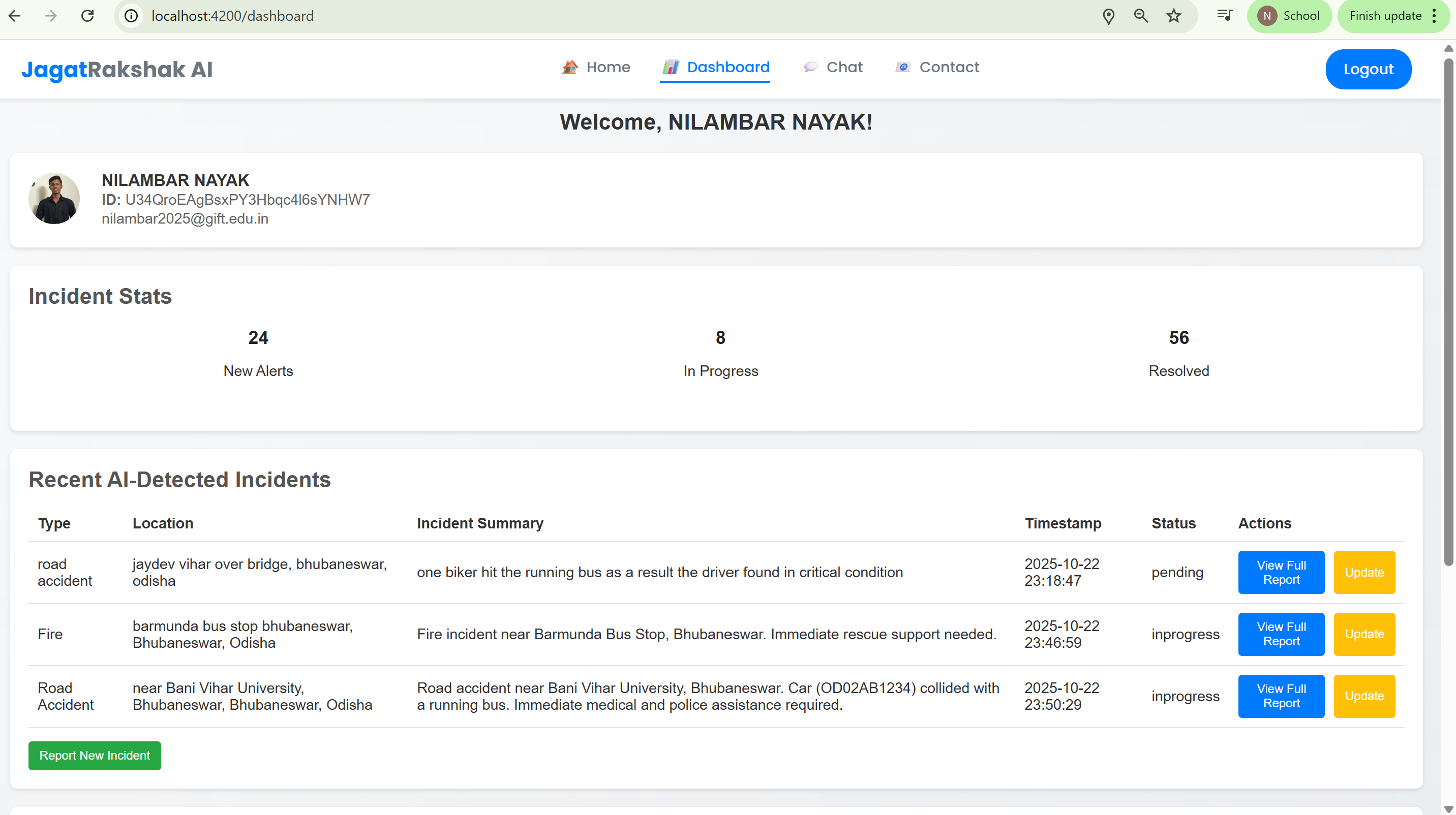
Dashboard
-
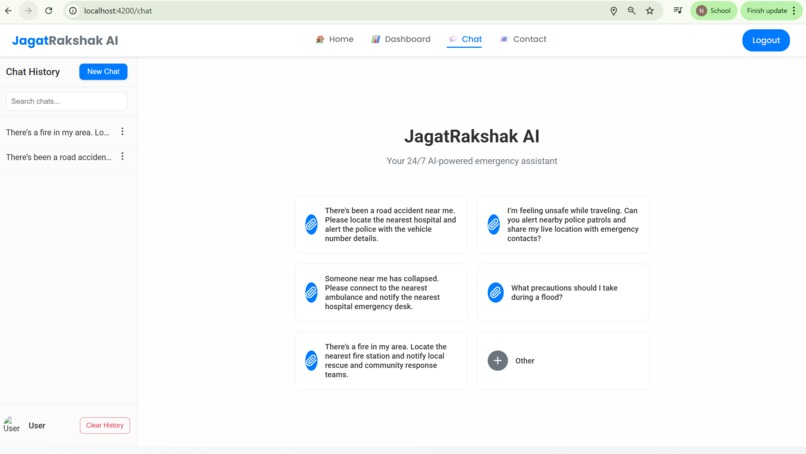
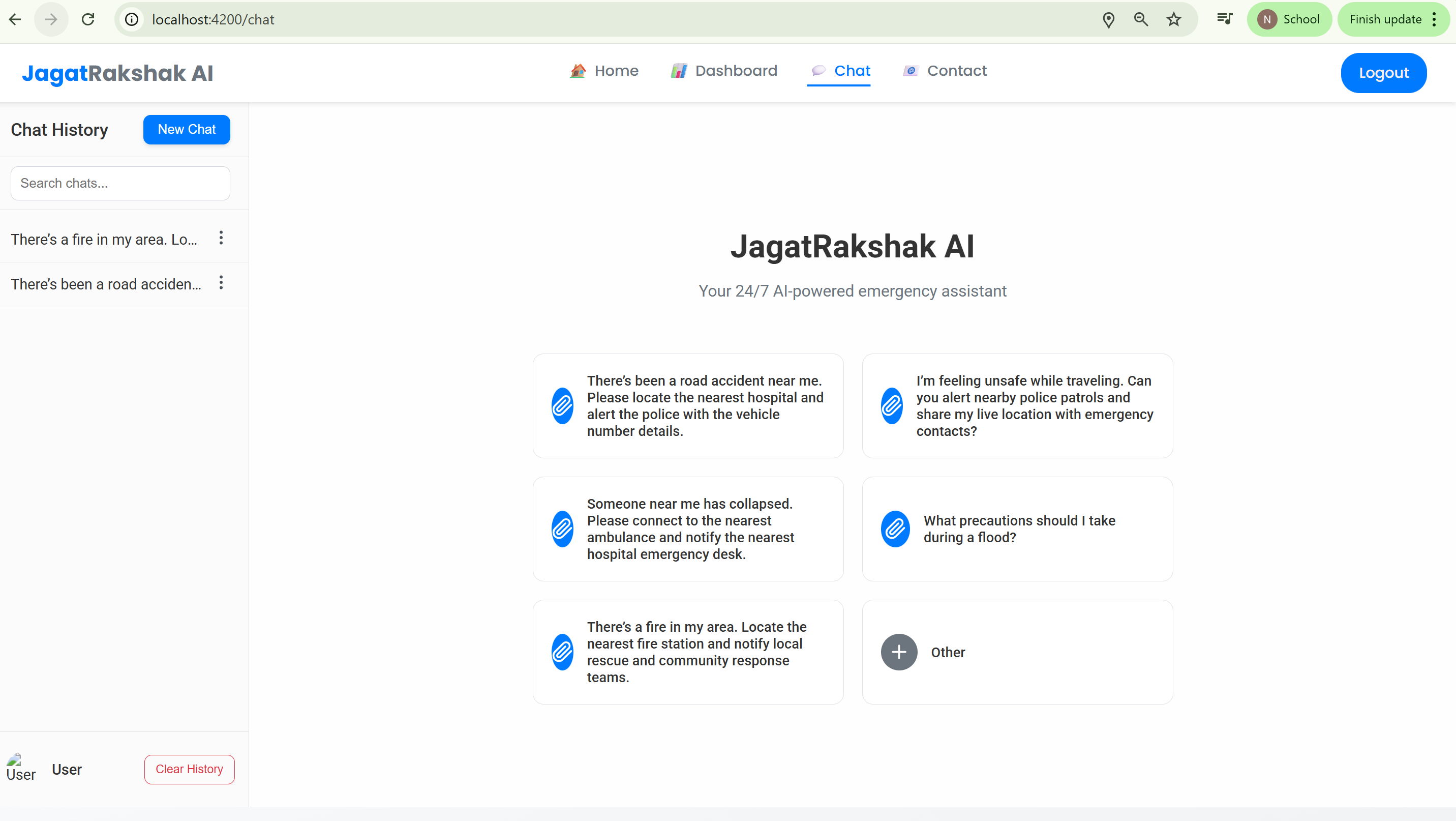
Agent New Chat
-
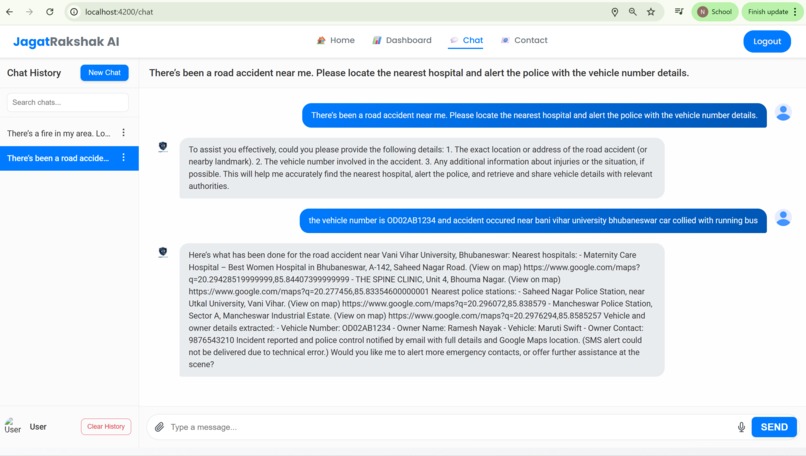
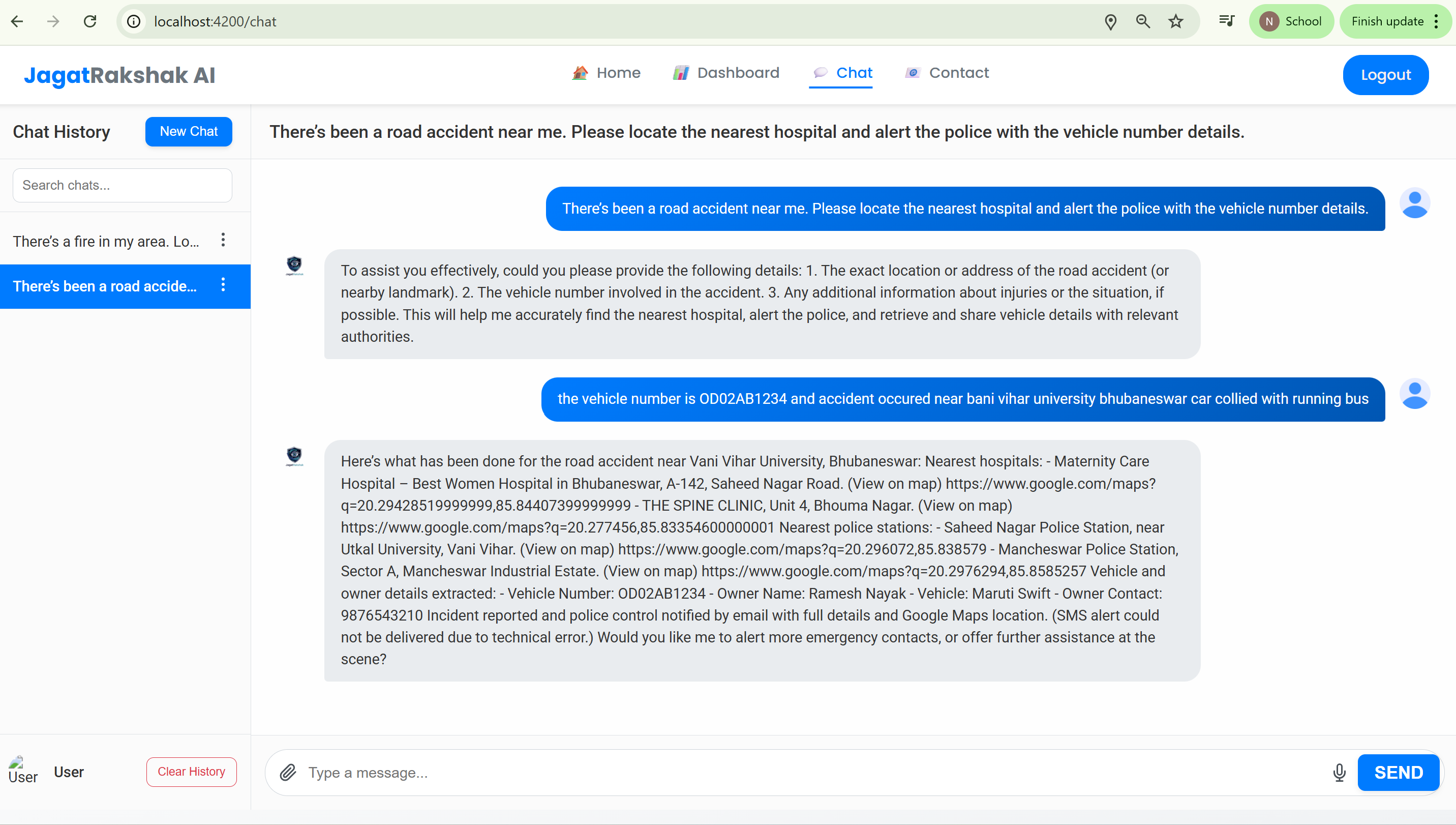
Agent Action
-
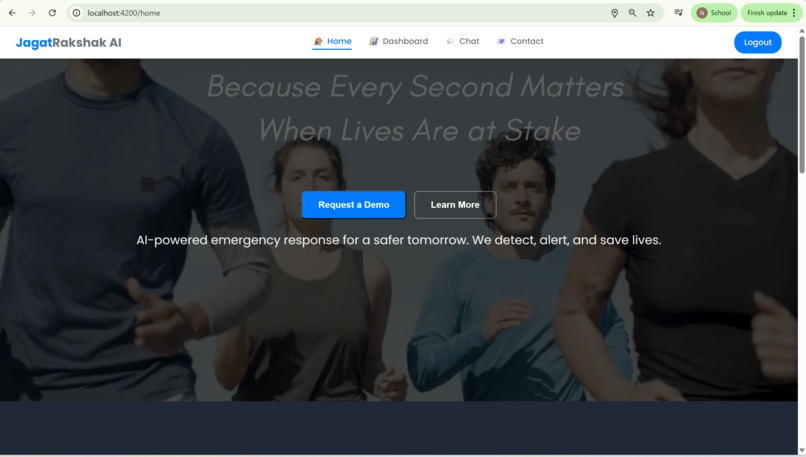
Home Page -1
-
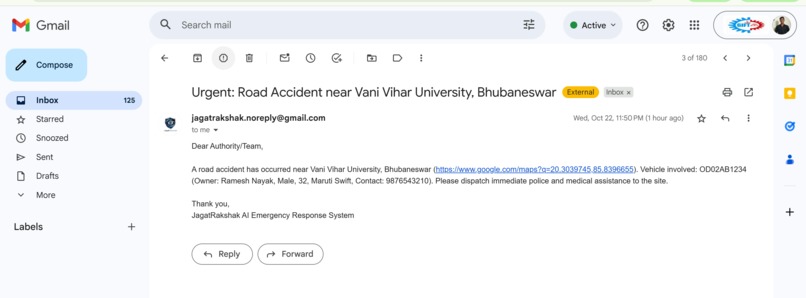
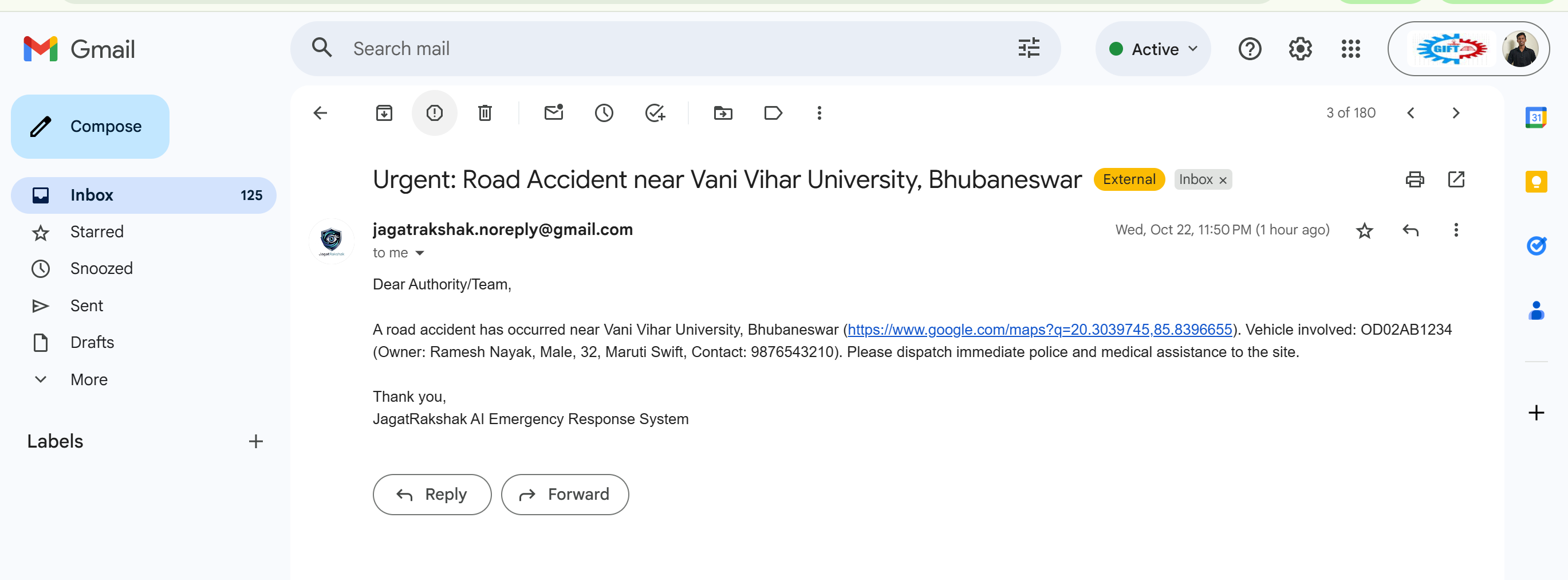
Email Notification
-
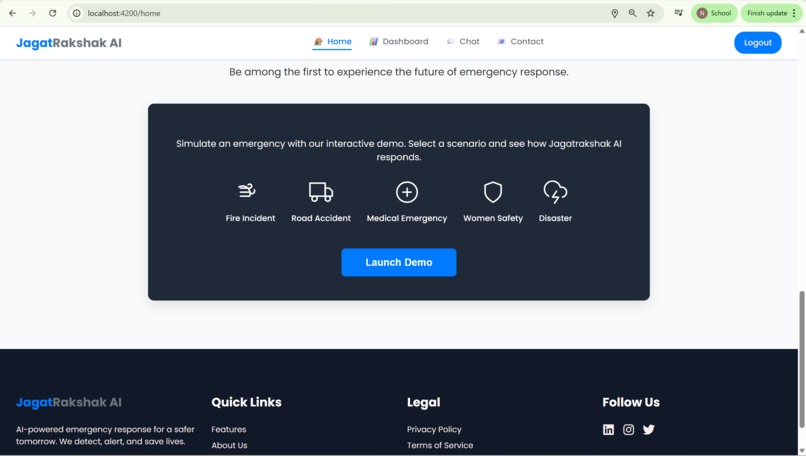
Footer
-
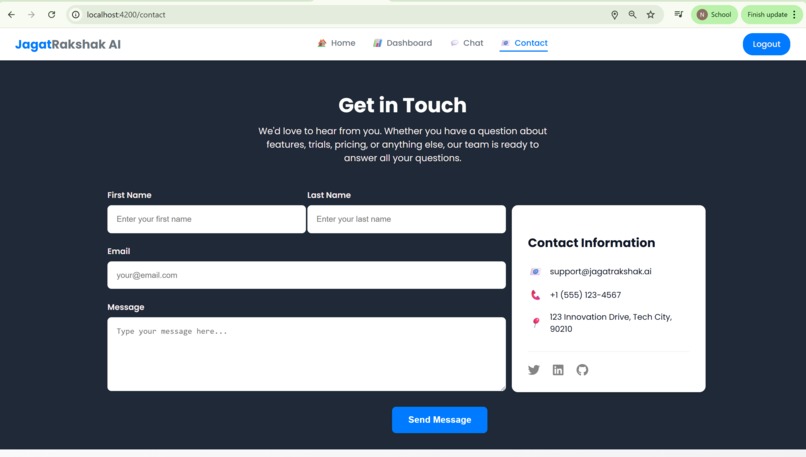
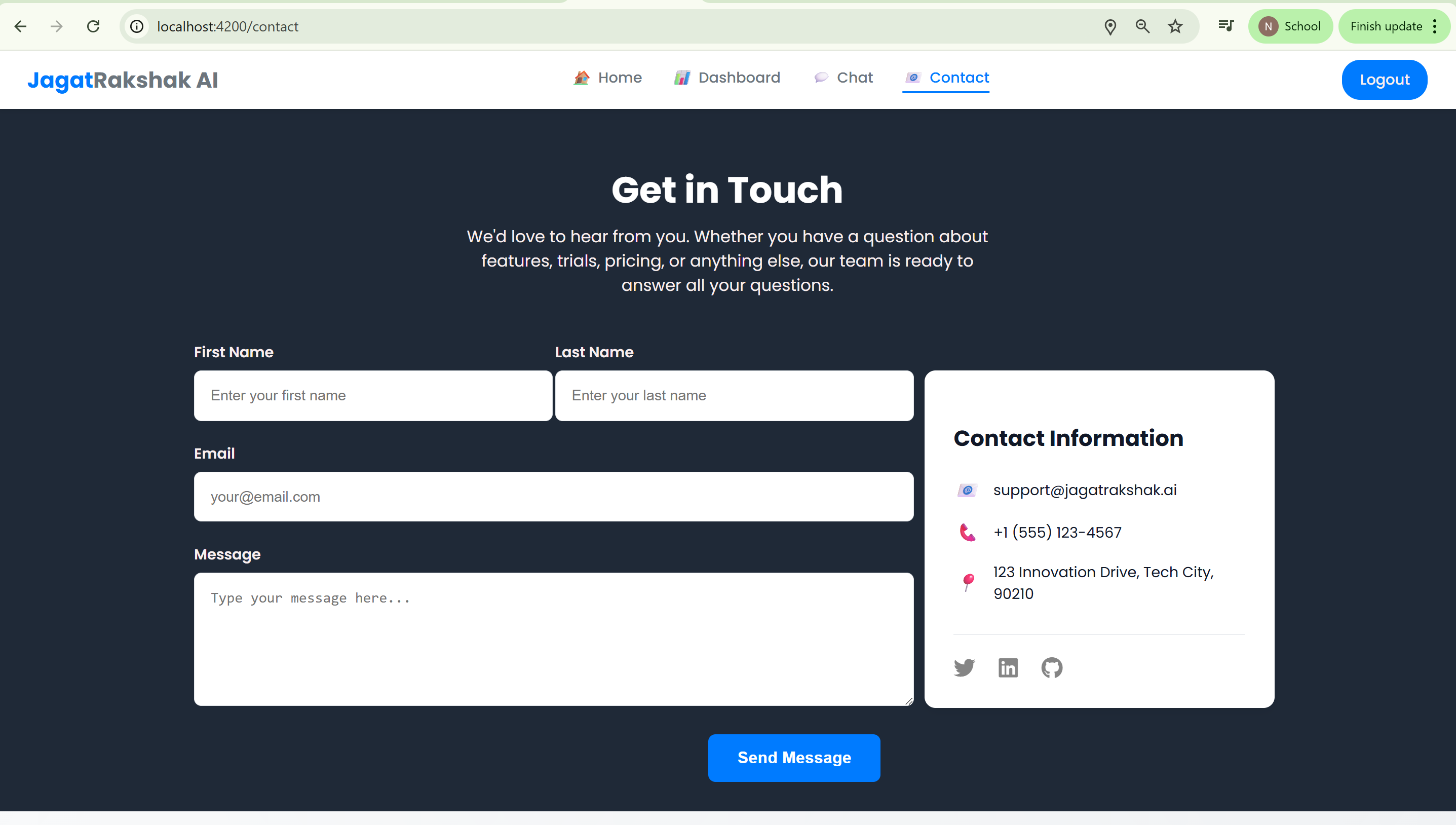
Contact
Inspiration
Every minute counts during emergencies, yet countless lives are lost each year due to delayed reporting, miscommunication, and fragmented civic response systems. We wanted to build a unified AI-driven platform that bridges the gap between citizens, authorities, and emergency responders—turning panic moments into coordinated action. The idea of JagatRakshak (“Protector of the World”) was born from the vision of making technology humanity’s fastest first responder. JagatRakshak will listen, respond, and protect. Because this is spiritually inspired by Lord Jagannath the eternal protector of the universe
What it does
JagatRakshak is an AI-powered autonomous emergency response system that:
Detects and classifies emergencies (accident, fire, medical, disaster).
Automatically identifies the nearest hospitals, police, fire stations, and ambulances based on geolocation.
Generates a real-time emergency report with incident details and severity analysis.
Instantly alerts authorities, NGOs, and trusted contacts through SMS, email, or API integration.
Provides a unified interface for citizens to report incidents, access safety resources, and track help arrival.
How we built it
Authentication: Descope
Frontend: Angular 18+, TypeScript
Backend: Python, FastAPI, SQLAlchemy, SQLite3
Agent Framework: Langgraph
LLM: OpenAI
MCP Server: Tavily AI
External APIs: Gmail, Google Map
Notifications: Gmail, Twilio
Challenges we ran into
Ensuring low-latency communication between backend services and responders.
Simulating reliable response networks (police, fire, ambulance) for prototype testing.
Designing a real-time, fault-tolerant system that can scale during multiple concurrent emergencies.
Integrating Descope Outbound App for secure communication with LLM
Accomplishments that we're proud of
Successfully built a working AI prototype that detects emergency type and generates automated reports.
Designed a centralized civic response architecture integrating multiple stakeholders.
Developed a user-friendly UI for instant reporting and real-time tracking.
Created a model that demonstrates how AI + civic infrastructure can work hand in hand to save lives
What we learned
How AI, automation, and civic technology can transform traditional emergency management.
Importance of data interoperability between public and private response units.
Designing for human trust and simplicity when lives are on the line.
Learned to balance innovation with real-world constraints like connectivity, cost, and response time
What's next for JagatRakshak - AI-Powered Emergency Response System
Integrate directly with government emergency APIs (112/911) for automated dispatch.
Add voice recognition and multilingual support for accessibility.
Deploy IoT and sensor integrations (dashcams, CCTVs, drones) for early detection.
Build a national-level emergency intelligence dashboard to visualize real-time civic data.
Collaborate with NGOs and local authorities to pilot the system in smart cities and disaster-prone regions.
Built With
- angular.js
- descope
- fastapi
- gmail
- langgraph
- llm
- mcp
- python
- sqlalchemy
- twilio

Log in or sign up for Devpost to join the conversation.