-
-
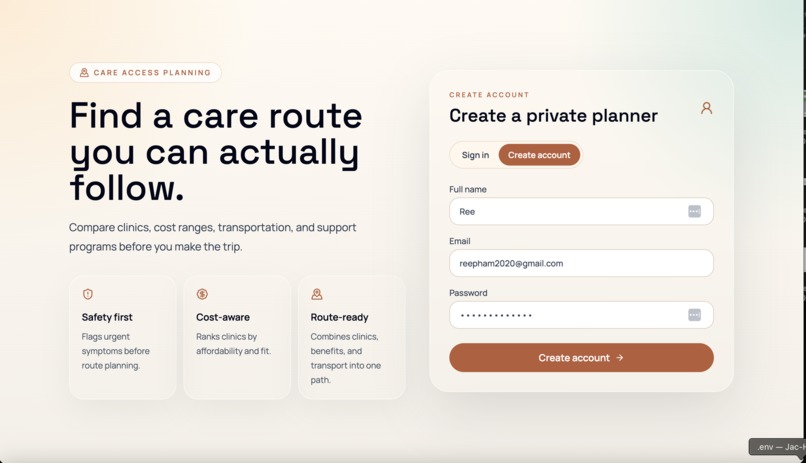
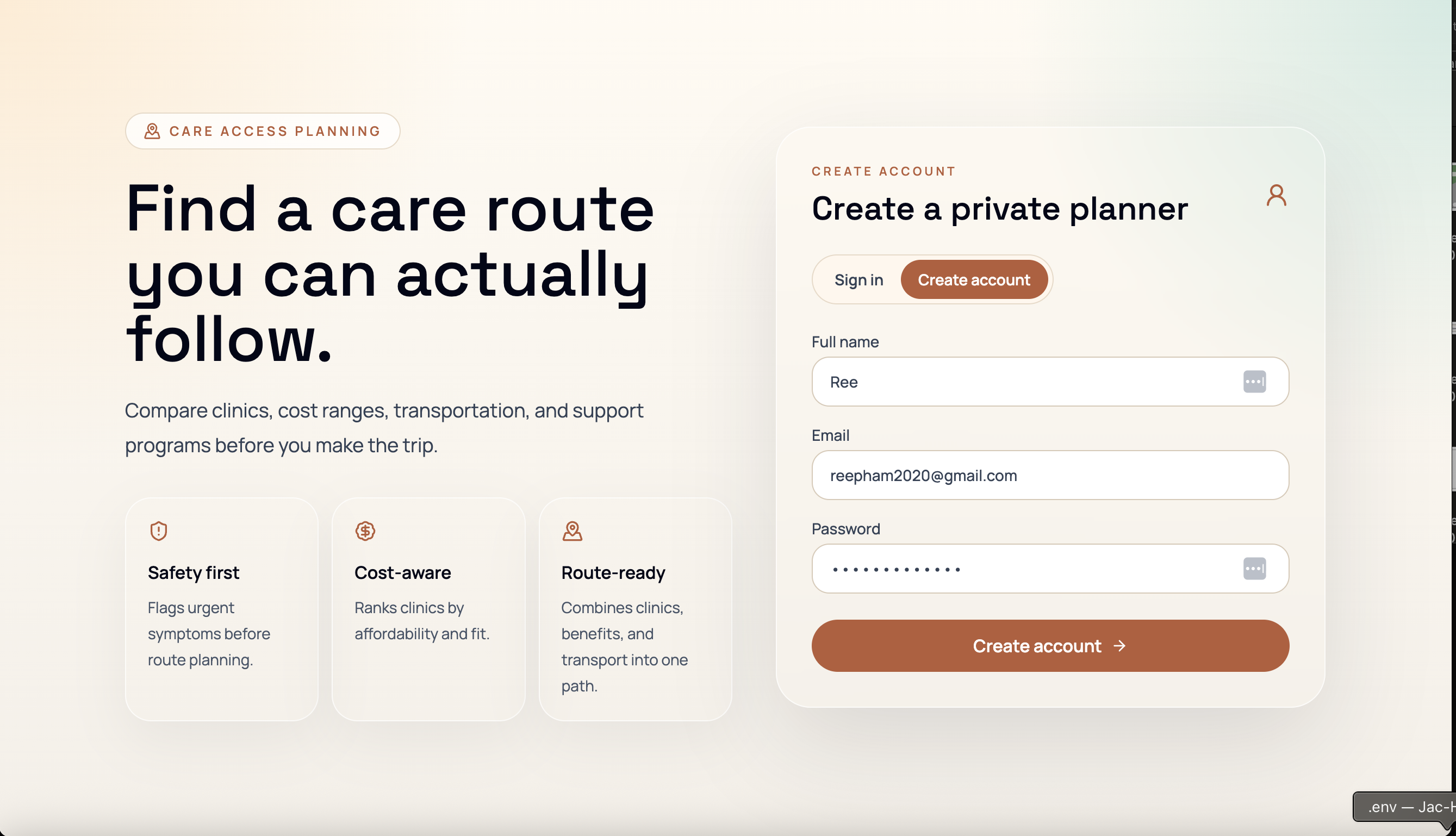
Landing Page
-
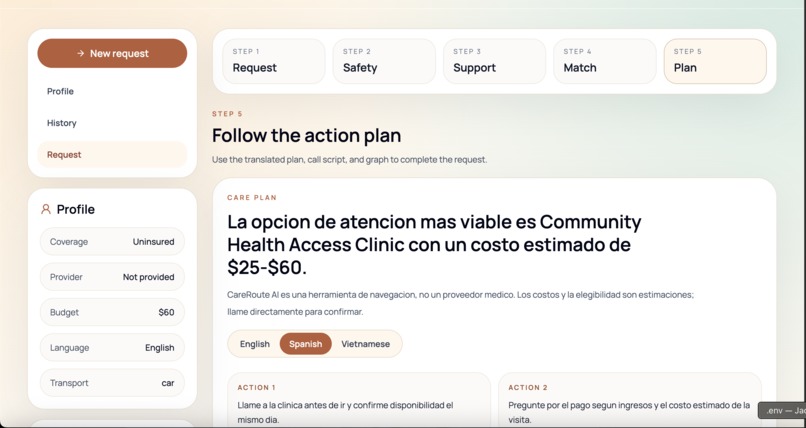
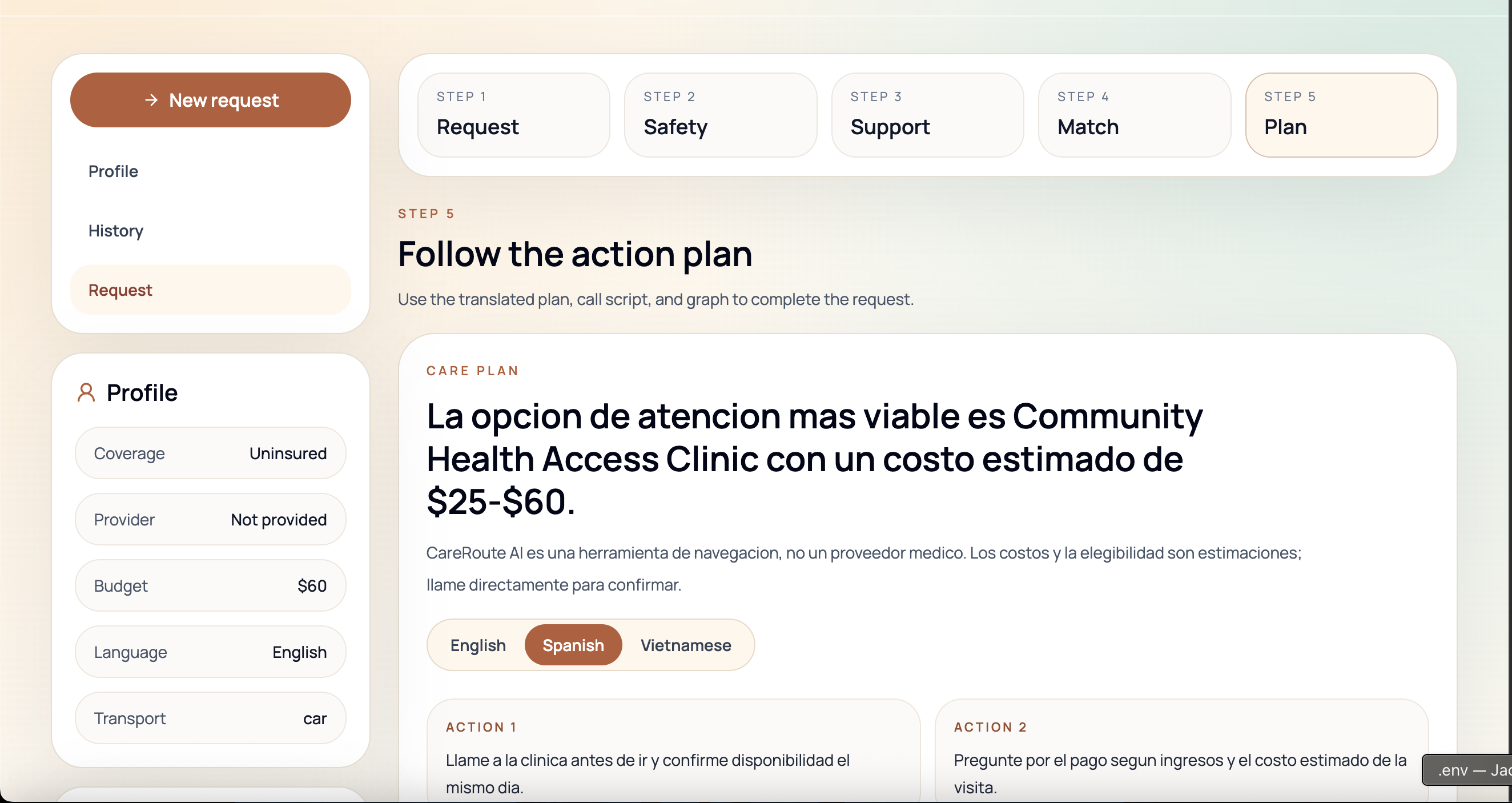
Workflow
Inspiration
Many people delay care because they do not know where to start. They may not know whether a clinic accepts their insurance, whether they can be seen without insurance, how much a visit might cost, what benefits may help, or how to get there.
This problem hits low-income, uninsured, and underinsured people especially hard. Even when affordable care options exist, the information is fragmented across clinic websites, public assistance programs, transportation systems, and pharmacy discount resources.
Part of the reason I built JacCareRoute is personal. There was a time when I needed dental care without insurance and ended up paying around $200 for a cleaning because I did not know what lower-cost options were available. That experience made the problem feel very real to me. I wanted to build something that helps people find a realistic care path before they overpay or delay treatment
What it does
It helps uninsured, underinsured, and low-income users find a realistic path to care. A user enters their ZIP code, budget, insurance status, language, transportation access, care need, urgency, and household situation. The system first runs a safety check for emergency red flags. If the request is safe to continue, JacCareRoute uses Jac graph walkers to match the user with affordable clinic options, transportation routes, prescription savings, and public support programs
How I built it
I built JacCareRoute as a graph-based healthcare access planner using Jac as the core reasoning layer. The backend models users, clinics, pharmacies, transportation routes, public services, eligibility rules, and cost options as connected graph entities. Jac walkers handle key parts of the workflow, including intake, safety checks, care matching, eligibility matching, transport reasoning, ranking, and care-plan generation. Backend uses FastAPI for processing all input such as insurance, zip code (location), household condition and urgency need. Frontend collects those as user input and send back to backend.
The matching system combines deterministic logic with graph traversal. We rank clinic options using affordability, uninsured or sliding-scale support, distance, transportation access, language fit, care-need fit, and document burden. We also generate call scripts, translated care plans, and an interactive graph and map view so users can understand why a route was recommended. I also added Firecrawl as real time scraping service as gov service support plan in real life.
Challenges I ran into
One challenge was integrating live public-resource lookup in a way that stayed useful and stable. Information about clinics, benefits, and support programs is spread across many websites, and it can change often.
Another challenge was language accessibility. Since many users may not be comfortable with English, I added Spanish and Vietnamese support alongside English so the care plan and call script are easier to use.
Accomplishments that I'm proud of
I’m proud that I built a tool that can help people find a realistic path to care, especially users who are uninsured, low-income, or unsure where to start. The platform brings together clinic matching, cost guidance, document preparation, transportation support, and public-resource navigation in one place.
What we learned
Using Jac as infrastructure, graph based, agentic workflow, and debugging
What's next for JacCareRoute
- Add more language preferences
- Add score and ranking document preparation
- Sending real time public transportation notification


Log in or sign up for Devpost to join the conversation.