The Problem
Your identity can be copied in seconds.
Someone can take your name, profile picture, photos, and publicly available information and use them to create an account that appears to be you. For the person being impersonated, discovering the account is only the beginning.
They still have to figure out whether the account is actually suspicious, collect evidence, keep track of what happened, and determine how to report it.
As image manipulation and AI-generated media become easier to create, the problem goes beyond fake profiles. A person's images can also be reused or altered without their consent.
We wanted to build something that focuses on the entire response process, not just detection.
Our Solution
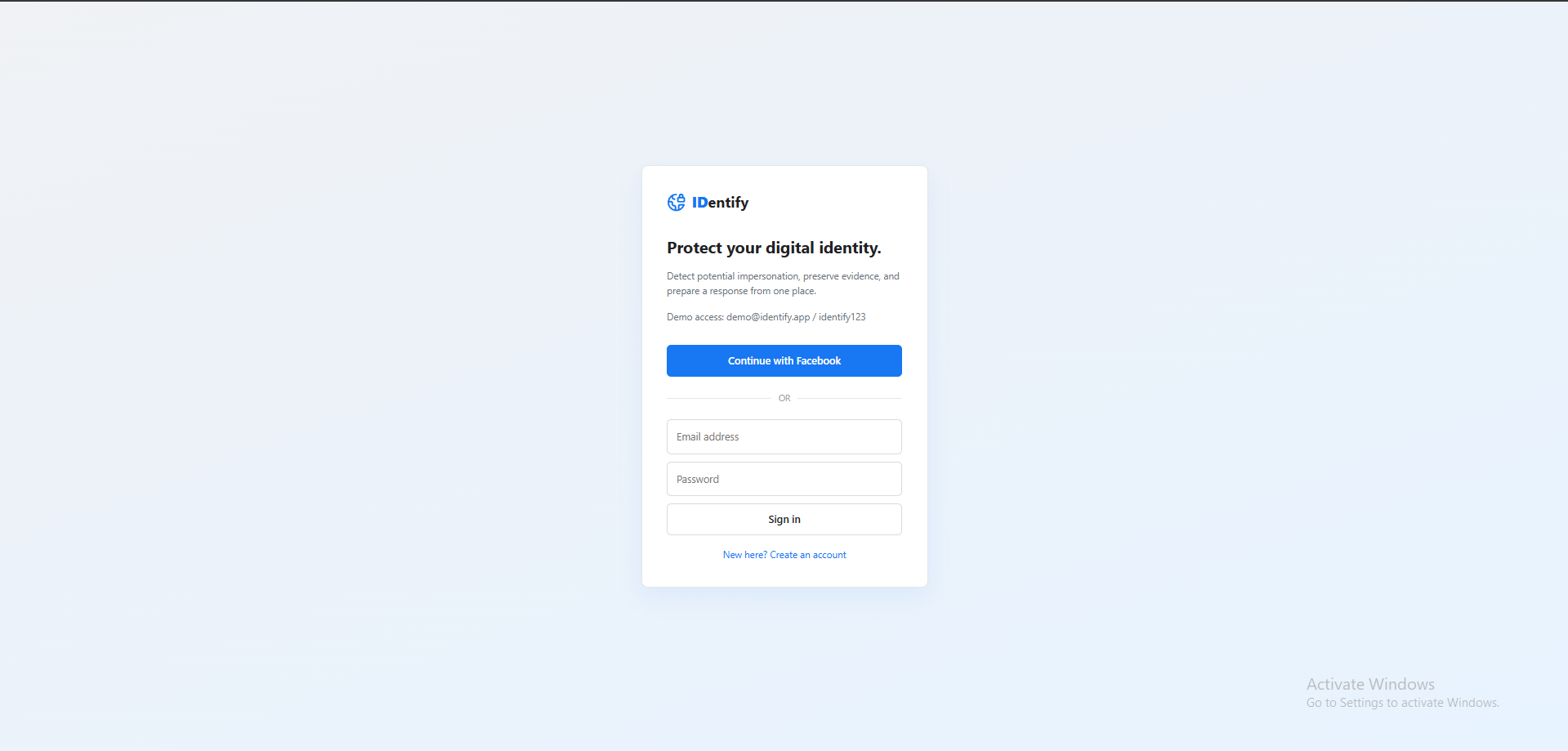
IDentify is a digital identity protection platform designed to help users detect, investigate, document, and respond to potential Facebook impersonation.
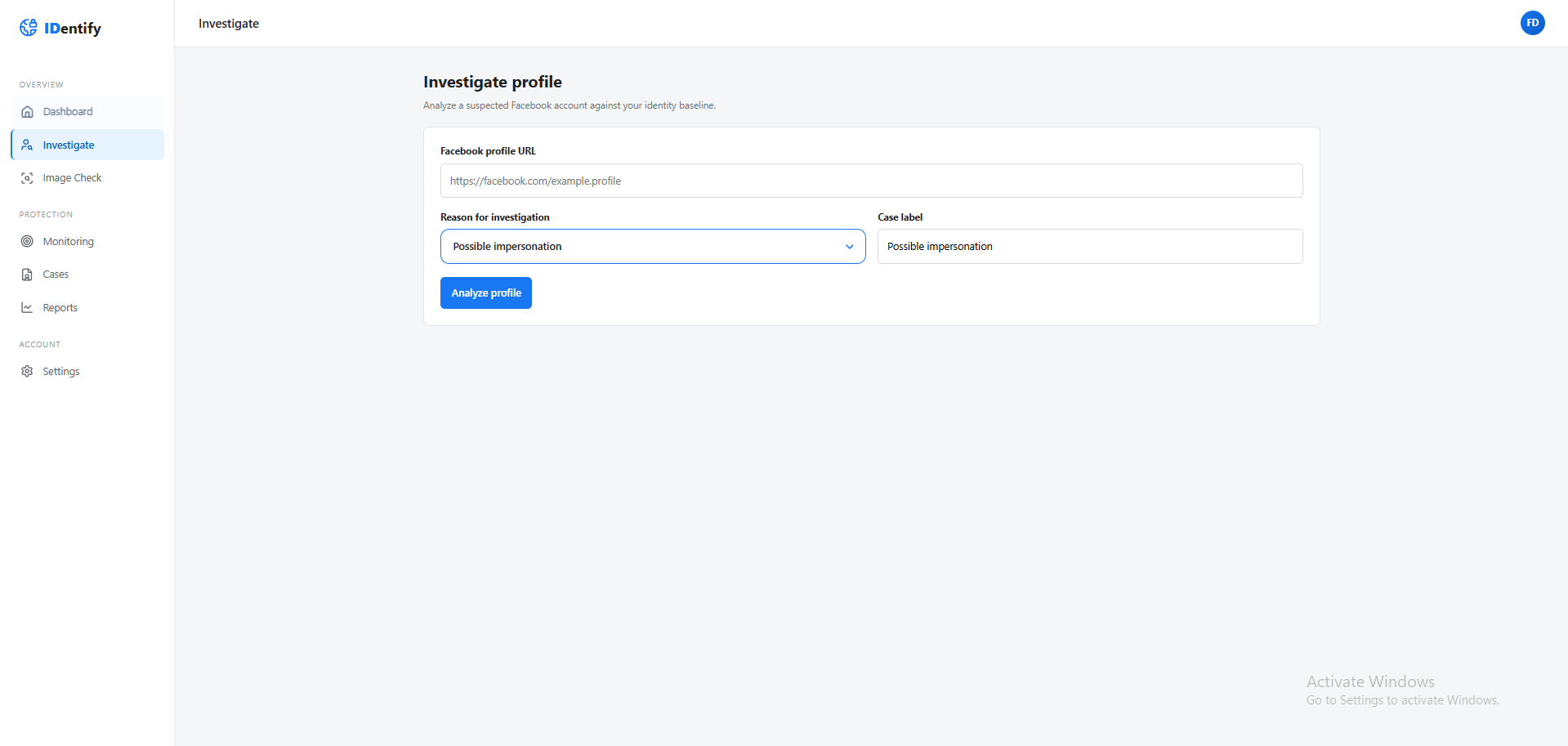
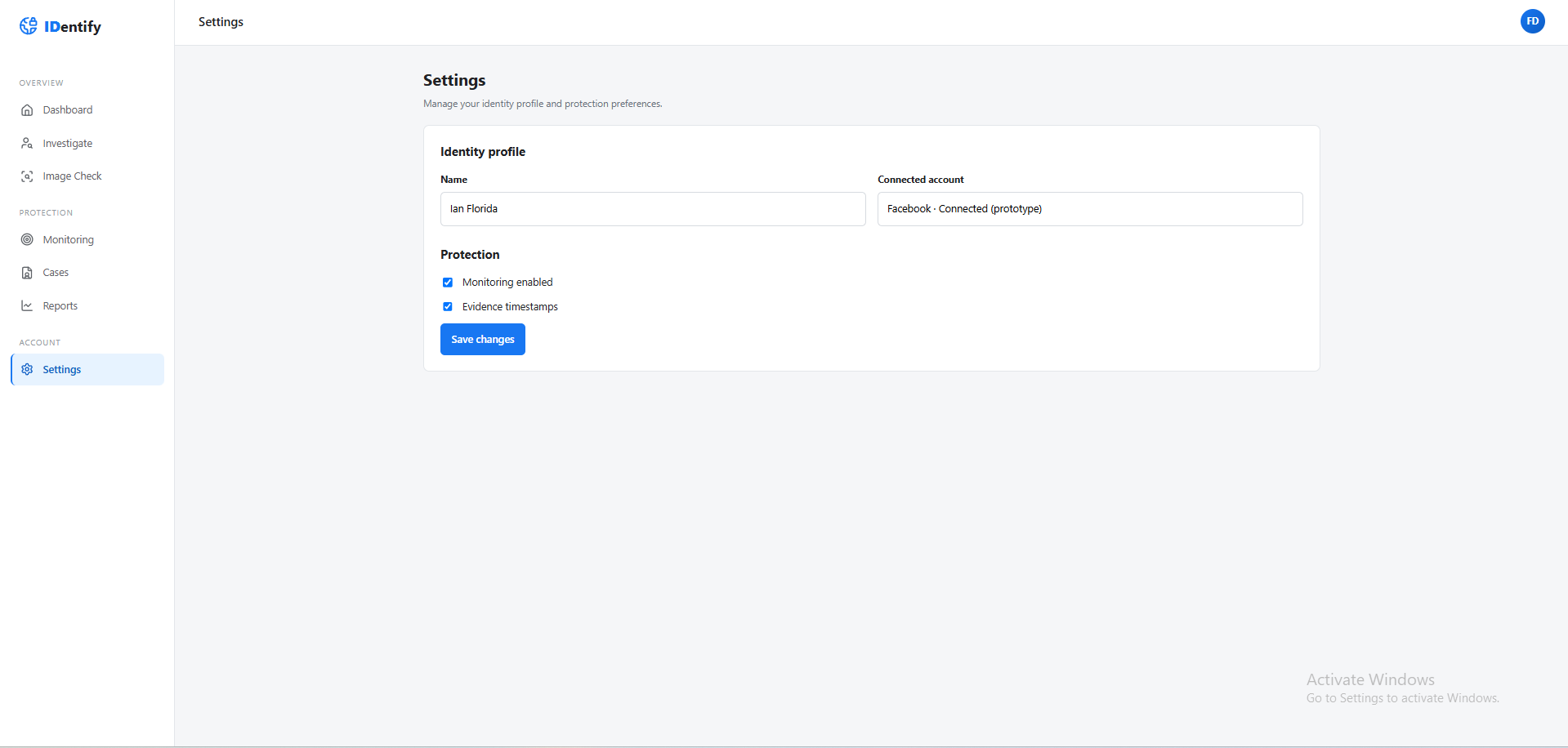
The platform starts by establishing an identity baseline for the legitimate user. From there, a user can submit a suspected Facebook profile for investigation.
IDentify analyzes available identity signals such as:
- Profile image similarity
- Name similarity
- Publicly available profile information
- Other indicators that may suggest impersonation
The system then presents a risk assessment along with the signals behind that assessment.
Instead of simply telling the user that an account is "fake," IDentify is designed to show them why the account may be suspicious.
From Detection to Evidence
Finding a suspicious account is not enough.
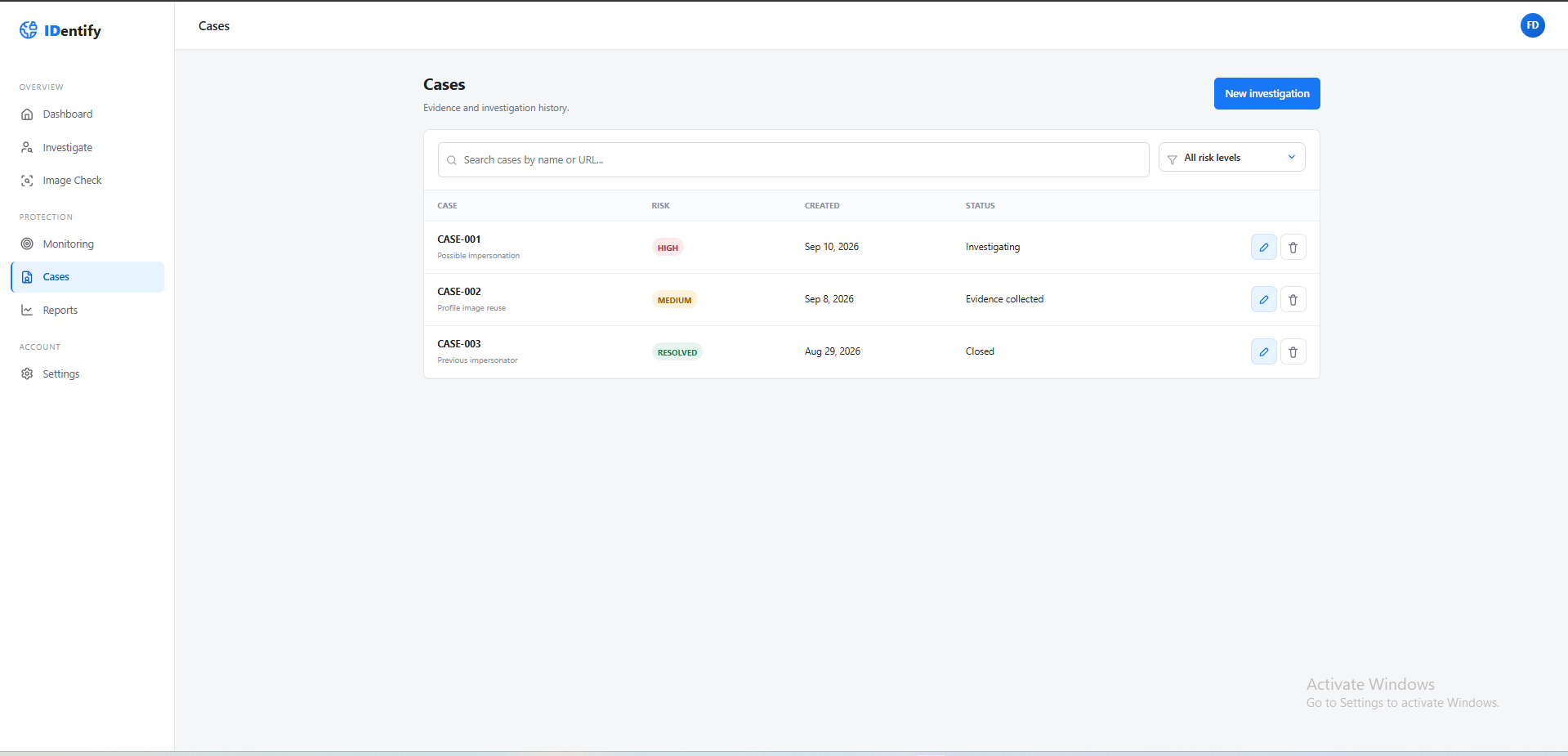
IDentify allows an investigation to become a structured case. The case can contain the suspected profile, investigation results, evidence, timestamps, and an assessment of the situation.
This gives users a centralized record instead of forcing them to keep screenshots, links, and notes scattered across different places.
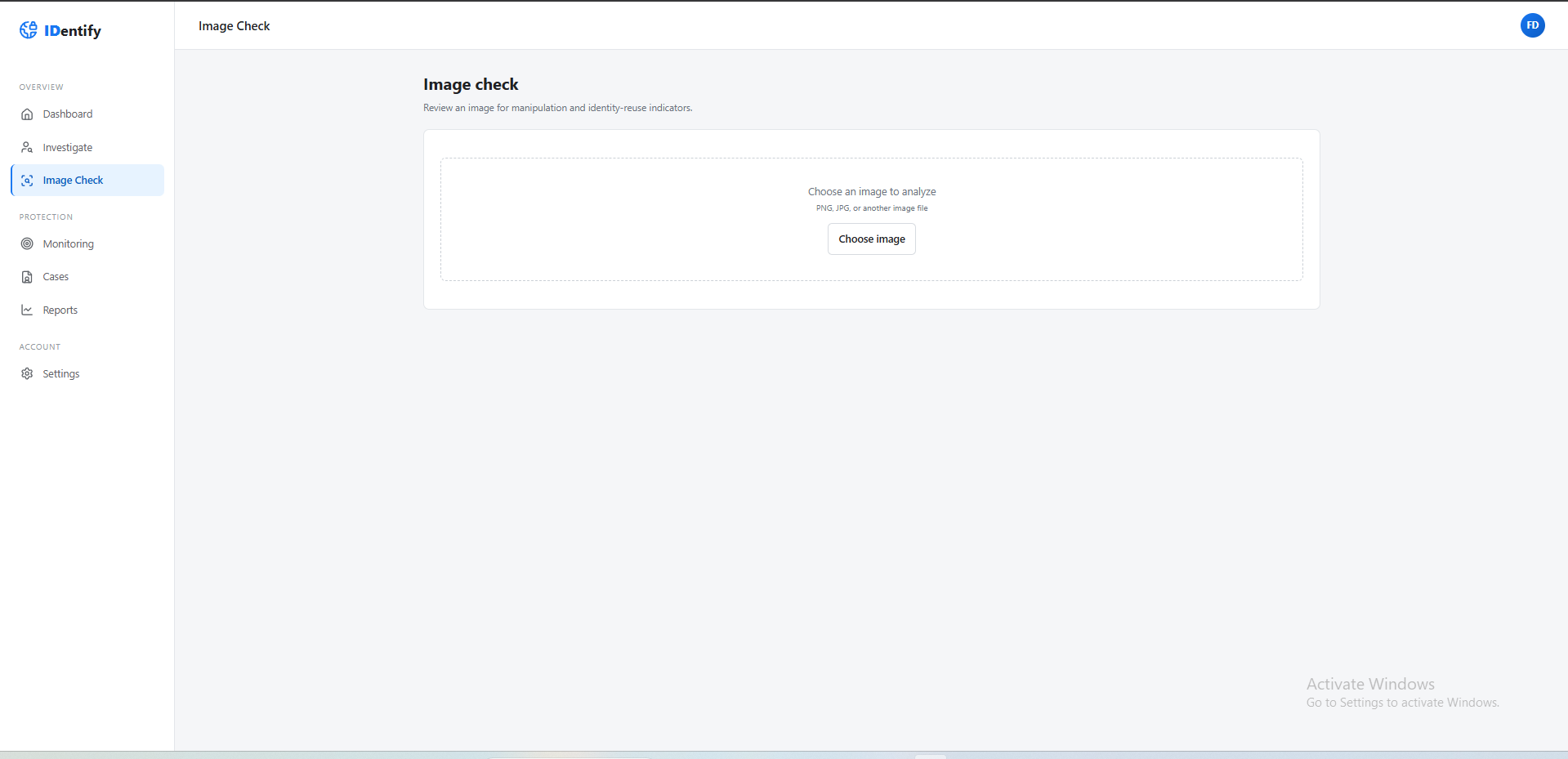
Image Misuse Detection
We also wanted to address the growing problem of image misuse.
IDentify includes an Image Check feature designed to analyze suspicious images for indicators of reuse or manipulation. The goal is not to claim that every image can be perfectly classified, but to provide another signal that can support an investigation.
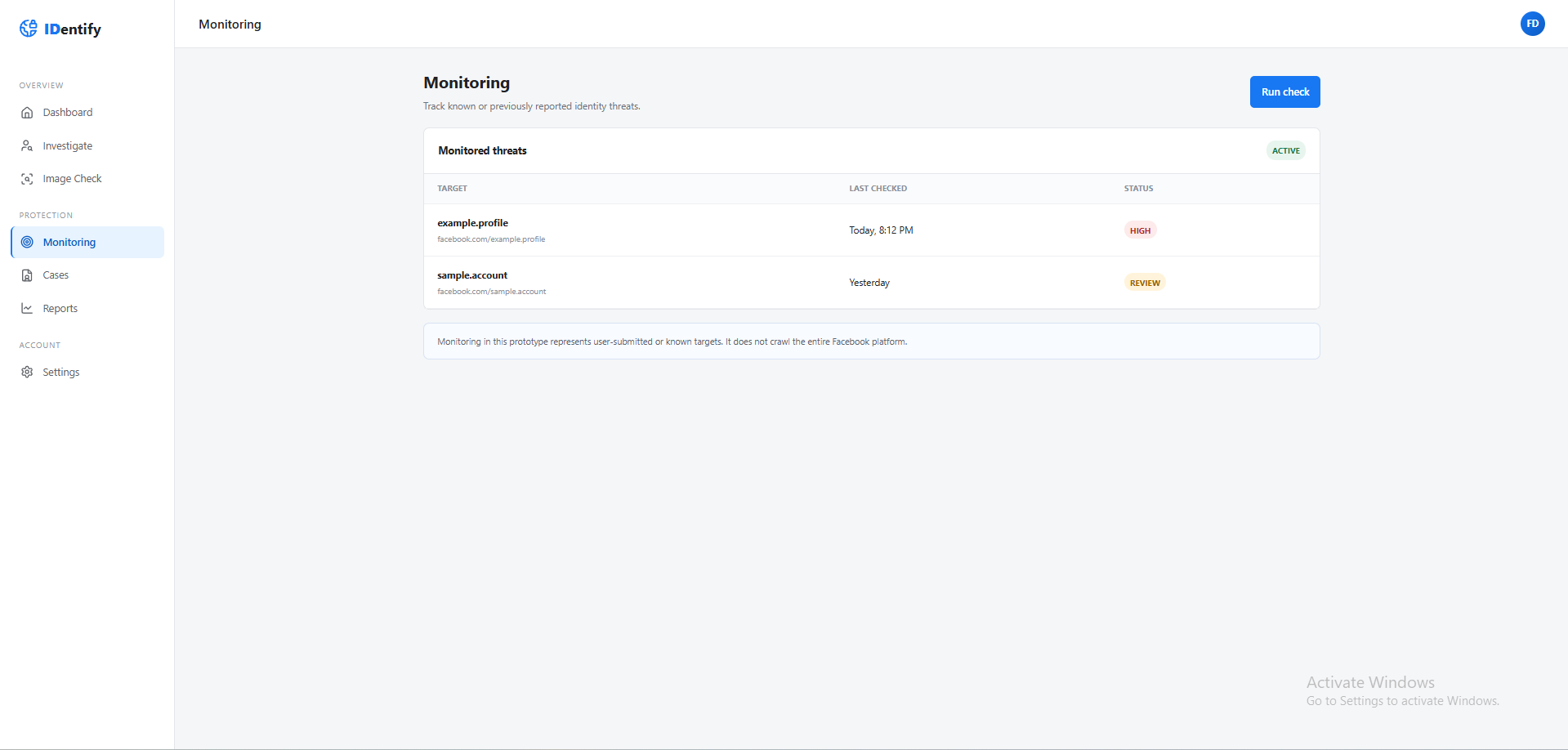
Monitoring
After identifying a potential threat, users can continue tracking known or previously submitted accounts through the Monitoring section.
Rather than attempting to crawl the entire Facebook platform, IDentify focuses on threats that users have actually identified and want to keep track of.
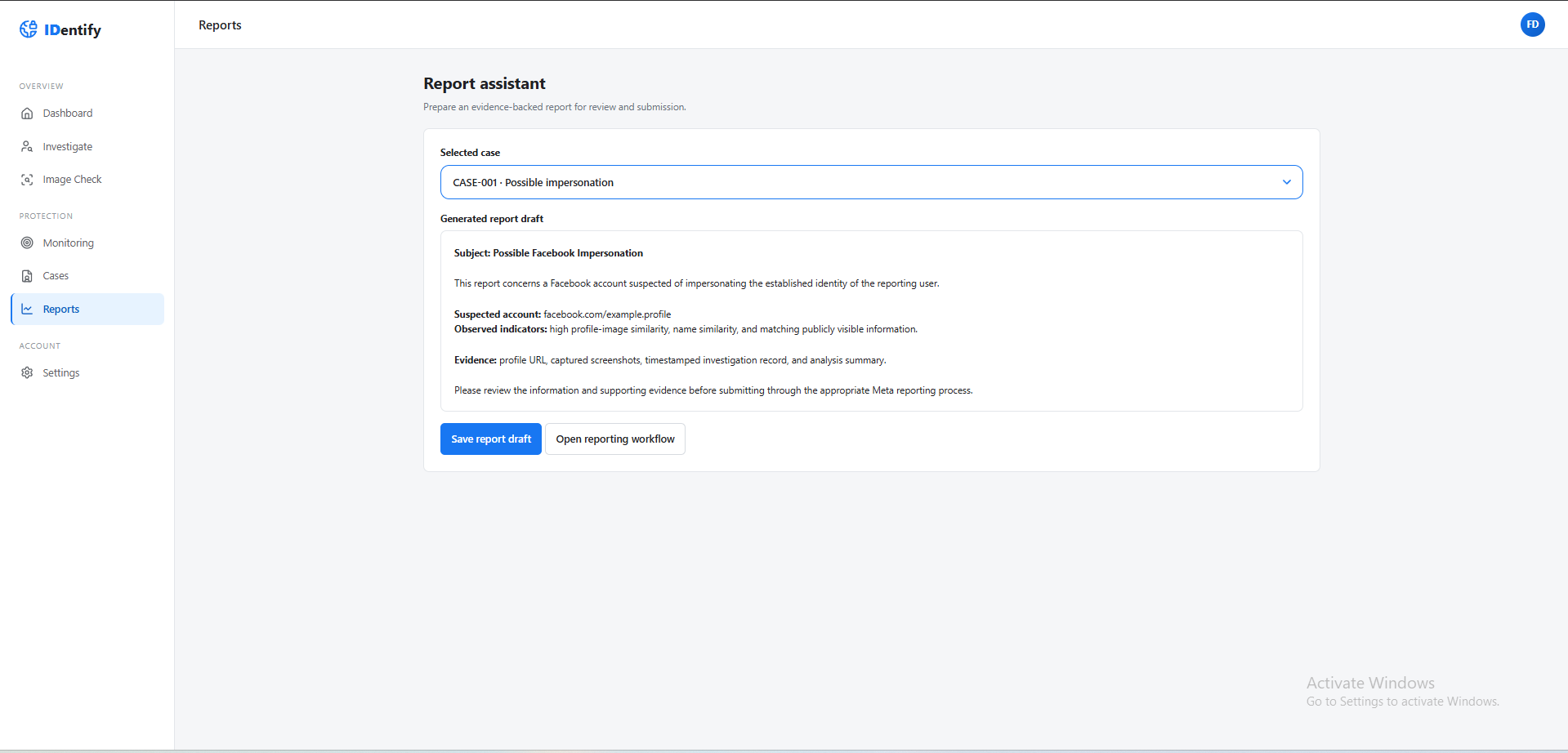
Report Assistant
Once the investigation is complete, IDentify helps turn the collected information into a structured report.
The Report Assistant organizes the suspected account, observed indicators, and supporting evidence into a report draft that the user can review before proceeding through the appropriate reporting process.
This closes the loop between finding the problem and knowing what to do next.
How We Built It
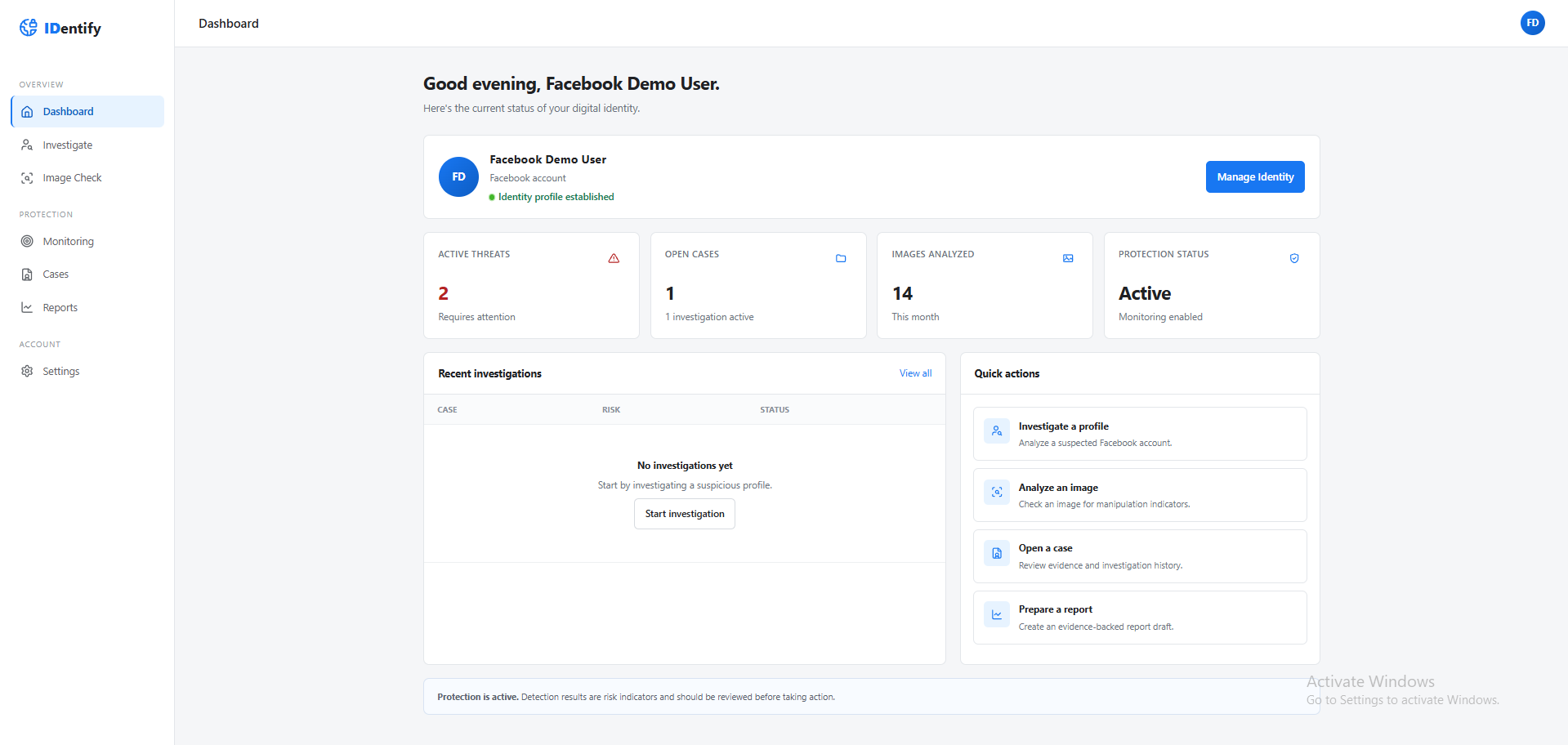
Our prototype is built as a web-based cybersecurity product with a dashboard-centered workflow.
The current prototype demonstrates the complete user experience:
Identity → Investigation → Risk Assessment → Image Check → Monitoring → Evidence Case → Report
We designed each part around the same goal: making digital identity abuse easier for an ordinary user to understand and respond to.
AI Usage
AI tools were used during development for brainstorming, UI prototyping, code assistance, debugging assistance, and refining project documentation.
AI-assisted development was reviewed and adapted by the team. The team remains responsible for understanding the submitted code, architecture, design decisions, and functionality.
What We Learned
One of the biggest things we learned while working on IDentify is that cybersecurity is not always about preventing an attack before it happens.
Sometimes the most important part is what happens after someone discovers that something is wrong.
A useful security tool needs to help users understand what happened, preserve useful evidence, and take the next step.
That shaped IDentify into more than a profile checker. We designed it as a response workflow for digital identity abuse.
Challenges
One of our biggest challenges was balancing what would be technically useful with what would actually be feasible.
A system that continuously scans all of Facebook for every possible impersonator would not be realistic for our prototype. Instead, we focused on a user-driven approach where suspicious profiles and images can be submitted for investigation.
We also had to consider the limitations around accessing information from third-party platforms and avoid presenting automated analysis as absolute proof.
Because of this, IDentify treats its results as risk indicators and supporting evidence, rather than replacing human review.
What's Next
Future versions of IDentify could expand the monitoring system, improve image analysis, provide a browser extension for investigating profiles while browsing Facebook, and integrate more deeply with supported platform authentication and reporting workflows.
Our goal is simple:
When someone abuses your identity online, finding the problem should not be the end of the process.
IDentify is built to help users find it, understand it, document it, and respond.


Log in or sign up for Devpost to join the conversation.