Inspiration
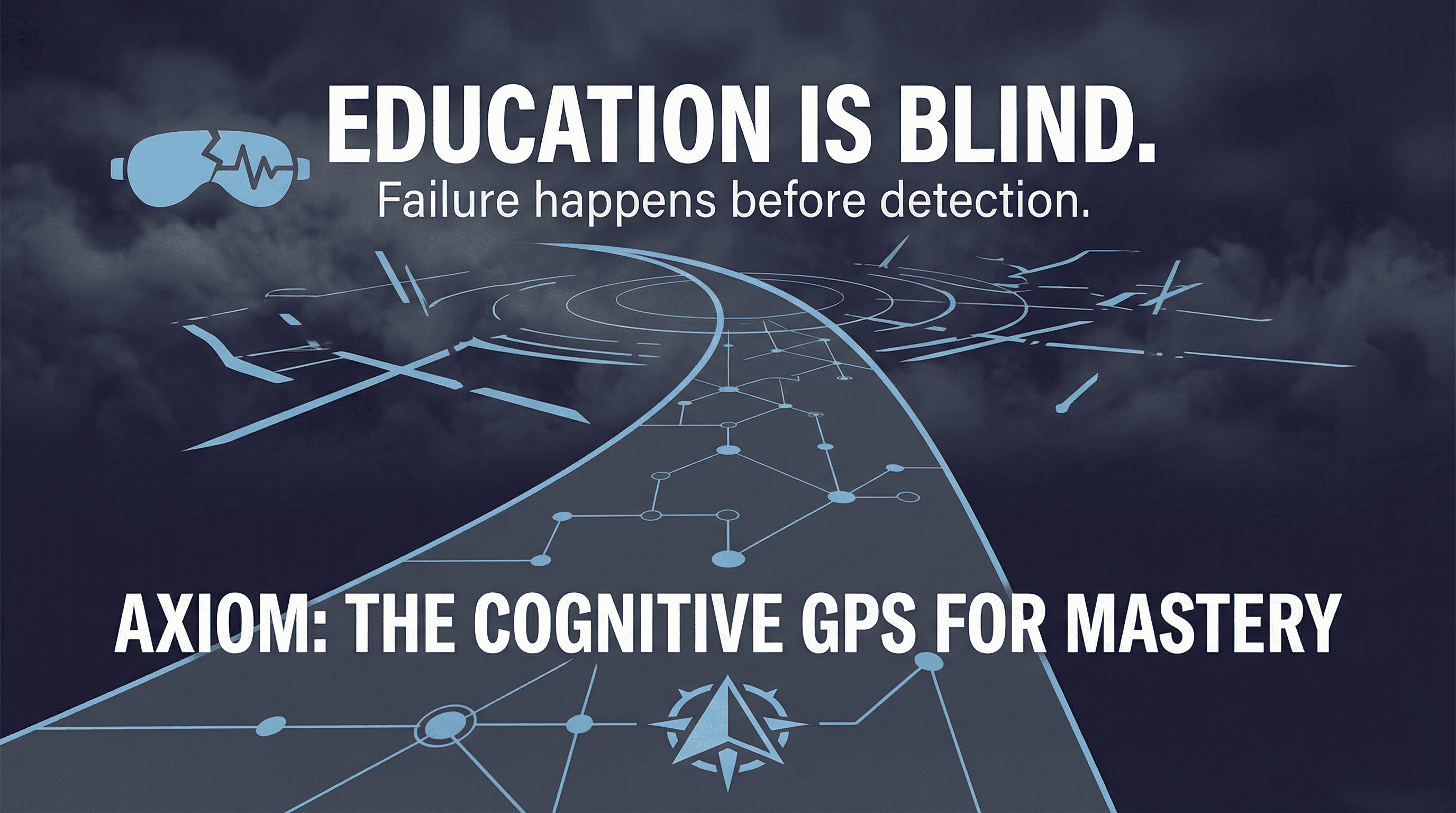
Current education systems wait for failure—usually a low test grade—to signal that a student is struggling. We were inspired by the concept of a Cognitive GPS: a system that identifies cognitive load, hesitation, and "Neural Drift" the exact moment they occur. We wanted to transform education from a reactive process into a proactive, predictive science.
What it does
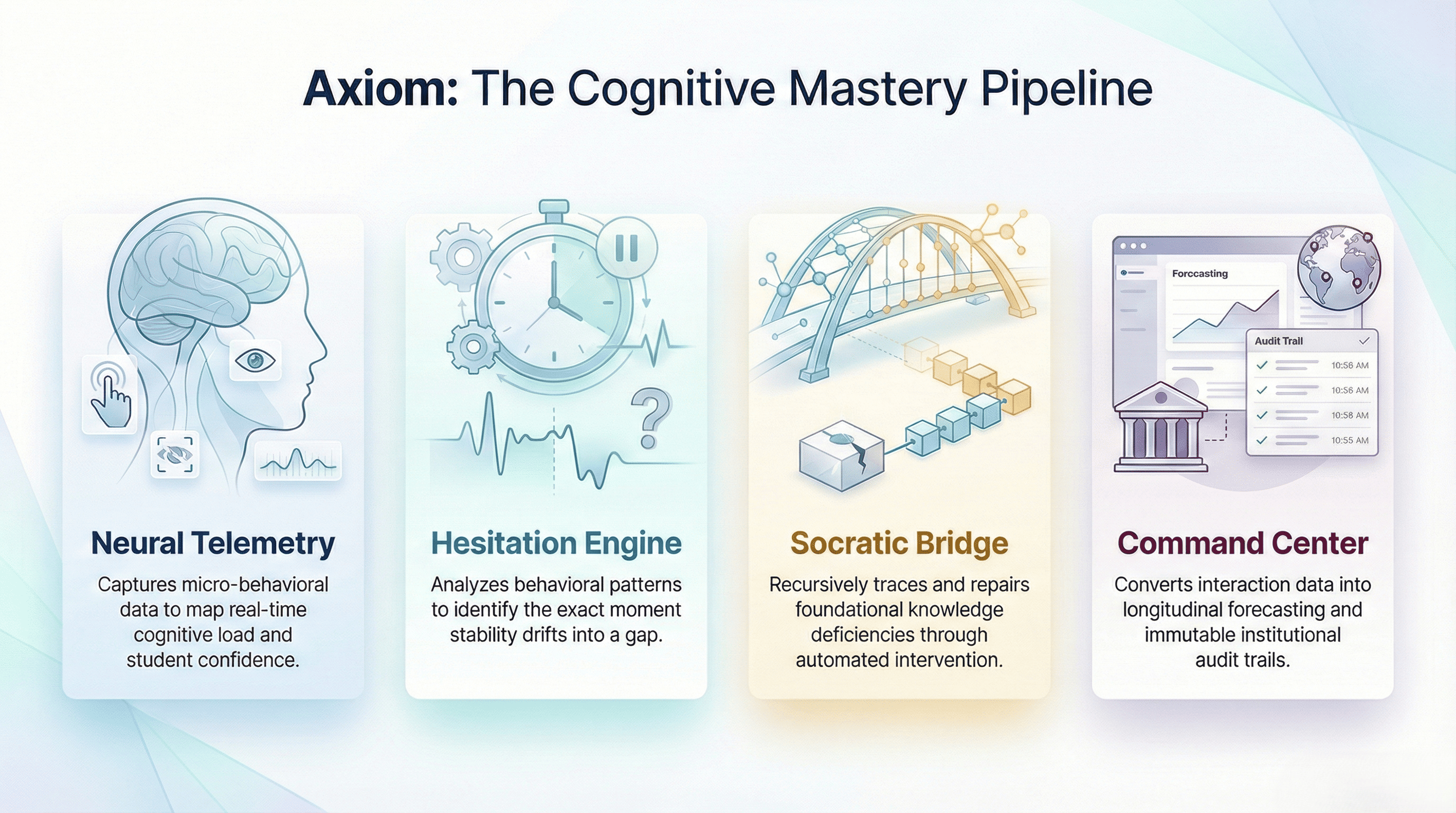
AXIOM creates a 3D Neural Twin of the learner's knowledge. It tracks micro-behaviors—such as cursor backtracking and response jitter—to detect "Invisible Hesitation." When a conceptual gap is found, the Socratic Bridge Engine recursively traces the learning graph to find the foundational root cause. It then intercepts the session with an adaptive AI-driven repair interaction to bridge the deficiency before it compounds.
How we built it
Volumetric 3D Engine: Built using Three.js and @react-three/fiber to render an interactive brain that pulses based on knowledge stability. Predictive Logic: Implemented Bayesian Knowledge Tracing (BKT) and the SM-2 Spaced Repetition algorithm to model probability of mastery: $$P(L_n) = P(L_{n-1}) + (1 - P(L_{n-1})) \frac{P(T)}{1 - P(L_{n-1}) \cdot P(T)}$$ Persistence: Developed an immutable Event Ledger using event-sourcing principles to ensure every interaction is auditable and verified via checksums. Interface: A high-end glassmorphism HUD built with React 19, Vite, and Tailwind CSS.
Challenges we ran into
The primary challenge was managing the Synchronicity of Remediation. Triggering a recursive "prerequisite search" and a Socratic intervention in the middle of a live testing session required deep optimization of React state selectors to prevent infinite re-render loops. We solved this by refactoring to stable Zustand selectors and memoized behavioral hooks.
Accomplishments that we're proud of
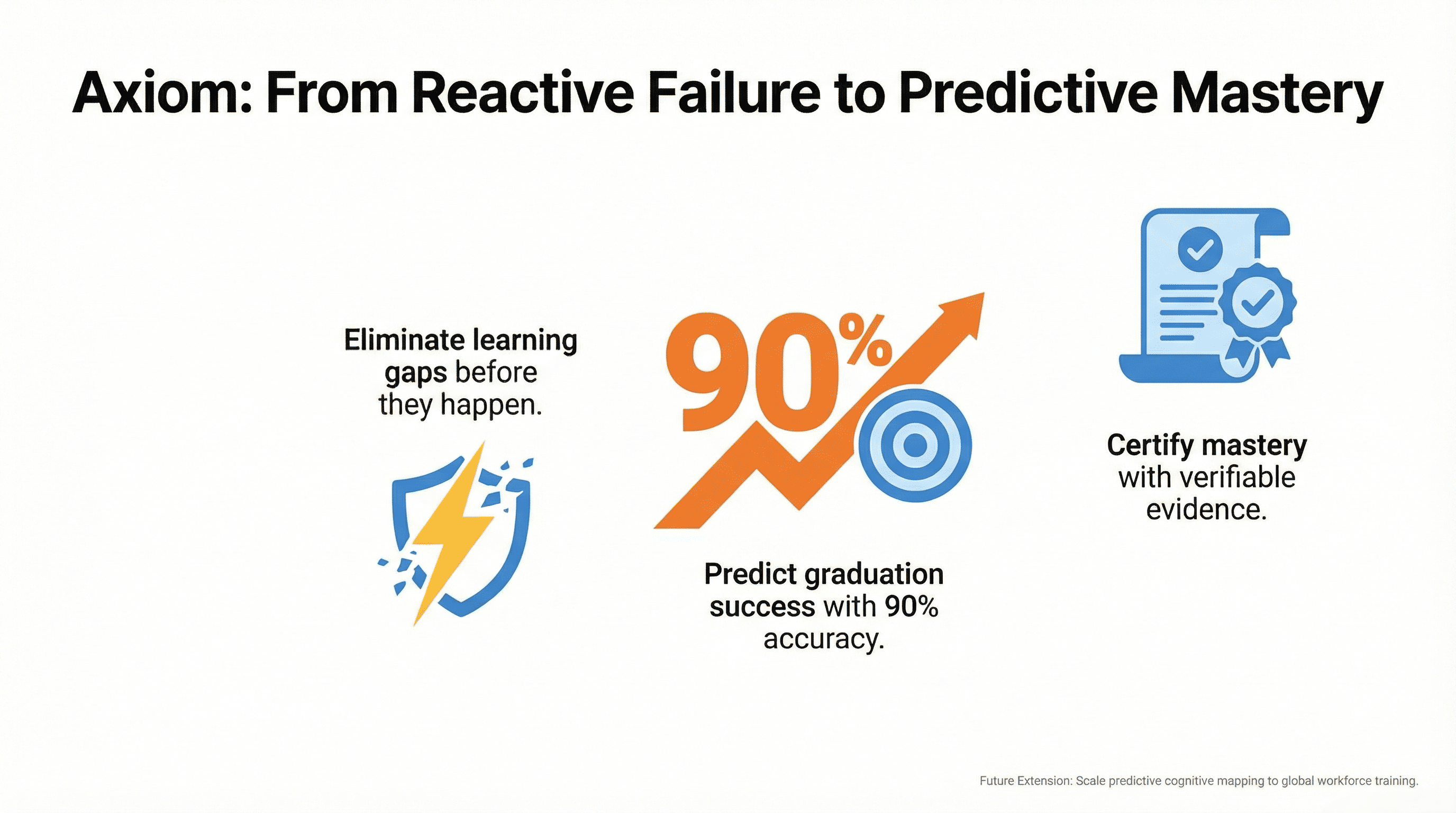
Hesitation Telemetry: Creating a system that can "see" a student doubting themselves based on cursor backtracking patterns. Root-Cause Logic: Successfully implementing a recursive prerequisite chain that can trace a complex neuroanatomy gap back to a basic cellular biology deficiency. Institutional Forecasting: Architecture that allows Deans to predict cohort pass-rates weeks in advance.
What we learned
We learned that behavioral data (the way a student answers) is often more valuable than the correctness of the answer. By measuring the time of a response and the frequency of cursor "backtracks" B_n, we can map the stability of a neural pathway with medical-grade precision.
What's next for AXIOM: The Cognitive Operating System for Learning
We plan to integrate with BCI (Brain-Computer Interfaces) for direct cognitive load monitoring and expand the Socratic Bridge into a cross-disciplinary Knowledge Graph that spans entire university curricula.
Built With
- bkt-model
- framer-motion
- lucide-react
- mermaid-js
- react
- sm-2-algorithm
- tailwind-css
- three.js
- typescript
- vercel
- vite
- zustand


Log in or sign up for Devpost to join the conversation.