Inspiration
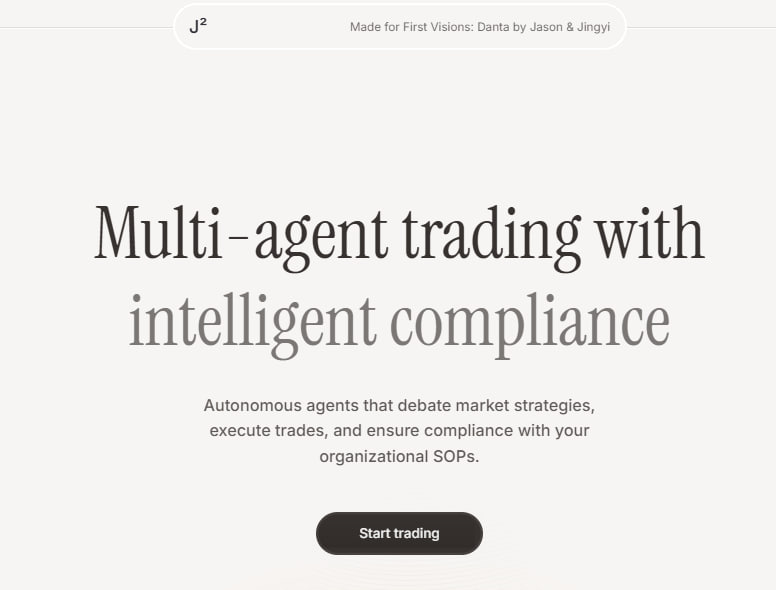
We were inspired by the disconnect between modern AI capabilities and traditional trading systems. Financial professionals spend hours manually synthesizing conflicting market data, dealing with compliance bottlenecks, and struggling to incorporate diverse perspectives into investment decisions. We realized that AI agents could debate like human investment committees—but with superhuman speed, objectivity, and access to real-time data across markets. The "First Visions: Danta" theme drove us to create the first truly autonomous trading system where AI agents represent different investment personas and collaborate intelligently.
What it does
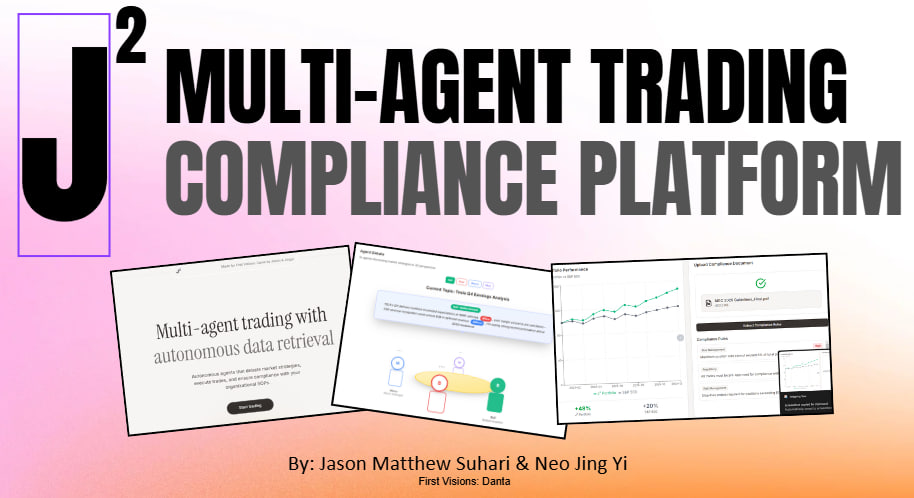
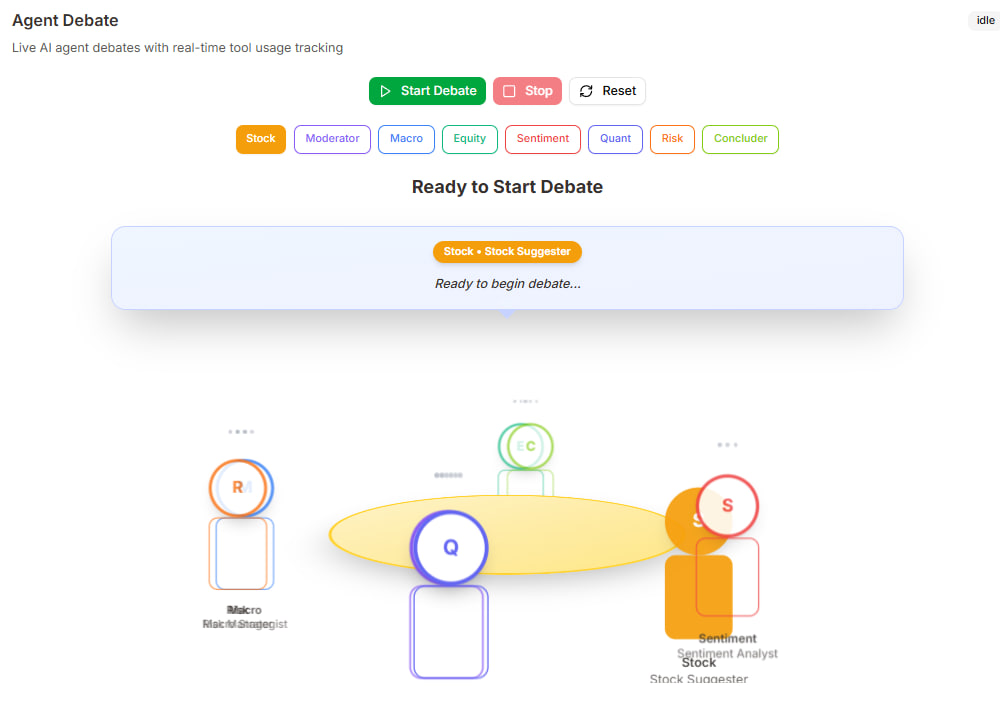
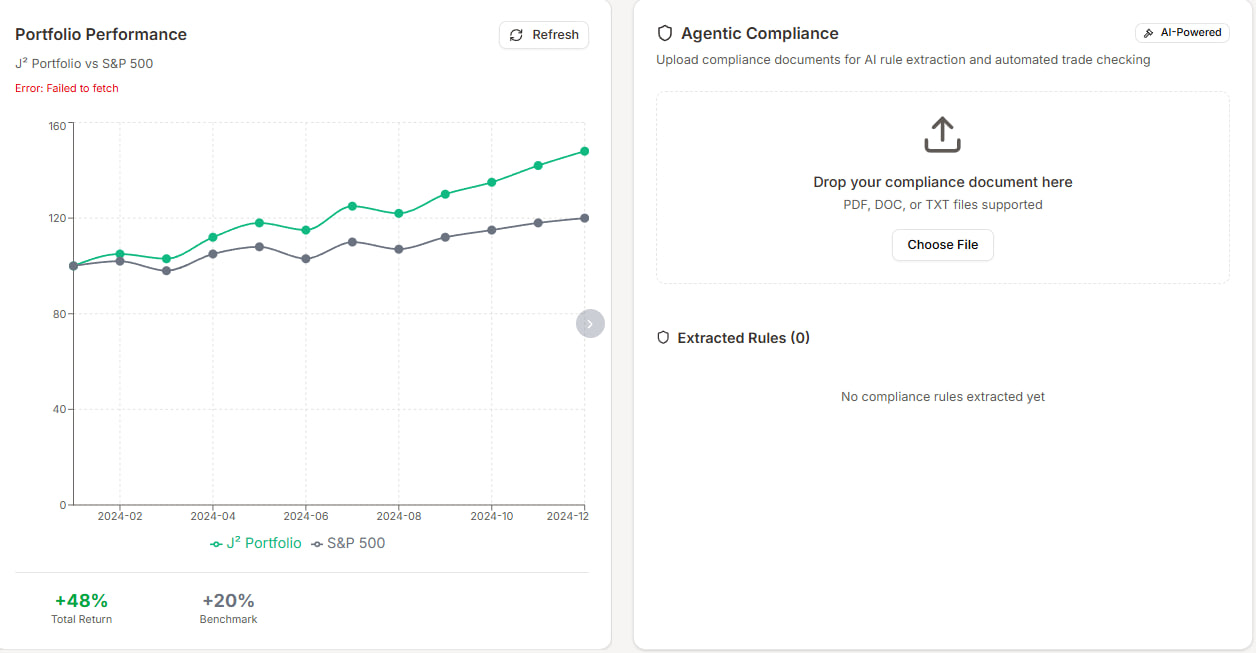
J^2 is a multi-agent trading and compliance system where autonomous AI agents represent different investment personas, debate on assets using diverse datasets, and automatically execute trades while ensuring regulatory compliance. The system features 6 specialized debate agents (Macro, Equity, Risk, Quant, Sentiment, Fact-Checker) that analyze market conditions, an Agentic Orchestrator that coordinates complex workflows, real-time compliance monitoring, and automated trade execution. Users simply input market queries, and the system delivers comprehensive analysis, consensus recommendations, and compliant trade execution—all through an intuitive dashboard with 3D agent visualization.
How we built it
We built J^2 using a modern multi-agent architecture with FastAPI backend, Next.js frontend, and 80+ shared tools across 13 categories. The core innovation is our Agentic Orchestrator powered by OpenAI's LLM that intelligently coordinates specialized agents without modifying their code. We implemented real-time data ingestion from SEC Edgar, NewsAPI, and market data feeds, created a sophisticated debate system where agents cross-reference each other's arguments, and built comprehensive compliance automation using Supabase for storage and ChromaDB for vector search. The frontend features interactive 3D agent visualization and real-time chat interfaces, while the backend ensures enterprise-grade security with sandboxed execution and audit trails.
Challenges we ran into
The biggest challenge was coordinating multiple autonomous agents while maintaining system coherence—early versions produced conflicting recommendations or got stuck in endless debates. We solved this with our LLM-driven orchestrator that dynamically manages agent interactions and synthesizes outputs. Implementing real-time compliance checking across different regulatory frameworks was complex, requiring extensive testing to ensure pre-trade validation never blocks legitimate trades. Integrating diverse data sources (PDFs, APIs, web scraping) with different formats and reliability was challenging, solved through our robust data processing pipeline with OCR fallback. Performance optimization was critical—managing 6+ concurrent AI agents required careful async programming and resource management.
Accomplishments that we're proud of
We're proud of creating the first truly autonomous trading system that combines AI debate, compliance automation, and trade execution in a single pipeline. Our Agentic Orchestrator can transform any static agent system into intelligent, goal-oriented behavior without code modifications—a breakthrough in agent coordination. The 3D agent debate visualization makes complex AI decision-making transparent and intuitive. We successfully integrated 80+ production-ready functions across financial analysis, data processing, and communication tools. Most importantly, we achieved real regulatory compliance with comprehensive audit trails while maintaining millisecond response times for trade validation.
What we learned
We learned that effective multi-agent systems require more than just connecting AI models—they need sophisticated orchestration, clear debate protocols, and robust failure handling. LLM-driven coordination is incredibly powerful but requires careful prompt engineering and result validation. Compliance automation is as much about audit trails and transparency as it is about rule enforcement. Real-time financial data integration is complex and requires multiple fallback systems. User interface design for AI systems should focus on transparency and control—users need to see and understand how AI agents make decisions, not just the final outputs.
What's next for J^2
Next, we're expanding J^2 with multi-LLM support (Claude, Gemini) for diverse reasoning approaches, advanced analytics dashboards with detailed performance tracking, and a plugin system for custom reasoning modules. We're building distributed execution capabilities for multi-node orchestration to handle institutional-scale trading volumes. Real-time strategy adaptation will allow agents to modify their debate styles based on market volatility. We're also developing persistent learning capabilities where agents improve their arguments based on trade outcomes, and enhanced goal refinement through interactive clarification with users. Our ultimate vision is democratizing institutional-quality trading intelligence for individual investors and smaller firms.


Log in or sign up for Devpost to join the conversation.