Inspiration
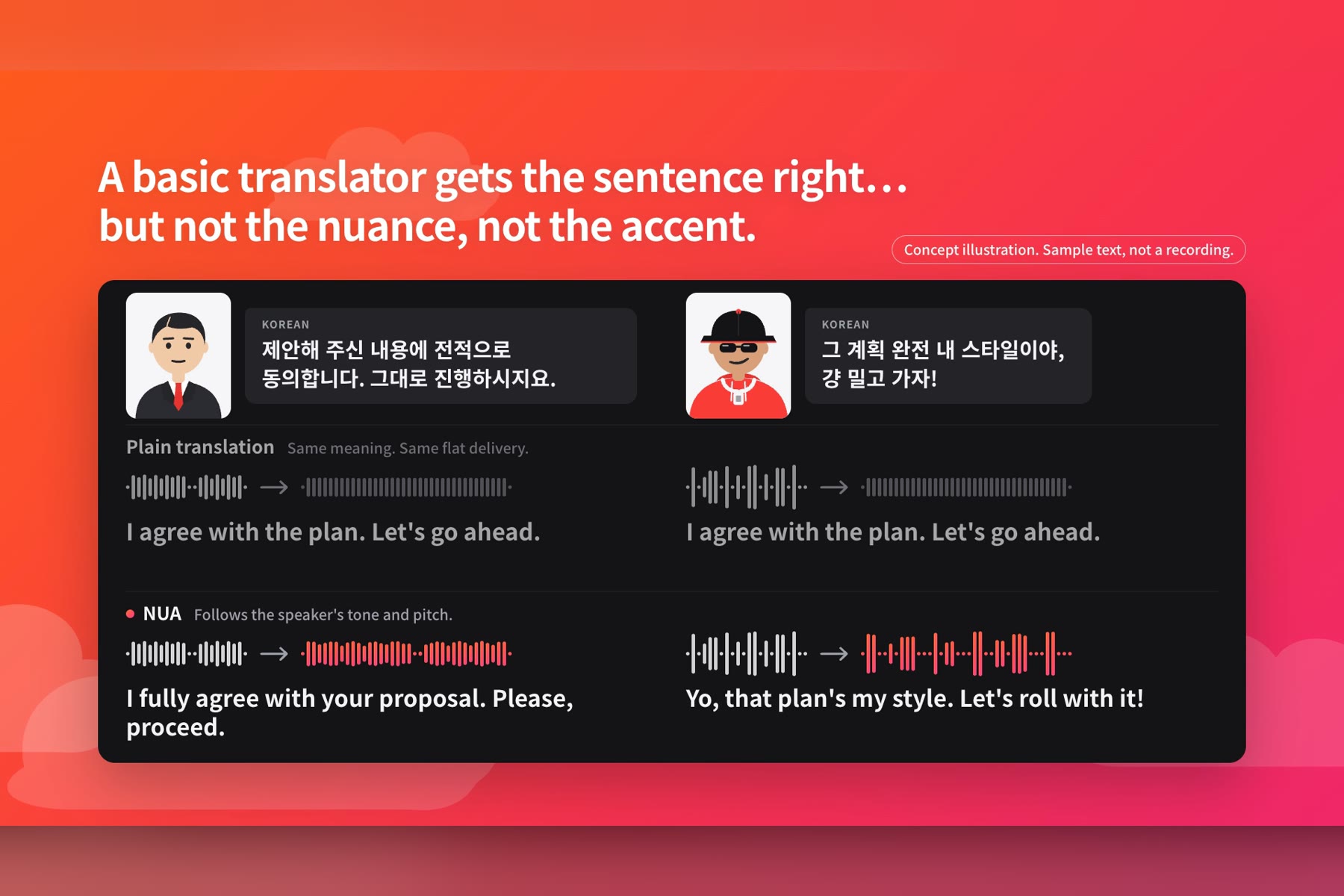
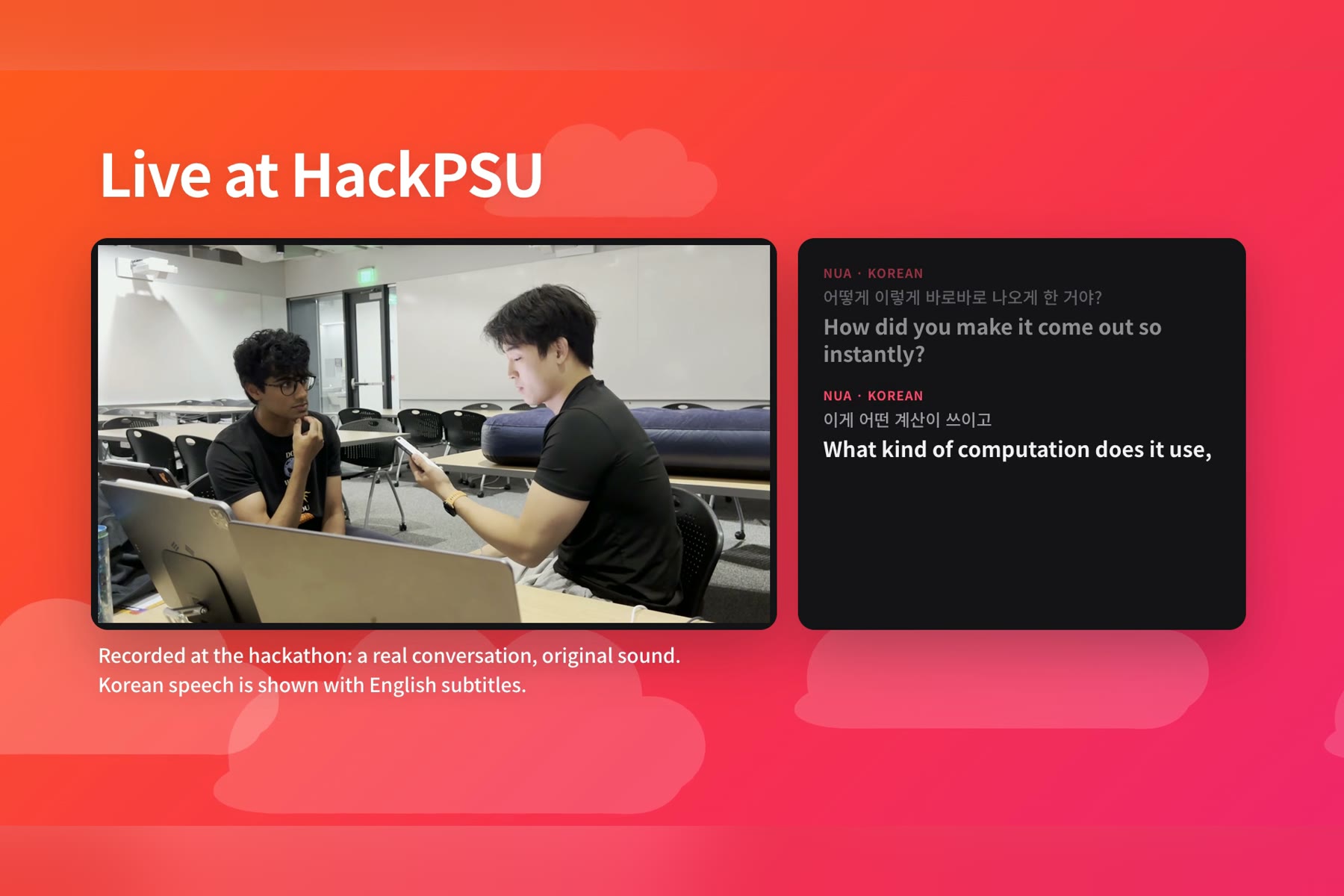
Language barriers in a face-to-face conversation are not only about words. The same sentence can be warm or cold, polite or sarcastic, and a plain translation flattens that. One of us, Wonui, has spent ten years studying abroad. He used translators the whole time, and they always fell short: a basic translator gets the sentence right but not the nuance or the accent. We wanted to put one phone between two people and let them just talk, each in their own language, while the way something is said carries over as much as possible.
What it does
NUA is an iOS app for real-time, face-to-face voice interpretation between two people on a single phone. Each person picks a language. The language picker is built for 14 languages (the 13 output languages OpenAI documents for its translation model, plus Arabic) and shows the ones our server enables. We tested the app in the languages in the picker, not only Korean and English.
- Hands-free. Tap Start conversation once. Nothing records at launch, and Mute and Stop are always visible.
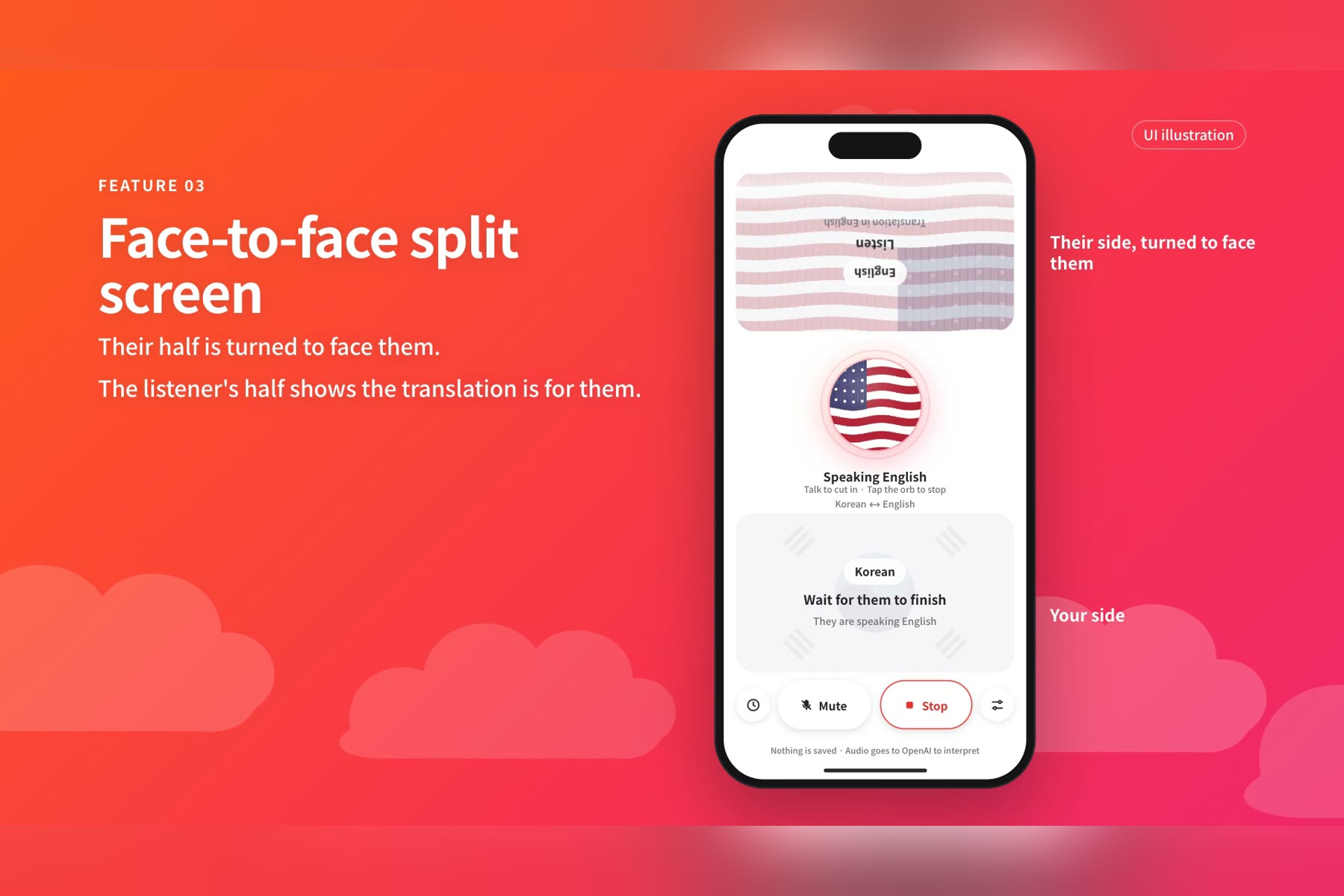
- Face-to-face split screen. The top half faces the other person (rotated 180 degrees), the bottom half faces you.
- An orb that shows what is happening. Ready, listening (it follows the real microphone level), waiting for you to finish, interpreting, and speaking.
- Speaks the interpretation aloud in the other person's language. The engine is built to follow the speaker's tone and pitch; how well that survives is something we are still measuring with real human speech.
- Nothing is saved to disk. Audio is streamed to OpenAI for processing.
How we built it
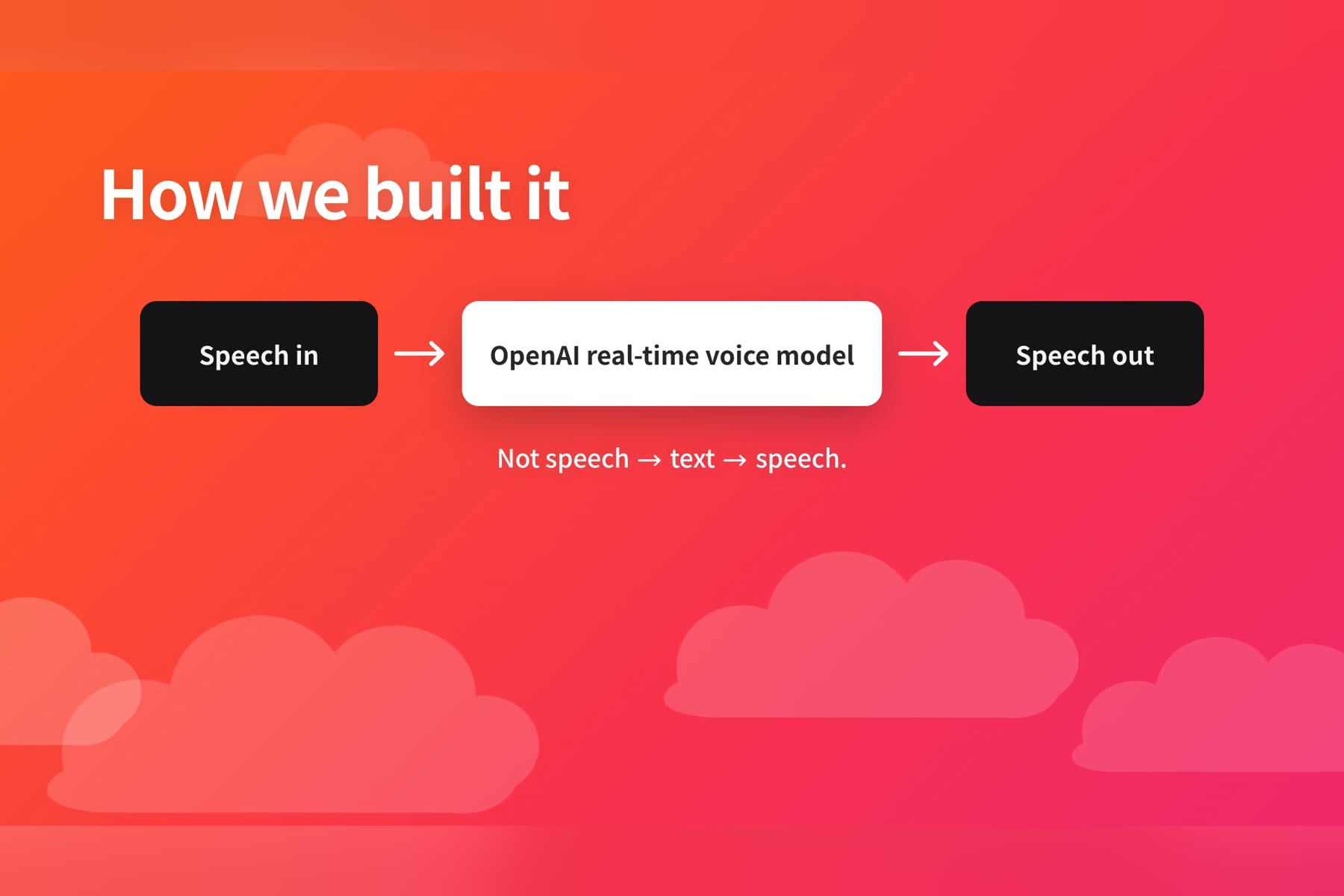
- iOS app in SwiftUI (project generated with xcodegen). Audio goes over WebRTC, which gives us echo cancellation.
- Engine: OpenAI
gpt-live-1, a full-duplex voice model, with fixed interpreter instructions written for the chosen language pair (we tuned them on Korean and English, and tested the other languages in the picker too). If a Live session cannot start, the app falls back togpt-realtime-translatewith two sessions (one per output language) and a local voice detector. - A small Node.js token server on Vercel keeps the OpenAI API key off the phone and hands the app short-lived credentials.
- A custom audio device holds NUA's voice until the speaker has been quiet for a moment, so it does not talk over you. Speaking over NUA cuts it off.
- An eval script with 15 test sentences in both directions: negation, questions, sarcasm, honorifics, casual speech, emphasis, hesitation, and commands that must be interpreted, not obeyed.
Challenges we ran into
- NUA hearing itself. The interpreter re-translated its own voice. We fixed it with echo cancellation, no microphone streaming while it speaks, and ignoring transcripts that match what it just said.
- Dead air. The model pads its output with seconds of silence before and after each translation, so playback now skips the padding.
- Audio routing. WebRTC reset the audio configuration and sent the voice to the earpiece instead of the speaker.
- Knowing when someone is done talking. We hold the interpretation until a short pause instead of cutting people off mid-thought.
What we learned
Tone is the hard part, so we treat tone-following as something to verify with real speakers, not as a guarantee. We also learned how much of a real-time voice app is plumbing: echo, turn-taking, routing, and latency.
What's next
- Test with many more real speakers and measure tone preservation and latency.
- Test each language in the picker with more native speakers.
- Options that keep more of the audio path on the device.
About us
We are Team P.I.C., a Korean-community club for people who take on challenges. This hackathon was our next challenge.


