Our inspiration was basically safety. There are many problems and flaws in machines all around the world; however, the one that matters most is the flaw that affects humans. That flaw, in this scenario, is human error. 80% of plane crashes in the US have been attributed to human error, and 15% of those crashes have been associated with fatigue or drowsiness. And 300+ Aviation accidents occurring in the U.S. that have been associated with fatigue since 1982.
People fall asleep behind the wheel, in cars, planes, trucks, and so many other places, even students who might be studying, so we wanted to create a system with a consistent pipeline that can help save lives and time in critical moments. Even though this project is targeted toward pilots, this solution can be pushed full-scale toward so many different areas.
IVISYX is a split-definition name: “I” meaning the literal “I” as a pronoun, and “VISYX” referring to vision, which regards seeing. Together, they make the whole name “IVISYX,” which means “I see.”
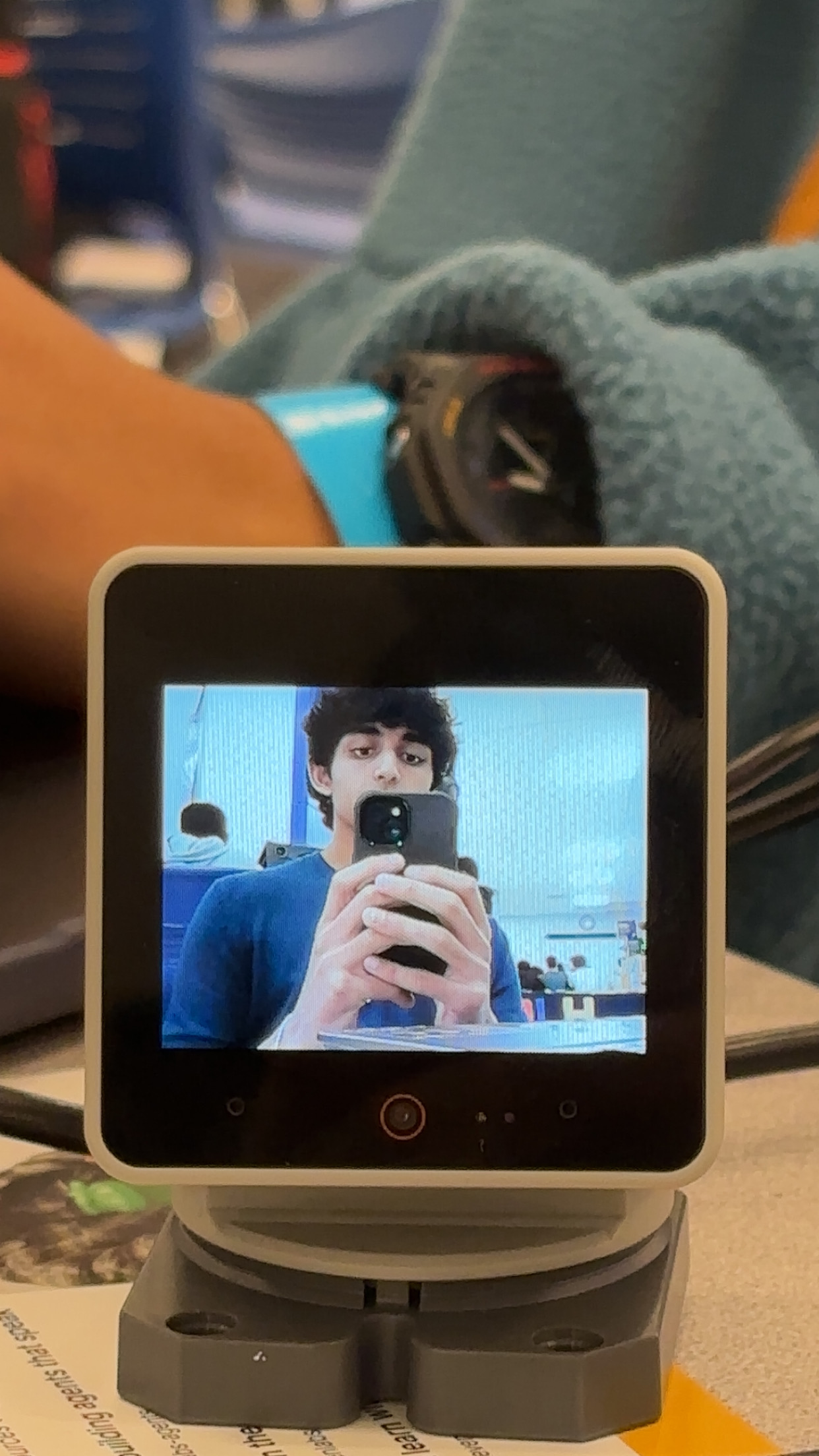
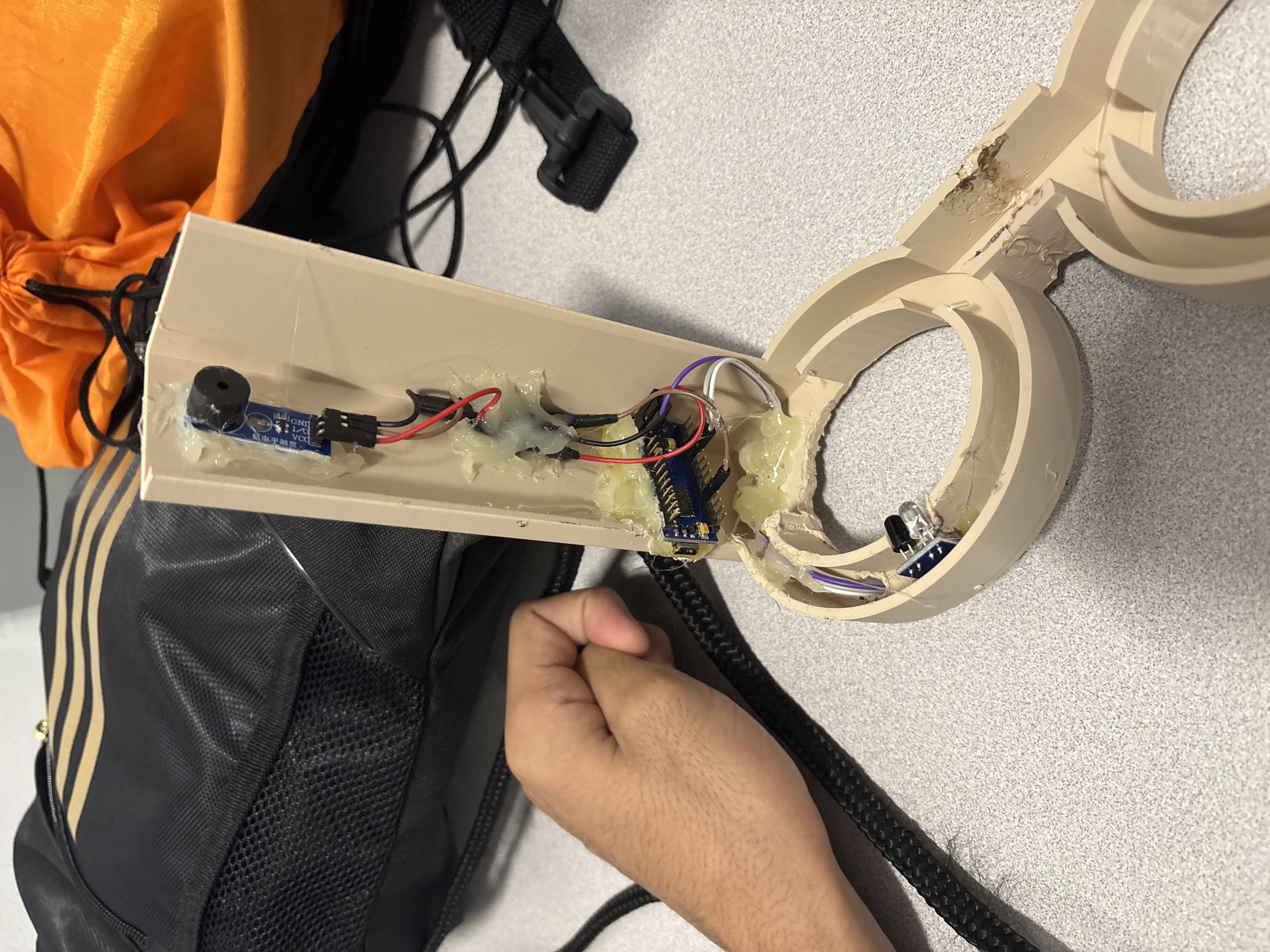
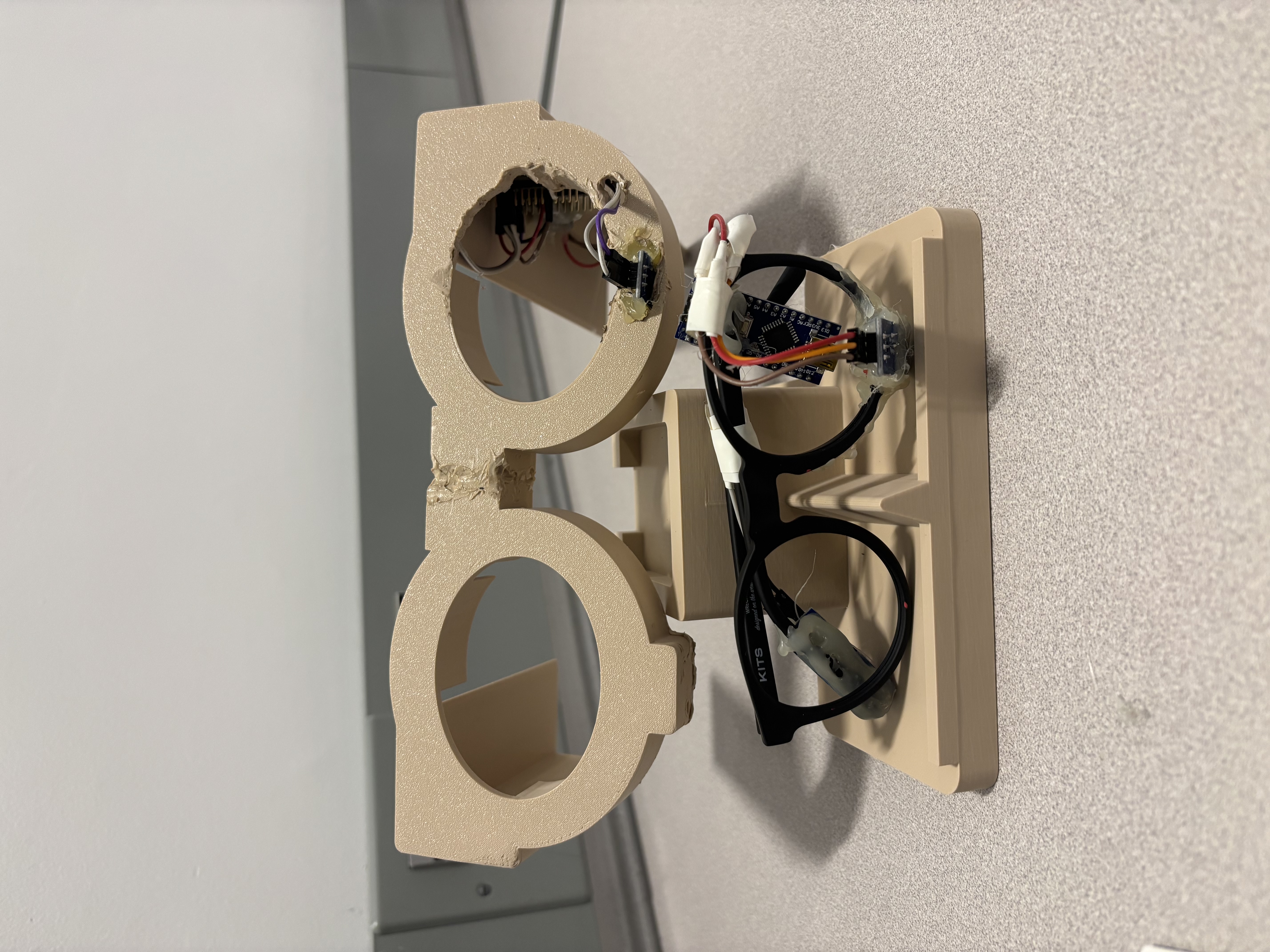
IVISYX is a pipeline. We started off with a StackChan, which will literally scan your entire face for facial cues of drowsiness, and if it detects any, it will ask you, using its built-in speaker, if you are okay. Since it’s coded to refer to IVISYX, it will check in pretty frequently, and if the pilot tells it that he/she is getting drowsy, then it will tell the pilot to put on the IVISYX glasses. The IVISYX glasses use three simple components: a buzzer, a (two-piece) emitter-and-receiver IR sensor, and an Arduino Nano. They point at the eye and detect your blinking patterns, and if or as the blinking gets slower, the glasses will ring the buzzer, which is attached to the temple of the glasses right behind the ear, to wake the user up.
We built it by starting off with a bunch of modules and using CAD to model and a 3D printer to print our 3D-printed parts. We used wires to connect the modules together while using hot glue and electrical tape to put the components together. Thats when we finished the life-sized (realistic) version of the glasses. Around nighttime, we were able to solder the 3D-printed parts together to make the concealed, huge presentation version of the glasses.
Some challenges we ran into during the building and programming process were that we needed an assembly method that looked clean and professional, and that we had to code the buzzer intervals. During the design process, mounting everything onto a clear, presentable platform was a tough choice, especially when trying to conceal bright, blinking hardware, so we ended up making a tradeoff: we exposed some material such as wires for more light and distraction concealment. Another thing we constantly tried to fix was the buzzer frequency. Getting the buzzer to a tolerable tune through the Arduino and making its beeping repetition gradually increase while implementing the IR sensor was very hard, especially since it was a passive buzzer. However, through a bunch of trial and error and with the help of AI assistance, we were able to make the code fully feasible for the final product.
Something that we’re proud of is efficiency. In the time from the beginning to the end of the hackathon, we were able to split all of our work among our group of four, and the group successfully made a website, a slideshow, a prop-up presentation, and both the concealed and life-sized products. We are especially proud of our task management: using a systematic task cycle to distribute work, using engineering distribution, and declaring our wants, needs, and additional subsystems.
We were able to learn how to vibe code and implement different systems into a developed idea, for example, integrating ElevenLabs as an auditory system for the final product. We also learned how to integrate different styles of mechanics, as some members learned how to solder, too.
As for IVISYX’s potential, not only can this project be scaled from pilots to the trucking industry, cars, shift workers, medical care workers, and even students cramming late at night, but IVISYX can also be mass-produced to potentially save millions of lives every year. Around $836 billion, which is almost $1 trillion, is lost in vehicle crashes alone. The potential for IVISYX to scale across a plethora of fields could be lifesaving for millions, if not hundreds of millions, of people in the future.



Log in or sign up for Devpost to join the conversation.