-
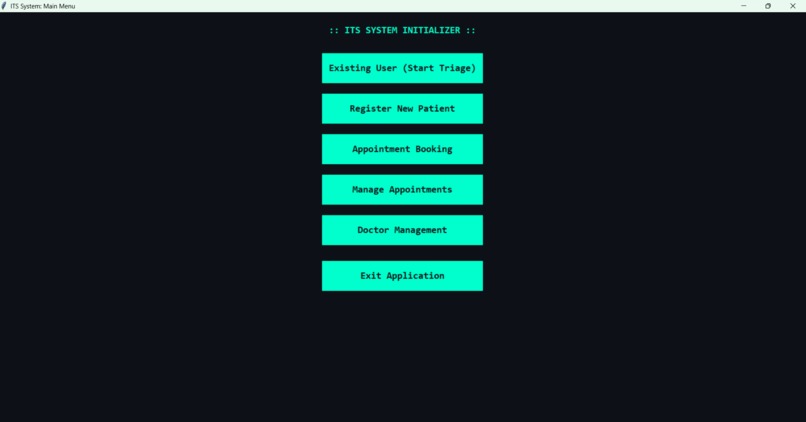
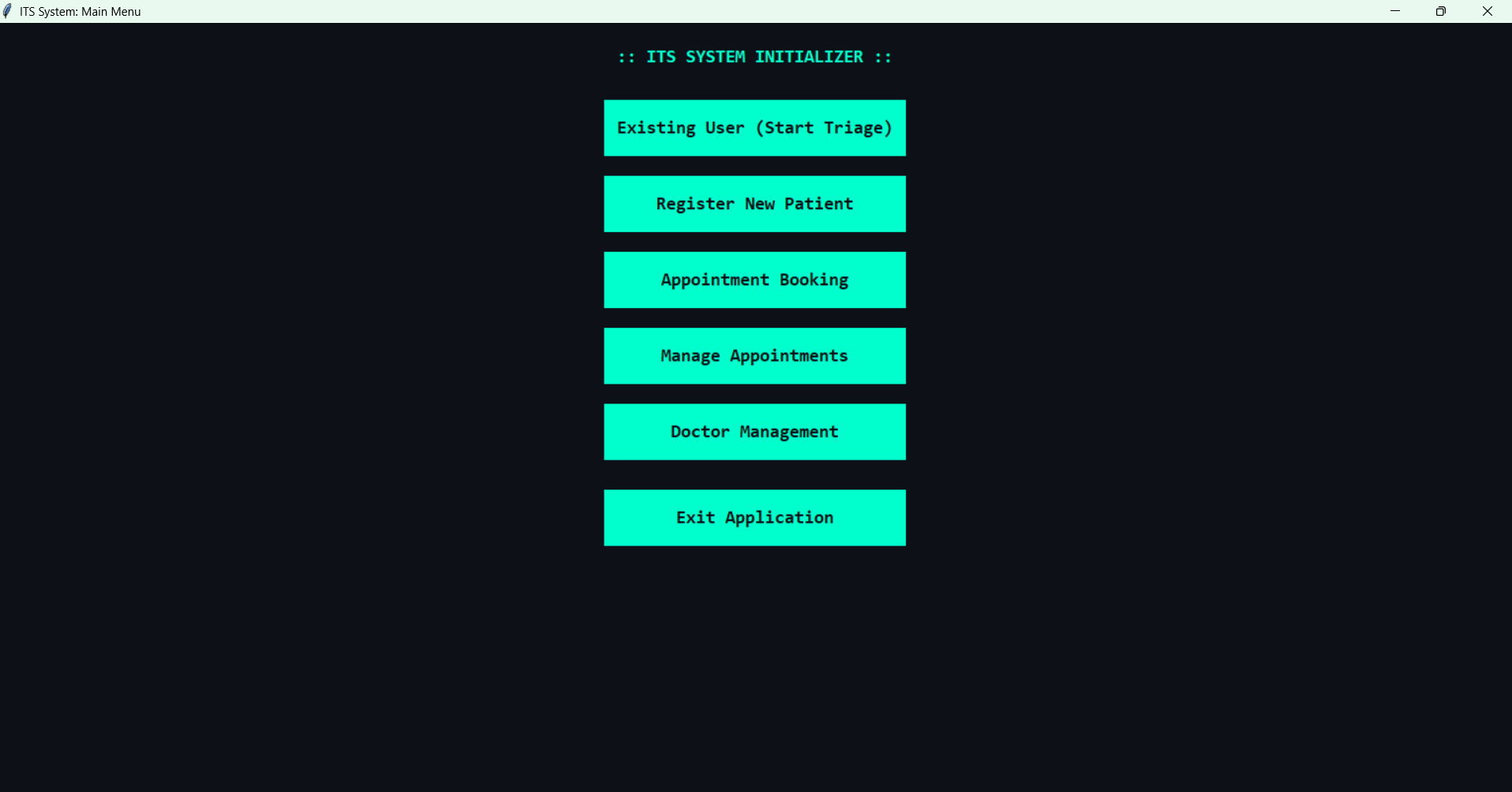
the home page view
-
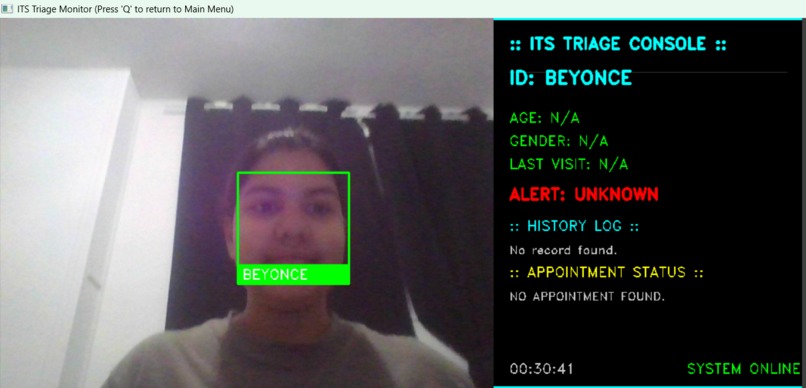
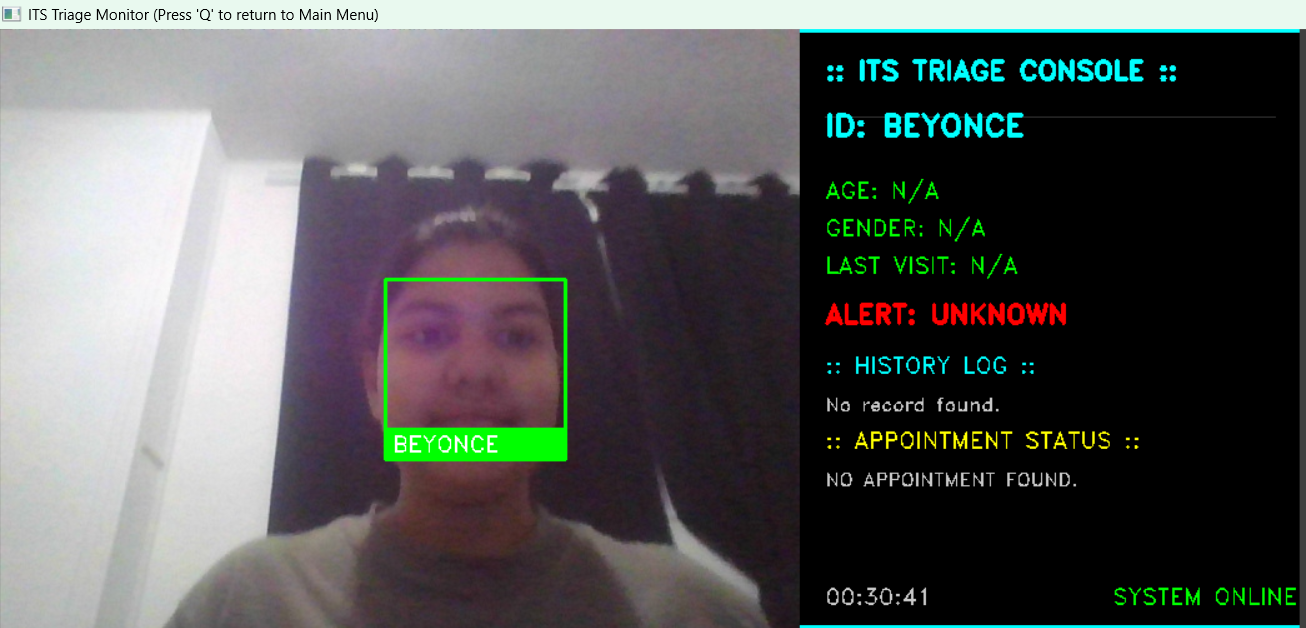
how it recognises registered patient
-
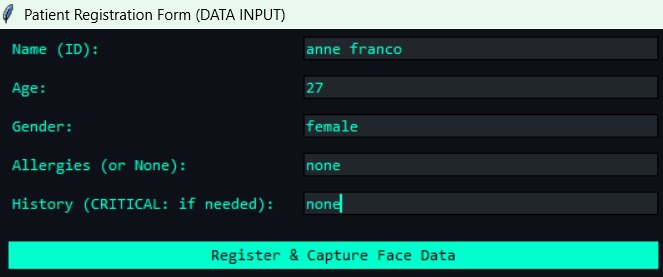
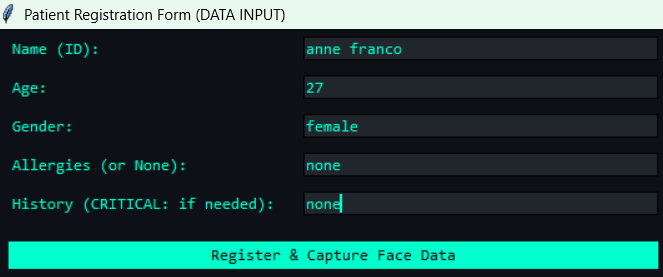
new registration form (part 1)
-
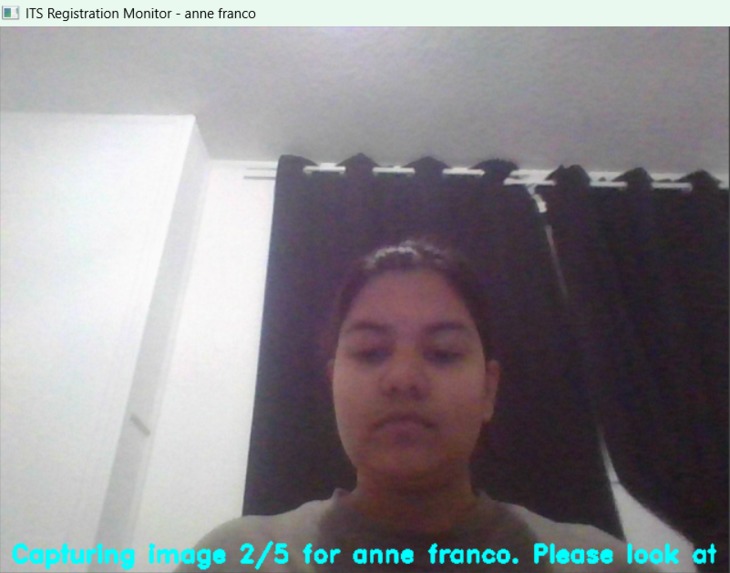
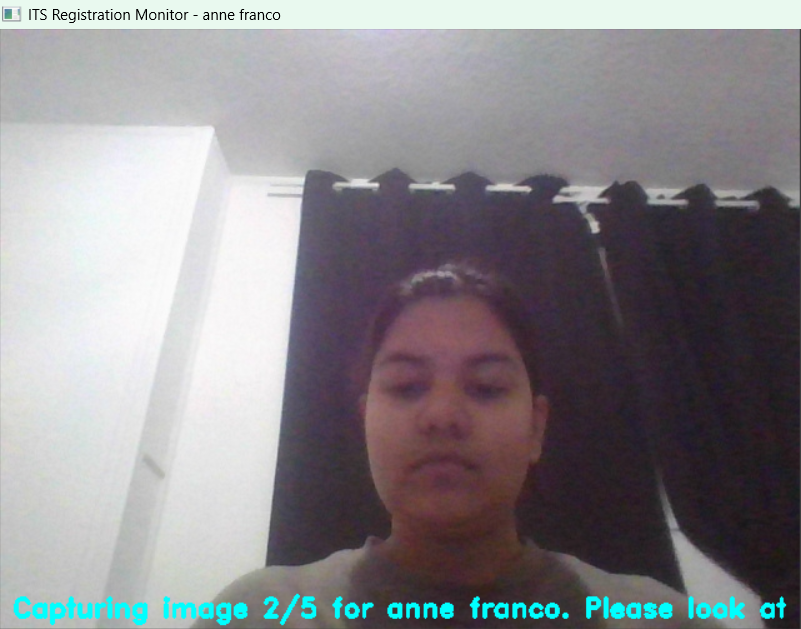
new registration form next step of capturing face (part2)
-
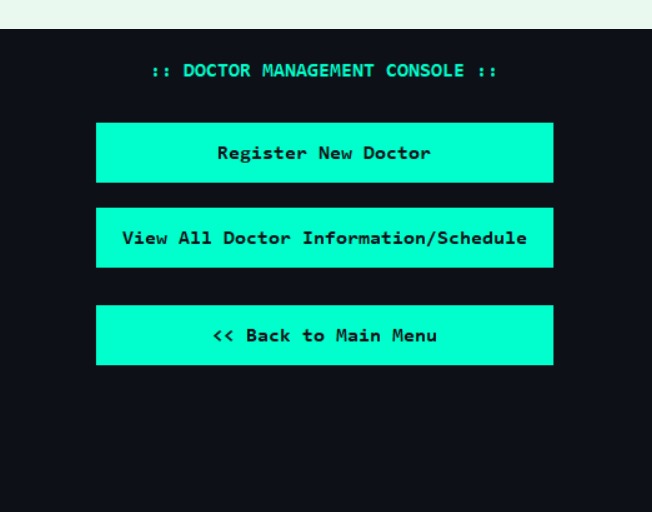
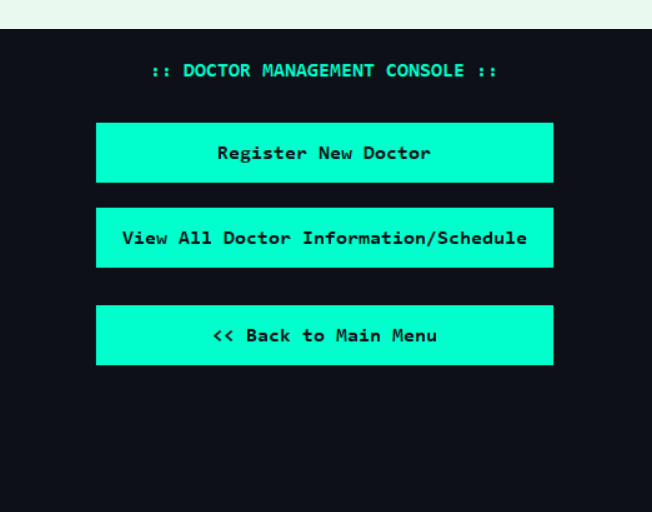
doctor management froms
-
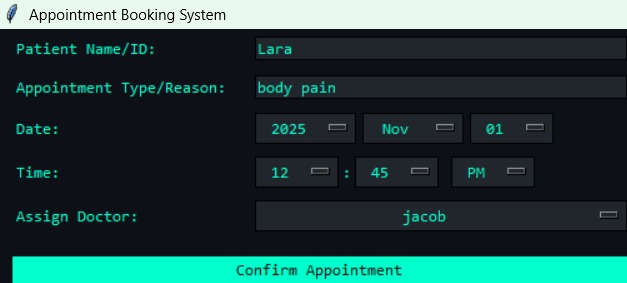
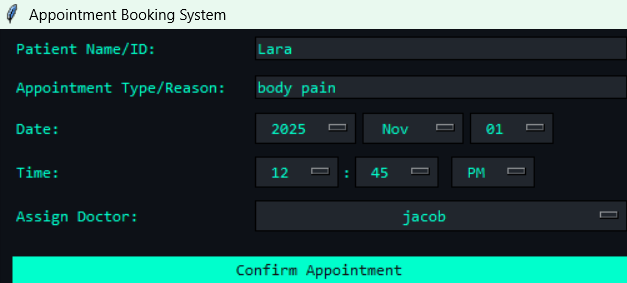
appointment booking form
-
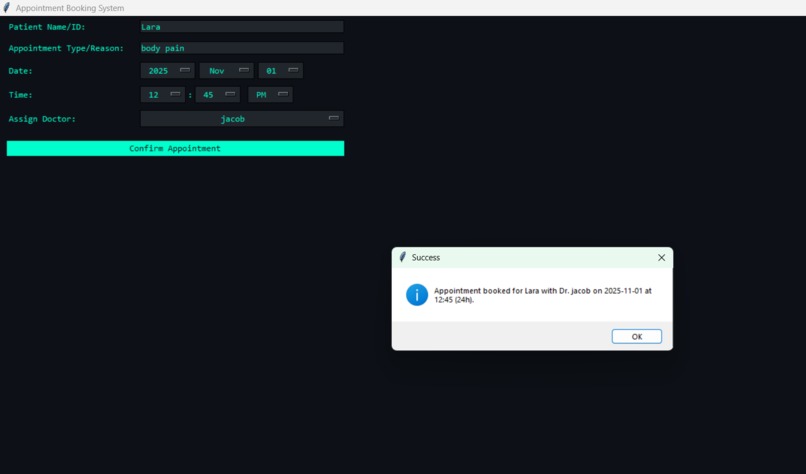
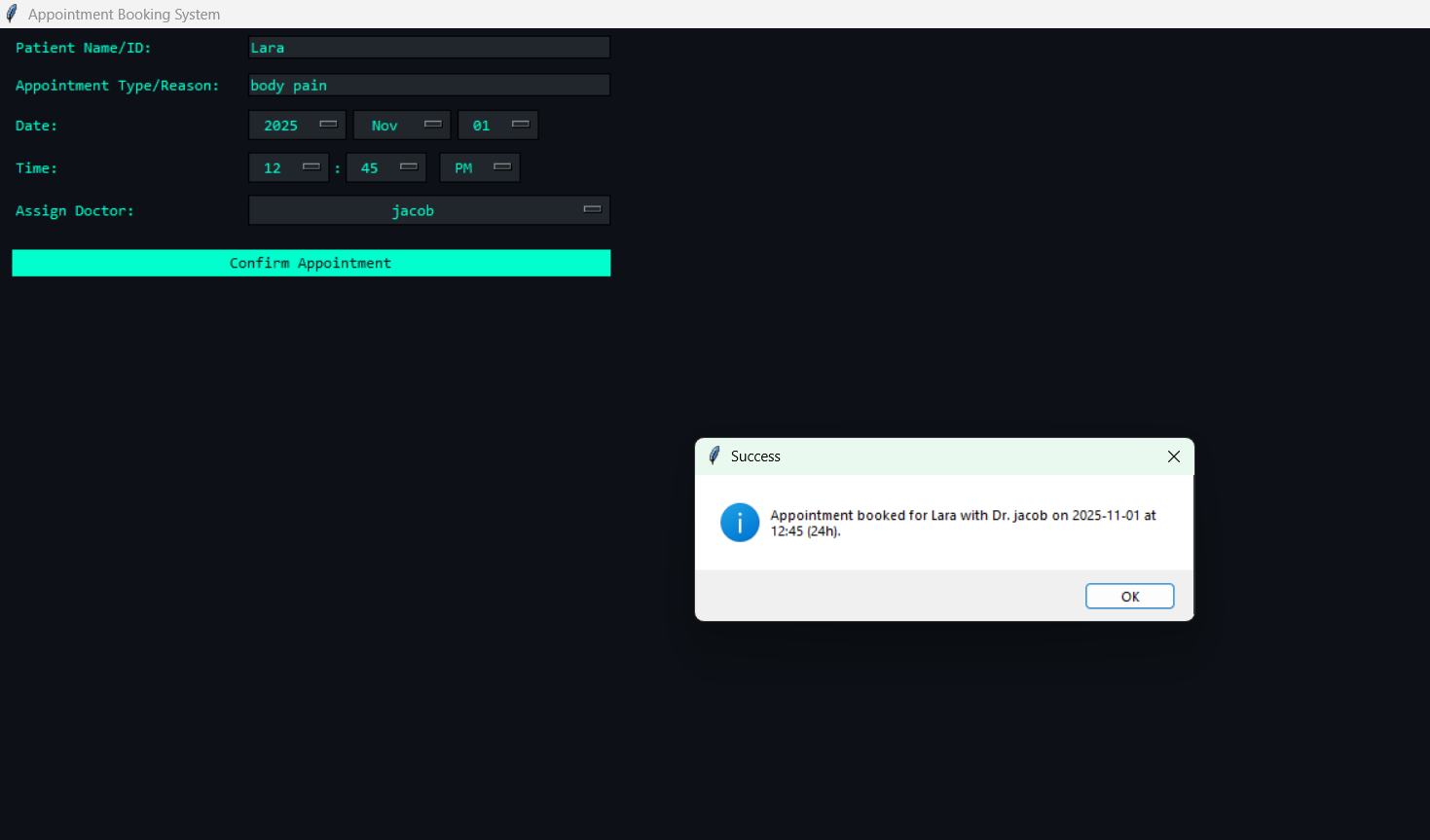
confirmation
-
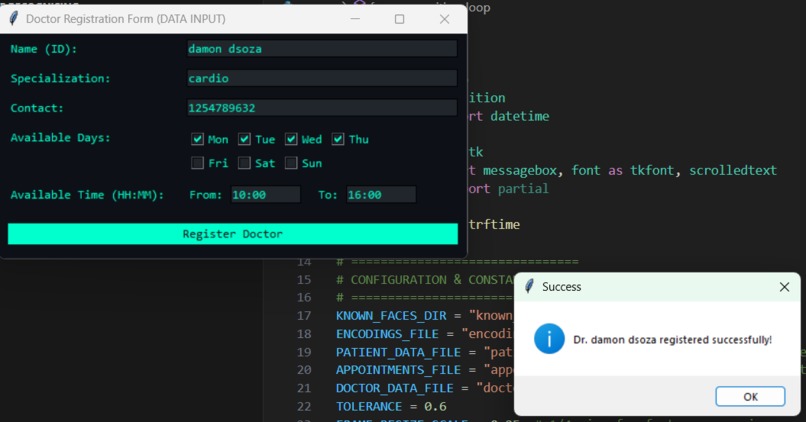
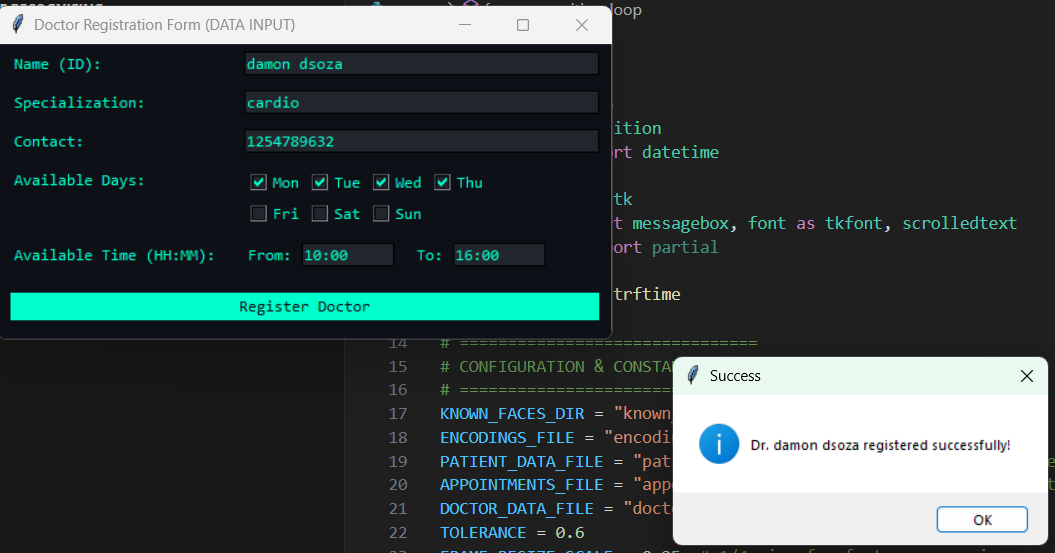
confirmation of registration
-
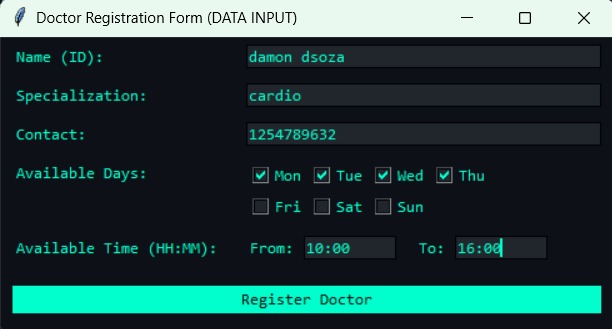
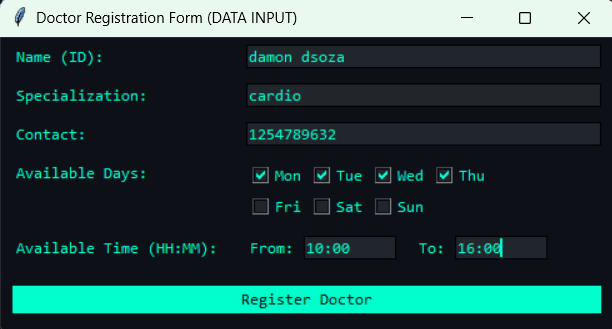
registration of a new doctor
-
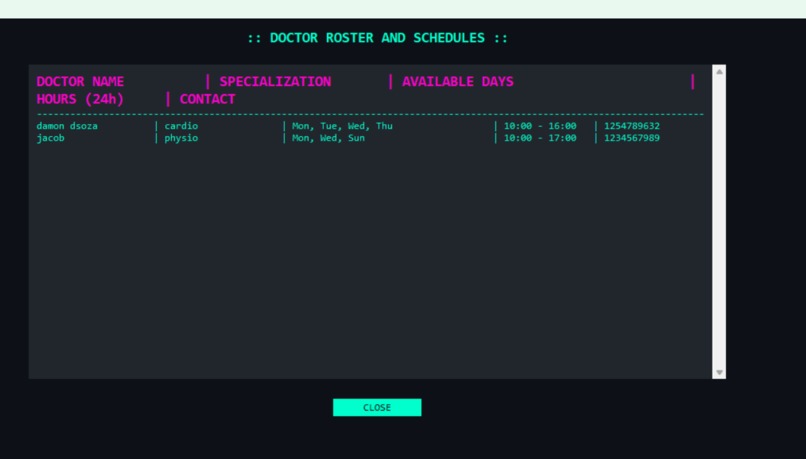
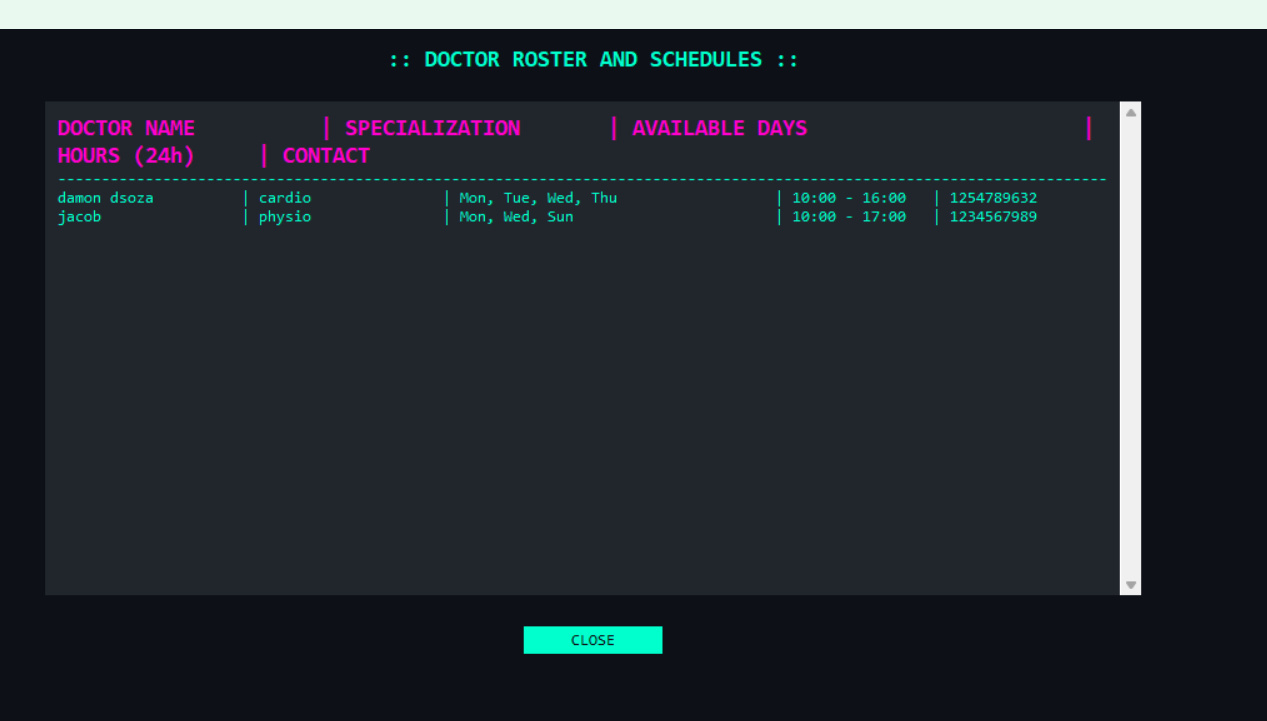
view of doctors schedule
-
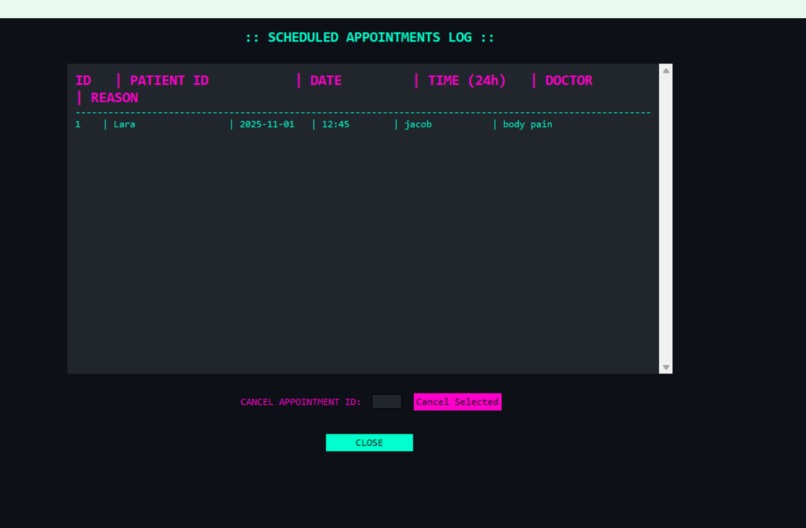
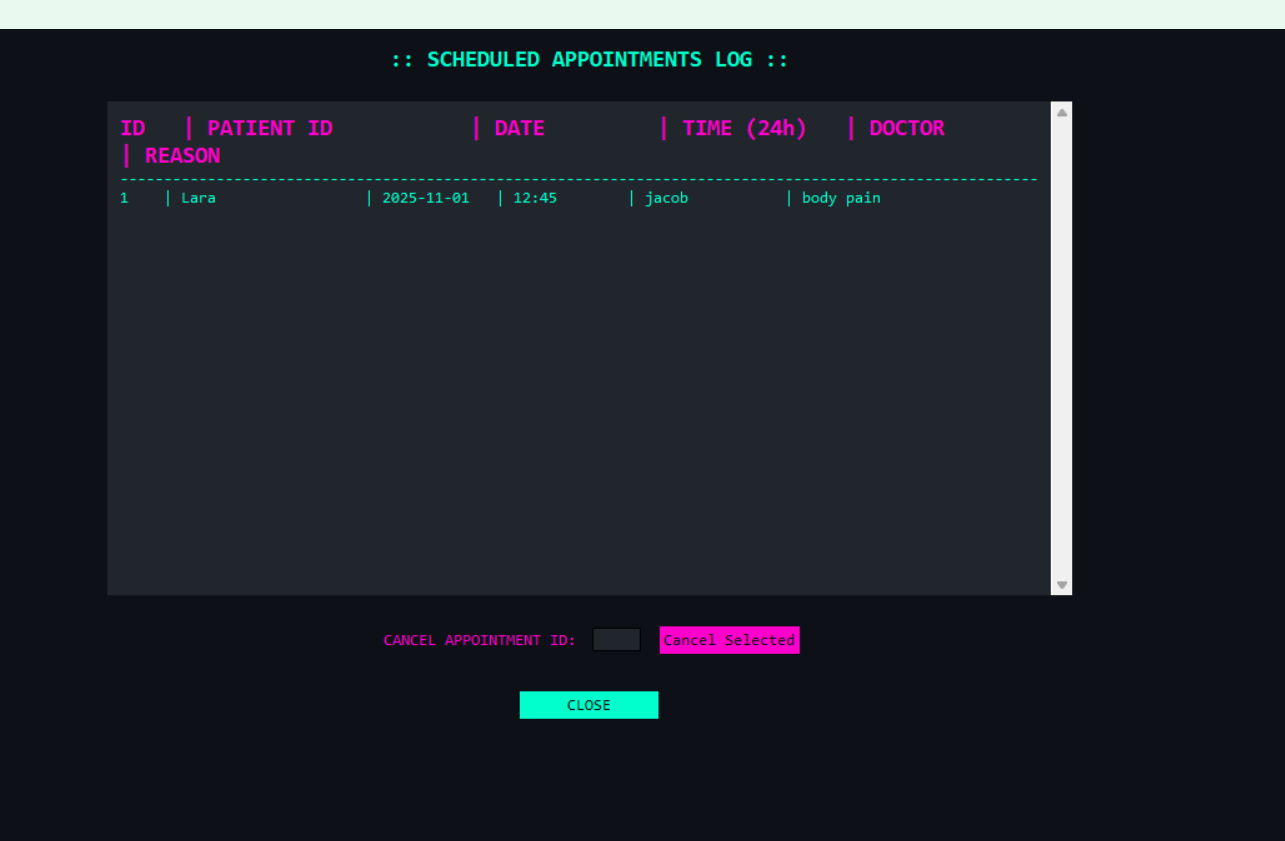
view appointments
This is the perfect structure for a project submission, like a hackathon entry or a technical portfolio showcase.
Based on the capabilities and the underlying code (Python, OpenCV, face_recognition, Tkinter) we've developed, here is the full narrative for ITS-Core.
ITS-Core: Intelligent Triage System Core
Inspiration We were inspired by a single, critical realization: The most valuable seconds in healthcare are wasted at the front desk. Long queues, manual data entry, and slow identification delay life-saving care and create a high-stress environment for both patients and staff. Our goal was to eliminate this friction point entirely. We asked: What if the patient's identity and critical data could be accessed instantly, with 100% accuracy, the moment they walk through the door? This led us to fuse robust biometric authentication with a streamlined, professional data visualization to create a truly intelligent medical entry point.
What it does ITS-Core is an AI-powered biometric triage and patient management platform.
Instant Patient Identification: Uses a live camera feed and face recognition to instantly identify returning patients with a high degree of confidence.
Real-Time Data Triage: Upon recognition, it immediately surfaces a custom data panel displaying:
Patient ID, age, gender.
Critical Allergies and Medical History (flagged with high-contrast alerts).
Current Appointments (with assigned doctor and reason).
Time of last visit.
Roster Management: Includes full Tkinter-based GUI modules for registering new patients, managing appointments, and maintaining a professional doctor roster with segmented schedules.
User Experience: For new users, it provides an intuitive, timed countdown and on-screen instructions during the face capture process to ensure high-quality enrollment data.
- How we built it ITS-Core is built as a monolithic, high-performance Python application:
Core Technology: We leverage the face_recognition library (built on dlib) to process facial encodings, and OpenCV (cv2) for real-time video streaming, face detection, and rendering the cyberpunk-style data panel.
Data Persistence: Patient records, appointments, and doctor schedules are stored securely and locally using JSON and Pickle (.json, .pkl) files for fast retrieval and persistence across sessions.
User Interface: We used Tkinter to build robust, secure, and separate GUI forms for data input (Registration, Appointment Booking, Doctor Management), keeping the live CV2 feed focused exclusively on the triage task.
Aesthetic: The visual design uses a fixed-width, "Professional/Cyberpunk" color scheme, ensuring critical alerts and information pop out instantly against the deep institutional blue background.
- Challenges we ran into Live Data Synchronization: The biggest challenge was maintaining the smooth, high-frame-rate CV2 feed while simultaneously performing data-intensive tasks like face recognition (which is computationally heavy) and fetching JSON data. We mitigated this by processing the video feed at a reduced resolution and implementing a recognition interval to only perform the costly face comparison every few frames.
Cross-Tool Coordination: Integrating the Tkinter GUI forms (which run in the main thread) with the OpenCV video loop (which blocks the thread) required careful sequencing and management (root.destroy() followed by the CV2 loop) to ensure one process fully terminates before the next begins.
Doctor Roster Formatting: Debugging the doctor schedule view required iterative adjustments to the fixed-width text formatting in Tkinter to prevent column overflow and ensure the multi-day availability fields were fully visible and aligned.
- Accomplishments that we're proud of Sub-Second Triage Time: We successfully achieved the goal of identifying a known patient and displaying their complete record in under one second.
Robust Registration UX: Implementing the 3-second countdown and instructional overlay during new user enrollment—a feature requested by a user—dramatically improves the quality and consistency of the captured face data.
Modular Architecture: The clear separation of data handling, biometric processing, and GUI forms makes ITS-Core highly maintainable and ready for future feature expansion.
What we learned We gained deep insights into the practical limitations of single-threaded Python applications for real-time systems. We learned that intelligent trade-offs (like downscaling frames and skipping recognition cycles) are essential to maintain a responsive user experience. Crucially, we learned that in medical applications, the presentation of data—especially critical alerts—is just as important as the data itself, leading us to prioritize high-contrast, professional alerting.
What's next for ITS-Core The future of ITS-Core involves shifting from a local application to a scalable network solution:
Database Migration: Moving all JSON files to a secure, networked SQL/NoSQL database for multi-station access and HIPAA compliance.
Asynchronous Processing: Implementing threading or parallel processing to decouple the CV2 feed from the recognition logic, allowing for continuous, 60fps recognition.
Advanced Scheduling: Adding a feature to check for doctor-patient schedule conflicts and highlight the next available slot directly on the triage screen.
Remote Monitoring: Developing a secure web dashboard for administrators to view real-time patient flow and doctor statuses across the entire facility.

Log in or sign up for Devpost to join the conversation.