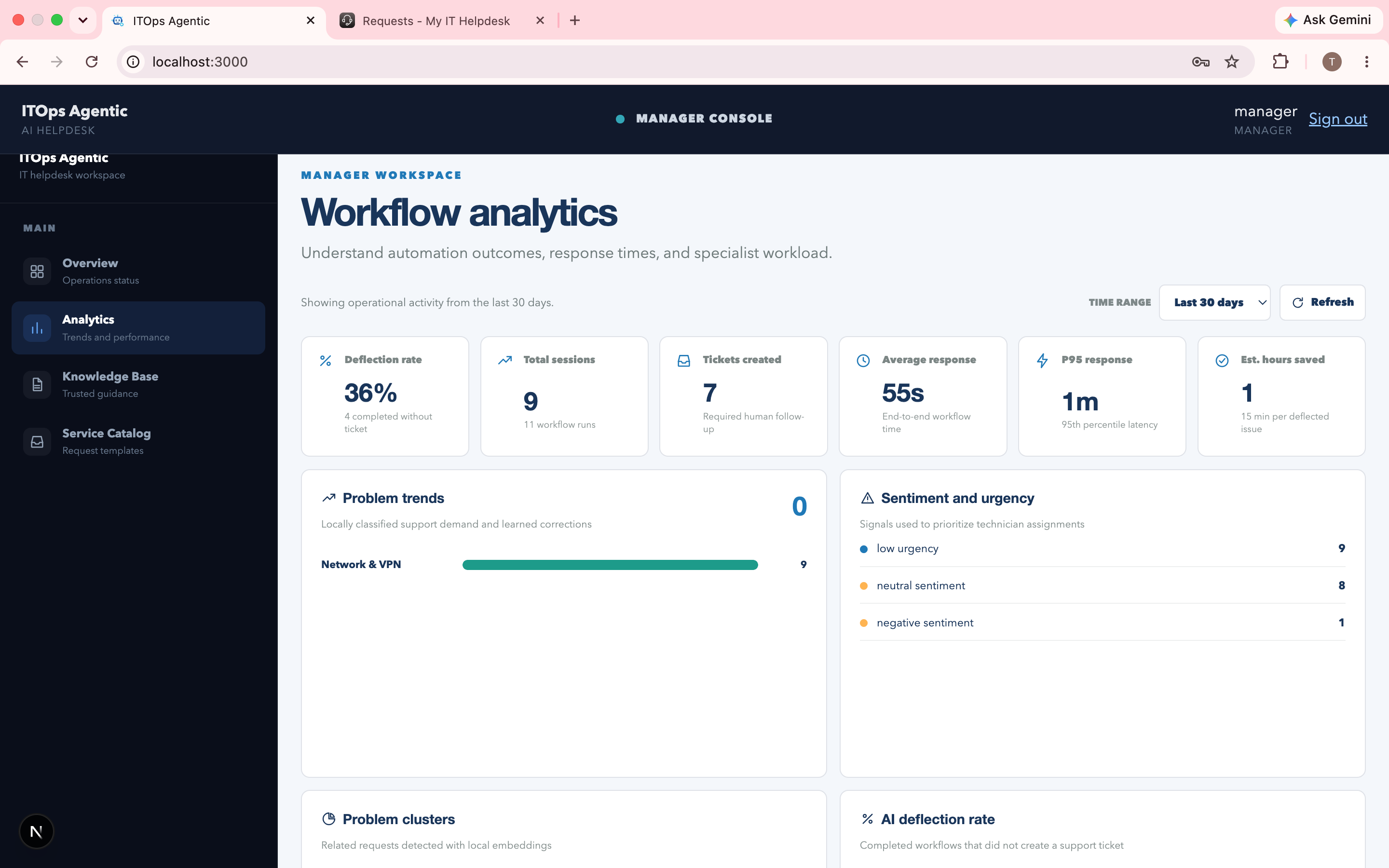
ITOps Agentic Inspiration Enterprise IT teams lose hours to repetitive support work — password resets, VPN issues, access requests, incident triage. ITSM platforms streamline ticketing, but engineers still bounce between chat, SOPs, scripts, and the ticketing system to resolve one issue. Having worked in enterprise healthcare IT, I saw skilled engineers burn time on this switching instead of on real problems — so I set out to build an AI agent team that could safely do the work itself, without handing a model the keys to production systems.
What it does ITOps Agentic is an approval-driven AI operations team powered by GPT-5.6 (Sol as supervisor, Terra as specialists), built with Codex as engineering collaborator.
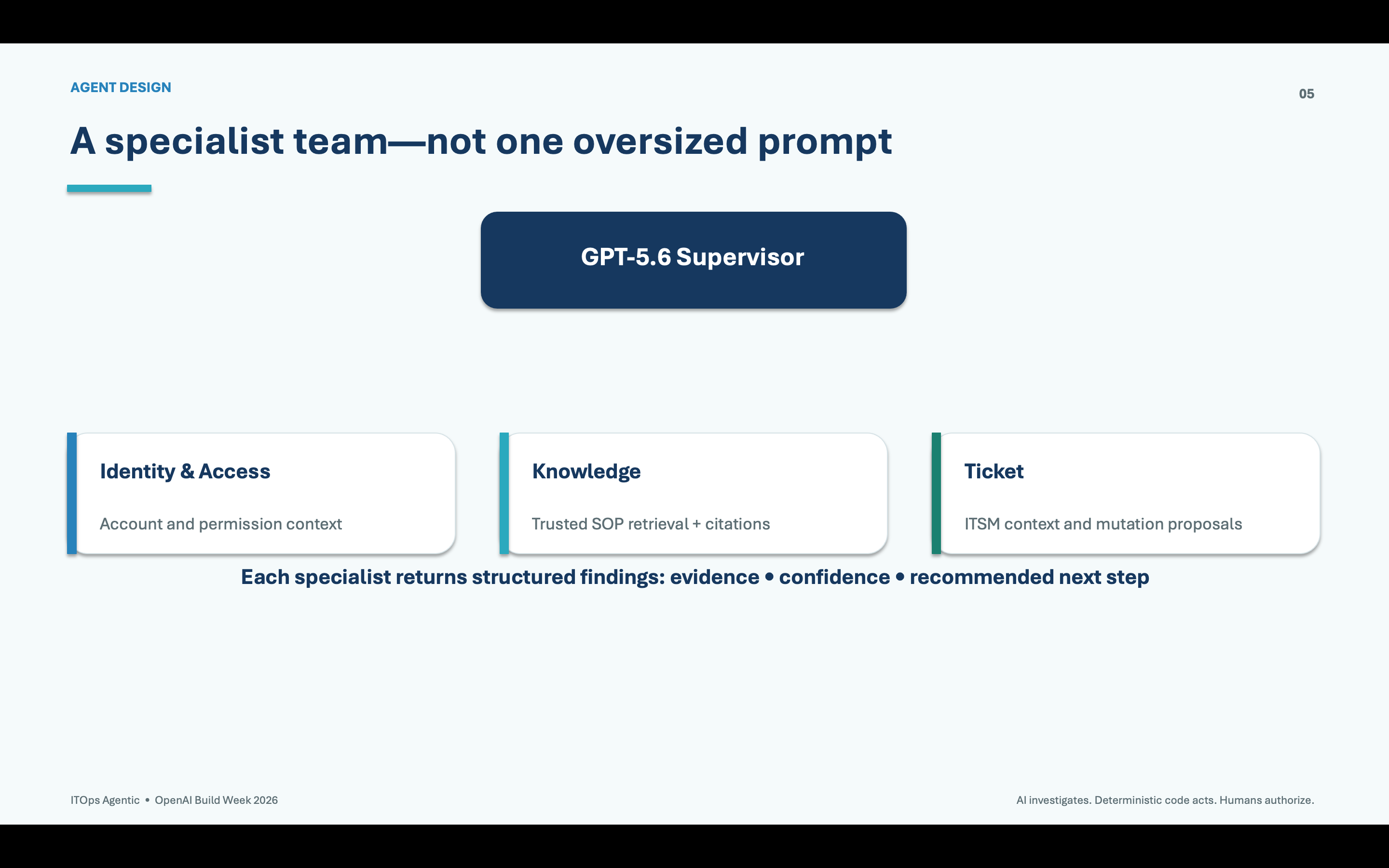
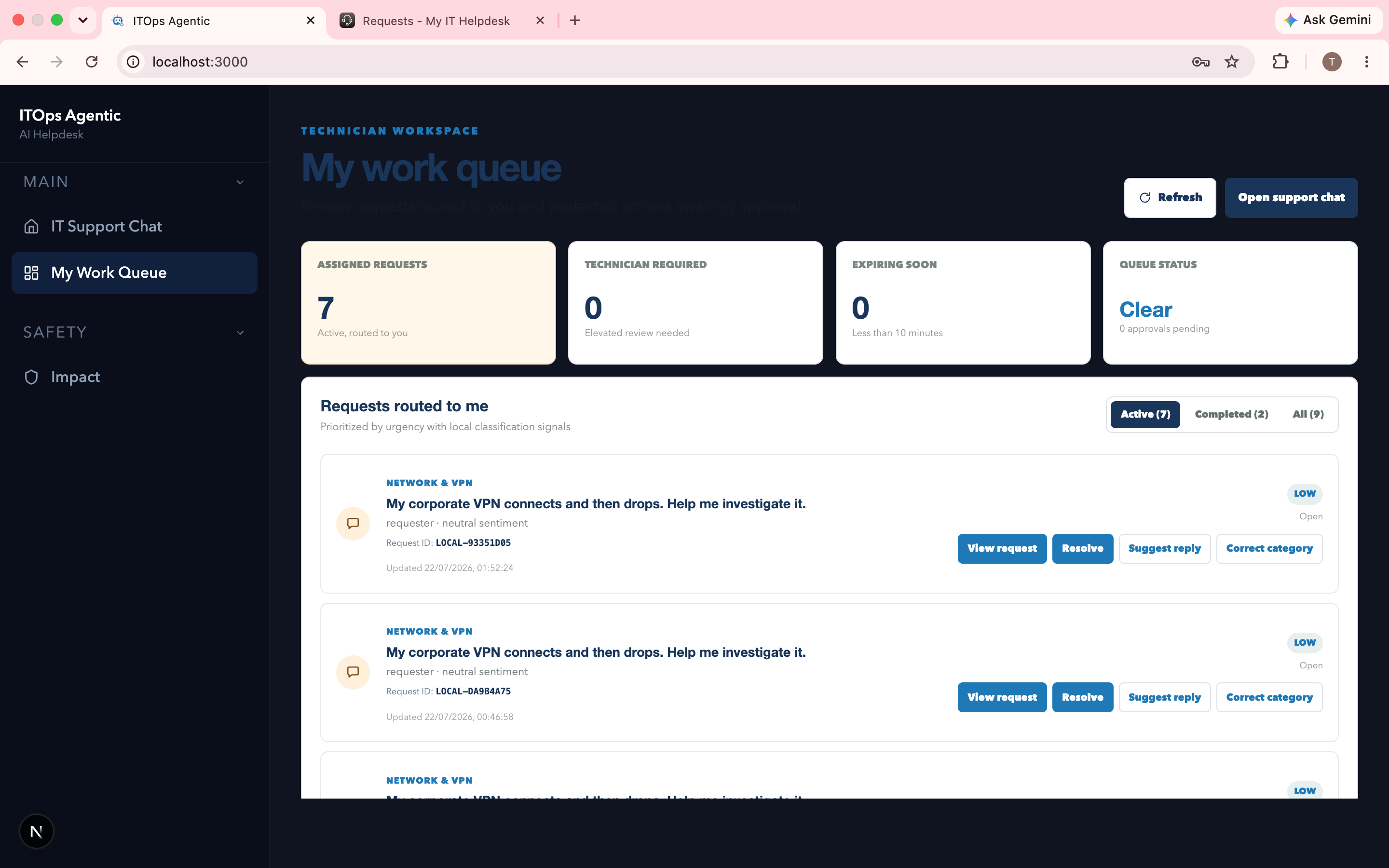
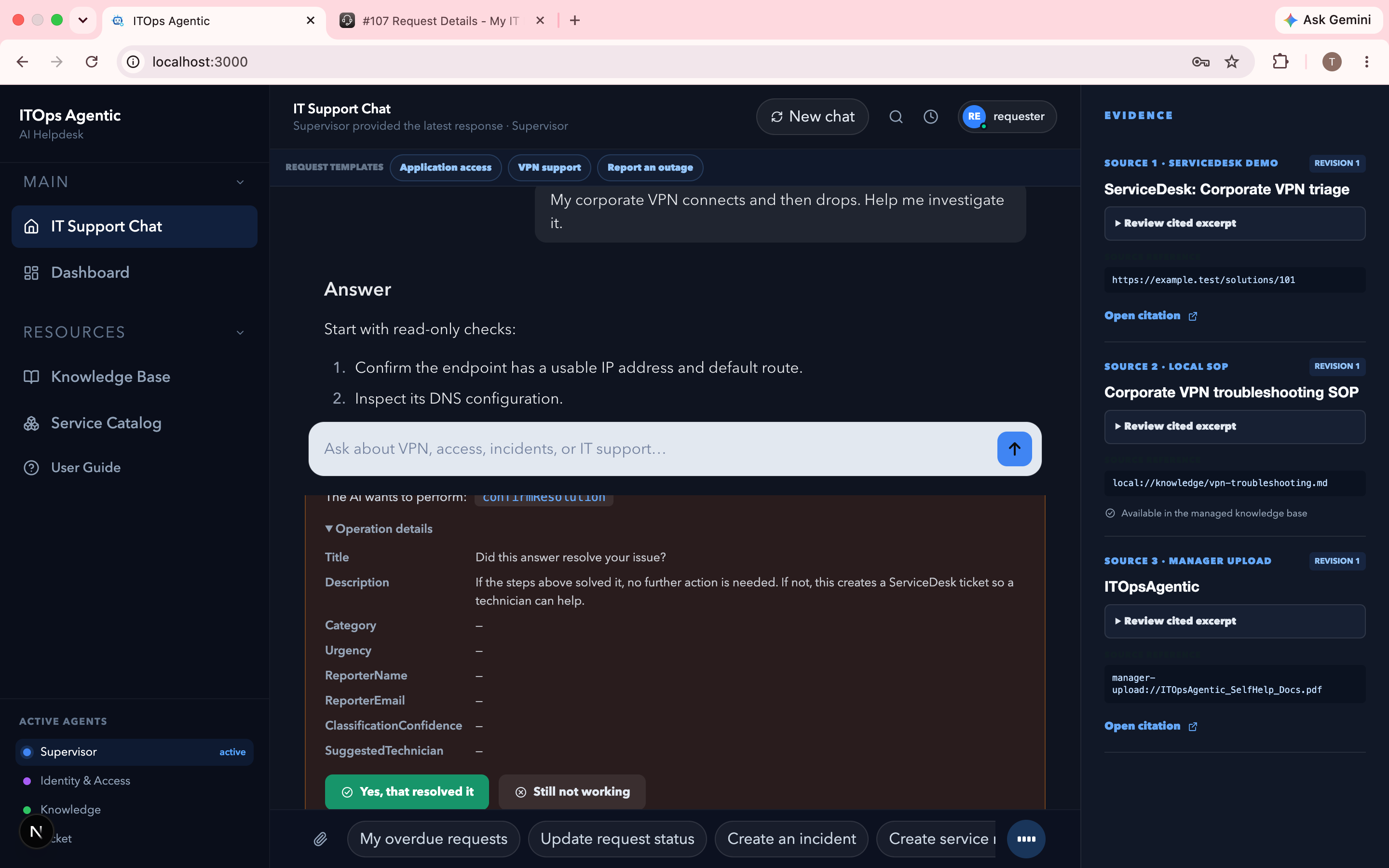
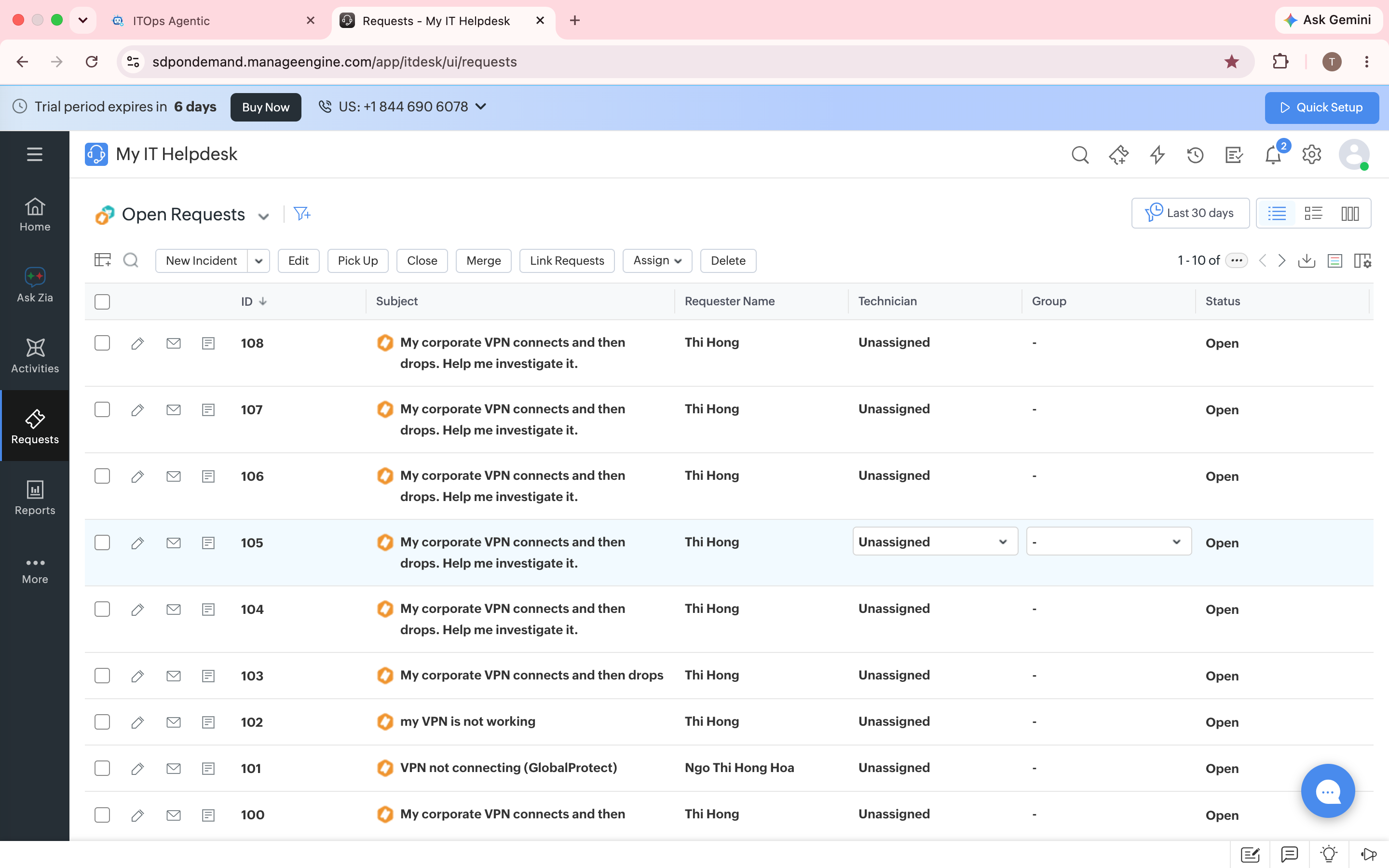
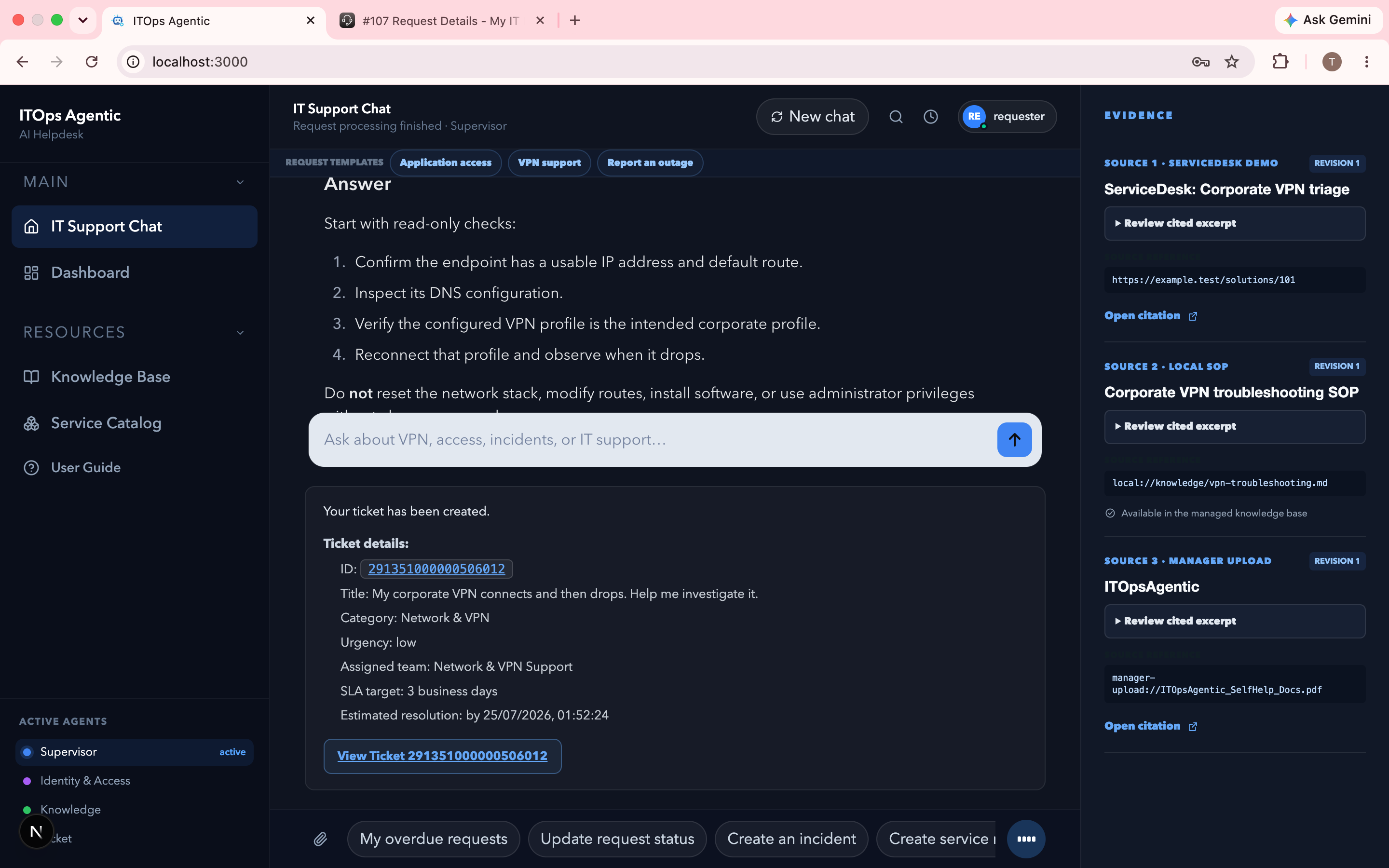
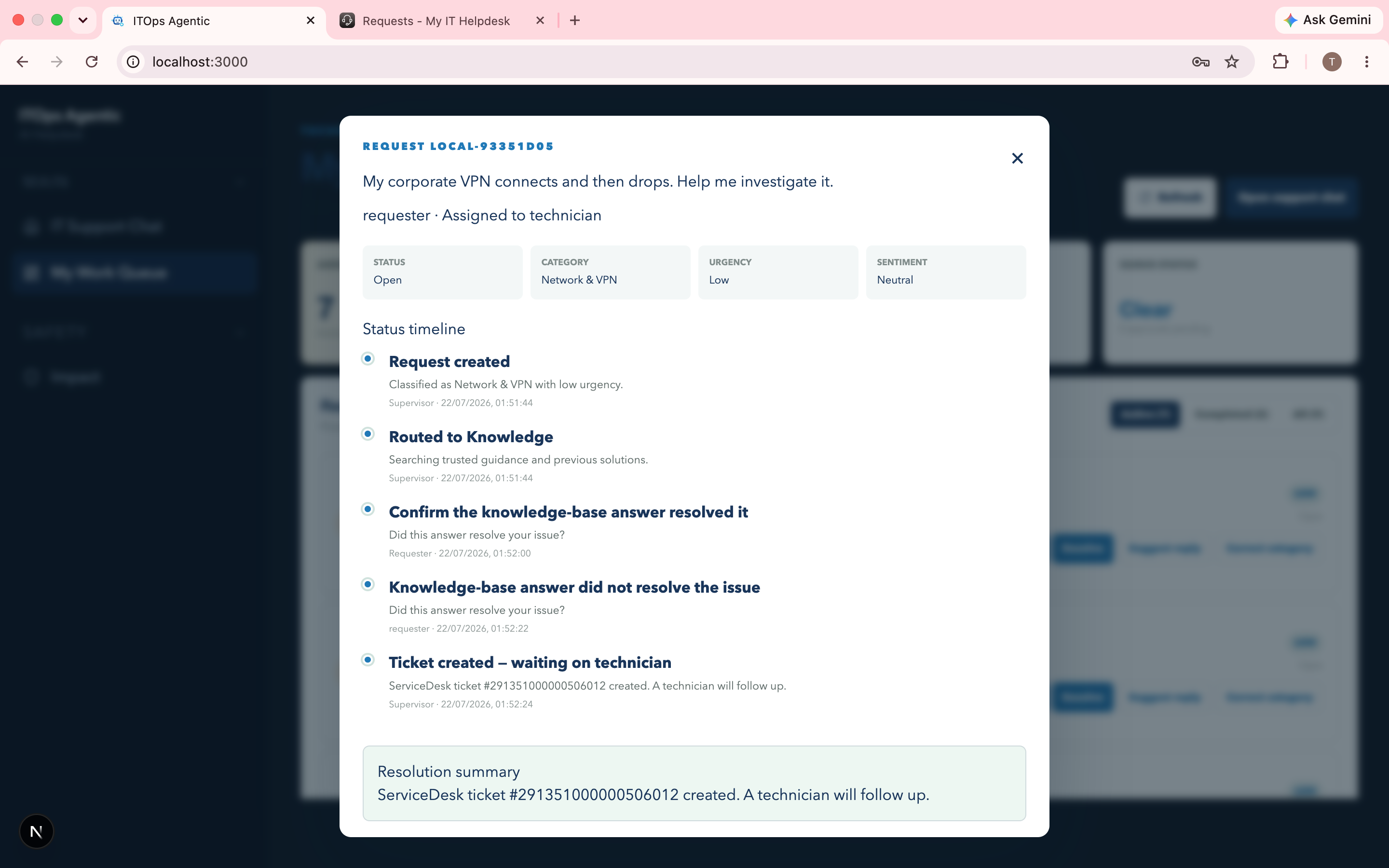
A requester describes a problem in one conversation. Sol delegates to three specialists — Identity & Access, Knowledge (cited SOP/ServiceDesk answers), and Ticket, all read-only. If the issue isn't resolved, a ServiceDesk ticket is proposed, never written directly; a technician picks it up with full context already attached.
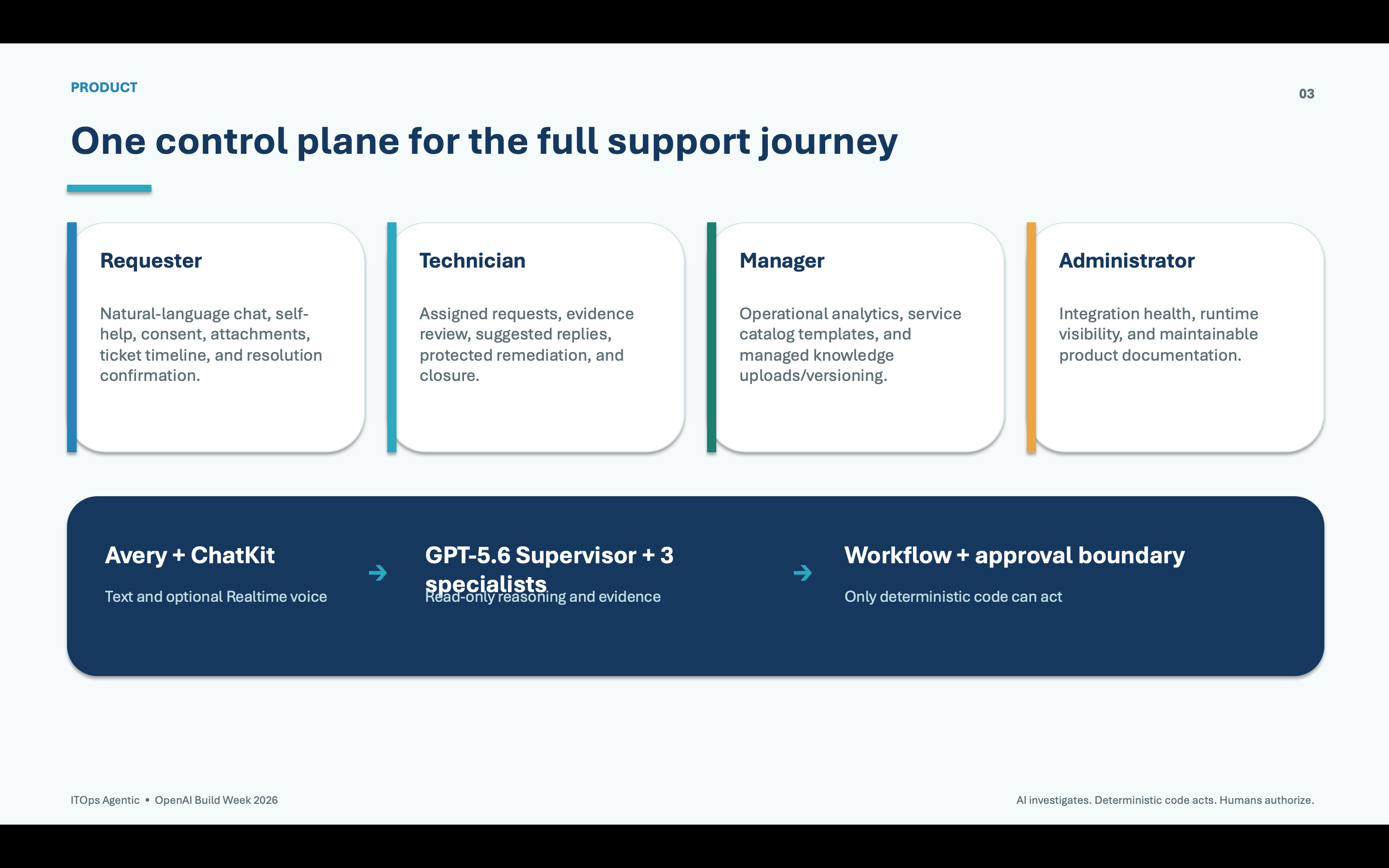
The core constraint, enforced in code: the agent framework reasons, deterministic code acts. No agent output can execute a command or write to ServiceDesk on its own , every action passes through a WorkflowEngine gated by an explicit approval and role check, and diagnostics run only through a fixed, no-shell command catalog.
How I built it GPT-5.6 Sol supervises and routes; GPT-5.6 Terra powers the three specialists. Codex built the FastAPI/Next.js/Agents SDK architecture, ChatKit integration, Realtime voice experience, the ExecutionPlan safety boundary, and the test suite. WorkflowEngine is the only component that can create an approval, execute one, or write to ServiceDesk.
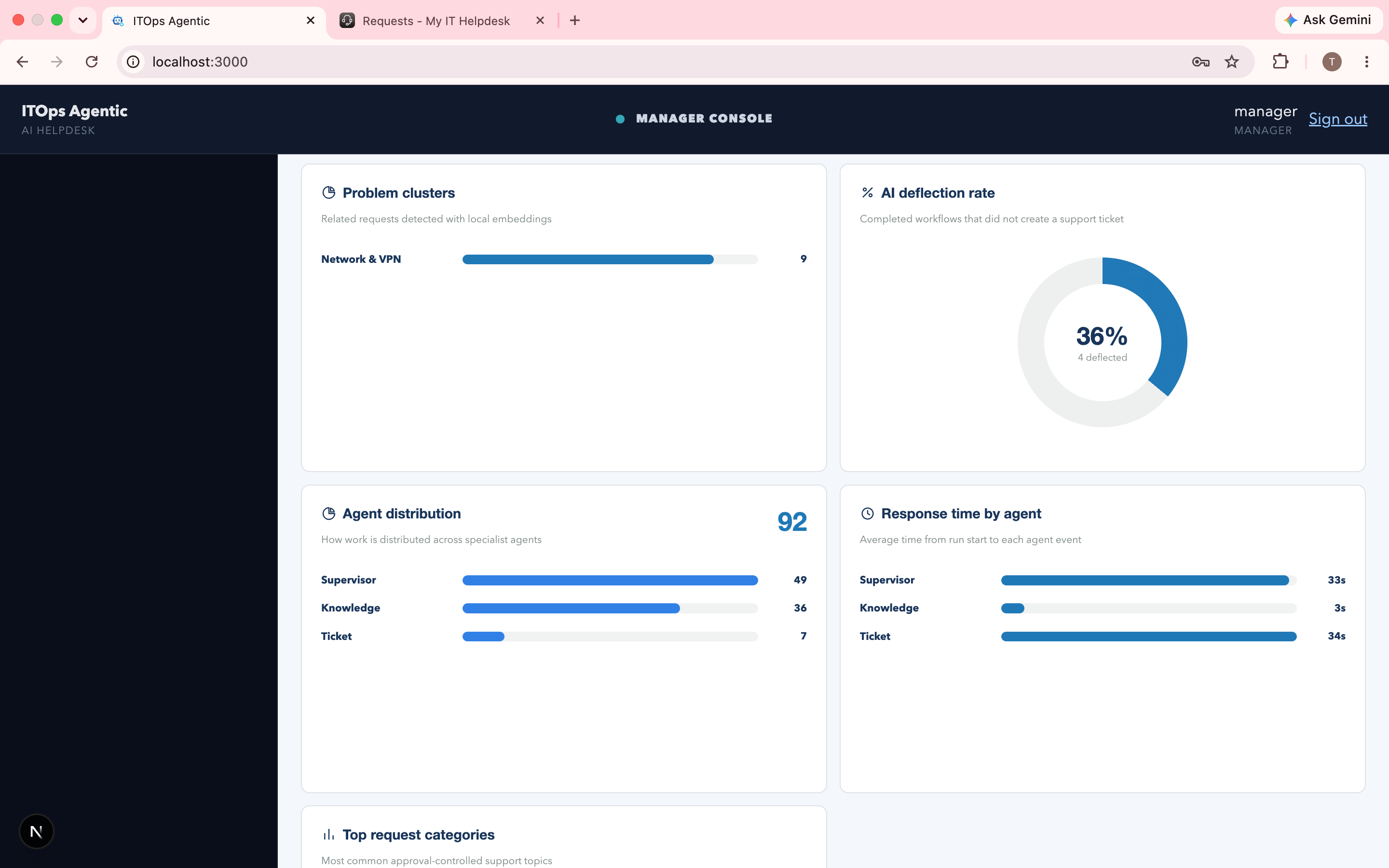
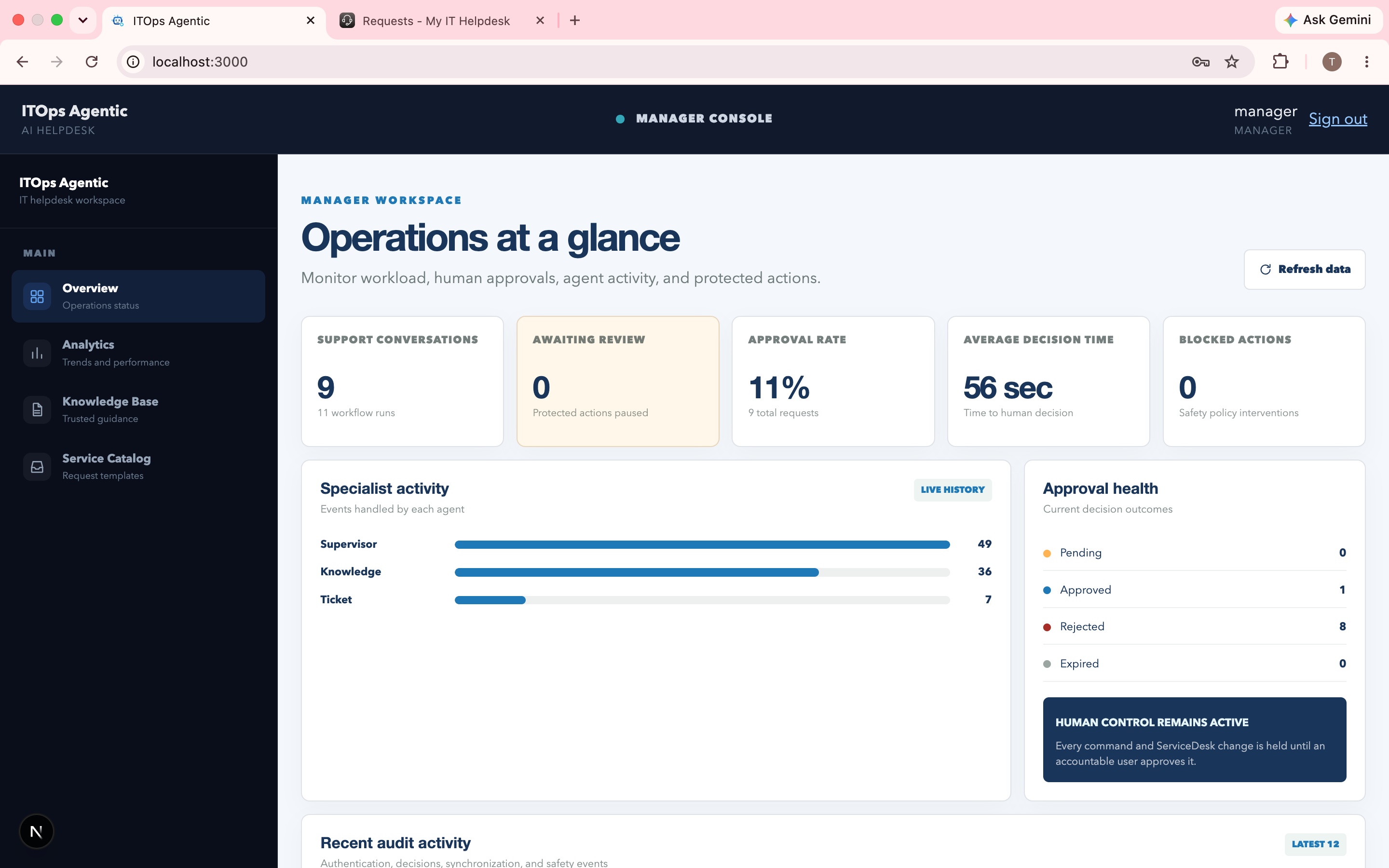
Provider adapters (ManageEngine ticketing, FTS5/vector knowledge search) sit behind protocols, swappable without touching the agent framework. Next.js role-routed dashboards (requester/technician/manager/administrator) over FastAPI, with ChatKit and an optional Realtime voice assistant that hands off into the same approval-gated workflow. Challenges Deciding where agent reasoning ends and deterministic code begins — solved structurally with typed contracts (ExecutionPlan, ActionProposal, ApprovalDecision) rather than prompting discipline, so only the WorkflowEngine and endpoint runner can act. Keeping one supervisor coordinating specialists across an interruptible, resumable approval flow, with every phase persisted to SQLite. And keeping the system extensible enough to add specialists later without touching the safety layer underneath.
What I learned The future of enterprise AI isn't one chatbot — it's a small agent framework with a hard-coded safety boundary between reasoning and action. GPT-5.6 excels at investigation and triage; Codex excels at turning that into production code. Neither should act unsupervised in a live system — the real engineering problem was building that supervision in as architecture, not as a prompt.
What's next Teams/Slack integration; real-time infrastructure monitoring feeding agent diagnostics Automated root cause analysis and predictive incident detection Self-healing workflows for low-risk remediations Additional specialists (infrastructure, automation) and more ITSM platforms (Jira Service Management, ServiceNow)
Built With
- gpt-5.5
- python

Log in or sign up for Devpost to join the conversation.