Inspiration
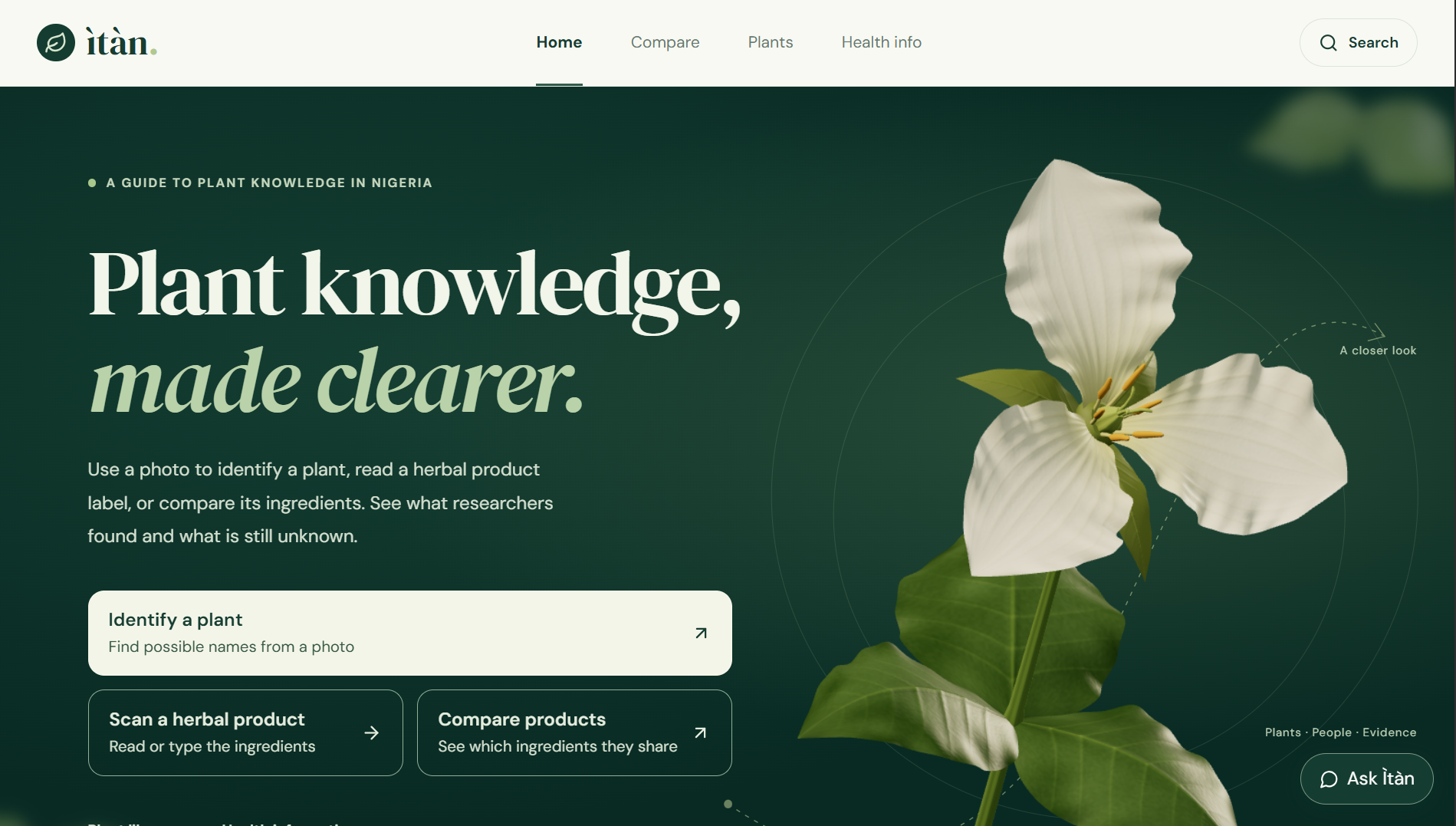
We started with a simple idea. What if you could take a photo of a herbal product label and find out what the ingredients were? That led us to a harder question. Once you know the plant, how do you check what someone has told you about it?
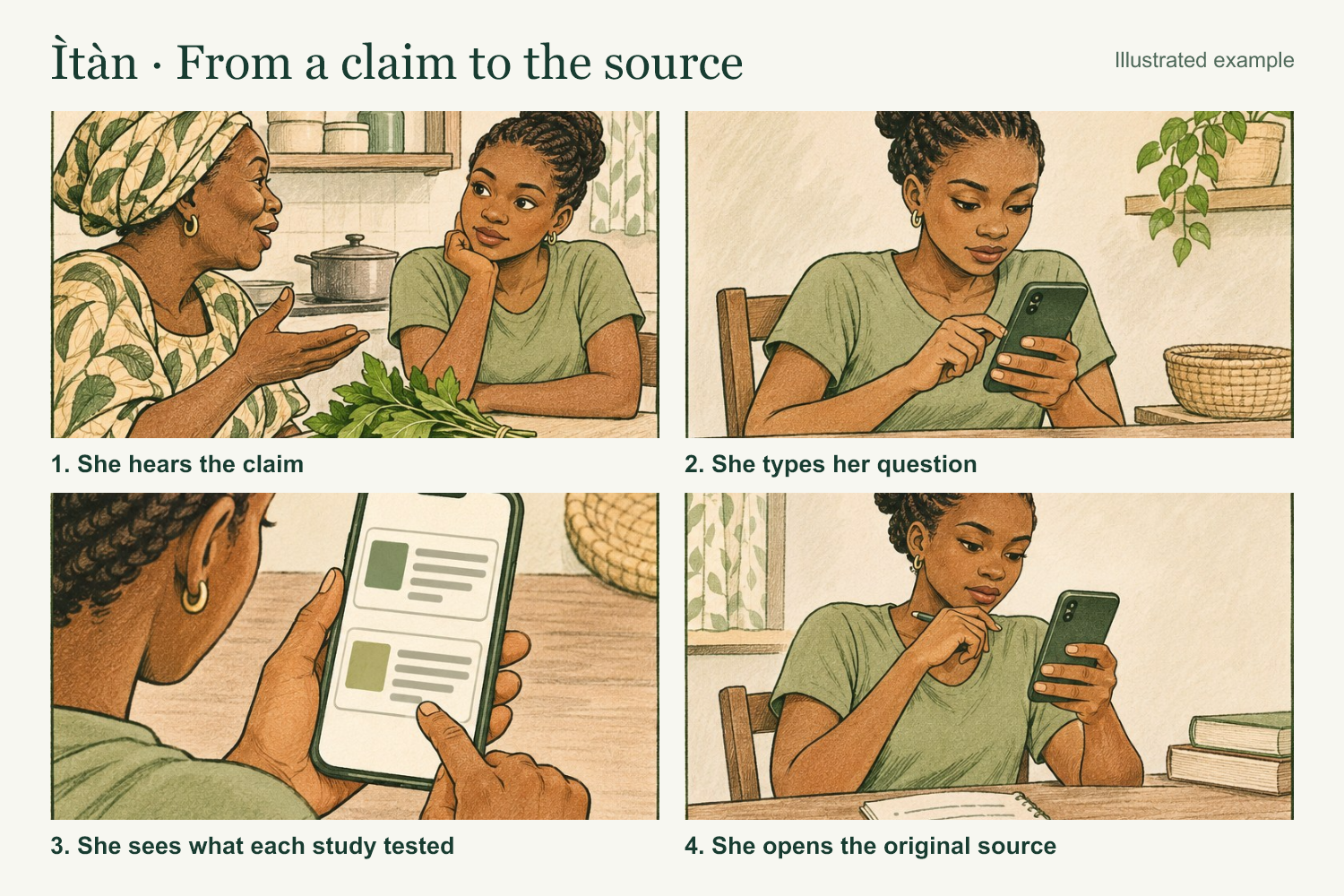
Take a claim like “bitter leaf lowers blood sugar.” Where would you go to see if anyone studied it, and what they actually tested? We built Ìtàn to make that research easier to find and understand for people in Nigeria.
What it does
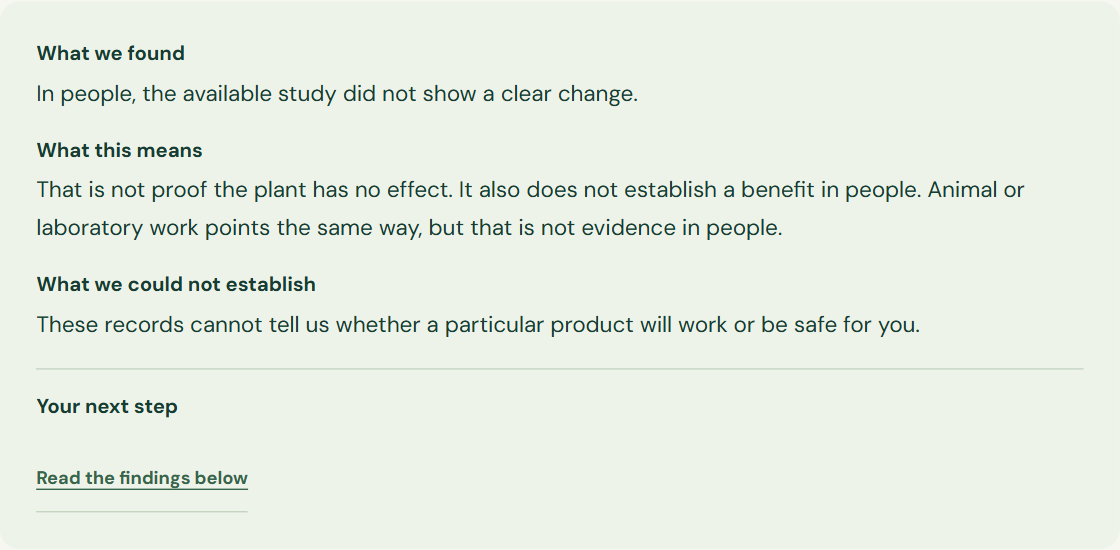
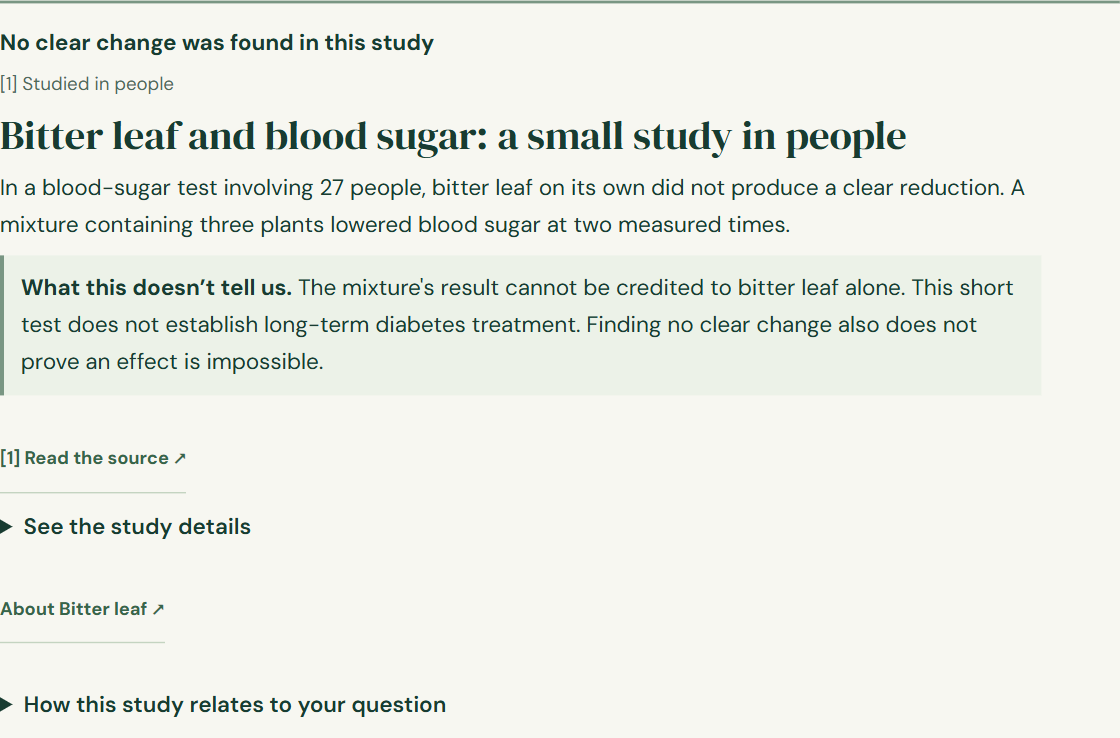
Type a question like “Does bitter leaf lower blood sugar?” Ìtàn finds related studies in its library and shows what they tested, what they found and what is still unclear. Each summary links to the source so you can read it yourself.
You can also use a photo to get a possible plant name, browse the plant library, or scan and compare herbal product labels. We link to official health guidance and to NAFDAC’s lookup for product registration details.
How we built it
We built the website with Next.js, React and TypeScript. We put together a small library of studies and wrote plain-language summaries that keep the original links. When you ask a question, Ìtàn looks for the plant and the effect you’re asking about, then matches them to the studies in the library.
Tesseract.js reads labels in the browser, Pl@ntNet suggests names from plant photos, and Supabase supports the plant catalogue. Gemini can give an optional explanation based on the sources Ìtàn finds. The claim checker works with that option turned off.
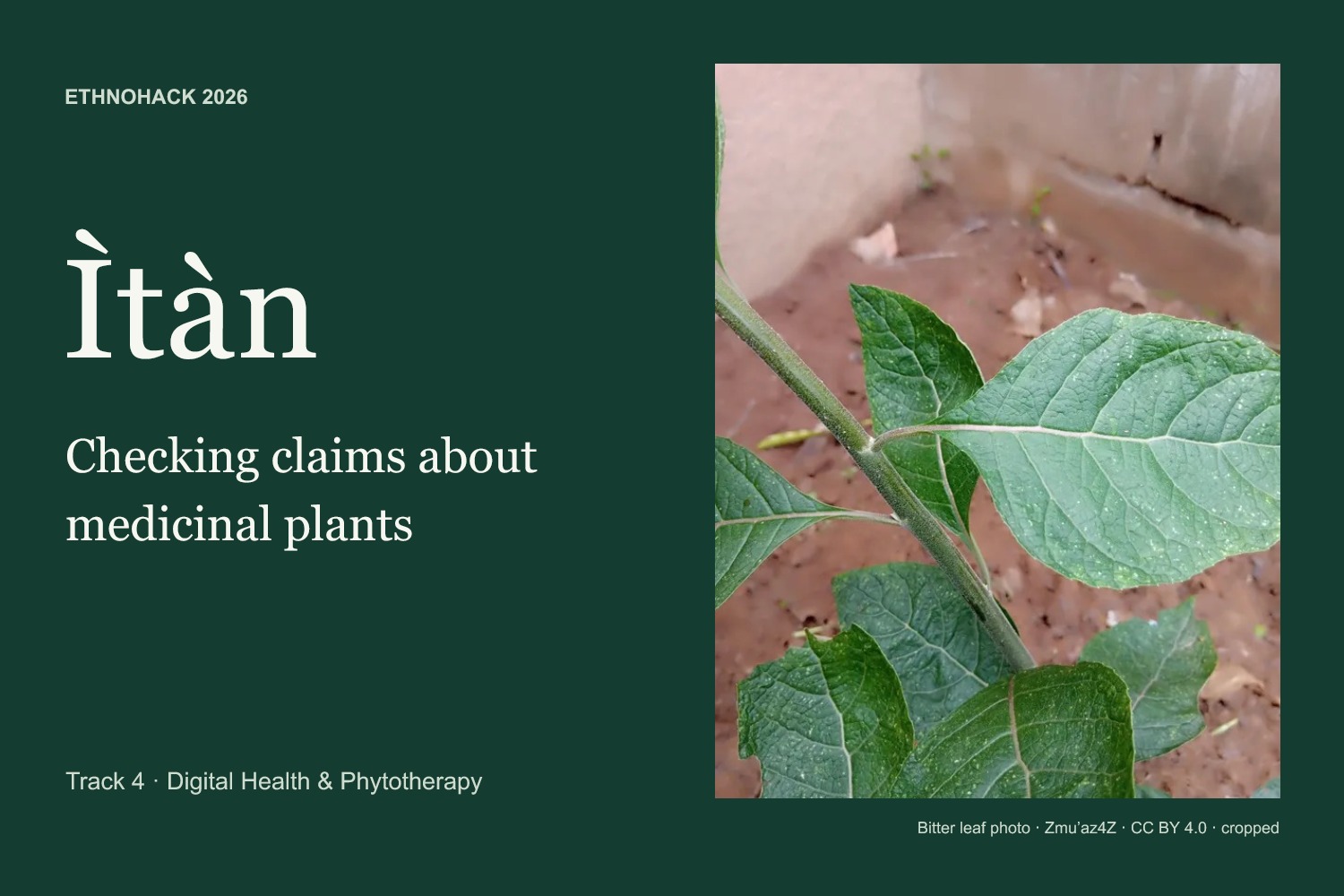
Codex helped with development, research and writing. We used AI-generated artwork for the storyboard and a cropped photograph by Zmu'az4Z for the cover. Photo source · CC BY 4.0 licence · Third-party notices
Challenges we ran into
Plant names were tricky. One plant can have several names, and a common name can refer to more than one plant. We had to decide when Ìtàn had enough information to make a match and when it should ask for more detail.
Summarising studies was also harder than we expected. A study might use a mix of plants or test a preparation in rats. We made those details visible so readers can see how closely each study answers their question.
Accomplishments that we're proud of
We’re proud that someone can go from an everyday question to the source in a few clicks. The prototype passed 39 automated tests. It also gave the expected result on all 34 claim examples and found the expected studies on all 16 questions in a separate check. We wrote these checks to test how the app behaves.
What we learned
We learned that the details people might skip are often the ones that matter most. With bitter leaf, it matters whether the researchers studied the plant on its own or in a blend. Showing that detail gives people a clearer idea of what the study can tell them.
What's next for Ìtàn
We want to ask a botanist and a pharmacist to review the records, then watch first-time users try the app. We want to see if they can find the source and explain what the study tested in their own words. We also want to add more plants and local names, with a source for each one.
Built With
- google-gemini
- next.js
- pl@ntnet
- react
- supabase
- tesseract.js
- typescript


