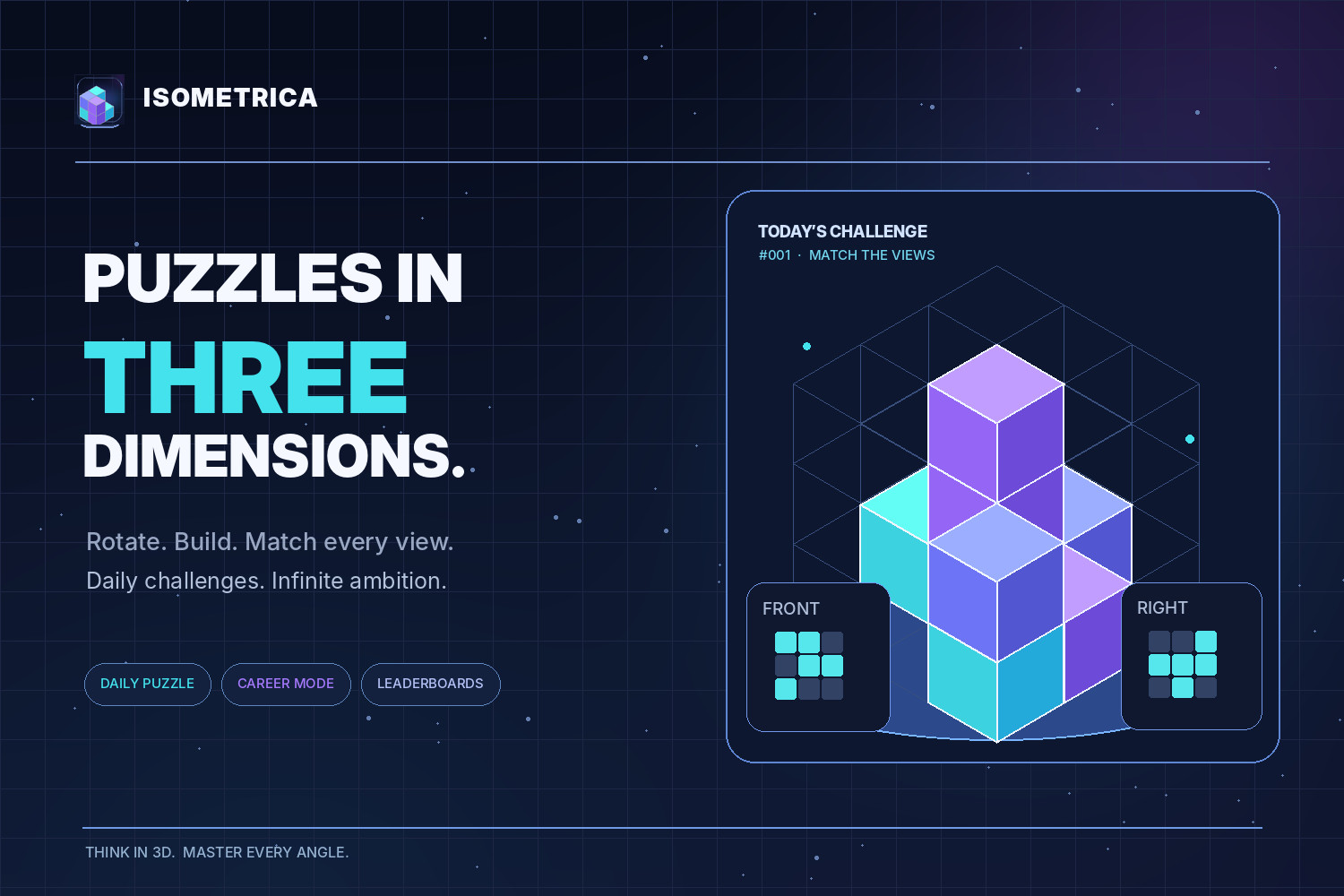
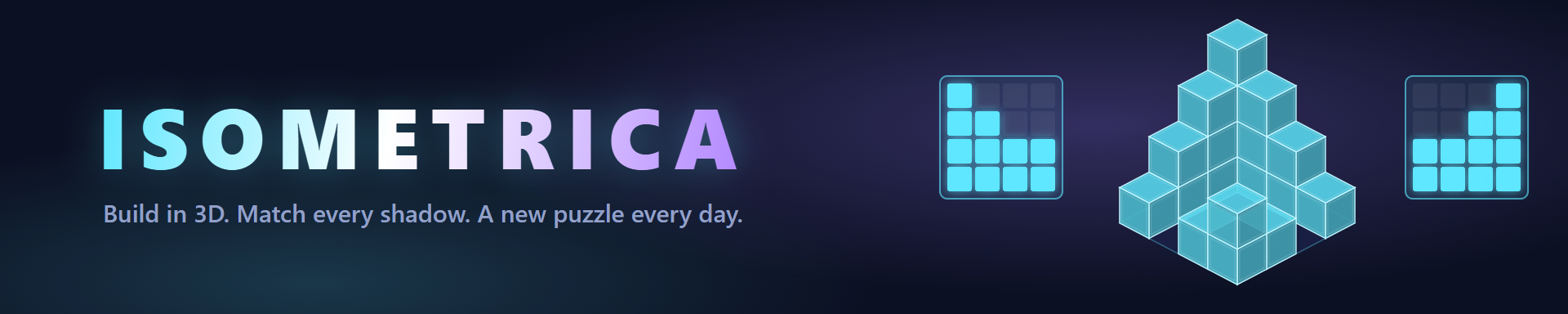
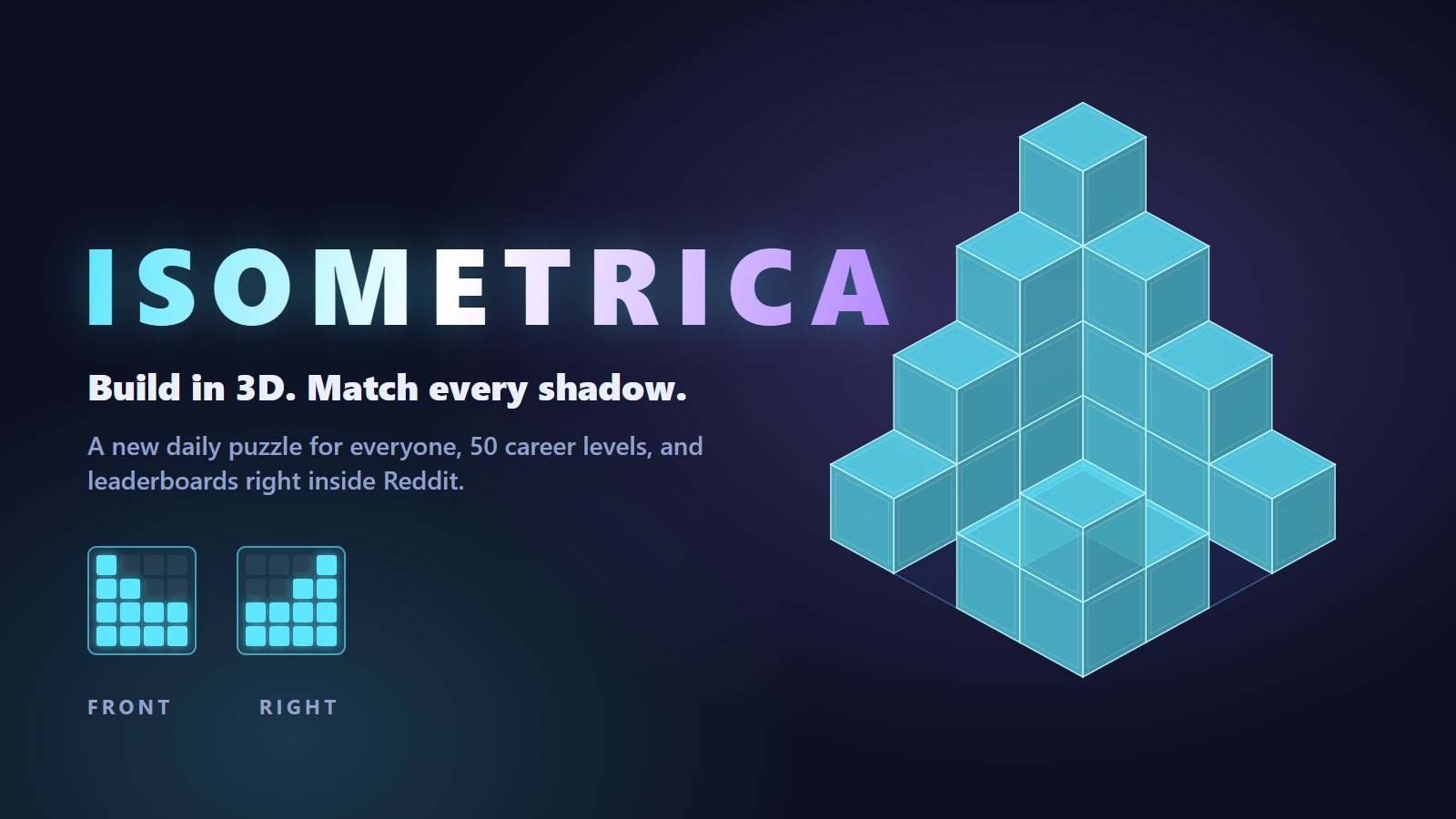
What it is Isometrica is a 3D spatial puzzle. Each puzzle shows the shadows a hidden structure casts from the front, the right and the top. Place and remove cubes in a floating grid until every shadow matches exactly, using exactly the cubes you're given.
Daily Challenge: everyone gets the same puzzle each UTC day. Your official run is timed by the server and scored 60% speed / 40% move efficiency. Climb the Overall, Fastest and Fewest Moves boards, and share your result as a comment. Career: 50 hand-tuned levels across five tiers, from First Light to The Umbra. Strict move limits, three stars for the perfect cast, plus locked cubes, blocked cells and colour puzzles. Progression: XP and eight ranks, streaks, 16 achievements, unlockable cube skins, themes and profile frames. Cosmetics never affect puzzles or scores. Inspiration
We love the "turn it around in your head" moment from spatial puzzles and wanted a version that fits a Reddit feed: something you understand in seconds, finish in a couple of minutes, and come back to tomorrow.
How we built it
A shared TypeScript puzzle engine (projections, move rules, replay validation) runs on both client and server. An exact branch-and-bound solver proves every career level is solvable and that its three-star par really is the minimum. The daily pool is pre-validated, with a seeded fallback generator. A lightweight Canvas 2D orthographic renderer (no WebGL needed) with smooth 90° rotations, layer slicing and an "inspect" view that lines up exactly with each target. It doesn't redraw while idle, to save battery. Anti-cheat: the server issues a run ID, timestamps the start, replays every submitted move, checks timing plausibility, and calculates the score itself. Reward gates make retries and resubmits safe.
Challenges Making 3D building feel tactile on a phone: reliable tap-vs-drag detection, ghost previews, and a layer picker for cubes that float. Teaching a new mechanic fast. The guided tutorial uses spotlights, arrows and glowing guide cubes. Generating puzzles that are hard because of reasoning, not just bigger grids, and proving them fair.

