-
-
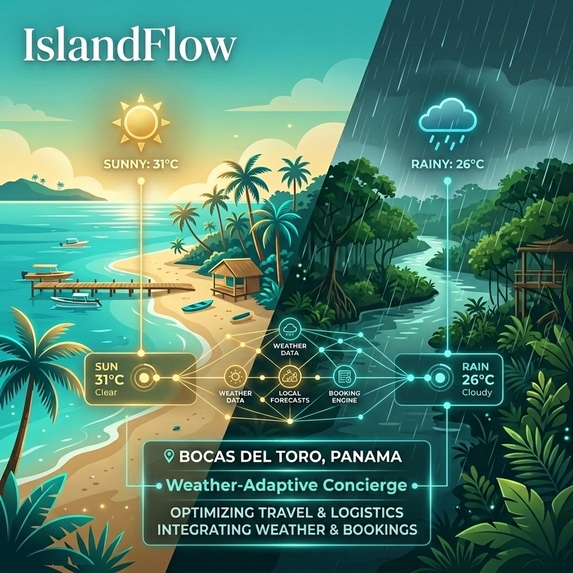
IslandFlow saves your rainy day!
-
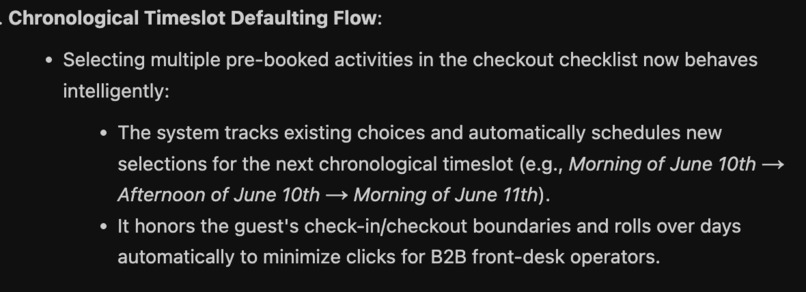
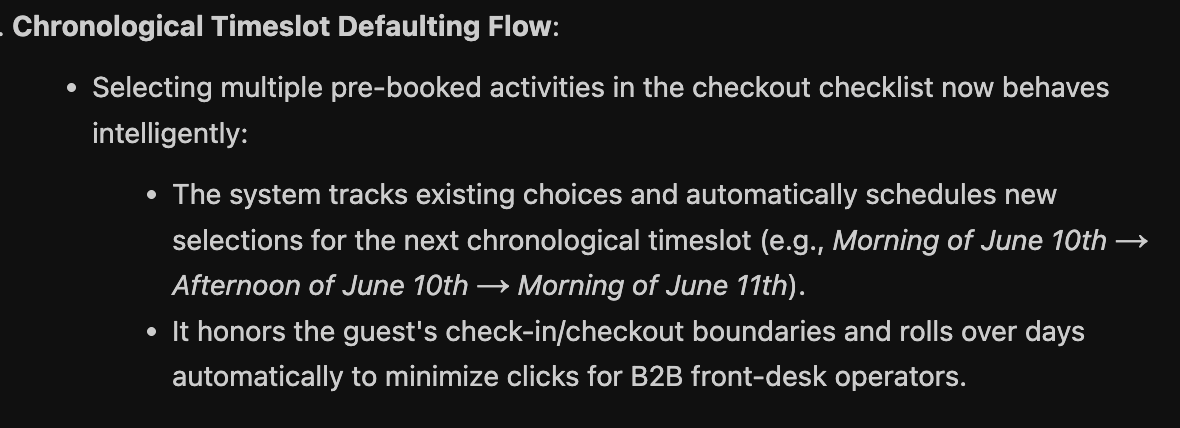
How IslandFlow reduces redundant clicks and duplicate booking errors
-
-
-
-
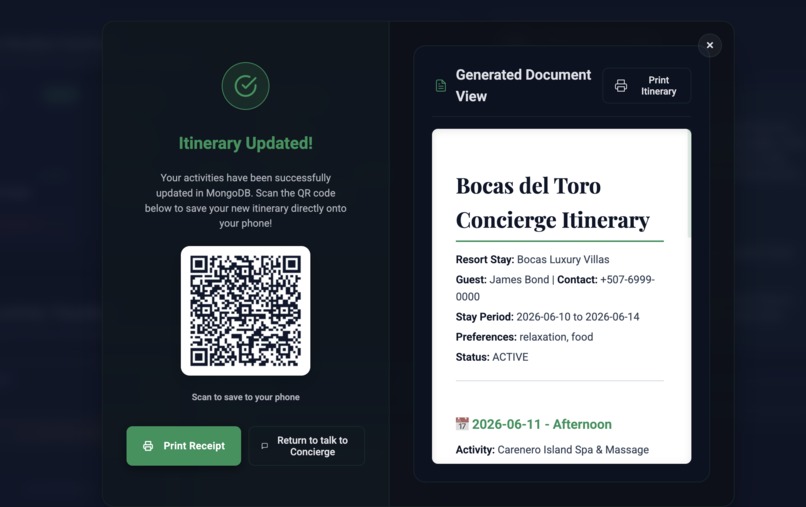
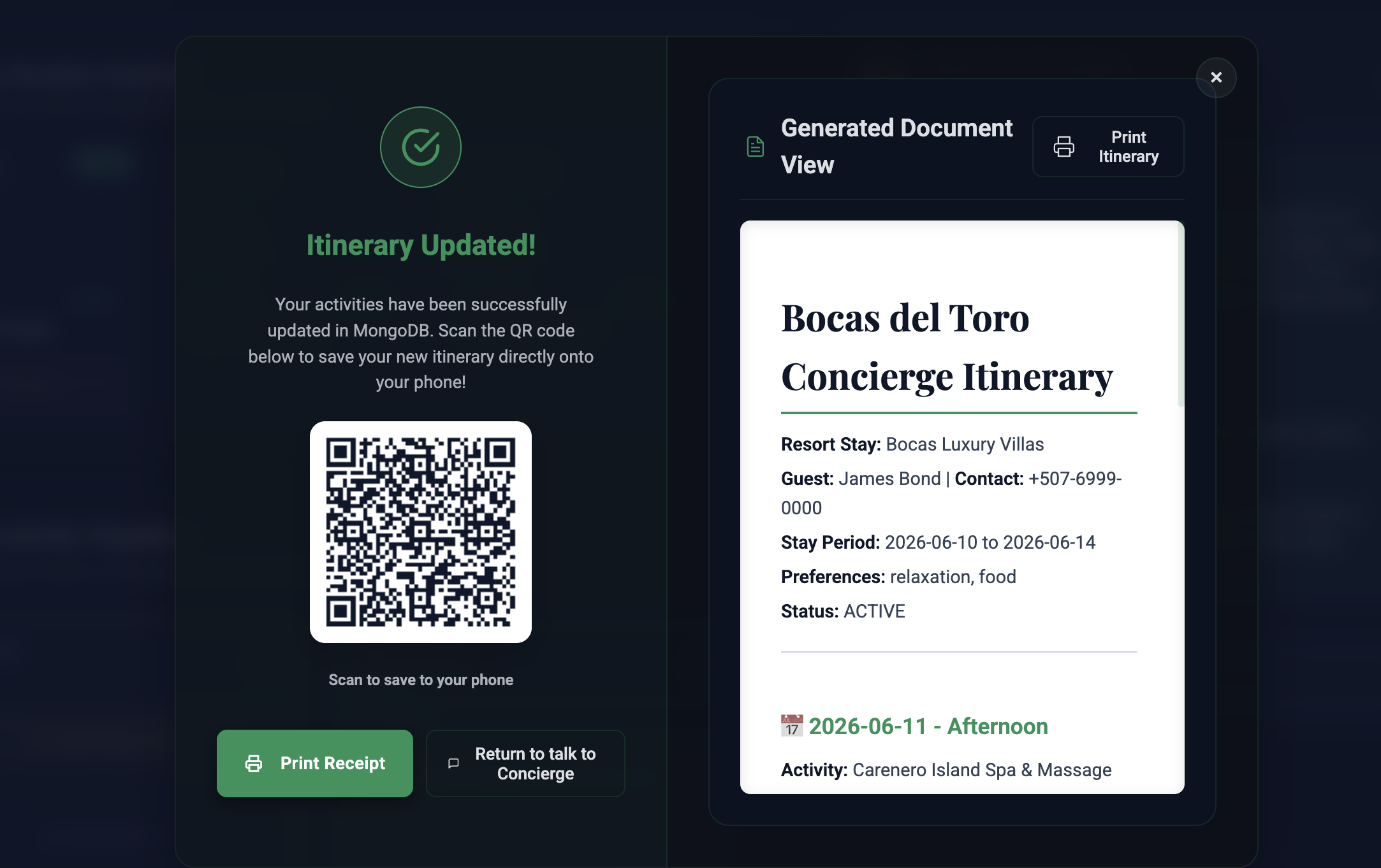
Guests receive a card at the front desk with a QR code to scan with their phone
-
-
-
-
Inspiration
Bocas del Toro, Panama, is an absolute paradise of islands, tropical beaches, and rich culture. But because it is situated in a tropical rainforest, rain is simply a part of the local experience. One minute you are planning to snorkel the pristine reefs of Cayos Zapatilla, and the next, a sudden tropical downpour rolls in.
When that happens, plans can get ruined quickly. Guests get frustrated, resort front desks get flooded with frantic reschedule requests, and local boat operators lose out on scheduled trips. I wanted to build something that turns a rainy day from a disappointment into a beautifully coordinated, stress-free island experience, automated from end to end while keeping the warm, laid-back hospitality of the islands alive.
What it does
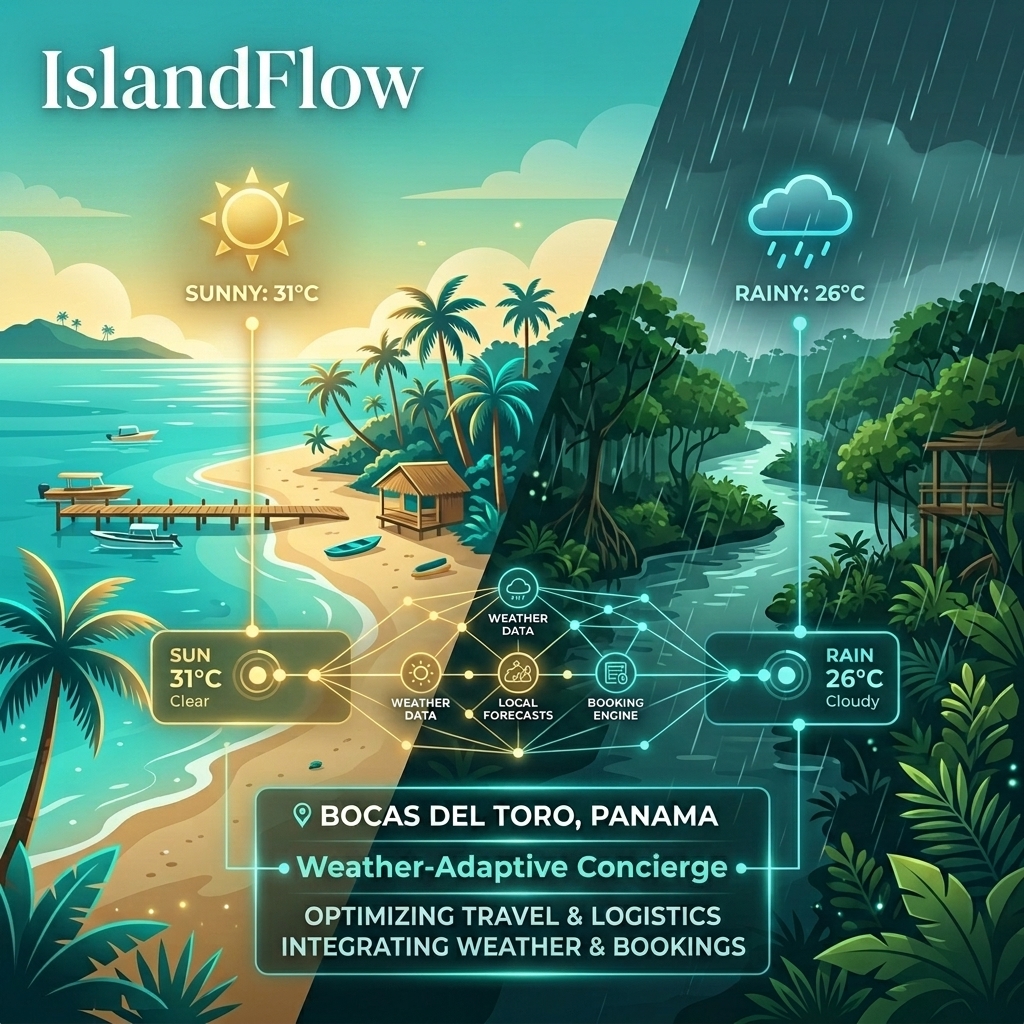
IslandFlow is an autonomous, weather-adaptive concierge and B2B logistics platform designed for boutique eco-resorts. It acts as a proactive digital companion for travelers, helping them navigate their itineraries when tropical weather shifts.
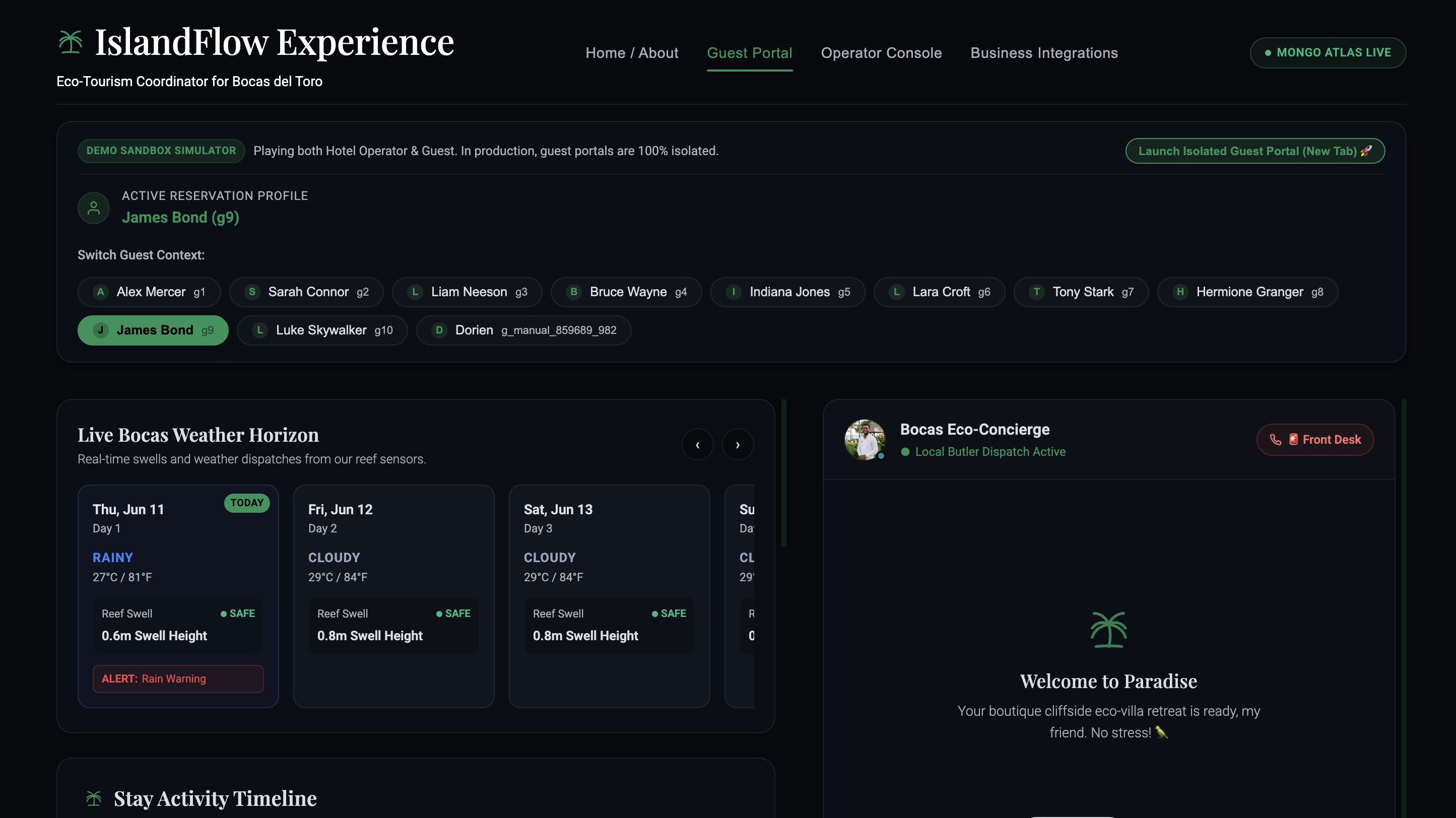
If a storm warning or heavy rain is simulated on the island, IslandFlow immediately leaps into action. It scans the guest's schedule for outdoor activities (like zip-lining or snorkeling) that might be affected. It then queries the database for active indoor alternatives, such as chocolate-making workshops, cooking masterclasses, or overwater spa sessions.
Instead of just forcing a change on the user, the agent presents an interactive swap proposal card directly in the chat widget. The guest can tap "Confirm Swap" with a single click. IslandFlow then automatically updates their master timeline, adjusts tour slots in the database, displays a printable travel receipt, and even simulates dispatching a Spanish-language text message to the local boat captain so he knows not to launch his boat.
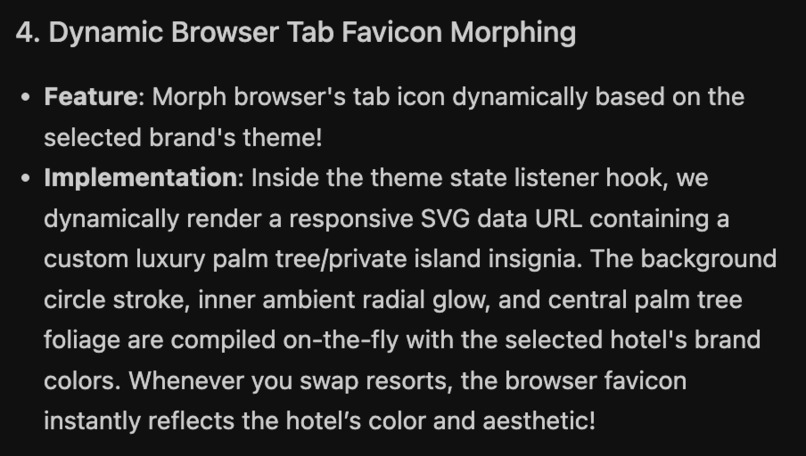
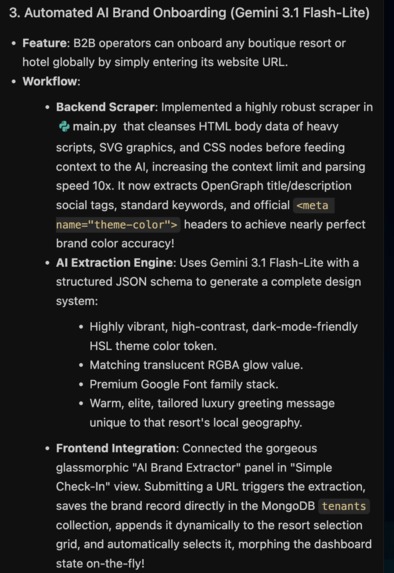
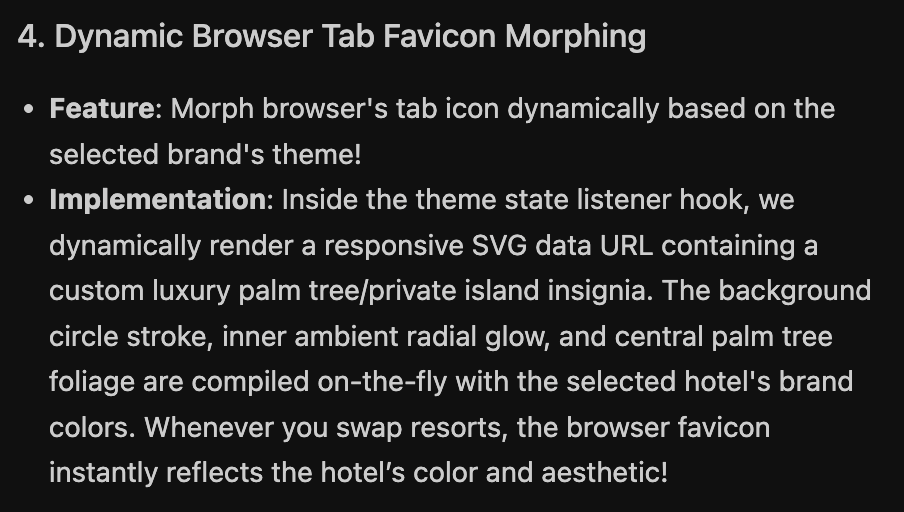
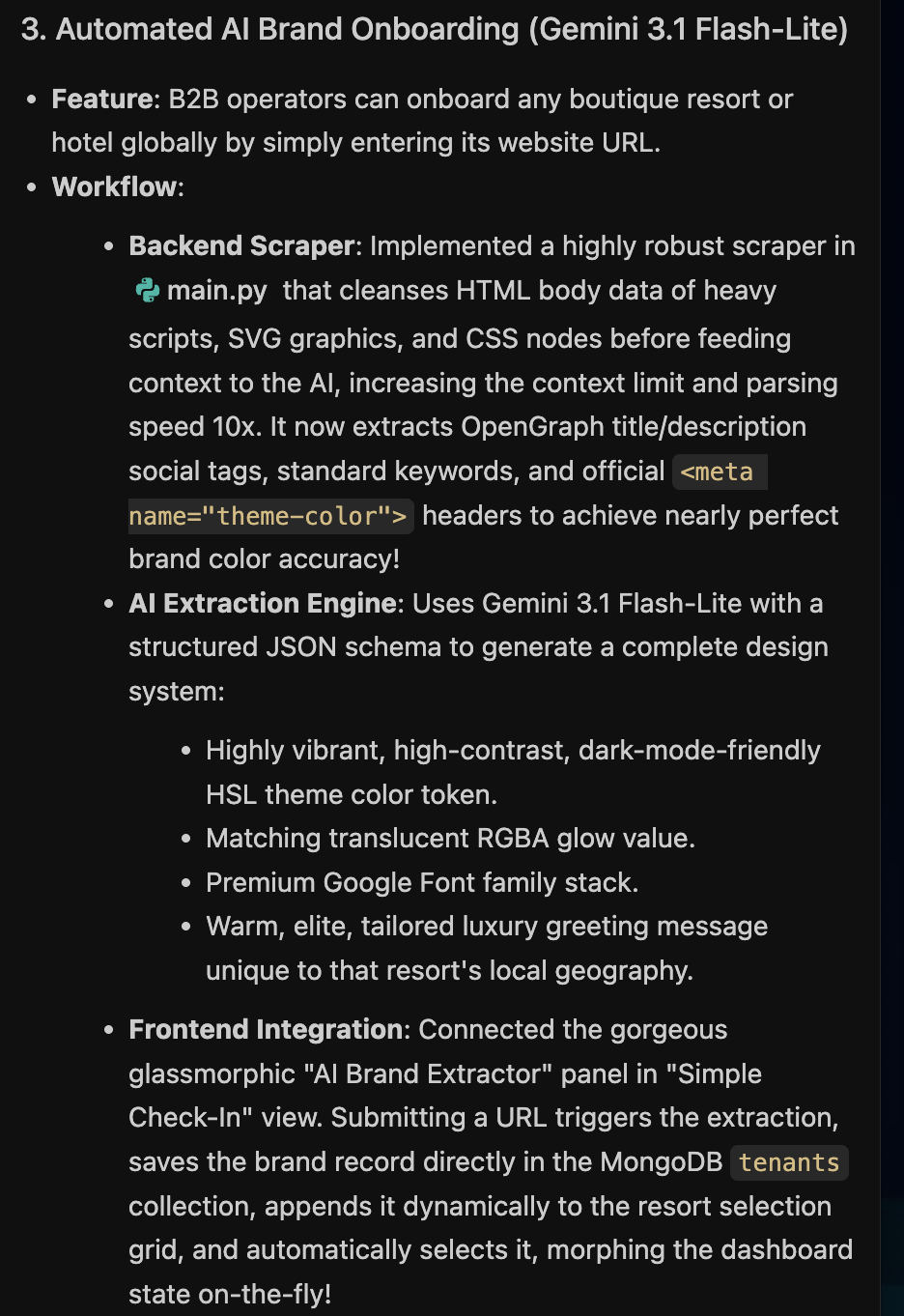
On the business side, hotel managers can use the built-in Vibe AI brand crawler. By simply pasting a hotel's landing page URL, our system automatically crawls the site, extracts its unique colors and typography, and dynamically skins the entire concierge portal to match their luxury brand in seconds, whether it is the gold elegance of La Coralina or the cyan waters of Nayara.
How we built it
We designed IslandFlow from the ground up to feel like a premium, production-ready product.
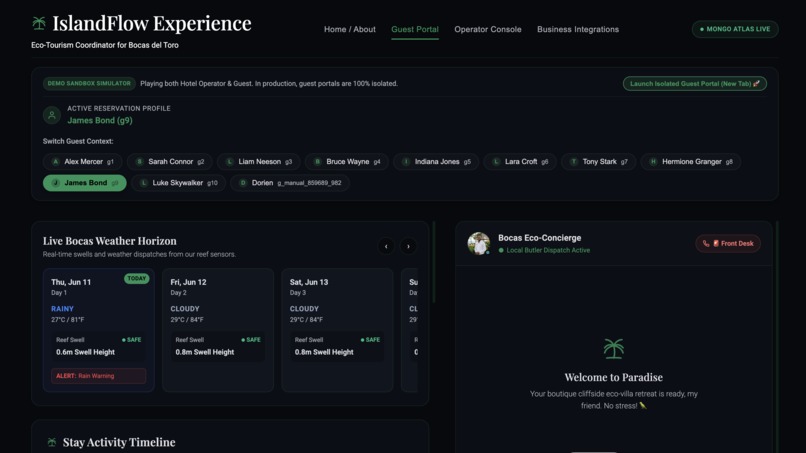
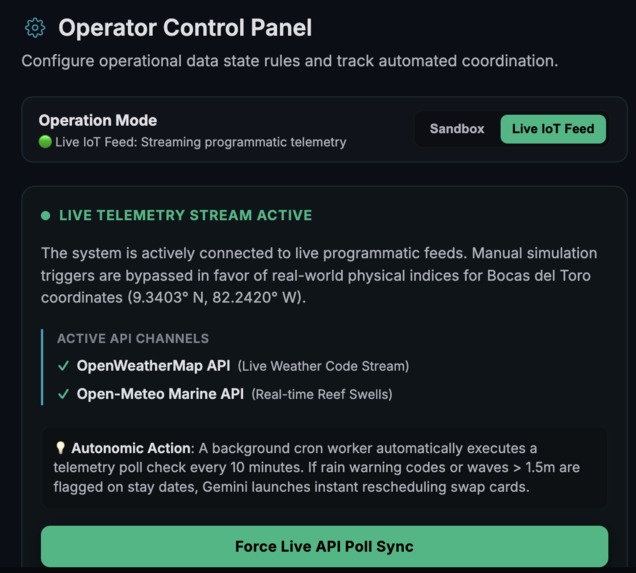
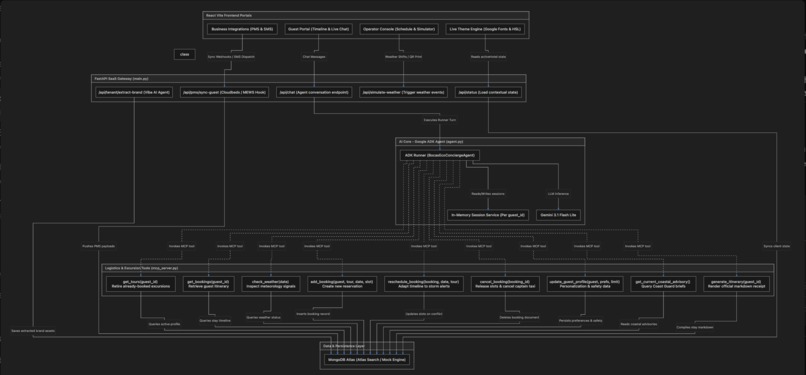
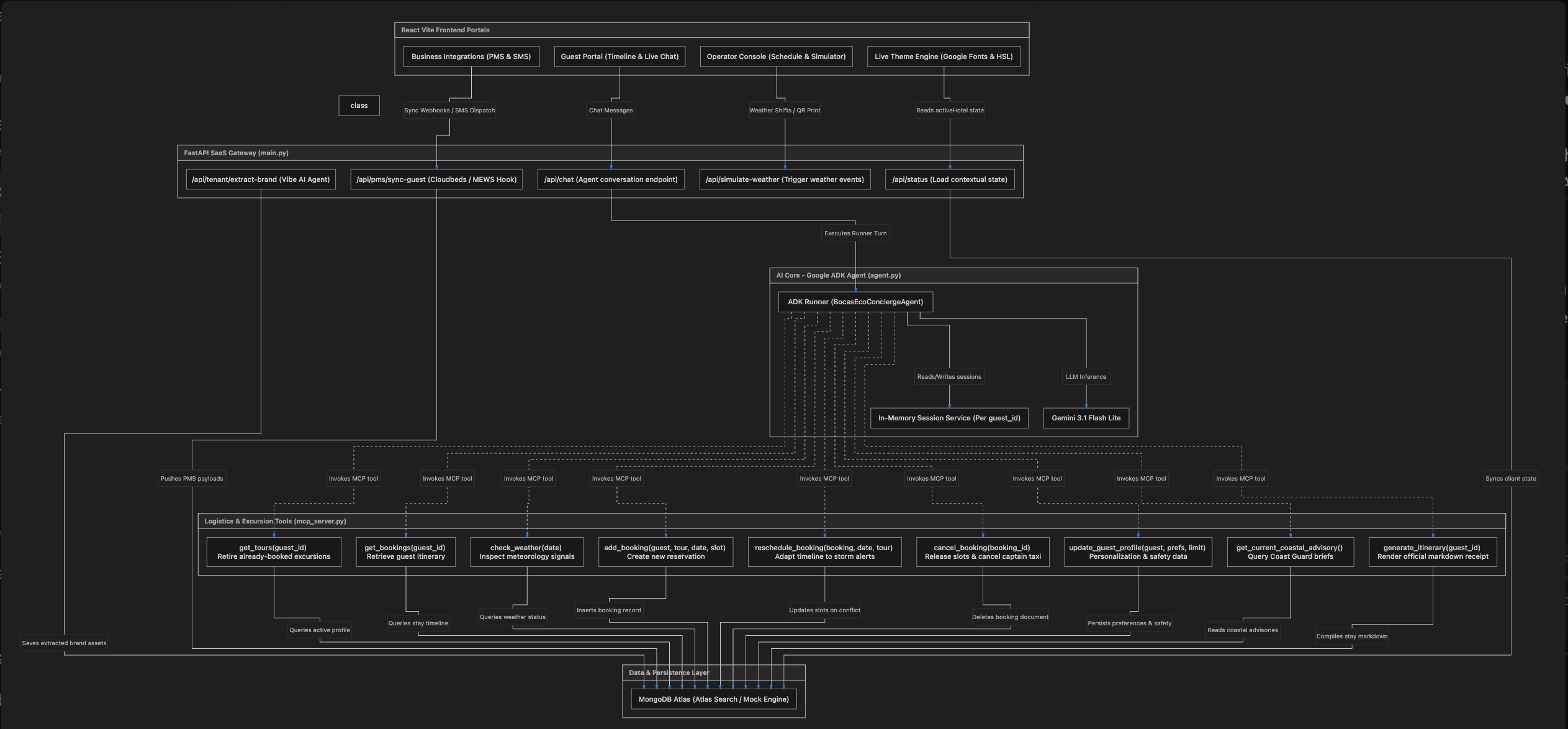
For the frontend, we used React and Vite to build a fast, highly interactive web application. We styled it with custom CSS to create a premium, glassmorphic dark-ocean aesthetic. The frontend is split into three main portals: a Guest Companion view with an interactive schedule timeline, a resort Operator Console for simulating weather patterns, and a Business Integrations tab showing a live mobile smartphone simulation and live HTML email receipts.
The backend is built with FastAPI, which serves as our central hub routing communication between the client, database, and AI.
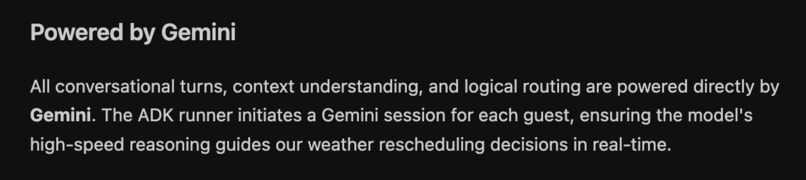
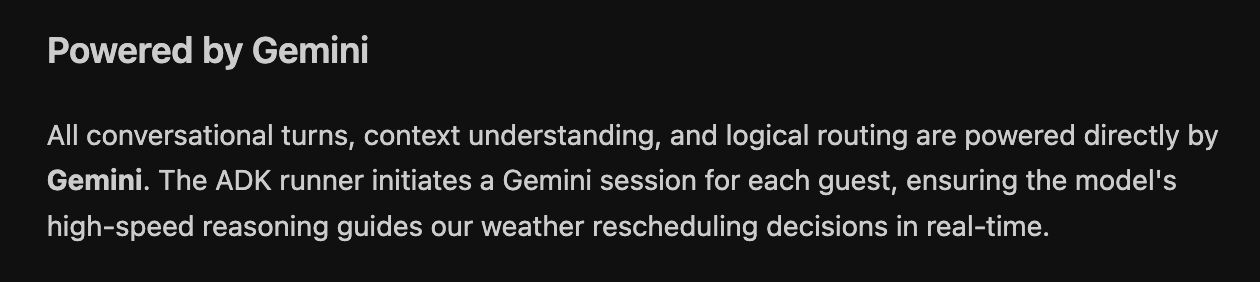
The core AI engine runs on Google Gemini, orchestrated using the Google ADK. We gave our agent a friendly, warm Afro-Caribbean island personality to make interactions feel incredibly hospitable and authentic.
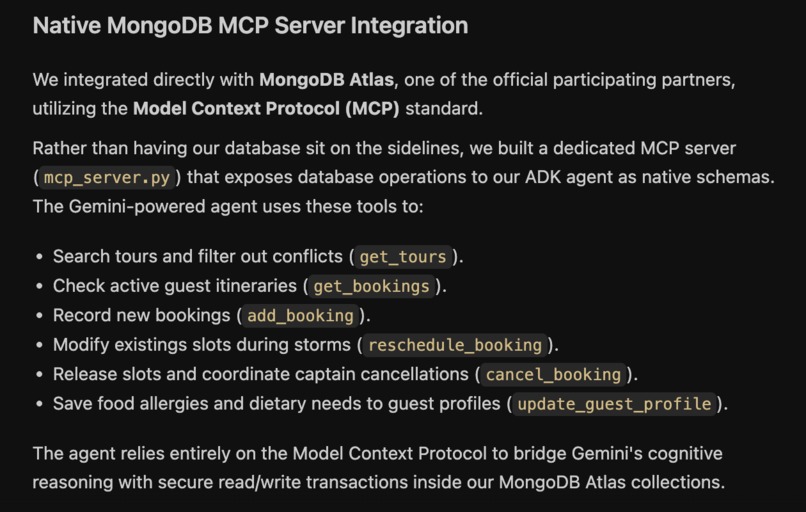
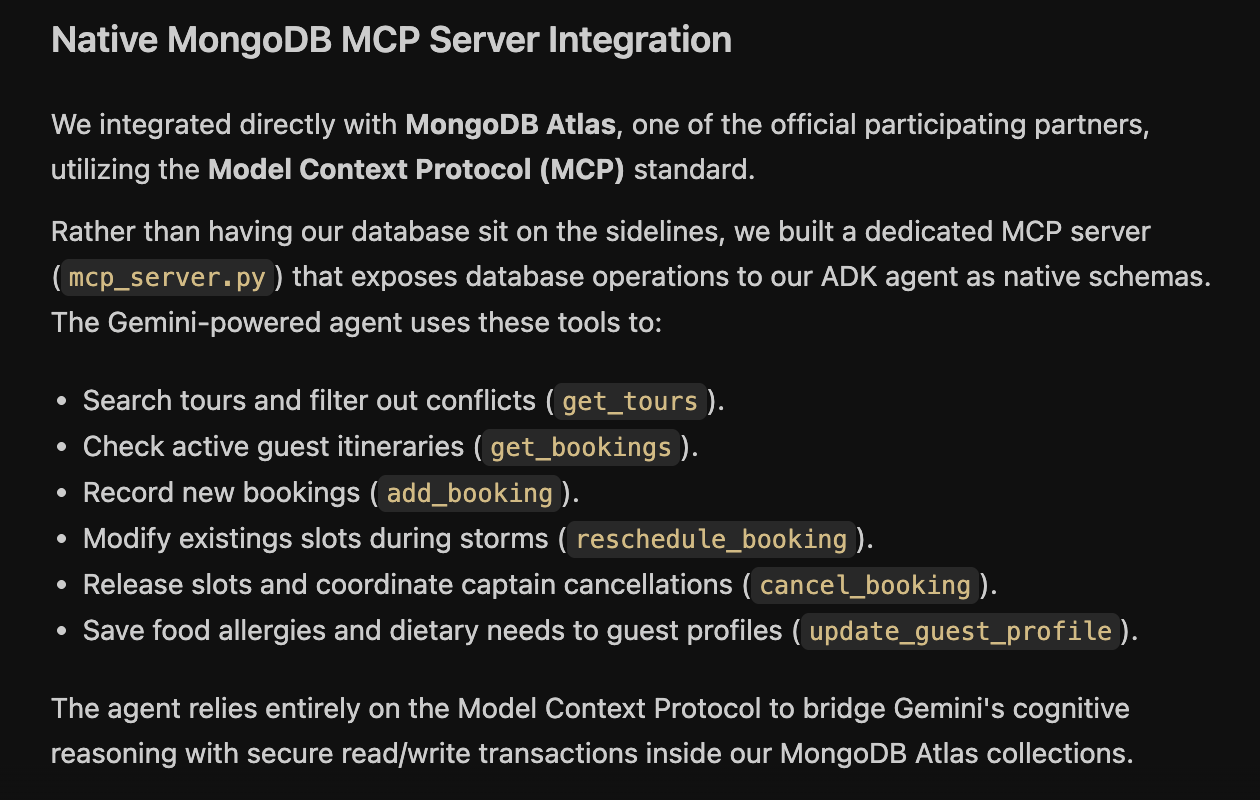
To bridge the gap between simple chat and real action, we implemented a custom Model Context Protocol (MCP) server. The agent is equipped with nine specialized logistics tools (such as retrieving itineraries, checking forecasts, reserving slots, cancelling trips, and updating guest food allergies or health profiles). This allows the AI to read and write directly to our MongoDB Atlas database based on the conversation flow.
Challenges we ran into
One of the biggest hurdles was managing the safety of autonomous database operations. We quickly realized we could not let an AI write changes directly to database schedules without explicit guest consent. If a guest asks "Will it rain tomorrow?", they do not want their snorkeling trip immediately canceled by a zealous model. We solved this by building a custom "Human-in-the-Loop" workflow. The agent generates a structured proposal in the background, which we render as an interactive card in the chat. The database write is completely blocked until the human explicitly clicks "Confirm" on the card.
Another tricky part was synchronizing the luxury branding themes across all the B2B dashboard tabs in real-time. When a resort manager switches guest contexts, every portal, from the guest chat to the operator table and the smartphone simulator, needs to adjust its color language instantly. We built a live theme engine that dynamically injects Google Fonts and custom CSS HSL variables into the root element, keeping the active color palette synchronized perfectly across the entire application state.
Accomplishments that we're proud of
I am incredibly proud of how human the AI concierge feels. Instead of sounding like a cold, corporate assistant, it greets you with local warmth, uses island phrases naturally, and genuinely feels like a friendly local host looking out for your stay.
The B2B Vibe AI engine also feels like absolute magic. Being able to paste a resort's homepage URL, let the model analyze its design, and watch the entire booking interface instantly re-theme itself to a custom high-end brand is a huge win for boutique properties that want a tailored guest experience.
We also succeeded in building a fully cohesive, end-to-end sandbox. Anyone can click "Heavy Rain," watch the developer console stream the step-by-step MCP reasoning logs, see the rescheduling card pop up, approve it, and see the calendar, MongoDB records, simulated WhatsApp messages, and official itineraries update live in front of their eyes.
What we learned
We learned that Model Context Protocol (MCP) is a game-changer for turning standard language models into action-oriented agents. By defining highly specific tools with strict parameters (such as making sure our activity browser filters out excursions the guest has already experienced), we can govern the AI's behavior through clean database constraints rather than excessively long and fragile system prompts.
We also learned that the best user experiences are designed to minimize typing. Guests on vacation do not want to negotiate back and forth with a chatbot to rearrange their day; they want the AI to do the heavy lifting of checking schedules, comparing weather, and suggesting a curated solution they can approve with a single tap.
What's next for IslandFlow: a Weather-Adaptive Concierge for Bocas del Toro
The next step is taking IslandFlow out of the sandbox and into the wild. We have already laid the groundwork by building incoming webhook routers to sync with property management systems like Cloudbeds and Mews.
We want to link the text-dispatch simulator to live Twilio WhatsApp Business APIs, allowing actual tour guides and local boat captains to receive automatic, instant SMS notifications in Spanish when bookings shift.
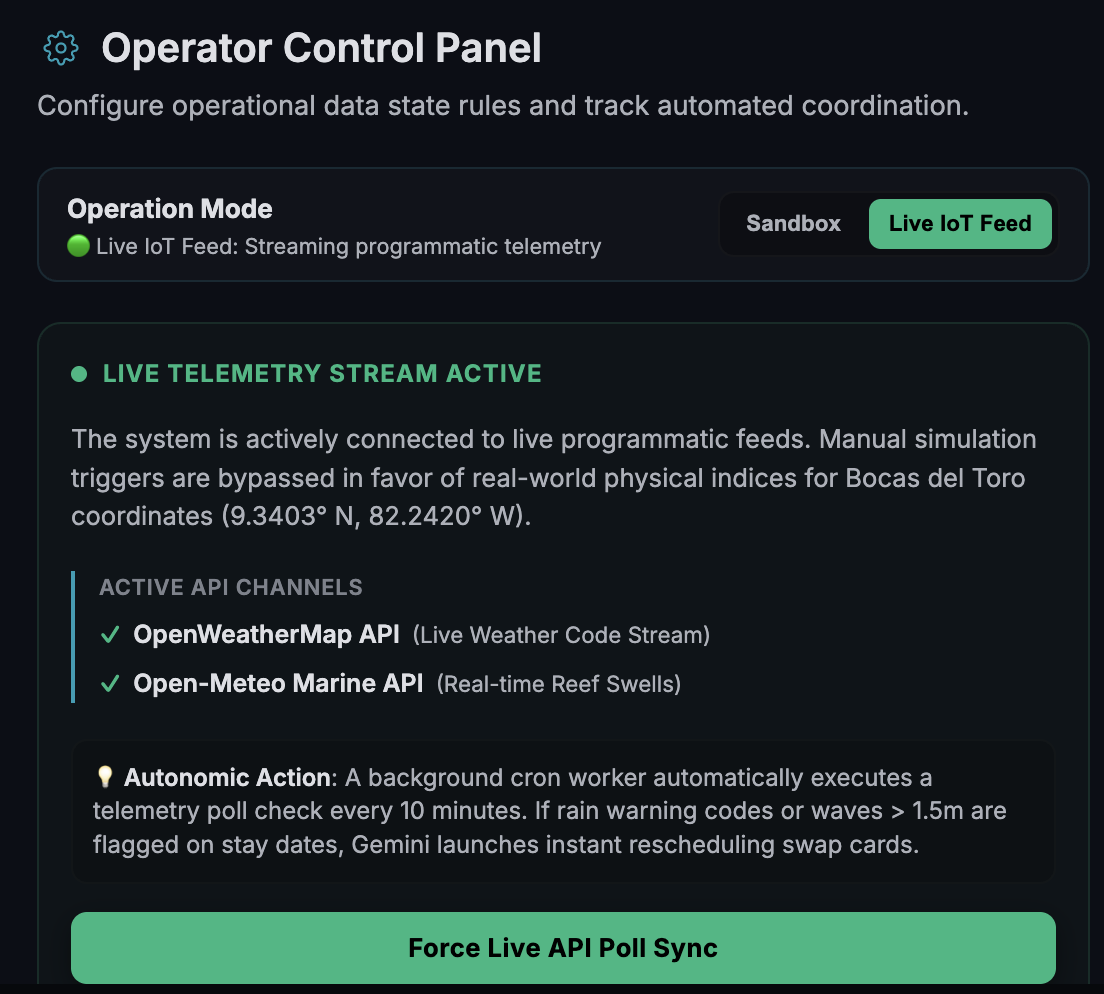
Finally, we plan to connect our weather checker to live marine telemetry and NOAA sensors. This would let IslandFlow detect heavy swells or small-craft advisories in real-time, proactively reaching out to guests to adjust their travels before the local authorities even issue a formal harbor closure.
Built With
- clearbit
- css
- fastapi
- google-cloud-build
- google-cloud-run
- google-gemini-api
- html
- javascript
- meteo-api
- mongodb-atlas
- open-meteo-api
- openweathermap-api
- python
- react
- vite

Log in or sign up for Devpost to join the conversation.