-
-
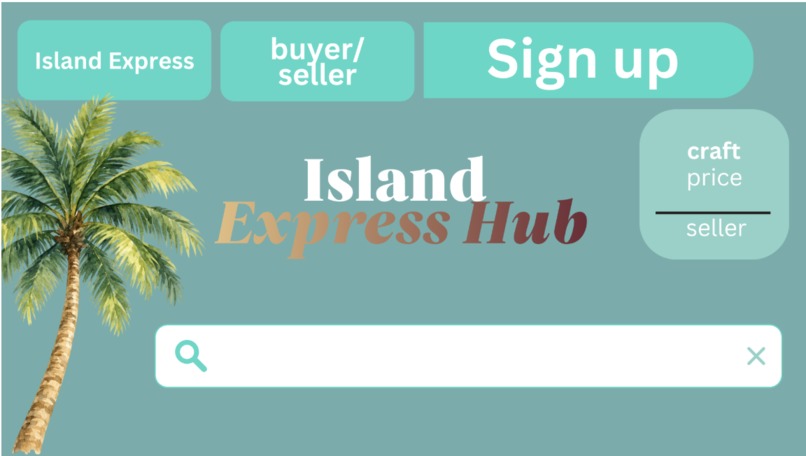
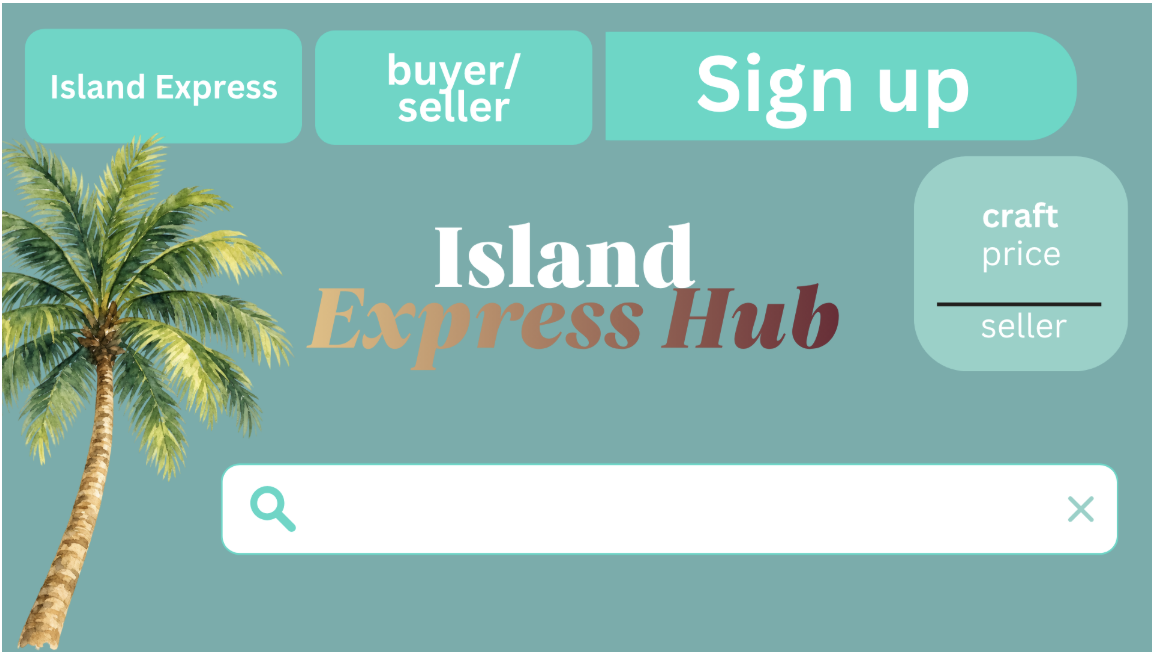
this is our first design. though we strayed quite a bit, this helped begin our brainstorming and collected our thoughts.
-
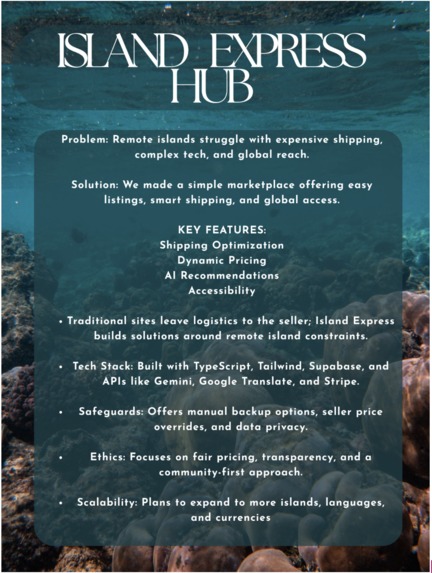
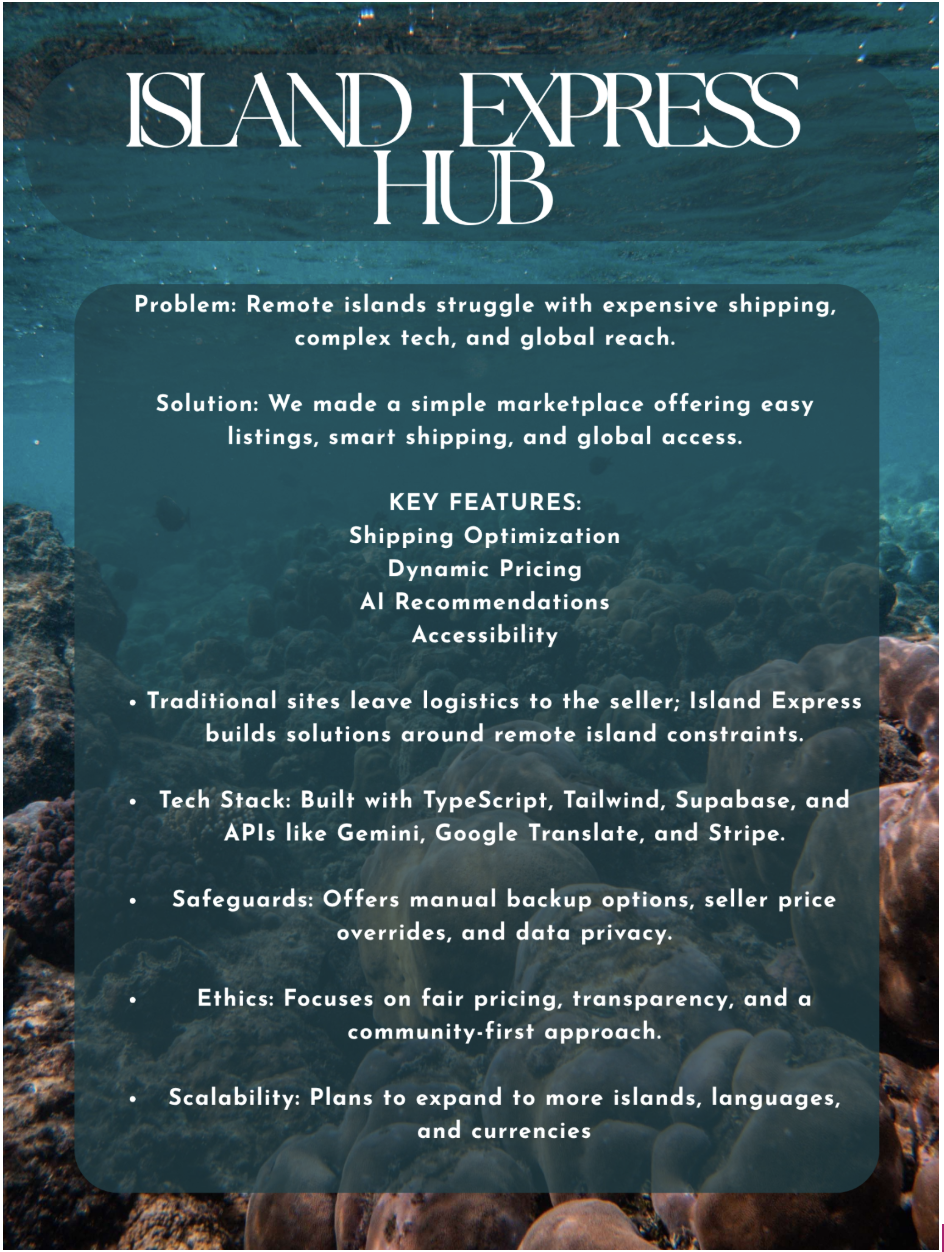
a quick info page summarizing all the key parts of our project!
Inspiration
We were all so touched by the idea of opening the world to smaller sellers without the extra stress of actually traveling there to buy these high-quality items. We all actually have grandparents in villages that, although not islands, are remote settings. They build amazing things, ranging from little toys to high-quality wooden chairs. However, they were never able to sell any of their amazing creations because they just didn’t know how to navigate modern websites or apps, and thus their dreams were diminished. This is why we decided to create an easier, more accessible way for them to upload their crafts efficiently, so they don't feel stressed and can instead preserve the joy of creating!
What it does
Island Express is a simple marketplace that helps island artisans sell worldwide by combining easy-to-use technology, affordable shipping, and better access to global customers. On the seller's side, Island express simplifies product listing and provides pricing based on production costs, labor, destination-specific shipping costs, and profit considerations. It also provides shipping guidance and uses shipping service APIs in order to compare options based on cost and delivery time. Our shipping optimization can also account for weather-related disruptions and balance cost, speed, and reliability when recommending a route. On the customer side, our recommendation engine uses user activity to recommend relevant products, island sellers, and easier-to-ship items. We also reduce international barriers through translation, currency conversion, accessible interfaces, and guided support.
How we built it
We built Island Express using Typescript and Tailwind. We started off by dissecting the problem, splitting into manageable parts, and brainstorming features to address different aspects of the prompt. We then created designs on Canva, coming up with the color scheme and vibe to capture the complex "island" theme. By utilizing Github Copliot, we planned out the execution with Gemini 3.7 Flash and executed with Claude Sonnet 5. Though AI was definitely a crucial part of our journey to create a full-fledged prototype in the time we had, majority of the debugging, ideation, and production was done by us. We efficiently split our team to work on the website and presentation simultaneously to get the most quality in both aspects of our submission.
Challenges we ran into
We ran into many challenges, both in the UI and functionally. For the UI, we struggled significantly with the Google Font styles to be applied, improving the visibility of the font size, selecting a color scheme that matches accurately with the theme but remains accessible, and sizing of the elements to be appealing. However, our biggest challenge was the website translation feature. An extremely important feature in our app is being accessible to all, and translating into different languages is the best way to incorporate this diversity and reduce friction. At first, we hardcoded many words and switched the language based on the toggle. After we finished our MVP, we replaced all the hardcoded translations with the Google Cloud Translation API which was a difficult switch, but is overall worth it when looking at future scaling and project maintainability.
Accomplishments that we're proud of
The accomplishments that we are proud of run from the beginning testing and debugging process of our code to the very end, which was full of trial and error to refine our whole goal of our app. But the greatest achievement of our time was from our communication and teamwork through and through. We worked through difficulties and disagreements about a certain aspect to make sure that the best solutions were produced while everyone had agreed with it. The project came together in an unforgettable way in which we had a clear vision and executed it using real work problems and solutions to overcome.
What we learned
The challenges we ran into taught us a lot about the technical difficulties we ran into for this project, but another key thing we learned was teamwork. With many members on the team, sometimes it felt as if we had "nothing" to do because everyone else was occupying the job. The first couple hours were not as productive as we wanted, but the team took a break, grabbed some food, talked about our goals and vision, assigned tasks, and followed through--making the rest of the hackathon much more seamless. We learned with effective communication and planning, teamwork can be improved greatly and starting with this mindset in the future would help us create even better projects!
What's next for Island Express
In the future, Island Express hopes to collaborate with FedEx, USPS, DHL, etc to allow business owners to place their orders directly on Island Express rather than going to many different sites to get the cheapest possible method of shipping. Also, adding Stripe would allow buyers to purchase directly from the website rather than having to contact the owner themselves. Overall, Island Express' growth focuses on removing a lot of the friction presented in the prototype to ease the usage for buyers and sellers. Not only that but we want to incorporate many more languages and currencies to expand the diversity of our project.
Built With
- github-copilot
- tailwind
- typescript

Log in or sign up for Devpost to join the conversation.