-
-

Logo
-
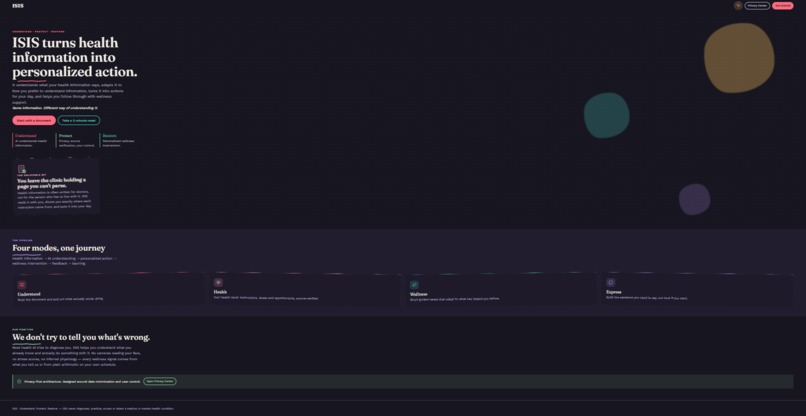
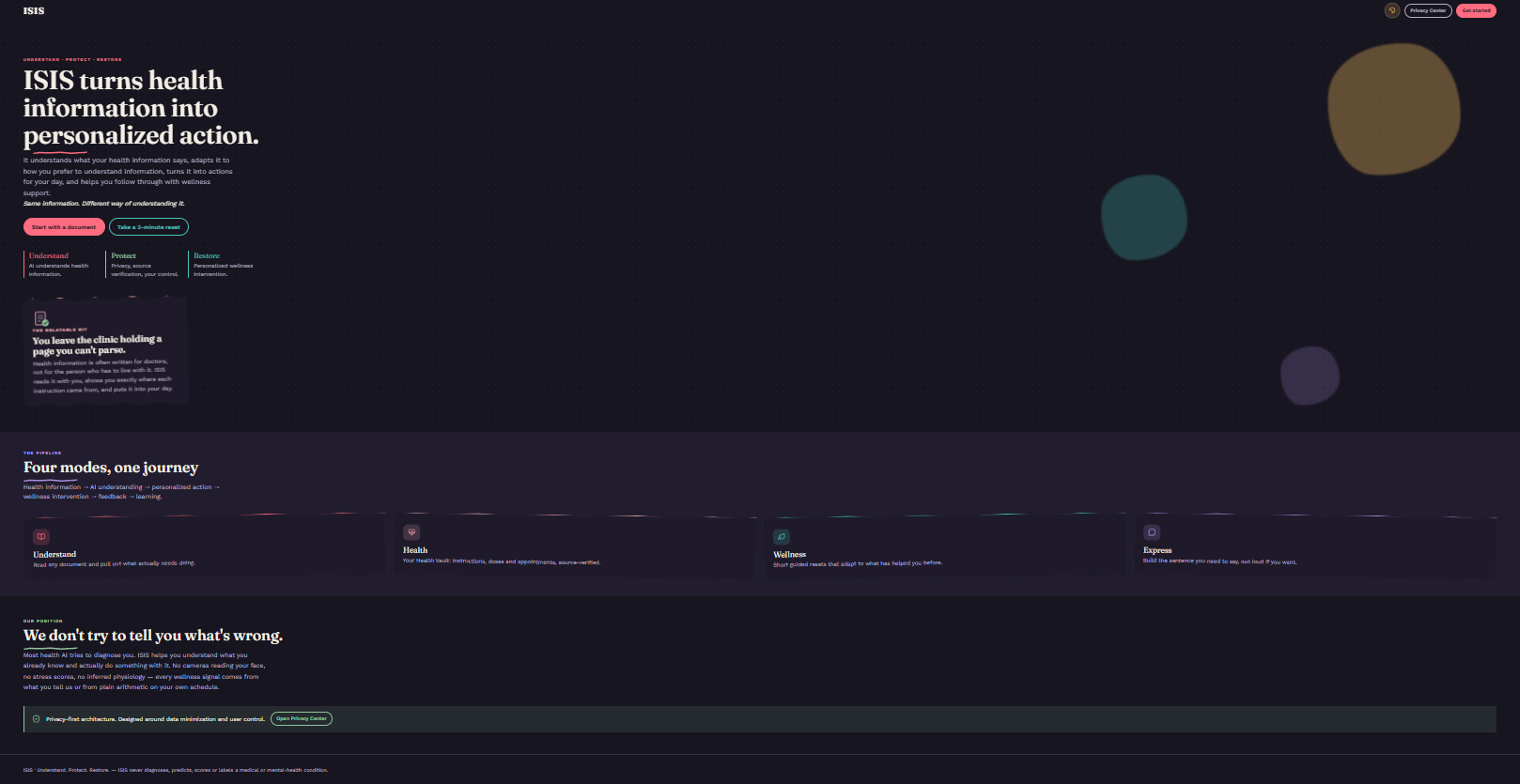
Homepage (dark)
-
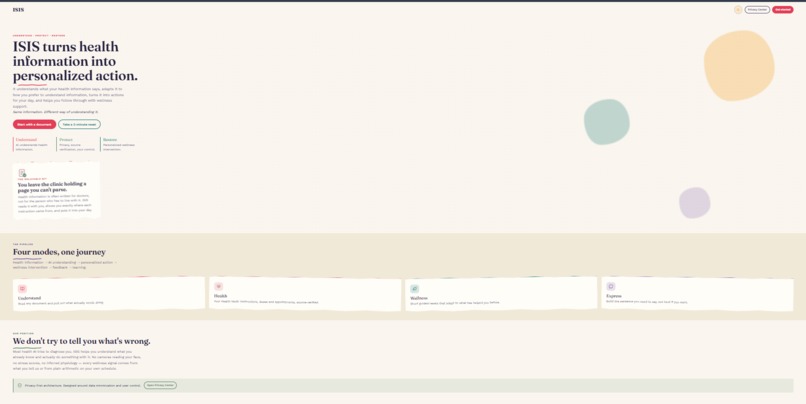
Homepage (light)
-
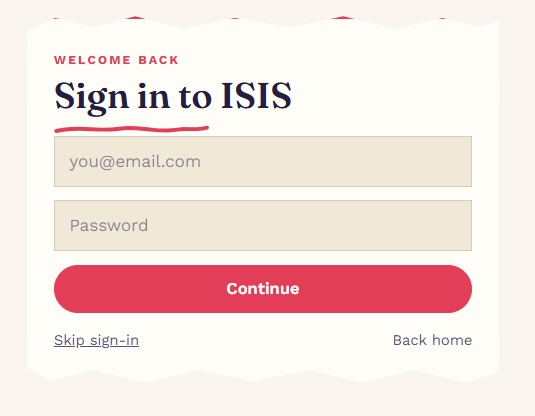
Login
-
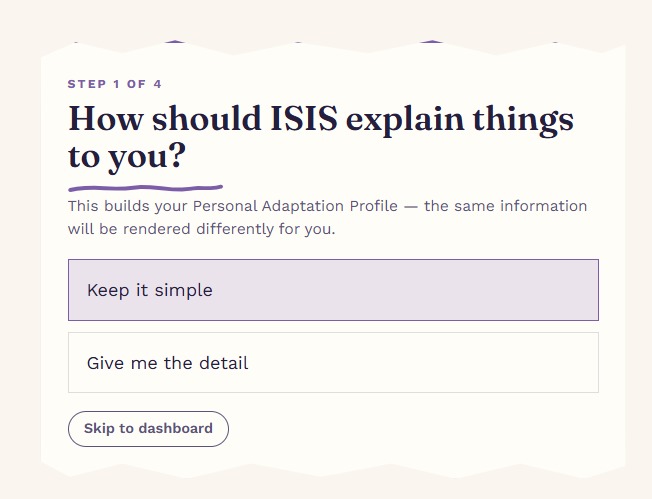
Question
-
Question
-
Question
-
Question
-
Dashboard(dark)
-
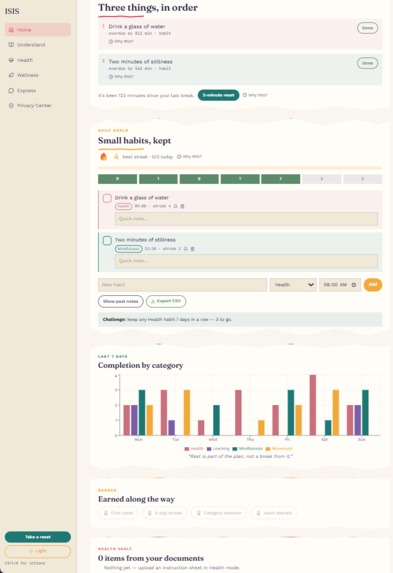
Dashboard(light)
-
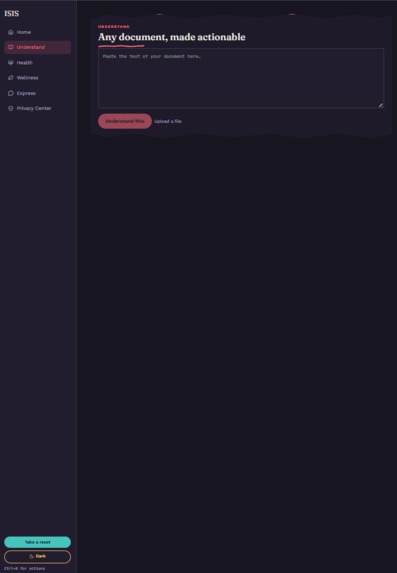
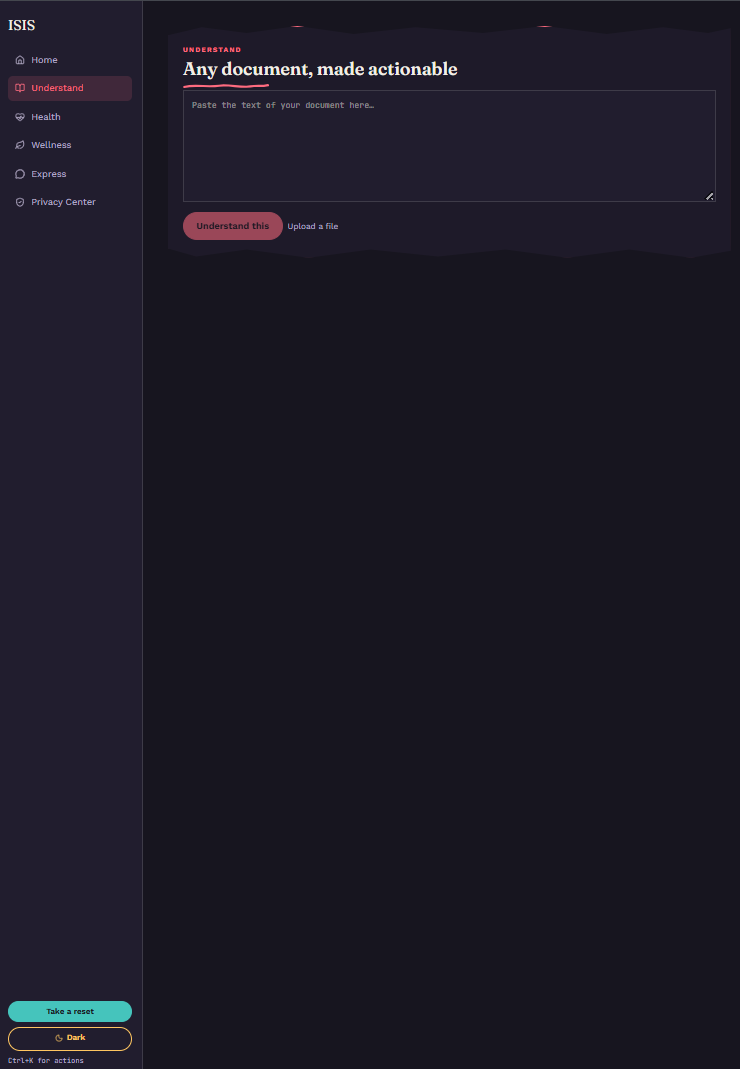
understand
-
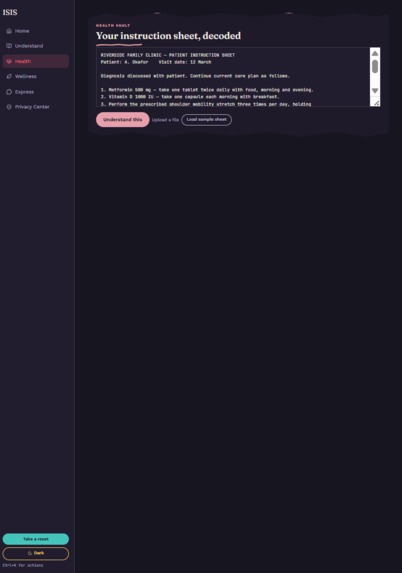
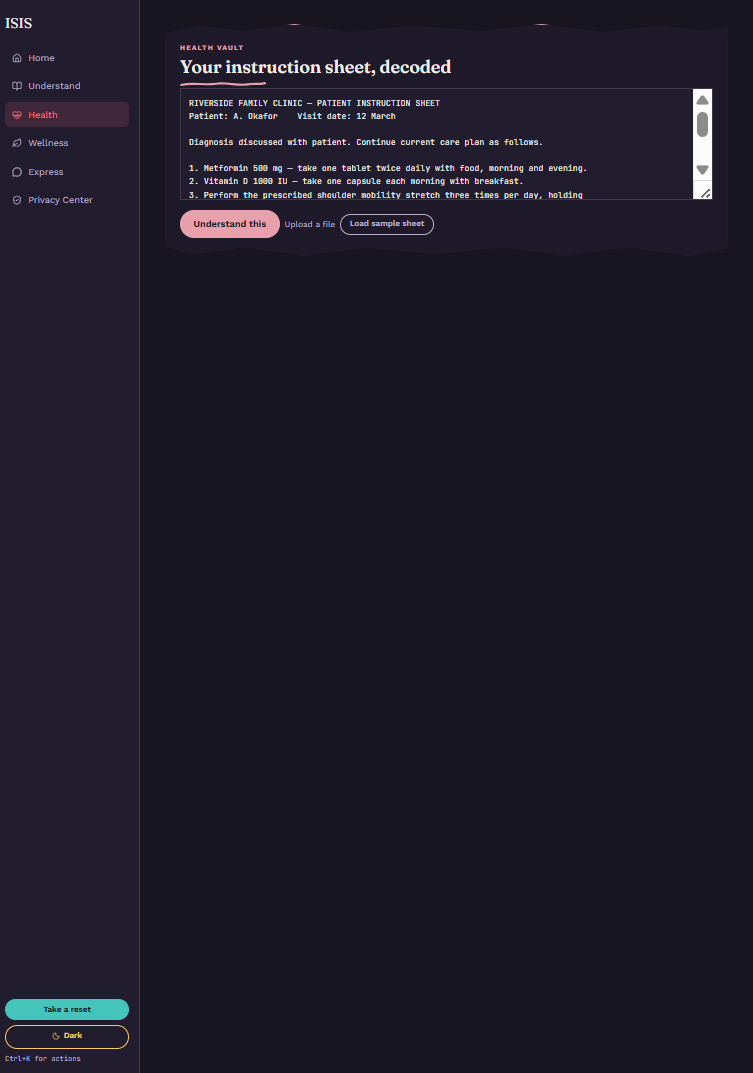
Health
-
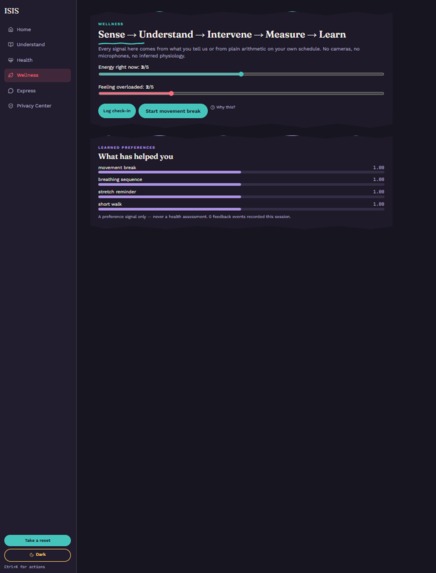
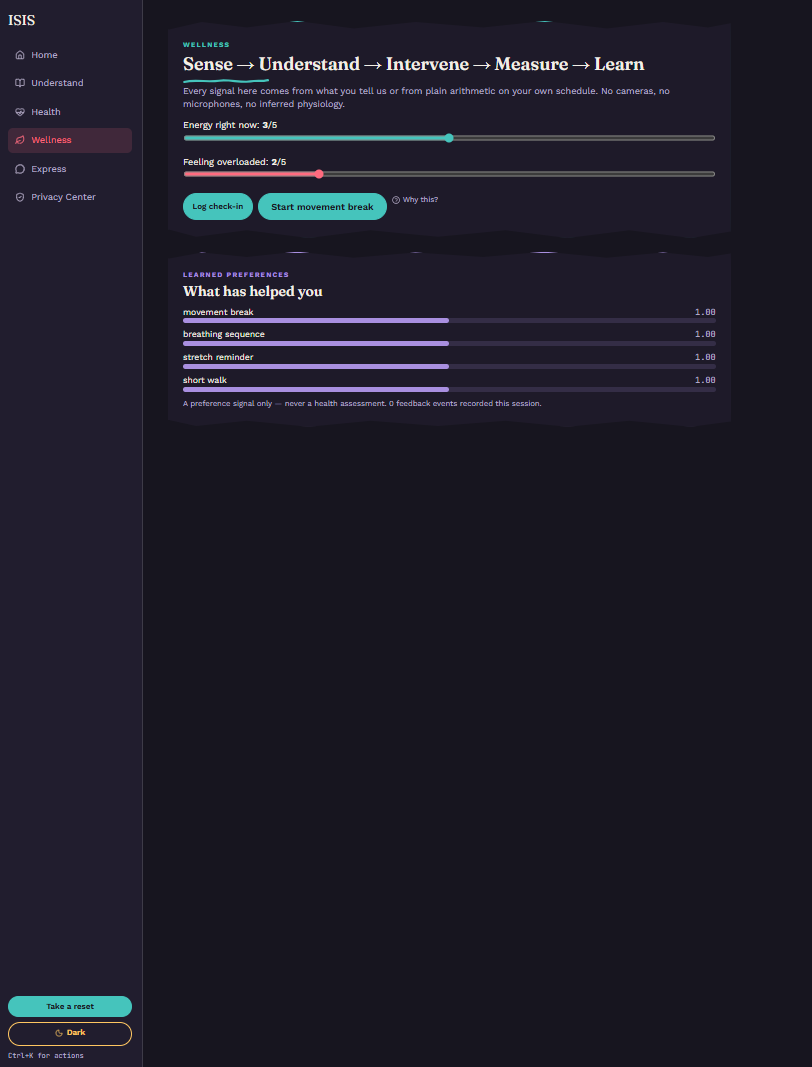
wellnessss
-
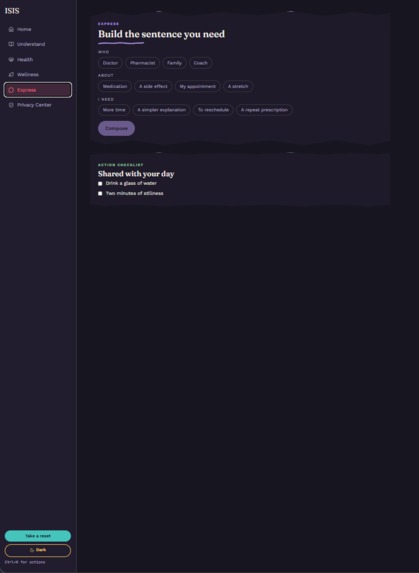
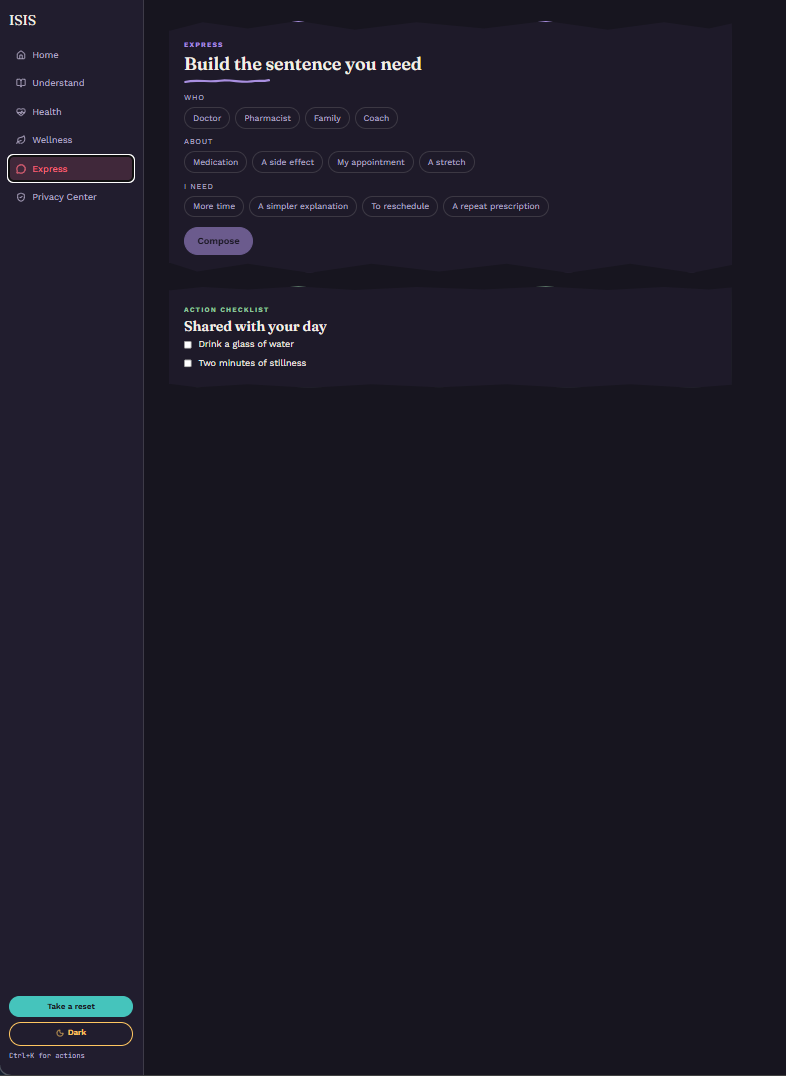
express
-
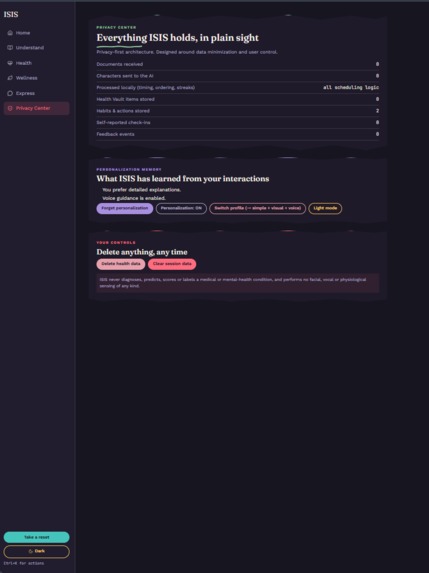
profile
Inspiration
ISIS started with something much more personal than a hackathon.
My grandparents live in another city, far away from us. As they got older, there were little things we started worrying about more and more
Did they take their medicines? Did they understand what the doctor asked them to do? Did they remember an appointment? Are they eating properly? Are they okay?
Sometimes they would forget. Sometimes we would remind them again and again. And sometimes, honestly, we would get frustrated.
But later I realized that they weren't forgetting because they didn't care.
They simply needed someone to make things a little easier.
The hardest part wasn't the distance. It was knowing that someone you love might need help, while you are too far away to be there.
That made me think like a lot and i came up with
What if technology could become a bridge between people who care about each other, even when they can't physically be together?
That became ISIS or I should say ISIS 1.0.
ISIS is built around a simple idea: health information should not just sit inside a prescription, report, appointment, or notification. It should become something a person can actually understand and act on.
A grandparent could upload a prescription and have ISIS explain it simply, read it aloud, organize their medicines, and remind them when it is time. Someone struggling through a difficult day could receive a small wellness intervention instead of another overwhelming notification. A family member living in another city could have peace of mind knowing that their loved one has a digital companion helping them stay on track.
And it goes beyond elderly family members.
It can help anyone who has ever felt overwhelmed by a medical document, forgotten an important task, struggled to communicate what they need, or simply needed a little support getting through the day.
I built ISIS because sometimes the most valuable thing technology can give us isn't another feature.
It's peace of mind.
The feeling that someone is looking out for the people you love.
Even from another city.
Even from another country.
Even when you can't be there yourself.
What it does
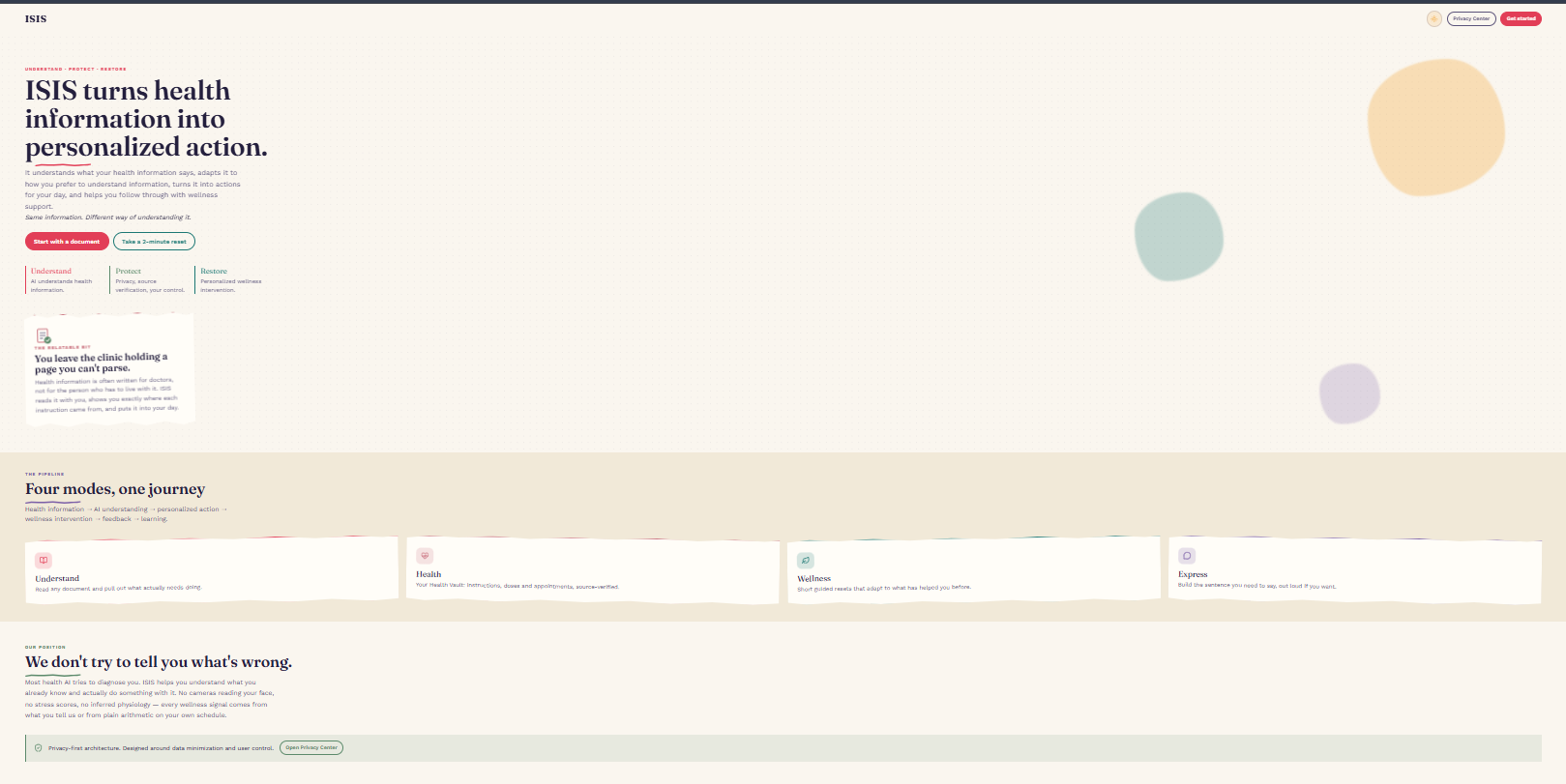
ISIS turns health information into personalized action.
Instead of simply storing health information or giving generic AI responses, ISIS creates a continuous journey:
Understand - > Personalize - > Act -> Support - > Learn
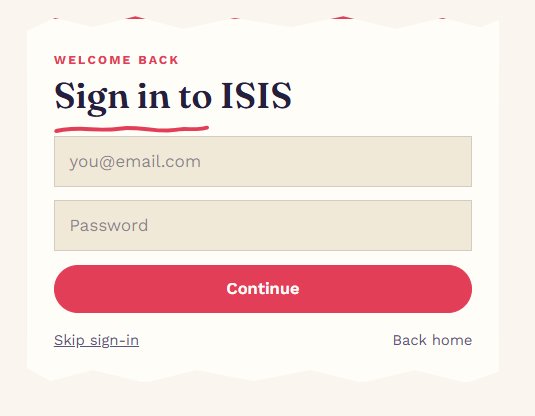
Users can upload health documents such as prescriptions, doctor's instructions, discharge summaries, or reports. ISIS uses Claude through a secure server-side API to understand the information, extract actionable instructions, and show users exactly where each piece of information came from.
Users can then turn those instructions into part of their day with "Make this part of my day."
For example:
Perform these stretches twice daily.
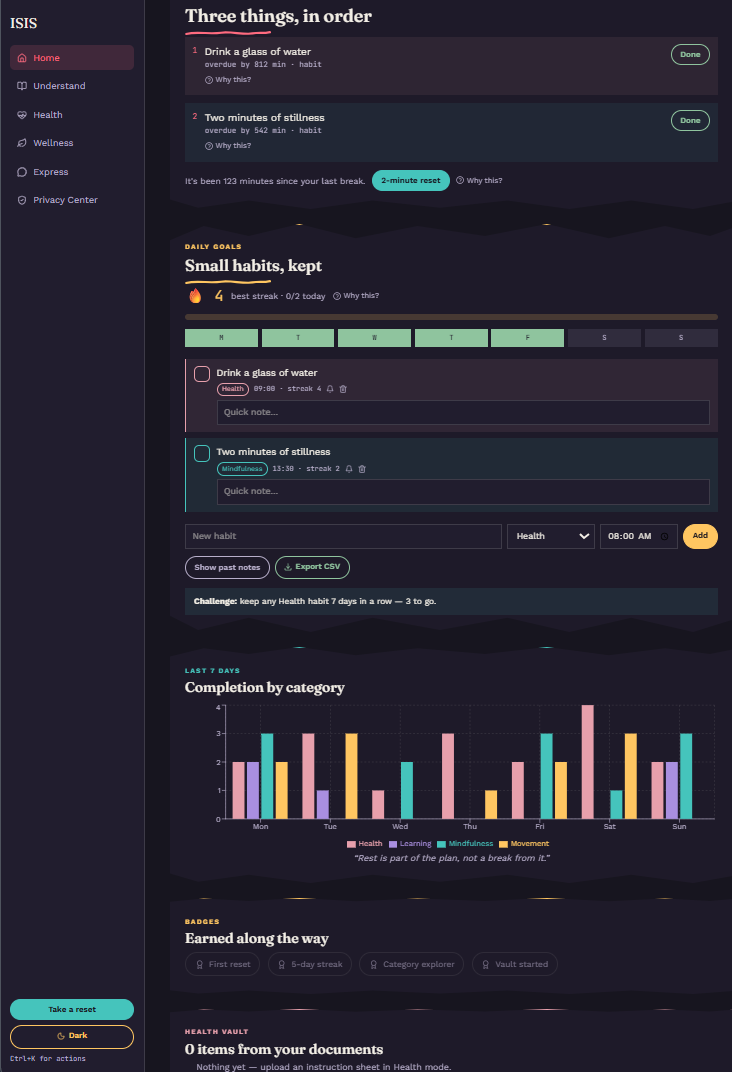
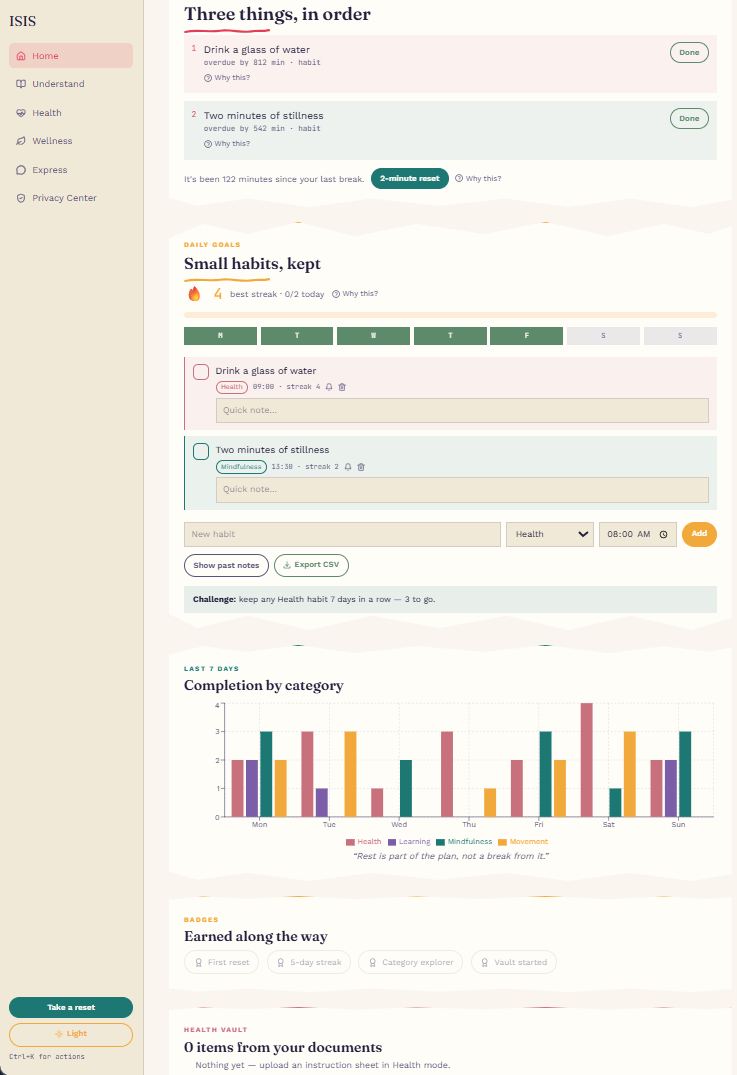
ISIS can turn that into a trackable action, surface it in Today's Brief, and connect it to a wellness intervention.
The experience doesn't stop at understanding.
ISIS can:
- Organize medication and health information
- Explain complicated information in simpler language
- Show the source behind AI-generated information
- Read information aloud
- Turn recurring instructions into daily actions
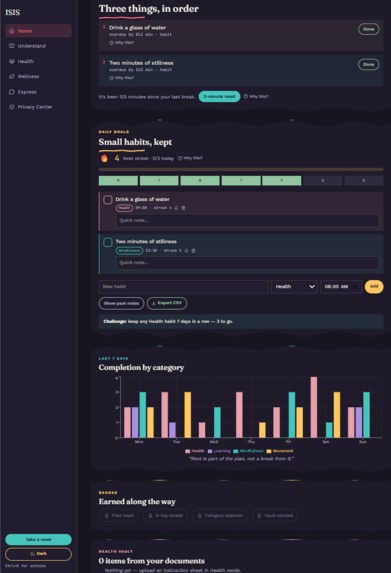
- Create a personalized Today's Brief
- Provide guided wellness interventions
- Ask "Did it help?" after an intervention
- Learn from user feedback
- Adapt information to the user's preferred communication style
- Help users communicate requests through Express
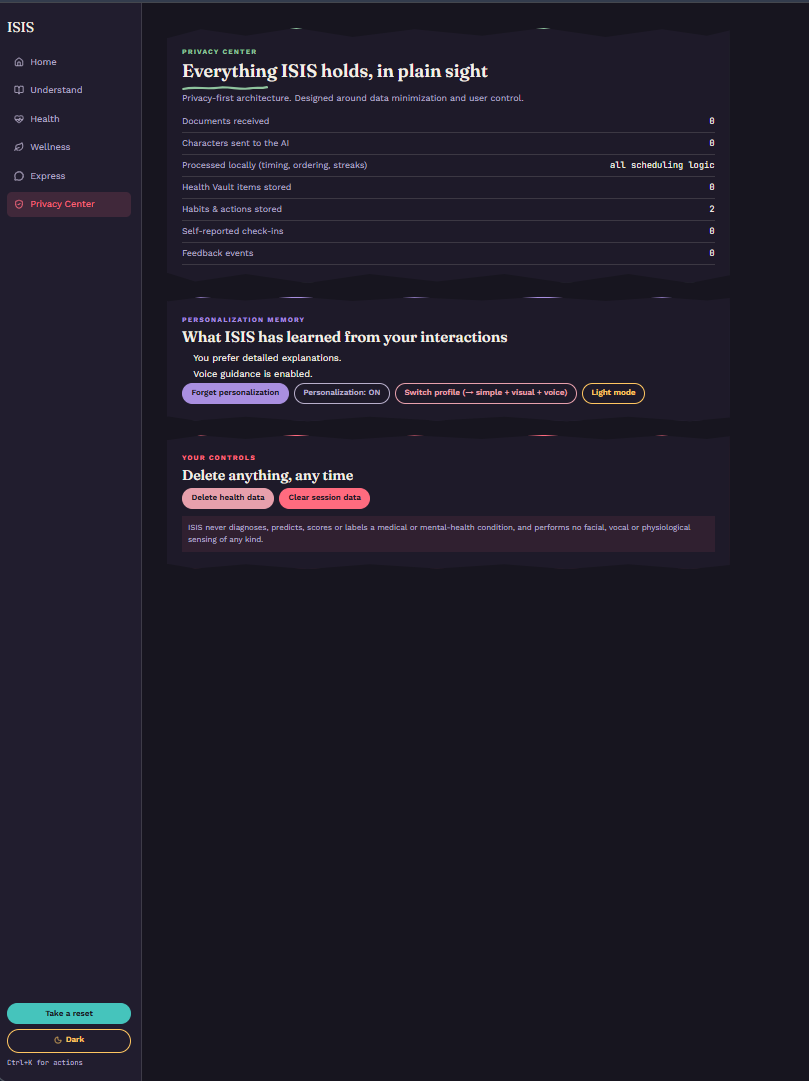
- Give users a dedicated Privacy Center to understand and control their data
The result is not another health dashboard full of numbers.
It's an AI layer between health information and real life.
How I built it
ISIS is built as a React + Tailwind application with a server-side API architecture for AI interactions.
The core intelligence is powered by Claude's API, which processes health and general documents through structured prompts and returns structured information that ISIS can turn into usable actions.
We designed the AI around a multi-stage reasoning pipeline:
Input - > Understanding - > Structured Facts - > Source Verification - > Personalization - > Action - >Feedback - > Adaptation
A major part of our implementation is source-backed AI.
Whenever ISIS extracts an important instruction from a health document, it keeps a literal source quote alongside it. Users can select "Show me why" and see exactly what part of their document led to that information.
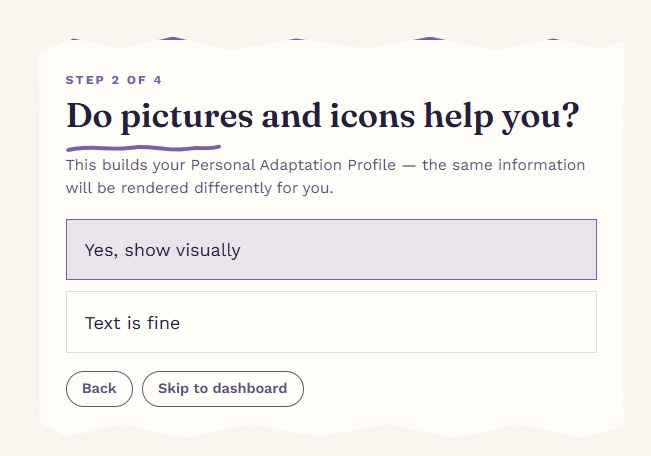
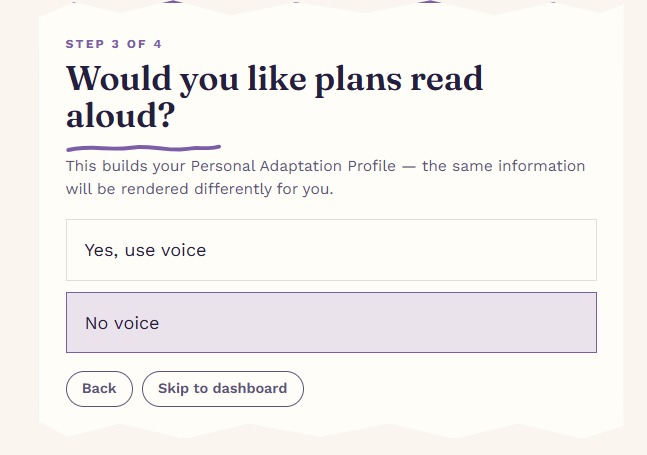
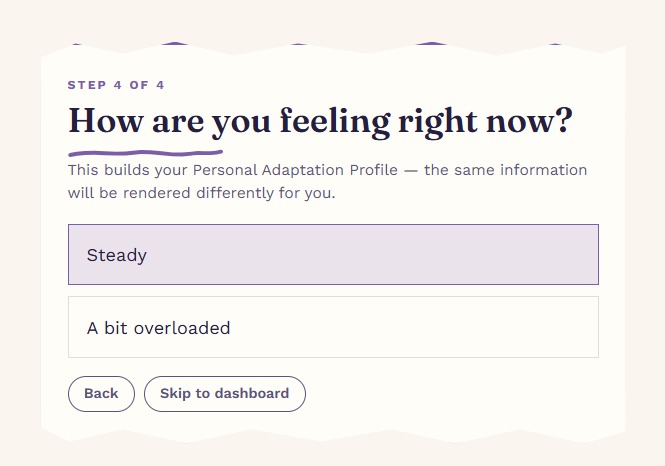
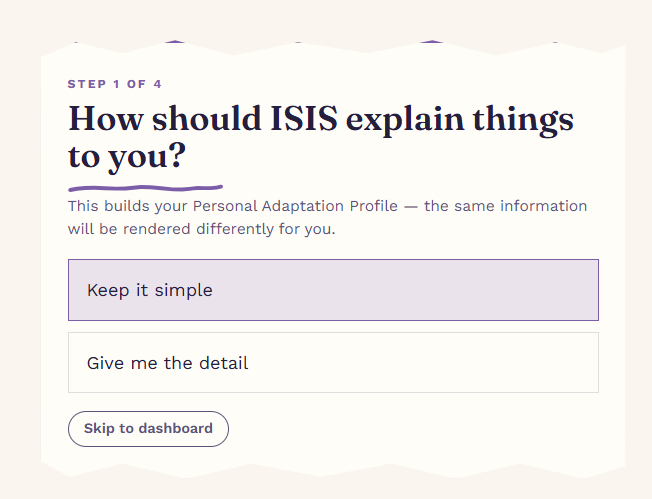
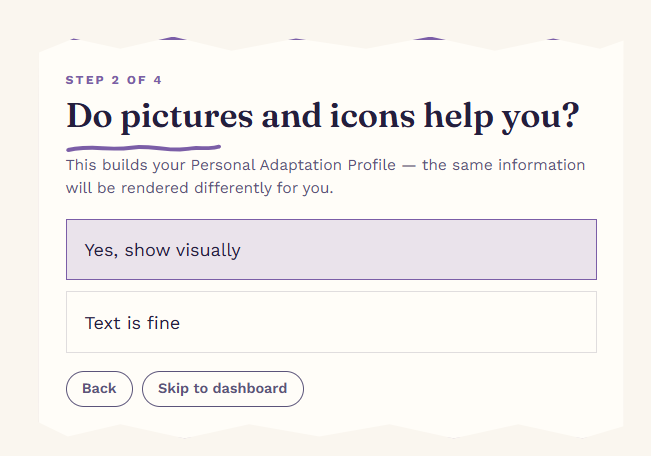
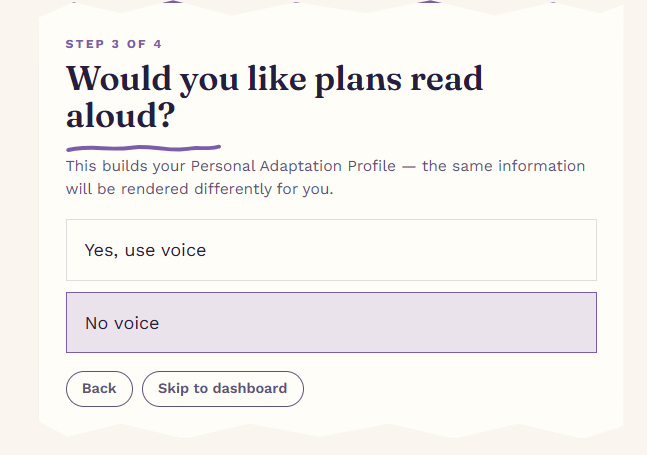
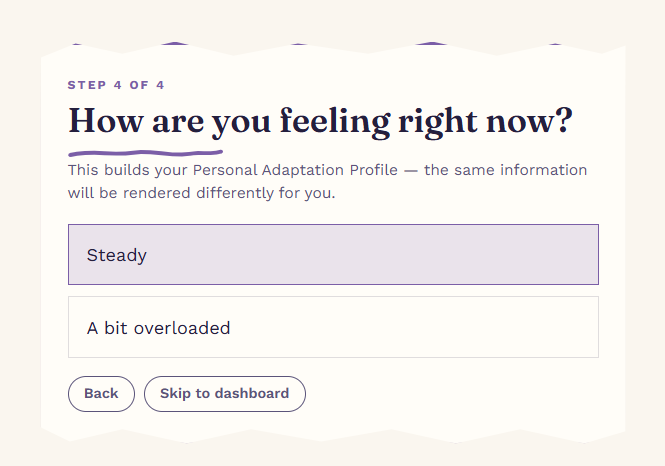
We also created a Personal Adaptation Profile.
ISIS doesn't assume everyone wants information presented the same way. Users can choose preferences such as:
- Simple vs. detailed explanations
- Visual vs. text-heavy presentation
- Voice vs. text communication
- Larger vs. standard interactions
Those preferences actually change how the same underlying information is presented.
The biggest architectural decision was creating a shared action system.
Instead of having completely separate medication reminders, habits, wellness tasks, and action items, ISIS treats them as trackable actions that can move through the same pipeline:
Health Information - > Action - > Today's Brief - > Wellness - > Feedback
The Wellness system then closes the loop with:
Sense - > Understand - > Intervene - > Measure - >Learn
We also built a dedicated Privacy Center around data minimization and user control, with session-level data visibility and deletion controls.
Most importantly, ISIS is designed to support and organize health information, not diagnose medical conditions or replace professional medical advice.
Challenges i ran into
The hardest part wasn't making an AI understand a document.
You Know The harder question was
What happens after it understands it?
There are already countless tools that can summarize a prescription or answer questions about a document. I wanted ISIS to actually bridge the gap between knowing something and doing something.
That led me to build the "Make this part of my day" concept.
Another challenge was balancing AI personalization with trust.
When you're dealing with health information, I didn't want ISIS to simply say, "Trust me, this is what your document means."
I wanted users to be able to ask:
"Why did you say that?"
And get an actual answer from their own document.
Ialso had to think carefully about safety. ISIS should never pretend to be a doctor, diagnose someone, or turn a wellness signal into a medical conclusion.
And finally, I wanted the product to feel human without becoming intrusive.
Health technology can easily become another source of notifications and anxiety.
I wanted ISIS to feel more like:
"I've got you."
rather than:
"You forgot something again."
Accomplishments that i am proud of
i am proud that ISIS became more than the collection of features i originally imagined.
The biggest accomplishment is the Health rto Wellness loop.
A document can become an action.
An action can become part of someone's day.
That action can lead to a wellness intervention.
The intervention can ask whether it helped.
And that feedback can influence what happens next.
i are also especially proud of Show Me Why.
In a world where AI can confidently generate answers, i wanted ISIS to make trust visible.
i didn't just want AI to tell users what to do.
i wanted it to show them why.
i am also proud of building the Personal Adaptation Profile, the shared action system, the Privacy Center, and the server-side Claude architecture into one coherent experience rather than making four disconnected AI features.
Most importantly, i built something around a problem that actually matters to us.
Something that started with worrying about our grandparents and turned into something that could help families everywhere feel a little closer.
What I learned
I learned that building a health product isn't just about making the AI smarter.
It's about knowing when AI should speak, when it should simplify, when it should step back, and when it should tell someone to seek professional help.
I learned that personalization isn't just changing colors or saying someone's name.
Real personalization means changing how information is understood and acted upon.
I also learned that trust has to be designed into the product.
Source citations, transparent data handling, privacy controls, and clear boundaries around what AI can and cannot do aren't "extra features."
They are part of the product.
And perhaps the biggest thing I learned is that technology doesn't always have to replace human connection.
Sometimes its most meaningful purpose is to help people take better care of each other.
What's next for ISIS 1.0
ISIS 1.0 is just the beginning.
my next goal is to turn ISIS from a session-based prototype into a long-term personal and family health companion while keeping privacy and user control at its core.
I want to explore:
- Trusted Family Circles -allowing loved ones to stay connected without exposing everything
- Caregiver Mode- helping family members support parents and grandparents remotely
- Smarter reminders- that adapt to how a person actually responds
- Voice-first- interaction for people who struggle with screens or reading
- Multilingual health communication- for families who are more comfortable in their native language
- Better accessibility for elderly users and people with different abilities
- Long-term wellness patterns based on user-controlled history
- More powerful AI agents that can help organize information across appointments, documents, tasks, and daily routines
But the goal will remain the same.
i don't want ISIS to become another app that tells people what they forgot to do.
i want it to become something that quietly helps people say:
"I'm okay."
And gives the people who love them a reason to believe it.
ISIS Submission Details
Technologies I Used
- React + Tailwind CSS
- Claude API for document understanding, personalization, source verification, and action generation
- Recharts for data visualization
- Web Speech API for text-to-speech and voice interaction
- Notification API for reminders
- Server-side API architecture to keep the Claude API key secure
Track Selection
Main Track: Health — Advanced
ISIS works with real health information such as prescriptions, doctor's instructions, medications, and appointments. It transforms that information into personalized, actionable support through:
- Source-backed health information with “Show Me Why”
- Medication and health-document organization
- Personalized explanations and accessibility options *“Make This Part of My Day”actions
- Today's Brief and wellness interventions
- Privacy controls and session-level data deletion
- A strict no-diagnosis boundary
AI Usage
Claude powers ISIS's core intelligence understanding health documents, extracting source-backed information, personalizing explanations, generating actions, and learning from user feedback.
I used Lovable to assist with building the React/Tailwind application and implementation.
ISIS
Understand. Protect. Restore.
Because distance shouldn't mean being unable to care.
Built With
- ai
- anthropic
- api
- apis
- claude
- computer
- css
- data
- generative
- healthcare
- healthtech
- minimization
- multimodal
- personalization
- privacy-first
- react
- responsive
- tailwind
- text-to-speech
- typescript
- vision
- web
- wellness


Log in or sign up for Devpost to join the conversation.