Inspiration
The aquaculture is a long standing and important industry, but farmers constantly face risks from unpredictable water conditions. We wanted to equip them with accessible, data-driven information to maximise yield, optimise resources, and prevent losses due to environmental factors.
What it does
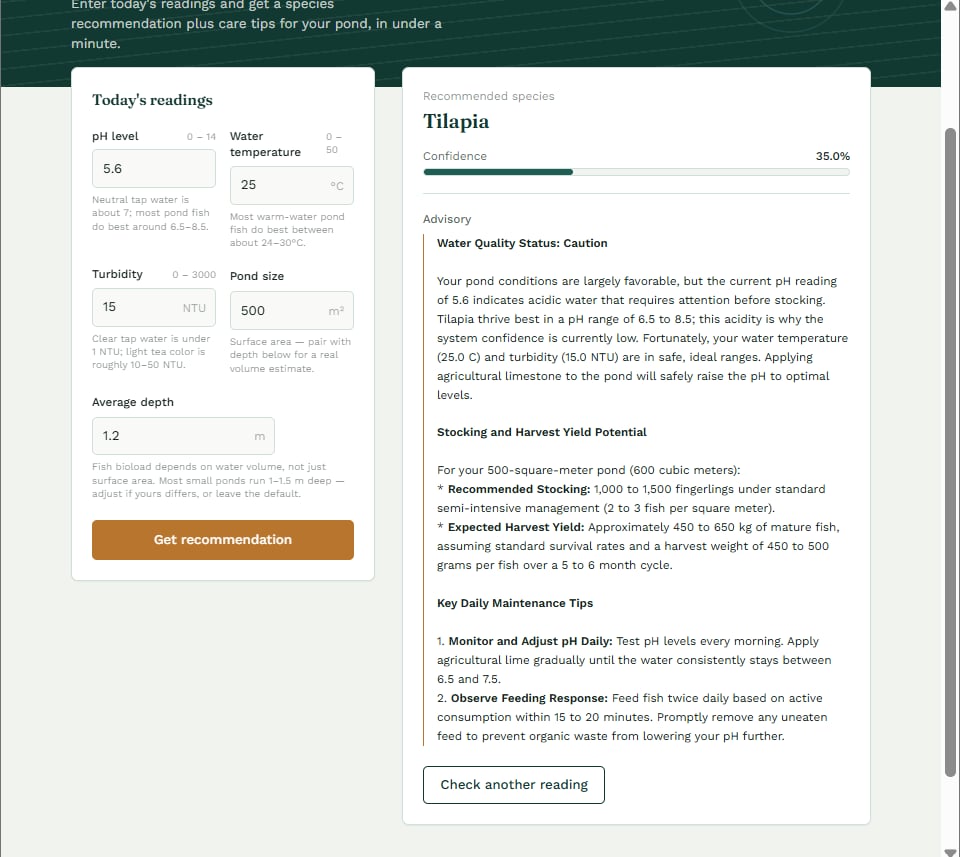
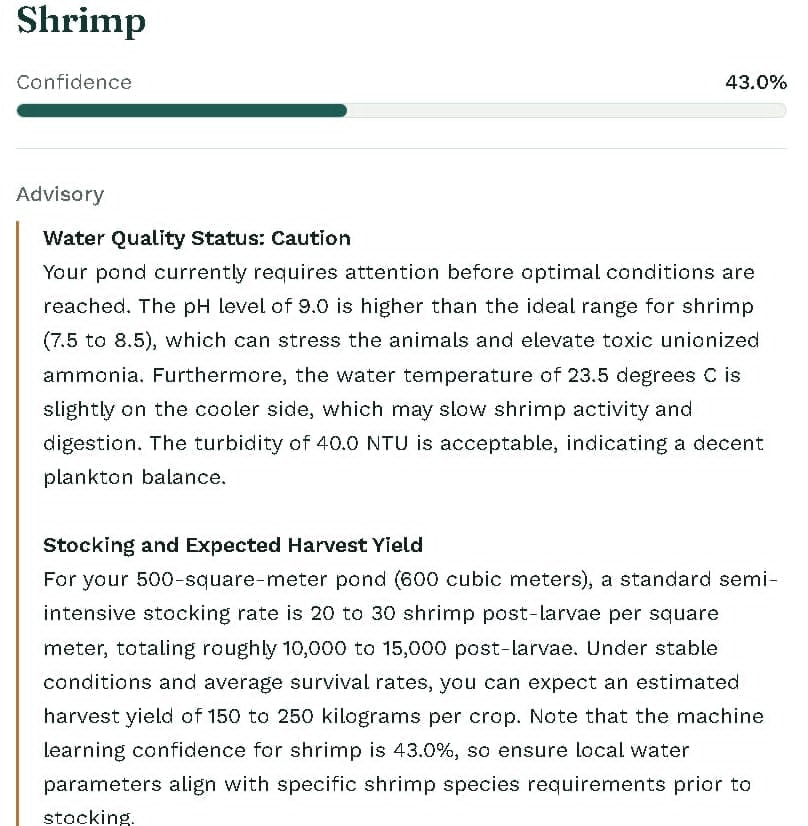
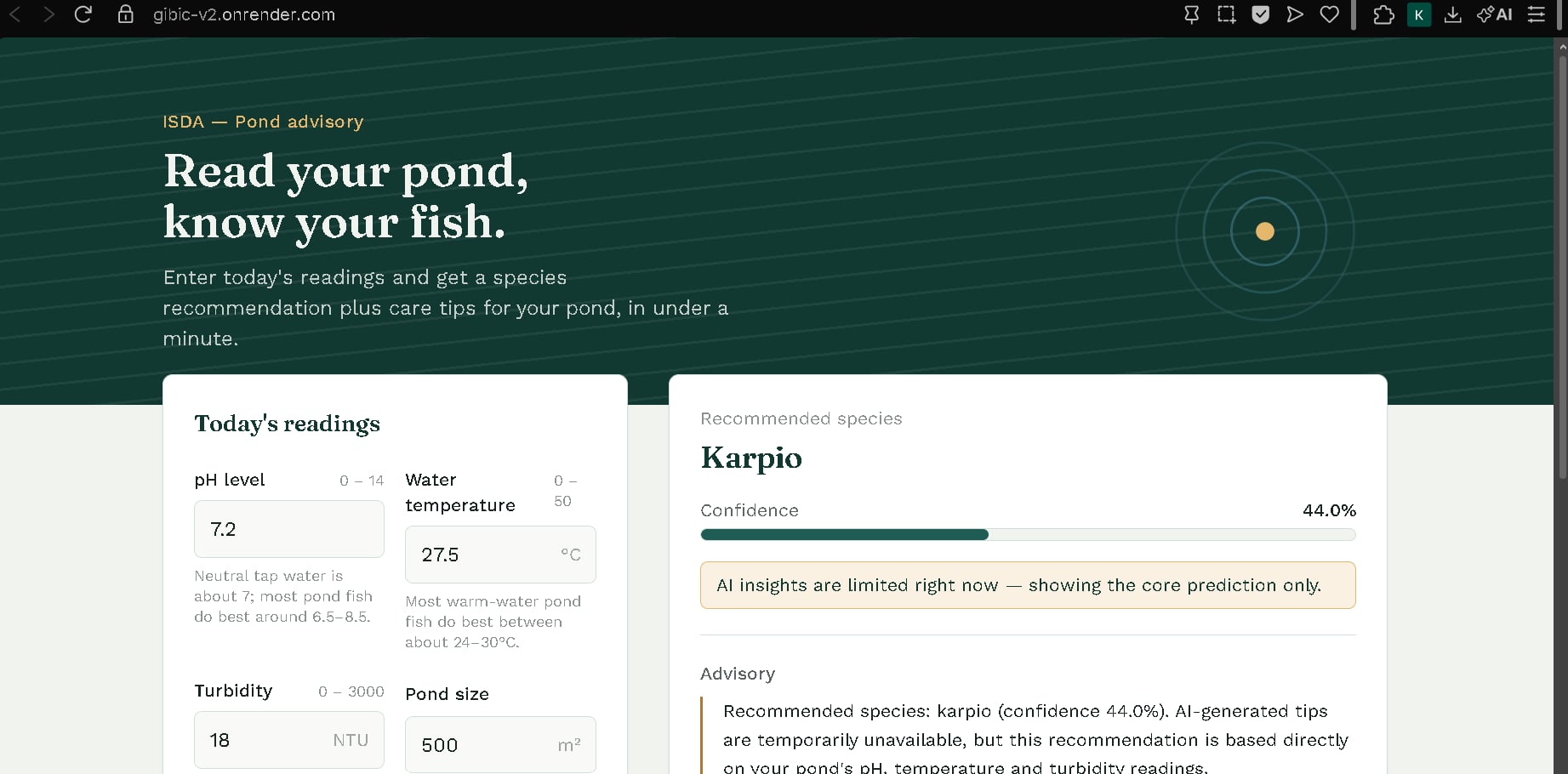
ISDA (Intelligent System for Data-driven Aquaculture) is a machine learning prediction system that evaluates water parameters such as ph-level and turbidity. Based on this data, it generates yield advice to help farmers make informed decisions about their farm.
How we built it
We created the core by training a predictive model using a random forest algorithm via scikit-learn. The backend was setup using FastAPI to handle data transfer and processing. To translate the numerical output of the ML model we integrated Google Gemini flash API.
Challenges we ran into
Developing the data science pipeline and fine-tuning the Random Forest training logic required trial and error to ensure the predictions were accurate. Additionally, bridging the machine learning model with the FastAPI backend and engineering the Gemini API prompts to consistently deliver reliable, well-formatted advice posed technical hurdles.
Accomplishments that we're proud of
We are incredibly proud of engineering a complete, end-to-end machine learning prediction system. Seamlessly connecting the scikit-learn logic with a FastAPI backend and the Gemini API to produce a functional, practical prototype was a victory for our team.
What we learned
We deepened our understanding of building and optimizing data science pipelines and implementing Random Forest models. We also gained practical experience in deploying scalable backend servers with FastAPI and effectively utilizing LLMs to generate dynamic user feedback from structured data.
What's next for [ISDA] Intelligent System for Data-driven Aquaculture
We plan to integrate real-time data ingestion by connecting the backend directly to IoT water sensors. We also aim to expand the model's training data to support a wider variety of aquatic species.

