-
-
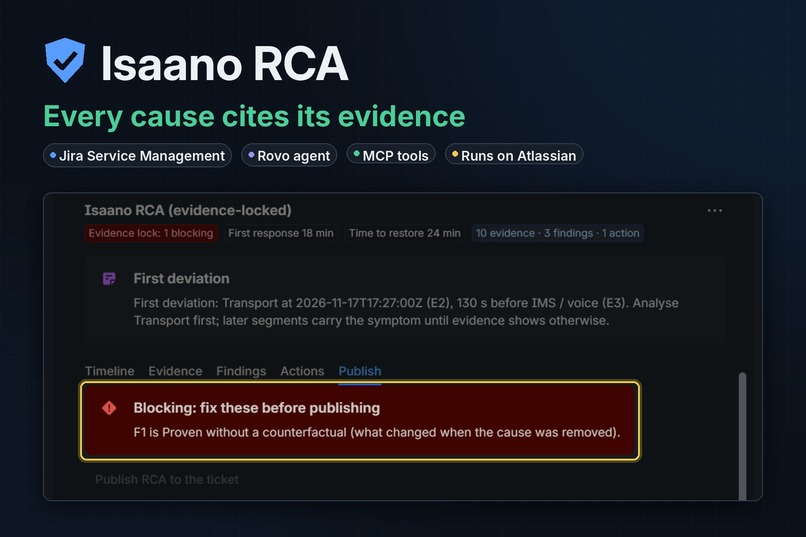
Isaano RCA: every cause cites its evidence
-
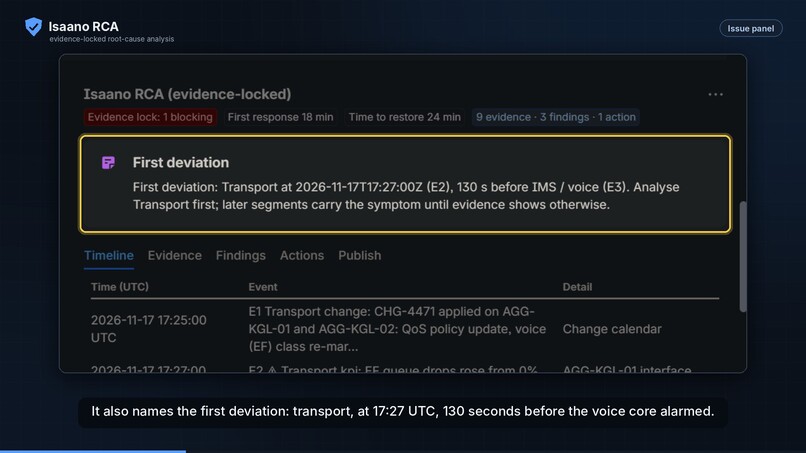
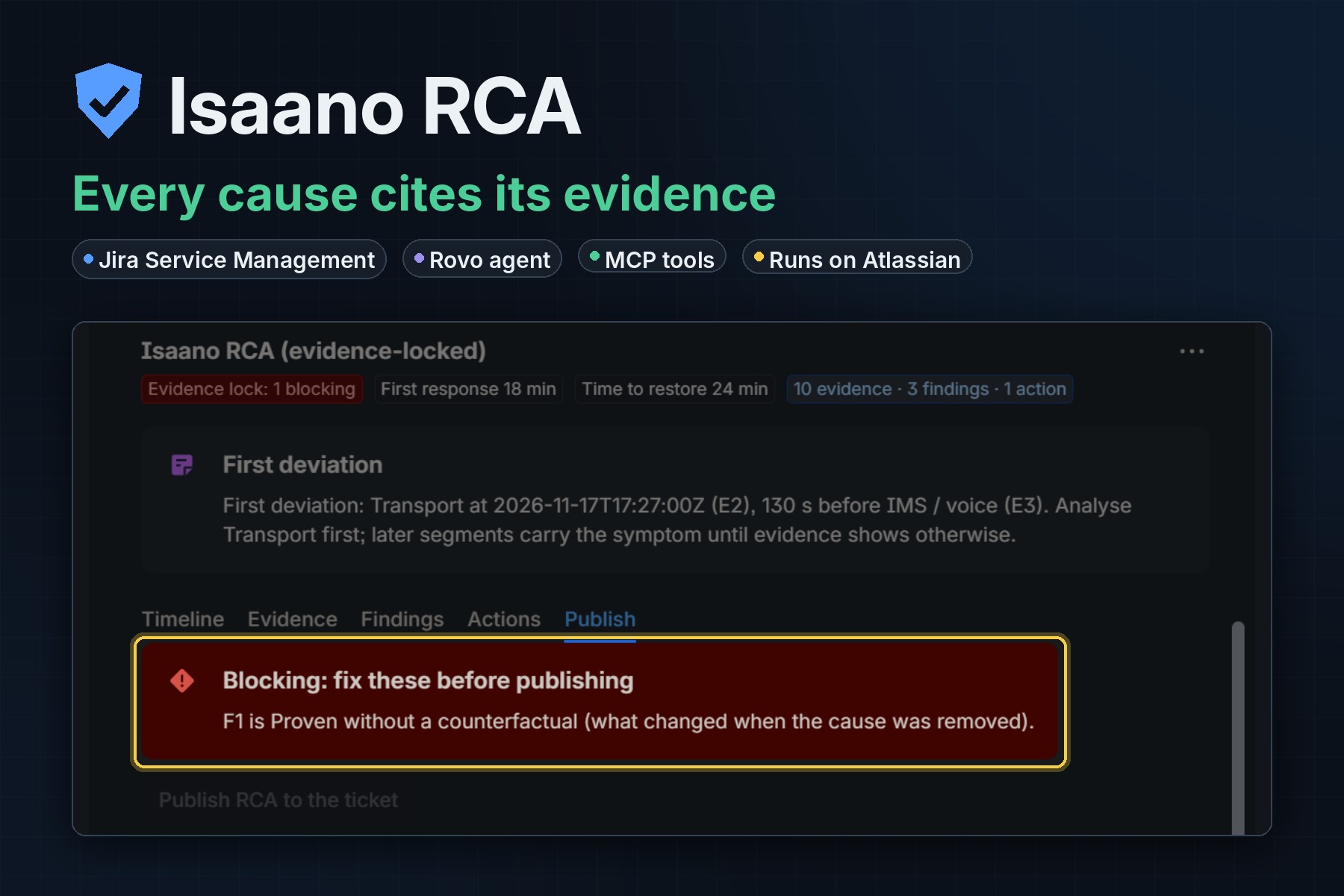
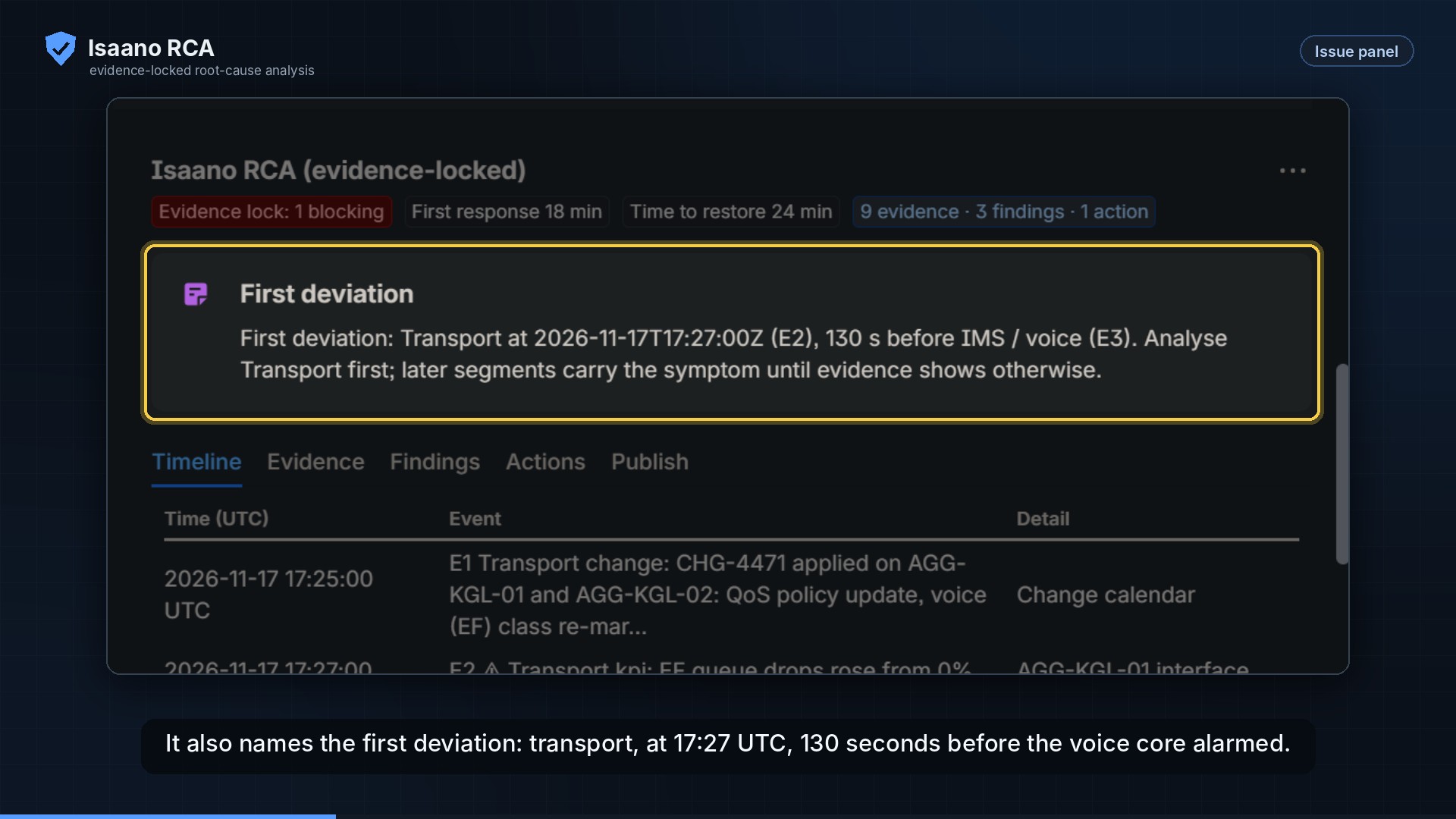
First deviation: transport, 130 s before the voice core
-
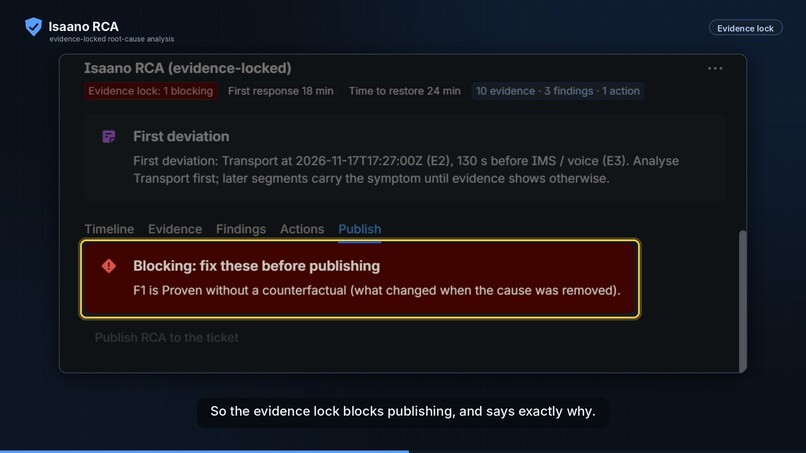
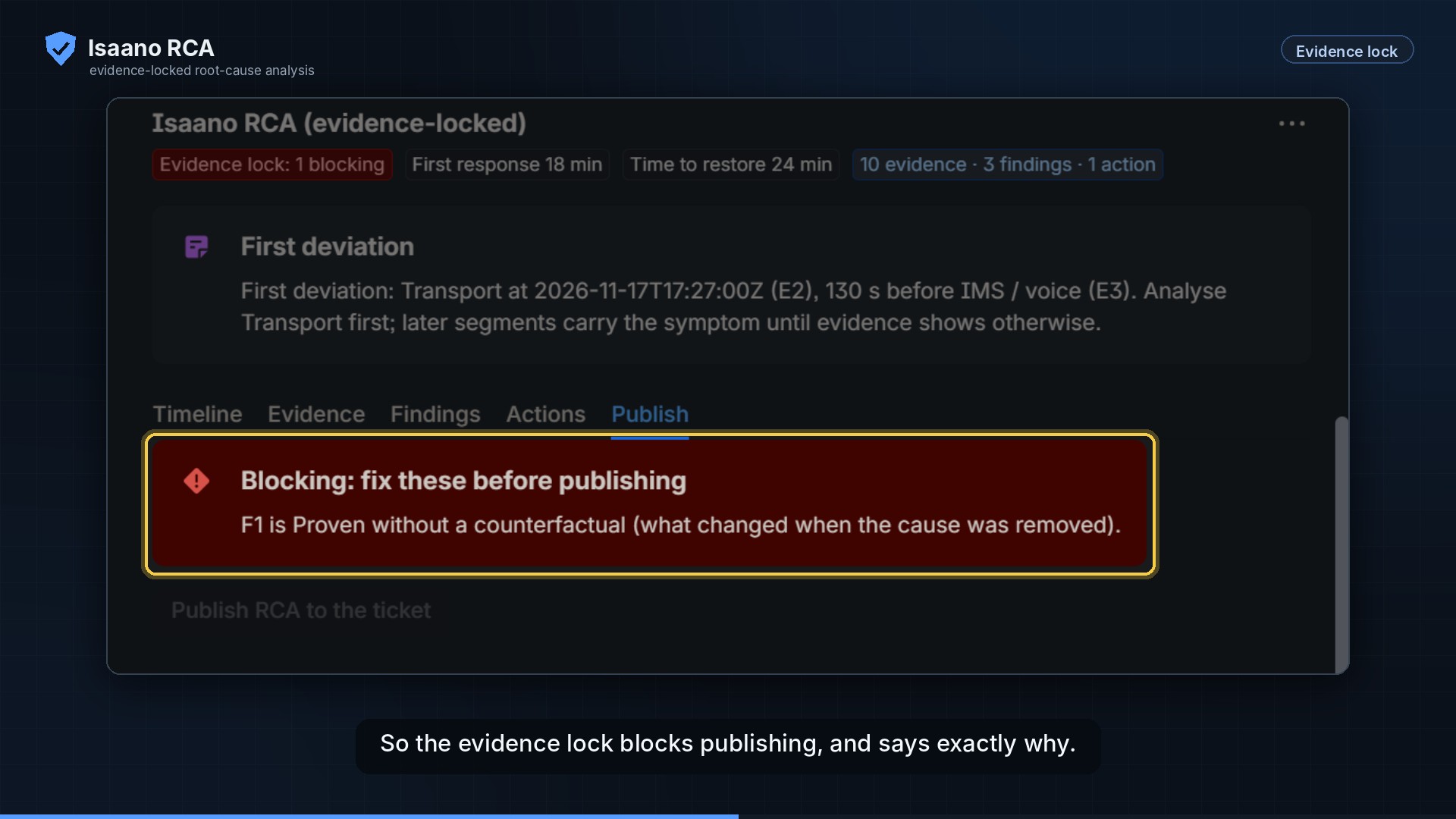
The evidence lock blocks a Proven cause without a counterfactual
-
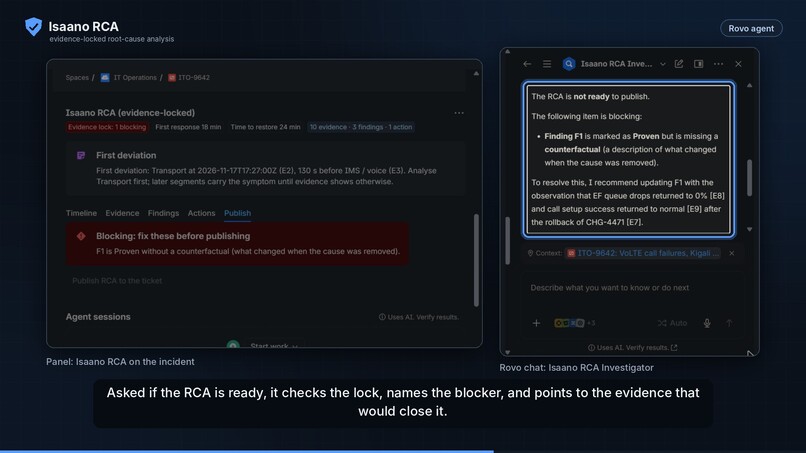
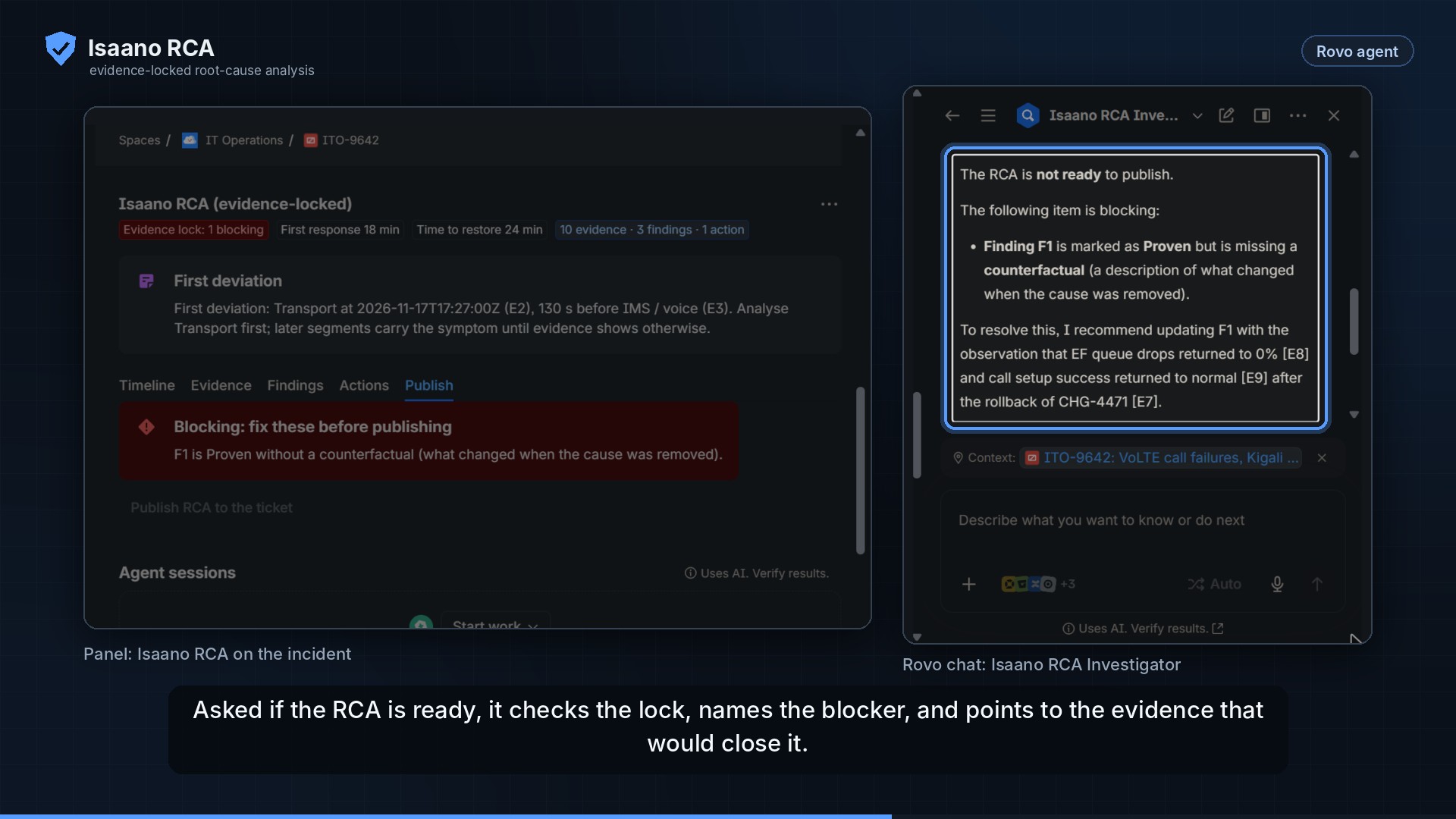
The Rovo agent checks the lock and names the blocker, with citations
-
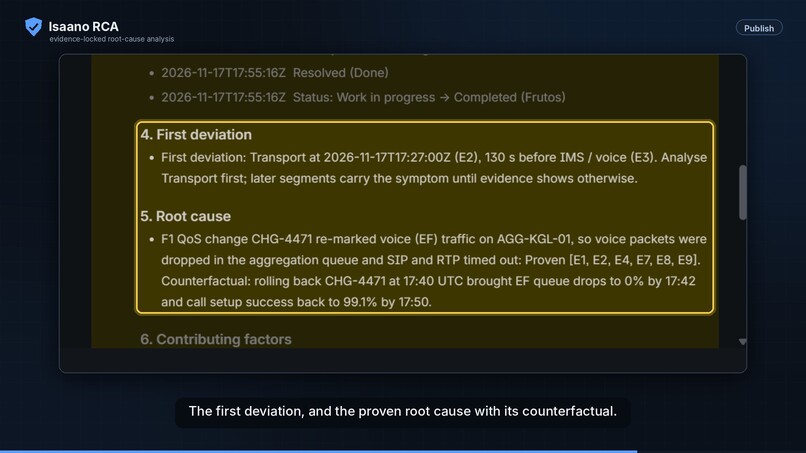
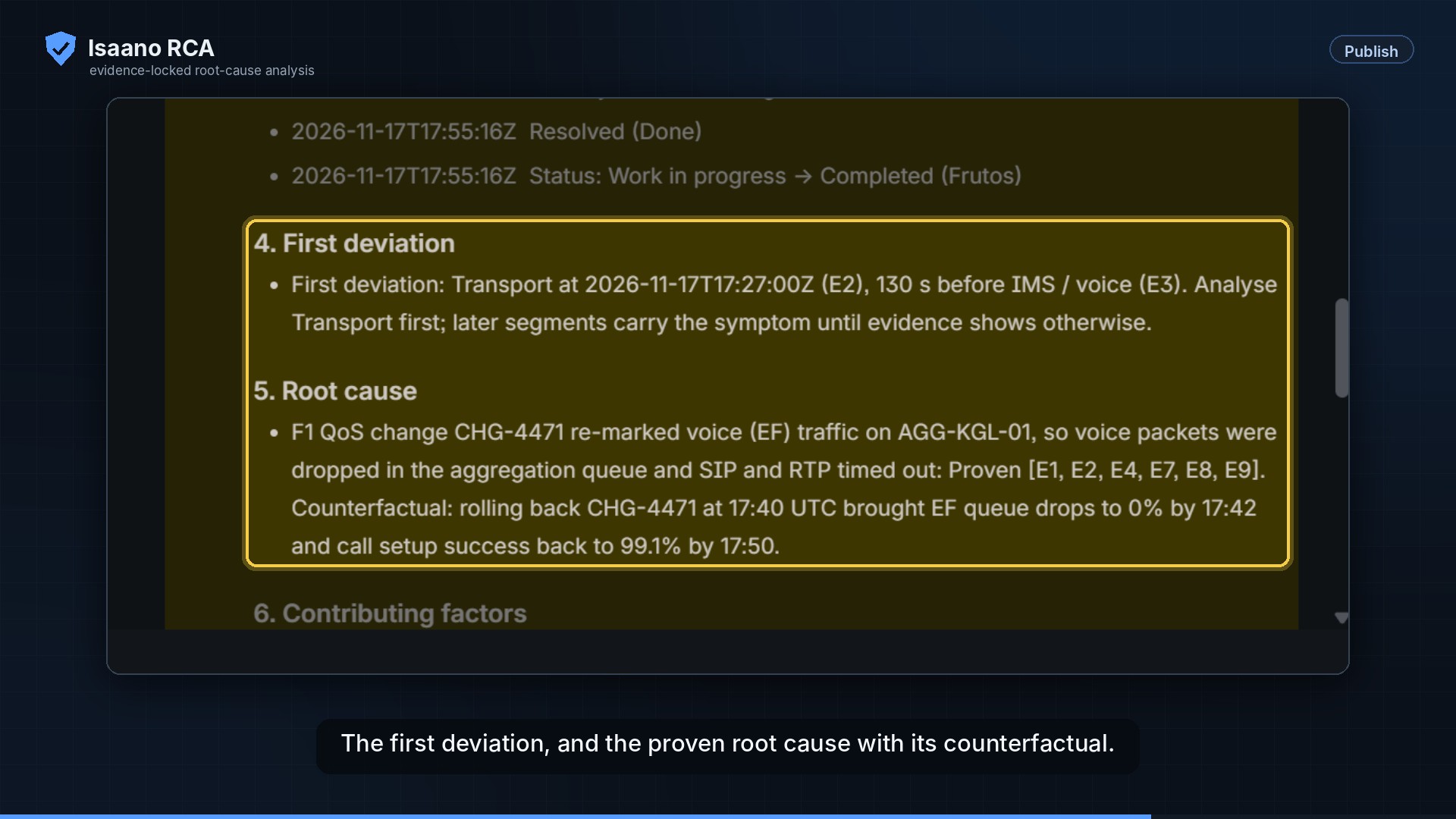
The ten-section RCA, published to the ticket as an internal comment
-
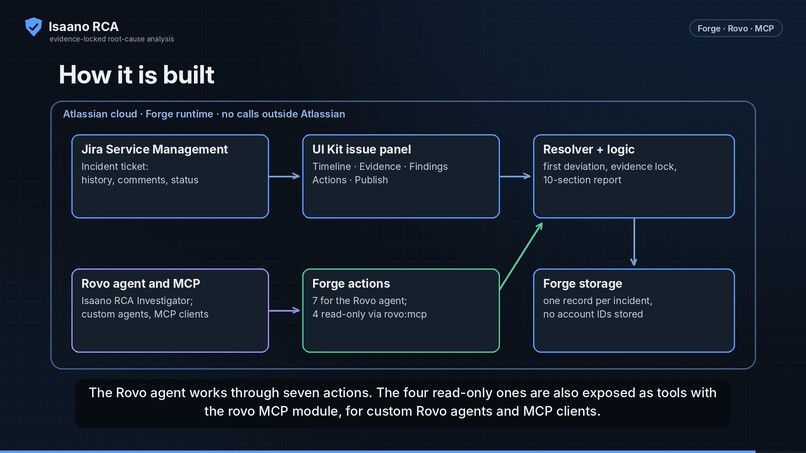
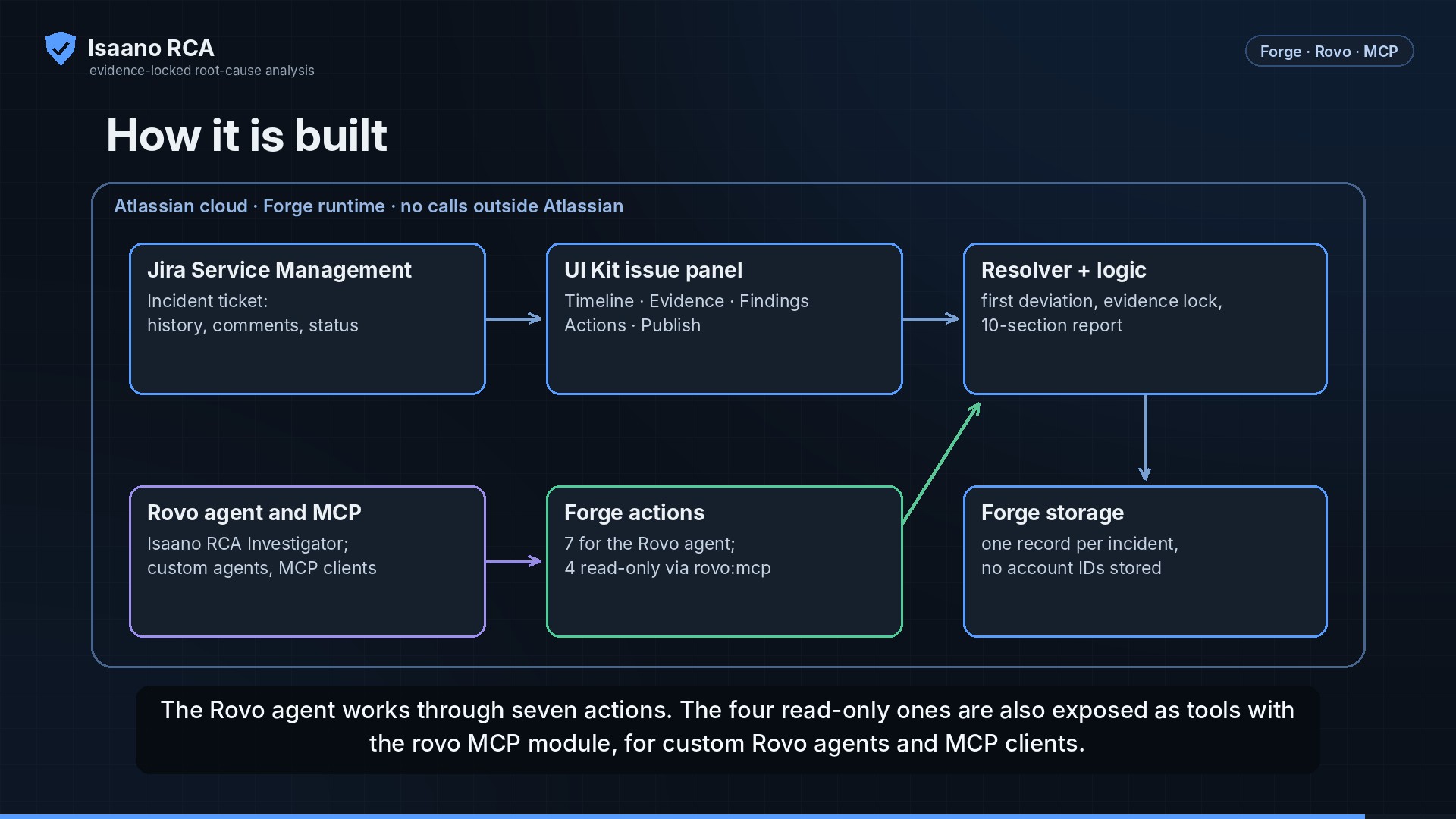
Forge panel, Rovo agent and rovo:mcp tools; no calls outside Atlassian
-
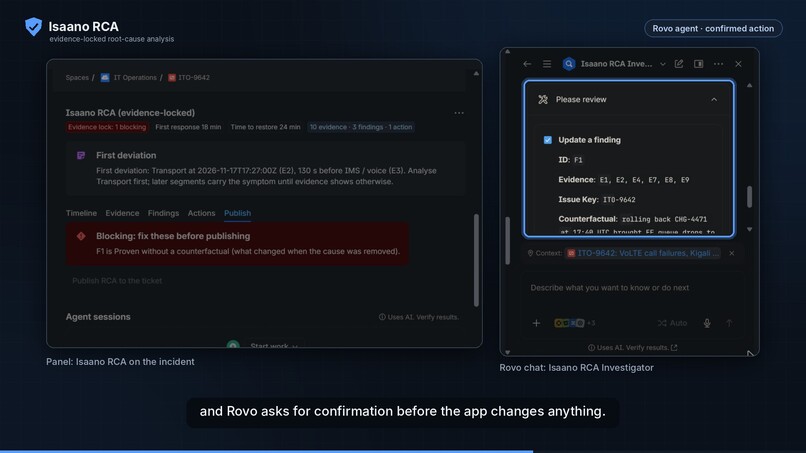
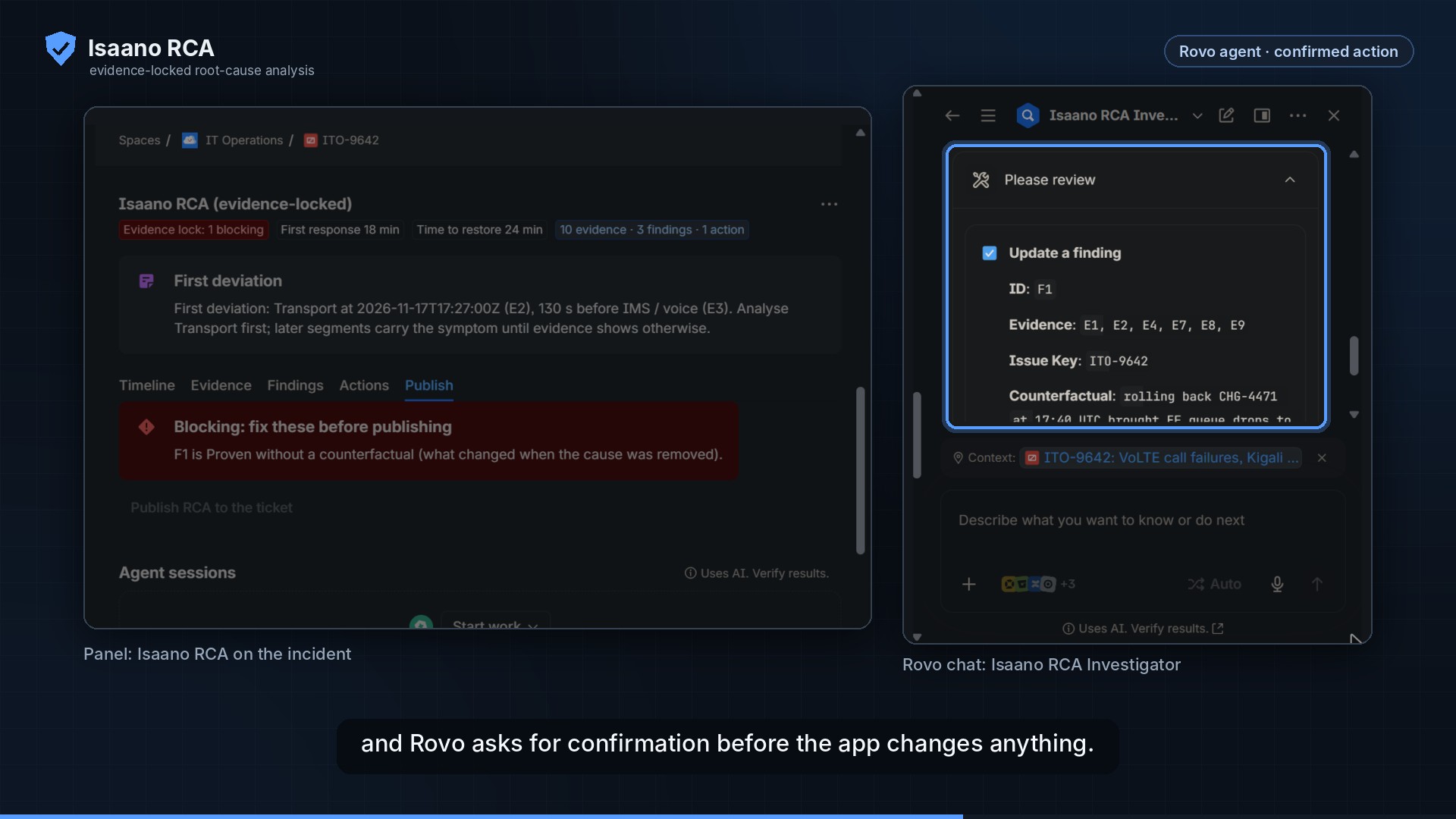
Rovo asks for confirmation before the app updates a finding
Inspiration
I have worked in mobile core networks for more than 18 years. After a big outage, the root-cause report is usually written days later from memory: someone rebuilds the timeline from screenshots, the segment that failed first is decided by whoever speaks loudest, and causes get published that no counter or log supports. The next outage repeats the pattern.
I wanted the analysis to live in the incident ticket itself, built from evidence while it is fresh, and to make "every cause cites its evidence" something the tool enforces rather than a slogan.
What it does
Isaano RCA adds an issue panel to Jira Service Management incidents:
- Timing from the ticket itself: time to first response and time to restore, read from the issue history.
- Timeline in UTC: ticket events (created, status and priority changes, comments, resolution) merged with the evidence.
- Evidence register: each item has a type (alarm, KPI, log, trace, change, field report), a network segment (RAN, Transport, Core, IMS / voice, Services, Cloud, Site power, Other), a source, a UTC time and a flag when it shows a deviation. Rows paste straight in from an alarm list, a KPI report or a change calendar; a row that does not fit is reported with the reason, never guessed.
- First deviation: the earliest abnormal evidence per segment. When the two earliest segments are within 60 seconds of each other, it says the order cannot be proven at that granularity and recommends checking shared resources first.
- Findings: root causes, contributing factors and excluded hypotheses, each citing evidence IDs, with a confidence of Proven, Supported or Unproven. Findings can be updated as evidence arrives.
- Evidence lock: publishing is blocked while a cause cites missing evidence, a Proven finding has no deviation in its evidence or no counterfactual (what changed when the cause was removed), or an action has no owner or due date.
- Publish: a ten-section RCA posted to the ticket as an internal comment: summary, impact and timing, timeline, first deviation, root cause with citations and counterfactual, contributing factors, excluded hypotheses, corrective actions with verification, the evidence register and open items.
Rovo agent: Isaano RCA Investigator. It follows the same rules in chat: it works only from what its actions return, cites evidence IDs such as [E2], starts from the first deviating segment, asks for the exact missing evidence, and checks the lock before calling an RCA ready. It adds or updates evidence and findings only when asked, repeats the values back, and Rovo asks the user to confirm before anything changes.
MCP. The four read-only actions (incident timeline, evidence list, lock check, draft report) are exposed as tools with the rovo:mcp module, so custom agents in Rovo Studio and MCP clients connected to Atlassian's MCP server get the same evidence-locked view.
How I built it
- Forge, Runs on Atlassian: a
jira:issuePanelin UI Kit (native render), one resolver function, and Forge storage (KVS) with one record per incident. The app makes no calls outside Atlassian and stores no account IDs. - Jira REST API as the user: issue fields, changelog and comments; the report is posted as an internal comment in Atlassian Document Format.
- Rovo: a
rovo:agentwith a strict prompt and seven actions (four read, three write: add evidence, add finding, update finding). One action handler routes on the module key, so the agent, the MCP tools and the panel share the same logic. - Logic without Forge calls: the timeline, first deviation, the lock and the report live in one pure module covered by 10 unit tests.
Challenges I ran into
- With native UI Kit rendering, a controlled text field can overwrite keystrokes that are still in flight; the inputs are now uncontrolled and remount to clear.
- Bundling ES modules against the CommonJS Forge packages: the resolver class arrived as a namespace object until the package type was changed.
- Deciding what "first" means: 15-minute KPI intervals cannot order events inside themselves, so ties within 60 seconds are reported as unprovable instead of picking a winner.
Accomplishments that I'm proud of
- An evidence lock that turns "every cause cites its evidence" into a check that blocks publishing.
- The same rules in the panel, in a Rovo agent and in MCP tools, from one code path.
What I learned
Rovo actions are a clean way to give an agent narrow, auditable powers: read actions for context, write actions that the user confirms, and a prompt that refuses to state anything the actions did not return.
What's next for Isaano RCA
Evidence import straight from monitoring tools through Jira automation, change-record lookups from Jira Service Management, and reusable RCA templates for transport, core and site-power incidents.
Try it
Install with the installation link, open any incident, add the Isaano RCA (evidence-locked) panel, and paste demo/sample-incident.csv in the Evidence tab. Step-by-step instructions: README. The incident in the video is a sample; network element names are fictional.
