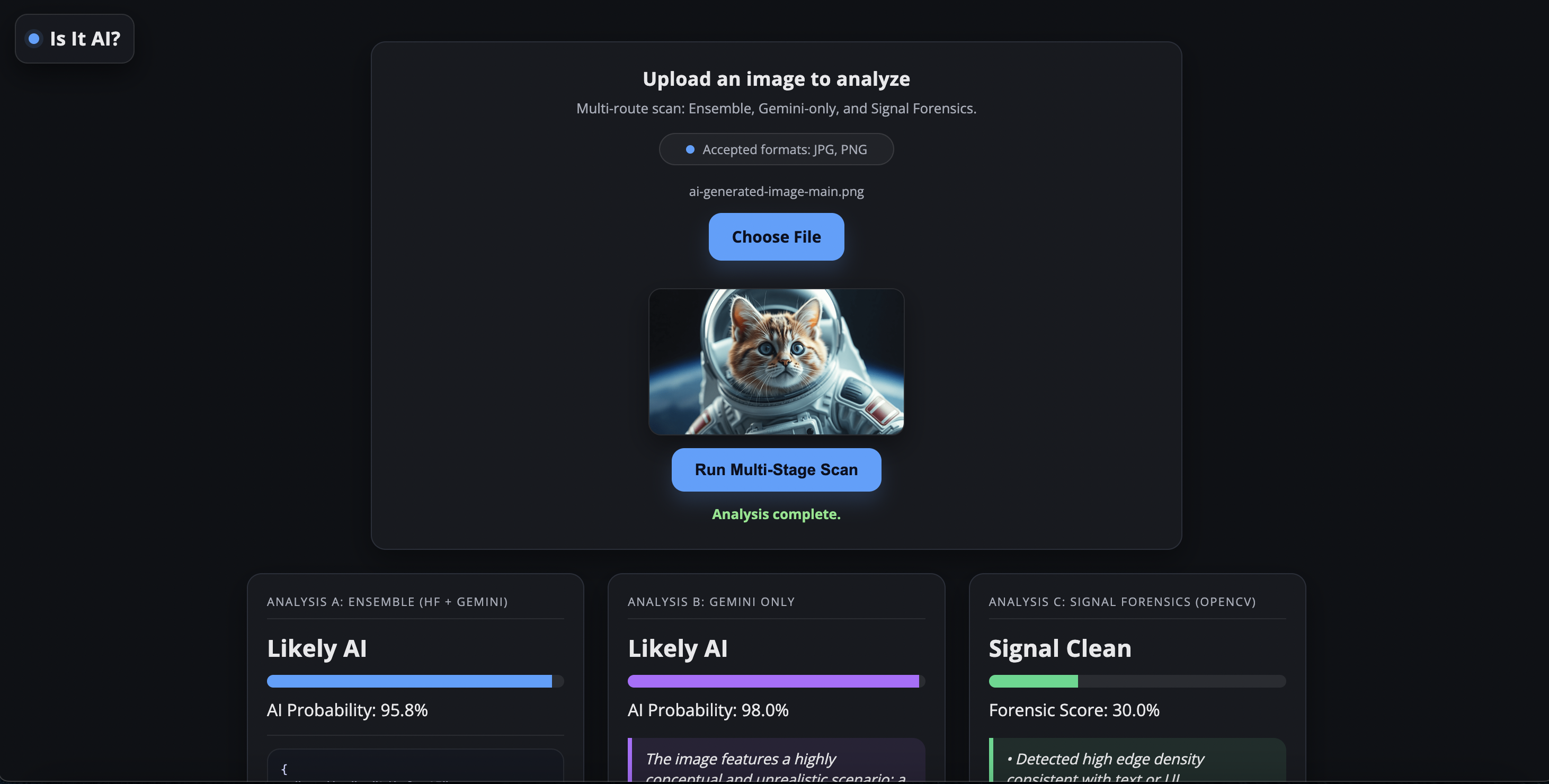
We’ve all been there: a parent or grandparent sends a photo into the family group chat, totally amazed by it, but within two seconds you realize it’s 100% AI. As these generators get better, it’s getting harder for people—especially older generations—to tell what’s actually real. We wanted to build something to help bridge that "AI literacy" gap. So, we created a tool where you can just drop a photo in, and it gives you a clear scale of how likely it is to be a fake.
How we made it happen: To get it right, we didn't just rely on one "brain." We used a triple-threat approach:
We hooked up a model from Hugging Face to scan for AI patterns.
We used Gemini to "look" at the photo and spot weird glitches.
We went under the hood with Signal Forensics to check for "noise" and "clipping"—the tiny digital fingerprints that AI usually hides.
The process: To be honest, the first version was pretty rough and wasn't very accurate. But after a lot of trial and error, we finally refined it into a software we're actually proud of. Along the way, we had to teach ourselves how to code in both Python and HTML to make the whole thing work.
What’s next? We’re super stoked to have a finished, functioning product, but we aren't stopping here. The goal for the future is to keep sharpening the accuracy and eventually add support for video analysis too.


Log in or sign up for Devpost to join the conversation.