-
-
Intro
-
Patient selection
-
Patient consultation
-
Same disease. Different Patient.
-
Product
Inspiration
Medical students spend years learning about diseases at their desks, but opportunities to practise with real patients are limited and expensive for universities.
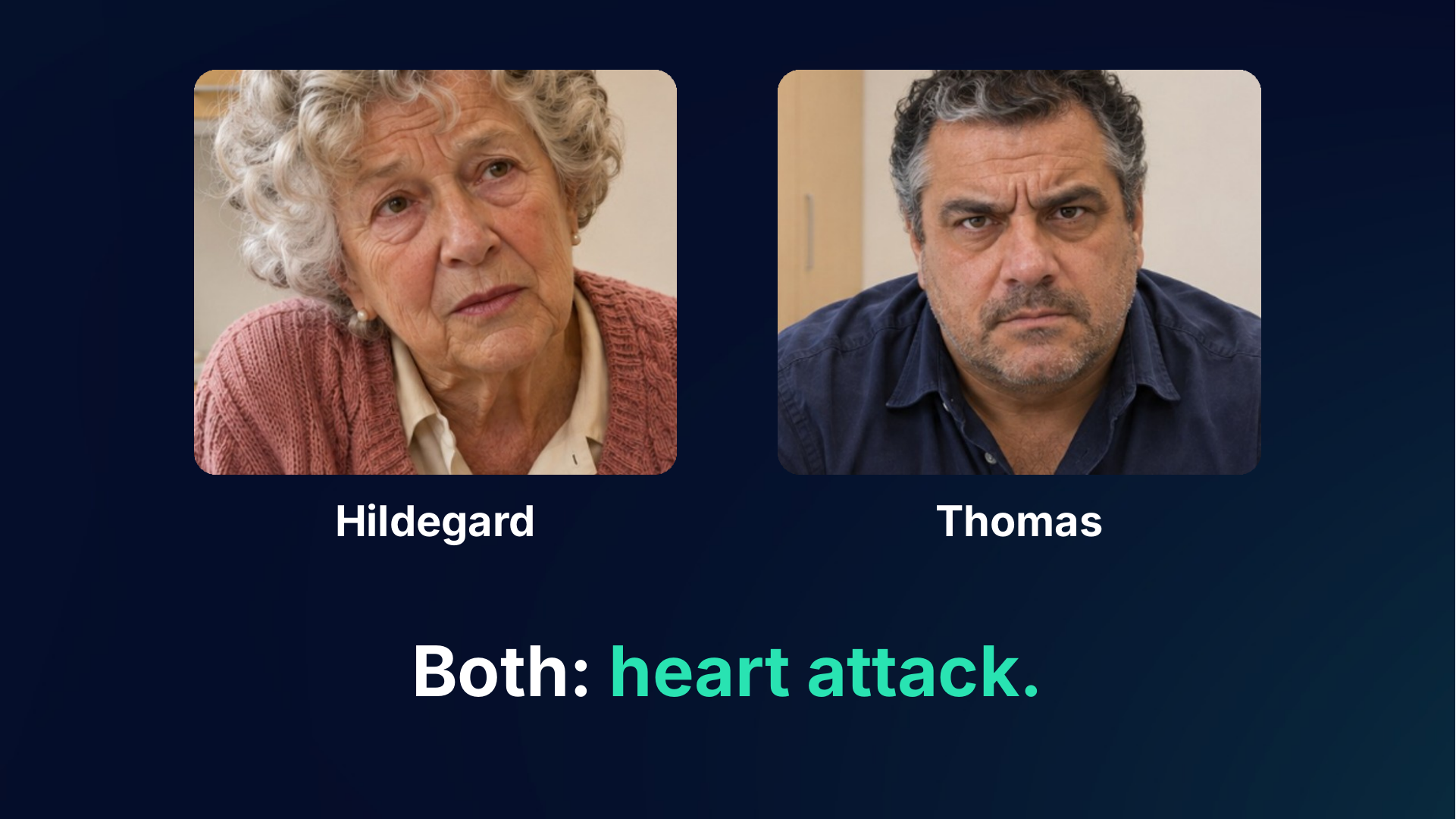
Real patients have individual personalities, emotions, beliefs and different ways of experiencing the same disease. They hesitate, digress, misunderstand symptoms and do not always reveal the most important information first.
We wanted to bridge the gap between theoretical knowledge and clinical practice by making realistic patient interactions accessible anytime, anywhere.
What it does
VIP (Virtual Interview Patient) is an interactive AI-powered clinical training platform for medical students.
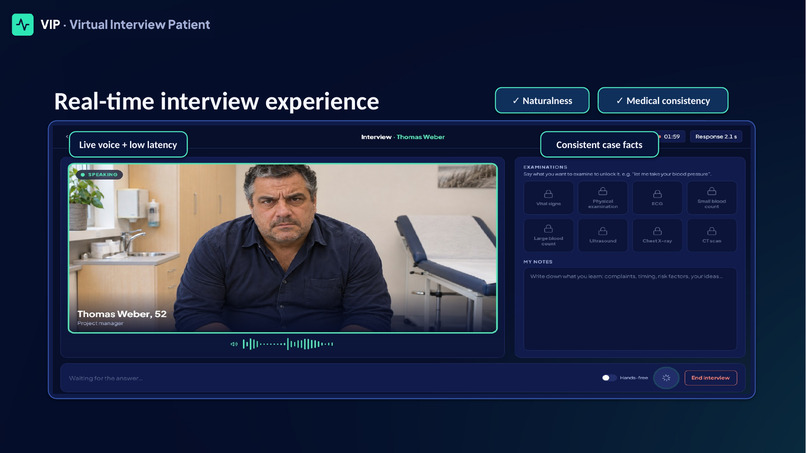
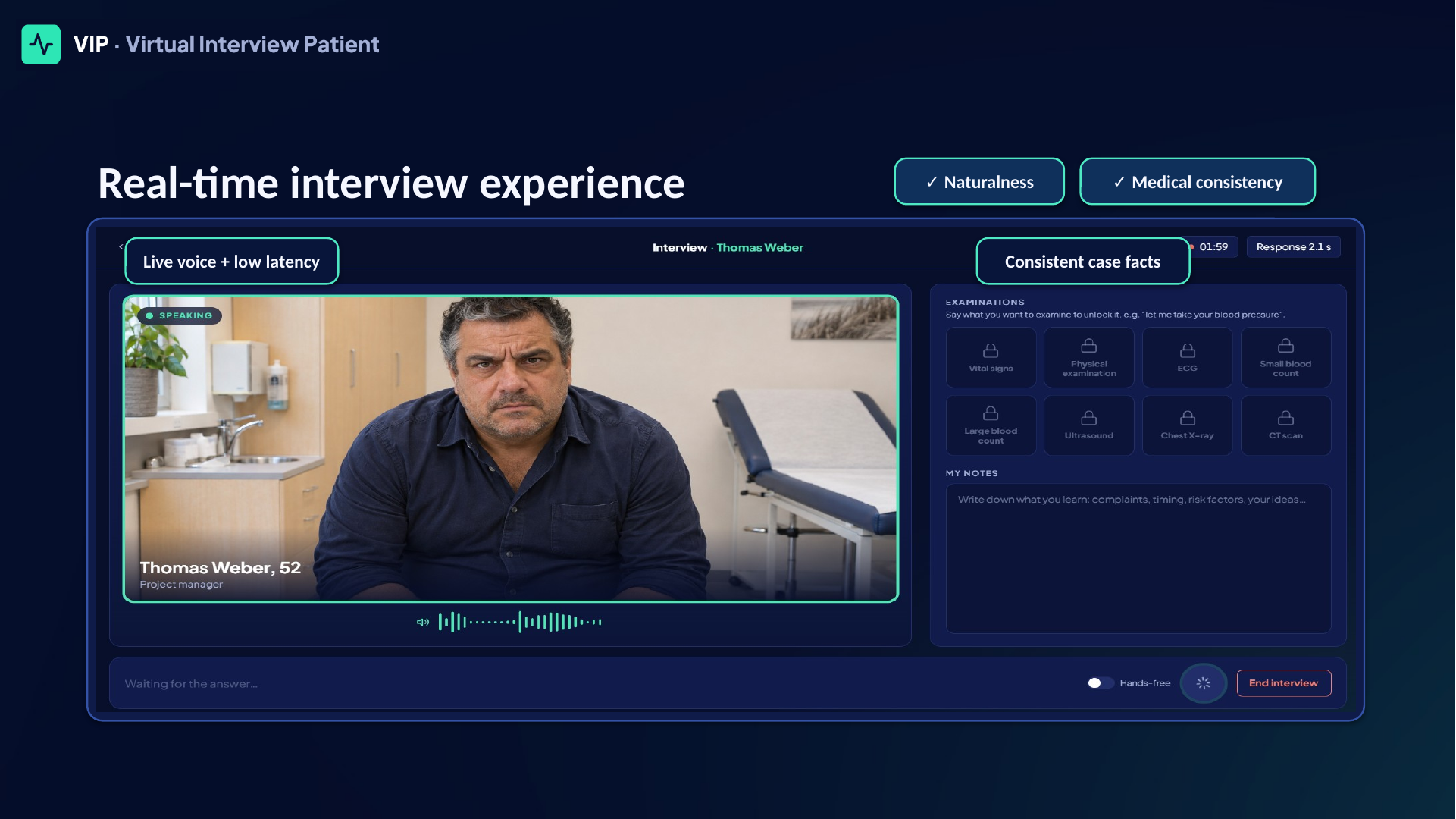
- Talk (our focus): Conduct natural, real-time conversations with patients who have distinct personalities, individual medical histories and emotional reactions.
- Listen: Experience realistic non-verbal sounds, such as coughing, heavy breathing, sighing and pauses, reflecting the patient's physical and emotional condition.
- Examine: Unlock medical examinations by verbally requesting them during the consultation. Perform simulated examinations and interpret ECGs, vital signs, laboratory results and medical imaging.
- Diagnose: Combine the patient's medical history and examination findings to formulate a suspected diagnosis.
- Learn: Receive personalized feedback on missed information, diagnostic accuracy and communication skills.
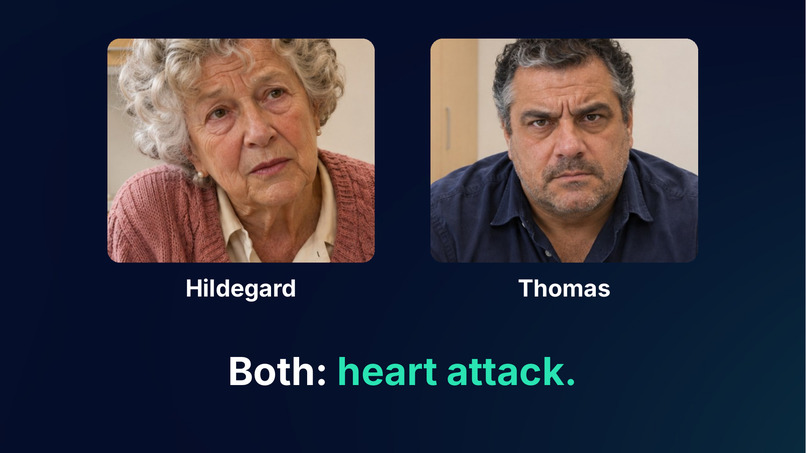
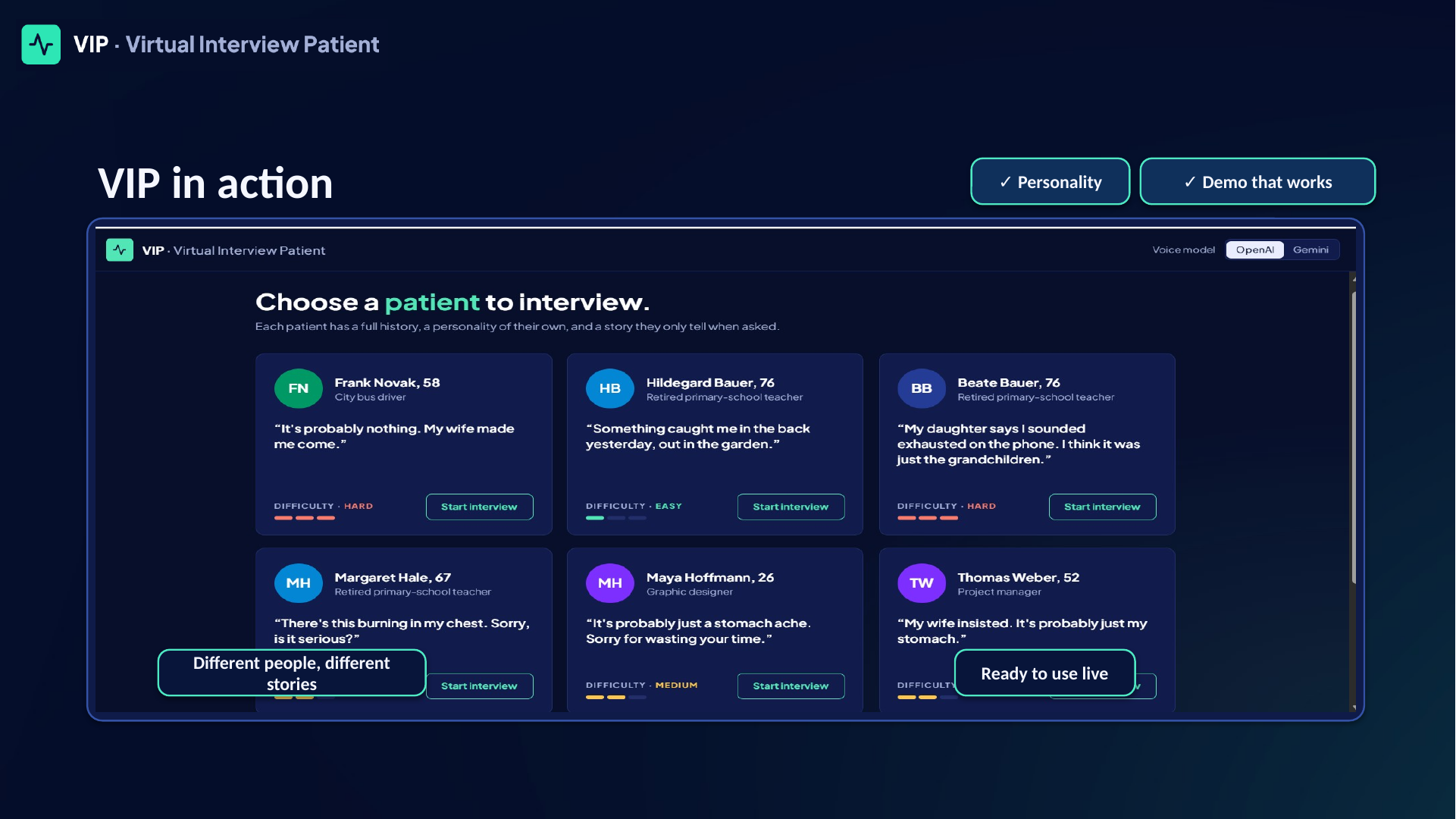
Two patients can have the same underlying disease but present completely different symptoms, personalities and conversational behaviors.
How we built it
We developed a React and TypeScript frontend connected to a FastAPI backend and PostgreSQL database. OpenAI Realtime and Gemini Live enable bidirectional voice conversations, natural turn-taking and interruptions. ElevenLabs adds expressive speech and non-verbal sounds to make patients feel more human. Our custom patient engine separates fixed medical facts from flexible human behavior. Each patient has an individual personality, medical history and information disclosure tendencies, while the underlying diagnosis remains hidden from the conversational model. A separate examination engine generates case-specific medical findings, and an AI evaluation system provides structured feedback on clinical reasoning and communication.
Challenges we ran into
Our biggest challenge was balancing conversational realism with medical consistency. Early interactions were sometimes too structured, with patients describing symptoms more precisely than real people would. Through feedback from medical students, we refined our patient engine to support natural uncertainty, spontaneous remarks, personal misconceptions and emotional reactions. Other technical challenges included reducing response latency, generating realistic non-verbal sounds, handling interruptions and keeping patients consistently in character.
Accomplishments that we're proud of
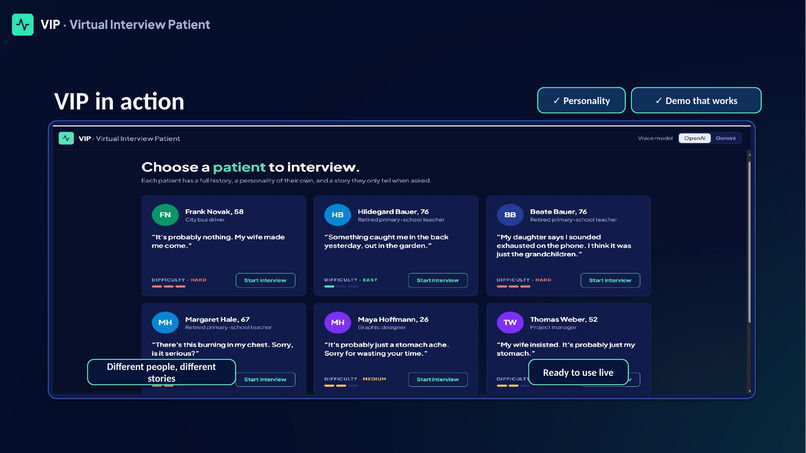
- We built virtual patients with distinct personalities, emotions, personal beliefs and individual medical histories.
- We integrated non-verbal sounds such as heavy breathing, coughing and sighing to make clinical interactions more authentic.
- Verbally unlocking medical examinations to interpreting findings, diagnosing and receiving personalized feedback.
What we learned
- Human behavior matters: A realistic patient is much more than a medically accurate symptom list.
- Freedom within boundaries: Medical facts need to remain consistent, while personality and conversational behavior require flexibility.
- Clinical reasoning goes beyond diagnosis: Asking the right questions, recognizing subtle symptoms and selecting appropriate examinations are essential skills.
- Interdisciplinary collaboration: Continuous feedback from medical students helped us understand what makes clinical interactions feel authentic.
What's next for Irish Kanisterkopf
Our vision is to create an increasingly realistic, end-to-end clinical training environment. We want to introduce evidence-based indications for medical examinations, realistic examination costs and more authentic examination procedures and findings. Students should not simply order every available test but learn to justify their decisions, prioritize appropriate investigations and balance diagnostic value with available resources. Ultimately, VIP aims to help future doctors develop not only medical knowledge, but also clinical judgment, communication skills and confidence before treating real patients.
Built With
- docker
- elevenlabs
- fastapi
- google-gemini-live-api
- interactive-voice
- live-assistant
- openai-realtime-api
- postgresql
- python
- react
- sqlalchemy
- tailwind-css
- typescript
- vite
- websockets
