Inspiration
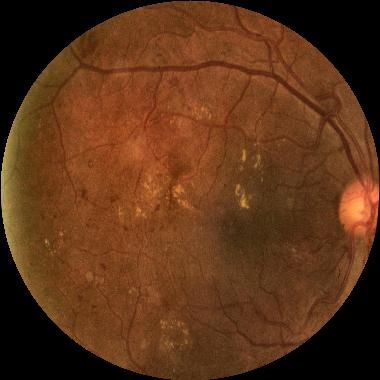
Blindness and vision impairment often go undetected until it’s too late—especially in areas with limited access to specialists. Diseases like Diabetic Retinopathy, glaucoma, and AMD can be detected early through retinal scans, but screening is not always accessible. We wanted to build a system that: Turns a single retinal image into a fast, explainable risk assessment for multiple diseases The goal was to bring AI-powered early screening closer to real-world use.
What it does
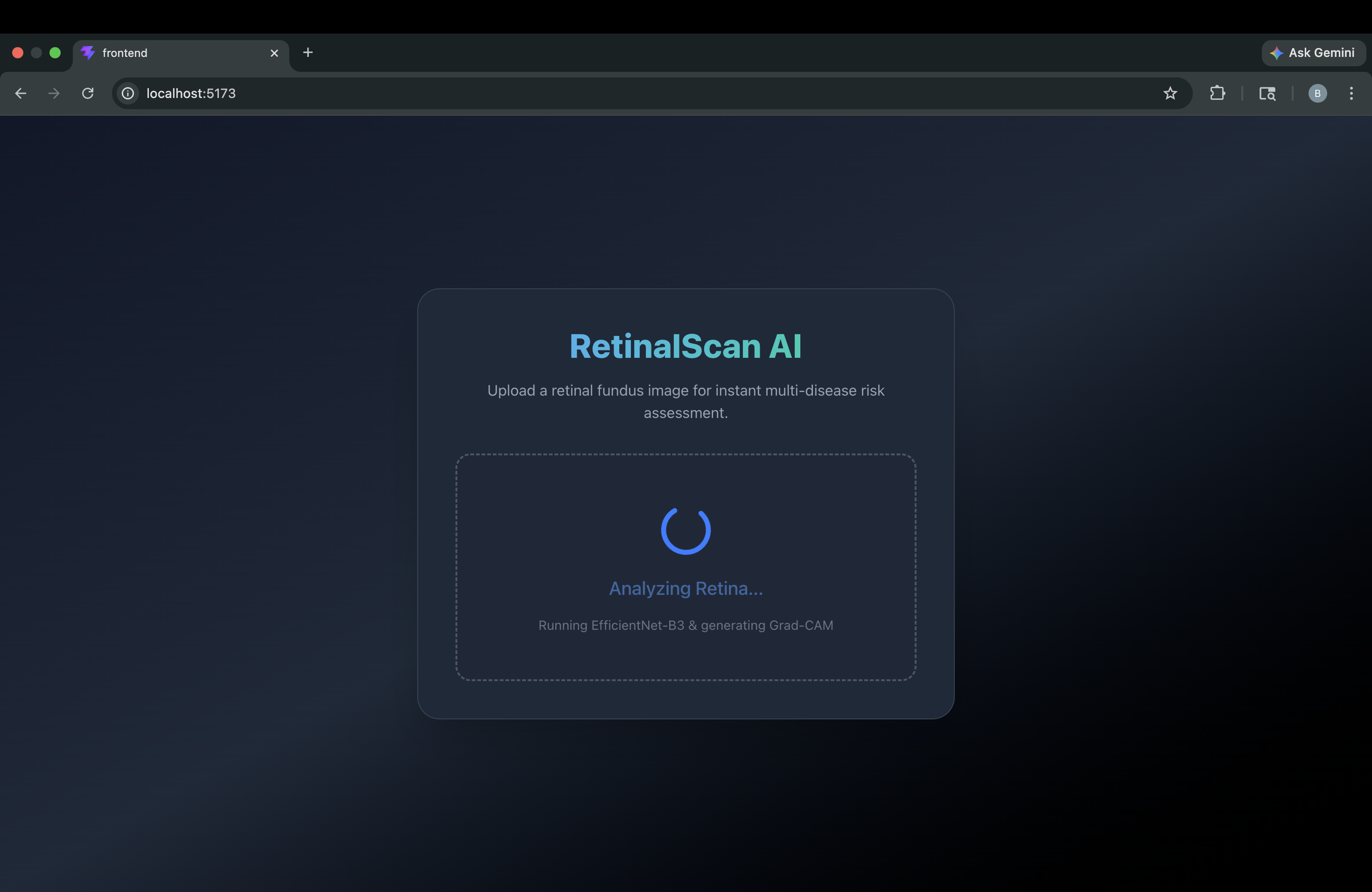
Iridos is a web-based AI system that:
- Accepts a retinal fundus image
- Predicts risk for 5 conditions:
- Diabetic Retinopathy
- Glaucoma
- Hypertension-related damage
- Cataracts
- Age-related Macular Degeneration (AMD)
- Generates:
- Risk percentages (0–100%)
- Confidence-aware interpretation (Low / Moderate / High)
- Grad-CAM heatmap showing where the model looked
- Plain English explanation
- Recommended next steps It acts as a screening assistant, not a diagnostic tool
How we built it
Model:
- Backbone: EfficientNet-B3 pretrained on ImageNet
- Custom multi-label classification head with five sigmoid outputs
- Loss function: BCEWithLogitsLoss with class imbalance handling
Data:
- APTOS 2019 dataset for diabetic retinopathy
- ODIR-5K dataset for multi-disease signals
Preprocessing:
- Circular cropping to remove black borders
- CLAHE for contrast enhancement and vessel visibility
- Resizing to 380×380
Explainability:
- Grad-CAM implemented using torchcam
- Heatmap overlay to visualize model attention
System:
- Backend: FastAPI
- Frontend: React with Tailwind CSS
- Communication via REST API
Challenges we ran into
*Dataset inconsistency: Different datasets used different labeling schemes, requiring careful mapping
- Class imbalance: Majority of samples were healthy, making learning biased without correction
- Cataract detection limitations: Cataracts affect the lens rather than the retina, making detection indirect
- Hardware-specific issues: Training errors occurred due to in-place operations on Apple MPS devices
- Explainability alignment: Ensuring that Grad-CAM highlights clinically relevant regions
Accomplishments that we're proud of
*Built a complete end-to-end system from data to deployment
- Integrated explainable AI into the prediction pipeline
- Designed a responsive and intuitive user interface
- Achieved fast inference suitable for real-time use
- Created a system that resembles a practical clinical support tool
What we learned
- Data quality and preprocessing are as important as model architecture
- Explainability is essential for trust in medical AI systems
- Multi-label classification requires different design choices than multi-class problems
- Real-world datasets require careful cleaning and alignment
- Combining backend, frontend, and AI is necessary to build usable systems
What's next for Iridos-See beyond the surface
- Improve model performance using larger datasets such as EyePACS
- Extend predictions to include disease severity grading
- Incorporate additional inputs such as patient history
- Optimize deployment for mobile and low-resource environments
- Validate the system with clinical experts for real-world use
Long-term vision: To build an accessible and explainable AI system for large-scale retinal disease screening.
