-
-
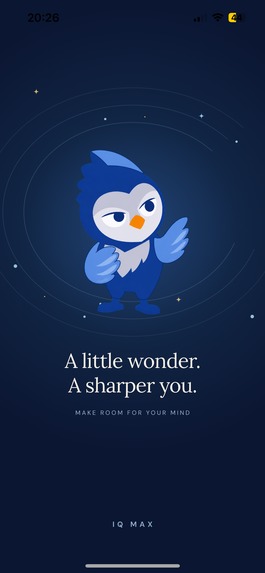
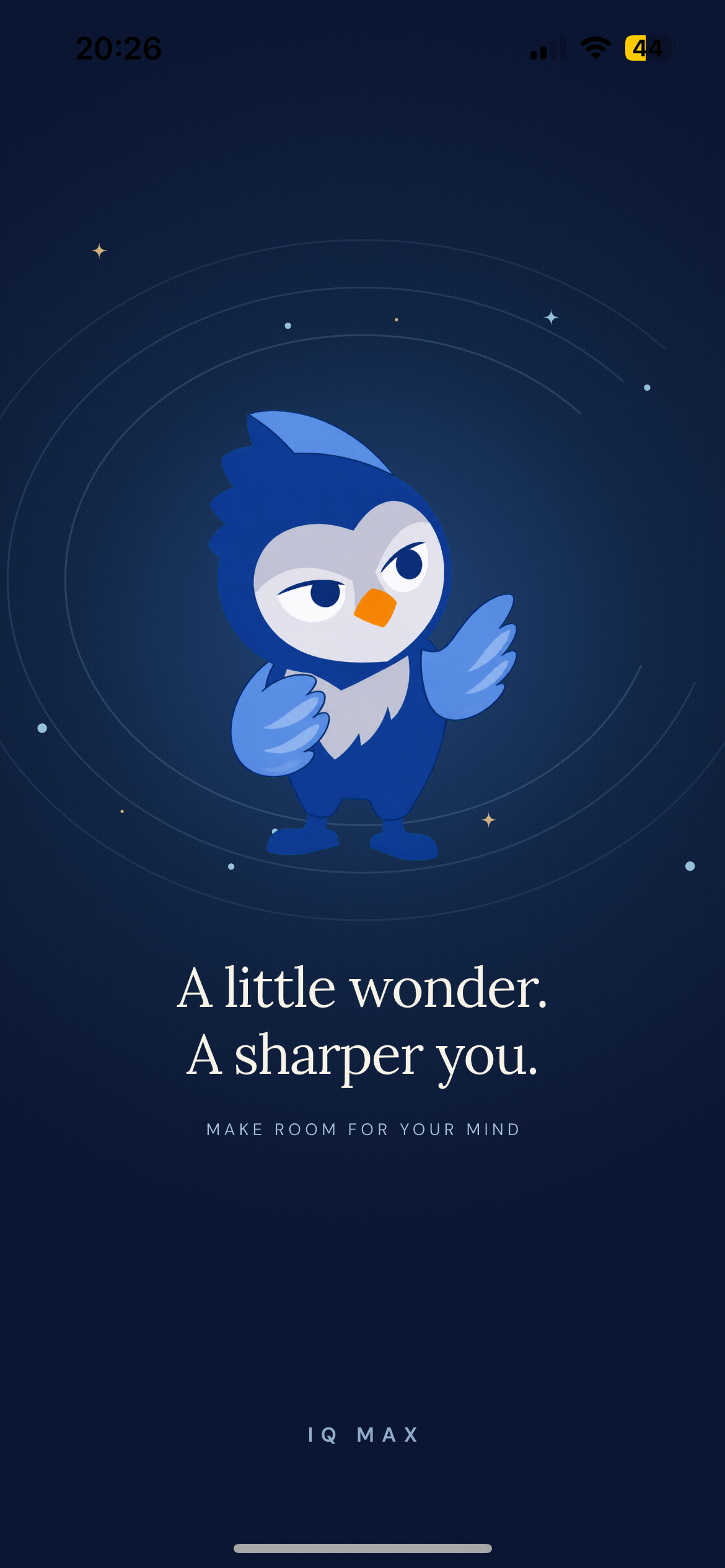
Our mascot sets a calm, warm tone from the very first screen. A little wonder, a sharper you.
-
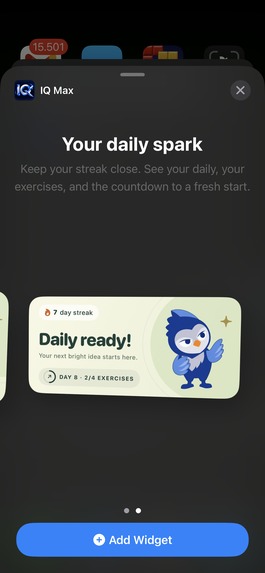
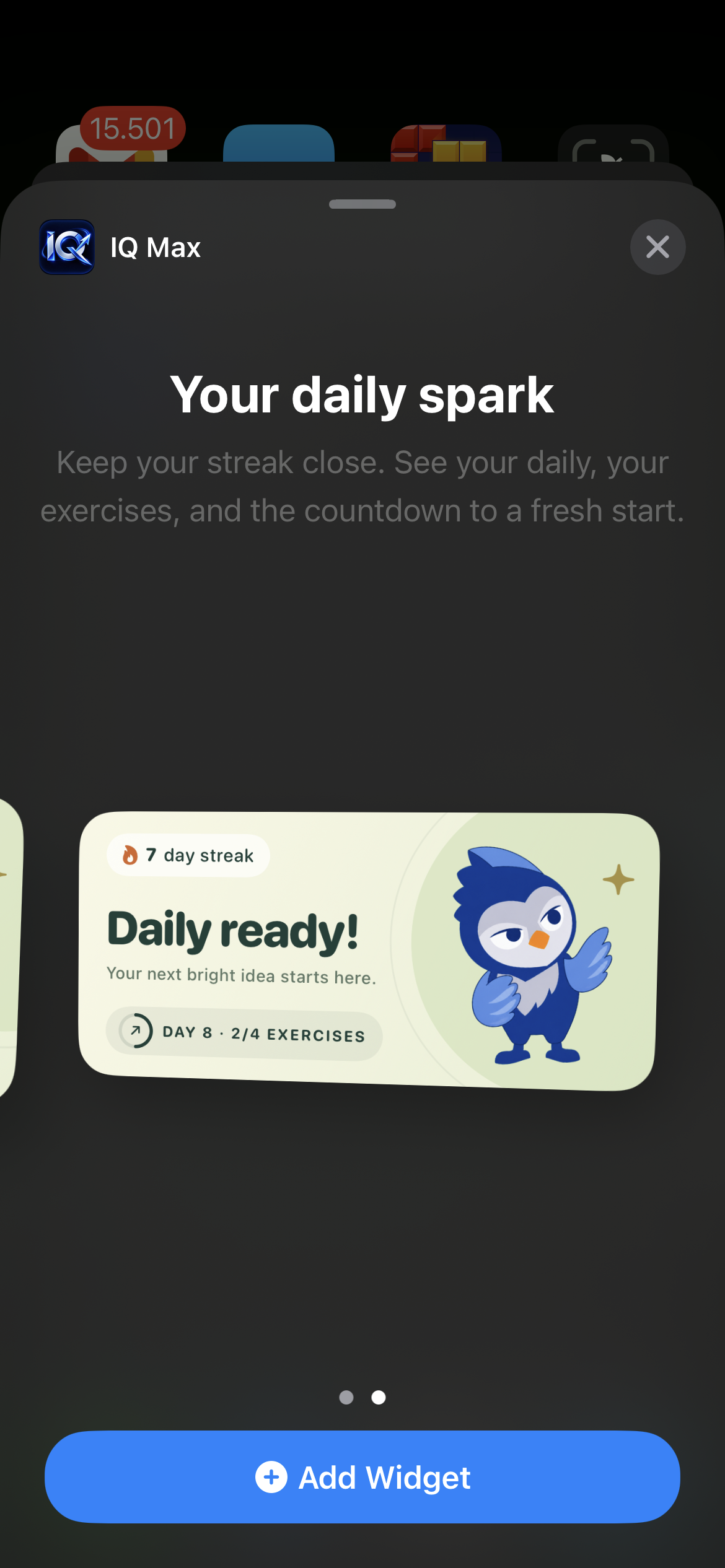
iOS Home Screen Widget
-
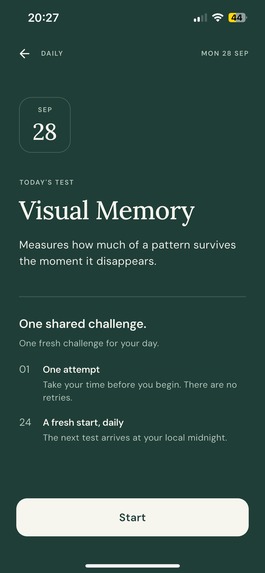
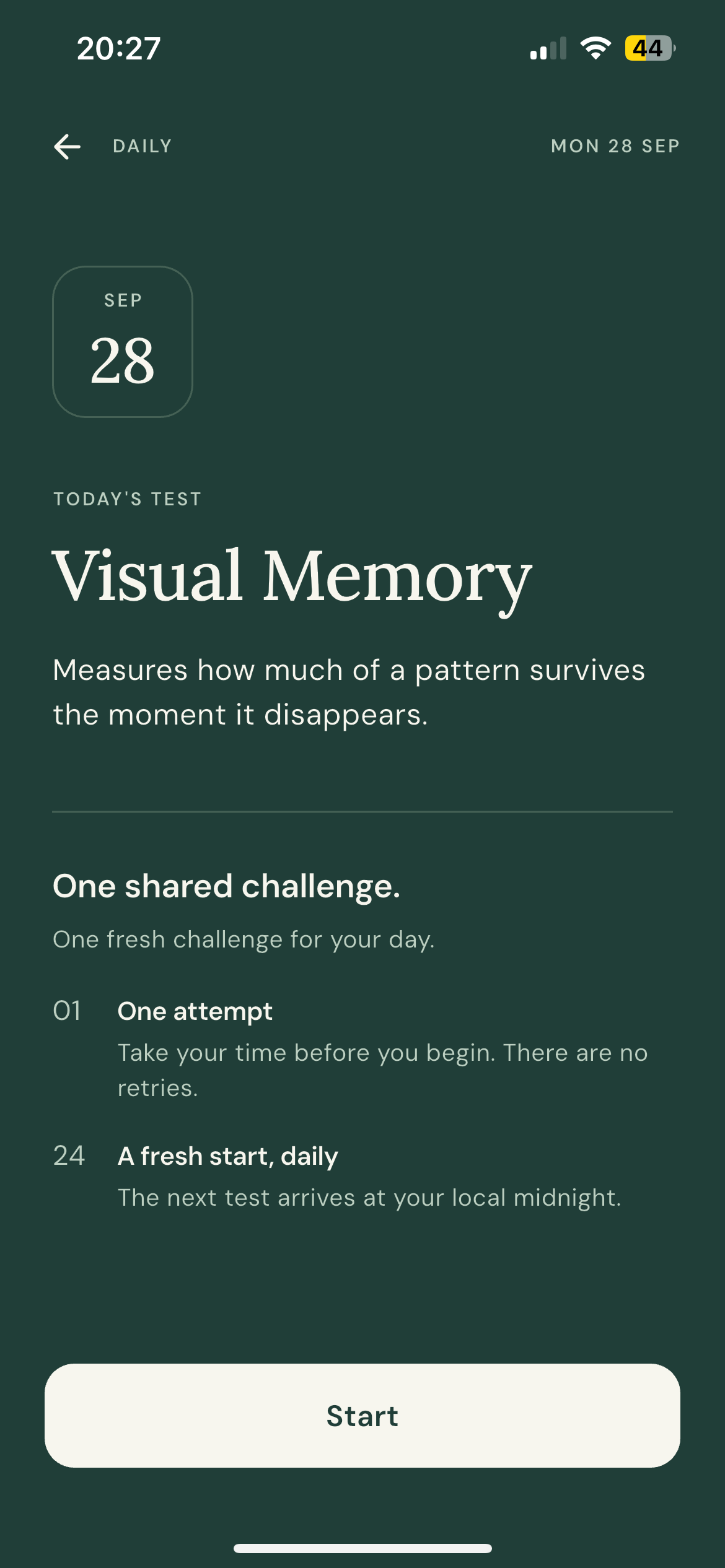
Visual Memory, one of the daily tests. The challenge resets every 24h, and each weekday trains a different cognitive skill.
-
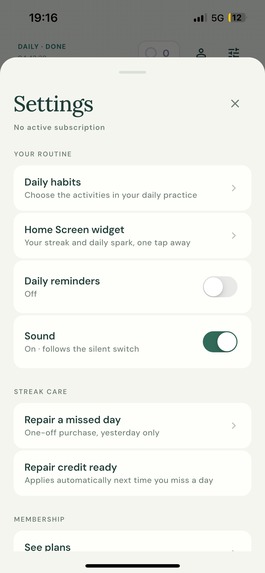
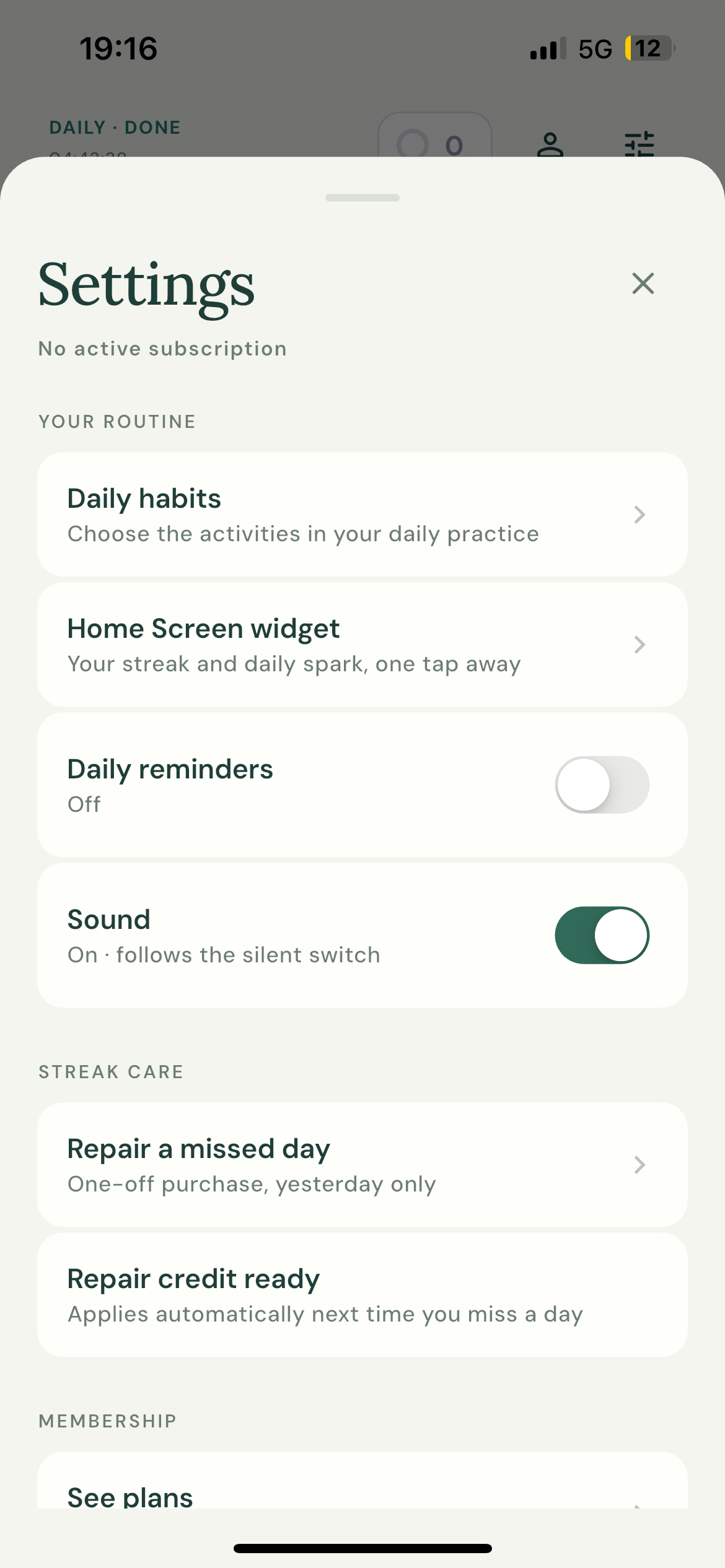
Settings: home screen widget, daily reminders, sound, and streak repair credits for the days life gets in the way.
-
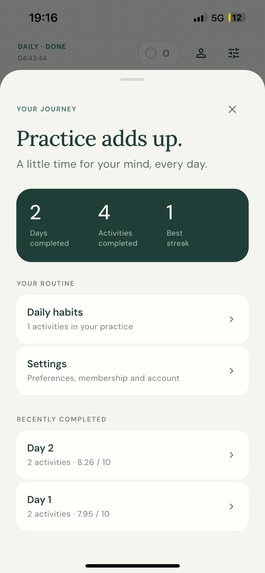
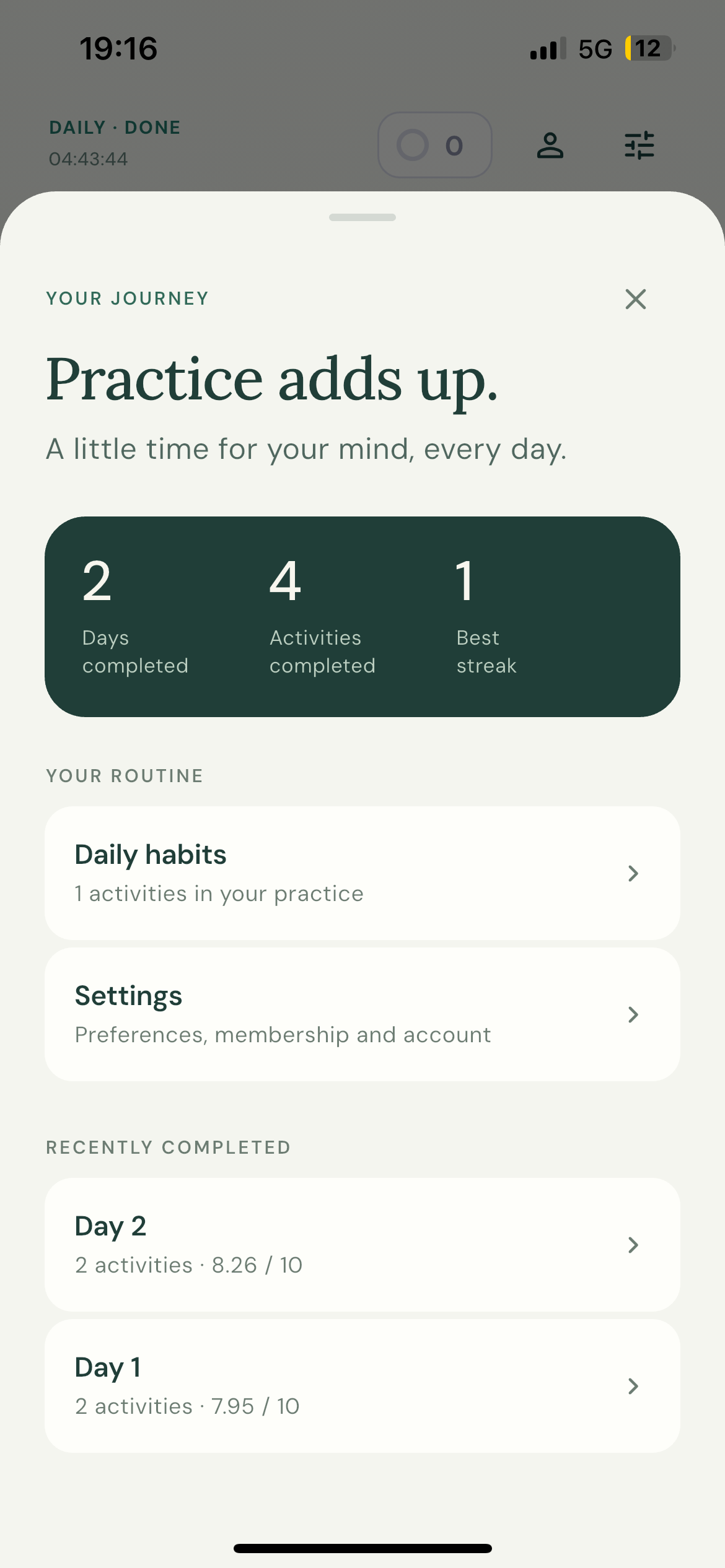
Practice adds up: streaks and session history make progress visible, not vague.
-
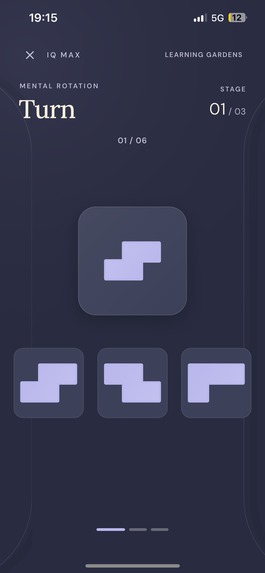
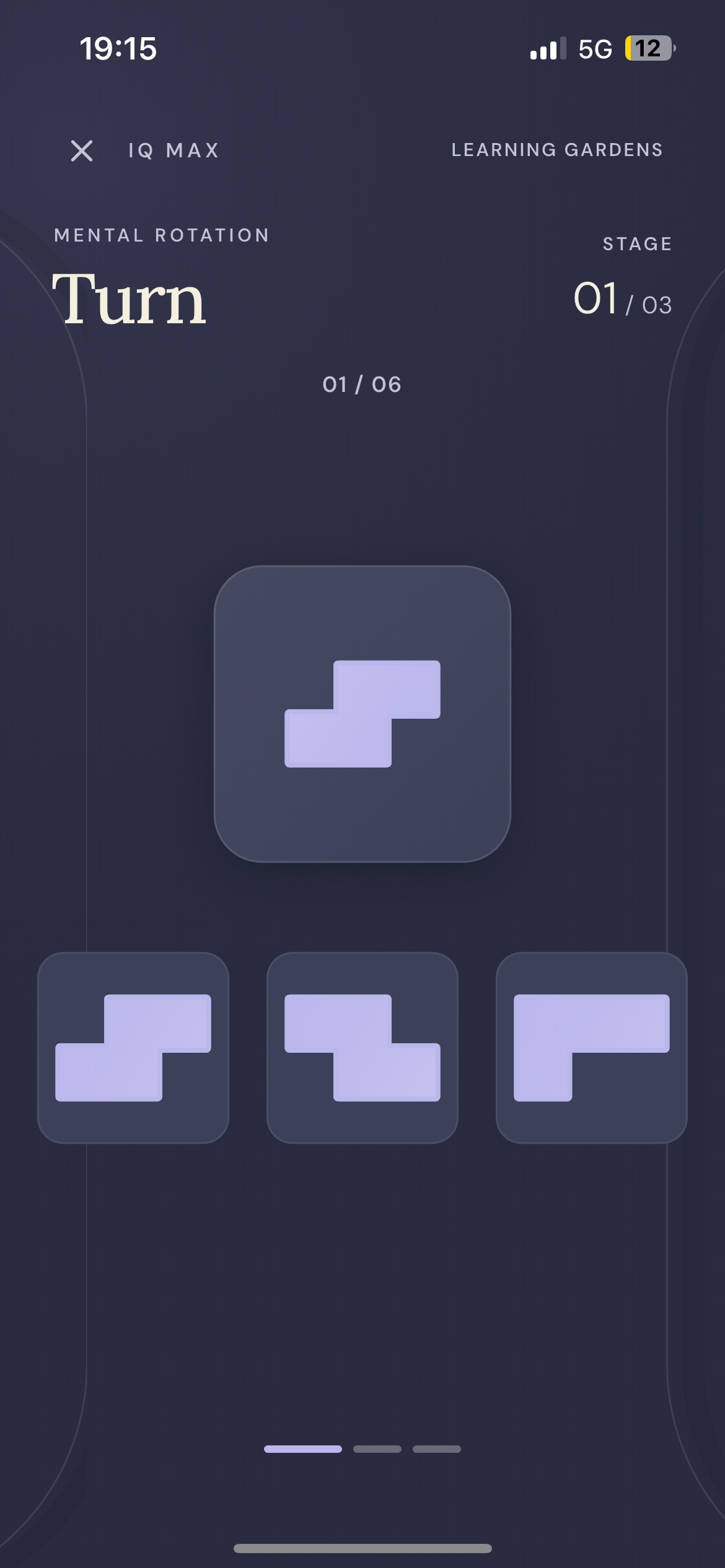
Turn · Mental rotation. Pick the piece that matches the target shape once it's rotated.
-
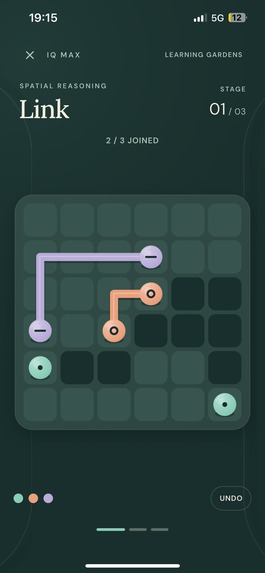
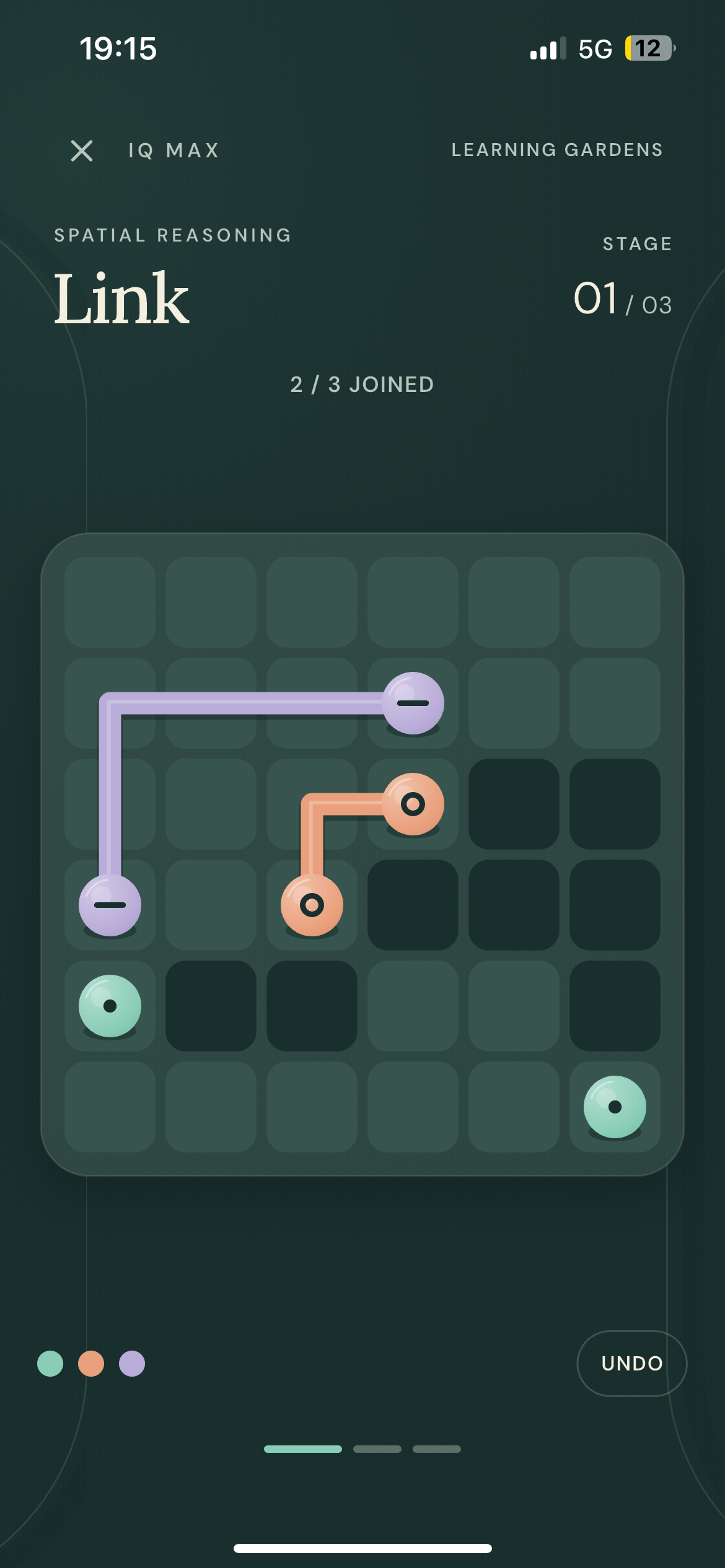
Link · Planning before acting. Connect matching dots across the grid without crossing paths.
-
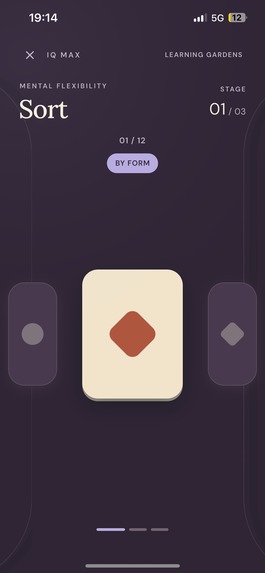
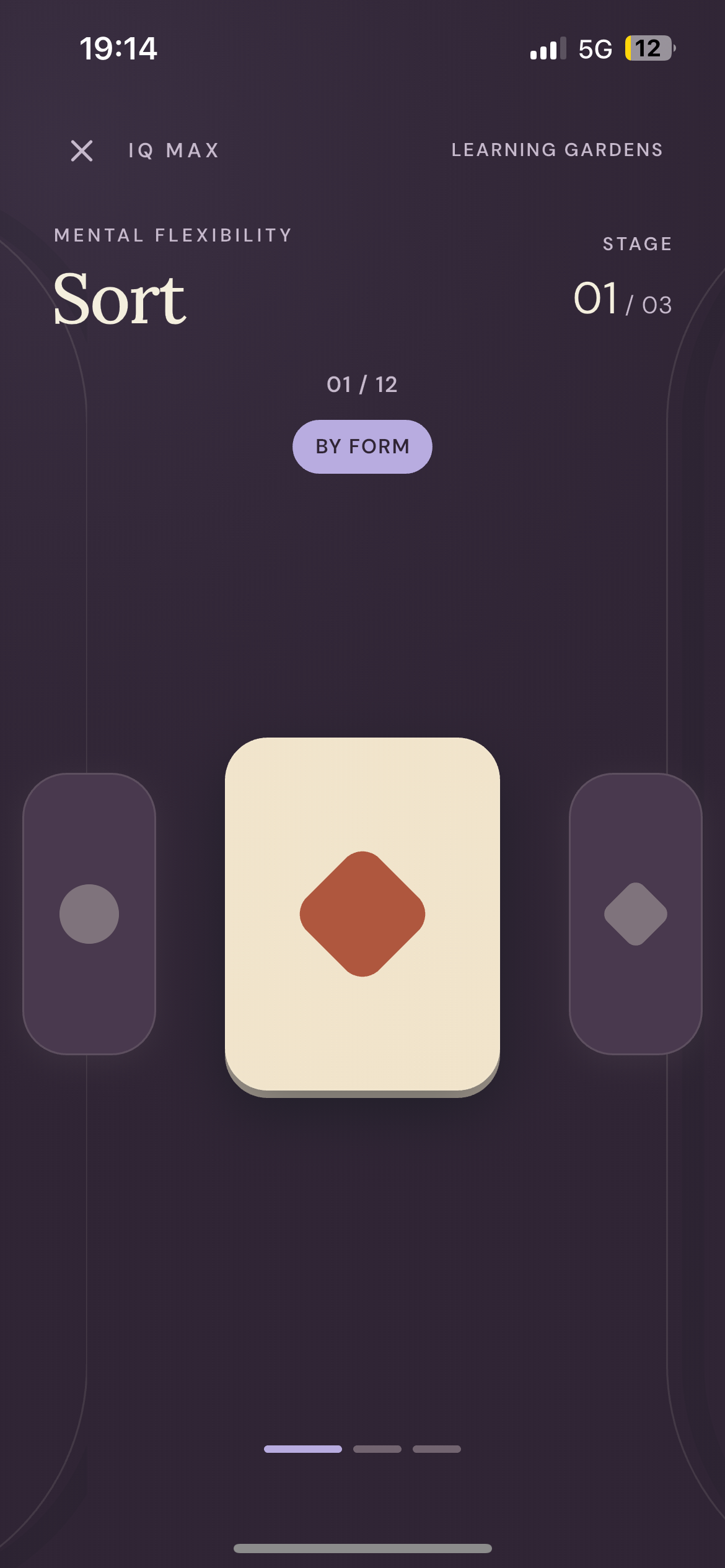
Sort · Rule switching and interference. Swipe each card by the current rule, then adapt fast when the rule changes.
-
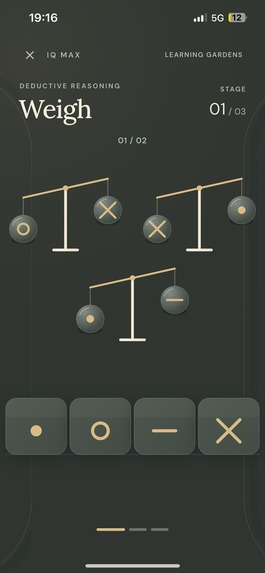
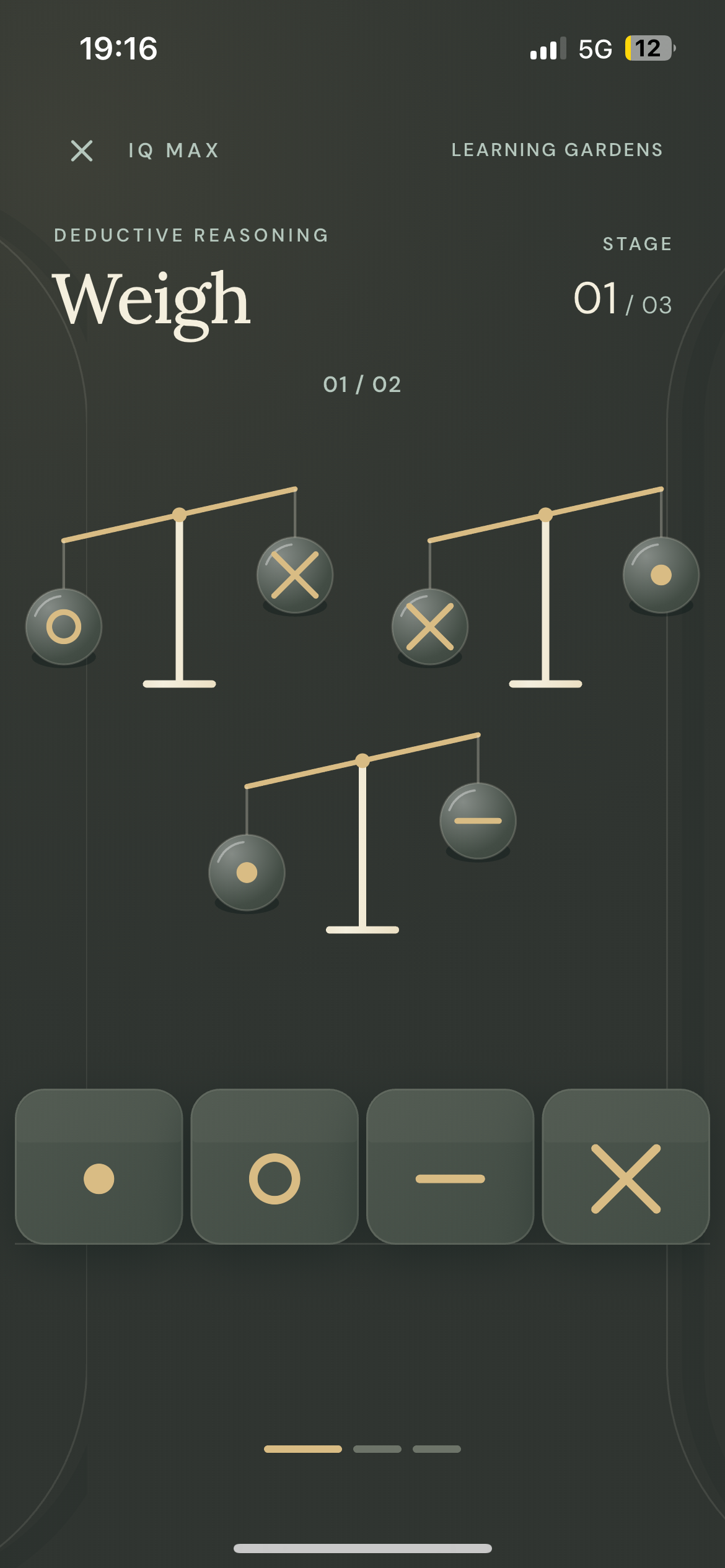
Weigh · Relational reasoning. Read the balance scales to work out which symbol is heaviest.
-
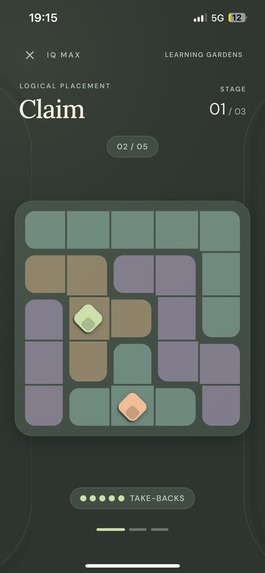
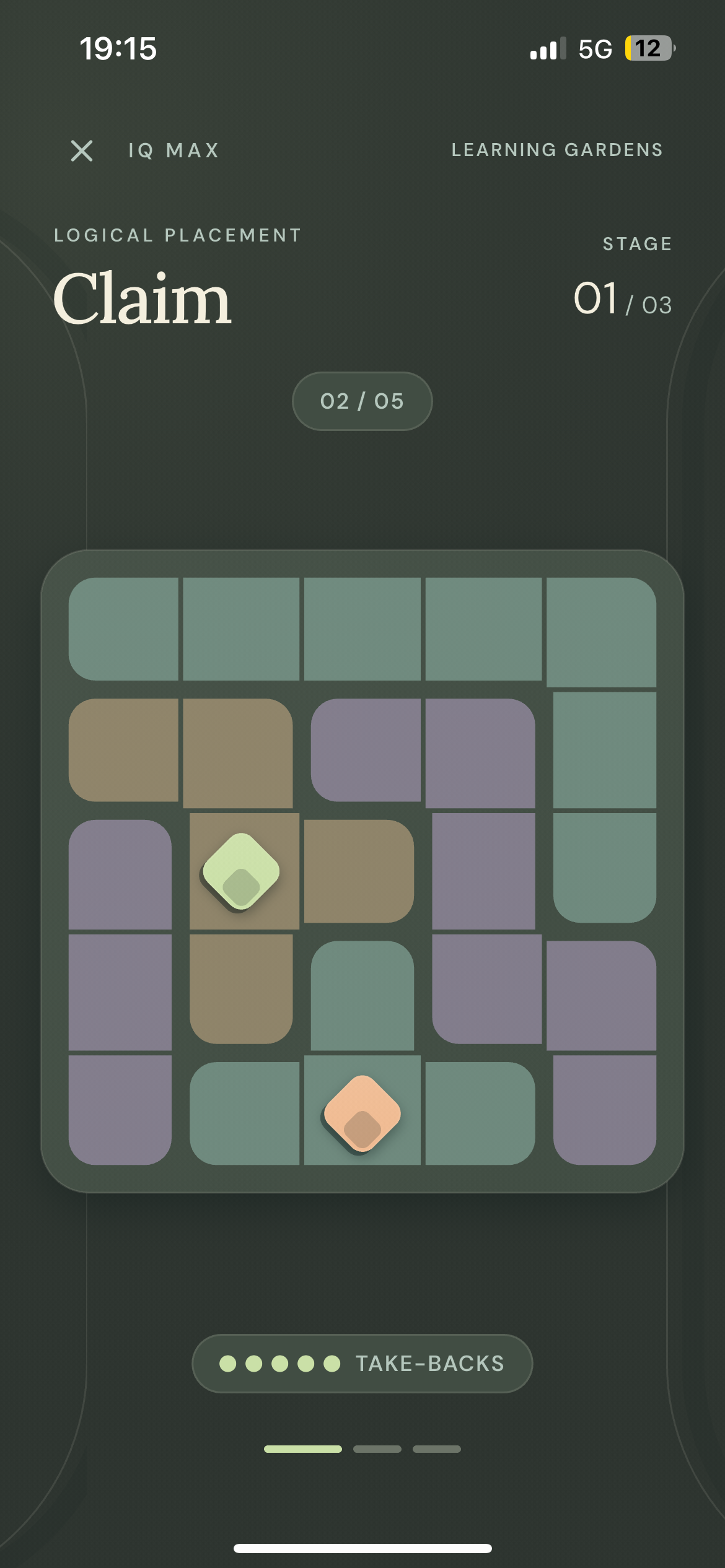
Claim · Deduction under constraint. Claim cells on the grid by working through the region rules step by step.
-

app icon

Inspiration
Most brain-training apps hand you a random puzzle, cheer with confetti and call it progress. I wanted the opposite: a calm, honest app that measures where you actually are and then trains you, a little every day, at the exact edge of what you can do. IQ Max came from that idea: find your baseline, then max it out.
What it does
- 7 onboarding tests measure your cognitive baseline across memory, attention, processing speed and motor precision.
- 10 adaptive disciplines make up your daily routine. You choose what to focus on and the app builds one short session around it.
- Difficulty never lets you coast. Corridors narrow, guides fade, rules change and timers appear as you improve.
- Star bands and streaks keep progress visible, and an iOS home-screen widget keeps your streak one glance away.
- Built to respect your focus: no score noise mid-game, no manipulative pop-ups, no invented numbers.
How I built it
IQ Max is a Flutter app with a native iOS widget, and RevenueCat handles all monetization. AI tools were part of my workflow from start to finish: prototyping game mechanics, debugging scoring algorithms, reviewing UX flows and producing visual assets.
Without any 3D modeling or complex vector work, I used AI tools to generate a set of mascot poses and placed each one where it carries emotional weight: onboarding, results, streak moments and the paywall. The mascot gives the app a personality without breaking its calm, minimal design language.
On the monetization side I chose a hard paywall: the baseline tests and your first result are free, and the daily routine is Pro. I added a streak-repair consumable so a missed day doesn't mean losing weeks of work, and I use RevenueCat subscriber attributes to personalize the paywall around each user's own results.
Challenges I ran into
Science before code. Every exercise had to rest on real, peer-reviewed cognitive science, both in what it measures and in how it scores you. Researching established paradigms for verbal, visual, working, sequential and numerical memory, processing speed and motor precision, and turning them into fair scoring and banding, took almost as long as writing the code.
Consistency at scale. Making 7 tests and 10 mini-games behave and score consistently meant running and debugging thousands of test sessions and tuning the algorithms again and again until a score meant the same thing everywhere.
Wearing hats I didn't own. I'm not a UI/UX designer or a marketer. I had to learn design principles, paywall strategy, pricing research and consumable design (how to sell help without selling pressure) from scratch.
Shipping to the store. App review is where many indie apps stall. I prepared the metadata, subscription disclosures and review notes carefully. When feedback came, I addressed it precisely and got IQ Max live.
Accomplishments that I'm proud of
- A complete, science-grounded product in production: 17 distinct cognitive tasks with one coherent scoring system.
- A design that stays calm and precise throughout, with a mascot that adds warmth without clutter.
- A monetization model that's transparent about what's paid and built natively on RevenueCat.
What I learned
My biggest lesson was how much further one developer can go with AI tools used deliberately, as a collaborator for research, design and debugging rather than a shortcut. I also learned how design decisions shape whether users actually reach the value of an app, what it takes to ship native iOS features like widgets from Flutter, and how to think about pricing and paywalls as part of the product rather than an afterthought.
What's next for IQ Max
More disciplines, deeper long-term progress insights, paywall and pricing experiments through RevenueCat, and bringing the full experience to Android.
Built With
- android-studio
- dart
- flutter
- postgresql
- revenuecat
- supabase
- swift
- swiftui
- testflight
- vercel
- widgetkit
- xcode


Log in or sign up for Devpost to join the conversation.