-
-
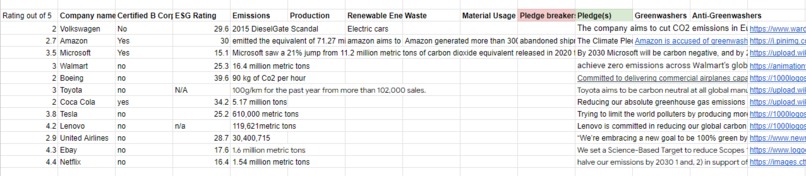
Demo database created in Google Sheets
-
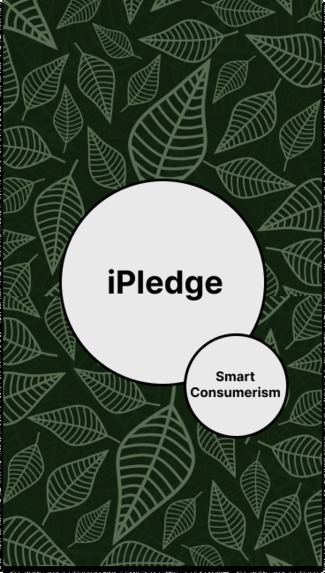
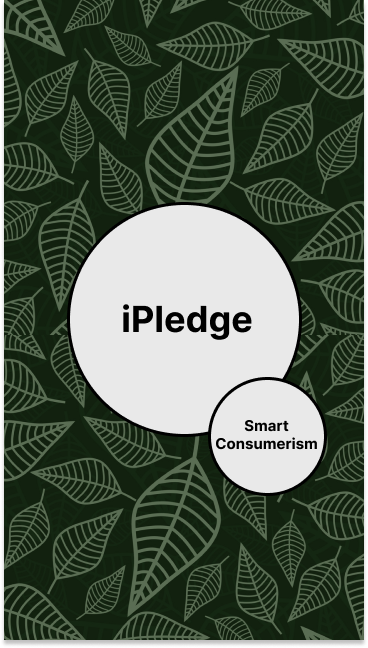
Front page of iPledge made on Figma
-
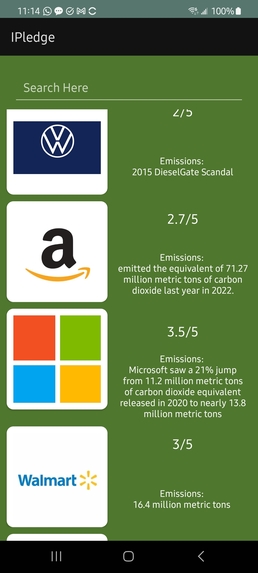
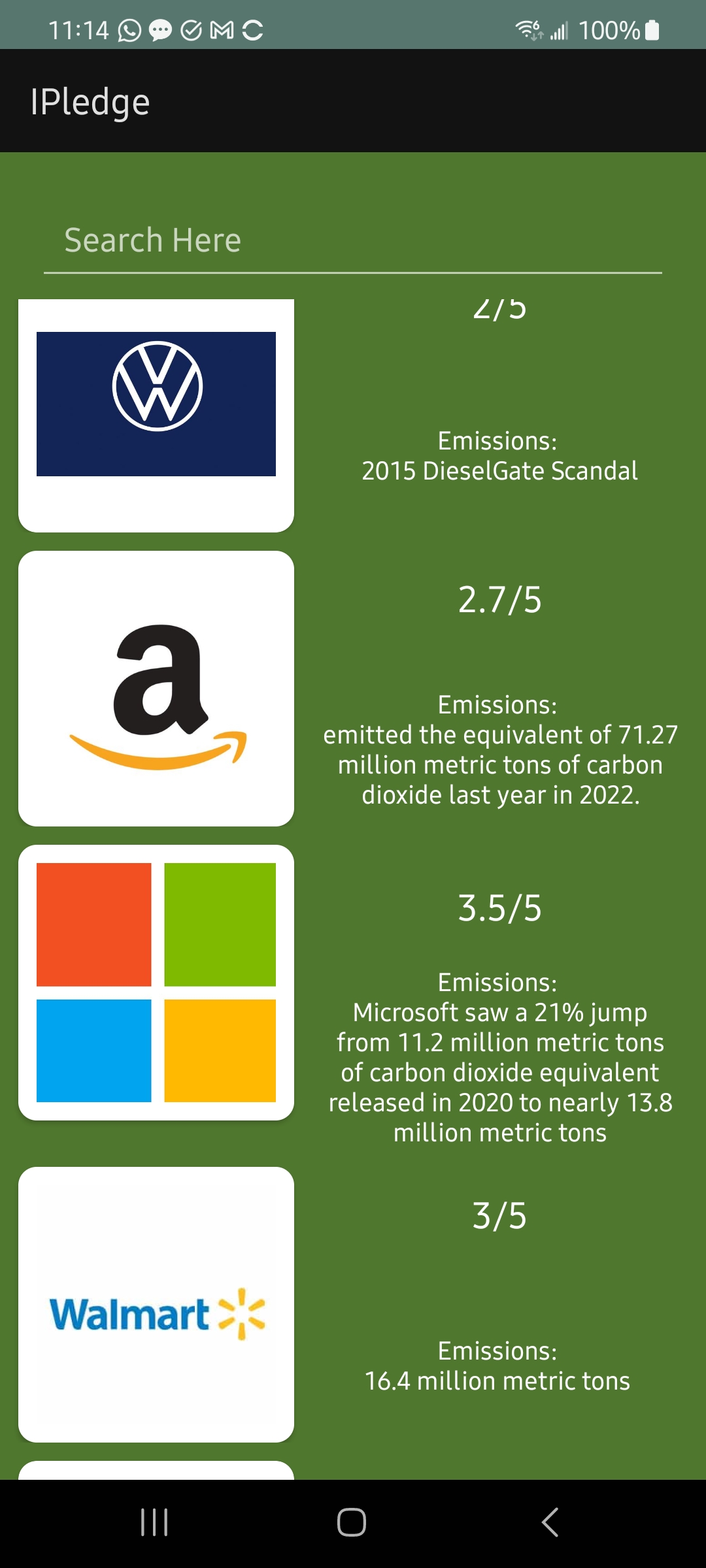
Our application run on an Android device
-
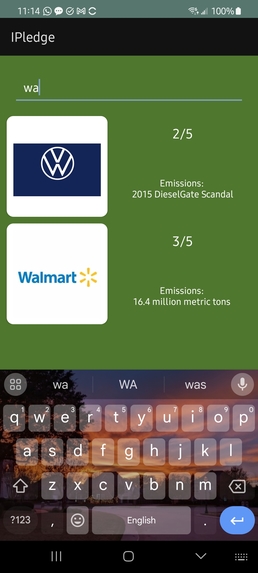
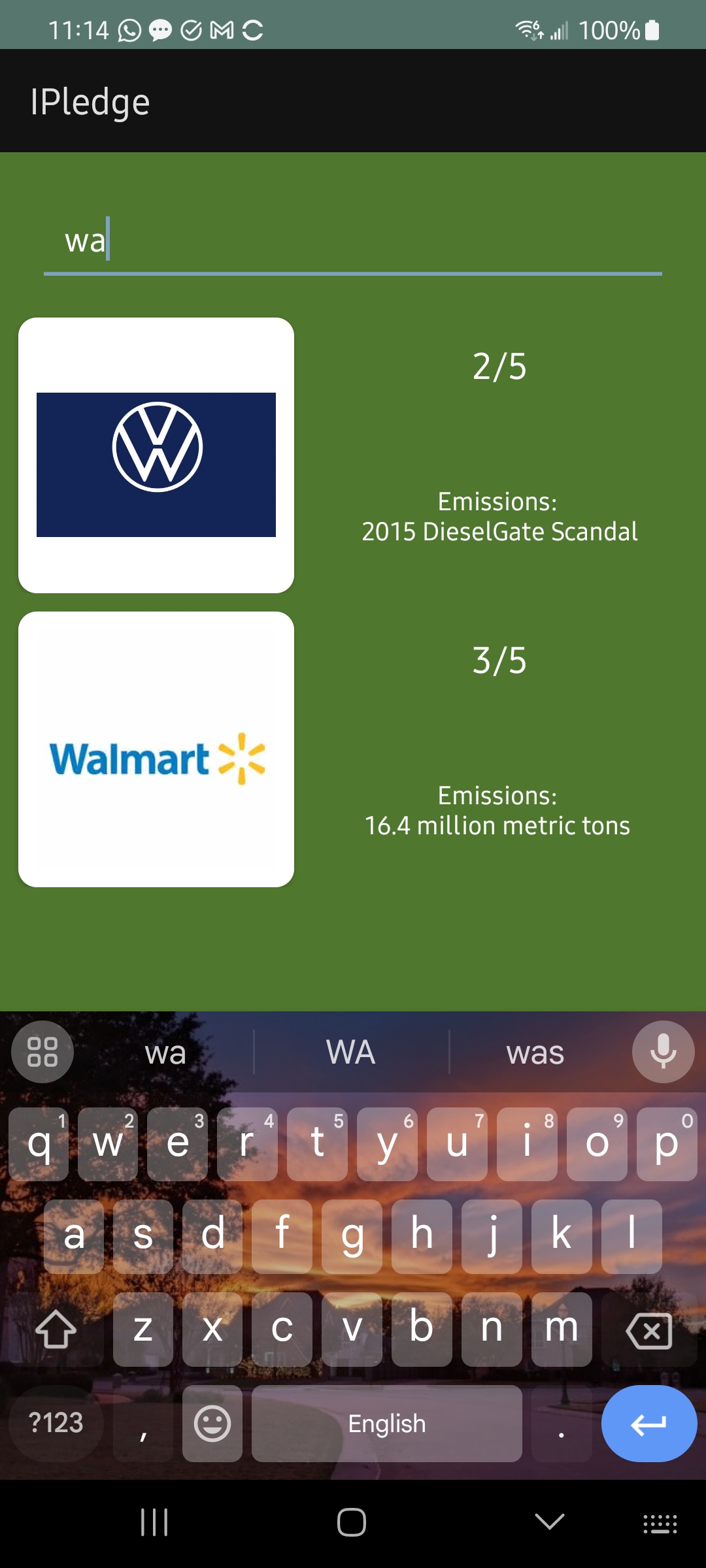
Our application run on an Android device with a search function activated

Inspiration
Most sustainability apps target individuals in regard to how they can make more sustainable choices in their day-to-day lives. However, it is becoming increasingly obvious that the actions needed to mitigate the climate crisis must come from companies and large corporations, as opposed to individuals. Greenwashing is a term coined to describe the unethical practice of spreading misinformation about a company’s sustainability practices through its marketing and PR. Greenwashing recently became a hot topic of controversy as several large corporations revealed that they had broken their promises for sustainability several times. With this in mind, the need for truthful and accessible information on companies’ sustainability practices has become more important than ever before. That’s what iPledge is for.
What it does
iPledge grants users access to companies’ sustainability pledges and information on the companies, allowing individuals to make their own informed decisions on which companies to support. This gives some control over the climate crisis back to the consumer population over the large corporations.
How we built it
We created a database that we used to store information and data on the pledges to sustainability made by companies and their annual reports of emissions, waste, and excessive production. In addition, we focused on 4 main factors:
- Is the company B Corporation Certified (a designation that a business is meeting high standards of verified performance, accountability, and transparency)?
- What is their ESG (Environmental, Social, and Governance) rating?
- What are the company's annual carbon emissions?
- What is their climate pledge? Then, we brainstormed ideas on how to create a GUI that is accessible, user-friendly, and unbiased in presenting information. Some of these features were iPledge's official ratings on a scale of 1 to 5 of each company (which we, the developers, created by compiling and analyzing their sustainability data), a comment section (so the users can interact with our interface and with each other), and different tabs to allow the user to navigate to company information from different industries. Additionally, we included a Pledge section for each individual company page, which allows users to pledge to not support the company until they execute their promises of sustainability in a petition-like form.
Challenges we ran into
The time constraint provided some challenges in regard to implementing the Figma design into our coded application. We created a baseline for the app on Android Studio that performs the most important, basic functions of iPledge. However, the more polished, final idea for iPledge is our interactive design on Figma.
Accomplishments that we're proud of
We are proud of our design and application idea. While doing initial research, we did not find many sustainability applications that target the same issue as iPledge - company accountability and accessible and truthful information. While individual action towards becoming eco-friendly is important, challenging and changing the unsustainable practices of large corporations hold much more power in fighting the climate crisis. iPledge gives users this power.
What we learned
Throughout the process of building this application, we learned to delegate tasks to better manage our time, effective communication, and the complex process of designing a mobile app from scratch. Additionally, we learned how to use Figma for UI design and learned the importance of diligent research in building databases for applications of this sort.
What's next for iPledge
We plan to implement a larger and more thorough database, allowing for a more efficient and precise comparison of companies. We also plan to add a community section in order to receive consumer feedback on the functionality of the app and to allow users to interact with each other to promote teamwork in their collective actions towards fighting the climate crisis.


Log in or sign up for Devpost to join the conversation.