-
-
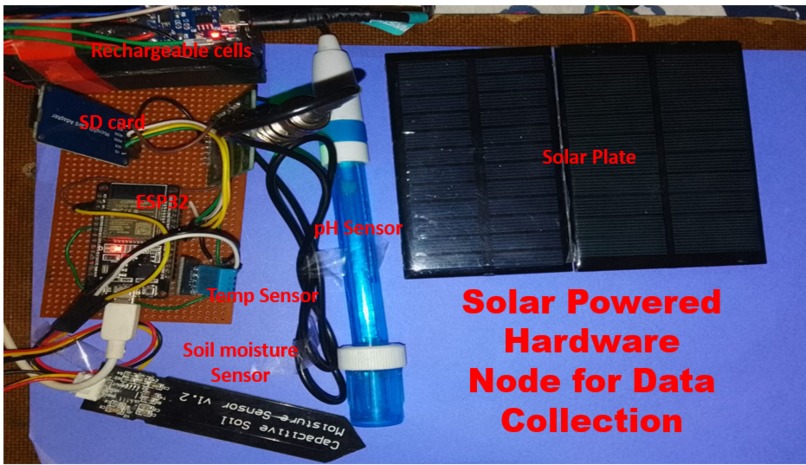
Solar powered Hardware
Inspiration
The inspiration for this project came from the challenges faced by millions of farmers in accurately measuring soil and environmental parameters. As agriculture becomes more data-driven, I envisioned a solution that would empower farmers, particularly in regions where access to modern farming technologies is limited. I wanted to provide them with a low-cost, easy-to-use device to monitor essential soil characteristics like pH, moisture, and nutrients (NPK), which are critical for crop success.
The project was born out of the need to ensure more informed decision-making at the field level, enabling better crop selection and soil management practices. Seeing the potential impact this could have on increasing yields and optimizing land use inspired me to delve deeper into this research area.
What it does
How we built it
I built the IoT-enabled precision agriculture and crop recommendation system in several stages:
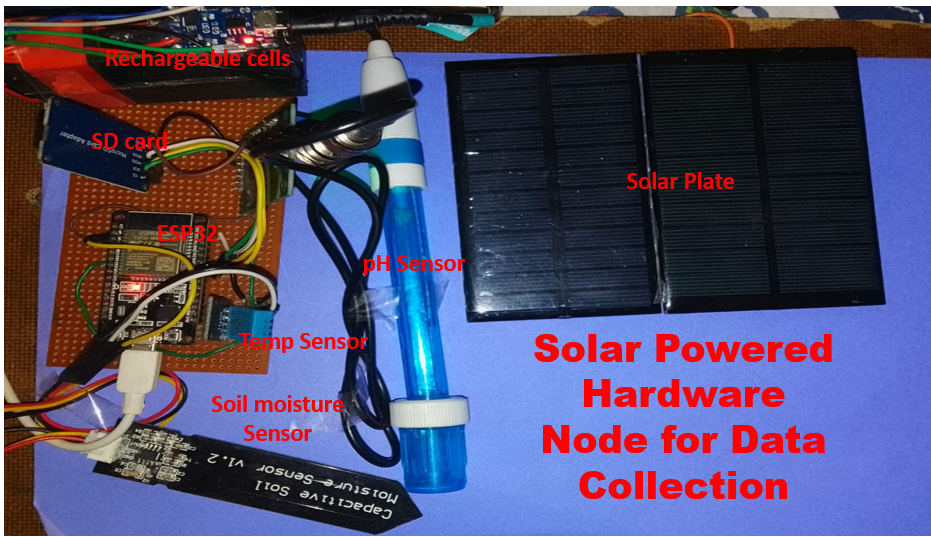
Hardware Design: I started by selecting sensors to measure soil moisture, temperature, humidity, pH, and NPK levels. These sensors were connected to ESP32 microcontrollers using the ESP-NOW protocol for wireless communication. The master node was responsible for collecting data from the slave nodes and sending it to the cloud for visualization and analysis.
Data Visualization: I integrated the system with ThingSpeak, an IoT platform that allowed me to visualize the sensor data in real time. This feature was essential for providing real-time feedback to farmers.
Machine Learning Integration: For the crop recommendation system, I used machine learning models trained on data such as soil parameters, weather conditions, and historical crop yields. This allowed the system to recommend the most suitable crops for different sections of land based on the collected data.
Handheld Device: I developed a simple handheld device to make this technology accessible to farmers. The device could measure the soil's properties and display the results in a user-friendly manner, helping farmers make quick decisions in the field.
Challenges we ran into
This project was not without its challenges:
Communication Issues: One of the primary challenges was ensuring reliable communication between the sensors and the master node using the ESP-NOW protocol. In field tests, maintaining a stable connection over long distances required a great deal of troubleshooting and optimization.
Data Accuracy: Ensuring that the sensor data was accurate and reliable took significant effort. I had to calibrate the sensors multiple times to ensure that the values for pH, moisture, and other parameters were consistent with lab-grade equipment.
Power Management: Since the system would often be deployed in remote agricultural fields, managing the power consumption of the sensor nodes was critical. I had to optimize the power usage to ensure that the devices could run for extended periods on battery power.
Integration with Machine Learning: Designing a machine learning model that could work with real-time data and make reliable crop recommendations was challenging. It required careful selection of features and model tuning to achieve the desired accuracy.
Accomplishments that we're proud of
Seamless Integration of IoT and Machine Learning: Successfully combined IoT sensor networks with machine learning models to provide real-time crop recommendations based on soil and environmental data. This fusion of technologies brings a cutting-edge solution to precision agriculture.
Low-Cost, Handheld Device for Farmers: Designed a user-friendly, handheld device that allows farmers to easily measure soil properties such as moisture, pH, and nutrient levels (NPK). This device empowers farmers with actionable insights, even in remote areas with limited access to modern agricultural technologies.
Reliable Wireless Communication Over Long Distances: Overcame the challenges of wireless communication in large fields by optimizing the ESP-NOW protocol for stable, low-power data transmission between sensors and the cloud, even across significant distances.
Real-Time Data Visualization and Insights: Integrated the system with ThingSpeak to provide real-time visualization of soil parameters, enabling farmers and landowners to monitor field conditions remotely and make informed decisions quickly.
Explainable AI in Agriculture: Implemented LIME and SHAP explainability techniques within the crop recommendation system, offering transparency in machine learning predictions. This helps farmers understand why specific crops are recommended based on their land’s data.
Scalable and Accessible Solution: Built a scalable system that can be deployed across large fields and multiple farms, with cloud-based data storage and mobile/web applications for easy access and management of farm data.
What we learned
Throughout this project, I learned several key things:
The Importance of Data: Gathering accurate, real-time data on soil conditions and environmental parameters is crucial for precision farming. Understanding how these parameters affect crop yield helped me realize the importance of IoT systems in agriculture.
IoT Technologies: I became familiar with IoT protocols, microcontrollers (like ESP32), sensors, and communication technologies. Integrating these components into a seamless, robust system taught me the challenges of wireless sensor networks in real-world applications.
Machine Learning for Agriculture: Developing a crop recommendation system required me to dive into machine learning. Understanding how different models, such as Decision Trees and Random Forest, can be used to predict crop suitability based on soil parameters was both fascinating and rewarding.
Challenges in Smart Farming: I learned that smart farming requires a combination of hardware, software, and networking solutions. The interaction between these components must be finely tuned for effective deployment.
What's next for IOT enabled crop recommendation system
Expanded Sensor Network: We plan to integrate additional sensors to capture more parameters, such as carbon dioxide (CO2) levels, soil salinity, and real-time pest detection. This will offer even more comprehensive insights for farmers, covering all aspects of crop health and environmental factors.
AI-Driven Irrigation and Fertilization Recommendations: By incorporating more advanced AI algorithms, we aim to extend the system’s capabilities to recommend optimal irrigation and fertilization schedules based on real-time soil data, weather forecasts, and crop needs, ensuring more efficient resource use.
Mobile App Enhancements: The mobile app will be further developed to include offline functionalities, allowing farmers to access critical data and recommendations without an active internet connection. It will also include push notifications for timely alerts related to crop health or environmental changes.
Weather Forecast Integration: We will deepen the integration with weather forecasting services to provide predictive analytics that not only recommends crops but also warns of potential extreme weather events, helping farmers plan ahead and protect their crops.
Built With
- c/c++
- html
- python
- streamlit
- thingspeak

Log in or sign up for Devpost to join the conversation.