Inspiration
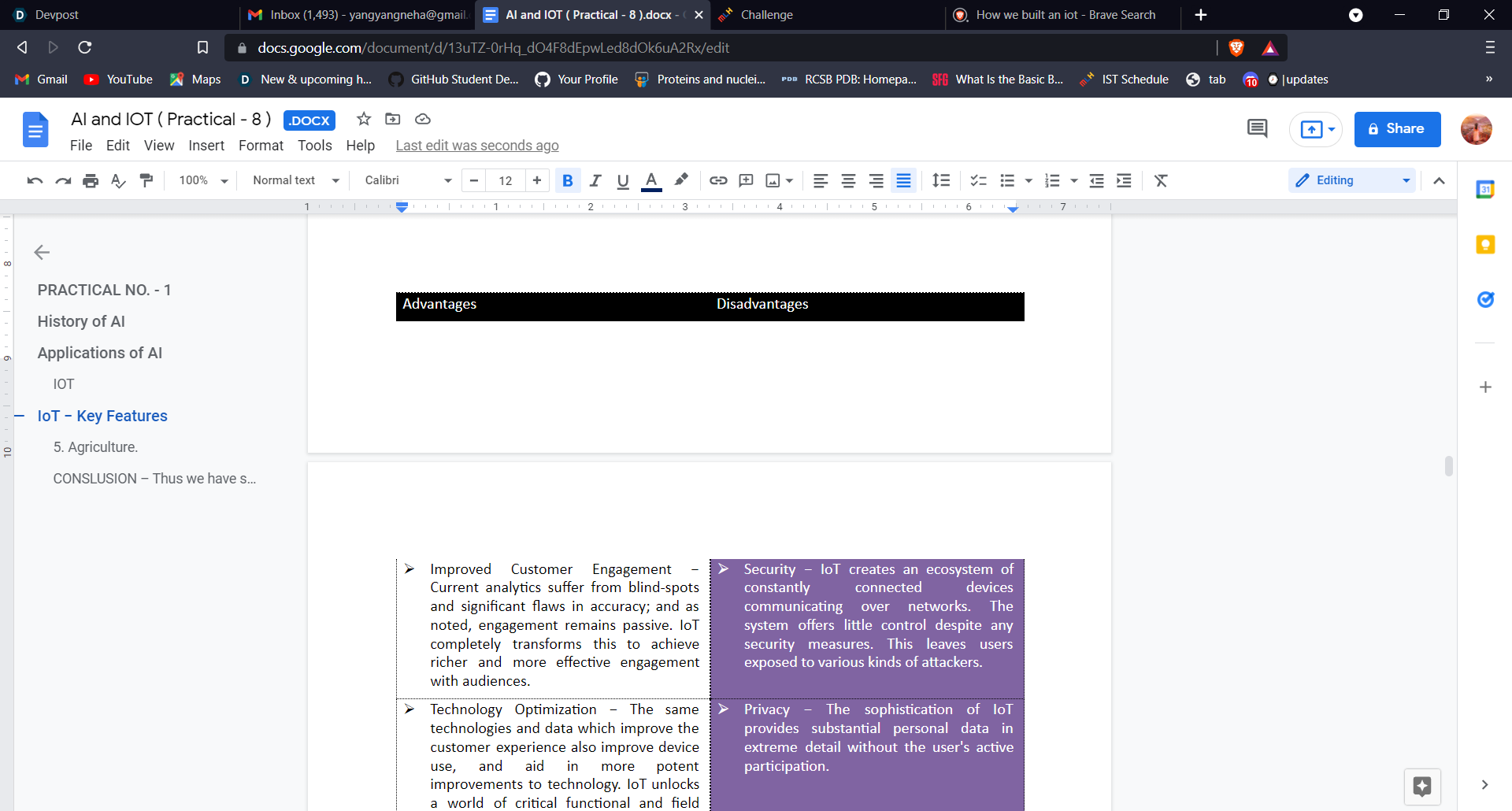
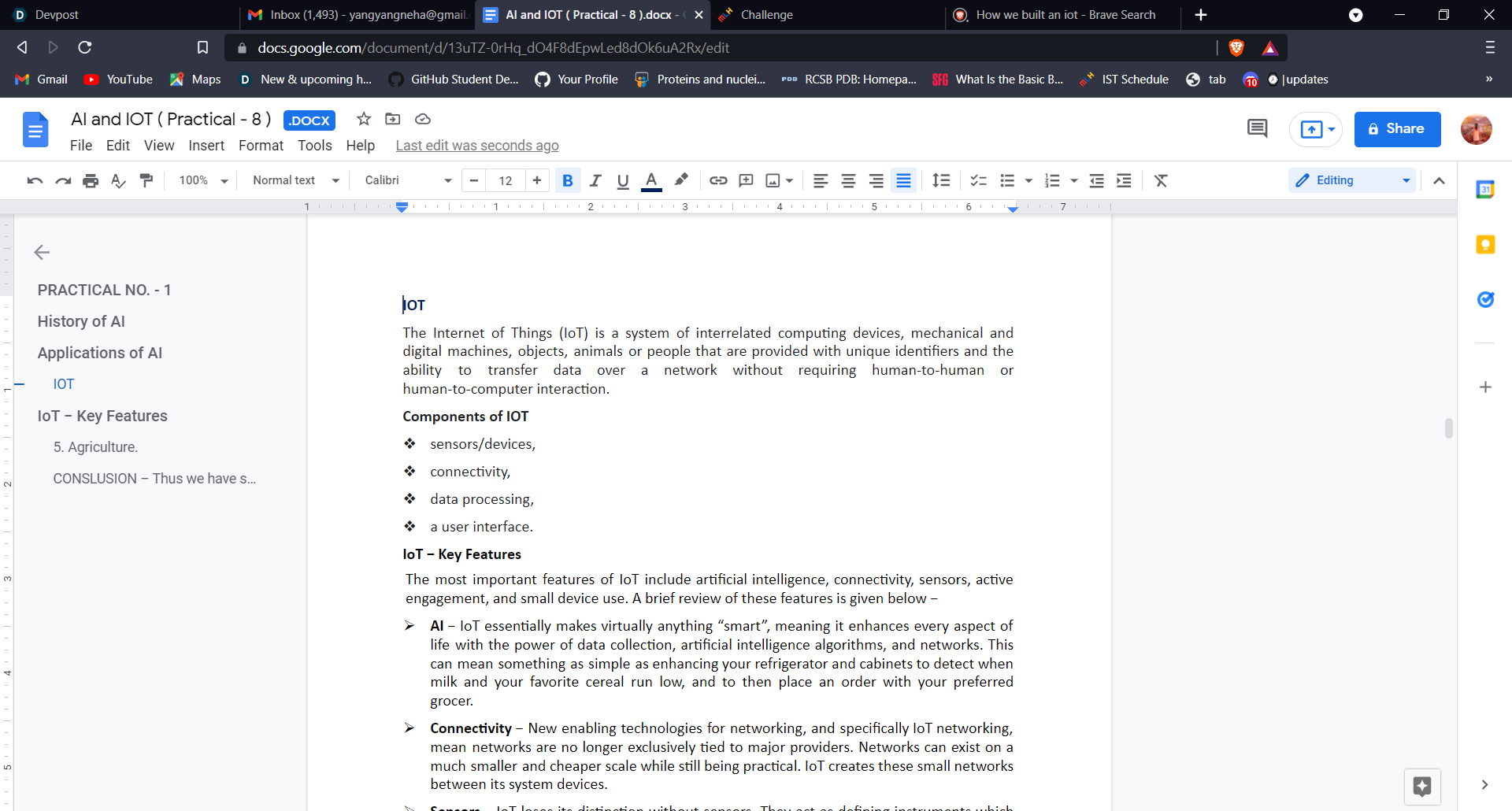
The Internet of Things (IoT) is a system of interrelated computing devices, mechanical and digital machines, objects, animals or people that are provided with unique identifiers and the ability to transfer data over a network without requiring human-to-human or human-to-computer interaction.
What it does
The basic elements of the IoT are devices that gather data. Broadly speaking, they are internet-connected devices, so they each have an IP address. They range in complexity from autonomous vehicles that haul products around factory floors to simple sensors that monitor the temperature in buildings. They also include personal devices like fitness trackers that monitor the number of steps individuals take each day. To make that data useful it needs to be collected, processed, filtered and analyzed, each of which can be handled in a variety of ways. Collecting the data is done by transmitting it from the devices to a gathering point. Moving the data can be done wirelessly using a range of technologies or on wired networks. The data can be sent over the internet to a data center or a cloud that has storage and compute power or the transfer can be staged, with intermediary devices aggregating the data before sending it along. Processing the data can take place in data centers or cloud, but sometimes that’s not an option. In the case of critical devices such as shutoffs in industrial settings, the delay of sending data from the device to a remote data center is too great. The round-trip time for sending data, processing it, analyzing it and returning instructions (close that valve before the pipes burst) can take too long. In such cases edge-computing can come into play, where a smart edge device can aggregate data, analyze it and fashion responses if necessary, all within relatively close physical distance, thereby reducing delay. Edge devices also have upstream connectivity for sending data to be further processed and stored.
How we built it
Challenges we ran into
Accomplishments that we're proud of
What we learned
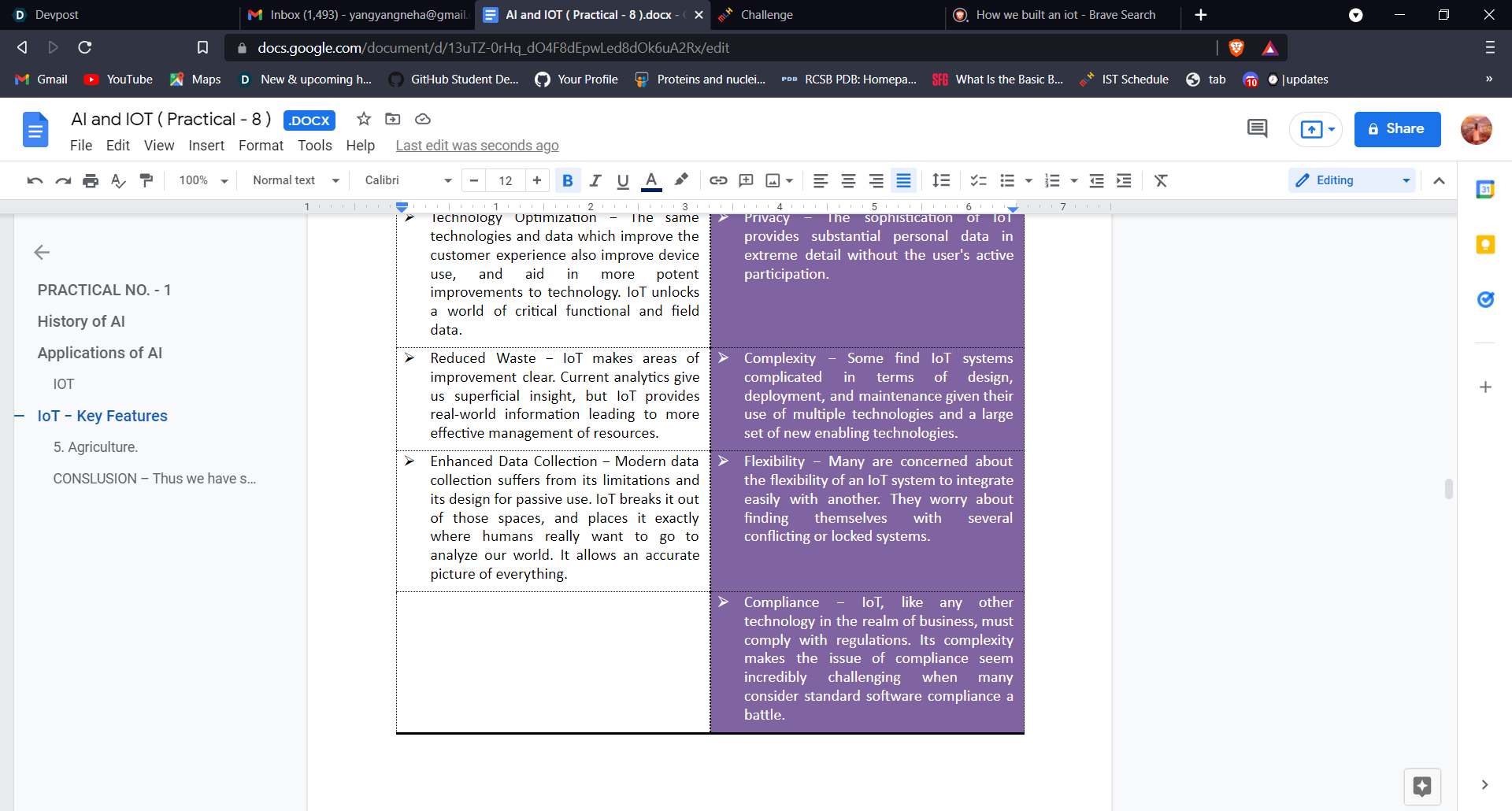
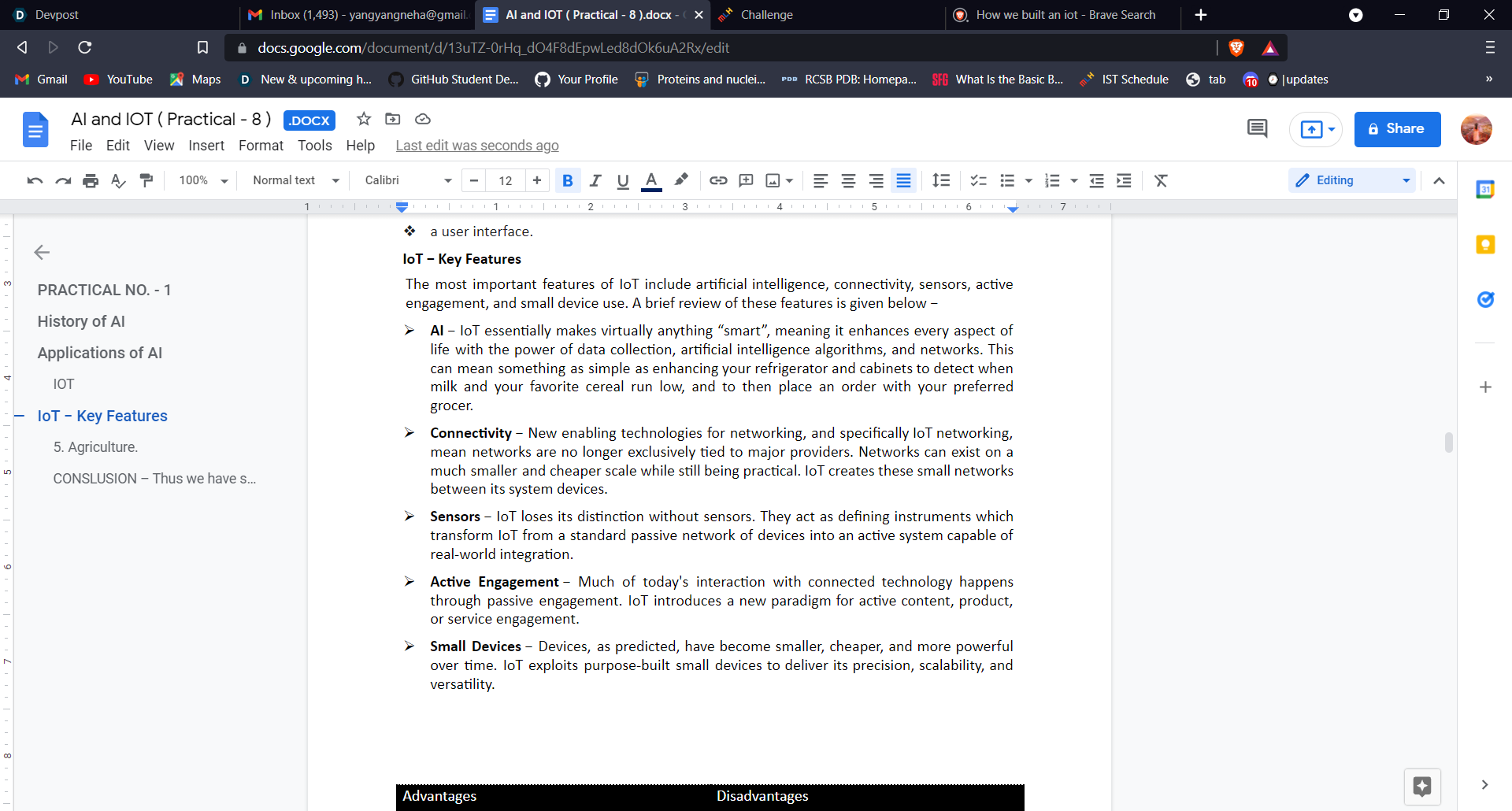
Improved Customer Engagement − Current analytics suffer from blind-spots and significant flaws in accuracy; and as noted, engagement remains passive. IoT completely transforms this to achieve richer and more effective engagement with audiences. Technology Optimization − The same technologies and data which improve the customer experience also improve device use, and aid in more potent improvements to technology. IoT unlocks a world of critical functional and field data. Reduced Waste − IoT makes areas of improvement clear. Current analytics give us superficial insight, but IoT provides real-world information leading to more effective management of resources. Enhanced Data Collection − Modern data collection suffers from its limitations and its design for passive use. IoT breaks it out of those spaces, and places it exactly where humans really want to go to analyze our world. It allows an accurate picture of everything.
What's next for IoT
Built With
- iot

Log in or sign up for Devpost to join the conversation.