-
-
Proposed Solution
Inspiration
The inspiration behind this project came from the growing global need for sustainable energy solutions and the underutilization of solar thermal energy. While solar panels generate electricity, they also produce a significant amount of heat which is often wasted. This motivated me to develop a system that harnesses both the electrical and thermal energy from hetrojunction solar panels, optimizing energy output for improved efficiency and sustainability.
What it does
Throughout the project we gained invaluable knowledge in several domains:
Renewable Energy Management :
- Learning how to maximize solar energy by tapping into both electrical and thermal outputs.
IoT Integration:
- By delivering into sensor interfacing and real-time monitoring using IoT technology, enhancing my understandings of how to collect and utilize data for energy systems.
Machine Learning :
- Developing algorithms to optimize battery management taught me how to predictive models can be applied o real-world systems.
Software Development:
- Building a full-fledged monitoring platform using technologies like React.js, Raspberry Pi, and AWS IoT helped me enhance my skills in software engineering and cloud infrastructure.
How we built it
Designing the System Architecture :
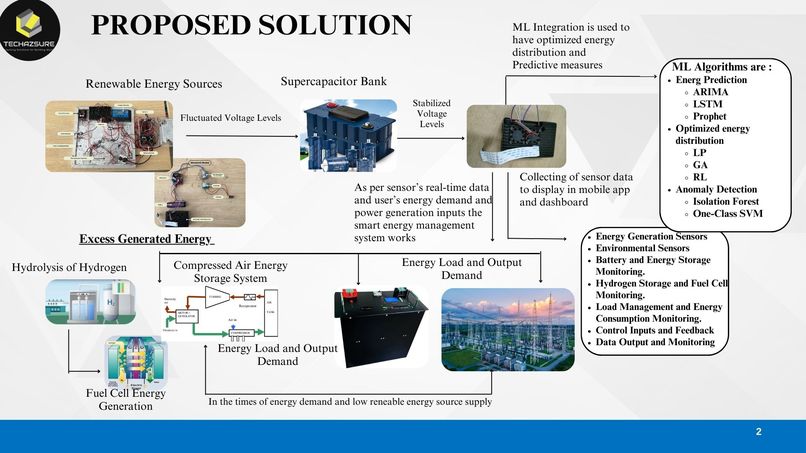
- We started by designing a hybrid solar energy system that integrates thermoelectric generators(TEGs) with phase change materials to capture the heat generated by the solar panel.
- Next, I implemented a smart battery management system using dual batteries which alternate between charging and discharging based on the energy generated.
Hardware Development :
- I connected voltage sensors and TEGs to the Raspberry Pi, enabling real-time monitoring of energy production.
- The Raspberry Pi serves as the control unit, which interfaces with the energy sources and batteries handling the data collection and control of the charging process.
Software and Cloud Integration :
- The software application was developed using React.js for the frontend and Django for the backend.
- Firebase was used to collect data from the sensors while ML algorithms were developed to optimize battery management and forecast energy demand.
- Real-time data is visualized on a dashboard and stored in the cloud using mySql and InfluxDB for analytics and historical tracking.
Machine Learning Integration:
- I utilized machine learning algorithms to optimize battery management by predicting energy consumption patterns. The model uses historical energy generation data from the solar panels and TEGs along with environmental factors like weather conditions.
- The ML model helps forecast when the dual battery system should switch between charging and discharging modes to maximize power output and efficiency.
- Predictive analytics the system anticipates peak energy usage time and adjusts the charging cycle to ensure that sufficient energy is available during high-demand periods thus improving energy distribution and reducing wastage.
- The ML algorithm also monitors battery health and degradation over time, enabling predictive maintenance to avoid performance losses.
Mobile App Development:
- I also created a React Native App to allow users to monitor the energy system remotely, receive alerts and view performance insights.
Challenges we ran into
Heat Management:
- One of the main challenges was efficiently managing the heat produced by the solar panel and converting it into usable energy through the TEGs.
- Fine-tuning the system to ensure optimal power generation was tricky.
** Sensor Calibration**:
- Calibrating the voltage sensors and ensuring accurate data collection required multiple iterations and testing.
Software-Hardware Integration:
- Integrating the hardware(sensors, TEGs) with the software platform posed challenges, especially in achieving real-time data transfer between the devices and cloud.
Battery Management:
- Designing the dual battery system and ensuring smooth switching between charging and discharging without interrupting energy supply was technically challenging.
Training the ML Model:
- Collecting enough data to train the machine learning model effectively was a challenge, especially to ensure accurate predictions for energy optimization and battery management.
Accomplishments that we're proud of
Successfully developed a hybrid energy harvesting system that combines both thermal and solar energy for higher efficiency.
Integrated thermoelectric generators(TEGs) with phase changing materials to capture and convert heat from the solar panel into additional energy.
Built a smart battery management system using machine learning algorithms that predict energy demand, optimize battery charging/discharging cycles and improve overall system efficiency.
Implemented a React Native mobile app that allows users to monitor the system remotely and access energy insights.
Integrated the project with Firebase and AWS cloud services for seamless data storage, processing and real-time updates.
What we learned
- IoT Integration
- Machine Learning for Energy Management System
- Hardware-Software Synergy
- Data-Driven Decision Making
- Energy Management Systems
What's next for IoT based Harnessing of thermal and solar energy with ML/AI
Enhanced Predictive Models:
- We plan to further improve our machine learning models by integrating more weather data, energy usage patterns and user behavior to make the system even more intelligent and responsive to dynamic energy needs.
Integration with Smart Grids:
- Expanding the project to connect with smart grids, allowing energy produced by the system to be efficiently distributed to households, industries or even back to the grid.
3.Advanced AI:
- Introducing AI algorithms for automous energy management including predictive maintenance for equipment and optimizing energy transfer based on real-time conditions.
Scalability:
- Scaling the project to manage larger solar farms and renewable energy setups, making it applicable to commercial and industrial use.
Blockchain for Energy Trading:
- Exploring the possibility of integrating blockchain technology to enable peer-to-peer energy trading between users, encouraging decentralized energy management.
Built With
- arduino
- c/c++
- django
- firebase
- google-cloud
- javascript
- mysql
- phpmailer
- python
- raspberry-pi
- react-native
- react.js
- scikit-learn
- tensorflow

Log in or sign up for Devpost to join the conversation.