Inspiration
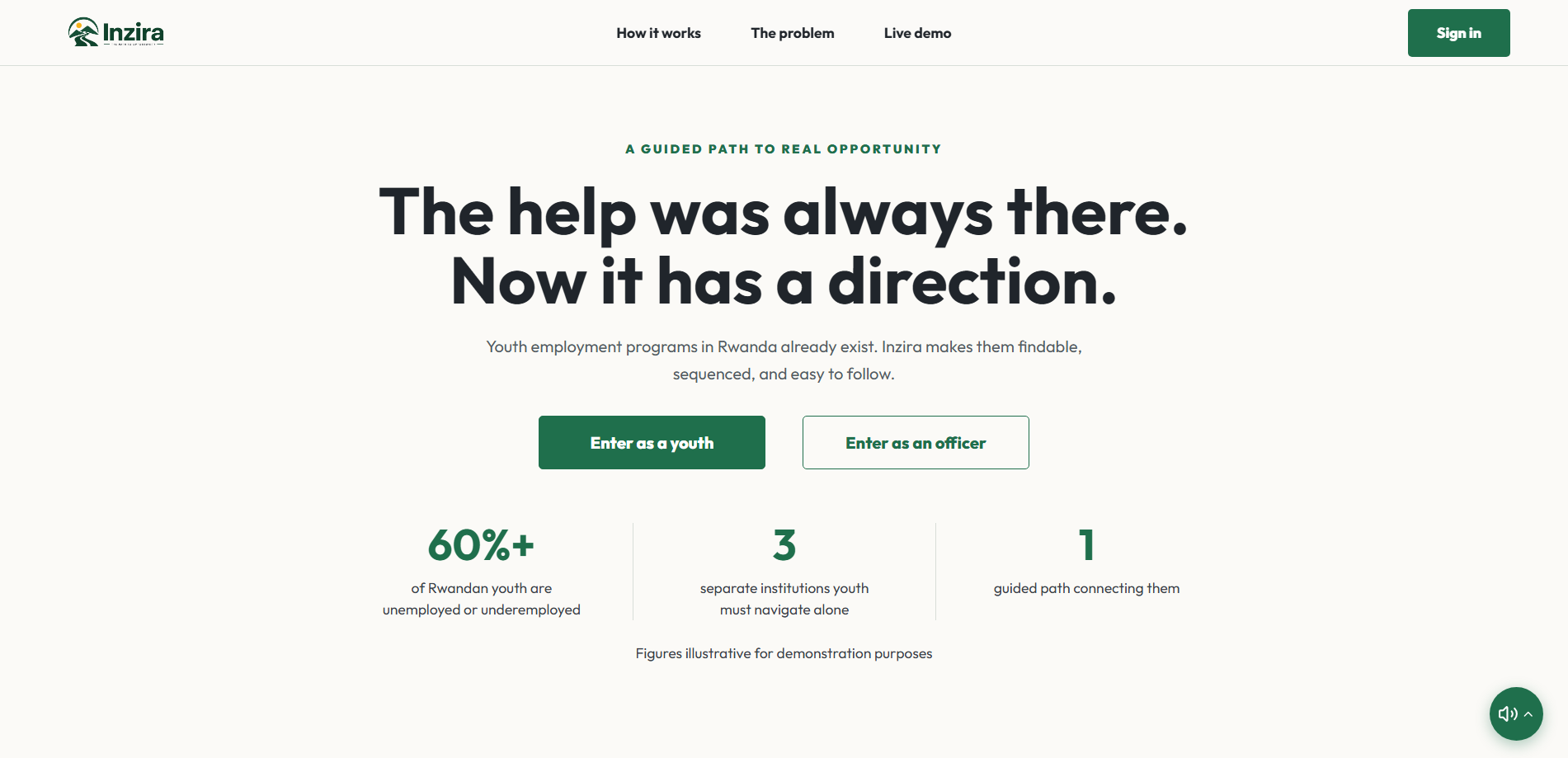
I was inspired by a simple observation: many young people are not necessarily lacking opportunities; they are lacking a clear path to those opportunities. Rwanda already has programs for business registration, vocational training, financing, and entrepreneurship, but they are spread across different institutions and processes. A young person can have the motivation and even the skills to start something, yet still get stuck wondering where to begin or what comes next. We wanted to build something that feels like having a knowledgeable person guide you through the process - while making sure AI supports, rather than replaces, the people responsible for providing that guidance.
What it does
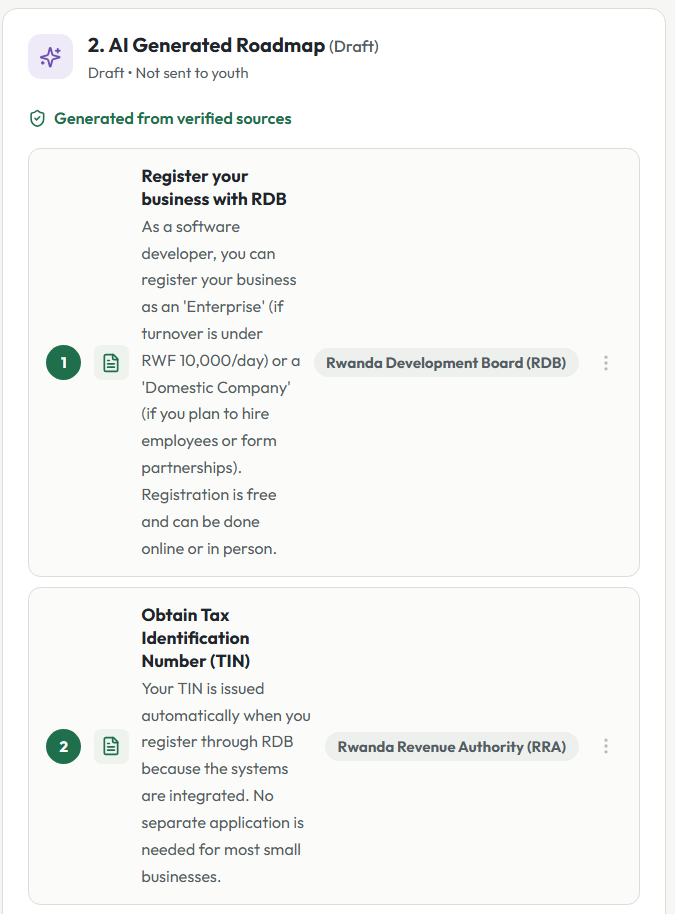
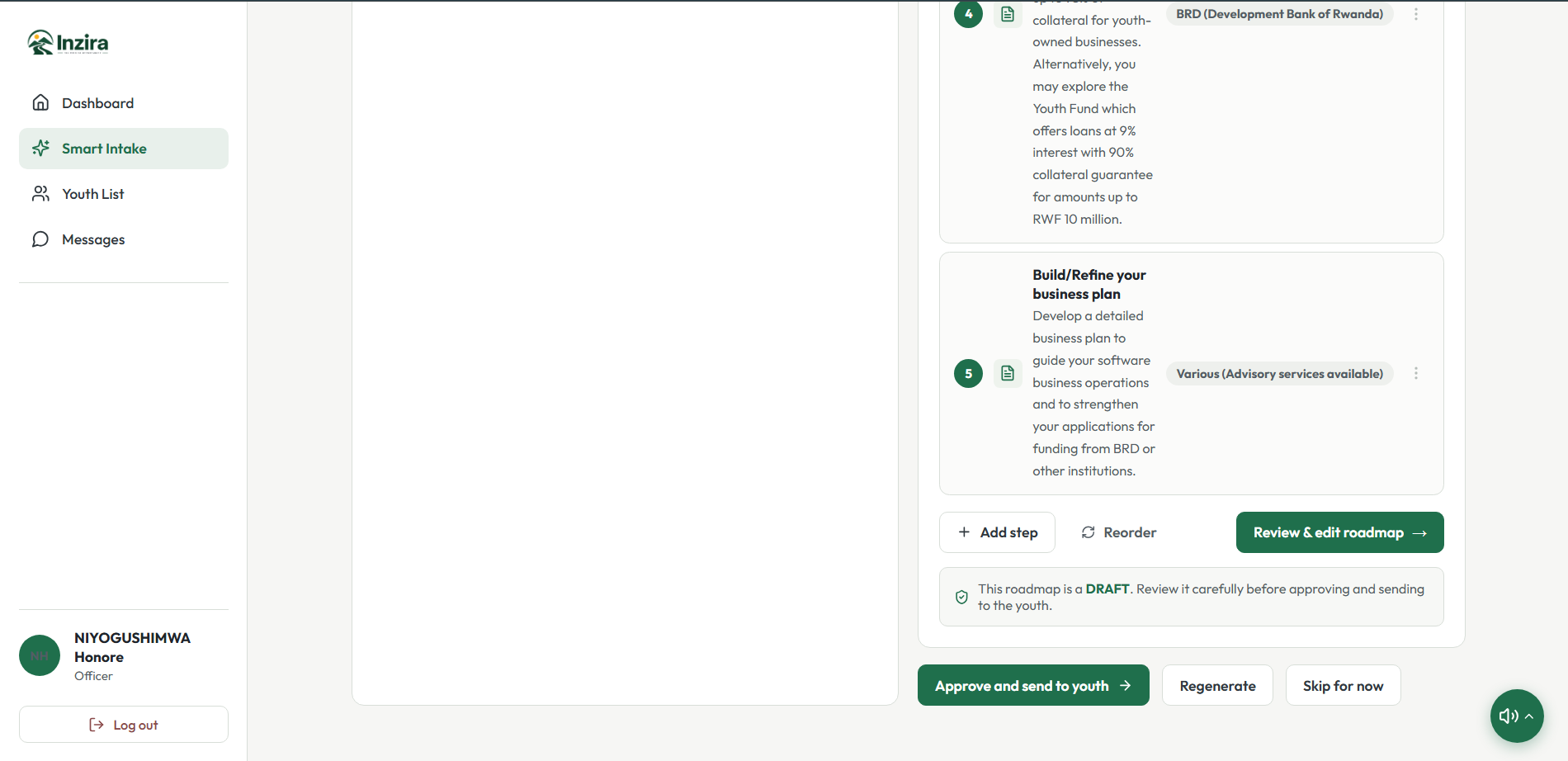
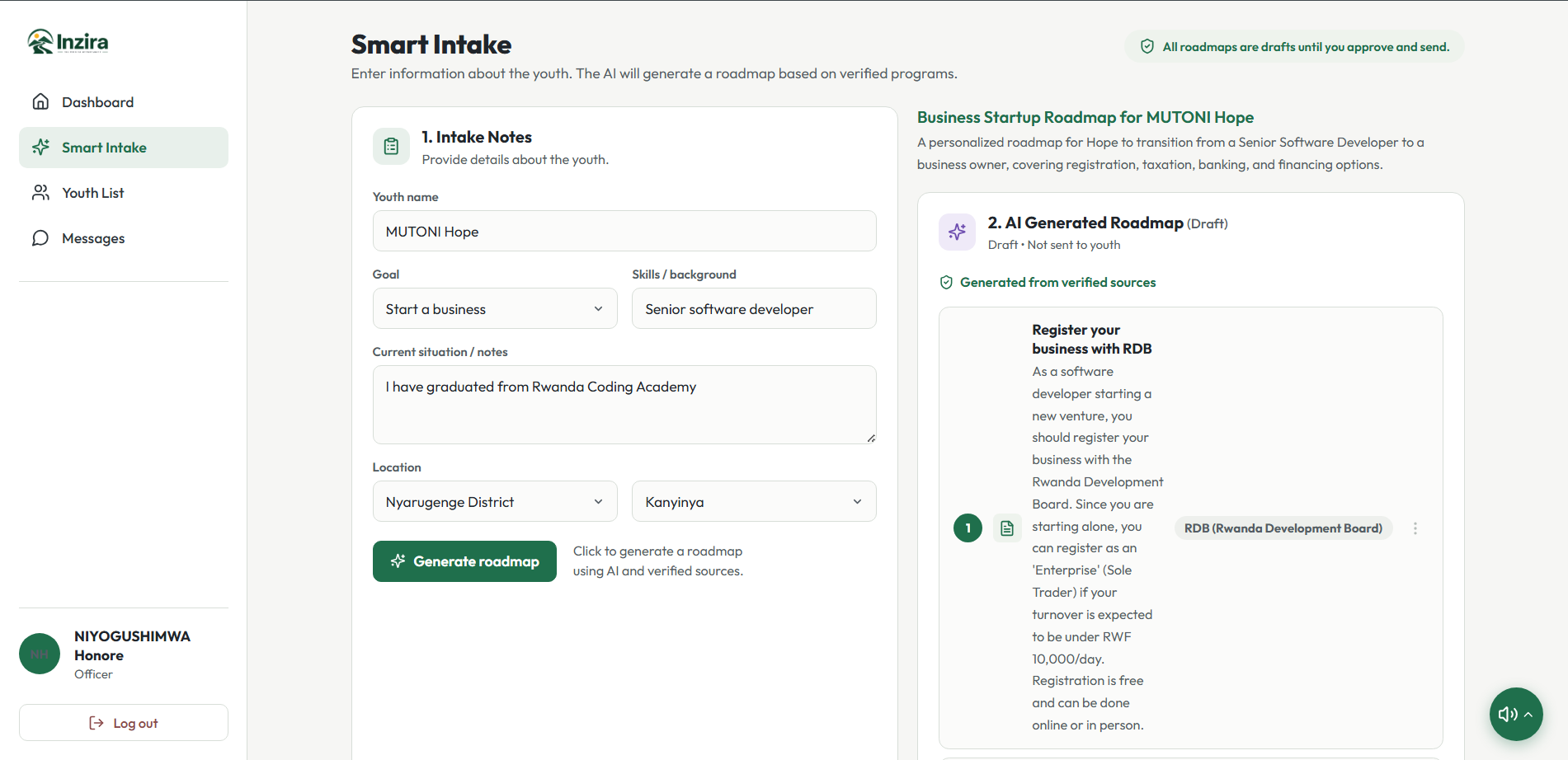
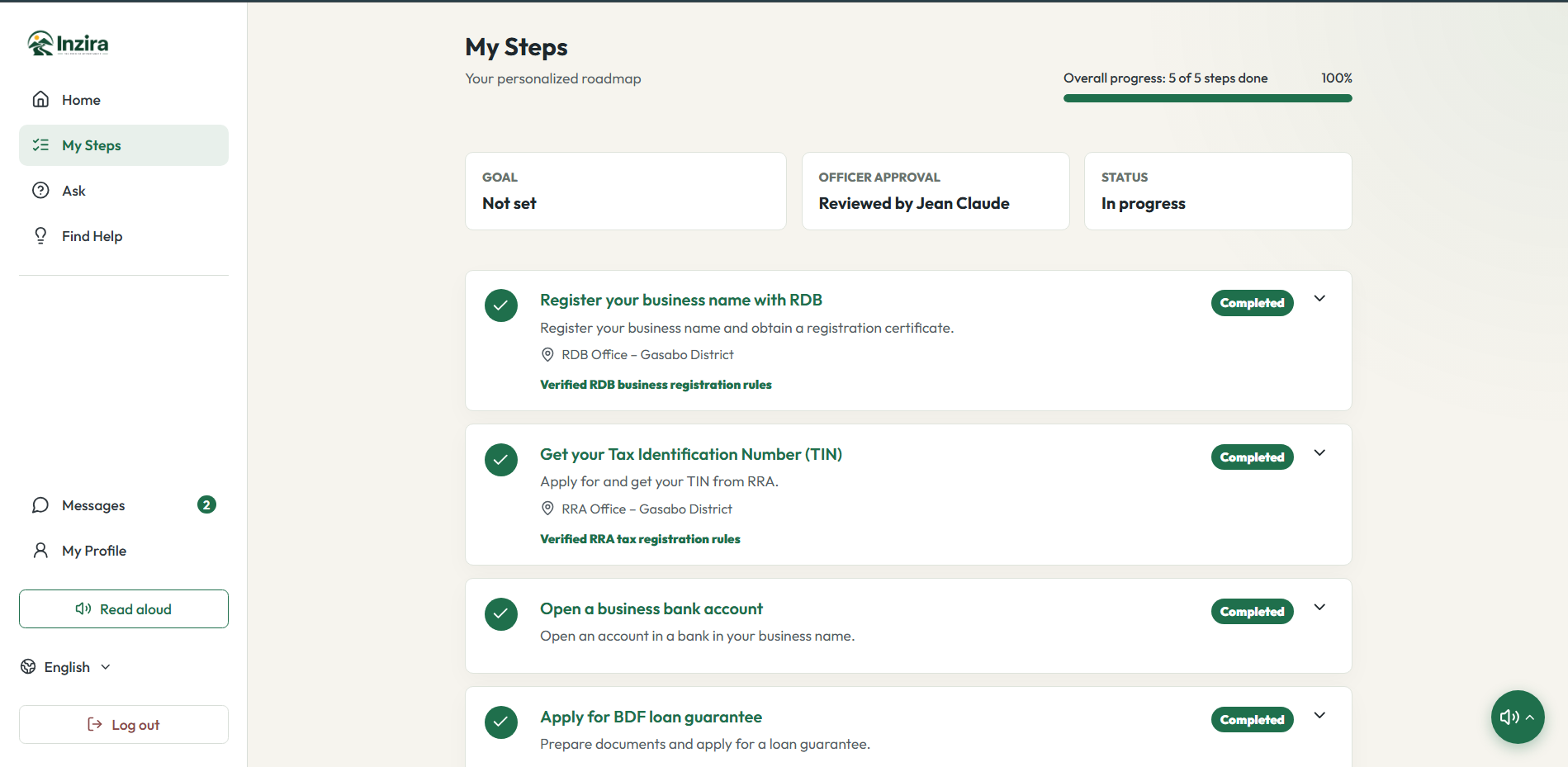
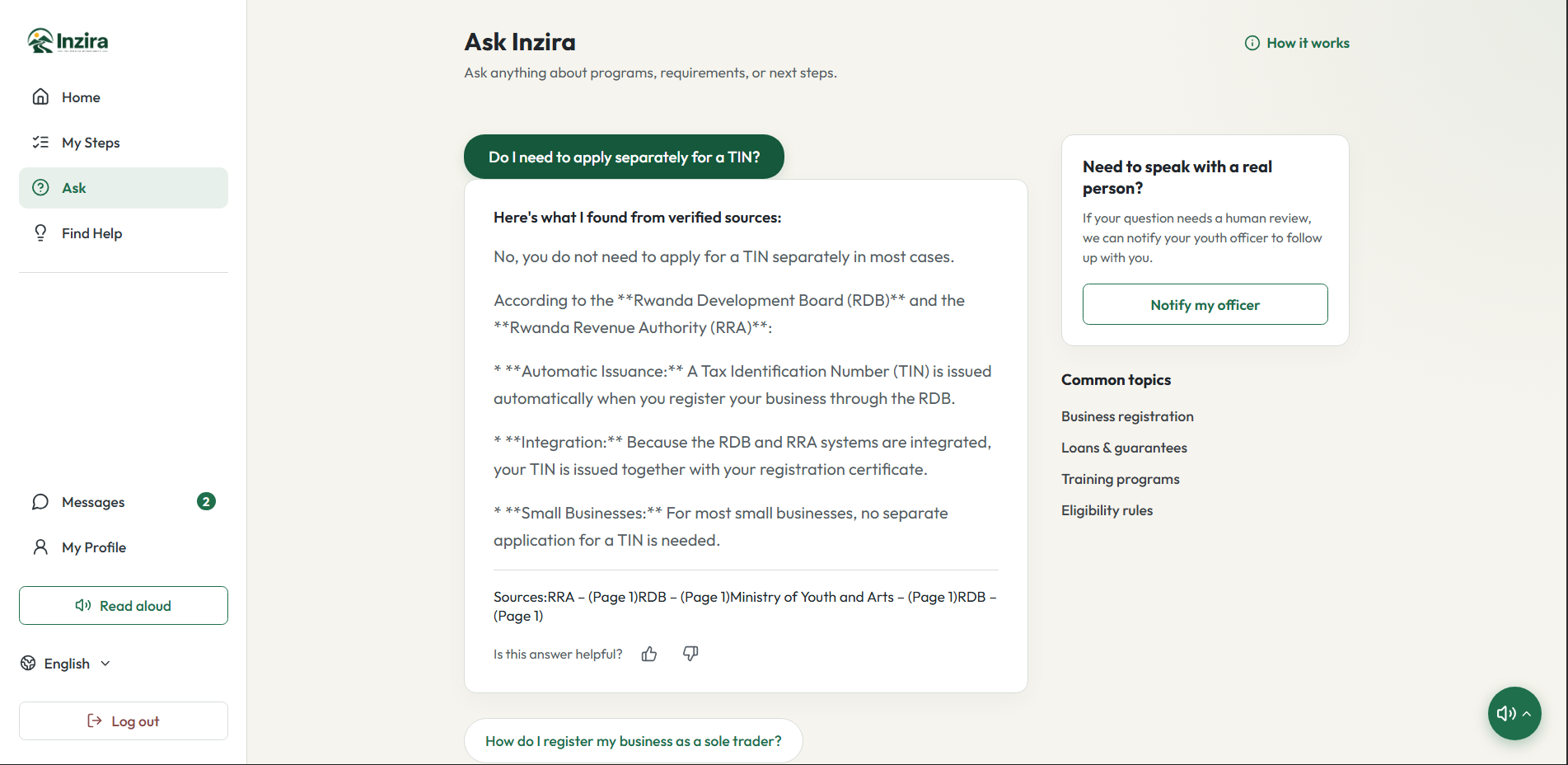
Inzira helps young people in Rwanda find and follow the right path toward employment, training, or starting a business. A youth shares their goal, skills, and situation, and a youth officer reviews that information. Our AI then uses a library of verified information from relevant institutions to draft a personalized, step-by-step roadmap. The officer reviews and approves the roadmap before the youth receives it. Young people can then see what they need to do, where to go, and what they need to bring at each stage. They can also ask questions through an AI assistant that provides source-backed answers and directs sensitive questions to a human officer.
How we built it
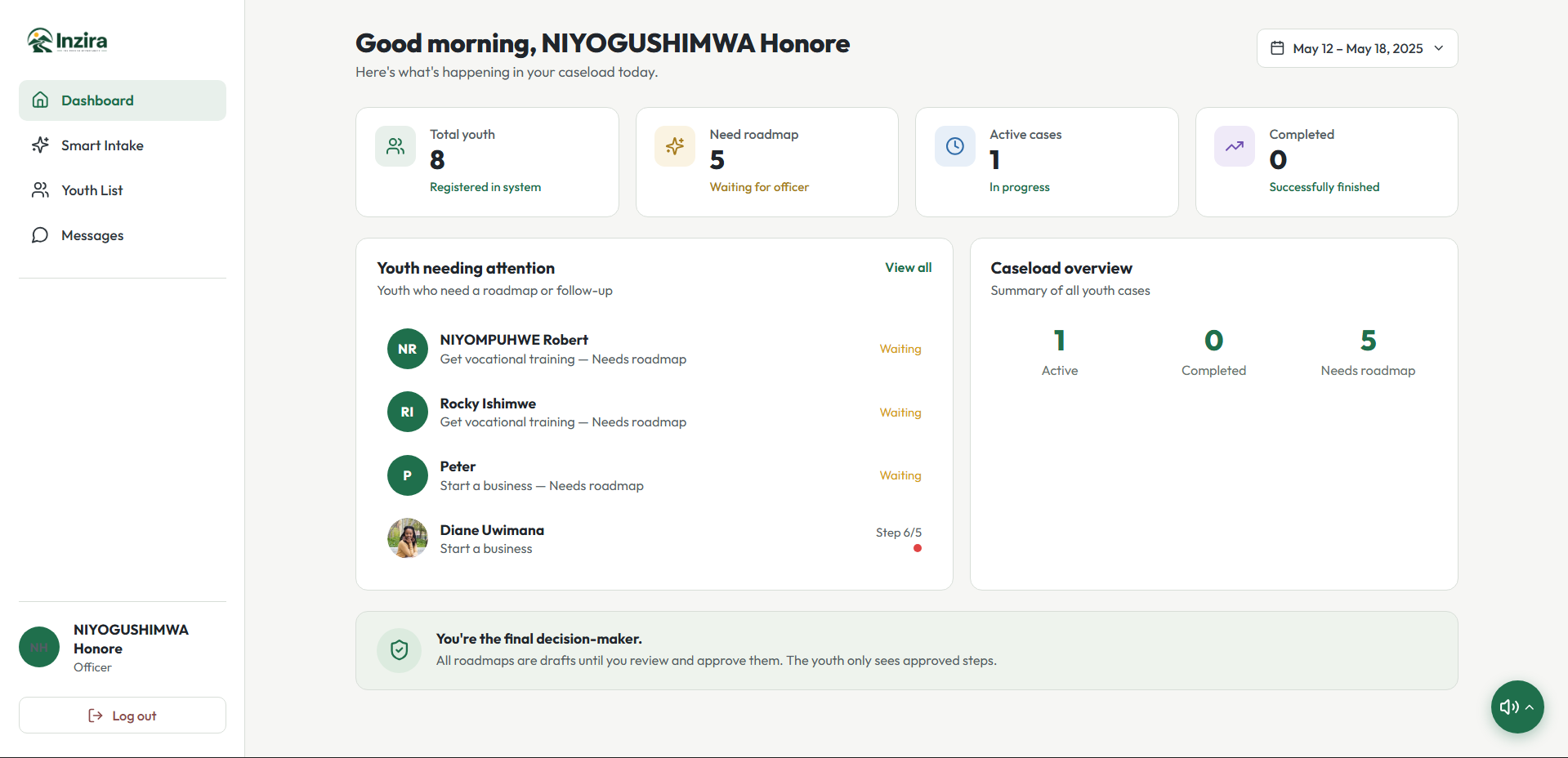
I built Inzira as a web platform with separate experiences for young people and youth officers. The youth side is intentionally simple, with guided onboarding, a personalized dashboard, step-by-step roadmaps, an institution directory, and an AI assistant. The officer side provides tools for reviewing youth information and generating and approving roadmaps.
For the AI component, we are building a Retrieval-Augmented Generation (RAG) system. Instead of allowing the AI to rely only on its general knowledge, we retrieve relevant information from a verified document library and provide that context to the model when generating an answer or roadmap. We use Supabase and pgvector for storing and retrieving document embeddings, and a hosted LLM through OpenRouter. The system is designed around a human-in-the-loop principle: AI drafts, but the officer decides.
Challenges we ran into
One of my biggest challenges was realizing that building a useful AI product is not just about connecting an LLM to an application. In Inzira, an incorrect answer could potentially send someone to the wrong institution or cause them to miss an important requirement. That made reliability and source verification much more important than simply producing convincing answers.
I also had to think carefully about how to turn complex institutional information into a simple experience for someone who may not be familiar with government processes. Designing two different interfaces - one simple enough for young people and another efficient enough for officers—was another challenge. Finally, building a RAG system while working with limited resources and free API tiers forced us to think carefully about our architecture and how we use AI.
Accomplishments that we're proud of
I am proud that Inzira has grown from an idea about youth unemployment into a working prototype with a clear end-to-end journey. We designed both sides of the platform: the youth experience and the officer workflow.
I'm especially proud of the human-in-the-loop approach. Rather than presenting AI as something that replaces youth officers, we designed it as a tool that helps them work faster and more consistently. The roadmap remains a draft until an officer reviews and approves it.
I'm also proud of implementing the foundation for a RAG-based system, because it allows us to focus the AI on verified information instead of treating the language model as the source of truth.
What we learned
I learned that the best AI solution is not necessarily the one that uses the most AI. In a problem involving government programs and people's economic decisions, trust and accuracy matter more than making the AI appear intelligent.
I also learned the importance of understanding the problem before deciding on the technology. At first, it was easy to think about Inzira as simply an AI chatbot. As I developed the idea, I realized that the real value is the pathway - understanding a person's situation, sequencing the right steps, and connecting AI assistance with human judgment.
Most importantly, I learned that good product design means reducing complexity for the user, even when the technology behind the product is complex.
What's next for Inzira
My next step is to validate Inzira with the people it is designed for - young people and youth officers - and use their feedback to improve the experience and the accuracy of the pathways.
Technically, i want to strengthen the RAG system, expand and continuously verify the source library, improve local recommendations, and make the platform work reliably in environments with limited connectivity. i also want to improve the officer tools so they can manage more young people without losing the human connection.
In the longer term, i want Inzira to support more youth pathways beyond our initial business-focused use case and potentially expand to other areas where people struggle to navigate fragmented public services.
The goal is simple: when a young person asks, “I want to move forward, but I don't know where to start,” Inzira should be able to help them find the next right step.
Built With
- bge-m3
- gemma
- next.js
- openrouter
- pgvector
- postgresql
- supabase
- tailwind-css
- typescript

Log in or sign up for Devpost to join the conversation.